Week-6 Challenge: EV Drivetrain
1. Types of power converter circuits are employed in electric and hybrid electric vehicle:
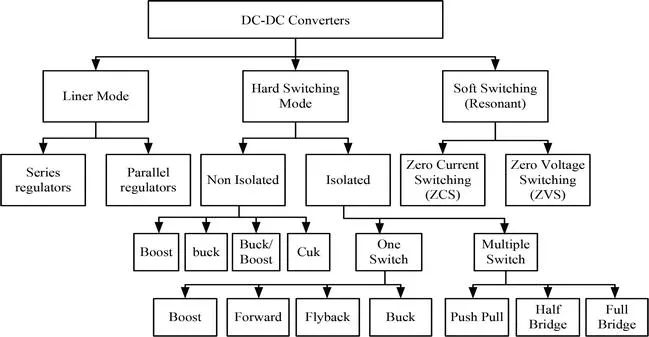
DC-DC Converter:
- Converts the unregulated DC input to regulated DC input.
- Non-isolated Converter:-The input and output are ohmically connected, most often having the negative side in common. We can measure low ohms between some of the input and output signals.These are used for low rating application(less than 100W).For example:Buck,Boost and Buck-Boost converter.
- Isolated Converter: There is a very high near to infinite resistance between any input connection and output connection. Usually this required magnetic or optical isolation somewhere between the input and output.These are used for more than 100W ratings. For example: Flyback,Forward, Half bridge,Full Bridge. They are good in efficiency and voltage ratio conversion.
- Resonant Converter: Converter which uses LC resonant circuit.Due to high frequency components are used in the circuit, switching losses are reduced and heating of power devices are also reduced.These are used for high power conversion.
- DC-DC converters are used between motor and battery of electric vehicles.
DC-AC converter:
- Commonly called as inverter.
- Can control both magnitude and frequency of Output.
- Widely seen in control of AC motors.
- Used if Traction motor of EV is AC.
AC-DC converter:
- Commonly called as rectifiers.
- Used for Battery charging of EV.
- Rectifier with power factor correction reduces losses and saves power.
2. Electric Vehicle's powertrain.
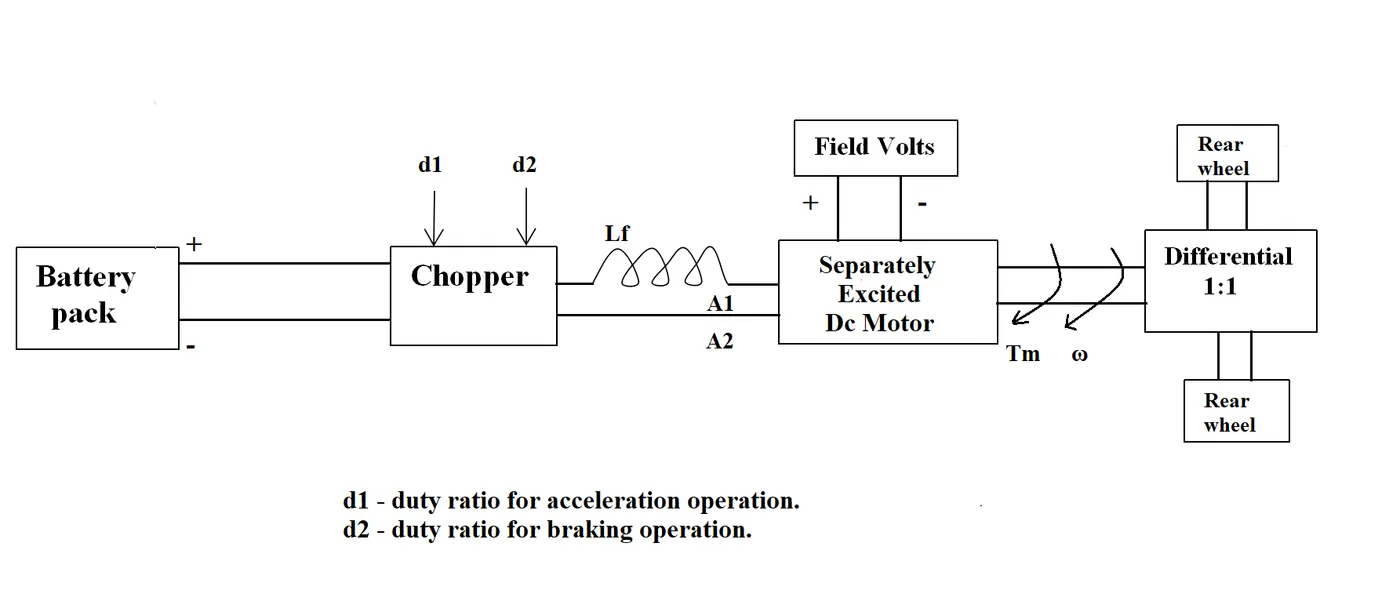
Given: The duty ratio for acceleration operation is 'd1' and for the braking operation the duty ratio is 'd2'.
Rated Armature voltage(V)= 72 V
Ra= 0.5Ω
KΦ= 0.7 Vs
 ...........equation(i)
Duty cycle= 70%
We know,
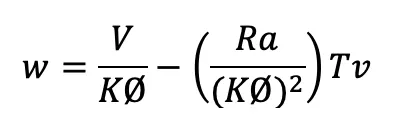 ..........equation (ii)
As, duty cycle is 70%, then 70% of armature voltage =72*0.70=50.4V
So, Output of chopper is 50.4V which goes to Separately Excited DC motor.
V=50.4V
By putting the all values in equation (i);
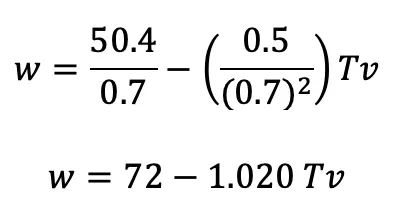
Re-arranging:

Compare this equation with equation(i):
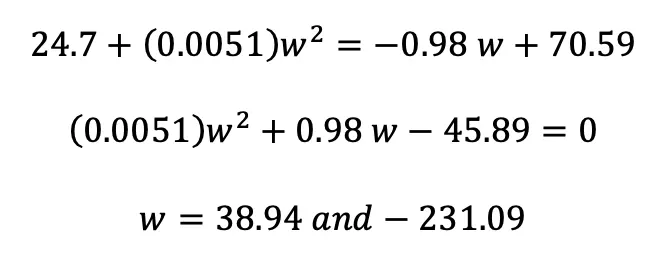
so, we get steady state speed=38.94 rad/sec or 372.04 rpm
3. Induction Versus DC brushless motors by Wally Rippel, Tesla
In this article, Wally Rippel concerns about obsolete elements of electric vehicle from 1960s. As lead acid batteries, DC brush motors, and contactor controllers are not much popular nowadays. Lead has been replaced by Lithium and DC brush motor by either DC brushless or induction. In 1990s, The only notable uses of induction drives have been the General Motors EV-1; the AC Propulsion vehicles, including the tzero; and the Tesla Roadster. Then he told the working of DC brushless and Induction with their differences and similarities.
DC brushless:With brushless machines, the rotor includes two or more permanent magnets that generate a DC magnetic field (as seen from the vantage point of the rotor). In turn, this magnetic field enters the stator core (a core made up of thin, stacked laminations) and interacts with currents flowing within the windings to produce a torque interaction between the rotor and stator. As the rotor rotates, it is necessary that the magnitude and polarity of the stator currents be continuously varied – and in just the right way - such that the torque remains constant and the conversion of electrical to mechanical energy is optimally efficient. The device that provides this current control is called an inverter. Without it, brushless motors are useless motors.
Induction: Currents flowing in the stator windings produce a rotating magnetic field that enters the rotor. In turn, the frequency of this magnetic field as “seen” by the rotor is equal to the difference between the applied electrical frequency and the rotational “frequency” of the rotor itself. Accordingly, an induced voltage exists across the shorted structure that is proportionate to this speed difference between the rotor and electrical frequency. In response to this voltage, currents are produced within the rotor conductors that are approximately proportionate to the voltage, hence the speed difference. Finally, these currents interact with the original magnetic field to produce forces – a component of which is the desired rotor torque. When a 3-phase induction motor is connected to utility type 3-phase power, torque is produced at the outset; the motor has the ability to start under load.
Similarity:
- The stators for the 3-phase induction motor and the DC brushless motor are virtually identical. Both have three sets of “distributed windings” that are inserted within the stator core.
- Both drives use 3-phase modulating inverters.
Differences:
- The essential difference between the two machines is with the rotor.
- Unlike the DC brushless rotor, the induction rotor has no magnets – just stacked steel laminations with buried peripheral conductors that form a “shorted structure.”
- No inverter is needed for Induction motor. The fact that induction motors are directly compatible with conventional utility power is the main reason for their success. In contrast, a brushless DC motor produces no starting torque when directly connected to fixed frequency utility power. They really need the aid of an inverter whose “phase” is maintained in step with the angular position of the rotor.
- The control differences are with control code. (DC brushless drives require an absolute position sensor, while induction drives require only a speed sensor).
- One of the main differences is that much less rotor heat is generated with the DC brushless drive. Rotor cooling is easier and peak point efficiency is generally higher for this drive.
- The DC brushless drive can operate at unity power factor, whereas the best power factor for the induction drive is about 85 percent.
- The peak point energy efficiency for a DC brushless drive is typically be a few percentage points higher than for an induction drive.
- In Ideal brushless drive, the strength of the magnetic field produced by the permanent magnets would be adjustable. In contrast, induction machines have no magnets and B fields are “adjustable,” since B is proportionate to V/f (voltage to frequency).
- With DC brushless, as machine size grows, the magnetic losses increase proportionately and part load efficiency drops. With induction, as machine size grows, losses do not necessarily grow.
- Induction motors will likely retain a cost advantage over PM machines because permanent magnets are expensive.
- Induction machines are more difficult to control.
- Achieving stability over the entire torque-speed range and over temperature is more difficult with induction than with DC brushless.
Conclusion:
- DC brushless drives will likely continue to dominate in the hybrid and coming plug-in hybrid markets.
- Induction drives will likely maintain dominance for the high-performance pure electrics.