Week-6 Challenge: EV Drivetrain
Aim:-
To study EV Drive train.
Objective:-
1) To study and understand types of power converter circuits employed in electric and hybrid electric vehicle.
2) To calculate EV steady state speed for given inputs if duty cycle is 70%.
3) Develop a mathematical model of a DC Motor for the equation using Simulink.
ω = V/Kϕ –(Ra/Kϕ2)*T
4) Refer to the blog & Explain in brief about author’s perspective.
Answer [1]:-
Power electronic converters perform various basic power conversion functions. This converter is a single power conversion stage that can perform any of the functions in AC & DC power conversion systems. Depending on the type of function performed, power electronic converters used in electric and hybrid electric vehicle are classified into following types:-
- AC to DC converter or Rectifier.
- DC to AC converter or Inverter.
- DC to DC converter or Chopper.
1) AC to DC converter or Rectifier:-
AC-DC converters are electrical circuits that transform alternating current (AC) input into direct current (DC) output. AC to DC converters use rectifiers to turn AC input into DC output. The PHEV & EV get their propulsion power from an external electricity source (charging stations) which is AC. The battery which operates with DC power supply needs to be charged at home or at charging station which supplies AC power from grid. So, the charger / ON board charger for these vehicles is an example of AC-DC converters.
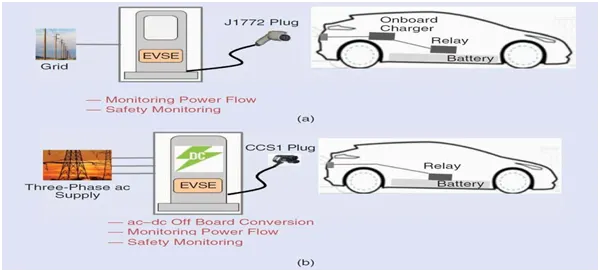
Fig.1:- AC-DC converters used in electric and hybrid electric vehicle.
2) DC to AC converter or Inverter:-
DC/AC converter, also described as “Inverter”, is a circuit that converts fixed DC supply voltage into a sinusoidal AC voltage to supply AC loads, control AC motors, or event connect DC devices that are connected to the grid. The input to an inverter can be a direct source such as battery, solar cell, or fuel cell or can be from an intermediate DC link that can be supplied from an AC source. Inverters can be usually classified according to their AC output as single-phase or three-phase and also as half- or full-bridge converters. Thus after converting DC to AC, the AC supply is given further to an electric motor.
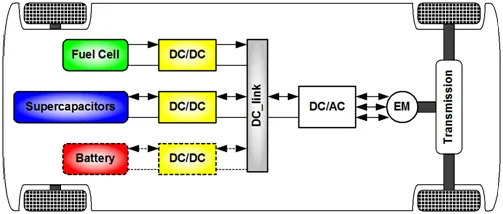
Fig.2:- DC-AC converters used in electric and hybrid electric vehicle.
3) DC to DC converter or Chopper:-
A DC-to-DC converter is an electronic circuit or electromechanical device that converts a source of direct current (DC) from one voltage level to another. That is it converts unregulated dc input voltage into regulated DC output voltage. The main dc-dc converter changes dc power from an on-board (200-800V) high voltage battery supply into lower dc voltages (48V or 12V) to power headlights, interior lights, wiper and window motors, fans, pumps and many other systems within electric vehicles (EV) and hybrid electric vehicles (HEV).
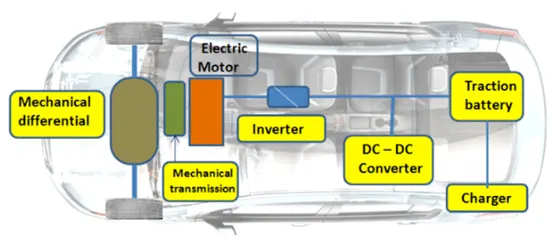
Fig.3:- DC-DC converters used in electric and hybrid electric vehicle.
There are two main types of DC to DC converters which are isolated & non isolated type.
I] Isolated type are further classified as:-
- Flyback converter – it is similar to the buck-boost converter except it uses a transformer instead of an inductor to store energy.
- Forward converter – this type will use a transformer to send energy between the input and output in single step.
II] Non-Isolated type are further classified as:-
- Boost – to step up the voltage.
- Buck – to step down the voltage.
- Buck/Boost – this can do both step up & step down operations but it is mainly used to reverse polarity.
- Charge pump – to step up / step down the voltage for low power sources.
- Cuk –similar to Buck/Boost type.
Answer [2]:-
An Electric Vehicle's powertrain with 72V battery pack in shown in the diagram below. The duty ratio for acceleration operation is 'd1' and for the braking operation the duty ratio is 'd2'.
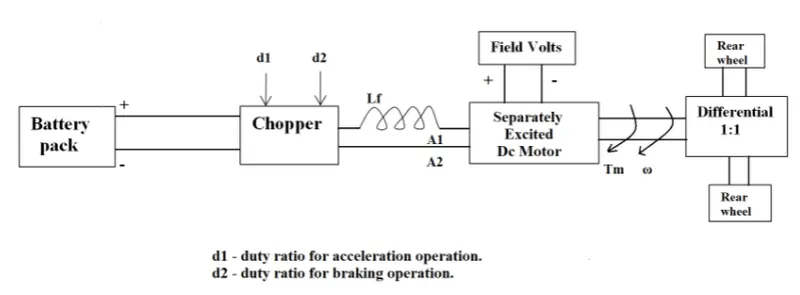
The other parameters of the electric vehicle are given below,
Given:- For Motor and Controller Parameters
- Rated Armature voltage (Va) = 72 V
- Rated armature current (Ia) = 400 A
- Armature resistance (Ra) = 0.5Ω
- Motor constant (KΦ)= 0.7 Volt second
- Switching frequency= 400 Hz.
The vehicle speed-torque characteristics are given by the below equation
Tv = 24.7 + ((0.0051)*ω2)
To find:- EV steady state speed if duty cycle is 70%
Solution:-
For duty cycle (D) = 70% = 0.7
Actual Voltage (V) = Va*D
= 72*0.7
= 50.4V
We know, the torque equation of DC motor is given by,
T = [(V *KΦ) – ((KΦ) 2* ω)] / Ra
= [(50.4*0.7) – ((0.7)2 *ω)] / 0.5
= 70.56 – 0.98*ω -------------------- (1)
The vehicle speed-torque characteristics are given by the below equation
Tv = 24.7 + ((0.0051)*ω2) -------------- (2)
At steady state speed of EV, the torque of both vehicle & motor will be same;
i.e. Tv = T
Thus equating equation (1) & (2) and by solving further we get a quadratic equation;
24.7 + ((0.0051)*ω2) = 70.56 – 0.98*ω
0.0051ω2 + 0.98ω - 45.86 = 0
Now solve quadratic equation using the formula:-
ω = [−b ± √(b2 − 4ac)] / 2a = {-0.98 ± √[0.98 – (4*0.0051*(-45.86))]} / 2*0.0051
By substituting all values in above equation & solving it, we get two different values of ω that are:
ω = 38.91 rad/sec or ω = -231.07 rad/sec
Assuming that forward direction is the positive & that the vehicle is in steady speed moving in forward direction, we will consider positive value for ω.
∴ ω = 38.91 rad/sec = 371 rpm
Answer [3]:-
Develop a mathematical model of a DC Motor for the equation using Simulink.
ω= V/Kϕ –(Ra/Kϕ2)*T
Simulink Model:-
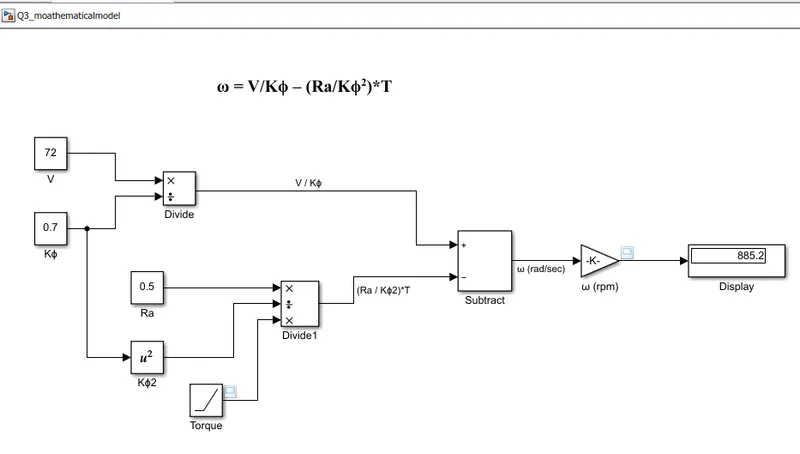
Fig.4:- Simulink Model for mathematical equation.
Here for this question, we have considered the V, Kϕ & Ra values of previous question.
Thus, V= 72, Kϕ = 0.7 & Ra = 0.5 Ω
For this V, Kϕ & Ra values we consider the constant blocks. For torque value consider a ramp input. Use square block to get Kϕ2. Use divide blocks for the operation V/Kϕ & (Ra/Kϕ2)*T respectively. Now use subtract block to get “ω” values in rad/sec. Then to convert rad/sec to rpm we add gain block to the output of subtract block. Connect scope through connect to viewer option.
Scope result:-
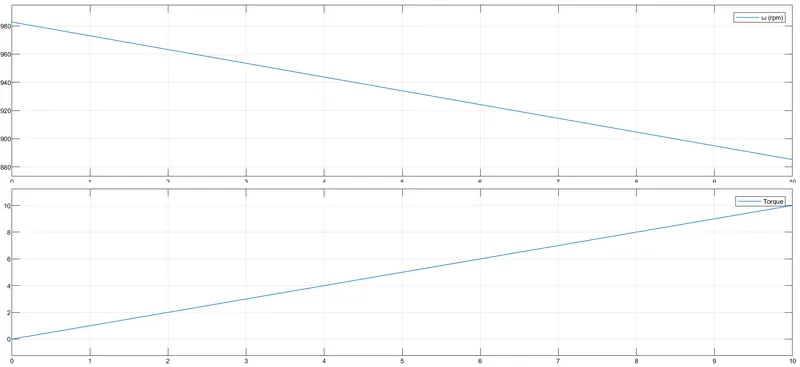
Fig.5:- Scope result for speed & torque.
We know torque and speed (ω) are inversely proportional to each other. Thus as torque values increases, speed decreases & vice versa. Here the first display is speed vs. time & second display is of torque vs. time.
Answer [4]:-
Author’s perspective about Induction Vs. DC brushless motors by Wally Rippel, Tesla is as follows:
- Author believes that there is no one best engine type, rather there are different types of engines to suit personal requirements, such as price and performance.
- He further explains the working of both 3-phase induction motor & a brushless DC motor.
- Now author has done comparison between these two technologies & stated some advantages & disadvantages of each.
- The 3-phase I.M can produce output torque and also have an ability to start under the load without any inverters also it has no magnets, whereas DC brushless motor produces no starting torque when directly connected to fixed frequency utility power and also inverter is needed to start under load.
- Brushless DC motor have some advantages like: much less rotor heat is generated with the DC brushless drive. The peak point energy efficiency for a DC brushless drive will typically be a few percentage points higher than for an induction drive.
- Disadvantages of Brushless DC motor are:- as machine size grows, the magnetic losses increase proportionally & part load efficiency decreases. Whereas with induction, as machine size grows, losses do not necessarily grow. Thus, induction drives may be the favored approach where high-performance is desired; peak efficiency will be a little less than with DC brushless, but average efficiency may actually be better.
- Permanent magnets are expensive & difficult to handle due to very large forces that come into play when anything ferromagneticgets close to them. This means that induction motors will likely retain a cost advantage over PM machines. Also, due to the field weakening capabilities of induction machines, inverter ratings and costs appear to be lower, especially for high performance drives.
- 3-phase induction motors have great utility; they also have some severe limitations. They cannot operate from DC; AC is a must. Shaft speed is proportionate to line frequency. Hence, when used with utility power, they are constant speed machines. Finally, when operated from utility power, they have limited starting torque and somewhat limited running peak torque capabilities, when compared to DC type machines. Inverter can be added to the 3-phase I.M so that we can supply power from DC source/ battery and also we can get variable speed and can adjust the frequencies.
- Induction machine when operated with a smart inverter has an advantage over a DC brushless machine – magnetic and conduction losses can be traded such that efficiency is optimized. This advantage becomes increasingly important as performance is increased.
- Both DC brushless and induction drives use motors having similar stators. Both drives use 3-phase modulating inverters. The only differences are the rotors and the inverter controls. And with digital controllers, the only control differences are with control code. DC brushless drives require an absolute position sensor, while induction drives require only a speed sensor.
- Finally author concludes that DC brushless drives will likely continue to dominate in the hybrid and plug-in hybrid markets, and that induction drives will likely maintain dominance for the high-performance pure electrics. But he also anticipate that so much of the hardware is common for both drives could mean that we will see induction and DC brushless live and work side by side during the coming golden era of hybrid and electric vehicles.
Conclusion:-
- We studied types of power converters used in electric and hybrid electric vehicles.
- EV steady state speed (ω) for given inputs if duty cycle is 70% is ω = 38.91 rad/sec = 371 rpm.
- Build the mathematical model of a DC Motor for the given equation.
- Explained in brief the authors perspective to Induction vs. DC brushless motors.