Week-6 Challenge: EV Drivetrain
1>>Ans: The electronics circuit used to control the power flow in a circuit is called power electronics. The components used in power electronics are power converters. The image is as shown below:
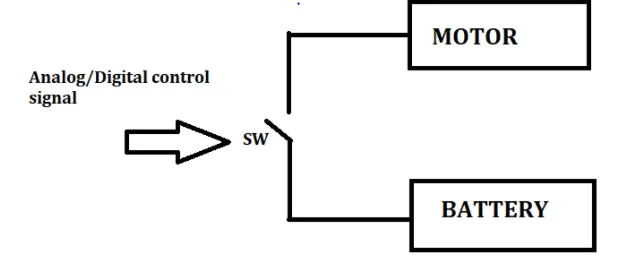
here a switch (SW) is assigned between a battery and a motor in order to control the flow of current and voltage across the motor. This control can result in to increase or decrease in the speed of the motor according to the voltage provided with the opening and closing of the switch. Here the power flow between the battery and motor is purely controlled by the switch. The command to the switch is provided from the acceleration or braking pedals i.e., the change in angle of pedals are converted to a proportion base current which may be analog or digital in form.
There are mainly four types of converters:
1> AC to DC converter: it is referred to as a rectifier, which converts the AC form of a quantity to the DC form. In EV or HEV the battery is DC and the charging DC battery needs DC but the grid is of AC type and there a conversion is required.
2> DC to AC converter: It is called an inverter, which converts DC into AC of desired voltage and frequency. In HEV and EV the inverter circuits are used to convert the battery DC Voltage to AC if induction traction motors are used.
3> DC to DC converter: It is called a chopper where high voltage DC can be converted to low voltage DC and vice versa. It is used to power other components and auxiliaries such as headlamps, entertainments systems, Air Conditions, etc.,
4>AC to AC converter: It converts high gain voltage AC into low voltage AC and vise versa. There are no prominent applications of this type of converter in HEV and EV. In-ceiling fan regulators these types of converters are used
2>>Ans:
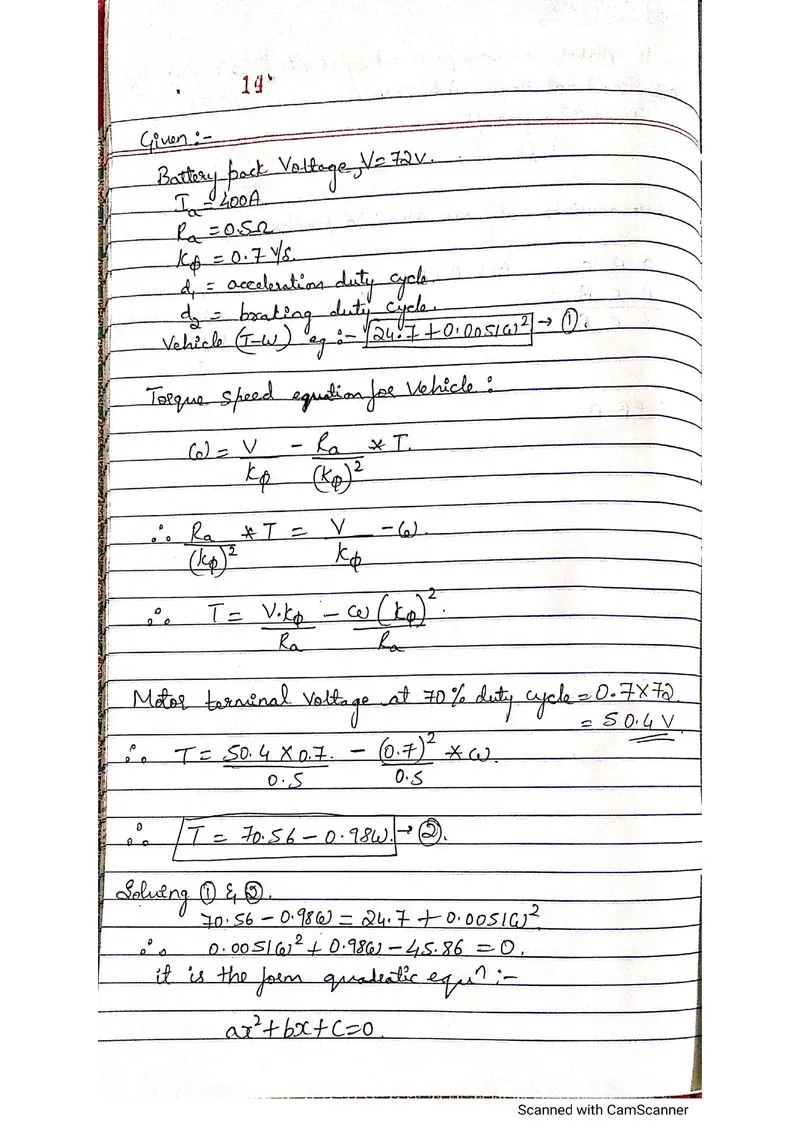
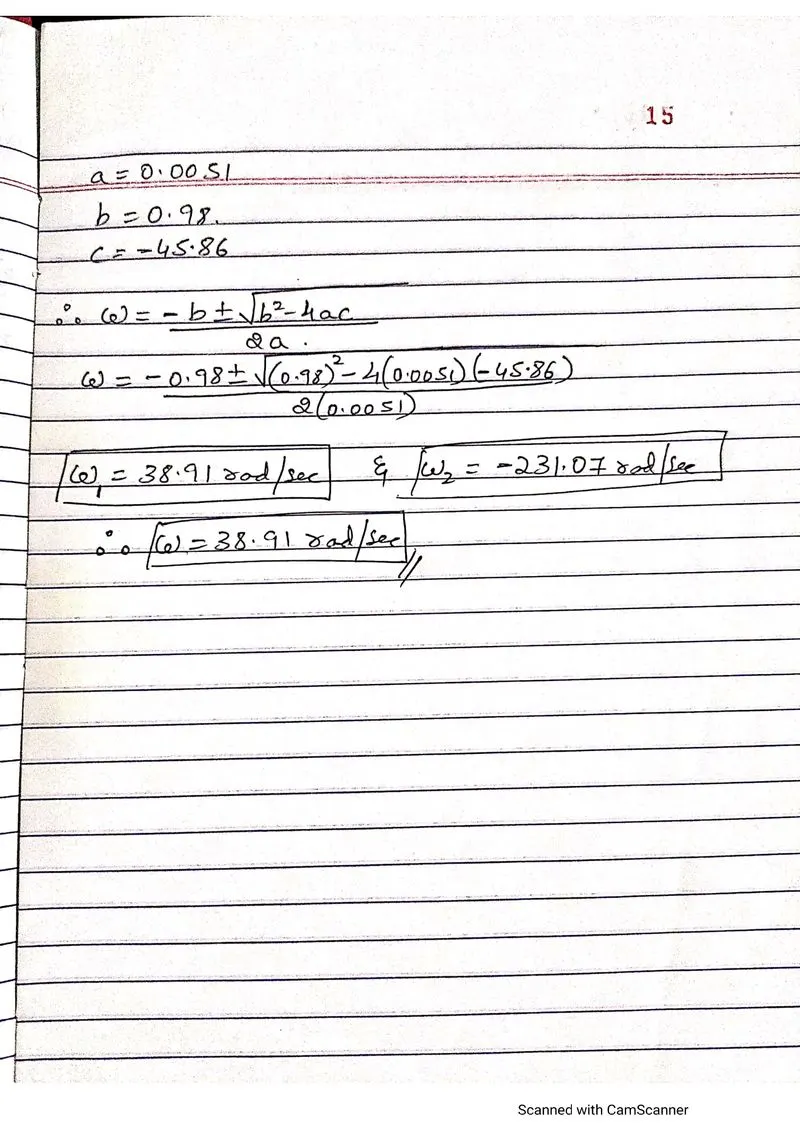
Therefore,the steady-state speed is 38.91 rad/sec.
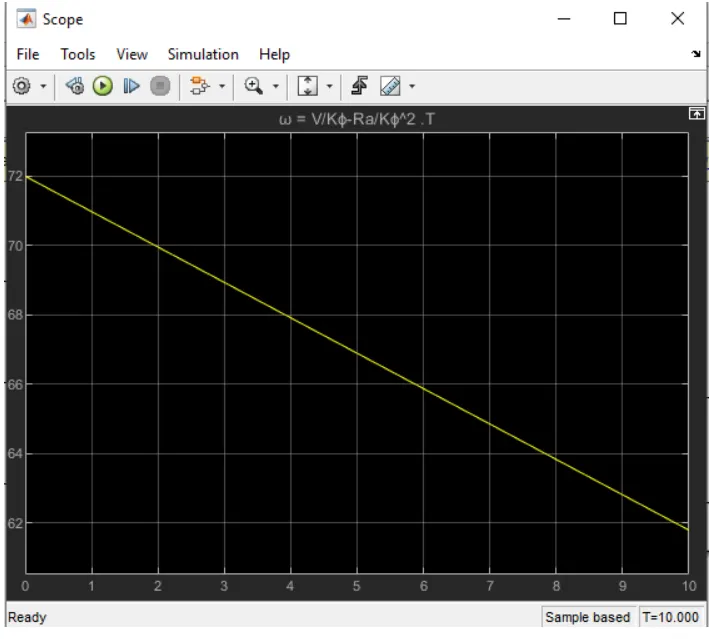
3>>Ans: Let us draw the mathematical model for the given equation and is as shown below:
(ωω= V/Kϕϕ -Ra/Kϕϕ^2 .T)
let V= 50.4 volts
Kϕ = 0.7
Ra = 0.5 ohm
and also let us consider torque as a linearly increasing signal. The mathematical model is as follows:
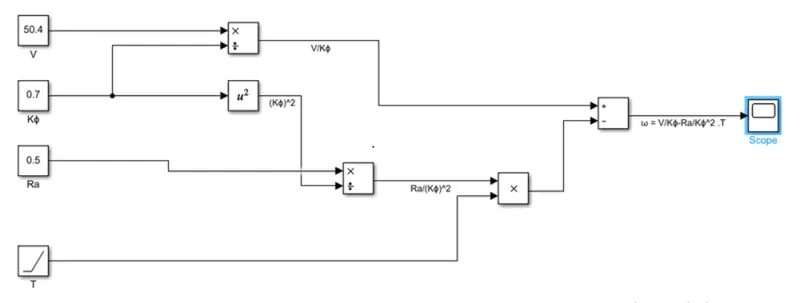
the result obtained from the above mathematical model is as follows:
4>>Ans: Wally Ripple is a long time proponent of electric vehicles. Prioir to joining Telsa Motor, he was as engineer at AeroVironment, where he helped develop the EV for General Motors and was featured in the documentary movies,Who Killed the Electric Car? Wally has also worked for the jet propolusion laboratoryon electric vehicle battery reasearch among other project in 1968, as a caltech undergate student , he built an electric car and won the Great Transcontinental Electric Car Race againt MIT. In the beginning the author describes the dominance of internal combustion engines in the world of automobile industry. He explains that all engines were simalr andit was to the user to select according to theri requirement. Next, the author highlits topics related to EV technology especially related to DC Brushless Mototr and Induction Motor. According to him, DC Brush Motor is replaced by either DC Brushless Motor or Induction Motor. Also, the Lead Acid Battery is replaced by lithium ion battery for EVs. He also quoted that there will be the future of both the technology DC Brushless Motor and Induction Motor depends upon their demands and users.
>>>DC Brushless Motor:
With Brushless machines, the rotor includes two or more permanent magnets that generates a DC magnetic filed. In turn this magnetic filed enters the stator core and interacts with currents flowing within the winding to produce a torque interaction between the rotor and stator.As the rotor rotates, it is necessary that the magnitude and the polarity of the stator currents be continously varied and in just the right way such that the torque remains constant and the conversion of electrical to mechanicalenergy is optimally efficient. The device that provides this current control is called adn inverter. WIthout it brushless motors are usless motors.The author also said that a brushless DC motor produces no starting torque when directly connected to fixed frequency utility power.They really need the aid of an inveter whose phase is maintained in step with the angular posotion of the rotor.
>>Advantage:
The main advantage of DC Brushless Motor is that there is low heat generation in the rotor and its cooling capacity is better as compared to induction motor. Also, peak point efficiency is generally higher for this device. The DC brushless drive can also operate at unity power factor, whereas the best power factor for the induction drive is about 85%.This means that the peak point energy efficiency for DC brushless drive will typically be a few percentage points higher than for an induction drive.
>>Disadvantage:
As Machnine size grows, the magnetic losses increase proportionately and part load efficiency drops. Permanent magnets are expensive and difficut to handle due to very large forces that comes into play when anything ferromagnetic gets close to them.
>>>Induction Motor:
The technology behind the induction motor is that it bascially uses a 3 phase induction motor which was invented by Nikolas Tesla sometimes before 1889. Unlike the DC brushless rotor, the induction rotor, the induction rotor has no magnets just stacked steel laminations with buried periphal conduction that form a shorted structure.Currents flowing in the stator windings produce a rotating magnetic filed that enters the rotor.In an Induction motor current interacts with the magnetic field generated by the stator to produce a force which is required for rotor torque.
When a 3phase induction motor is connectedd to utility type 3 phase power, torque is produced at the outset. The fact that induction motor are directly compatible with convetioanal utility power is the main reason for their success.
>>Advantage:
The induction motor does not havey any magnets and itn this the B field is adjustable. The motor has the ability to start under load and there is no need of an inverter. In an induction motor B filed is proprtionate to V/f. This technology is used to reduce the magnet losses andconduction losses due to which efficiency will reamin at maximum peak. This al, leads to increasing the performance, induction motor is very useful and efficient for high performab=nce.
>>Disadvantage:
An induction motors cannot operate from DC Voltage it always requires an AC Voltage . In an Induction Motor , the Shafy speed is proportionate to line frequency. Hence, when used with utility power are constant speed machines. When operated from utility power, they have limited starting torque and somewhat limites running peak torque capabilites when compared to DC type machines.
Inference:
Thus, in the end the autor couldnt choose which drive is better than the other but makes its clear that DC Brushless motor drives will likely continue to dominante in the Hybrid and upcoming Plug in Hybrid markets and induction motor drives will likely maintain dominance for the high performance pure electric.
Conclusion:
> We have discussed and studied the different types of power conveter circuits employed in electric and hybrid electric vehicles.
> EV Steady state speed of an EV Drivetrain was deterimned with the given input conditions
> The Mathematical model for DC motor is developed
> Lastly, we have studied a blog on the topic " Induction versus brushless motors by 'Wally Rippel', ' Nikola Telsa' and explained in brief about the authors perspective".