Week-6 Challenge: EV Drivetrain
Aim:
1. Which types of power converter circuits are employed in electric and hybrid electric vehicle?
electric vehicles:
All-electric vehicles (EVs), also referred to as battery electric vehicles, use a battery pack to store the electrical energy that powers the motor. EV batteries are charged by plugging the vehicle in to an electric power source. Although electricity production may contribute to air pollution, the U.S. Environmental Protection Agency categorizes all-electric vehicles as zero-emission vehicles because they produce no direct exhaust or tailpipe emissions.
DC/DC converter: This device converts higher-voltage DC power from the traction battery pack to the lower-voltage DC power needed to run vehicle accessories and recharge the auxiliary battery.
Battery (all-electric auxiliary): In an electric drive vehicle, the auxiliary battery provides electricity to power vehicle accessories.
Charge port: The charge port allows the vehicle to connect to an external power supply in order to charge the traction battery pack.
Electric traction motor: Using power from the traction battery pack, this motor drives the vehicle's wheels. Some vehicles use motor generators that perform both the drive and regeneration functions.
Hybrid electric vehicles are powered by an internal combustion engine and an electric motor, which uses energy stored in batteries. A hybrid electric vehicle cannot be plugged in to charge the battery. Instead, the battery is charged through regenerative braking and by the internal combustion engine. The extra power provided by the electric motor can potentially allow for a smaller engine. The battery can also power auxiliary loads and reduce engine idling when stopped. Together, these features result in better fuel economy without sacrificing performance.
2. An Electric Vehicle's powertrain with 72V battery pack in shown in the diagram below. The duty ratio for acceleration operation is 'd1' and for the braking operation the duty ratio is 'd2'.
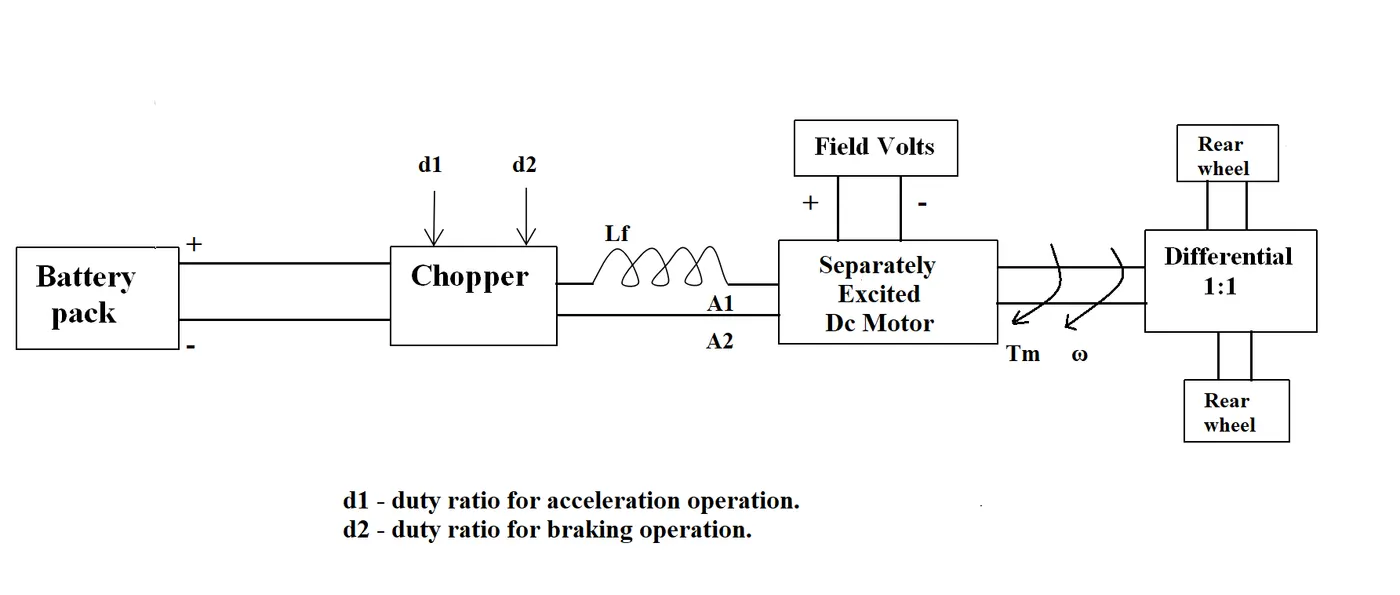
The other parameters of the electric vehicle is given below,
Motor and Controller Parameters:
Rated Armature voltage= 72 V
Rated armature current= 400 A
Ra= 0.5Ω, KΦ= 0.7 Volt second
Chopper Switching frequency= 400 Hz
The vehicle speed-torque characteristics are given by the below equation

What is EV steady state speed if duty cycle is 70%?
solution:
vehicle output voltage is given by Vv=battrery voltage*duty cycle
`72*0.70=49v`
now equation `Tv=(Vw-w.ktheta)ktheta/Ra`
`Tv=(50.04-0.7.w)0.7/0.5`
`Tv=70.56-0.98.w`
`Tv=24.7+0.0051.w^2`
solving these two equations
`70.56-0.98w=24.7+0.0051w^2`
`0.0051w^2+0.098w-46.94=0`
we get quadratic form of two values which are `w=38.85rad/s and w=-230.95rad/s`
so steady state vehicle speed is 38.85rad/sec
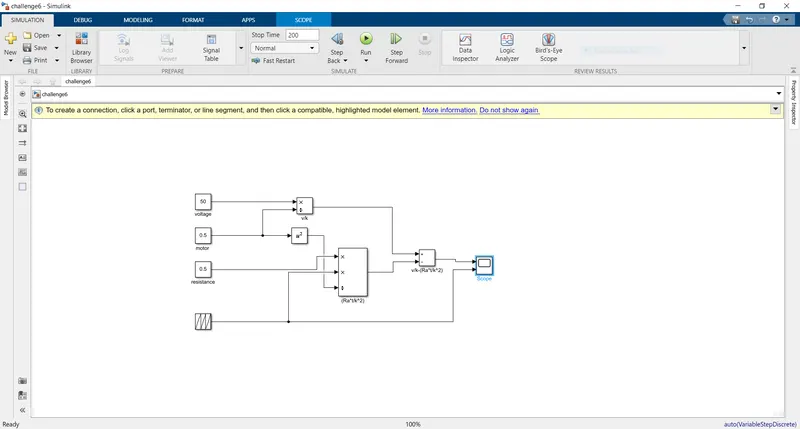
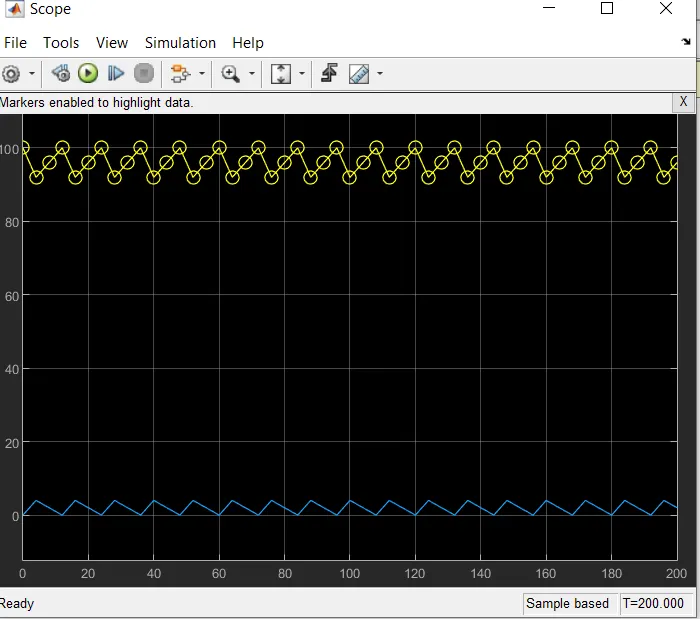
3. Develop a mathematical model of a DC Motor for the below equation using Simulink.
ωω= V/Kϕϕ -Ra/Kϕϕ^2 .T
(4):
from the author sayings the conclusion at the time of 90s ev tech is not clearly taken like today's gas vechiles.
and describes about induction and brushless motors
in the induction motor invertor is not needed whereas in brushless inverter is needed but in the run induction motor requires ac current so for it has limitations so inveter is required for feedback signals
in the real-world ev and hybrid both are brushless drive powered,little difference in code,dc brushless produce low heat and high efficiency figures.
induction motors will high powered with low efficiency lesser than dc brushless
but dc brushless can dominate in real world for induction motors but for performance mode for super sport cars induction motor is considered.so there should be a new technology