Week 5 Sphere pressing on a plate
Aim
a) To perform static structural analysis of sphere pressing a flat plate
b) To press the given sphere on the plate by the required depth
c) To ensure that the plate will be deformed plastically
Procedure
1. Imparting the given model
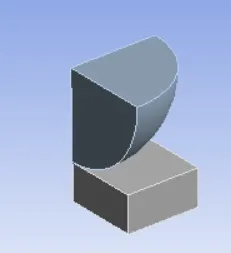
First of all, the given model has been imparted in ANSYS Workbench and static structural analysis has been selected. The given geometry is as shown below:
2. Material Data
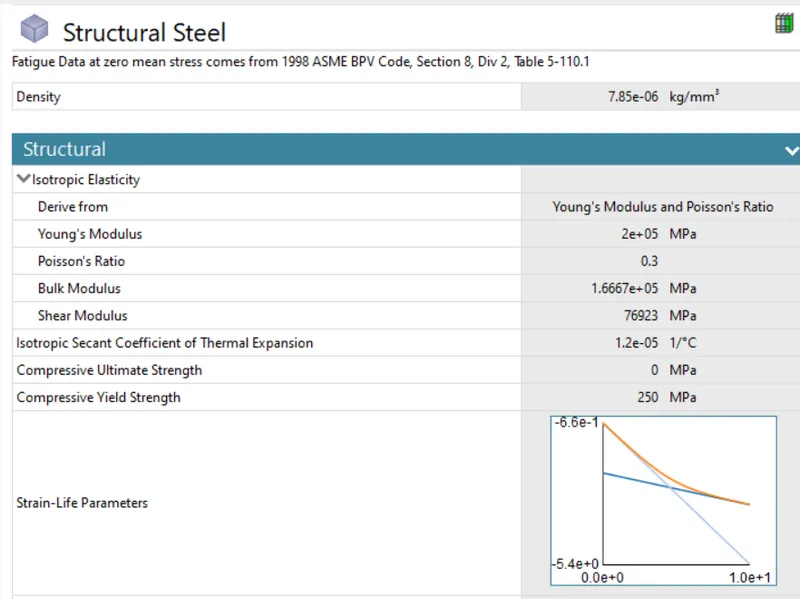
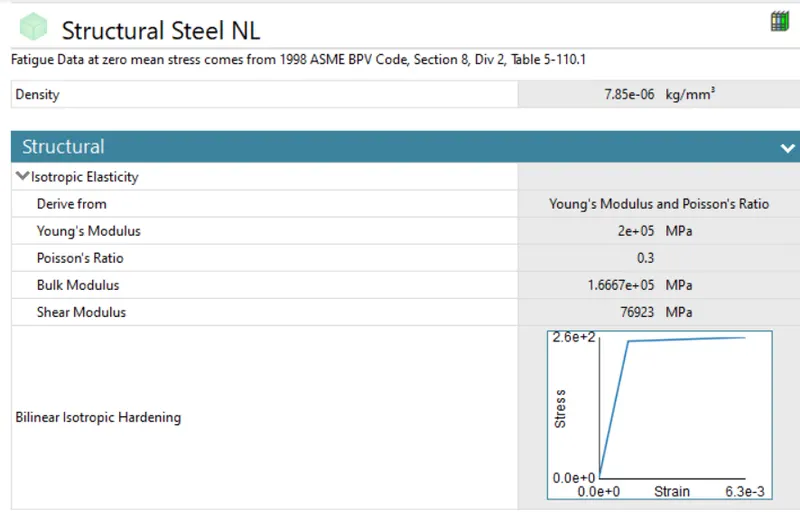
The material used for this static structural analysis was Structural stell and structural steel non-linear. The properties of these two material are as sown below:
3. Symmetry
3.1 Normal to X axis
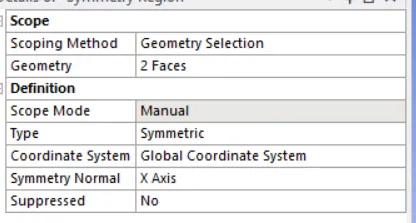
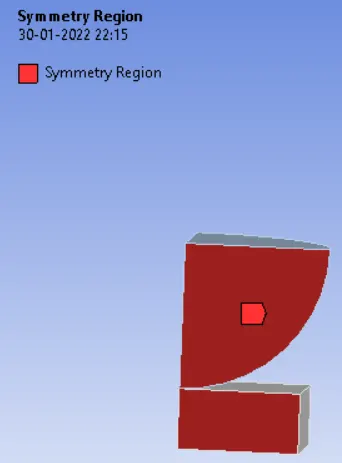
As shown above, the two surfaces were selected for symmetry and normal direction was elected as X axis.
3.2 Normal to Z axis
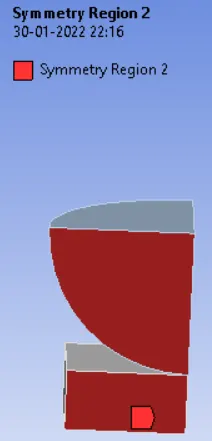
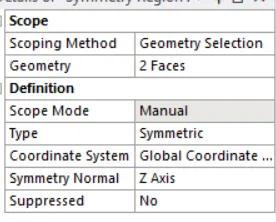
Like above another symmetry was given normal to Z axis by selecting two faces of model.
4. Connections
Frictional Contact:
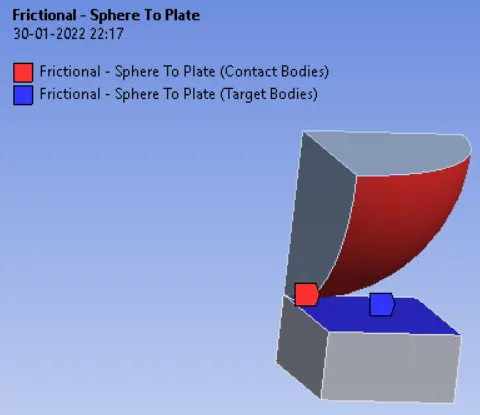
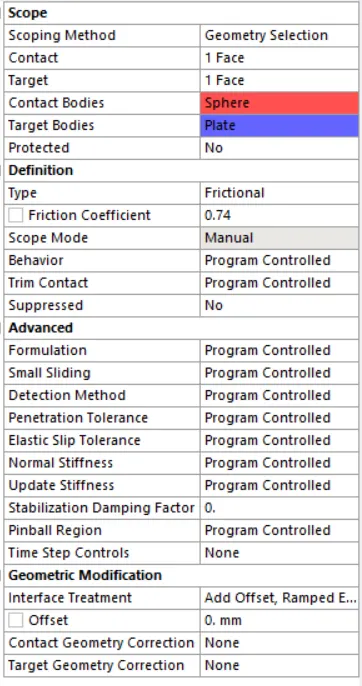
As shown above, frictional contact was defined with coefficient of friction value as 0.74 ( defined by standard data). Rest of the settings were remained as program controlled. Add offset ramped effect was selected as interface treatment.
5. Mesh Details
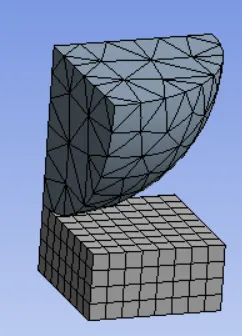
The mesh was selected as default settings and nothing has been changed as manually.
6. Analysis Settings
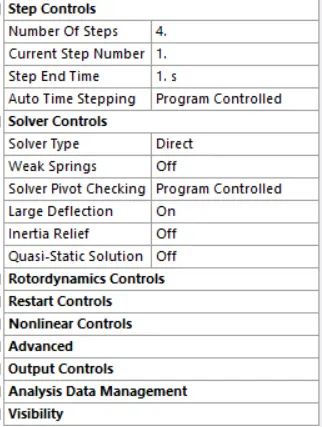
As shown above, the analysis was done using four steps and the time stepping was remained as program controlled. Large deflection was on to allow sphere to penetrate in the plate.
7. Load Details
Load was given in the form of displacement to the sphere and the load details are given below:
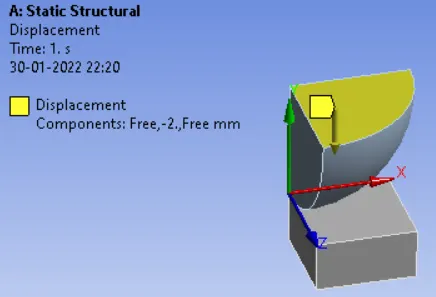

As shown in the load table, total displacement given to the sphere was 4 mm and to observe whether the deformation is plastic or elastic the sphere was retained ite original position.
8. Results
8.1 Equivalent Stress
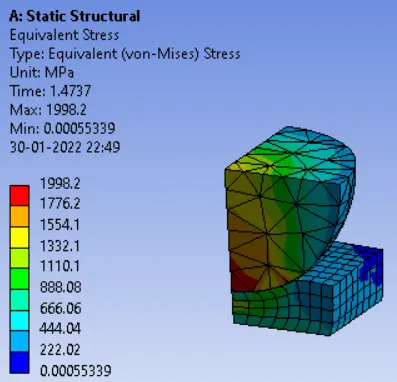
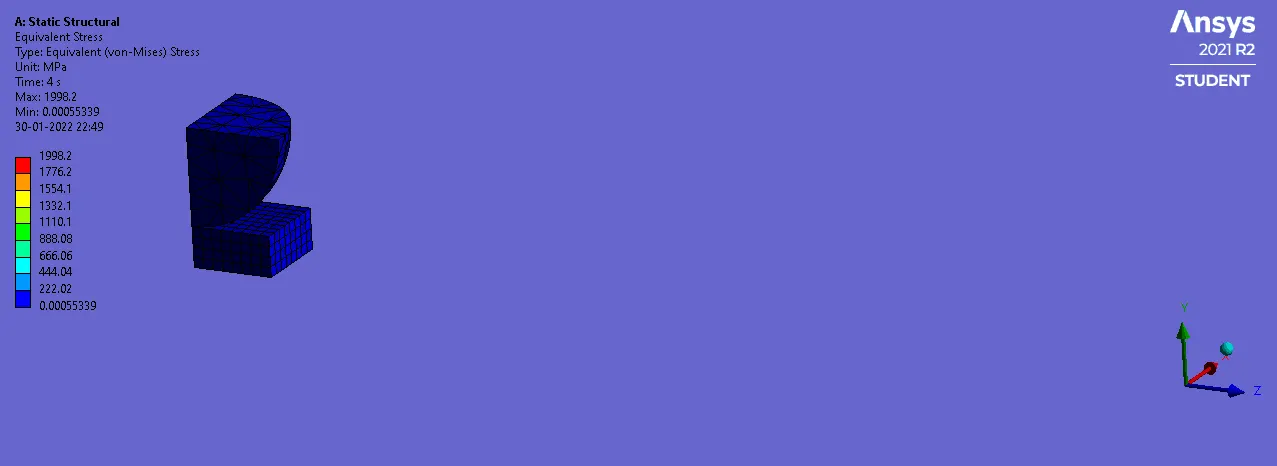
Directional deformation of plate
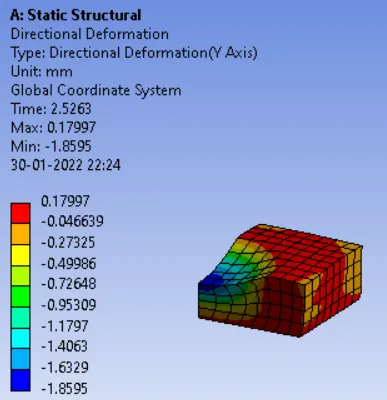
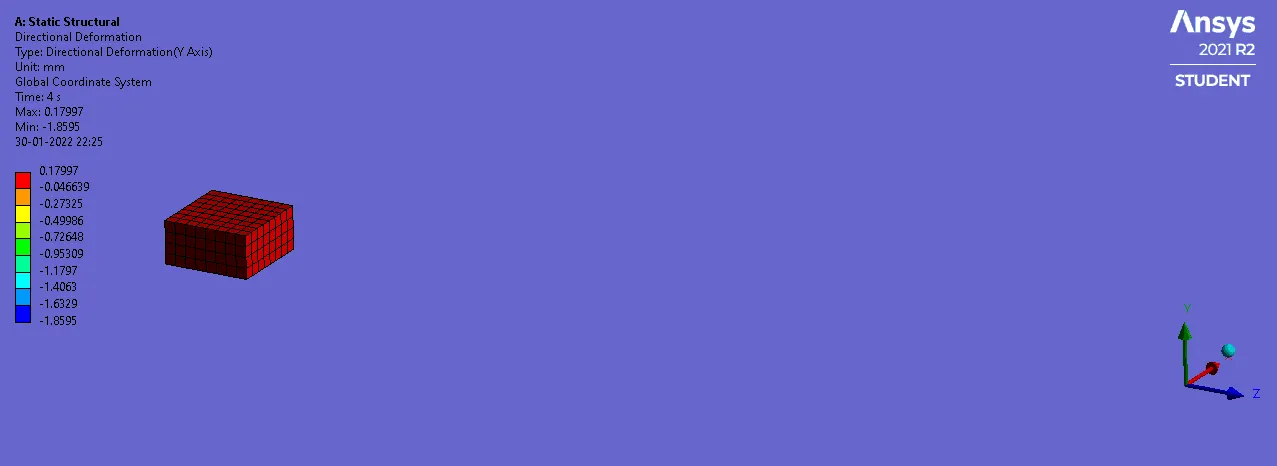
9. Conclusions
a) The maximum stress developed was 1998.2 MPa.
b) The plate was deformed plastically because as we released the sphere from the surface of plate, the plate has not recovered its original shape hence it has been proved.