Sphere pressing on a plate
OBJECTIVE:
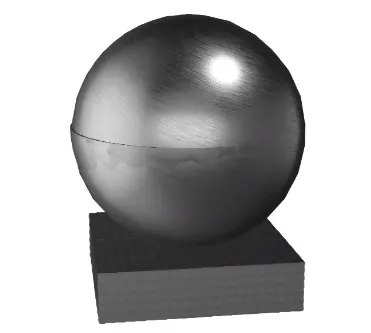
To perform a static structural analysis of sphere pressing on a plate. Then evaluate the results, to show the plastic deformation of the plate.
SOLUTION:
STEP 1) Part Design
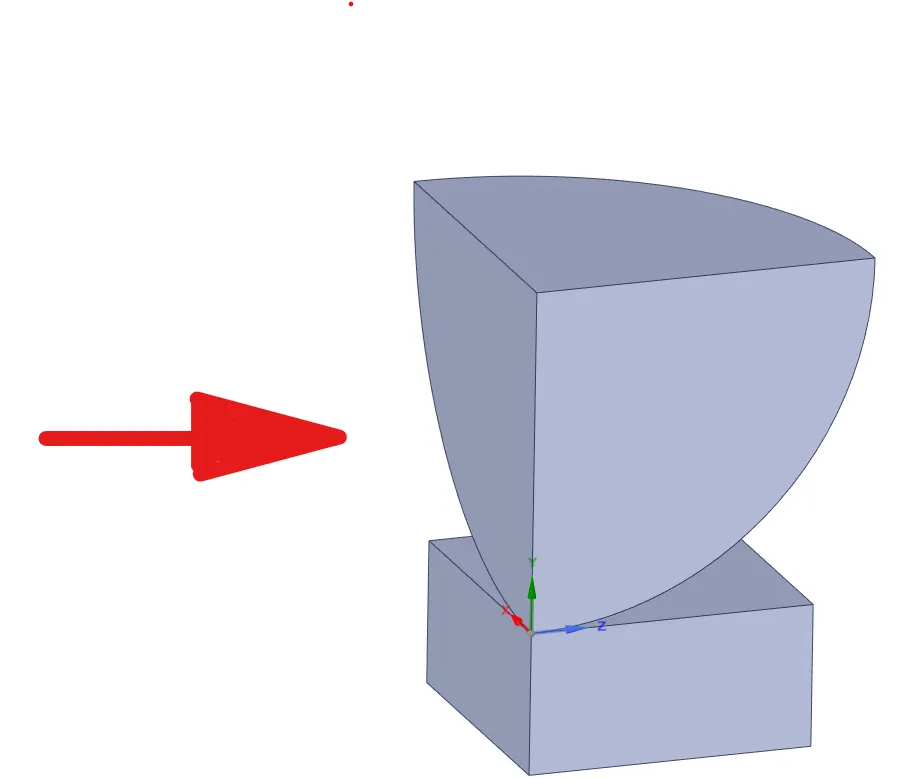
The model with the sphere and the plate was given. As the model is symmetric about two axis, the analysis can be performed on one quarter of the setup. This will led to reduce in computation time. So, in the final model only consists of one quarter of sphere and one fourth of the base plate.

STEP 2) Material
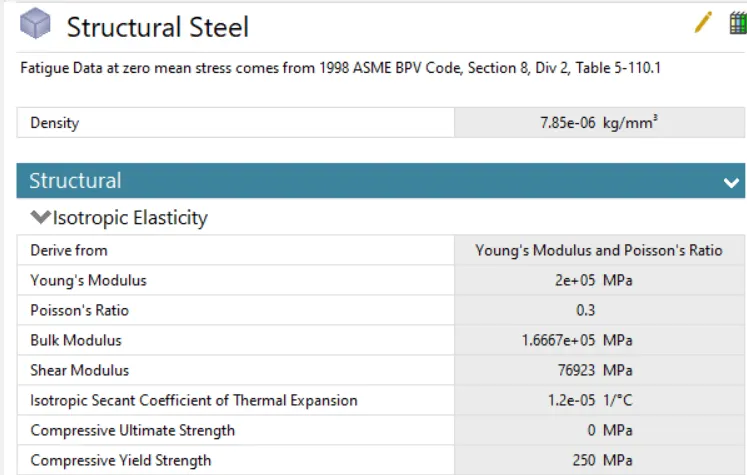
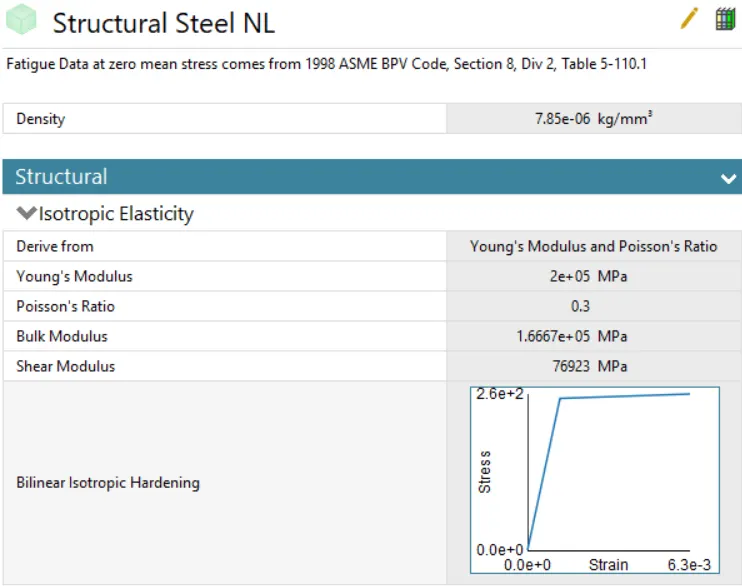
In this stimulation structural steel is assigned to both the plate and the sphere but plate material also have non-linear behavior. The properties of the material is given below.
STEP 3) Symmetry
Since the model consist of only one-fourth of the full model, so we have to have to define symmetric relation along the two axis.
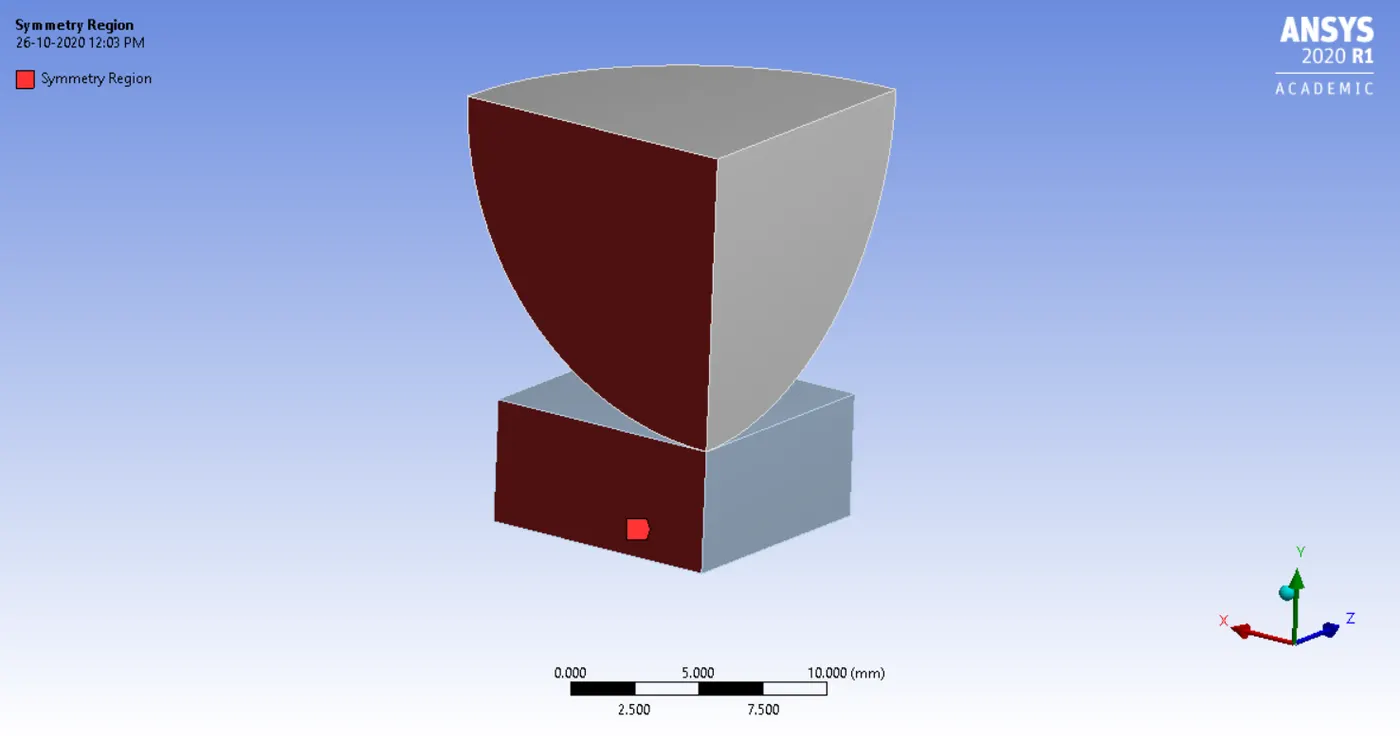
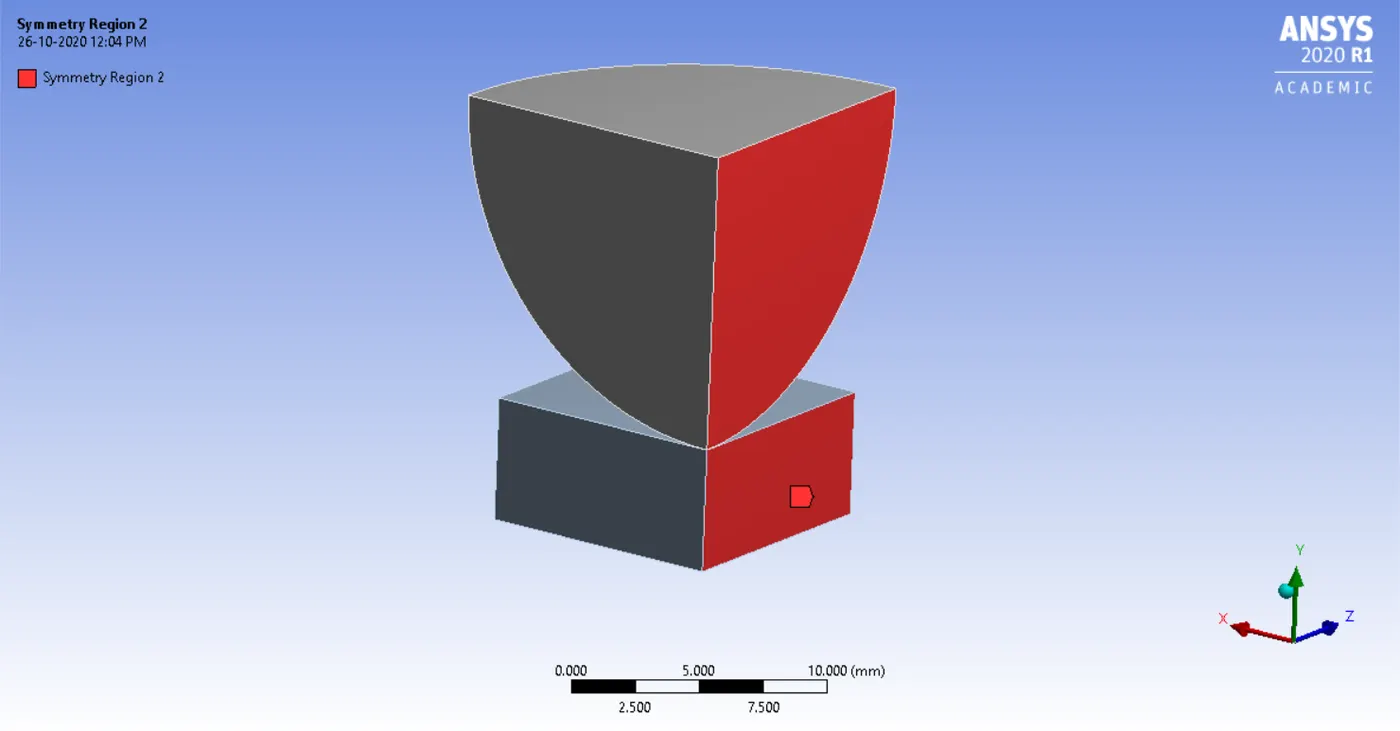

STEP 4) Connections
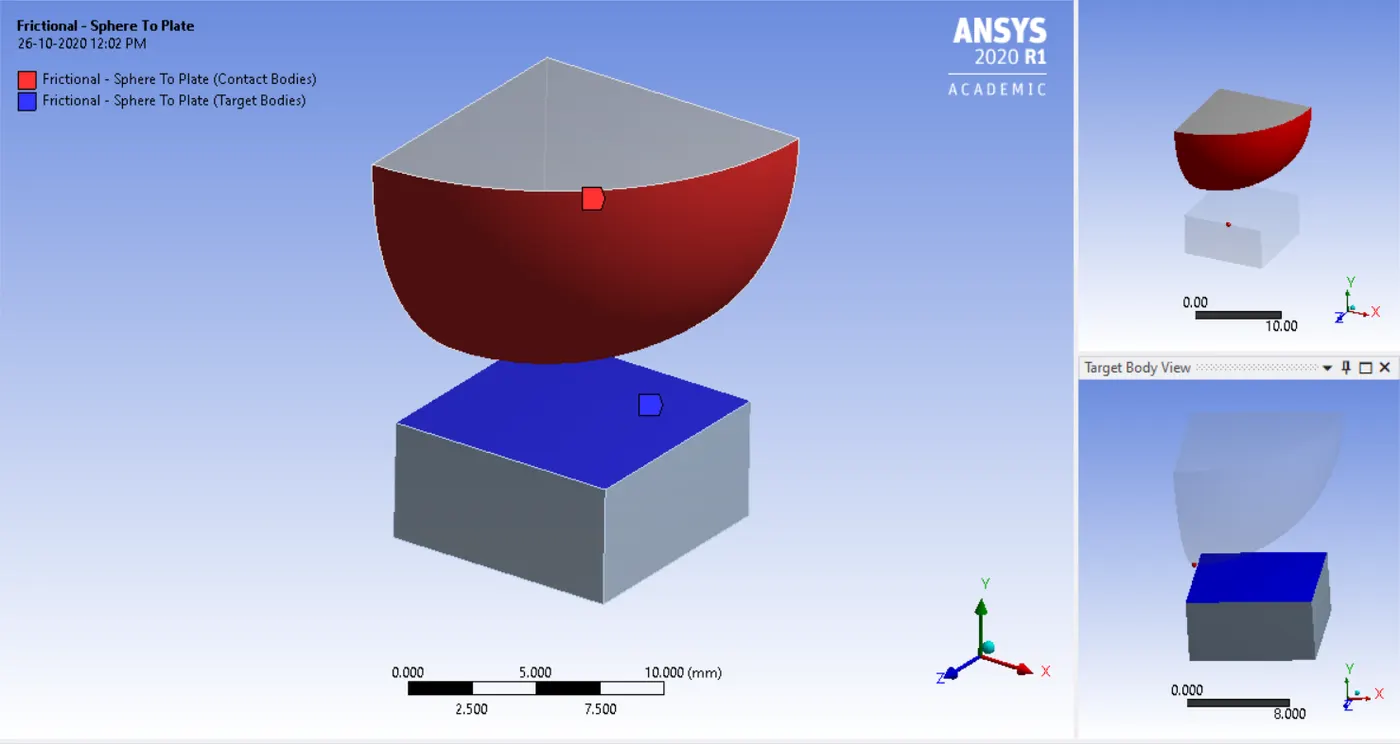
To carry the stimulation, the outer surface of the sphere was defined as the contact body and the top surface of the plate as target body. Contact type is frictional with coefficient of friction as 0.74. The coefficient of friction was found on roymech.org website.

STEP 5) Meshing
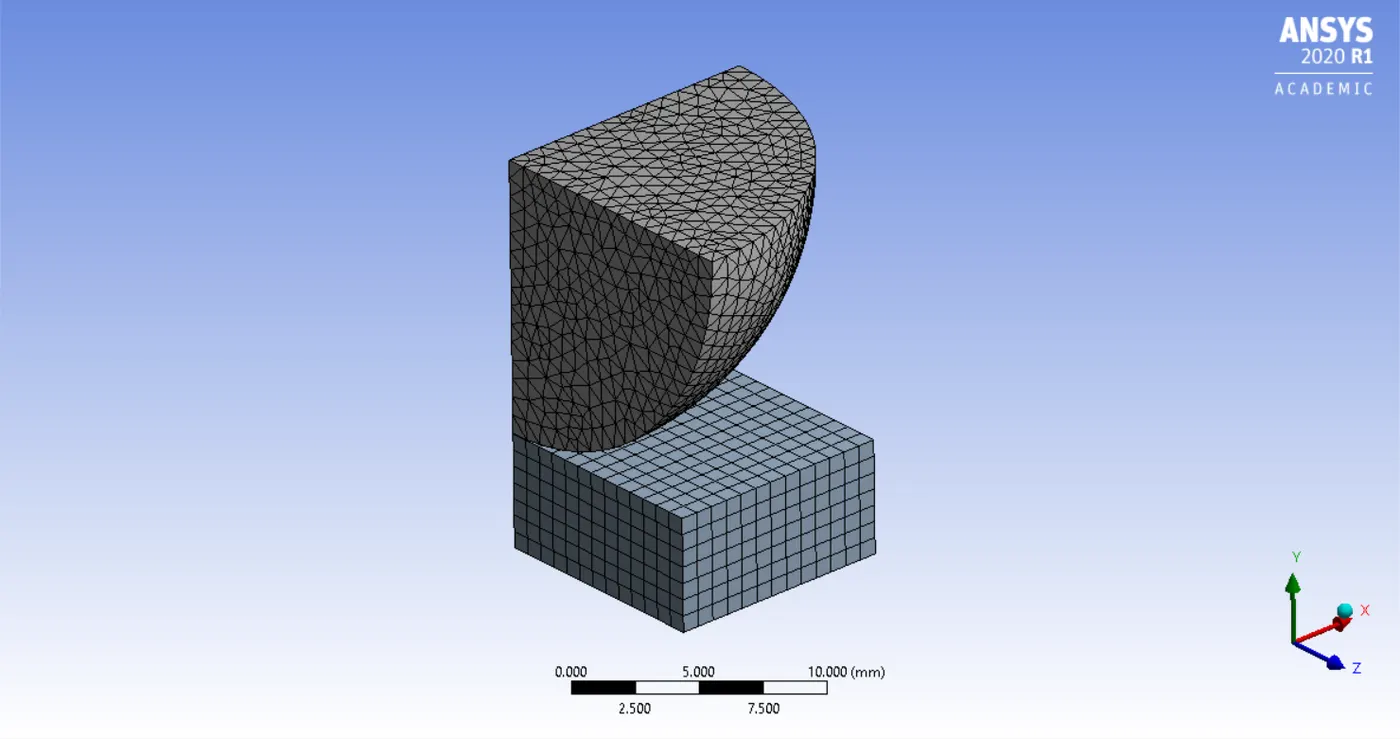
The model was meshed using ANSYS mesher. Both the sphere and plate were assign mesh size of 0.8mm.

STEP 6) Analysis settings
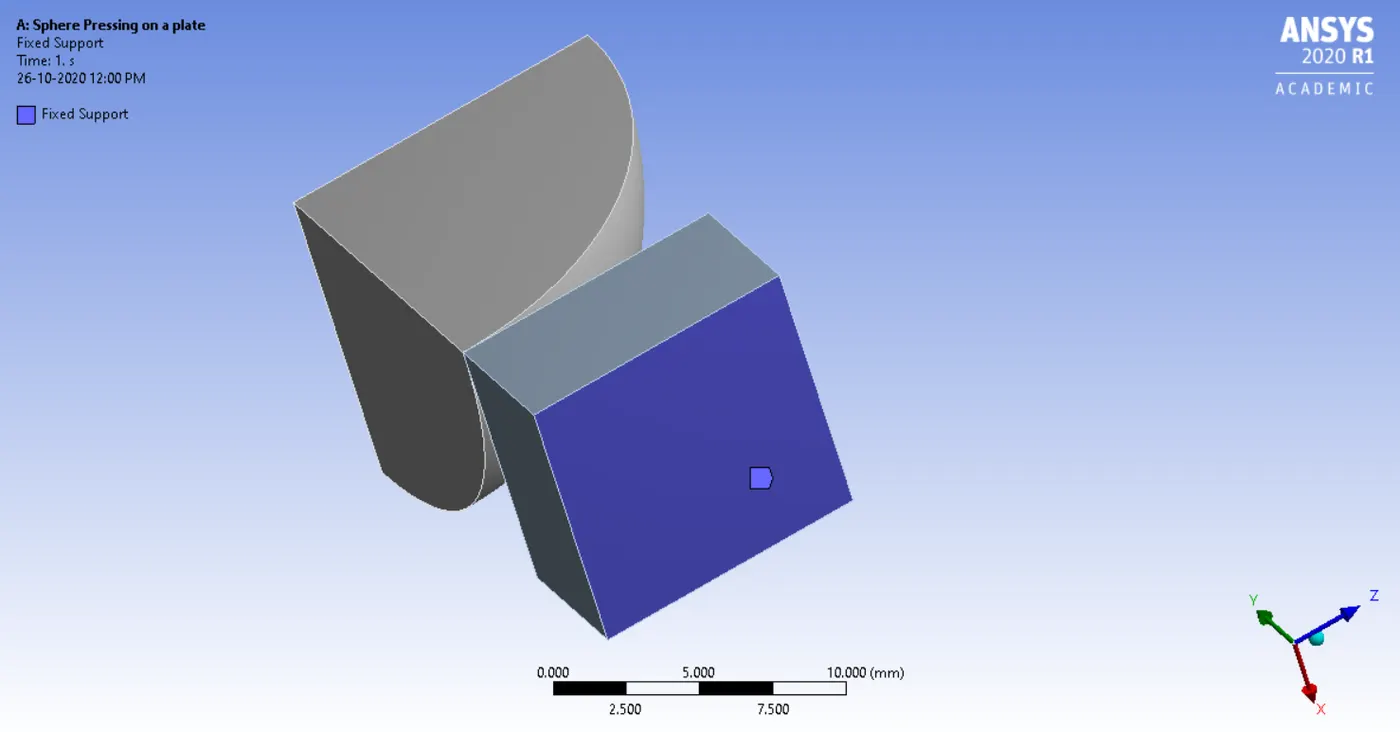
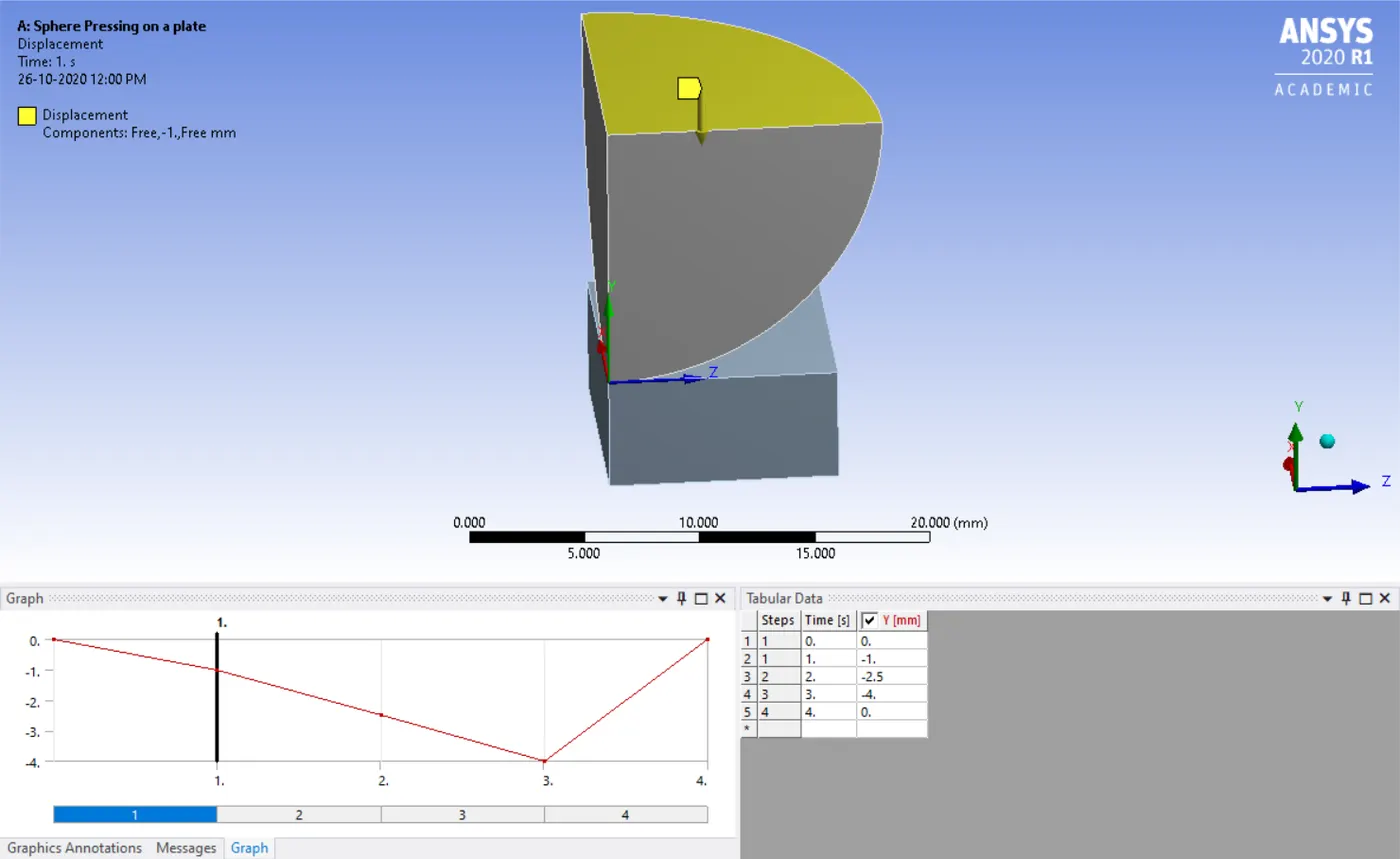
The analysis was carried out in 4 steps with solver type as direct and large deflection turned on. In analysis settings, the base plate is fixed by giving fixed support condition to the bottom of the plate. The sphere is given displacement in downward y direction and was retracted back to its original position.

STEP 7) Result
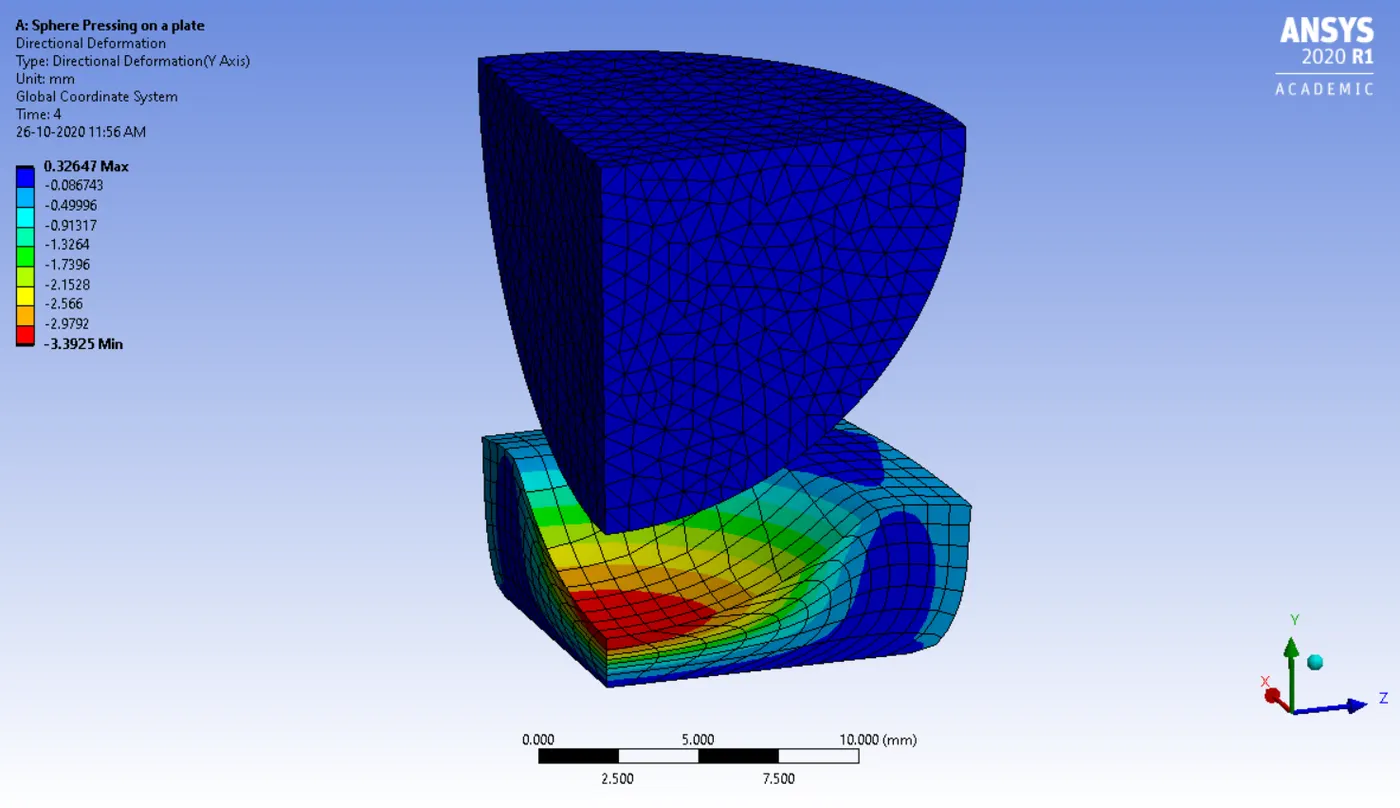
- Directional Deformation along Y axis

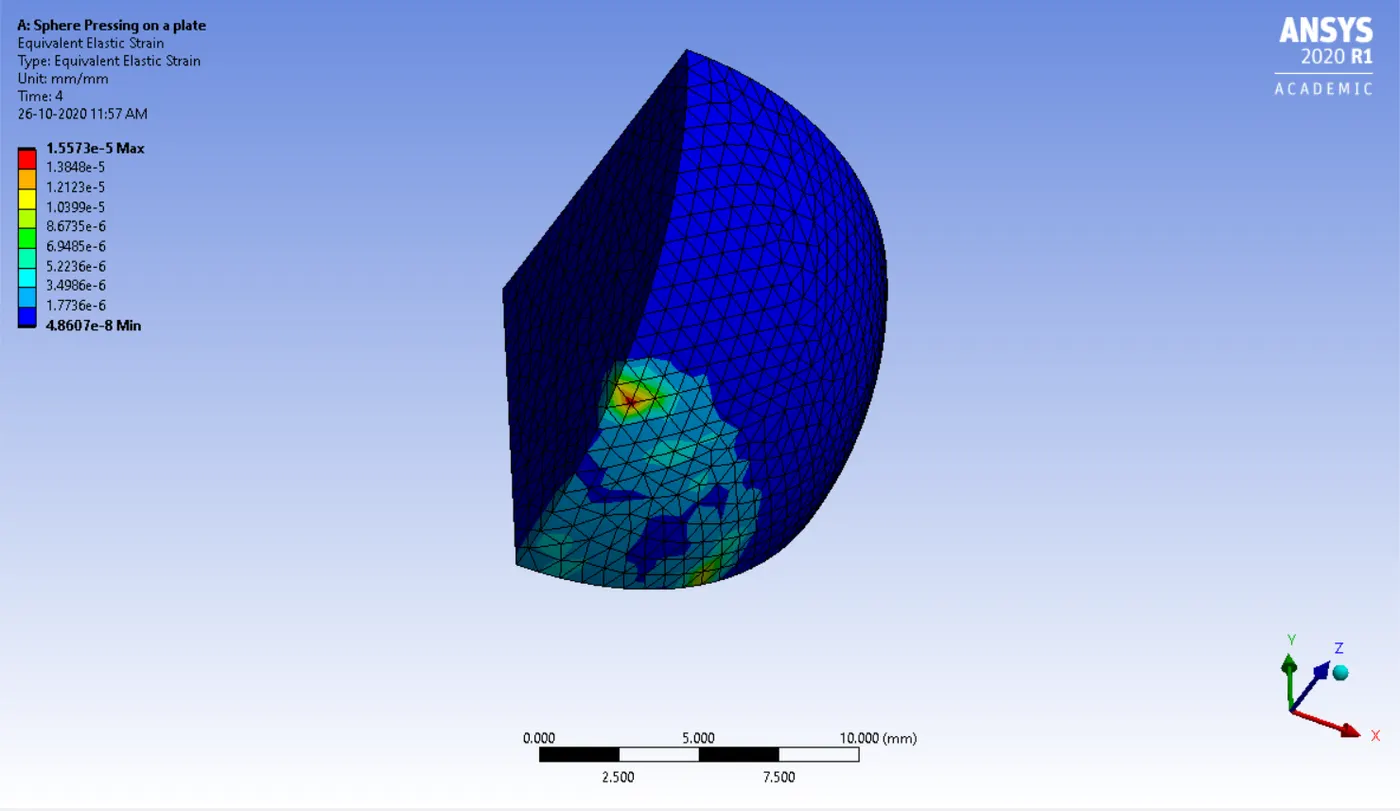
- Equivalent elastic strain on the plate
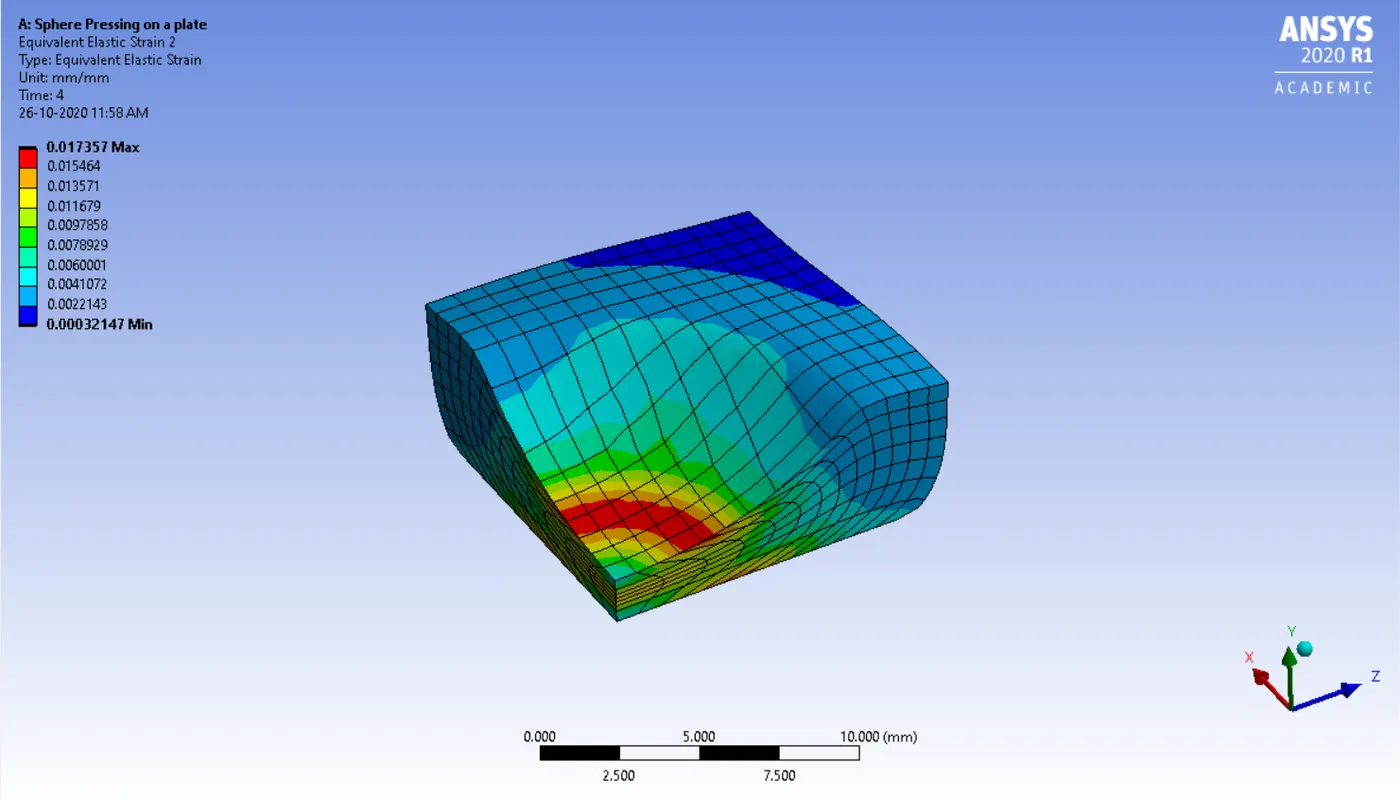

- Equivalent elastic strain on the sphere

|
Max |
|
|
Directional Deformation along Y axis |
-3.3925mm |
|
Equivalent elastic strain on the plate |
1.5573e-5 |
|
Equivalent elastic strain on the sphere |
0.017357 |
CONCLUSION:
From the stimulation, we get above results. From the above results it can be seen that the sphere moves down by 4mm, but the max deformation developed in the plate is 3.3925mm. This shows that the plate has regained some deformation, which is due to the elastic behavior. The permanent deformation of 3.3925mm is due to the plastic deformation.
"Analysis Files are attached"