Week 5 Sphere pressing on a plate
Sphere pressing on a plate
Objective:
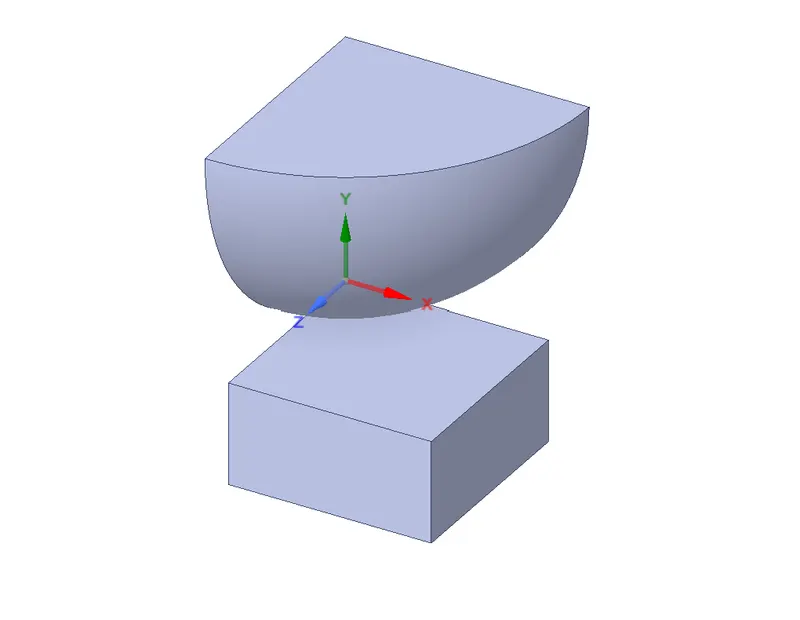
To perform the analysis, simulate a sphere pressing on a plate. Using structural steel for the sphere and structural steel NL for the plate. Using a sphere to press the plate by 4mm downwards also to capture the plastic deformation in the plate.
Geometry File:
Properties of the material used:
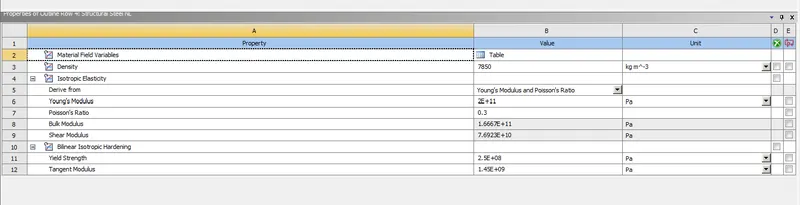
Properties of material used for sphere
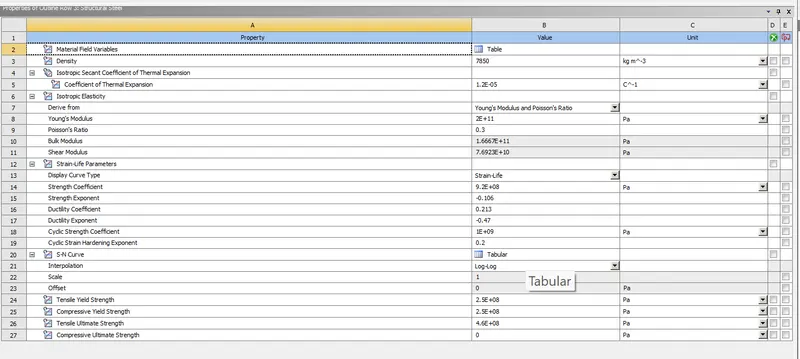
Figure 2 Properties of material used for Plate
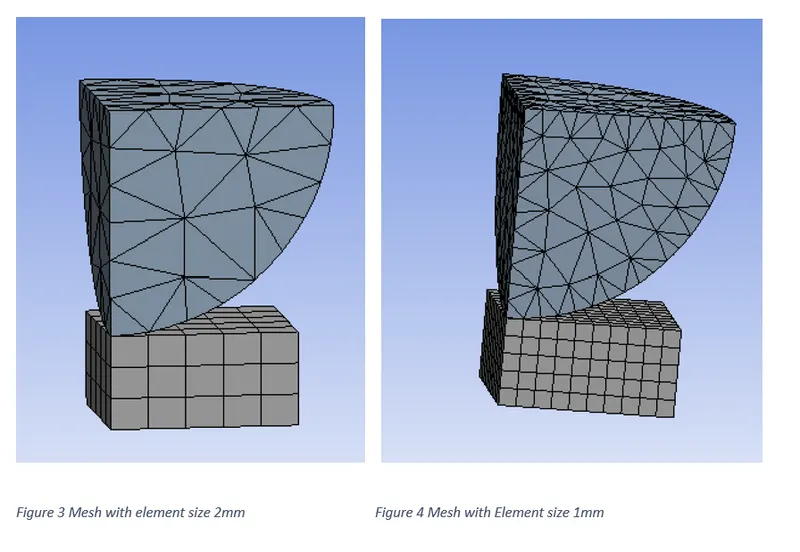
Mesh file:
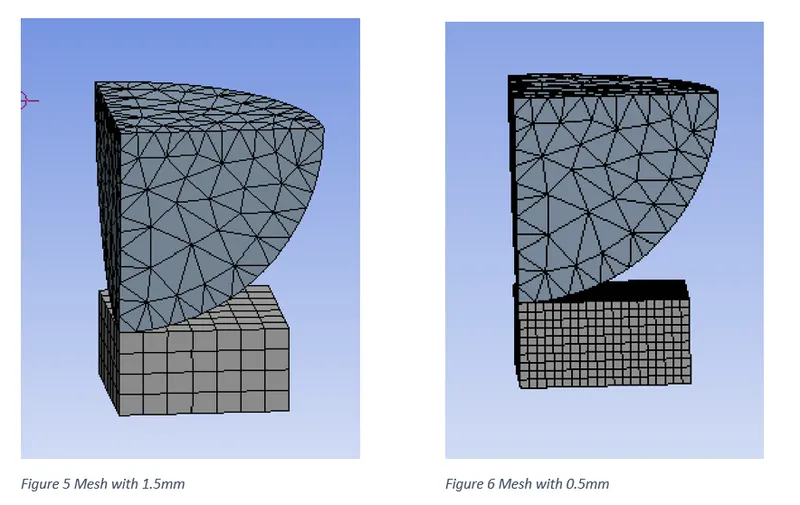
Performed a grid dependency test with 2mm and 1mm for a better evaluation of the results.
Also as our main interest is to find the deformations in the plate alone in this simulation considered the Tetrahedrons method.
Contacts setup:
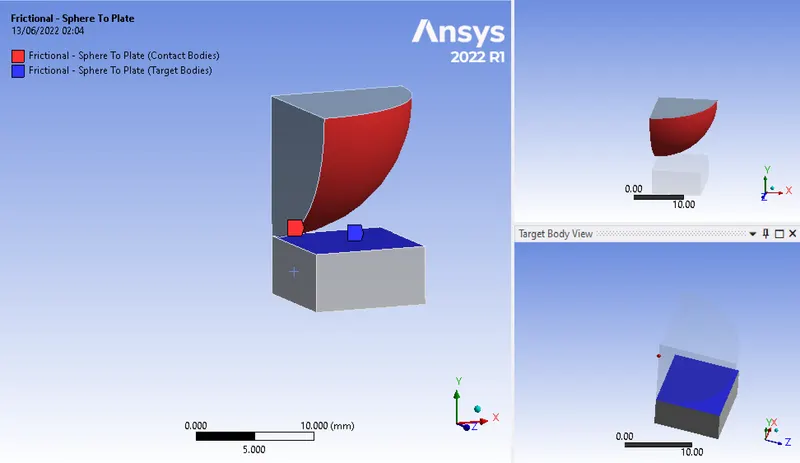
Contacts at the interface were set up for a sphere and a plate with a frictional coefficient of 0.74 and the rest are left with program control.
Frictional contact
Symmetric Regions:
Analysis setup:
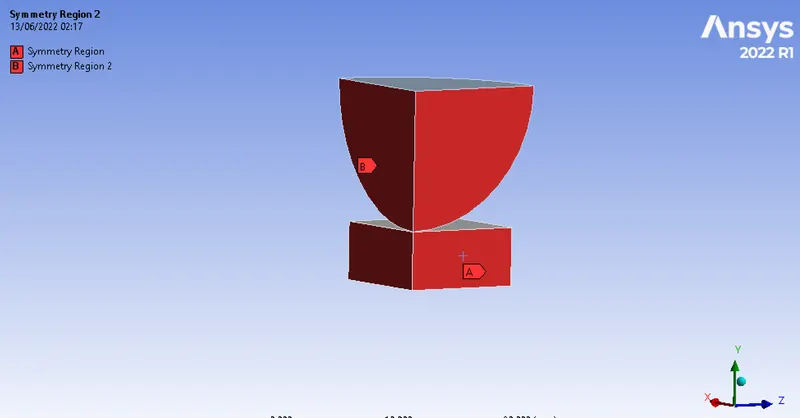
As we are considering the influence of the sphere on the plate in this simulation considering the displacement of the sphere in the Y direction and as the target is a plate, we fixed the plate on the bottom to arrest the motion of the plate in other direction while evaluating on the other face.
To evaluate better in this case, I considered symmetric regions as one face pointing to X-axis and the other face pointing to Z-axis.
To give displacement along Y-axis for the sphere considered 5 steps and allotted the values in tabular data.
Simulation results:
Total deformation: 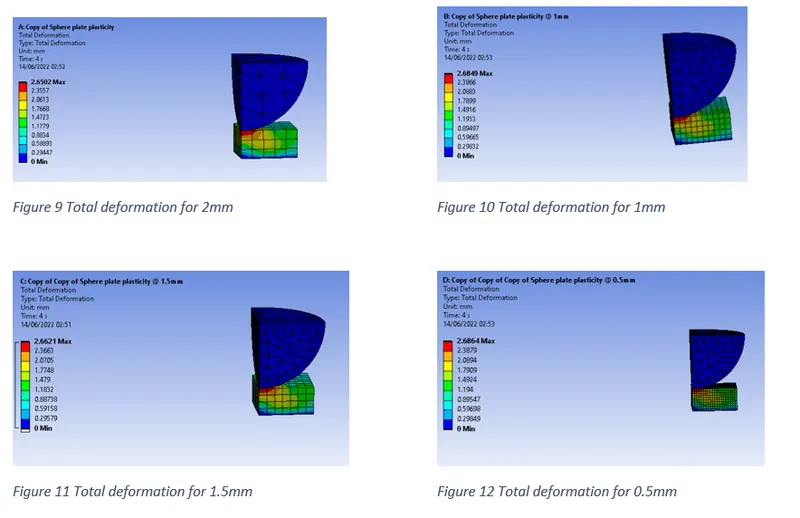
Directional Deformation 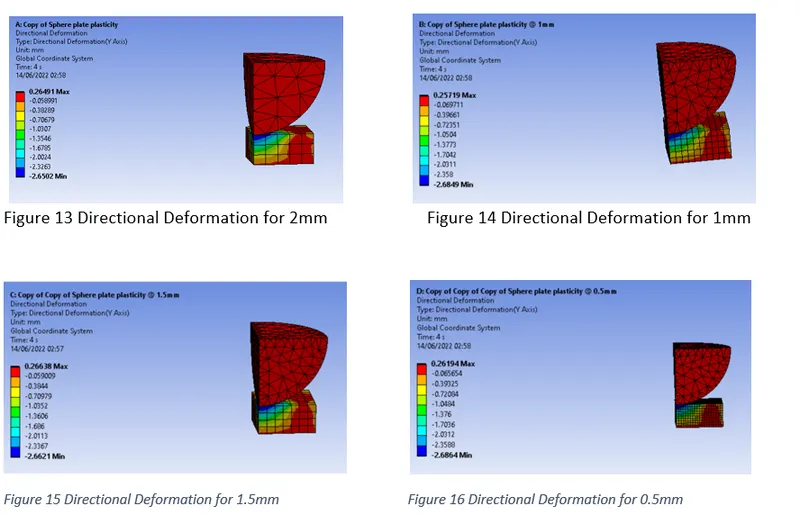
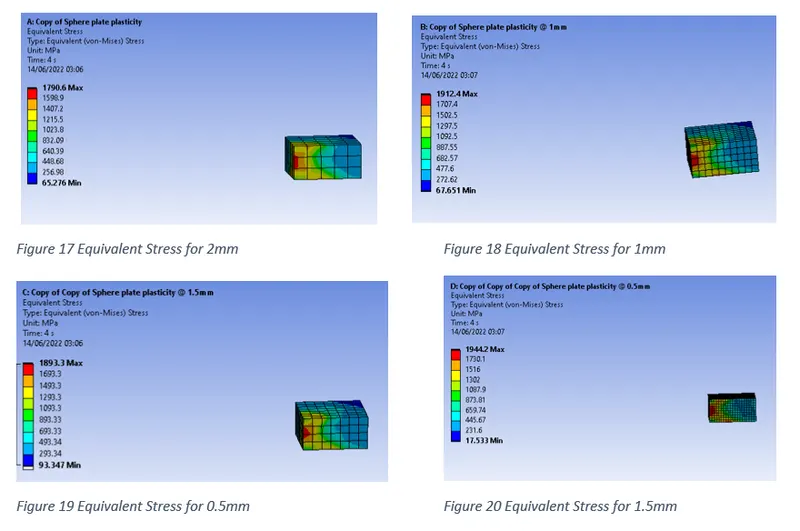
Equivalent Stress:
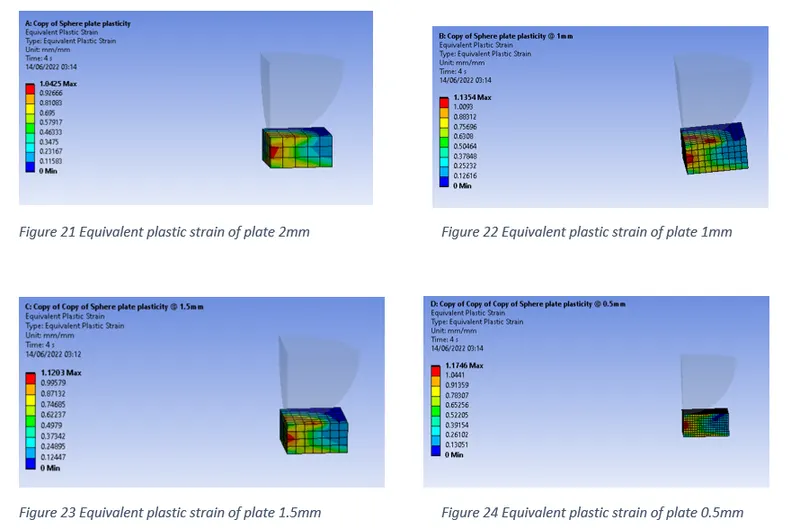
Equivalent Plastic Strain:
Comparison Table:
|
Mesh Element Size |
Maximum |
||||
|
Total Deformation |
Equivalent Stress |
Equivalent Strain (mm) |
Directional Deformation (mm) |
Equivalent Plastic strain (mm) |
|
|
2 mm |
2.6502 mm |
1790.6 MPa |
8.9576e-003 |
0.26491 |
1.0425 |
|
1.5 mm |
2.6621 mm |
1893.3 MPa |
9.4673e-003 |
0.26638 |
1.1203 |
|
1 mm |
2.6849 mm |
1912.4 MPa |
9.5622e-003 |
0.25719 |
1.1354 |
|
0.5 mm |
2.6864 mm |
1944.2 MPa |
9.7208e-003 |
0.26194 |
1.1746 |
Conclusion:
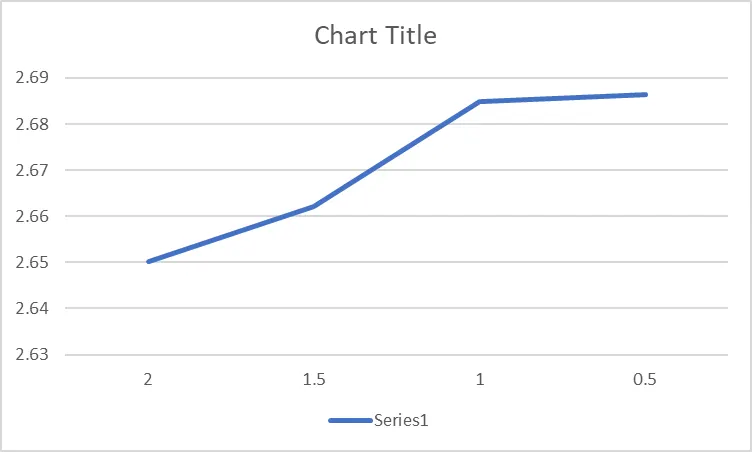
From the above table and graph we can conclude that with the element size of 1mm we attained better reuslts of Equivalent stress,Total deformation and Equivalent strain.
From the above pictures we can see that the deformation has taken place by 4mm and as it is not regained back to its original shape we can conclude that is a plastic deformation.