Week- 5 - Solid meshing
ANSA JULY BATCH 1
AIM:-
solid meshing for the given rear view mirror model .
OBJECTIVE :-
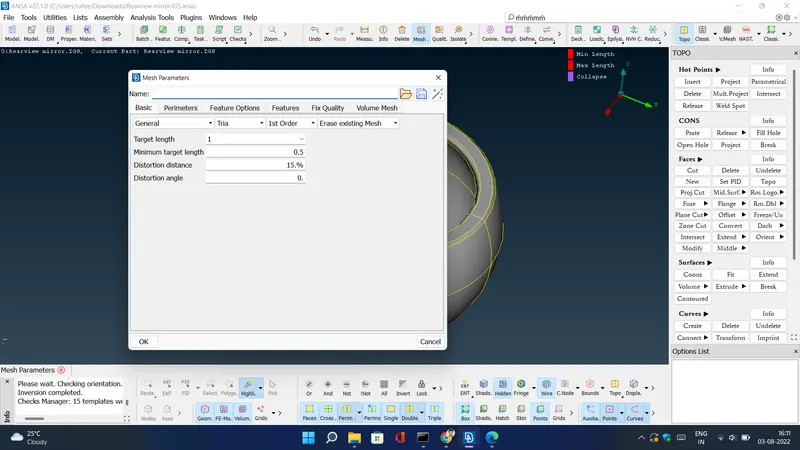
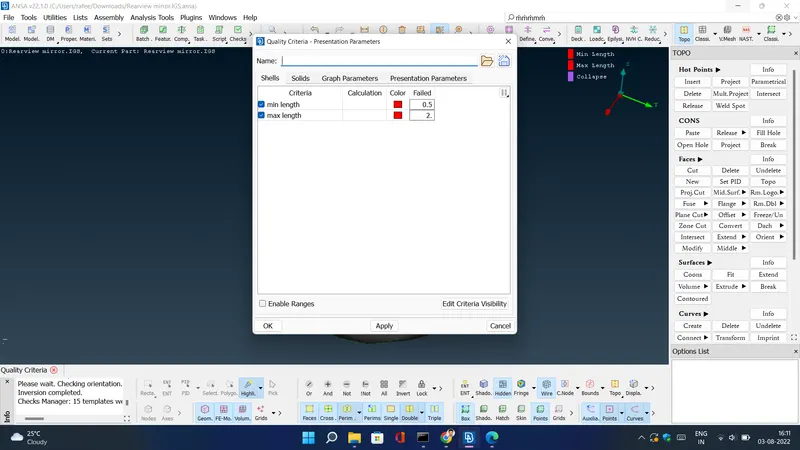
For the given Rear view mirror component, check for the geometrical errors and mesh the Surfaces with the given 2D element Quality criterias given below.
|
S.No |
Quality Criteria |
Value |
|
1 |
Target/Average length |
1 |
|
2 |
Minimum Length |
0.5 |
|
3 |
Maximum Length |
2 |
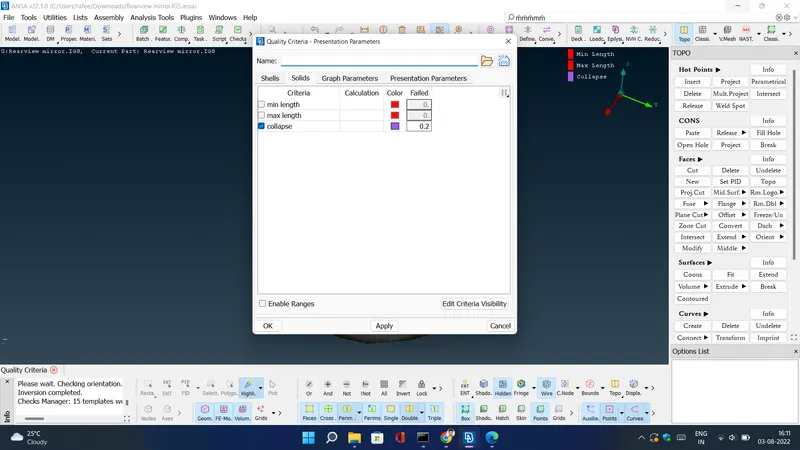
Use tetra elements to mesh the Volumes defined in the model and check for the below quality after Volume meshing.
|
S.No |
Quality Criteria |
Value |
|
1 |
Tet collapse |
0.2 |
THEORY :-
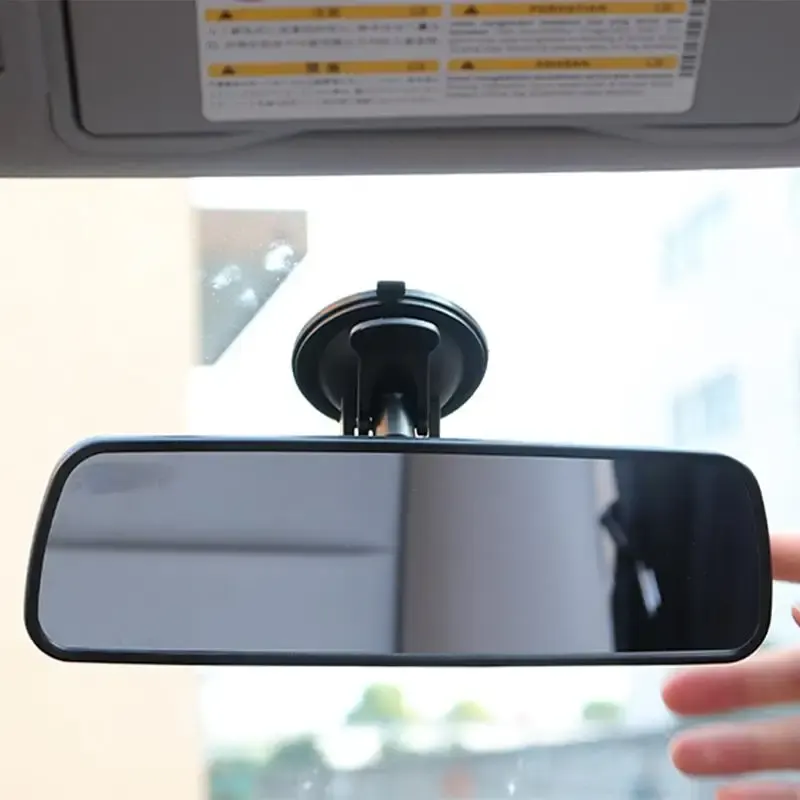
A rear-view mirror (or rearview mirror) is a flat mirror in automobiles and other vehicles, designed to allow the driver to see rearward through the vehicle's rear window (rear windshield). In cars, the rear-view mirror is usually affixed to the top of the windshield on a double-swivel mount allowing it to be adjusted to suit the height and viewing angle of any driver and to swing harmlessly out of the way if impacted by a vehicle occupant in a collision. The rear-view mirror is augmented by one or more side-view mirrors, which serve as the only rear-vision mirrors on trucks, motorcycles and bicycle.
PROCEEDURE :-
1. import model
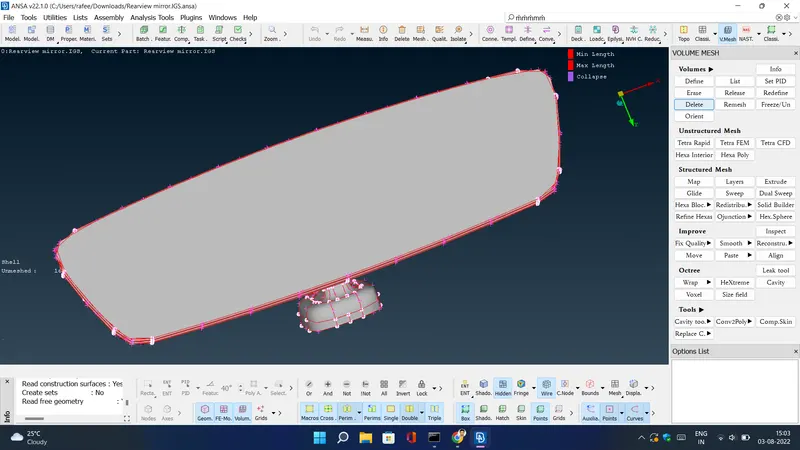
2. there are 4 parts for this model so we will be solid meshing each part seperately .
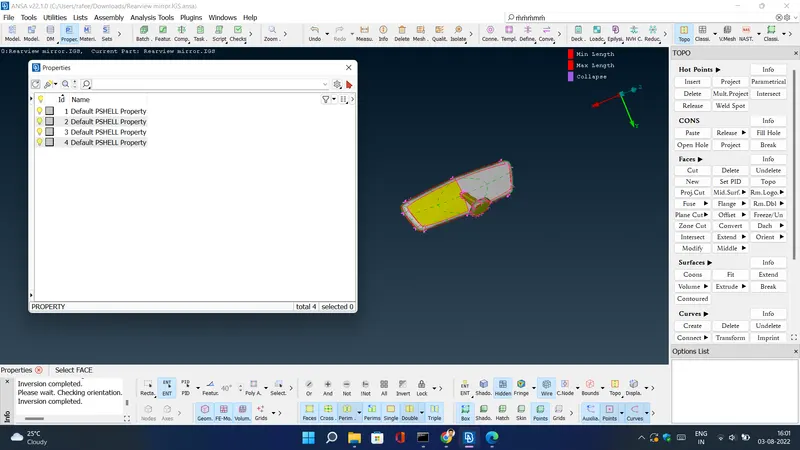
3. show first part . hide remaining .
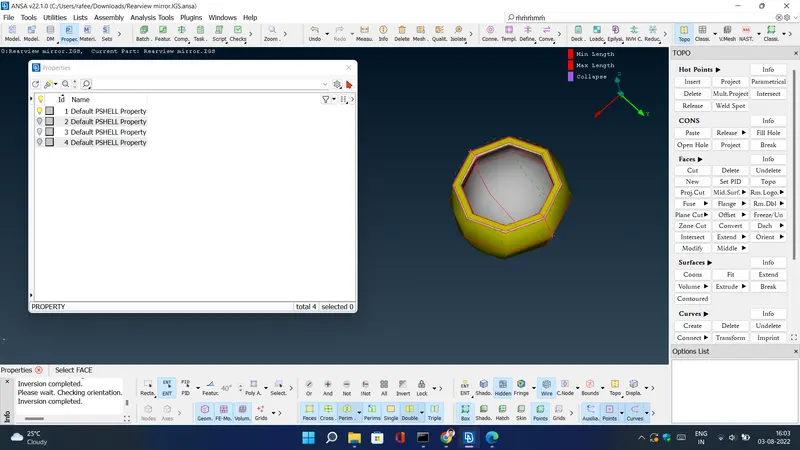
4. Cons resolution by Length option in Mesh module.
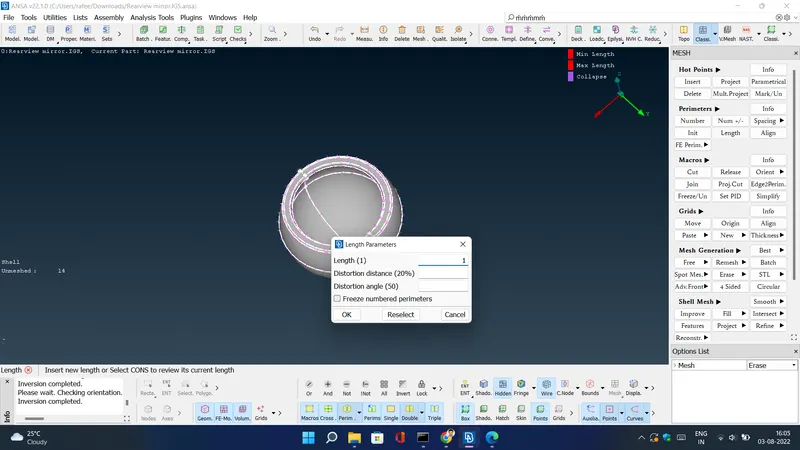
5. To get the connectivity between the surfaces we have to use the Topo option
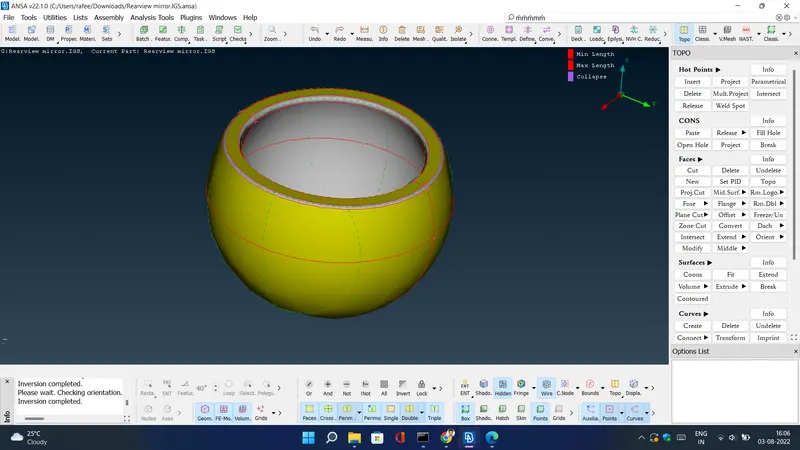
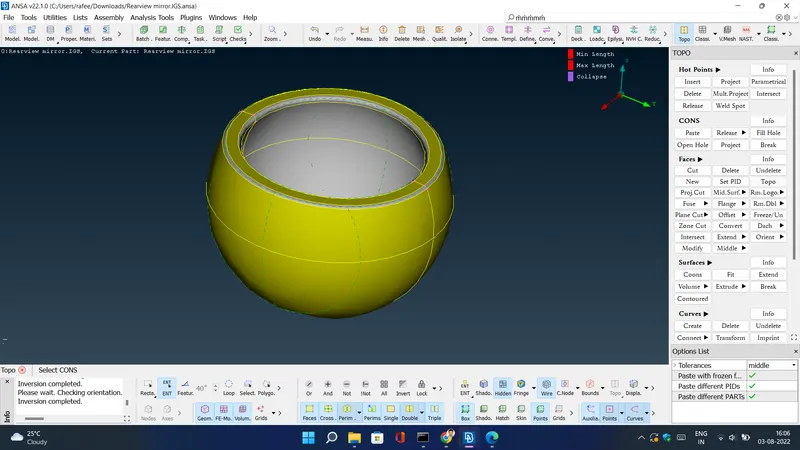
6. Orient the Surfaces to make sure all the surfaces are in one normal direction
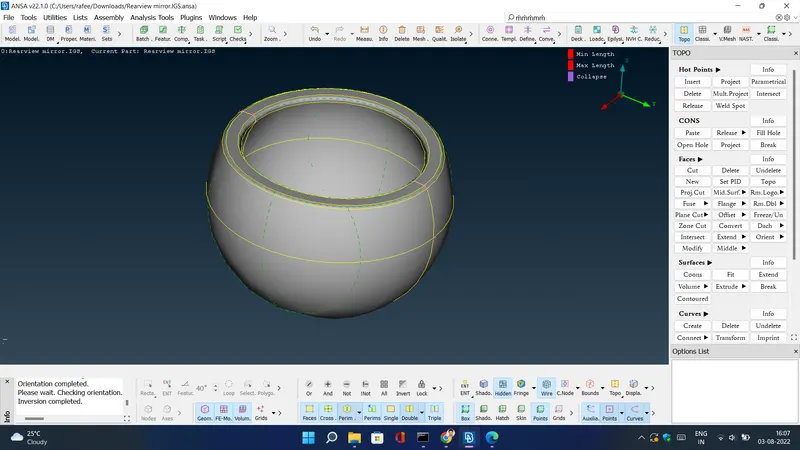
7. Checking the geometrical errors and Clearing the geometry errors.
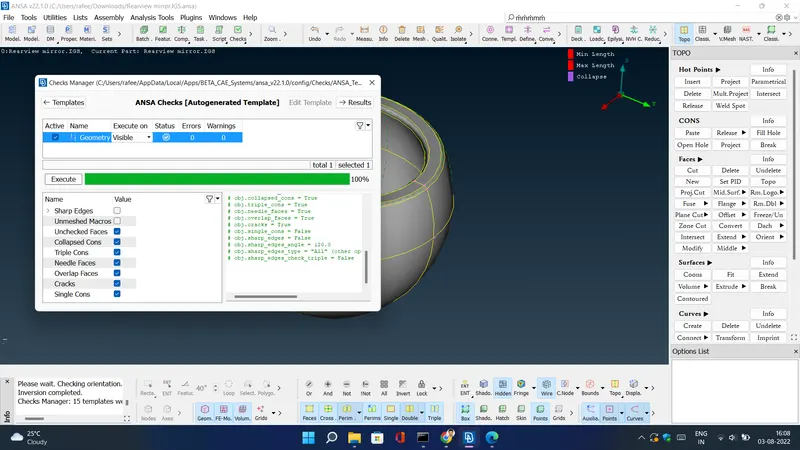
8. Providing the Mesh Parameters and Quality criteria to the models.
9. Cleaning the Parent Geometry.
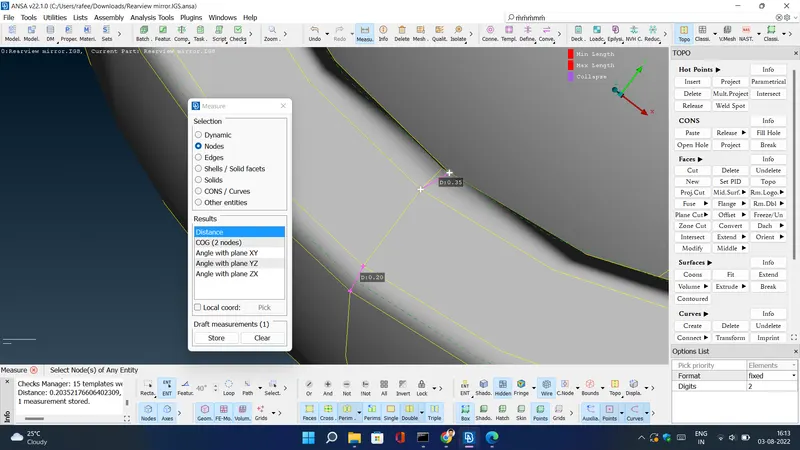
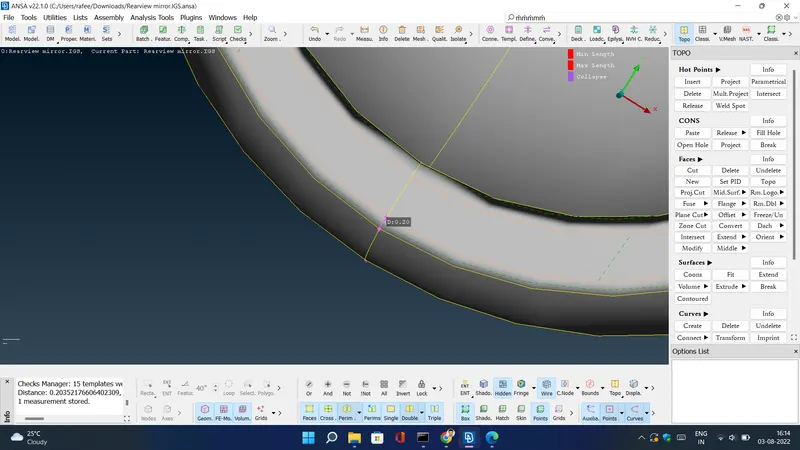
10. mesh surfaces by using ortho tria for curved and tria for flat surfaces
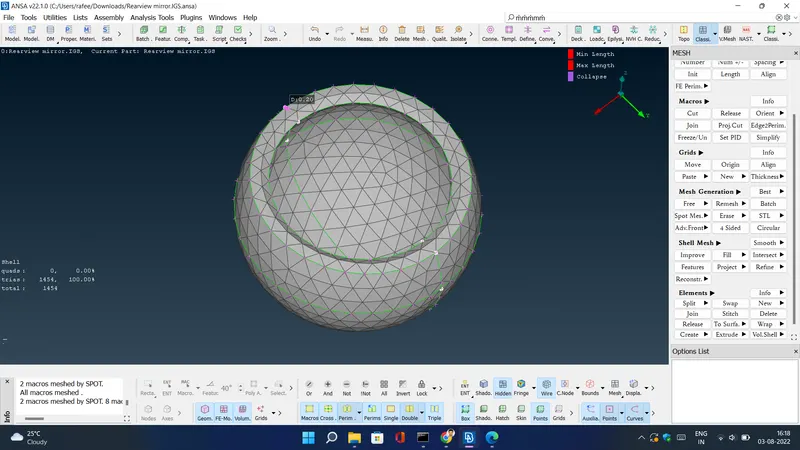
11 . make sure that there are no off elements and unmeshed elements .
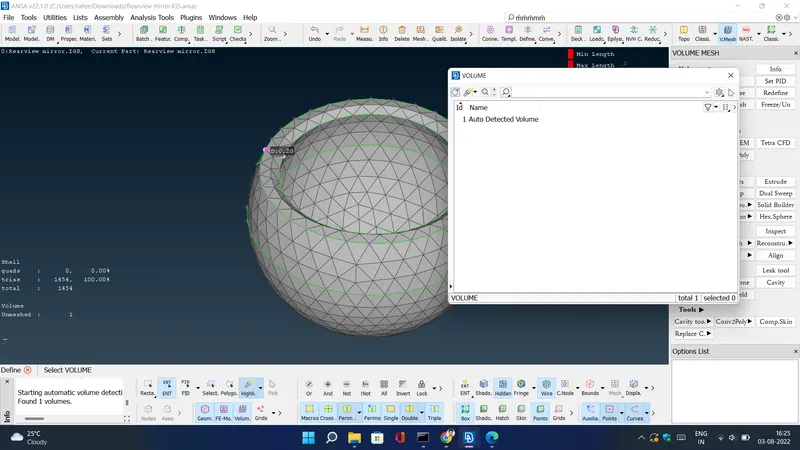
12. Go to the Volume deck and define the volume for the closed mesh.
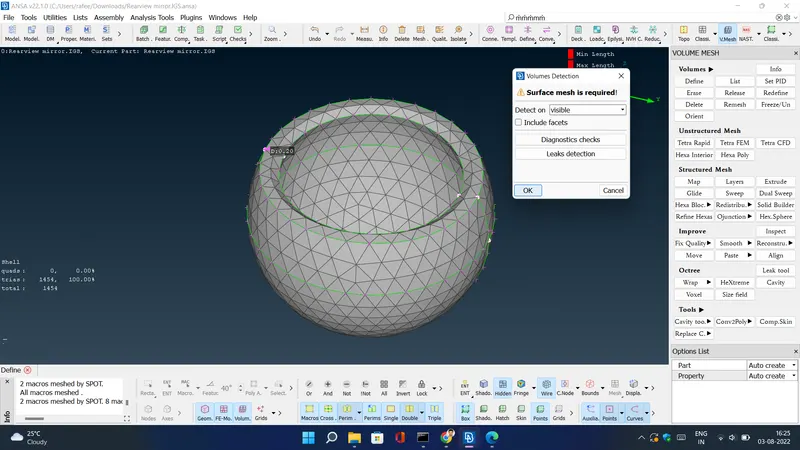
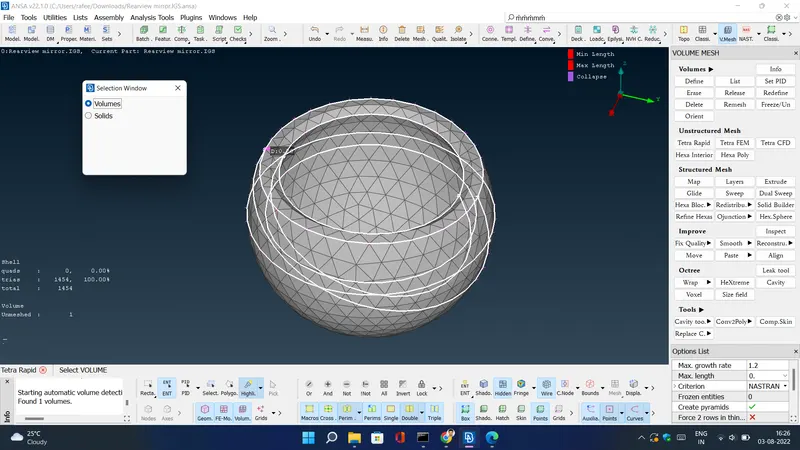
13. edit the volume by changing the type to tetra rapid.
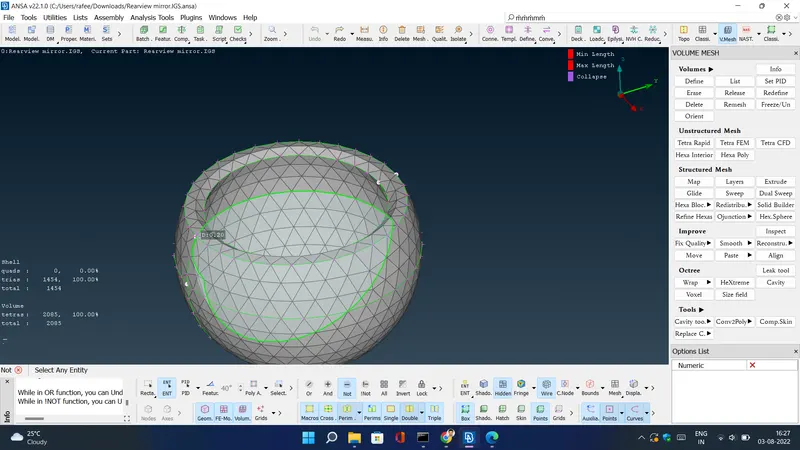
14. Check for the Tet collapse and fix the Tet collapse.
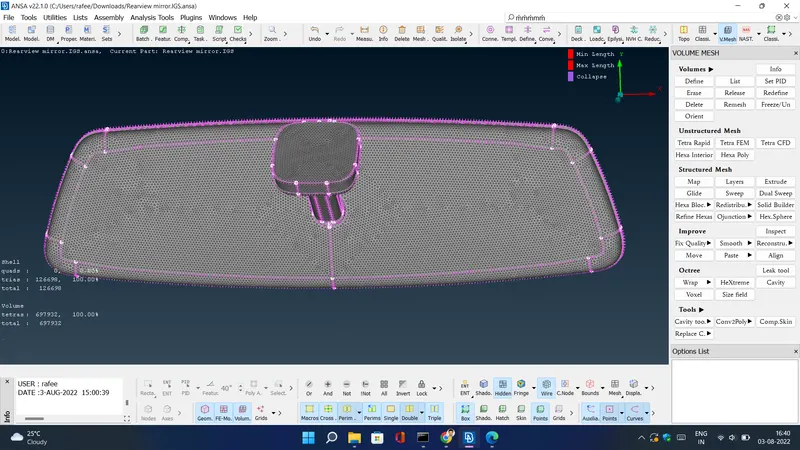
15. similarly unhide other parts in properties and carry out above steps from 2. we get following results .
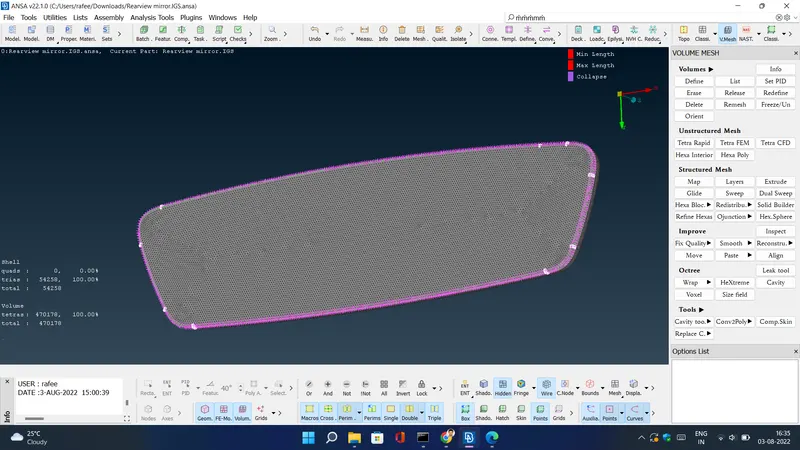
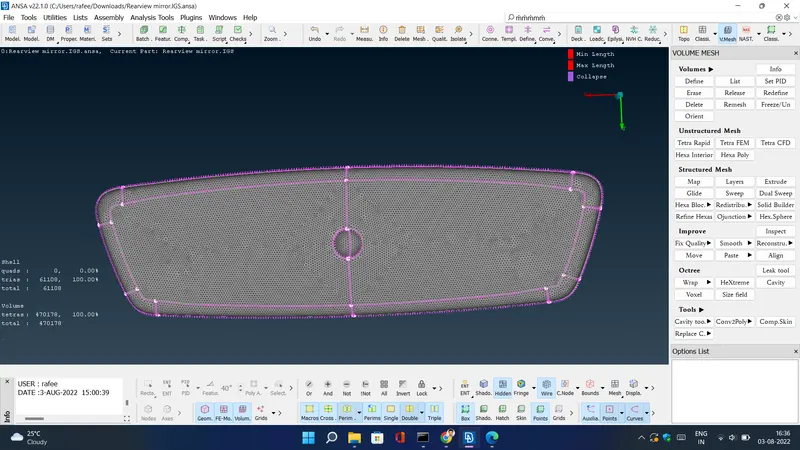
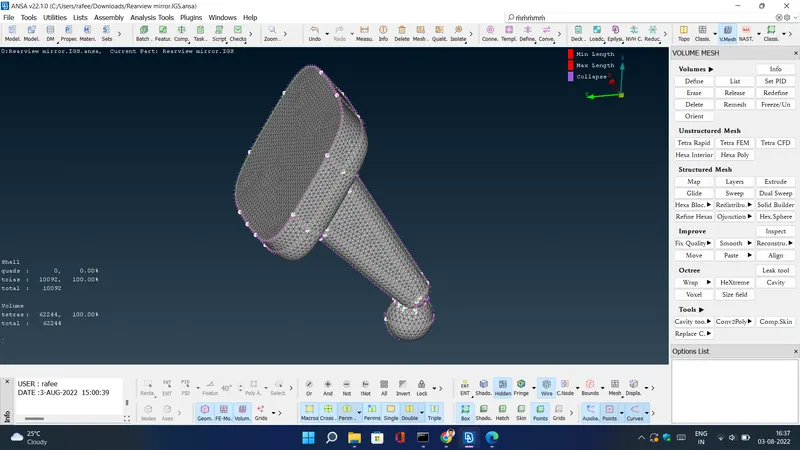
16. final solid meshed model
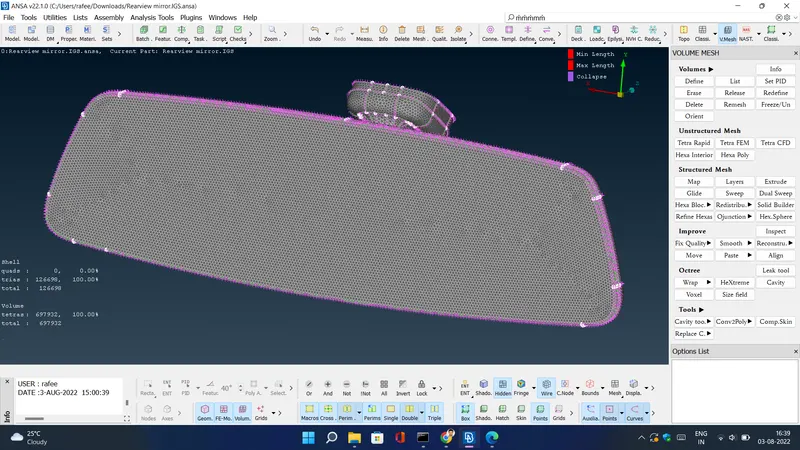
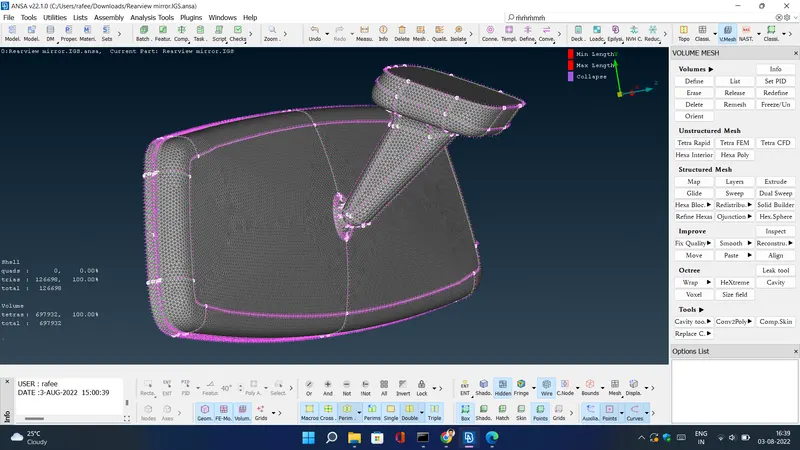
LEARNING OUTCOMES :-
- Learned how to do solid meshing
- where to use ortho tria and tria while meshing
- how to fix tet collapse
CONCLUSION :-
we have successfully solid meshed the given component , rear view mirror .