Week- 5 - Solid meshing
AIM: TO PERFORM A SOLID MESHING ON REAR VIEW MIRROR COMPONENT BY COMPLYIING TO THE QUALITY CRITERIA AS SPECIFIED USING ANSA 19
PROCEDURE: Import CAD file to ANSA and perform topo function on whole geometry from surfaces section in TOPO module.
and check for errors in materials and geometry using checks manager from user defined preset checks and fix the errors.
below pictures shows before and after the checks.
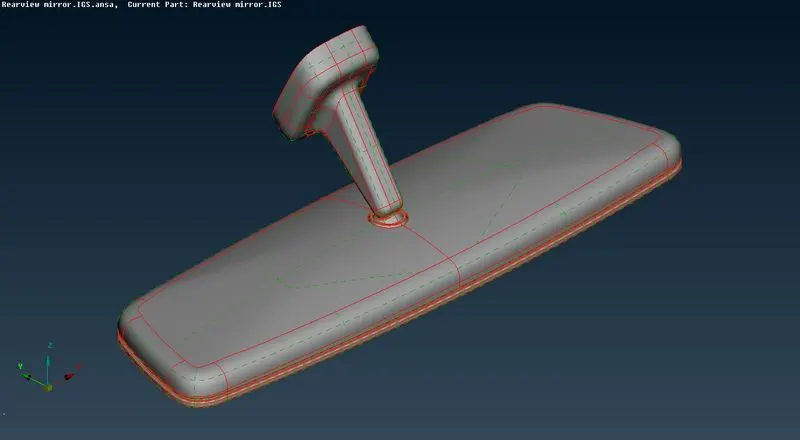
after performing topo
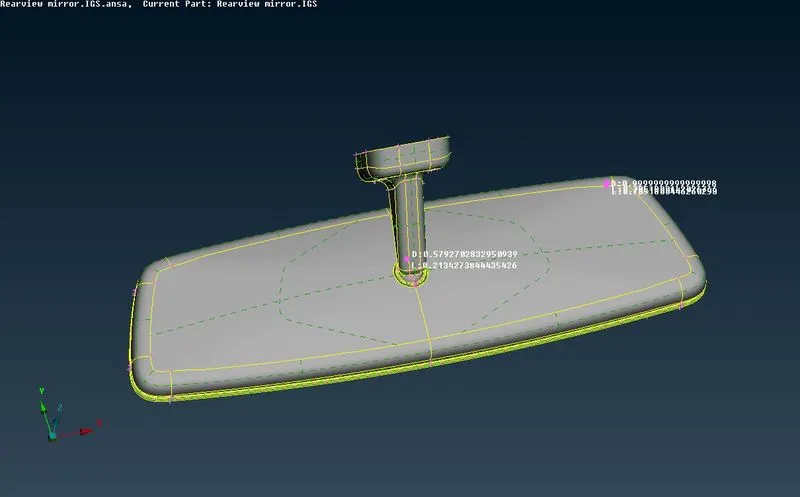
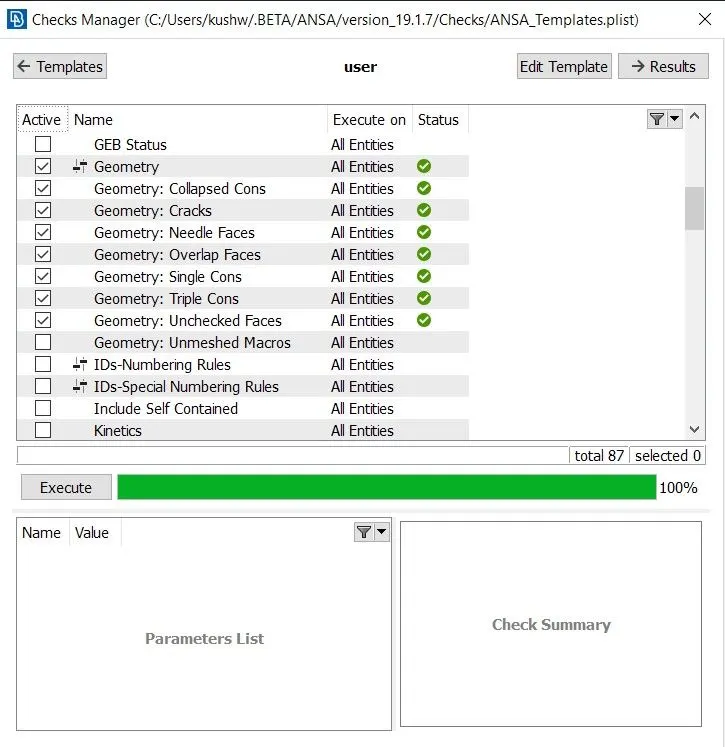
after doing the CAD clean-up I setup the mesh parameters and quality criteria as specified in the challenge.
CAD has four PSHELL properties so I started meshing one by one. the PSHELL I started meshing was the base/stand of the component.
first I performed the length funtion from perimeters section in mesh module as length equal to 1. and joined unnecessary cons on the CAD using join function from macros section in mesh module.
as recommended I meshed the curved macros using ortho tria elements for caputring them curvature smoothly using Spot.Mesh function from mesh generation section in mesh module and after the curved areas are done with meshing I have meshed the remaining macros with tria elements. I have reconstructed the mesh for ortho tria and tria elements seperately by changing the element type options on right bottom of the window
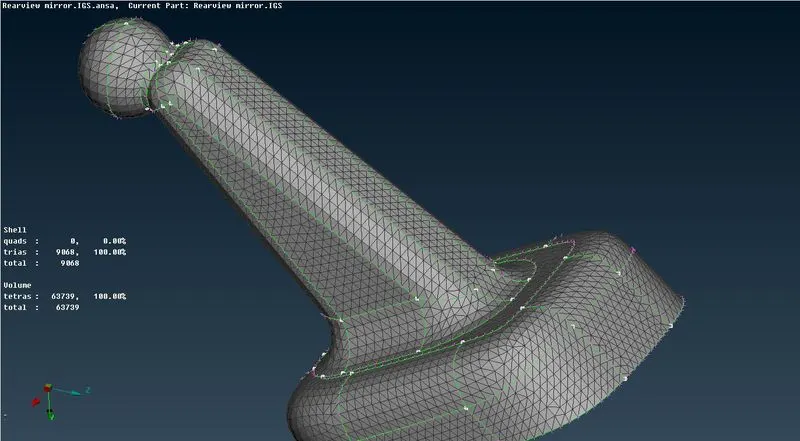
after the meshing on surface is done next step is to create volume using define>manual function from volumes section in volume mesh module and create a new PSOLID and name it. then go to list feature in the same section and you can find the PSOLID in the List window and right click on it and select the remesh and choose the appropriate meshing method and I chose TetraFEM ad then you will have the TetraFEM mesh.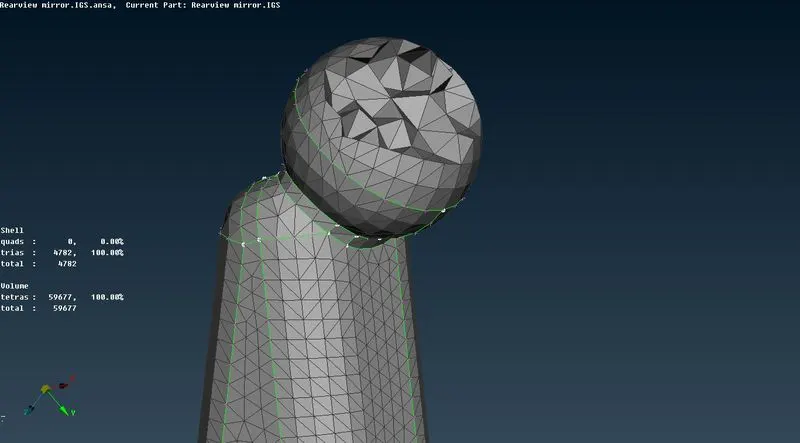
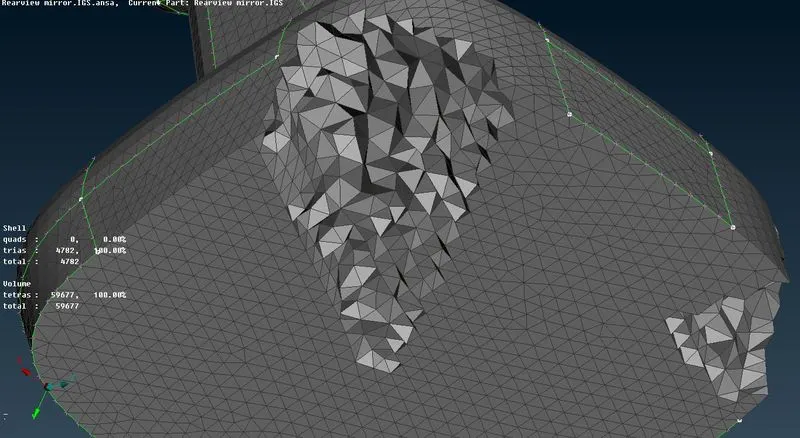
after this I meshed the socket part with ortho tria elements as and created the volume and done solid meshing as mentioned earlier.
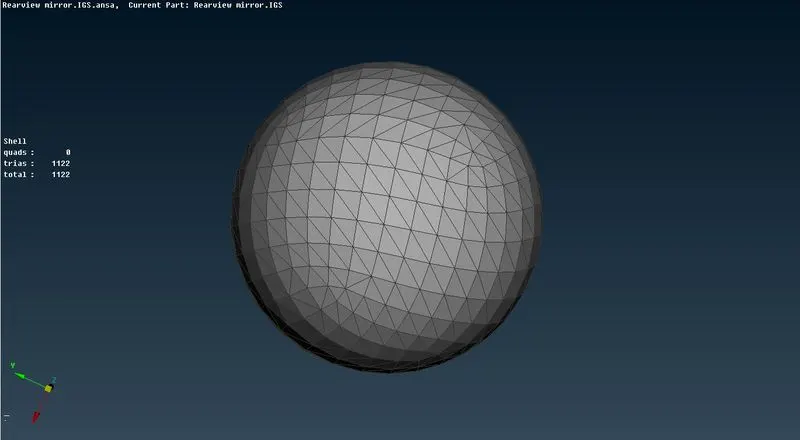
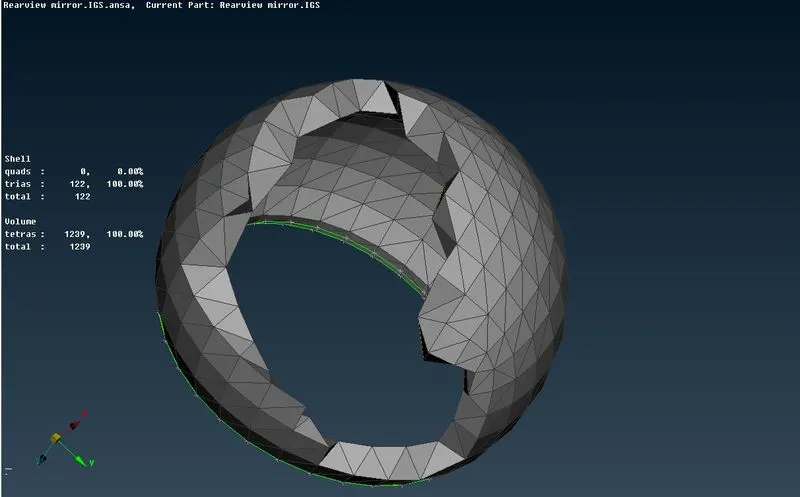 ]
]
after this I have meshed the frame of the mirror and did solid meshing using tetraFEM method.
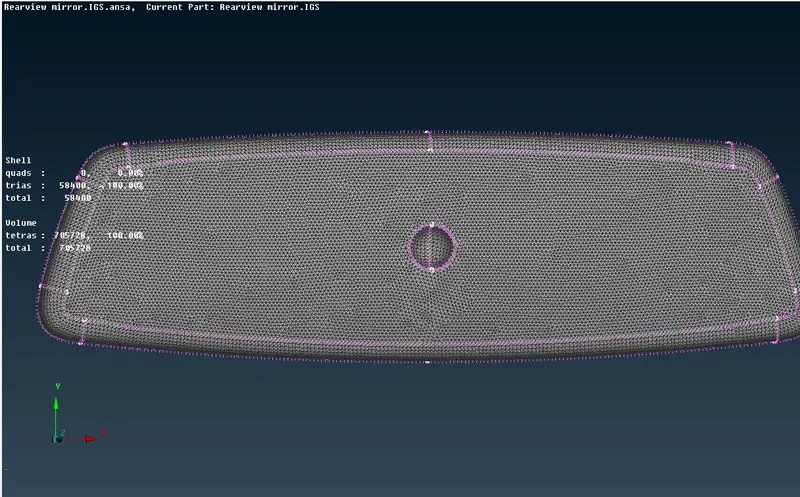
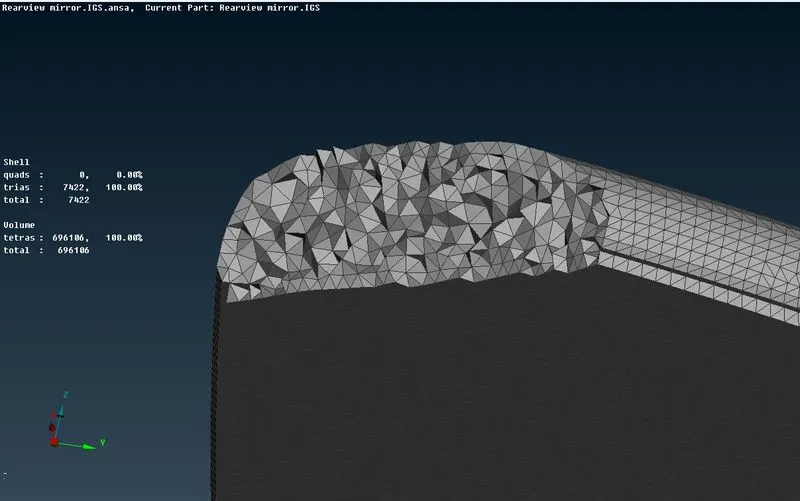
lastly the palne part I have assumed it as mirror part and did the meshing and also solid meshing using tetraFEM as shown below.
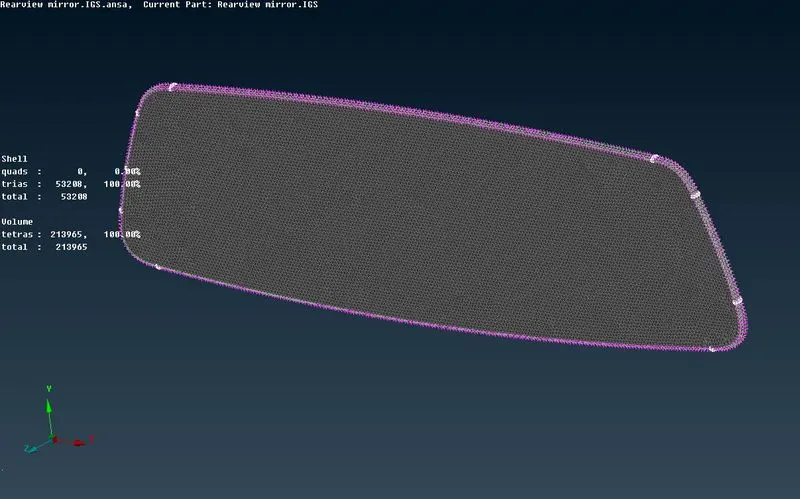
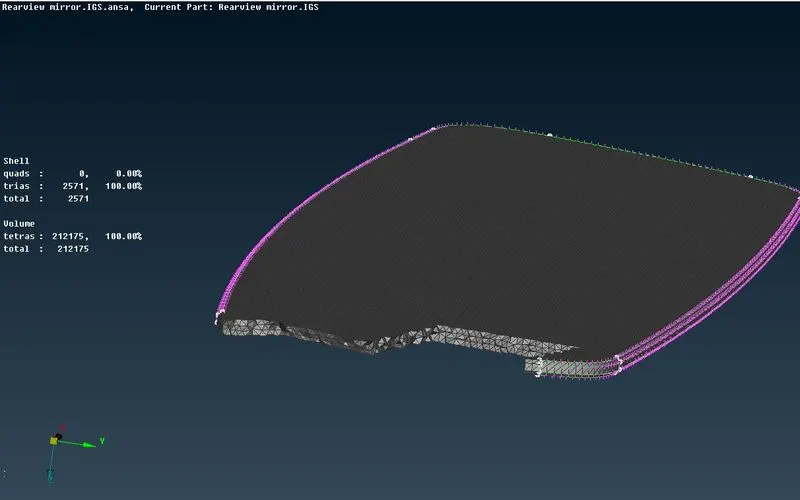
now the meshing is complete for the component.
WHAT I HAVE LEARNED.....
In this week I have learned about solid meshing and what are steps to follow and difference between the quality criteria of solid parts and shell parts and about the quality criteria tetra collpase on what it is and how it is calculated. and different meshing algorithms which are TetraRapid and TetraFEM.
CONCLUSION:
In this challenge I have learned how to do the solid meshing for the rear view miror component and to know the differences between TetraRapid and TetraFEM meshing algorithms and how to create a Volume for solid meshing.