Week 3 - 2D meshing for sheet metal
AIM: To pre-process a CAD model using ANSA. In this challenge we perform geometry clean-up and create midsurface and use that midsurface for meshing and acheiving a smooth mesh flow with less Trias and zero rotating quads and finally to assign thickness.
PROCEDURE: first import the CAD model to ANSA and and check the geoemtry and material from checks manager and fix the geoemetry and by topo operation in faces section of TOPO module for single and triple cons use the Release and topo commands in TOPO modules. for material checks ensure that the all the materials are defined.
after this we ahve to create mid surface for every part. first I measured the thickness using measure option from Utilities tab and found the thickness of hood top and Reinforcement to be 0.75mm and latch and hinges to be 1.2mm and then I have created the midsurface of Hood topand reinforcement using skin function from midsurface command in Faces section due to its complexity and size of the parts. and used offset feature for latch and hinges.
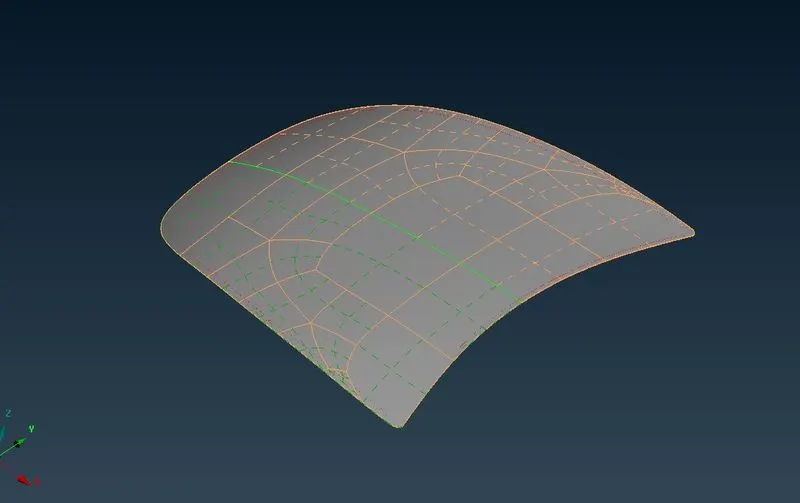
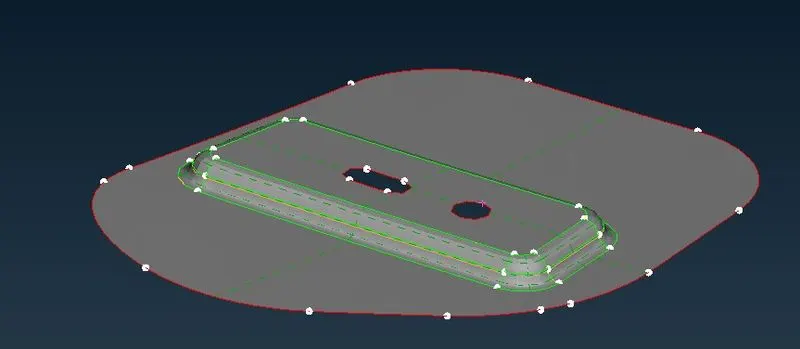
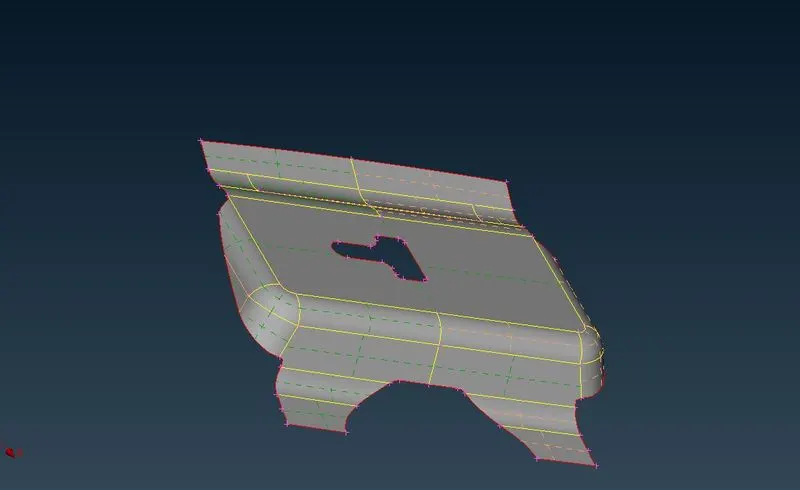
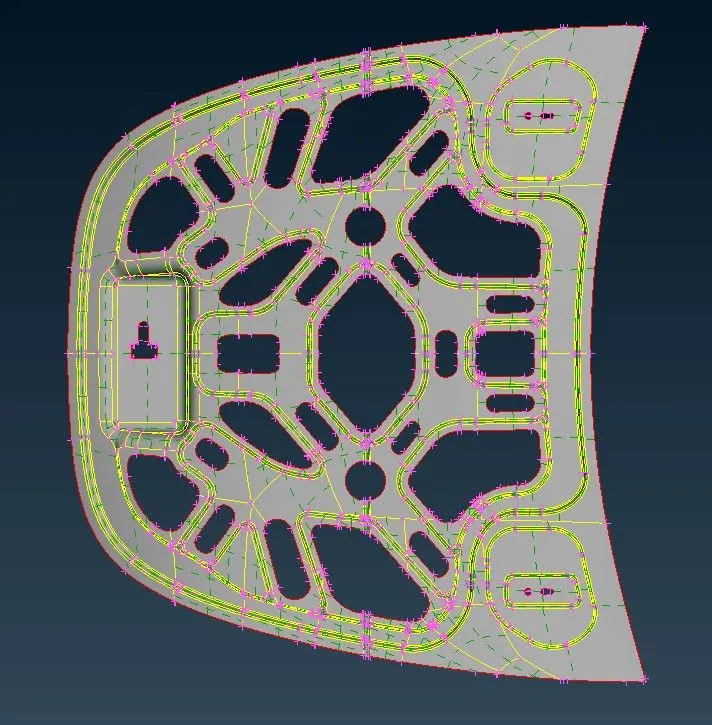
after creating mid surface we assign each of them a new PID by using the feature set.PID in Faces section as new PSHELL and name them accordingly.
Now we move on the next major step meshing.
before meshing we have to remove unnecessary cons from flat surfaces for smooth meshflow and simplify cons on complex areas by suppressing cons as in below pictures.
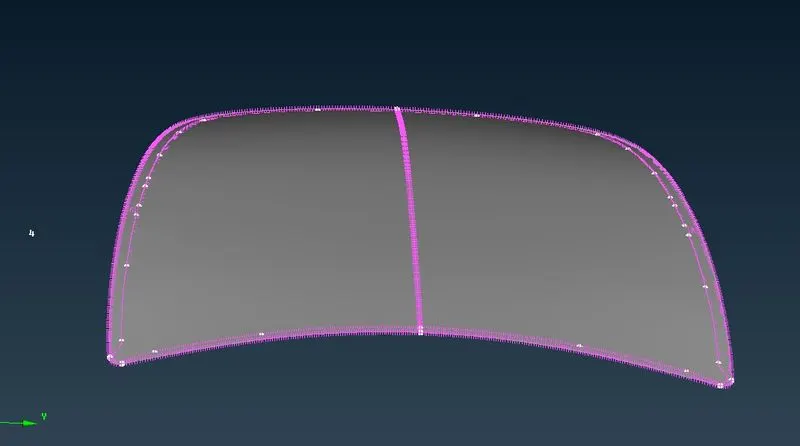
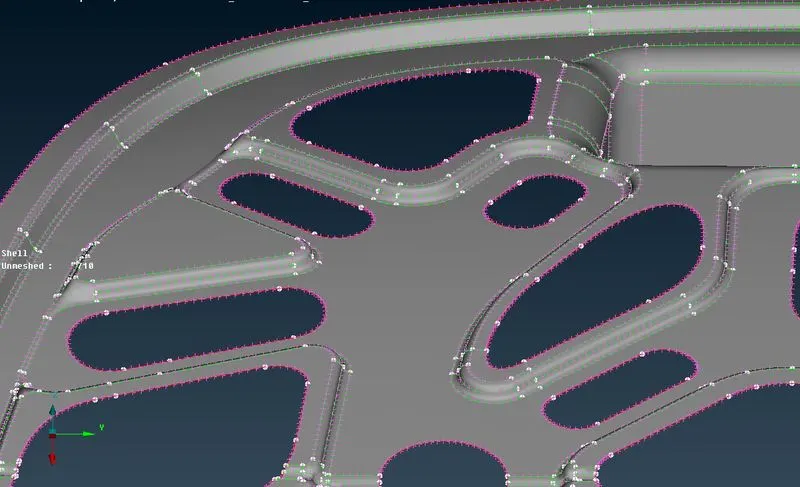
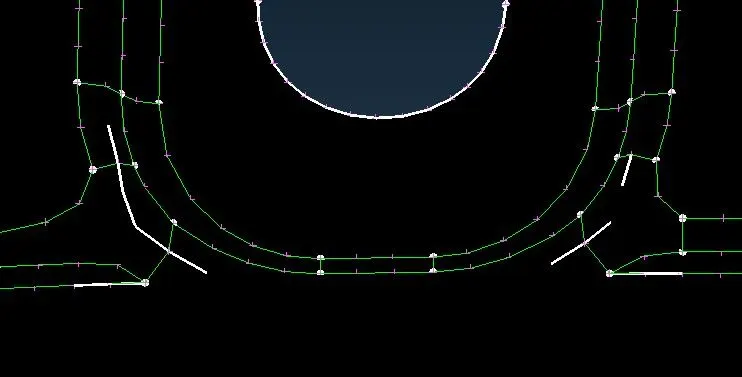
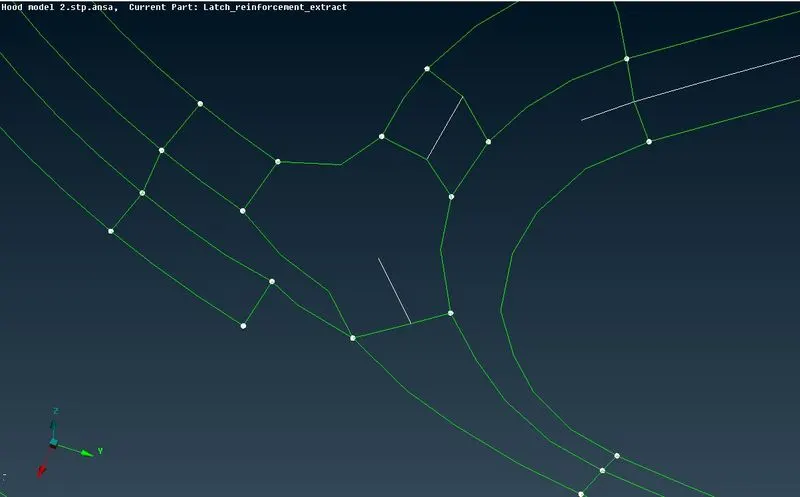
now assign quality criteria as instructed and apply them. and give mesh parameters as target length as 5, min = 2, max = 7.
in the quality criteria in presentation parameters section tick the elements % and set the bar of all details to the left.
after this in mesh module in the perimeters section select the length command and select the whole part and execute the command
and give the length as 5 and execute again. this divides the cons with the length of 5 and creates grid points on the cons.
and do this to all parts of the hood.
now mesh the area using Best option from Mesh generation section from Mesh module.
now the mesh is generated with off elements and cluster of trias and rotating quads randomly.we can eliminate the off elements and
Trias concentration to some extent by reconstruction feature in shell.mesh section.
trias at fillets can be reduced with matching the perimeters number with Number option on perimeters section and the trias at
edges has been removed using split and paste functions as suggested in the FAQ.
and eliminated the rotating quads using split function to convert it into a Tria.
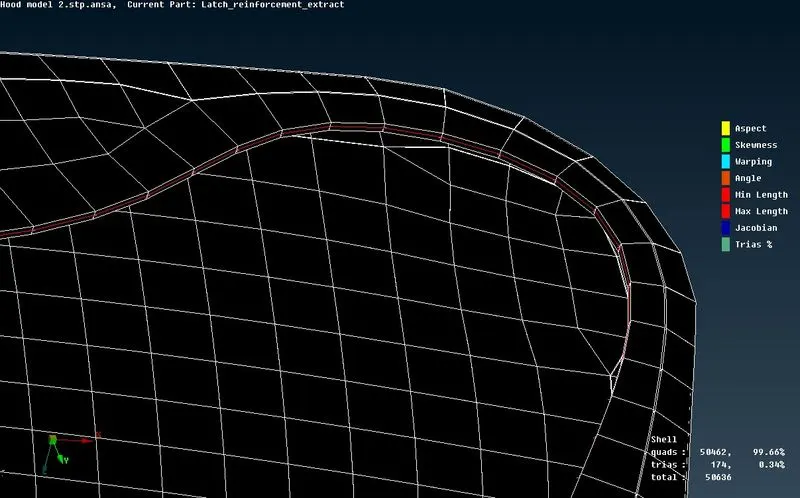
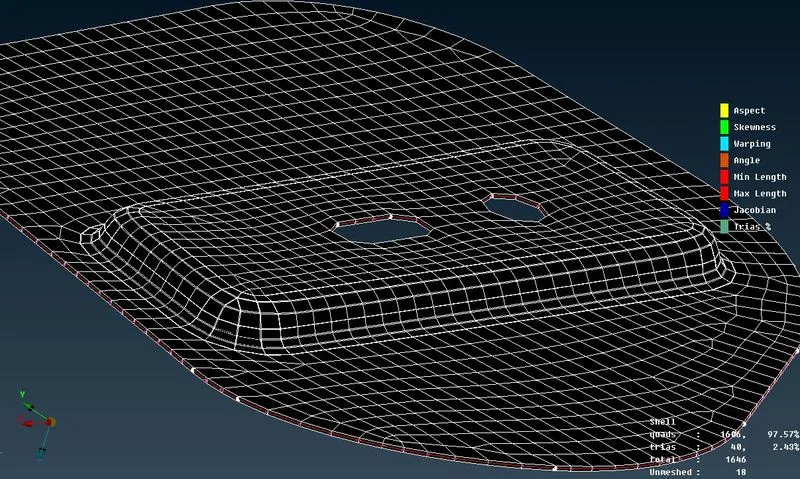
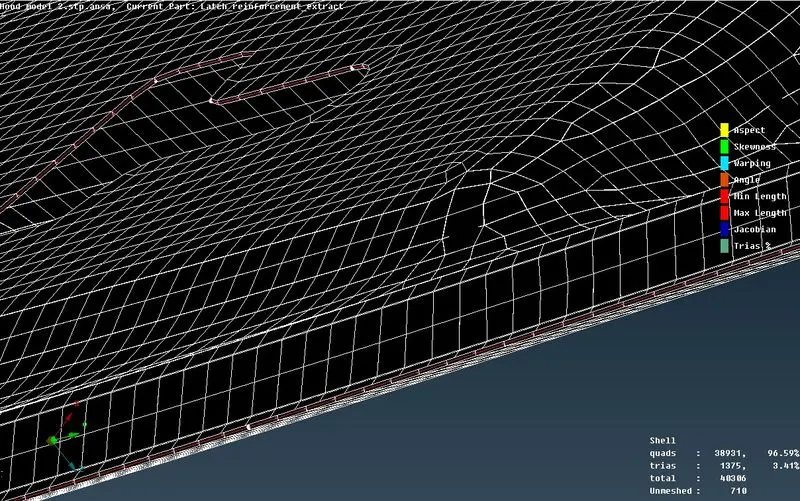
after doing the above procedures as best as I can I got the meshing as shown in below pictures.
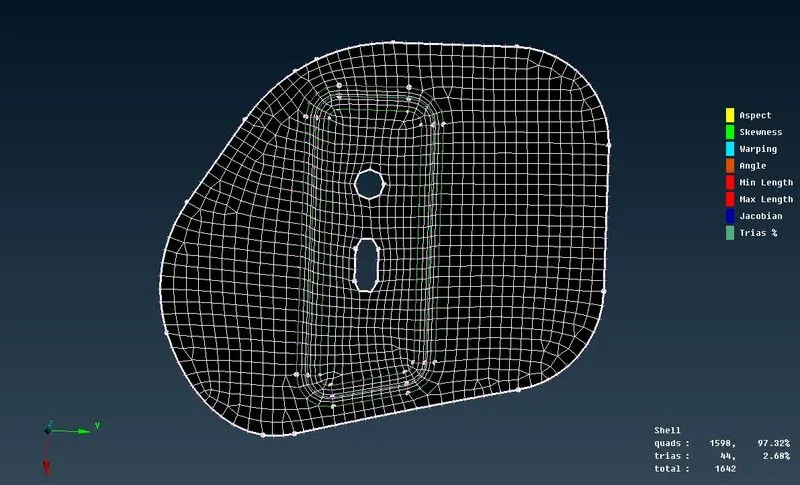
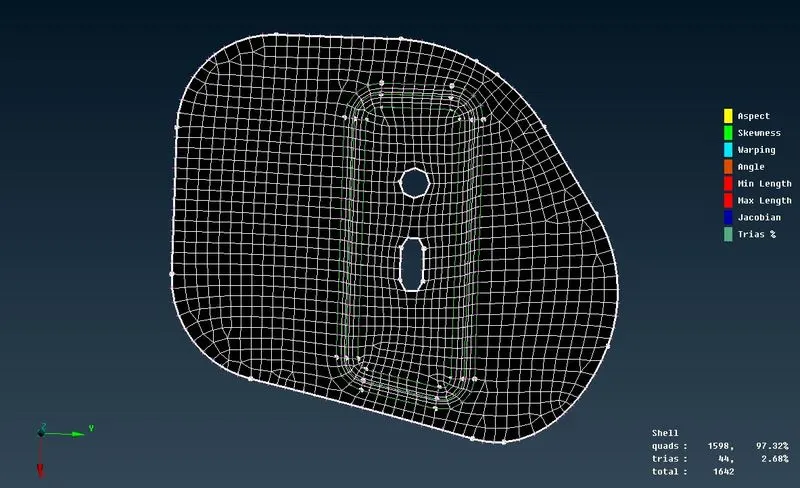
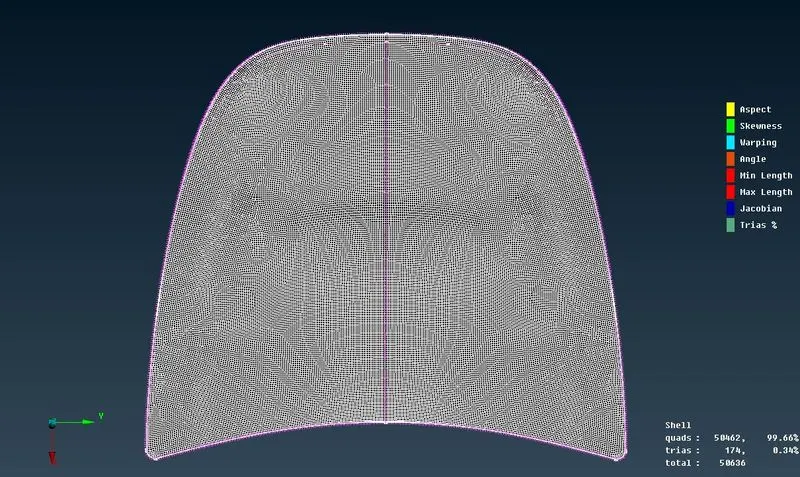
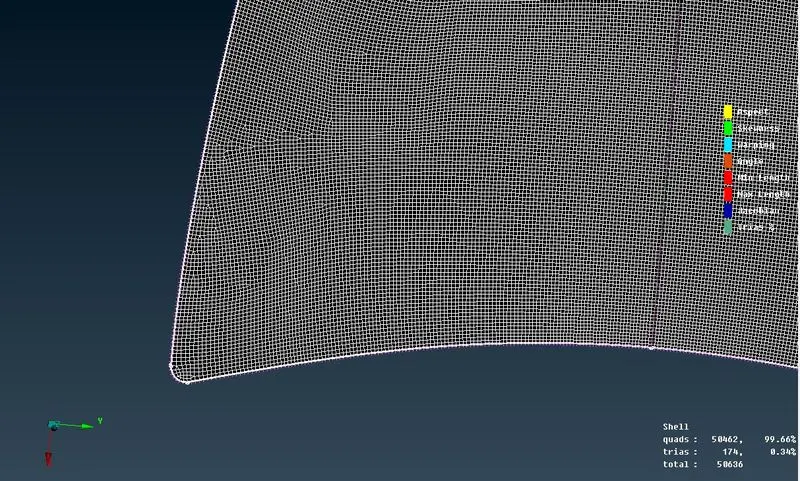
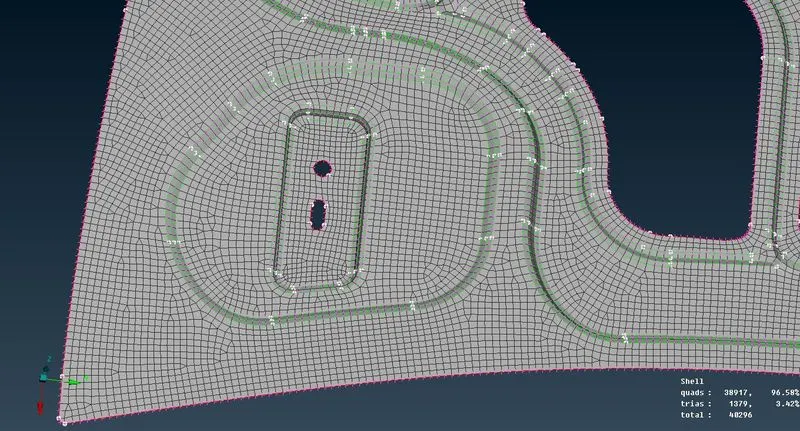
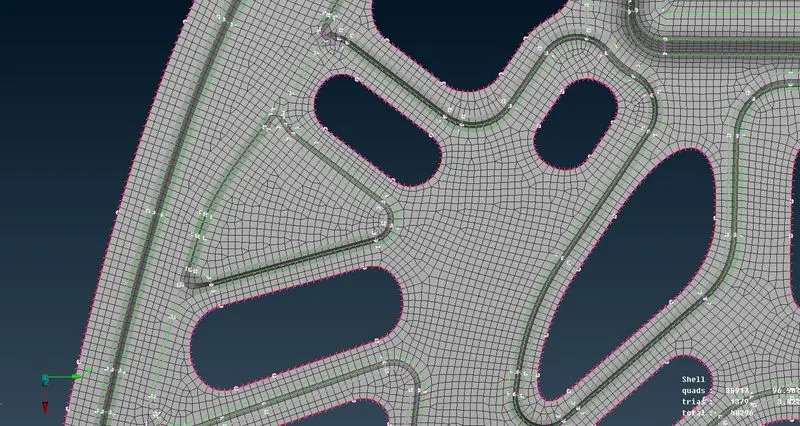
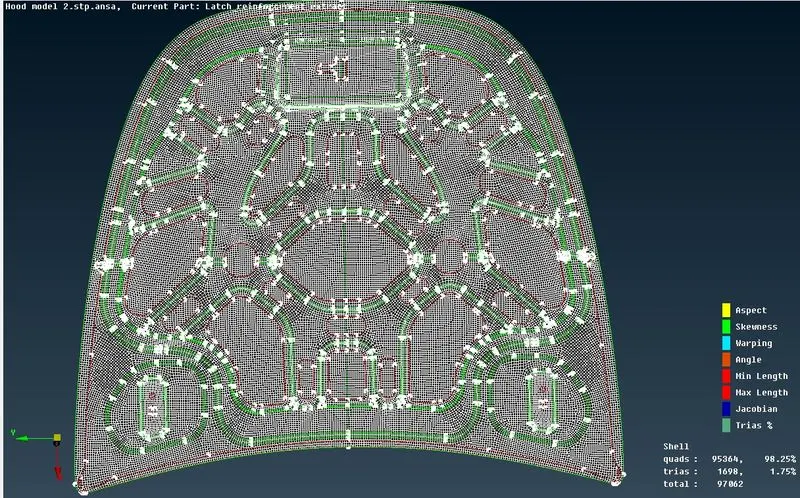
I have eliminated the trias as best as I could and got less than 2% Trias.
there are some exceptions in which I had to compromise on Trias on edges by preferring no trias at fillets as shown in below figure.
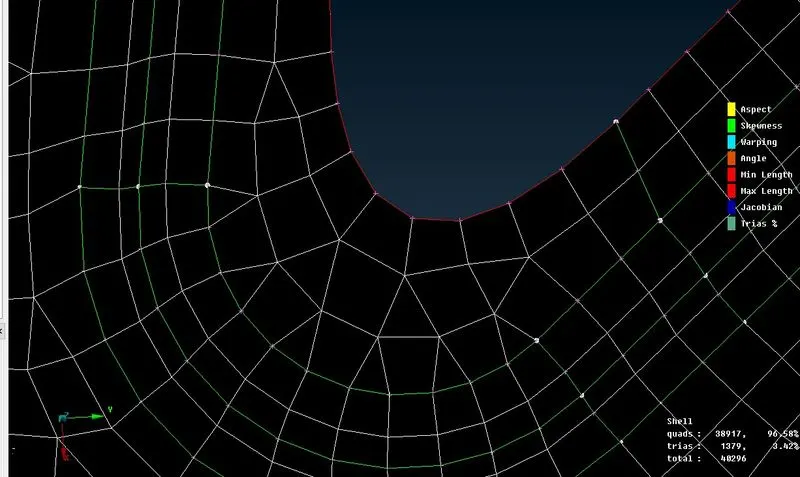
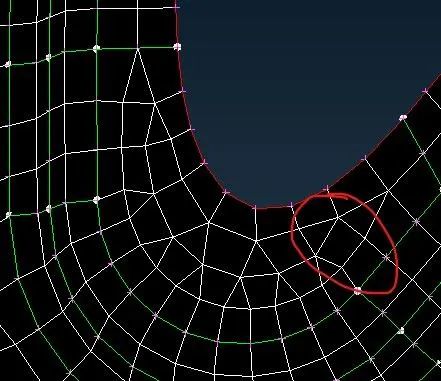
although I tried to remove trias on edges with split function there is a rotating quad formation in the red circle which I preferred to eliminate it due to the shape of the bounds
I had to compromise on trias on edges.
after the mesh is complete we have to release FE model from geometry by using the Release function in elements section.
the last step is to assign thickness to the FE model this can be done going to Quality Criteria in Utilities tab and tick the draw shell as solid.
WHAT I HAVE LEARNED...
I learned the steps and procedures for pre-processing a sheet metal component.
and how to do geometry cleanup and to create mid surface for components and meshing, not only meshing but how to create a smooth meshflow and reducing trias
and eliminating trias on edges and rotating quads. learned how to customize GUI and creating shortcuts for quick actions.
and finally how to assign thickness to a mid surface after meshing is done.
CONCLUSION:
This challenge has helped me to learn about pre-processing of a sheet metal in ANSA and lot of new information by doing this industrial level exercise.
I learned the options,features and commands on how to use them and why we use them. and how the meshing should be done and what precautions should we take for avoiding certain undesirable conditions.