Week 5 - Rayleigh Taylor Instability
AIM:
Simulate and study the Rayleigh Taylor instability using volume of fluid method.
OBJECTIVE:
- To study the importance of Rayleigh Taylor instability.
- To study multiphase flow in Ansys fluent.
- To study the volume of fluid method and its importance.
- To study the effect of mesh refinement on the Rayleigh Taylor instability
- To explain the behaviour of instability based on Atwood number.
INTRODUCTION:
RAYLEIGH TAYLOR INSTABILITY:
The Rayleigh–Taylor instability, or RT instability is an instability of an interface between two fluids of different densities which occurs when the lighter fluid is pushing the heavier fluid. Examples include the behavior of water suspended above oil in the gravity of earth, mushroom clouds like those from volcanic eruptions and atmospheric nuclear explosions, supernova explosions in which expanding core gas is accelerated into denser shell gas, instabilities in plasma fusion reactors and inertial confinement fusion.
PRACTICAL CFD MODELS BASED ON RAYLEIGH TAYLOR WAVE:
RICHTMYER-MESHKOV INSTABILITY:
- This instability occurs when two fluid with different density are accelerated impulsively
- Magnetized target fusion, formation of material in the cores of stars (cobalt 56) are the example of this type of instability
ISCOUS VORTEX SINGLE-MODE BUBBLE EVOLUTION MODEL:
- Explains viscous effect of early stages of Rayleigh taylor wave for low atwood number.
SAVART-PLATEAU-RAYLEIGH INSTABILITY OF A WATER COLUMN:
- Column of liquid spontaneously breaks up into droplets under the influence of atwood number.
K-L TURBULENCE MODEL FOR THE SELF-SIMILAR GROWTH OF THE RAYLEIGH-TAYLOR AND RICHTMYER-MESHKOV INSTABILITIES:
- Used to simulate turbulence model or turbulent boundary conditions.
VOLUME OF FLUID METHOD:
In computational fluid dynamics, the volume of fluid (VOF) method is a free-surface modelling technique, i.e. a numerical technique for tracking and locating the free surface (or fluid-fluid interface). It belongs to the class of Eulerian methods which are characterized by a mesh that is either stationary or is moving in a certain prescribed manner to accommodate the evolving shape of the interface. As such, VOF is an advection scheme—a numerical recipe that allows the programmer to track the shape and position of the interface, but it is not a standalone flow solving algorithm.
CASE SETUP:
GEOMETRY:
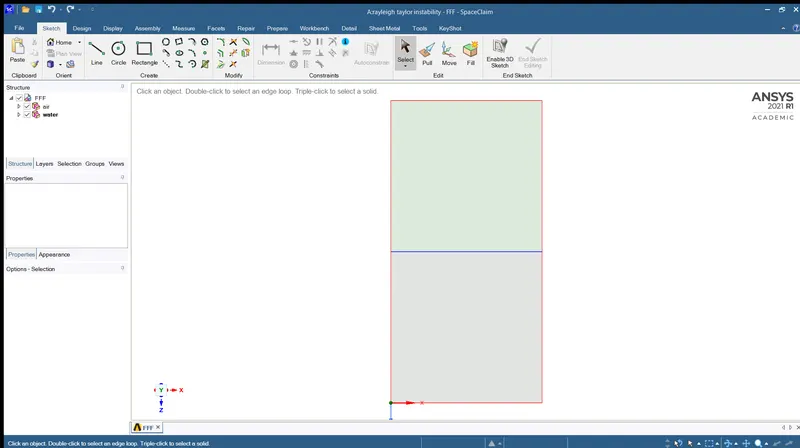
The rectangle of 20x20mm dimension and surface was created from that sketch and using the pulled command it is created into surface which is moved into new component Air. Then again new component is created with same dimension and is converted into surface as we do in air component.
The share topology is set inorder to generate a conformal mesh between the rectangles.
MESH:
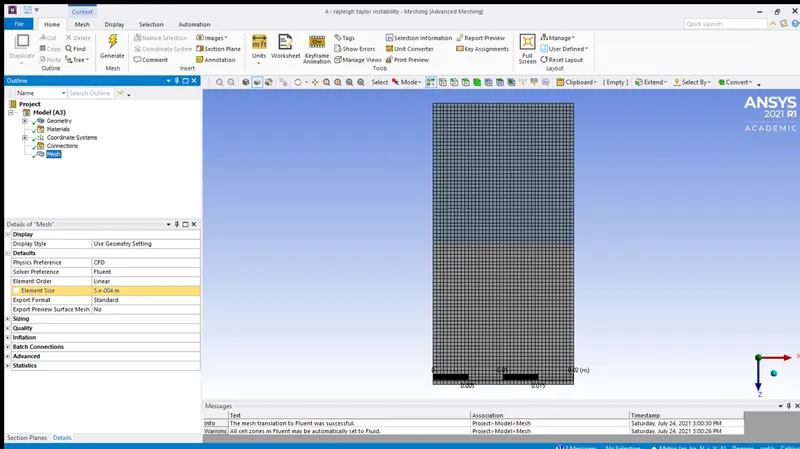
A mesh is created for the geometry with a base line mesh size of 0.5mm. The meshed model will look like the image as shown below
SETUP:
GENERAL:
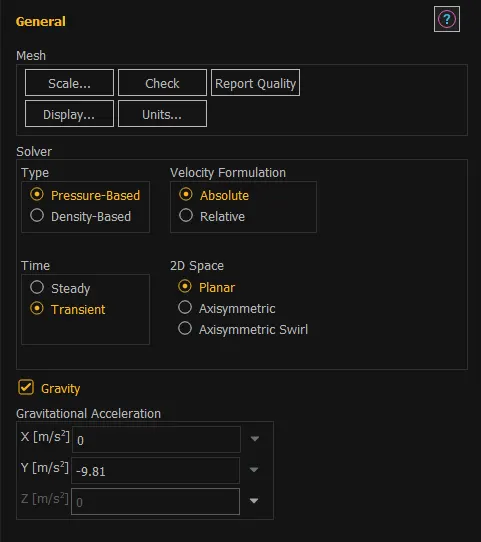
- Pressure based solver
- Transient state condition
MODEL:
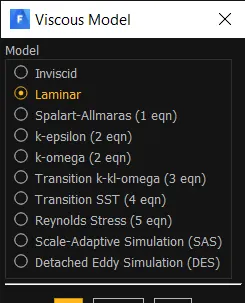
- Viscous – laminar
MATERIAL:
- Fluid – air
- Fluid – water
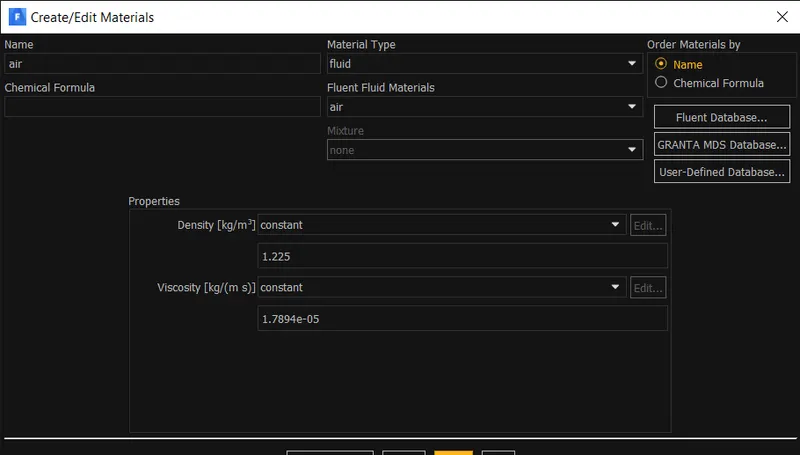
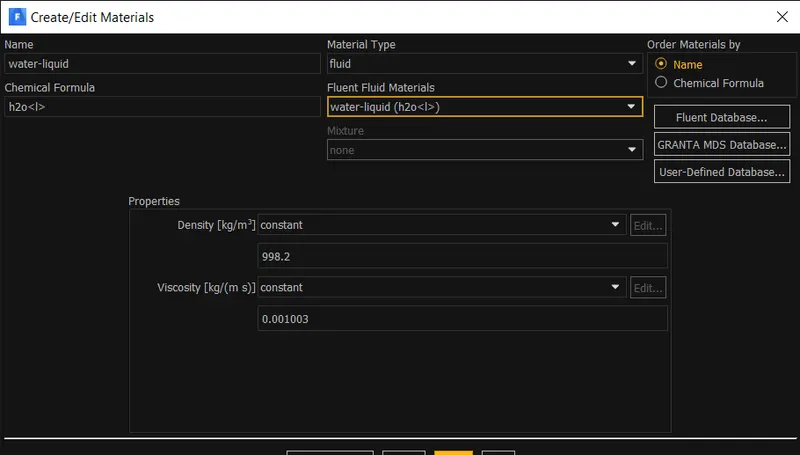
MULTIPHASE MODEL:
- Volume of fluid
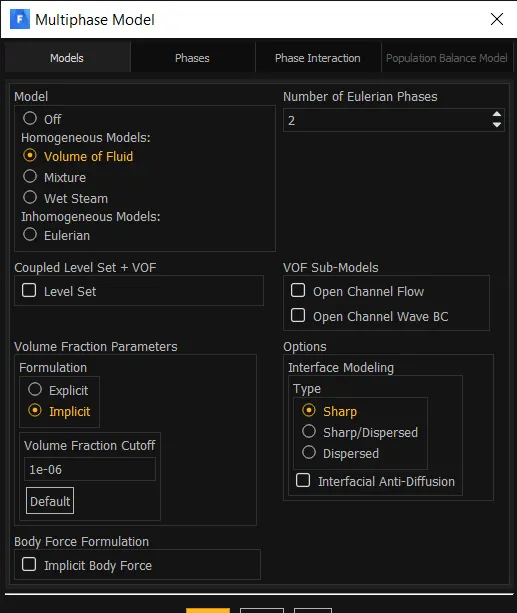
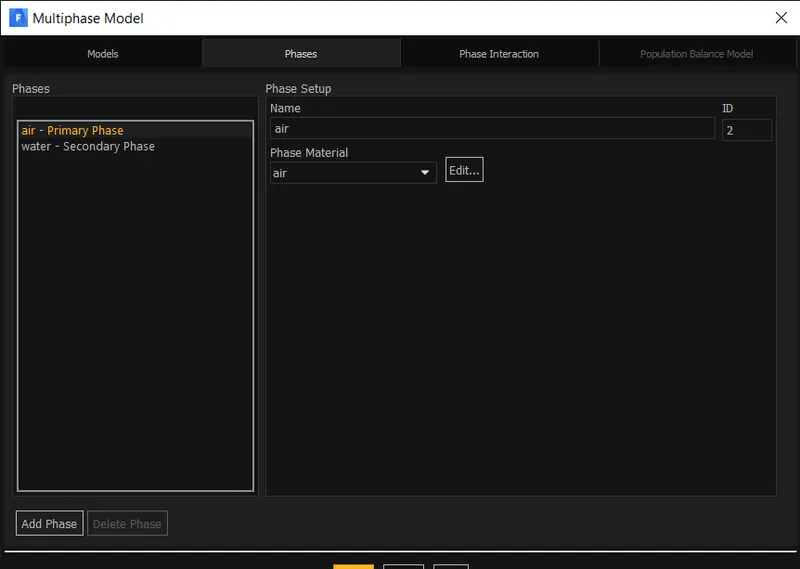
- Primary phase – air
- Secondary phase – water
INITIALIZATION:
Standard initialization

Time step size – 0.005s
No. of time steps – 600
RESULTS:
RESIDUAL:
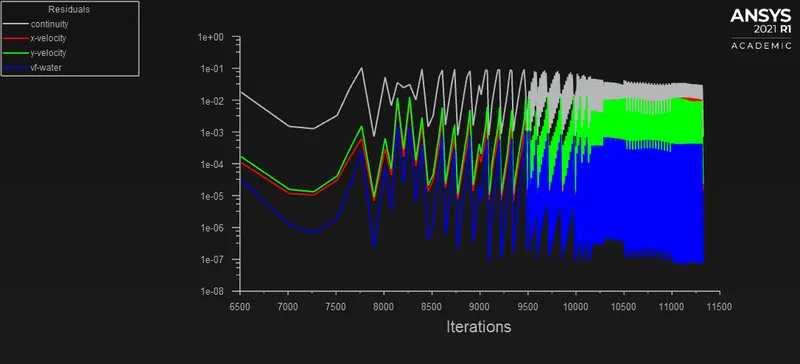
ANIMATION:
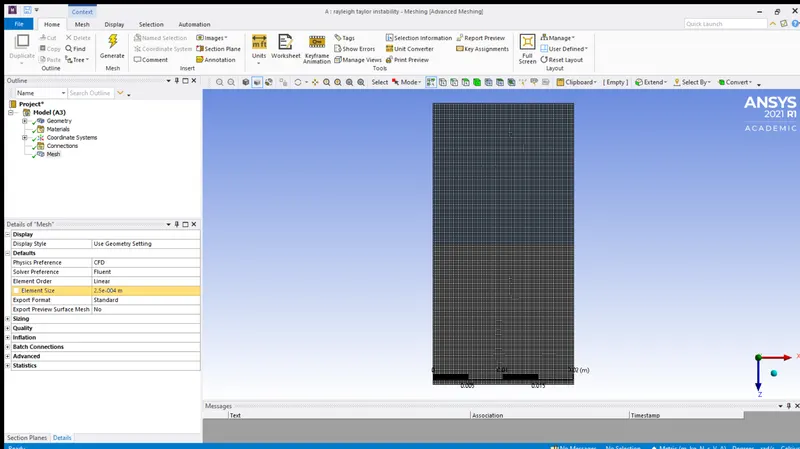
FOR MESH = 0.25MM
A mesh is created for the geometry with a mesh size of 0.25mm. The meshed model will look like the image as shown below
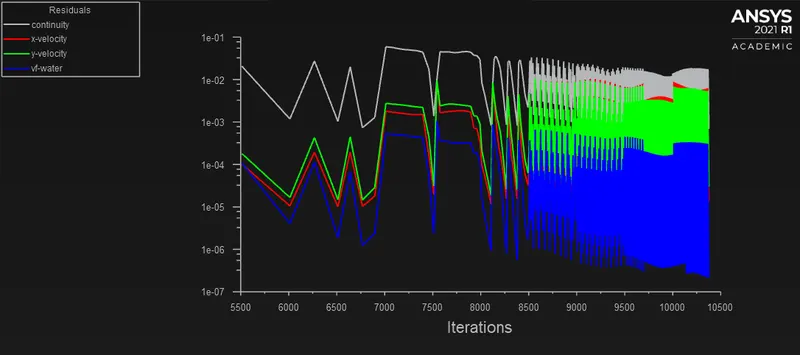
RESULTS:
RESIDUAL:
ANIMATION:
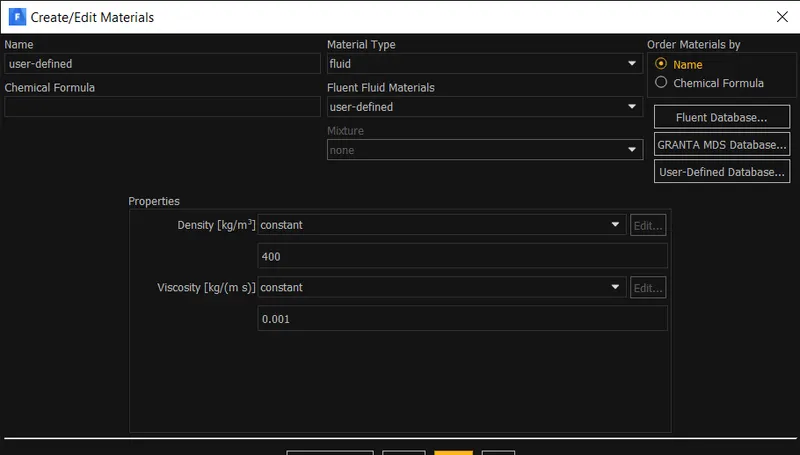
FOR MESH SIZE – 0.25MM AND USER DEFINED MATERIAL:
MATERIALS:
- Fluid – user defined material
- Fluid – water
RESULTS:
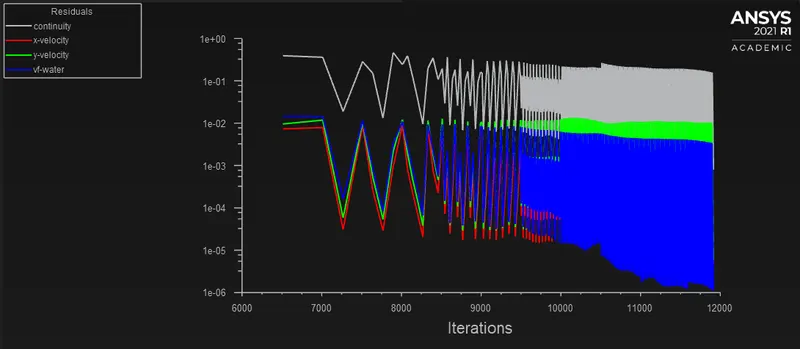
RESIDUAL:
ANIMATION:
CONCLUSION:
- Rayleigh Taylor instability is observed at the interface of the fluids with different density under the influence of gravity
- The lower density fluid pushes the higher density fluid above it. The heavier fluid which is water in this case comes at the bottom and replaces the air from the bottom
- Due to refinement of mesh we can visualize the instability and irregularities that takes place at the interface more better.
- In all the cases the lower dense fluid moves into the higher density fluid which causes instability.
- In case 2 we can capture instabilities more accurately due to finer mesh than case 1.
WHY A STEADY STATE APPROACH MIGHT NOT BE SUITABLE FOR THESE TYPE OF SIMULATION?
the steady state simulation is performed if we are concerned about the final results. In this case we are more concerned to learn about the irregularities that starts developing when we pour high dense fluid under gravity effect. So by using transient solver along with refined mesh we can compute the smooth transistion of irregularities that takes place at the interface of the fluids.
DEFINE THE ATWOOD NUMBER:
Atwood number is a dimensionless number in fluid dynamics used in the study of hydrodynamic instabilities in density stratified flows.
A = rho1-rho2/rho1+rho2
Where,
Rho1 – density of heavier fluid
Rho2 – density of lighter fluid
FIND OUT THE ATWOOD NUMBER FOR THIS CASE AND EXPLAIN HOW THE VARIATION IN ATWOOD NUMBER AFFECTS THE BEHAVIOUR OF THE INSTABILITY:
Atwood number for the above case is
A = (998.2 -1.225)/(998.2 + 1.225)
A = 0.9975
- When Atwood number is high the more instability takes place in the fluid and measuring the spikes of the instability is very difficult.
- When the Atwood number is low the more stable is the fluid mixture and measuring the spikes of the instability can be done to some extent because it expresses linearity to some extent.
HOW CAN WE USE THE ATWOOD NUMBER TO VALIDATE OUR SIMULATION RESULT?
SIGNIFICANCE:
- Penetration distance of the heavier fluid into the lighter fluid is given by the formula Agt^2 where g is the acceleration due to gravity and t is the time.
- For A close to 0, RT instability flows take the form of symmetric “fingers” of fluid
- For A close to 1, the much lighter fluid “below” the heavier fluid takes the form of larger bubble-like plumes.
For case 1,
A = (998.2-1.225)/(998.2+1.225)
A = 0.9975
For case 2,
A = (998.2-400)/(998.2+400)
A = 0.4278
We see that the lighter fluid air rises up and bubble like plumes takes place. The Atwood number calculated for our result is close to 1. The Atwood number close to 1 signifies the same phenomenon and hence validates our result.