Week 5 - Rayleigh Taylor Instability
OBJECTIVE :
To perform Rayleigh taylor instability simulation on Ansys Fluent and to perform grid Independent tests for three different cases which includes mesh size and user defined case.
RAYLEIGH TAYLOR INSTABILITY
It is a criteria where a dense fluid is placed over a light fluid so that interpenetration of materials occur leading to instability in volume mixture. It is a dynamic process where the potential energy of each fluids get disturbed when combined.
Practical CFD models that have been based on the mathematical analysis of Rayleigh Taylor waves
- Kelvin Helmoltz Instability
- Richtmyer Meshkov Instability
- Plateau Rayleigh Instability
KELVIN HELMOLTZ INSTABILITY
Kelvin Helmoltz instability occurs whenever there is a velocity difference between two immiscible fluid interface so that they form a sequence of wave approaching towards velocity direction callked Kelvin Helmoltz waves.

Cloud formation of Kelvin Helmoltz wave pattern is formed as there is a velocity difference between two different densed fluids.
RICHTMYER MESHKOV INSTABILITY
This instablity occurs when a shock wave interacts with interface region separating two different fluids. It also progress for shock wave interaction, hydrodynamic instability, refraction.
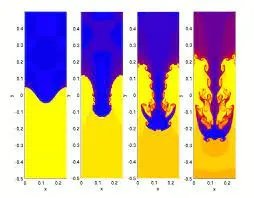
This type of instability is seen in scramjet combustion as the shock wave is accelerated whenever the fuel is ignited in the cylinder.
PLATEAU RAYLEIGH INSTABILITY
This type os instability can be seen in water falling from a jet or from clouds ending up in a droplet form. Air - Water boundary falling in a cylindrical shape needs more energy , whereas same volume of water falling in a watercdroplet form needs less surface energy. This leads to Varicose Pertubation of the liquid falling which then causes pressure gardients in a sinusoidal form
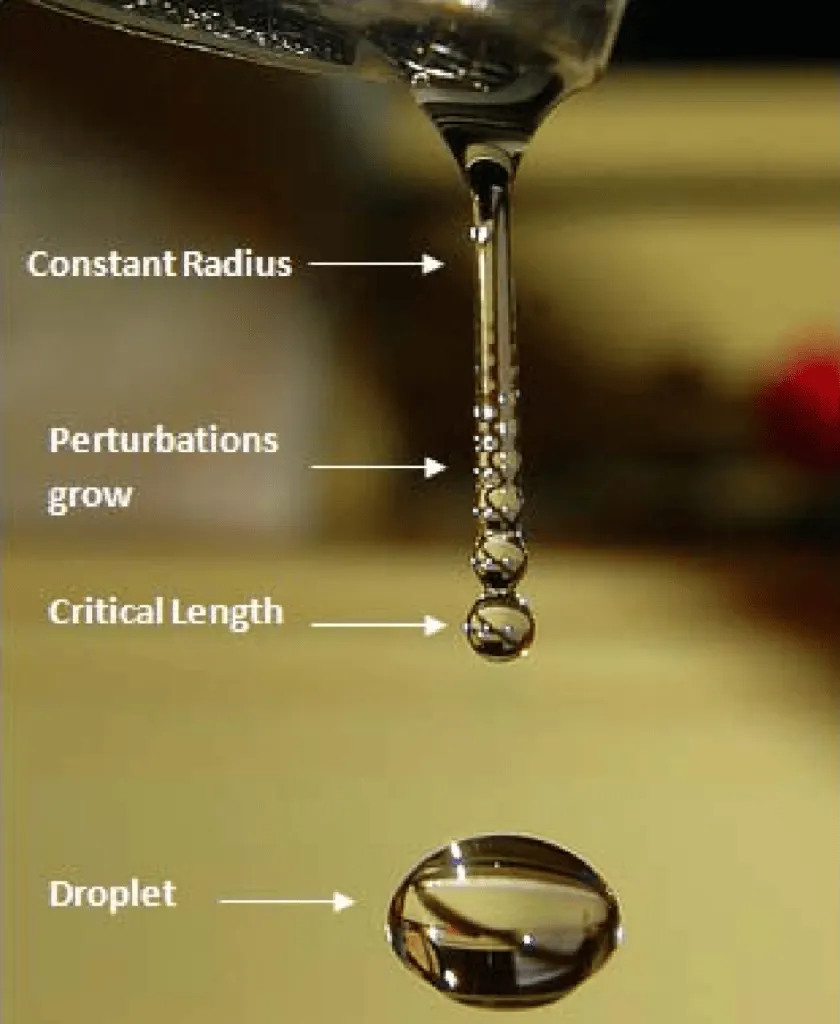
Rayleigh Taylor Instability
case 1 , Mesh size - 5e-4m
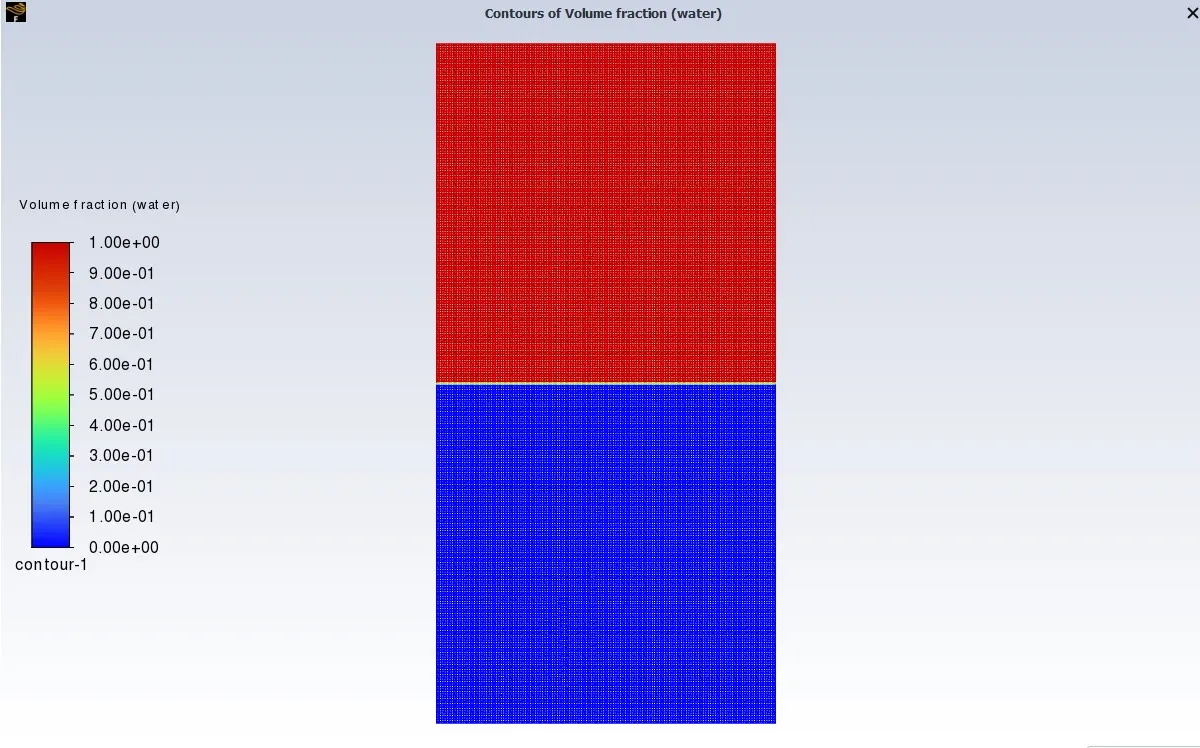
Setup
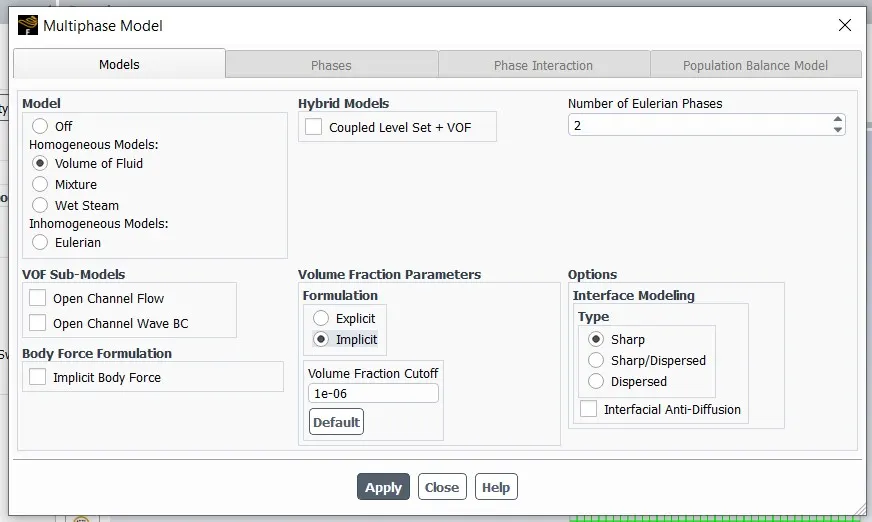
Primary phase - air
Secondary phase - water
Result
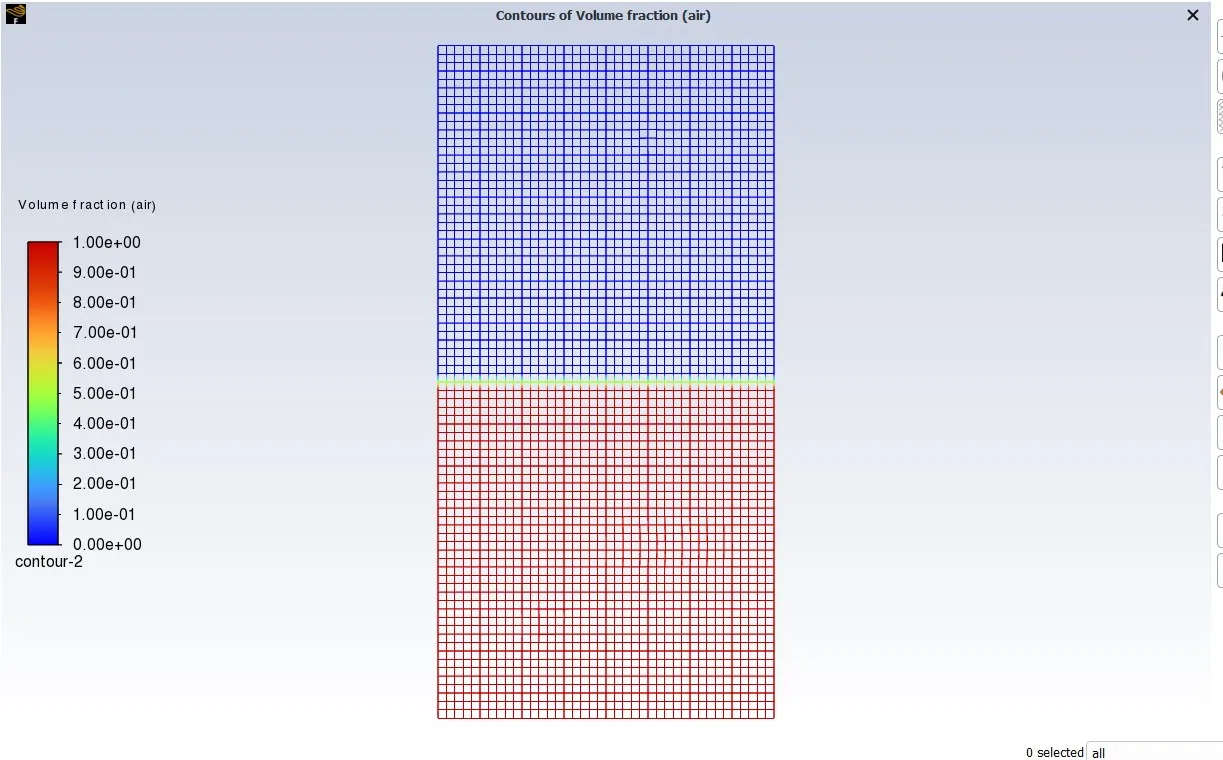
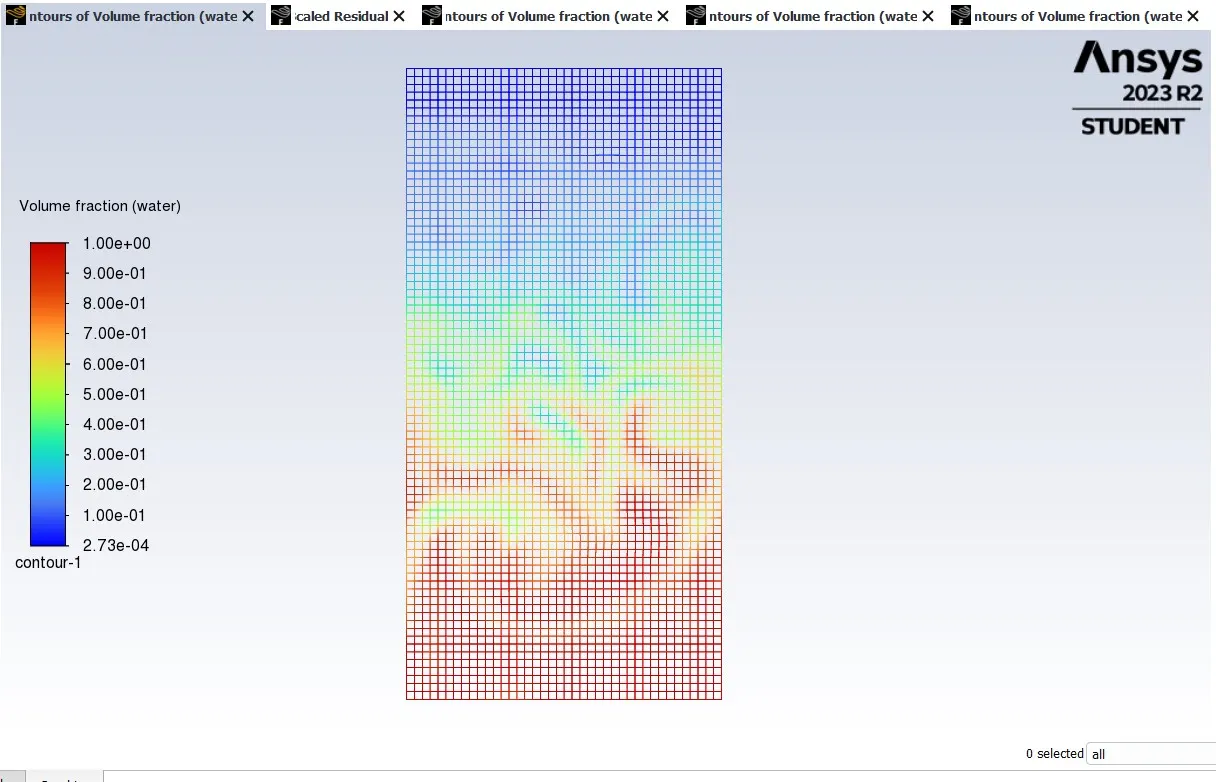
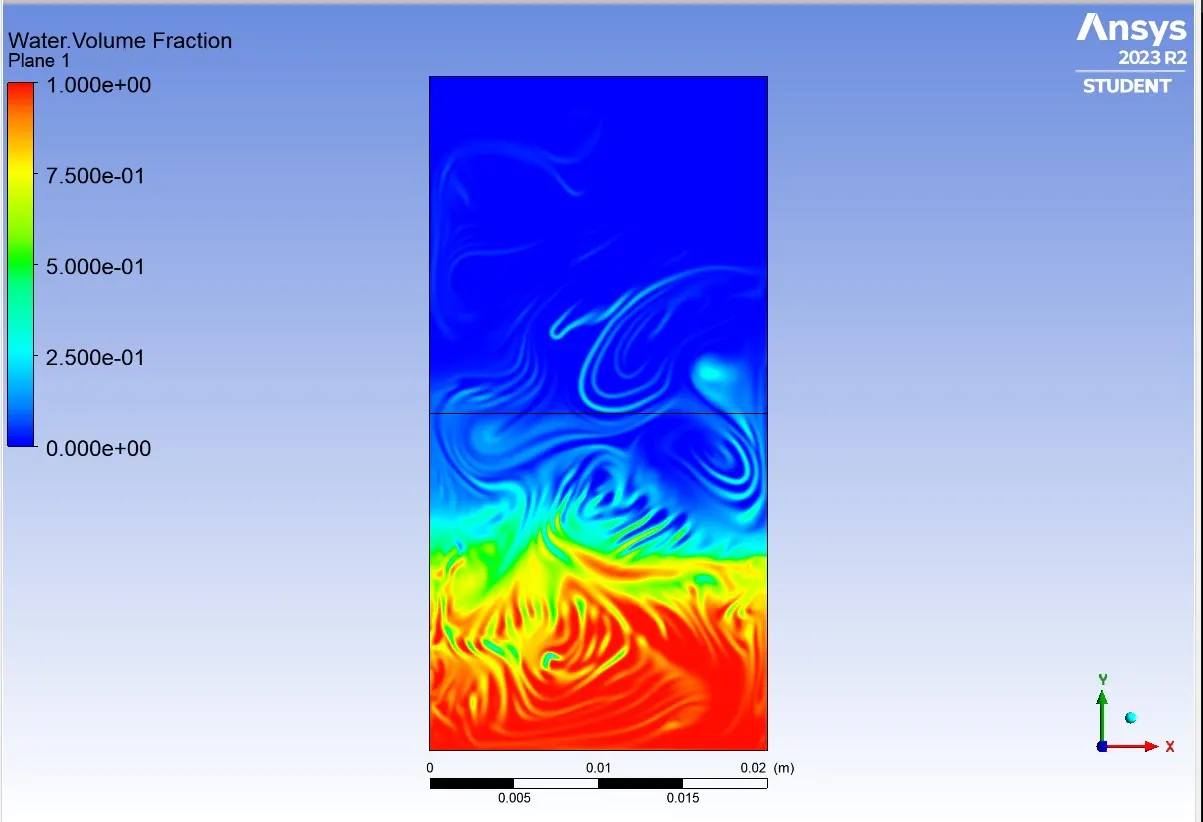
Water volume Fraction
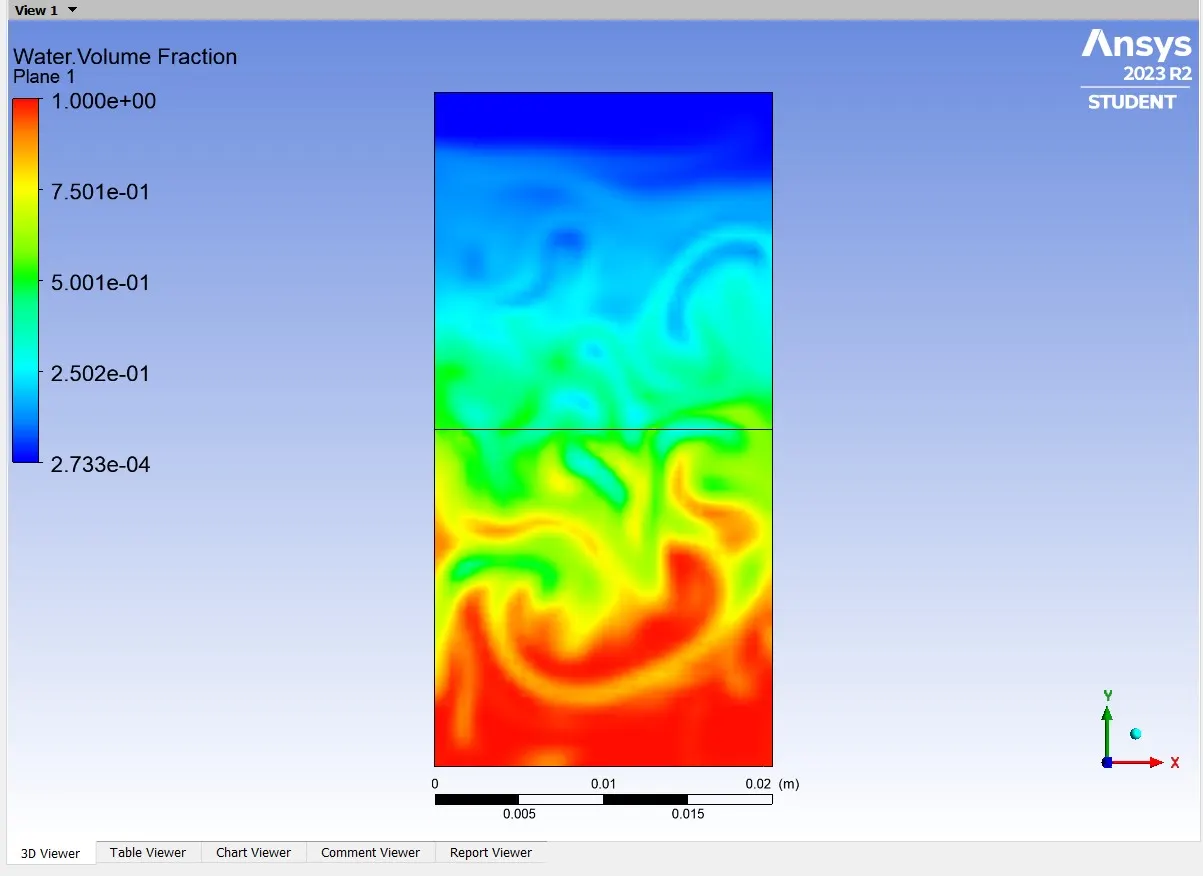
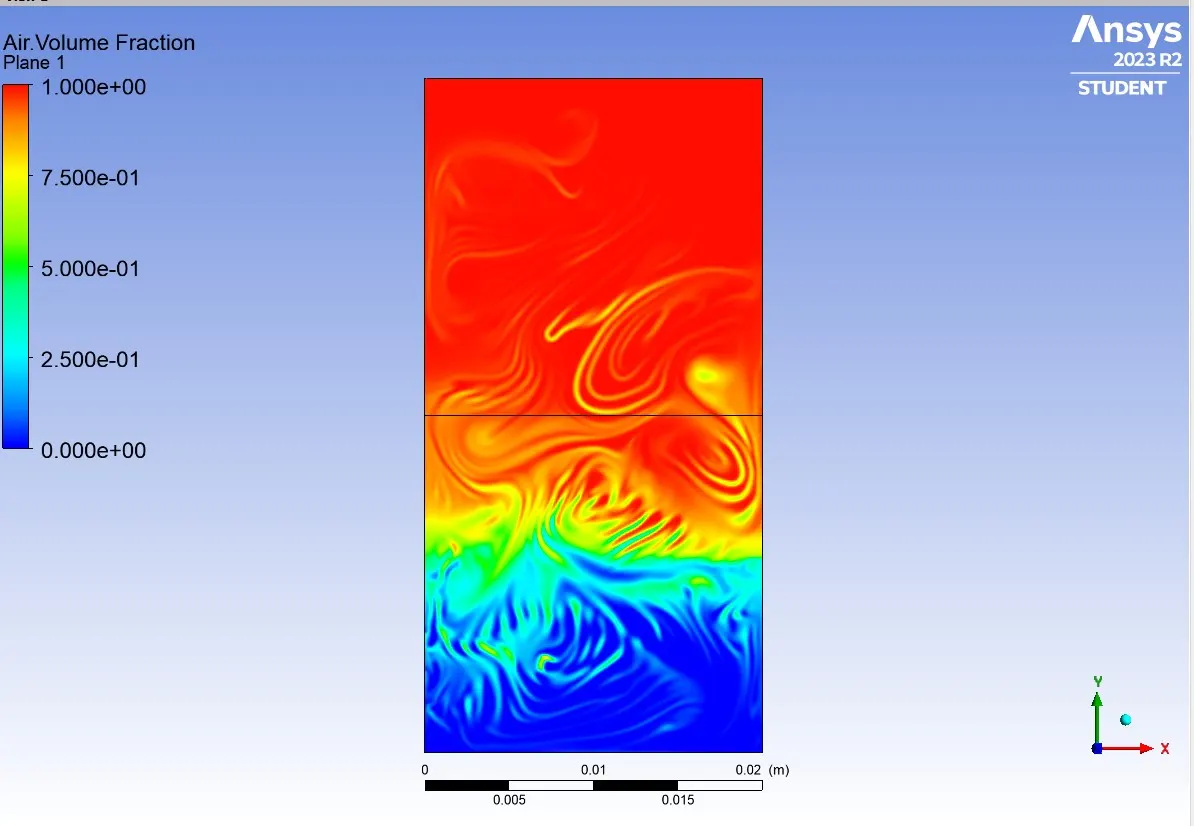
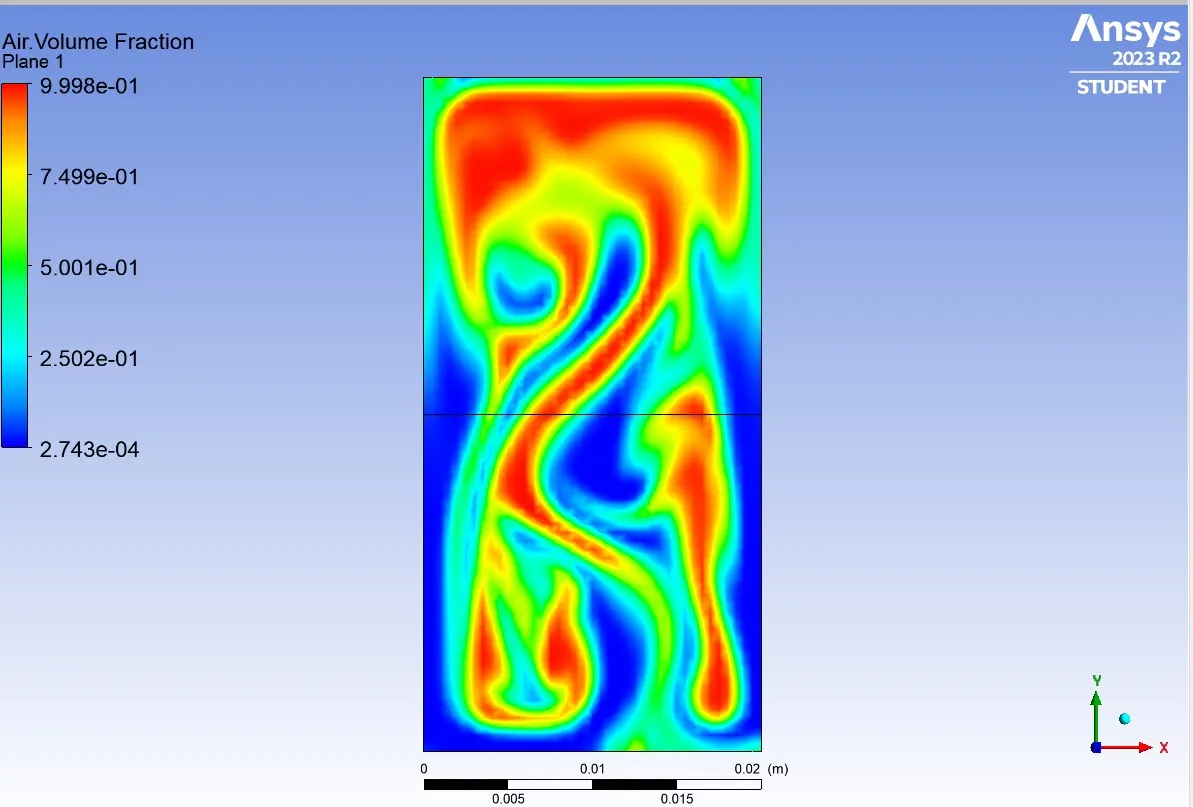
Air Volume Fraction
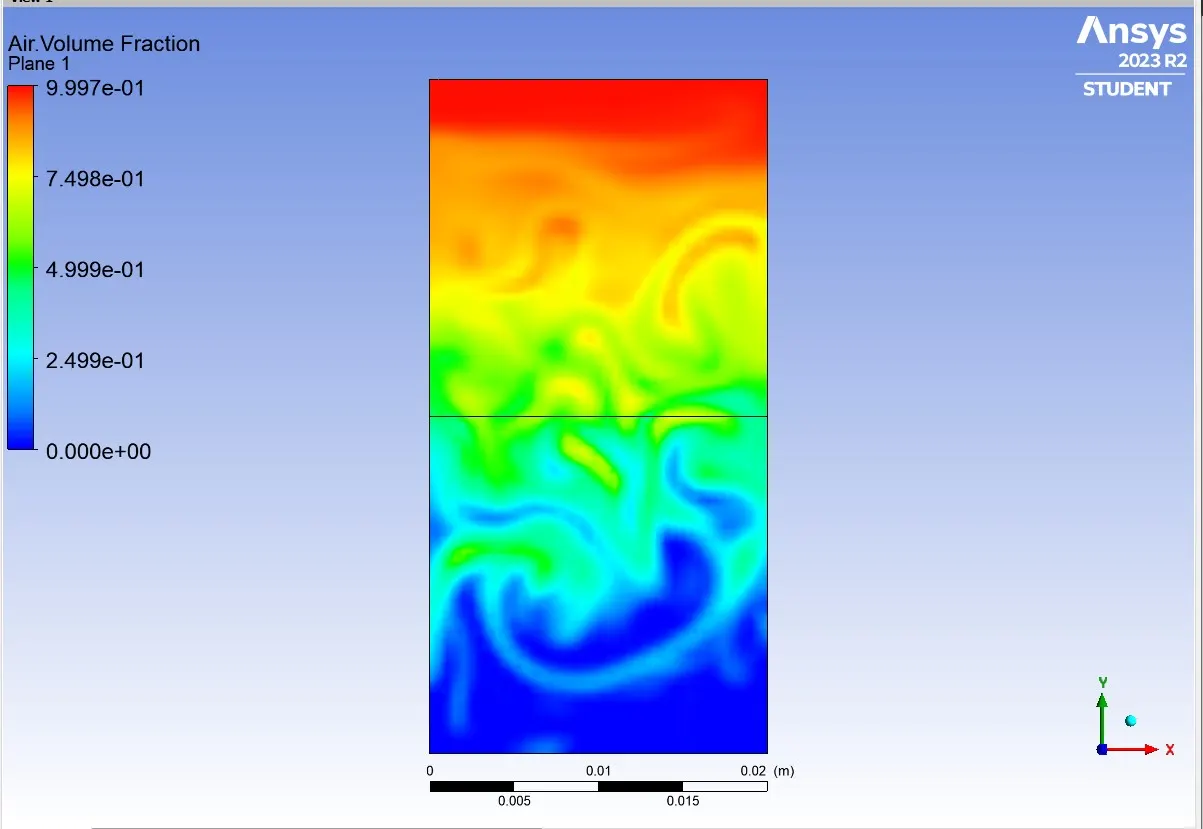
case 2, Mesh size - 5e-5m
Result
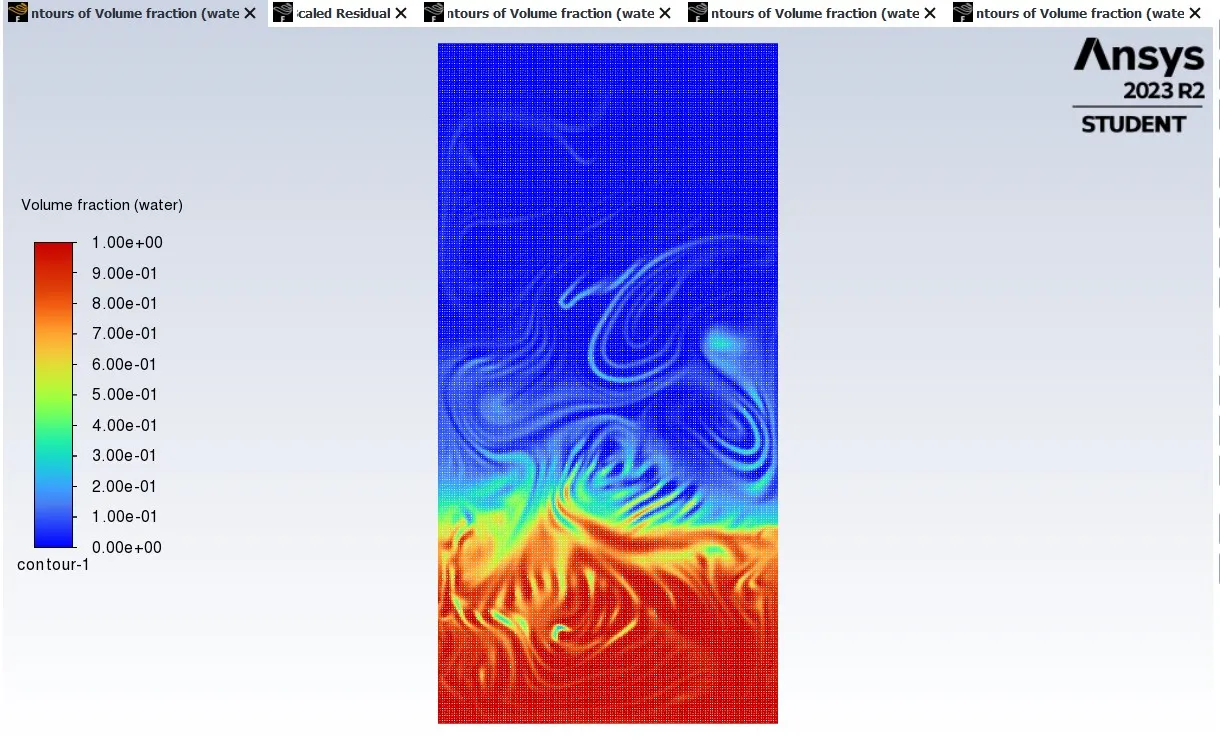
Water Fraction
Air Fraction
User Defined case
Density = 400 kg/`m^3`
Viscosity = 0.001 kg/m-s.
Result
Water fraction volume
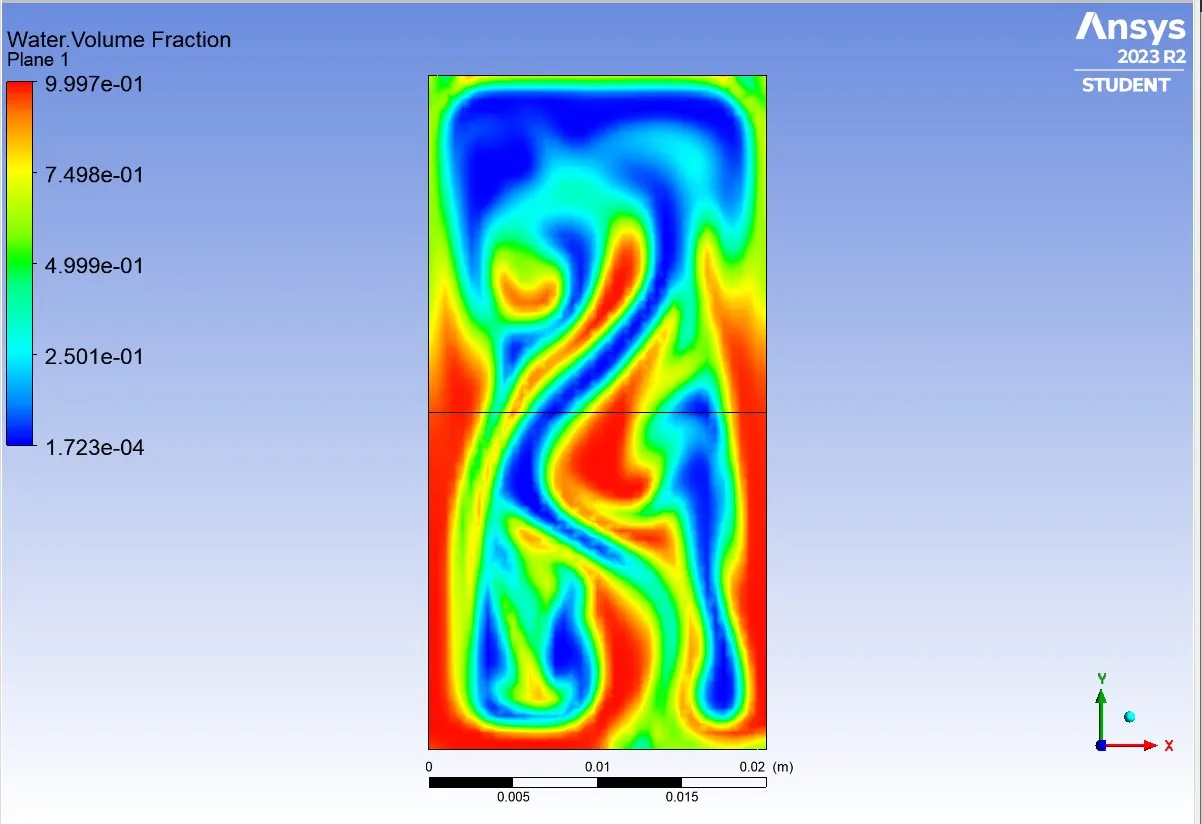
Air Fraction volume
Calculation of Atwood number
Atwood number (A) is the ratio of the differnce of the densities of the fluid to the sum of densities of the fluid. It is used to state the hydrdynamic in stability of the fluid.
- A = `((rho1-rho2)/(rho1+rho2))`
For case 3 Atwood number A = 0.427
For case 1 Atwood number A = 0.997
CONCLUSION
- When the Atwood numbe is nearer to 1 then the lighter fluid below the heavy fluid takes a bubble plum form
- When the Atwood number is nearer to 0 then the instability flow is patternised as symmetrical flow,