Week 5 - Rayleigh Taylor Instability
Aim: our mian aim in these simulation is to perform rayleigh taylor instaility analysis on a surface combine of air and water.
Objective: As told below is the main objective we discussed in report.
- What are some practical CFD models that have been based on the mathematical analysis of Rayleigh Taylor waves? In your own words, explain how these mathematical models have been adapted for CFD calculations.
- Perform the Rayleigh Taylor instability simulation for 2 different mesh sizes with the base mesh being 0.5 mm. Compare the results by showing the animations (Attach them from your google drive). Observe the differences in the animation and explain the effect of mesh size on simulation. Also, explain why a steady-state approach might not be suitable for these types of simulation. [ Choose Air and Water for this simulation]
- Run one more simulation with water and user-defined material (density = 400 kg/m3, viscosity = 0.001 kg/m-s) for refined mesh.
- Define the Atwood Number. Find out the Atwood number for both the cases and explain how the variation in Atwood number in the above two cases affects the behaviour of the instability.
Body of content:
What is Rayleigh Taylor Instability?
Rayleigh Taylor Instability is nothing but the prominent energy mixing mechanism when heavy fluid lies on top of light fluid under the gravity.
This instability deals with a dense, heavy fluid that is being placed above a lighter fluid in a gravity field perpendicular to interface. Example for such systems are dense water over oil (liquid–liquid), or water over air(gas–liquid). The original Rayleigh's paper deals with the dynamics and density variations.
What is Atwood number:
Atwood number is nothing but the dimensionless number in fluid dynamics used in the study of hydrodynamic instabilities in density stratified flows. as shown in below is the equation of atwood number.
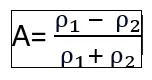
Where ρ1 and ρ2 are heavier and lighter fluid value respectively.
Geometry
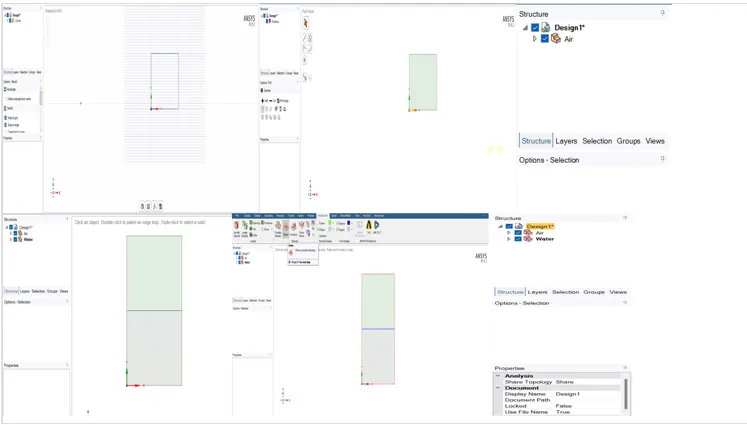
First, we design the geometry in spaceclaim for that we constructed a square of 20mm x 20mm as these is 2d analysis on Rayleigh instability, now next step is to name the square component as air, similarly we going to design another component water and then we use share option workbench to share the topology, as shown in below figure.
Mesh setup
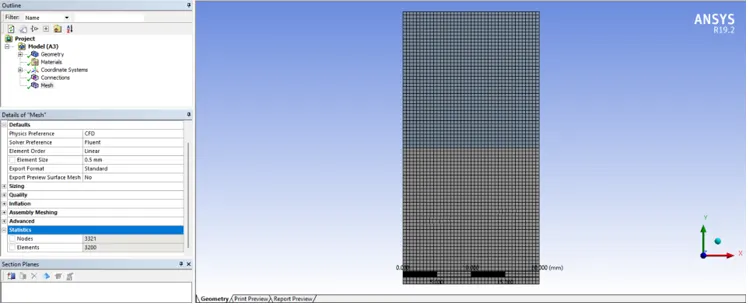
As we design only surface body so for this case, we perform meshing of 0.5 mm on our geometry and obtain 3200 elements, below is the figure of mesh and elements static respectively.
Setup
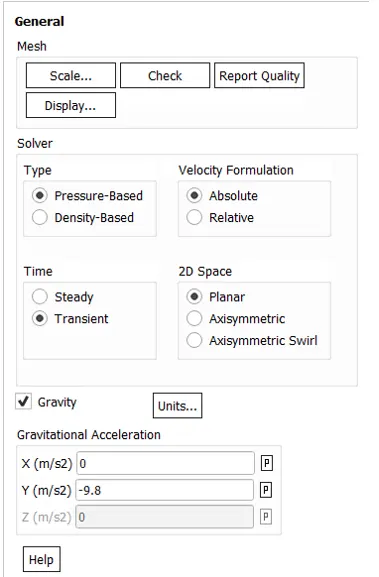
In this analysis of Rayleigh instability, we are going to perform transient simulation, also we enable the gravity in negative y direction, as shown in below figure.
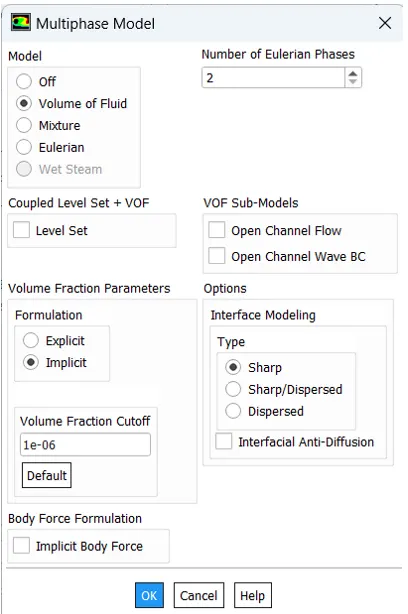
Then we go to multiphase model and select volume of fluid, also we perform implicit method, as shown in below figure.
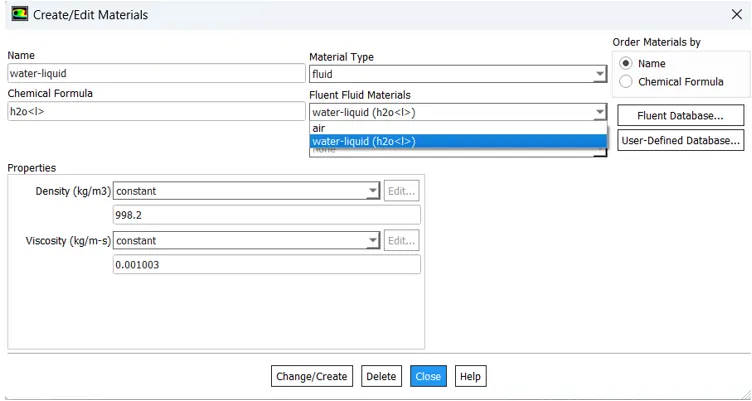
Then we add material which are air and water as shown in below figure.
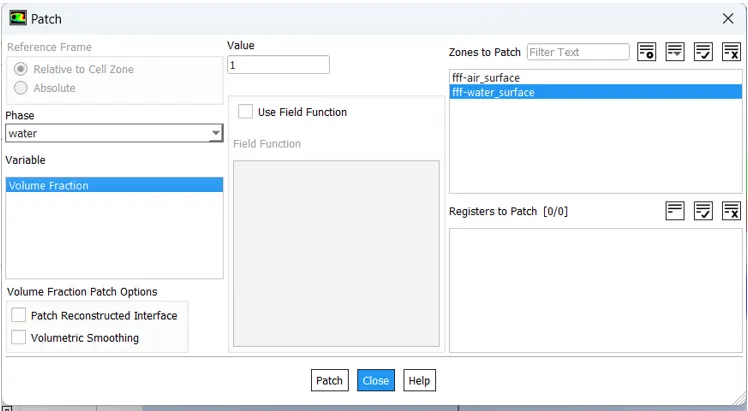
After we assign the material, we initialize the solution here we used standard initialization, for our fluent we also use patch which is important for the simulation, as shown in below figure.
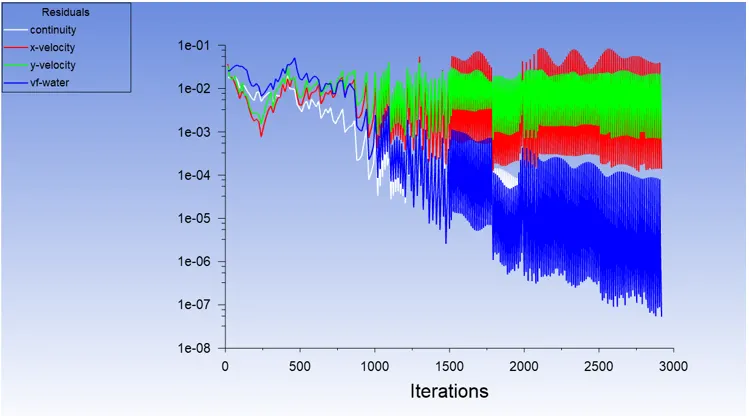
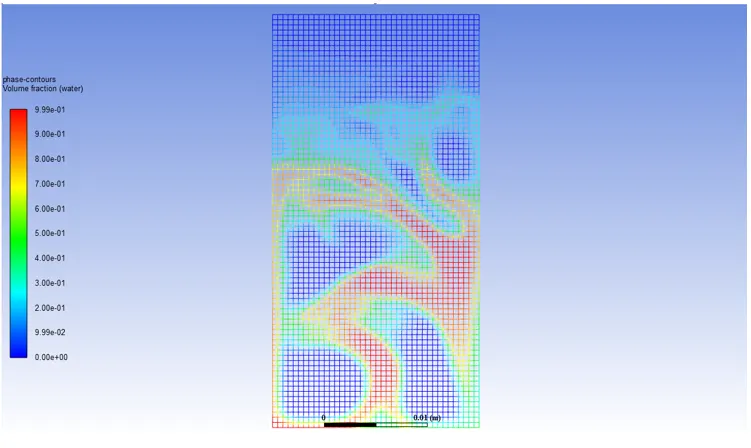
Then we run our simulation for time step of 0.025 and up to iteration 200 as per computational resource, below is the result of residual and Rayleigh Taylor instability.
Now we are going to calculate Atwood value for these solution
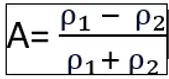
Here density of water is 998.2 kg/m^3 and density of air is taken as 1.225 kg/m^3.
So, the value of Atwood is nothing but 0.9975.
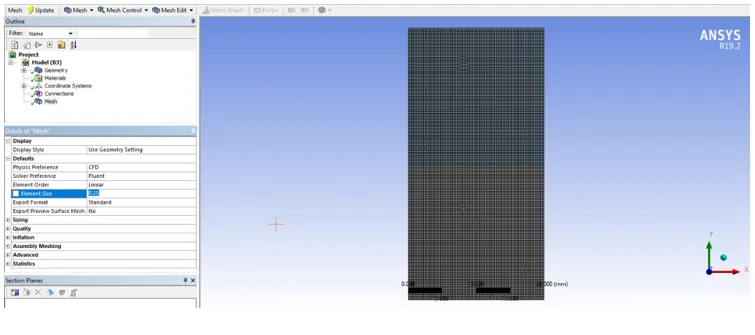
Moving on to next case here we going to refine our mesh furthermore up to 0.25 mm as shown in below figure, to make simulation more precise.
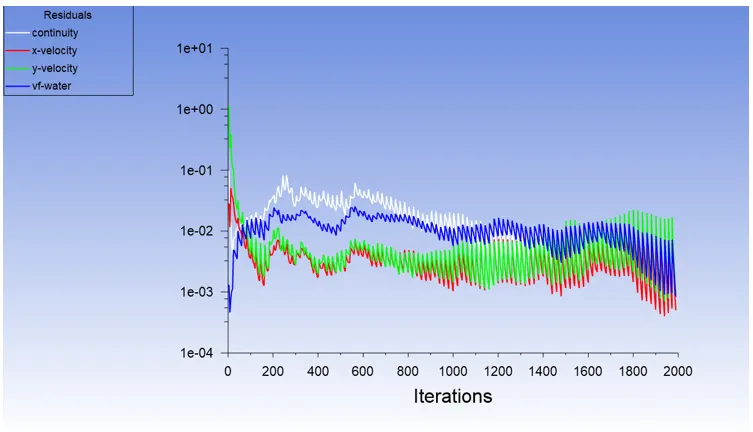
Then we run our simulation for time step of 0.01 and up to iteration 100 as per computational resource, below is the result of residual and Rayleigh Taylor instability
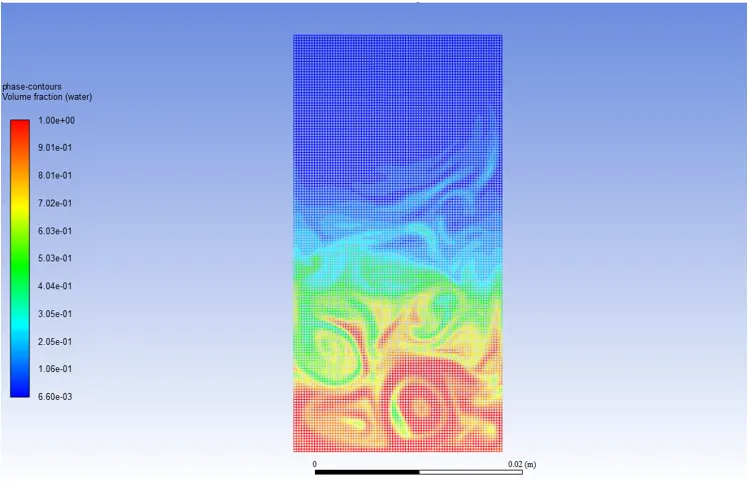
Now, same here also we are going to calculate Atwood value for these solution
Here density of water is 998.2 kg/m^3 and density of air is taken as 1.225 kg/m^3.
So, the value of Atwood is nothing but 0.9975.
In next simulation all the thing are same but we are going to mesh the next simulation up to 0.3mm sizing as shown in below figure.
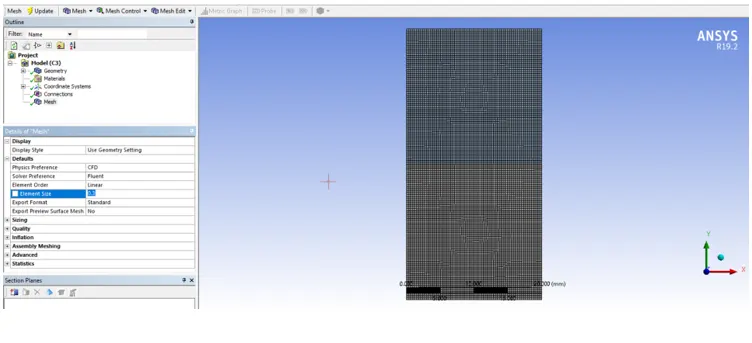
In this simulation instead of going with air we are going to use user-material as shown in below figure.
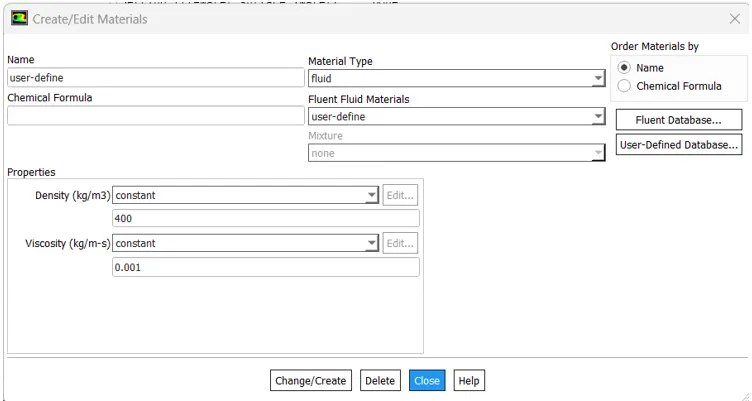
Then we run our simulation for time step of 0.025 and up to iteration 100 as per computational resource, below is the result of residual and Rayleigh Taylor instability.
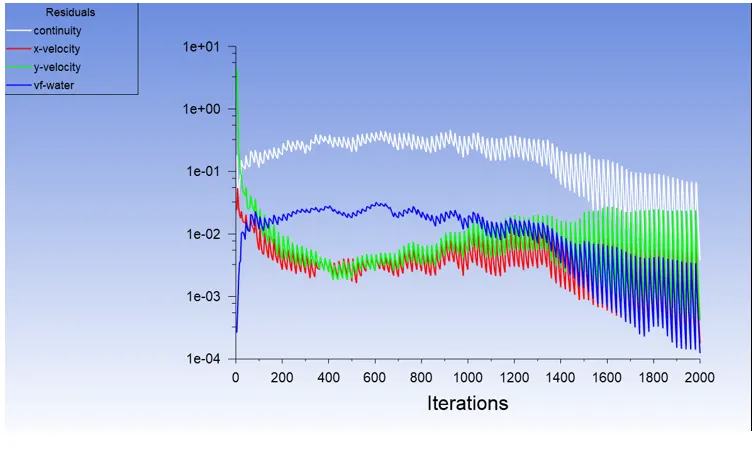
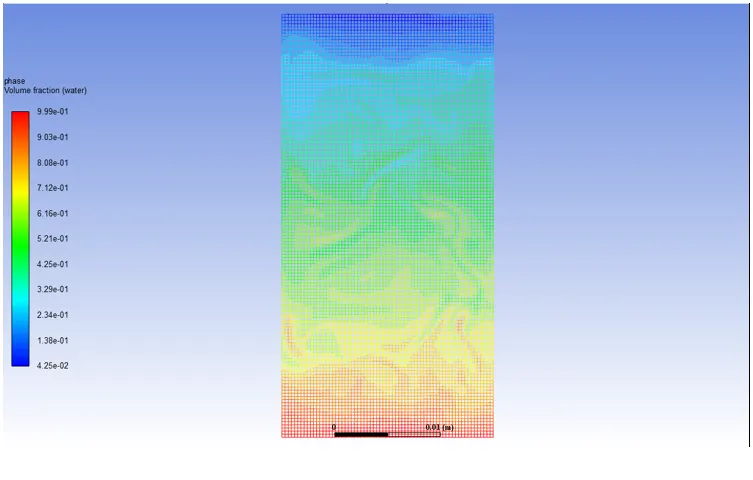
Now, same here also we are going to calculate Atwood value for these solution
Here density of water is 998.2 kg/m^3 and density of user-define is taken as 400 kg/m^3.
So, the value of Atwood is becoming 0.42783.
Conclusion:
Here we learn about Rayliegh Taylor instability we perform two case simulation in which one we used air and in other we use use-define material, we learn the different in stability in both of them.
This simulation is done in ANSYS 19 fluent, below is the comparison table of mesh and element of all three simulation.
|
Simulation |
Element size for meshing |
Statics of mesh elements |
Atwood number |
|
Base line simulation |
0.5 |
3200 |
0.9975 |
|
Case 1 |
0.25 |
12800 |
0.9975 |
|
Case 2 |
0.3 |
8978 |
0.42783 |
Also below is the google link of the videos:
https://drive.google.com/file/d/1ScYySxO-YVXa63VKqx_w9-t-eX3_CiIq/view?usp=drive_link