Week 5 - Rayleigh Taylor Instability
AIM: To perform Rayleigh Taylor instability simulation.
Introduction:
Rayleigh Taylor instability is a phenomenon that occurs at the interface of fluids of different densities wherein the lighter fluid pushes the heavier fluid due to the density difference. it is a dynamic process wherein the system tries to reduce its combined potential energy.
Theory:
From Newton's law of viscosity, we know that the fluid cannot resist even the lightest shear force. Density is one of the main properties of the fluid which the shear force can incorporate with it.
Depending upon the density we have lighter fluid like water etc and denser fluid like mercury, oil, honey etc.
Lord Rayleigh observed that when two fluids. i.e., lighter and heavier fluids are mixed together where the denser fluid is at top of the lighter fluid, due to the gravity and the density variation in the interface of the fluid is not stable. i.e., water suspended on the oil.
So, the instability of the interface between the different densities of fluid when the lighter fluid is accelerated towards the heavier fluid is known as Rayleigh Taylor instability.
CFD models based on mathematical analysis of Rayleigh Taylor waves.
Richtmyer-Meshkov instability
the Richtmyer-Meshkov instability arises when shockwave interacts with an interface separating two different fluids. It combines compressible phenomena, such as shock interaction and refraction with hydrodynamic instability, including the nonlinear growth and subsequent transition to turbulence across a wide range of Mach numbers.
Plateau-Rayleigh instability
The Plateau-Rayleigh instability, often just called the relay instability, explains why and how a falling stream of fluid breaks up into smaller packets with the same volume but less surface area. This fluid instability is exploited in the design of particular type of inkjet technology where by a jet of fluid is perturbed into a steady stream of droplets.
Kelvin-Helmholtz instability
It can occur when there is velocity shear in a single continuous fluid or where there is a velocity difference across the interface between two fluids. For example, a wind blowing over water, the instability manifests in waves on the water surface, more generally clouds, the ocean, Saturn bands, and the sun’s corona show this instability.
GEOMETRY
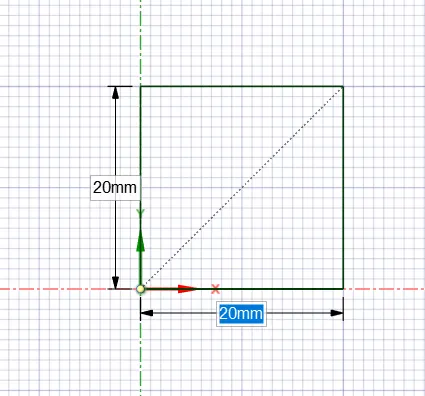
Open SpaceClaim and draw a 2 (air & water )20X20 mm square and select pull tool to make this a surface.
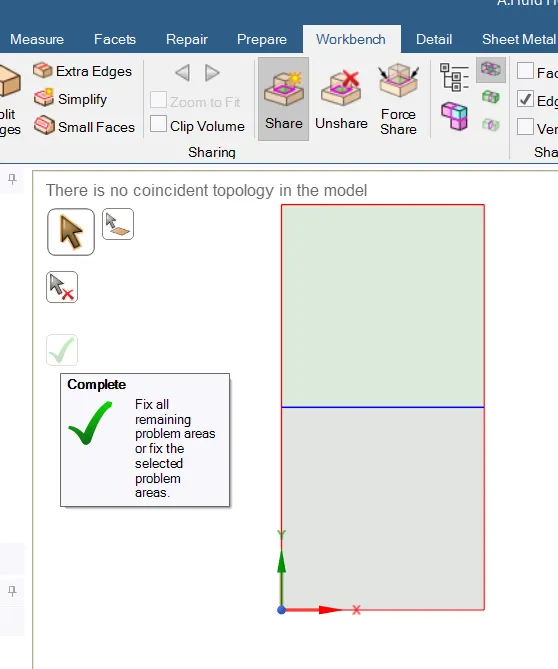
Share topology.
MESHING
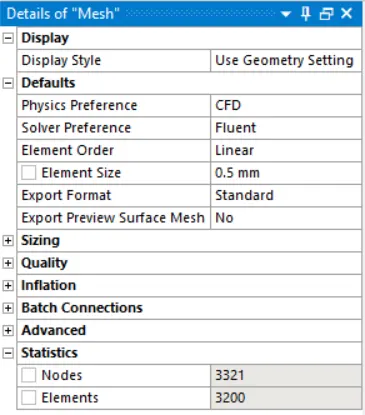
Create a baseline mesh of element size 0.5mm
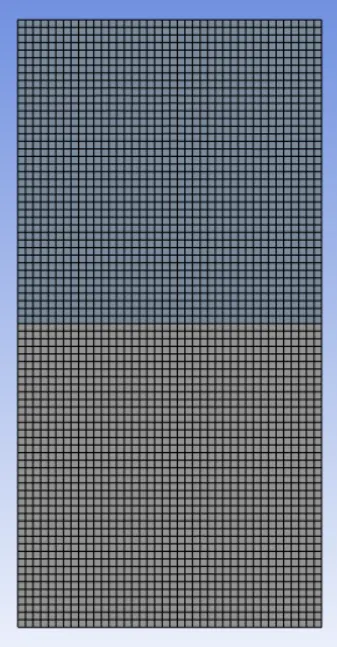
name selection
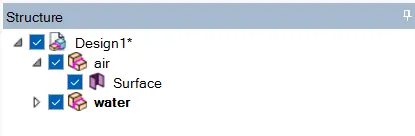
upper square - WATER
lower square - AIR
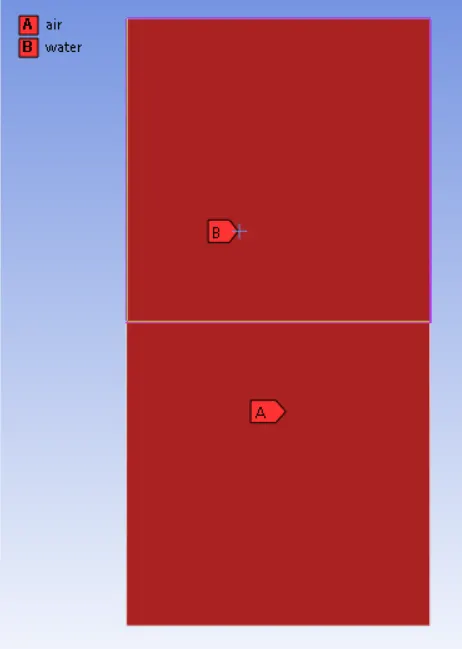
exit spaceclaim.
SETUP
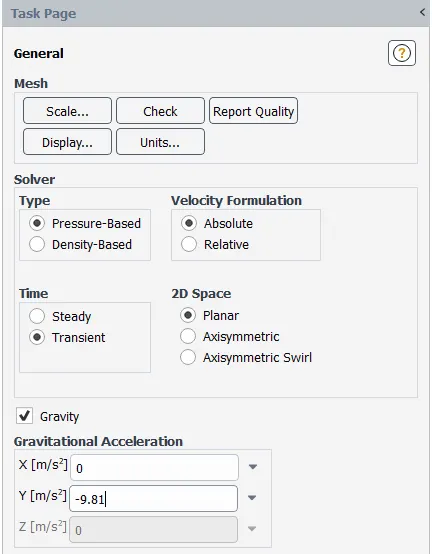
General setup
solver type: Pressure based
velocity formulation: Absolute
Time: Transient
2D space: Planer
gravity enabled with `y=-9.81m/s^2`
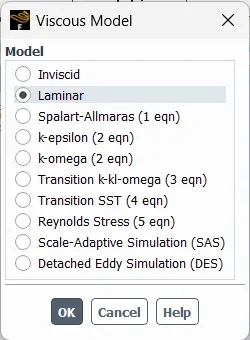
Viscous model - Laminar
Material -
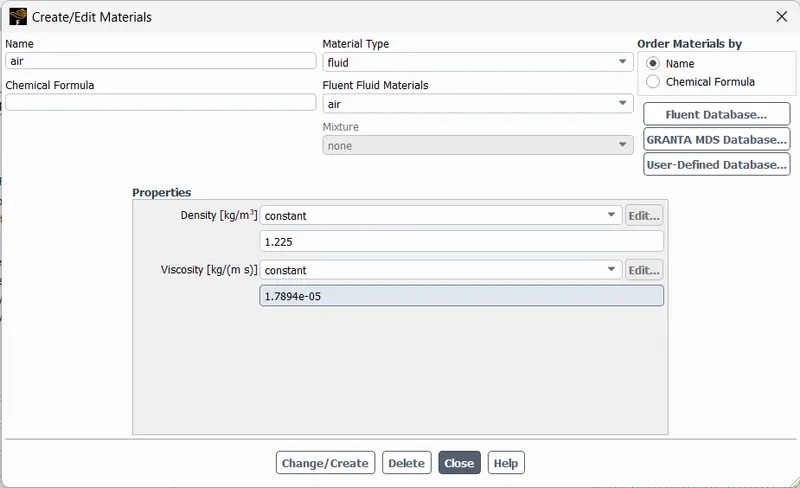
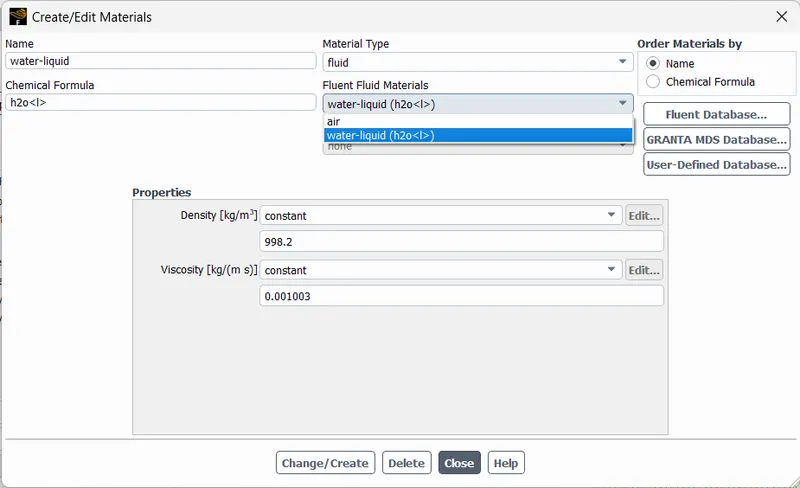
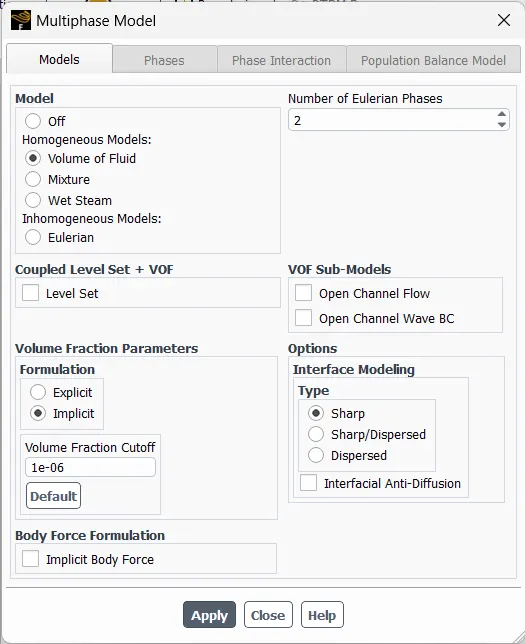
Multiphase
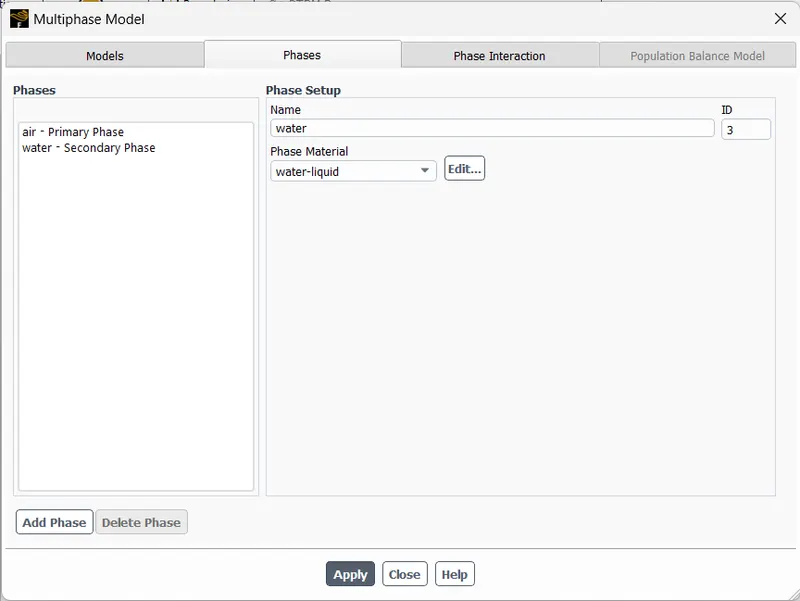
- set multiphase model to Volume of fluid and implicit formulation
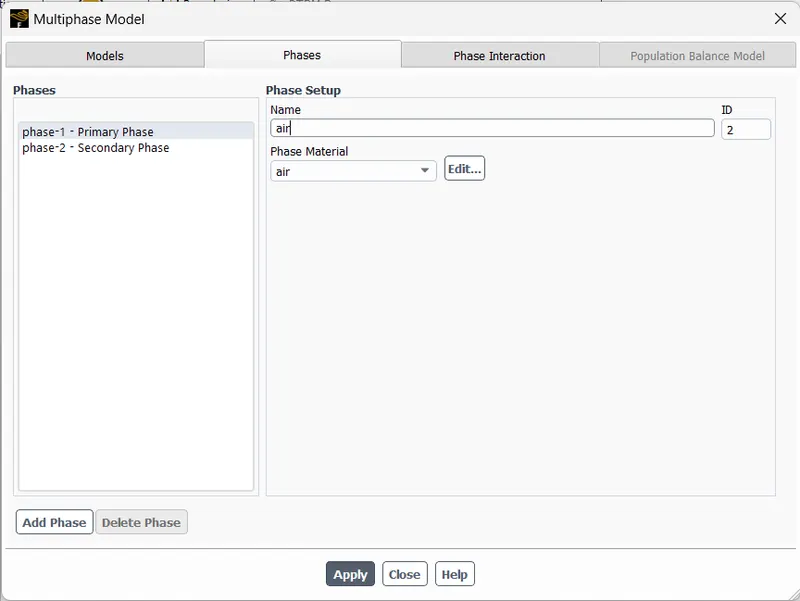
Change name of phases
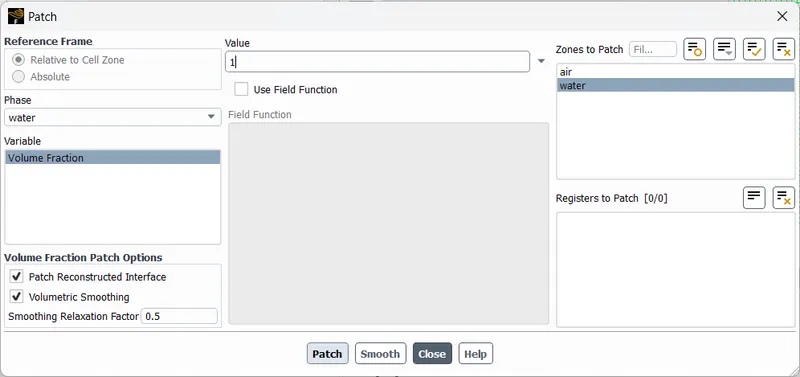
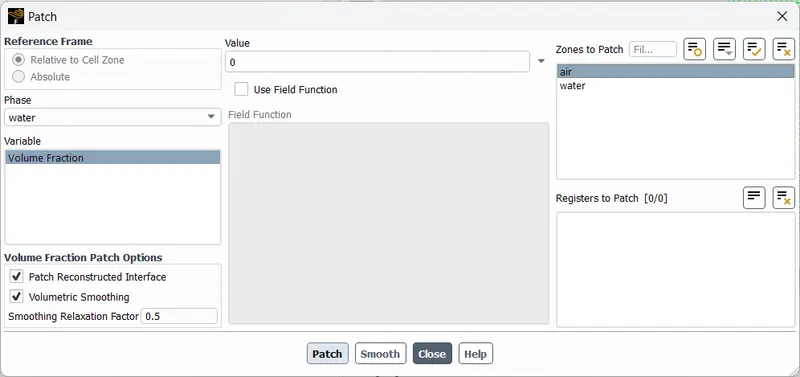
Create patch
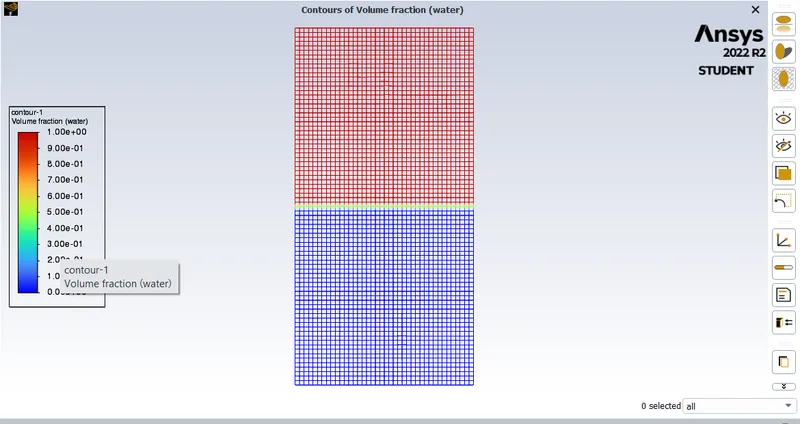
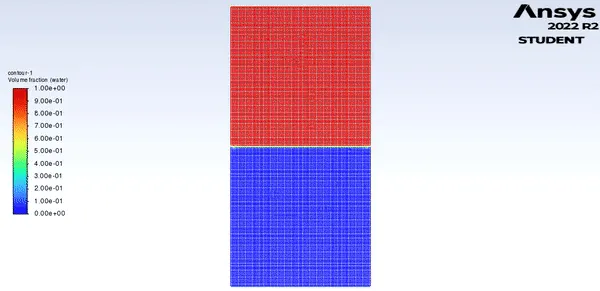
After initialization, we need to patch both the respective materials, where we provide a volume fraction value of 1 for the water and 0 for the air and user defined material.
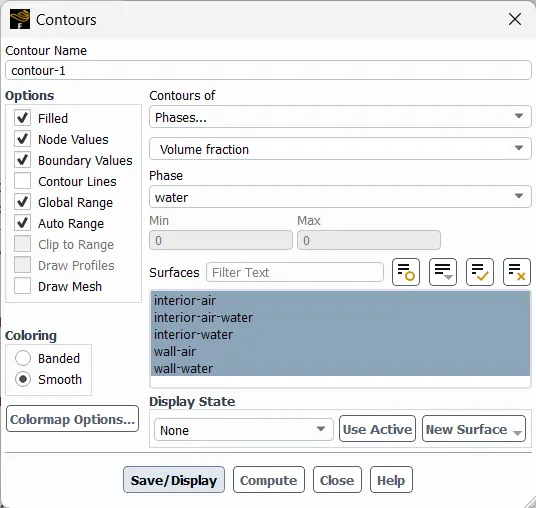
contour plot selection
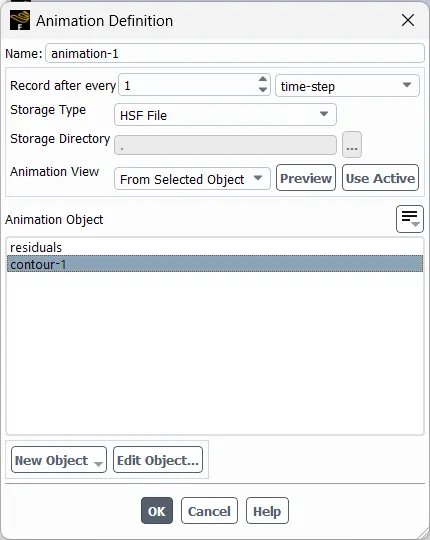
create animation file
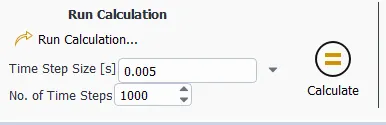
Result:
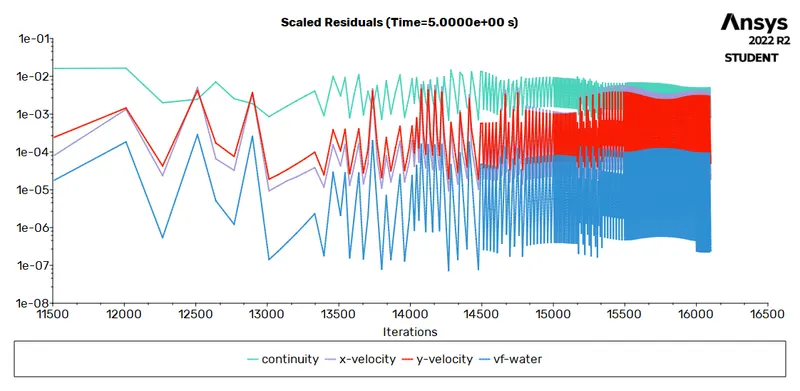
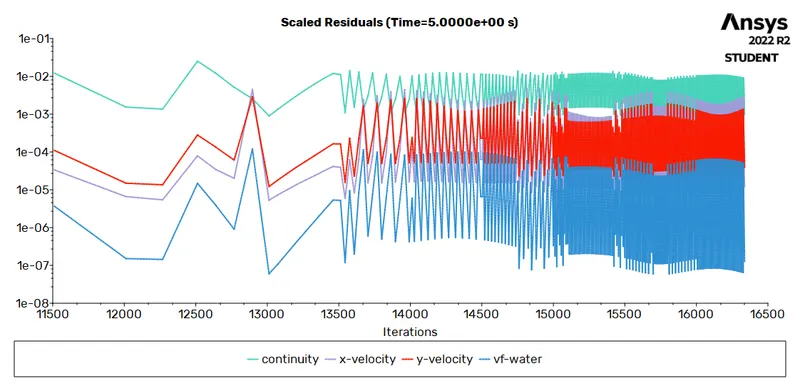
Residual plot
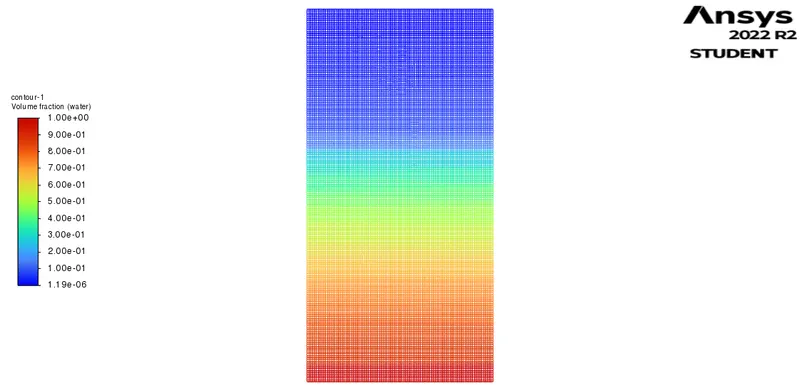
Animation file
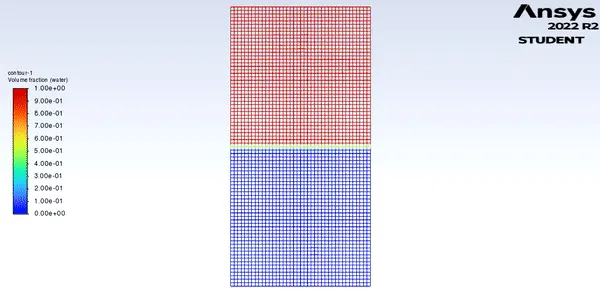
====================================================================
case 2
mesh size 0.3mm
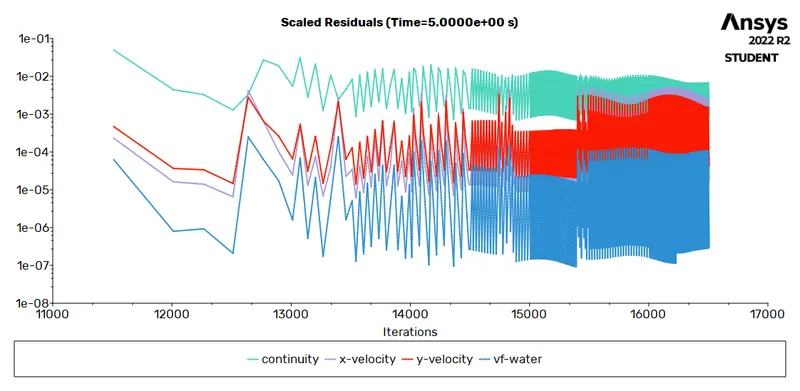
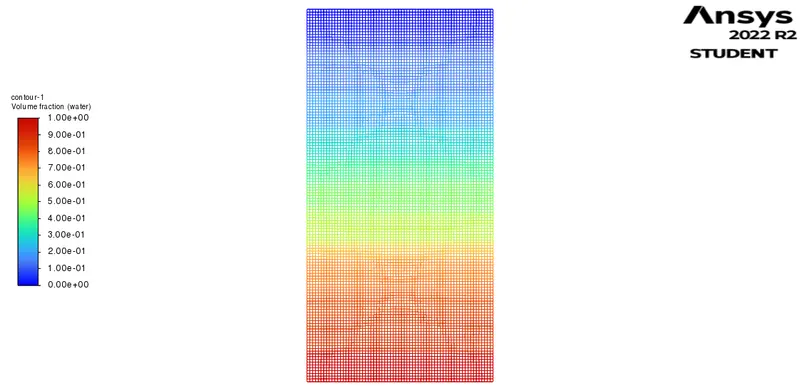
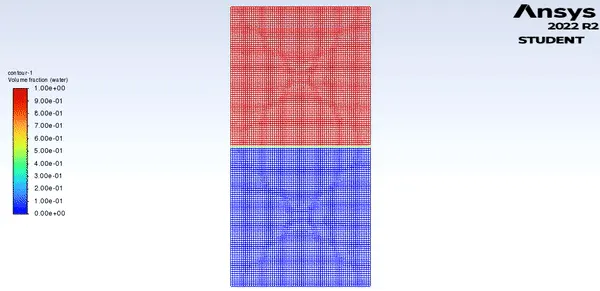
===============================================================
case 3
mesh size 0.2
=============================================================
Observation
In all the cases, it was observed that fluid was starting to diffuse quit symmetrically, but once the air/use define material bubble was touching the top surface it was becoming distorted. Finer meshes captures the instability better than course meshes, but it takes more time to for the heavier fluid to settle down. it is computationally expensive but produces results with better accuracy.
Atwood number(A)
it is a non dimensional number that is used to study hydrodynamic instability in density stratified flows.
`A=(rho_1-rho_2)/(rho_1+rho_2)`
where ,
`rho_1`is density of heavier fluid.
`rho_2`is density of lighter fluid.
or air-water RT instability.
`rho_1=998.2(kg)/m^3` [water density]
`rho_2=1.225(kg)/m^3` [air density]
`A=(998.2-1.225)/(998.2+1.225)`
`A=0.998`
for water\user defined material RT instability.
`rho_1=998.2(kg)/m^3` [water density]
`rho_2=400(kg)/m^3` [user defined material density]
`A=(998.2-400)/(998.2+400)`
`A=0.428`
Behavior of RT instability on variation of Atwood number.
Conclusion
From the simulation results we have found, we can conclude that, it takes more time for a heavier fluid to settle if the Atwood number is smaller. and similarly for large Atwood number it takes less time to settle. in case of air- water it took almost 2 seconds for water to settle down. but in case of user defined material density was higher than air so it took approximately 4 seconds to settle down.