Week 5 - Rayleigh Taylor Instability
Aim
Perform a situation undergoing Rayleigh Taylor Instability and analyse it's important features
Introduction
The Rayleigh–Taylor instability, or RT instability (after Lord Rayleigh and G. I. Taylor), is an instability of an interface between two fluids of different densities which occurs when the lighter fluid is pushing the heavier fluid.[2][3][4] Examples include the behavior of water suspended above oil in the gravity of Earth.
The most common example is of 2 fluid of different densities undergoing ustability when are to be mixed.
In our case Air & Water
Theory
The evolution of the RTI follows four main stages.
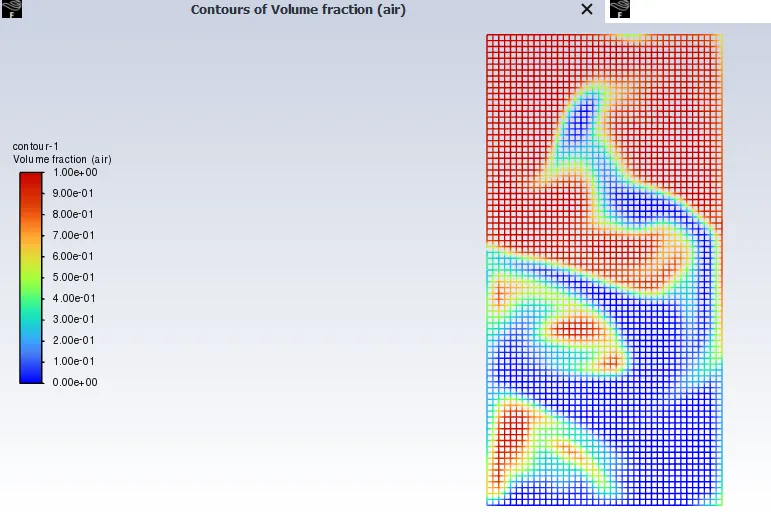
In the first stage, the perturbation amplitudes are small when compared to their wavelengths, the equations of motion can be linearized, resulting in exponential instability growth. However, after the end of this first stage, when non-linear effects begin to appear, one observes the beginnings of the formation of the ubiquitous mushroom-shaped spikes (fluid structures of heavy fluid growing into light fluid) and bubbles (fluid structures of light fluid growing into heavy fluid).
The growth of the mushroom structures continues in the second stage and can be modeled using buoyancy drag models, resulting in a growth rate that is approximately constant in time. At this point, nonlinear terms in the equations of motion can no longer be ignored.
The spikes and bubbles then begin to interact with one another in the third stage. Bubble merging takes place, where the nonlinear interaction of mode coupling acts to combine smaller spikes and bubbles to produce larger ones.
Also, bubble competition takes places, where spikes and bubbles of smaller wavelength that have become saturated are enveloped by larger ones that have not yet saturated.
This eventually develops into a region of turbulent mixing, which is the fourth and final stage in the evolution. It is generally assumed that the mixing region that finally develops is self-similar and turbulent, provided that the Reynolds number is sufficiently large.
Solving & Modelling approach
I have soved through the stages mentioned above with the help of videos shown and guidance of the technical staff.
The process fluesnt fluid flow will be done in following these 5 steps:-
1) Geometry - The geometry of the model will be formed where the actual flow will flow/interfere
2)Mesh - The meshing of the volume is done whoose parameters are set by default with help of 'Boundary Box'
3)Setup - The initial and boundary conditions or parameters and the model choosen are given to the model.
4) Solutions - Based on conditions and requirements the result is calculated with the help of model choosen
5) Results - The final results are appeared here from where the investigation of simulation is done.
Step 1) Start with geometry of our system
1.1) Make a Square on top of another of 20mm length in XY plane
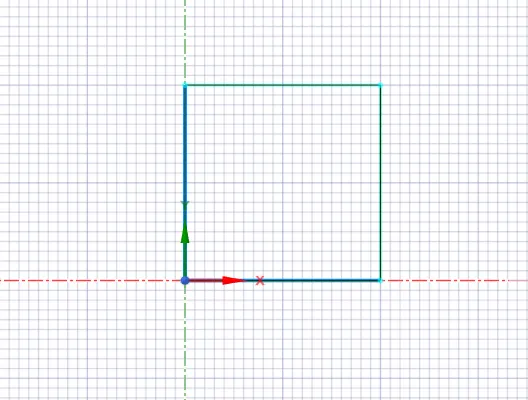
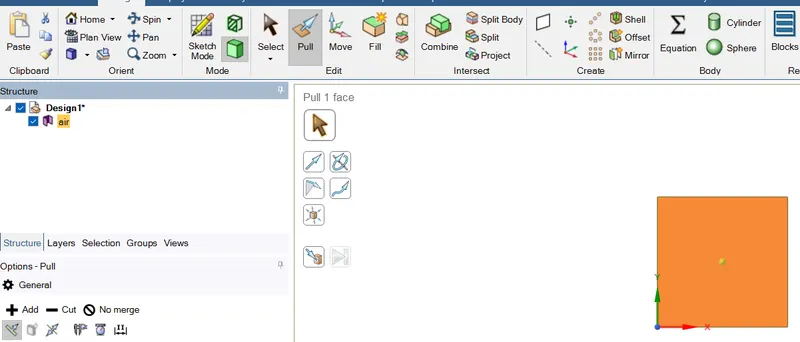
1.2) Name them air and water
1.3) From workbench make sure thet their topology shares

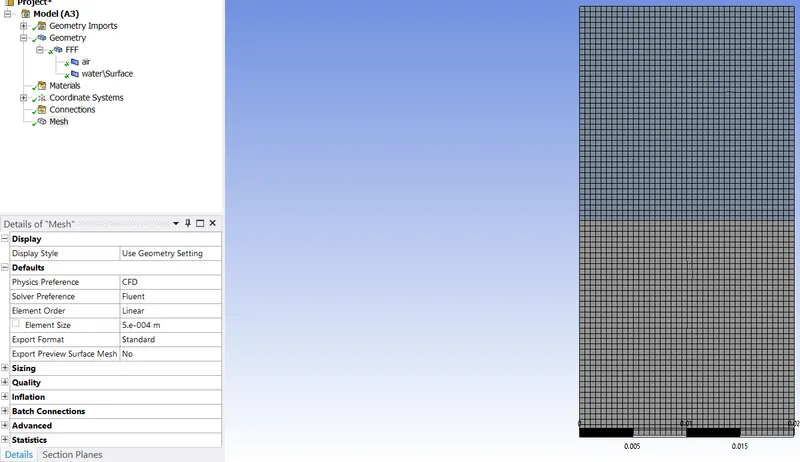
Step 2) Mesh the component
2.1) Generate mesh with mesh size 0.5mm
Procedure
Step 3) Setup the system
3.1) Set the physiccs as mentioned below

3.2) Create water as new material
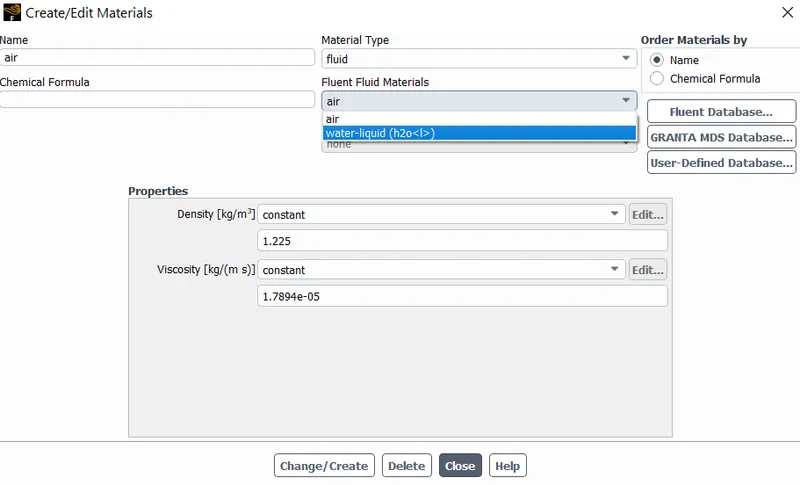
3.3) Assign the phases to water and air
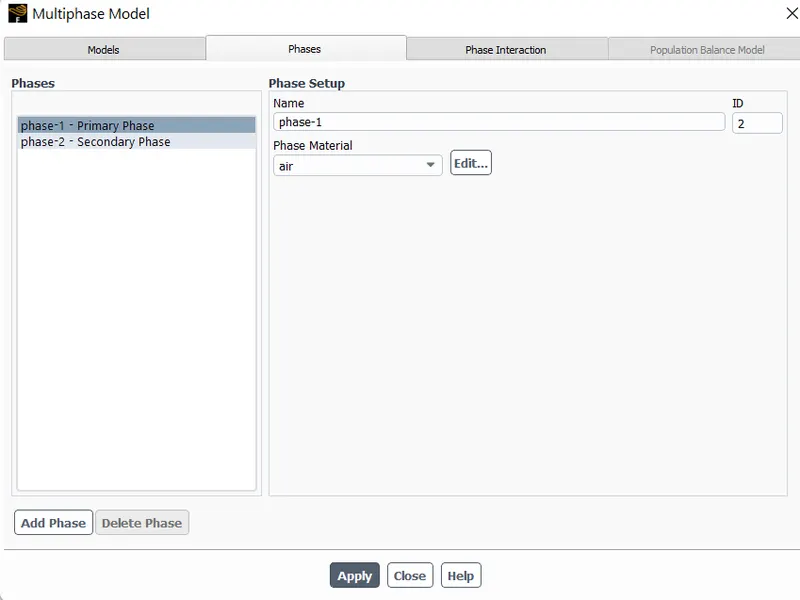
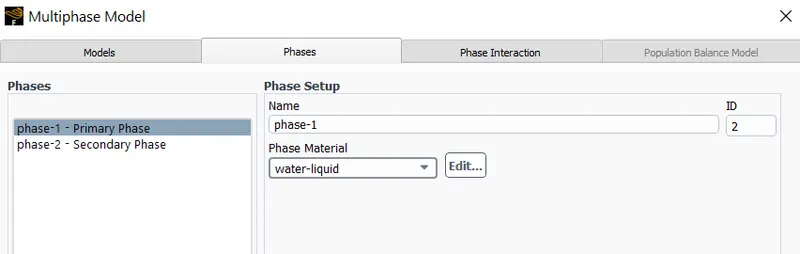
3.4) Standard Initialise the system
3.5) Gice the patch(1,0) to the 2 phases
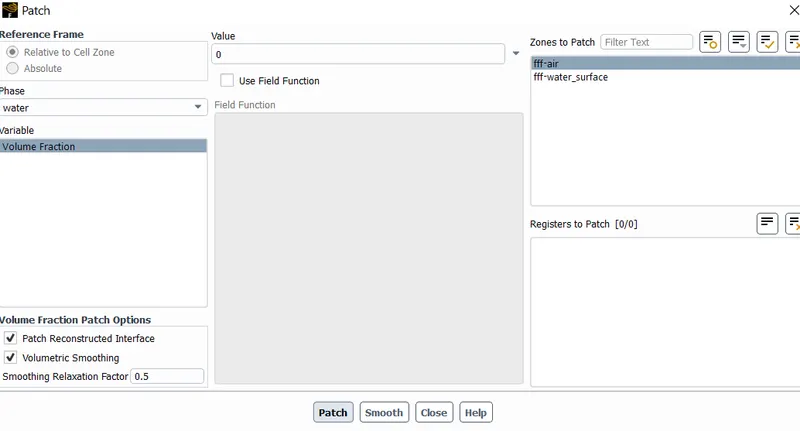
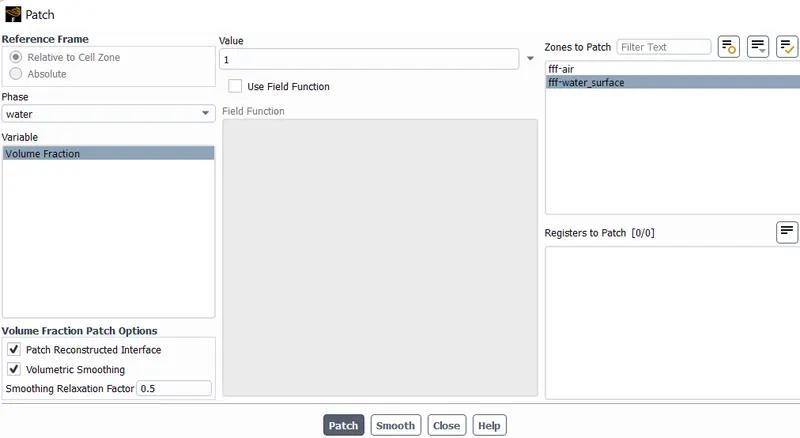
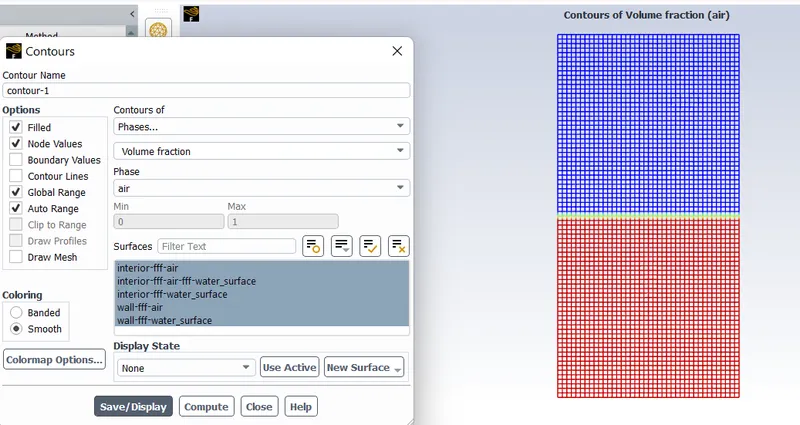
3.6) Create a new contour for mass fraction of phase
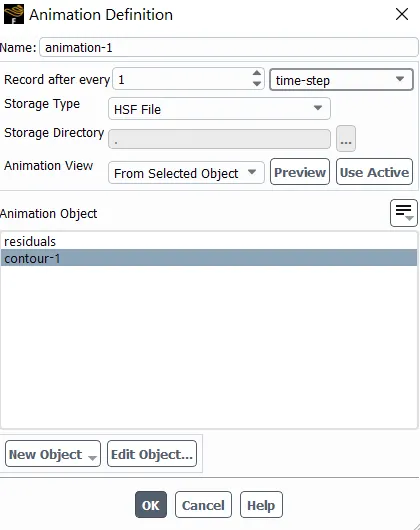
3.7) Create animation for the system
3.8) Calculate the result for 0.005s time step
Result
The conclusion can be conclude by the following results:-
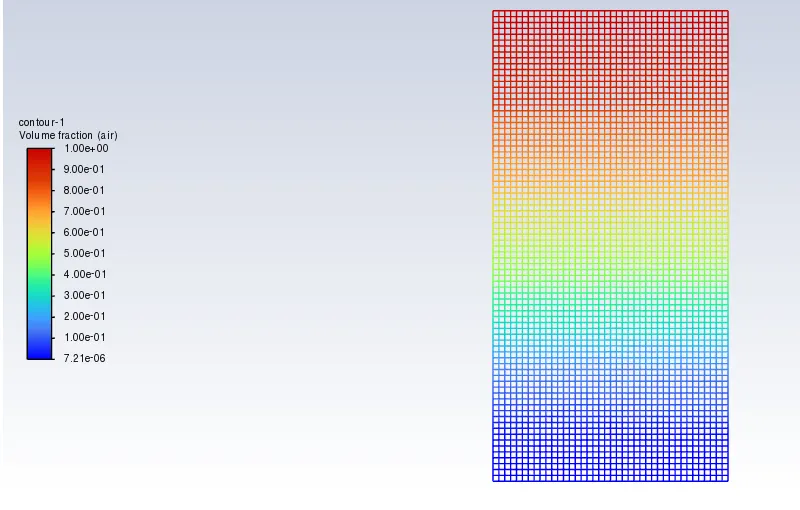
1.Contour of volume fraction
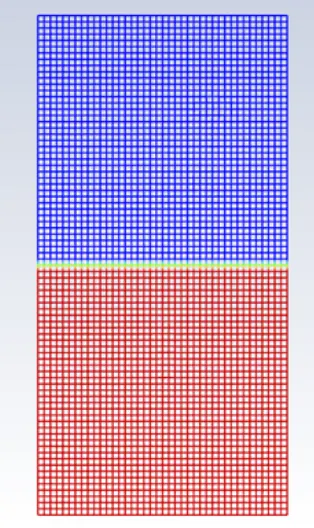
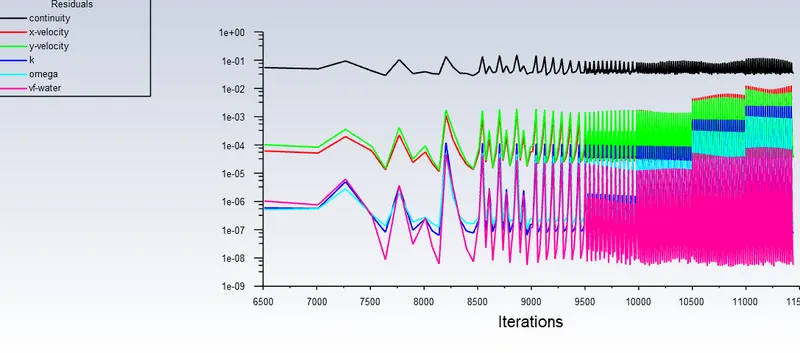
2. Graph of scaled residual
Conclusion
The following points can be concluded:-
1. Unstability is experienced for a while when fluids of different density mixes.
2. The higher density fluid tends to go downwards and lighter tends to upwards, in form of bubble like shape.
3. Stability is achieved after a while.
4. The real time simulation can be appeared better with finer mesh and using transient type flow
Animation link
https://drive.google.com/file/d/1JfuQd_G0p-Va_Paho-jSLG6fAd52bMjy/view?usp=sharing