Week 5: Prandtl Meyer Shock problem
What is a shock wave?
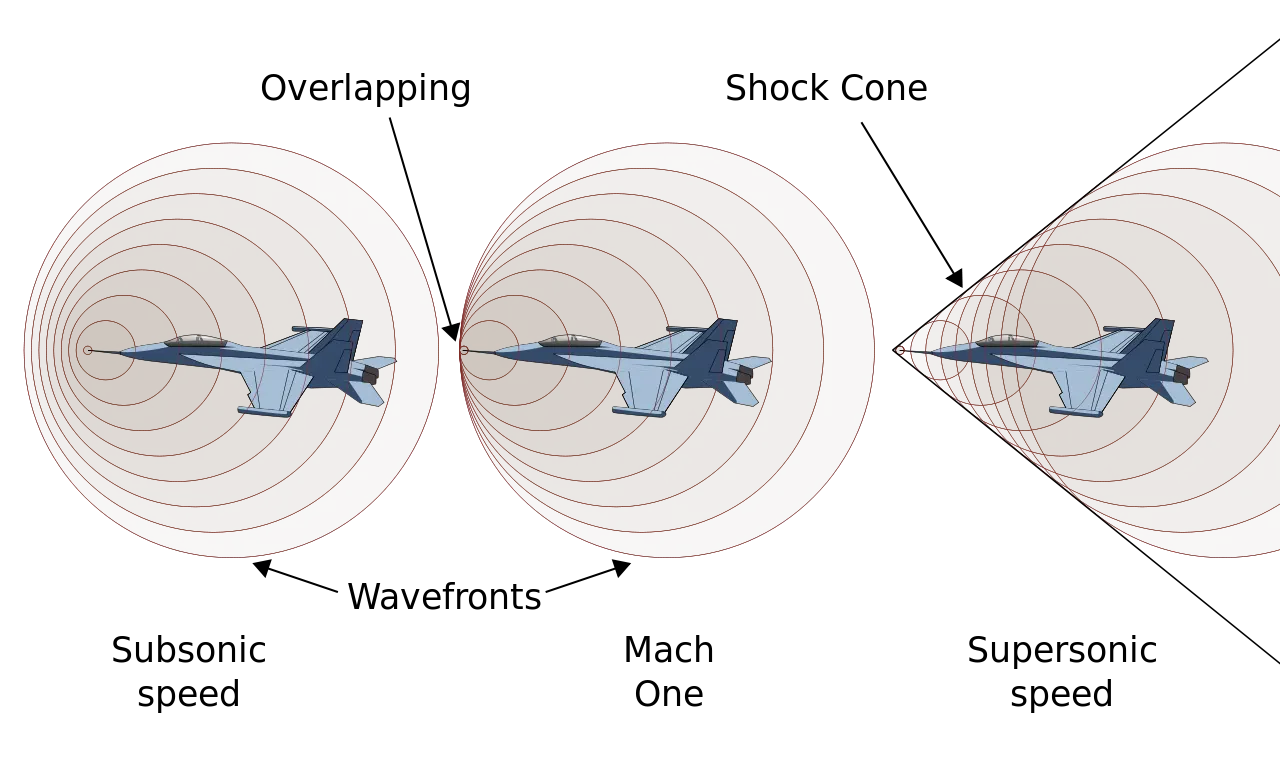
When an object (or disturbance) moves faster than the information about it can be propagated into the surrounding fluid, fluid near the disturbance cannot react or "get out of the way" before the disturbance arrives. In a shock wave the properties of the fluid (density, pressure, temperature, velocity, Mach number) change almost instantaneously.
Measurements of the thickness of shock waves have resulted in values 2 micrometers (10-5 in), which is on the same order of magnitude as the mean free gas molecule path. In reference to the continuum, this implies the shock wave can be treated as either a line or a plane, if the flow field is 2d or 3d respectively.
Shock waves form when the speed of a fluid changes by more than the speed of sound. At the region where this occurs sound waves traveling against the flow reach a point where they cannot travel any further upstream and the pressure progressively builds in that region, and a high pressure shock wave rapidly forms.
Shock waves are not conventional sound waves; a shock wave takes the form of a very sharp change in the gas properties on the order of a few mean free paths (roughly micro-meters at atmospheric conditions) in thickness. Shock waves in air are heard as a loud "crack" or "snap" noise.
Over longer distances a shock wave can change from a nonlinear wave into a linear wave, degenerating into a conventional sound wave as it heats the air and loses energy. The sound wave is heard as the familiar "thud" or "thump" of a sonic boom, commonly created by the supersonic flight of aircraft.
PRANDTL-MEYER EXPANSION WAVES
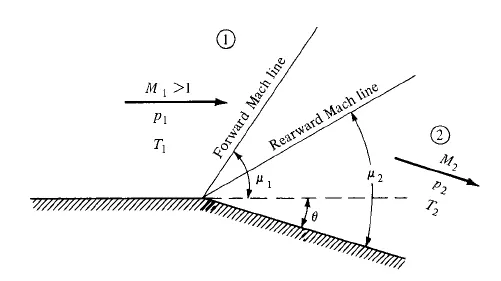
Expansion waves are in many ways the antithesis of shock waves. They arise when a supersonic flow is turned away from itself. An expansion region is built up of an infinite number of weak Mach waves. Since each Mach wave is isentropic the entire expansion region is isentropic, which means that the isentropic relations may be used over the expansion region.
over an expansion region we will get an increase in flow Mach number, decrease in pressure, decrease in density and decrease in temperature.
Starting from a geometrical analyze of the slight change in flow angle over one single Mach wave and assuming calorically perfect gas, the Prandtl-Meyer function is derived. The Prandtl-Meyer function can be used to obtain the downstream flow Mach number after a expansion region given the upstream Mach number and deflection angle.
What BC's are typically used for shock flow problems
A practice that is widely adopted for inflow boundaries is to set the transported quantities of either a uniform or some predetermined profile over the boundary surface (Dirichlet).
For outflow boundaries, the convective derivative normal to the boundary face is set equal to zero; the transported quantities at the boundaries are extrapolated along the streamwise direction of the fluid flow (Neumann).
Shock waves are steep wave fronts that are fundamental in nature, especially in highspeed fluid flows. When a shock hits an obstacle, or a flying body meets a shock, shock reflection/diffraction phenomena occur.
In particular, these shock problems include von Neumann's problem for shock reflection–diffraction by two-dimensional wedges with concave corner, Lighthill's problem for shock diffraction by two-dimensional wedges with convex corner, and Prandtl-Meyer's problem for supersonic flow impinging onto solid wedges, which are also fundamental in the mathematical theory of multidimensional conservation laws.
Aim :
To Simulate a super sonic flow creating a Prandtl Meyer Expansion. To Compare the Effect of SGS parameter on shock location. And to post process the results and compare the plots for estimating the properties of the shock wave.
Geometry & Introduction :
The geometry is a rectangular Block having a nudge at the center of the block towards the flow of fluid.
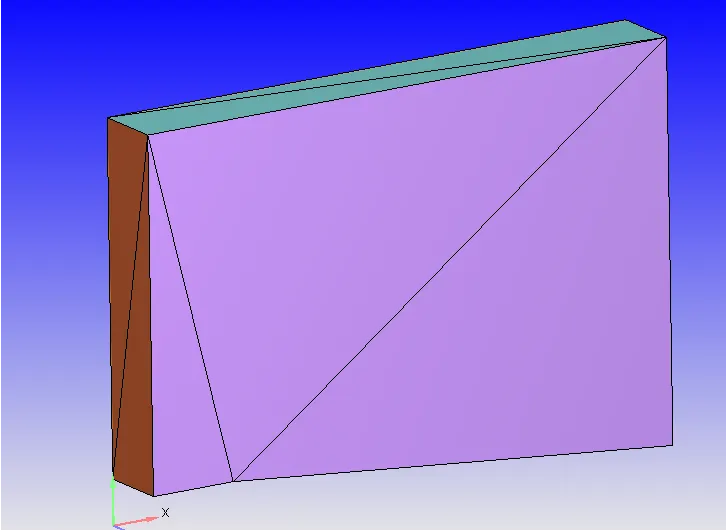
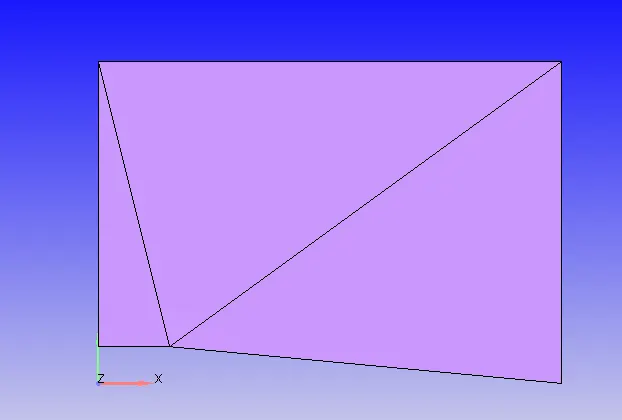
The super sonic velocity of the fluid (Air) produces a shock expansion when it hits the nudge present in the middle of the block.
Case Set-Up :
The fluid used for the simulation of flow is the air.
A steady state simulation is set-up to observe the fluid flow.
A density based solver is used as the Value of mach number decreases.
The case simulation is calculated for 25000 cycles to monitor the motion of the fluid.
Boundary Conditions :
The inflow conditions are set to have an inlet velocity of 680 m/s along the X direction of the flow. This conditions are given to follow the Dirichlet Boundary conditions.
The outflow conditions are set to zero normal gradient to follow the Neumann Boundary conditions.
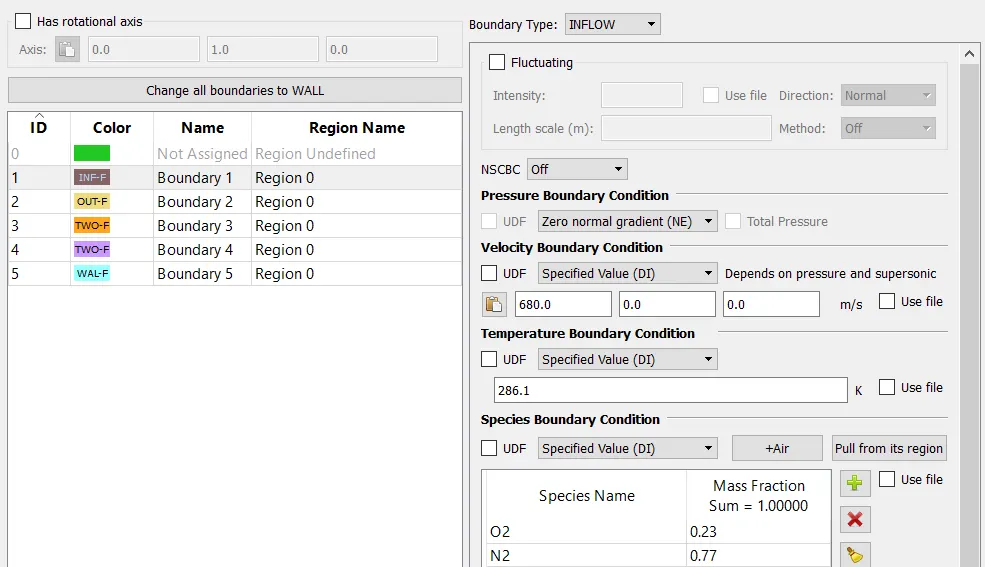
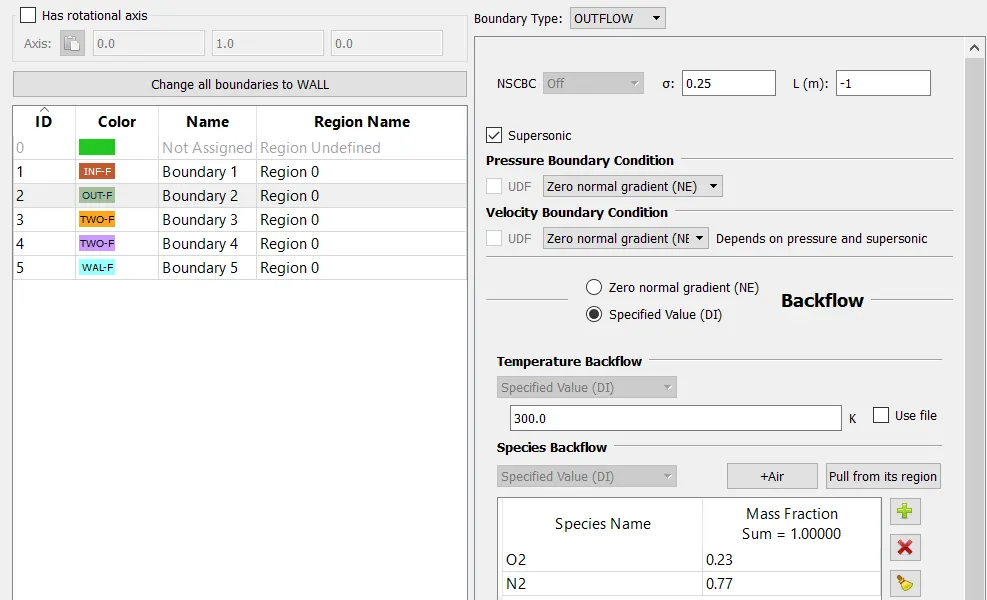
The two sides along the flow direction are set as Two dimensional as the results along the paths can be considered to be the same at any plane along the sides of the walls.
The Top & Bottom sides are set as slip boundaries.
The initial conditions for the velocity and pressure is set as a way that the super sonic flow conditions are satisfied.
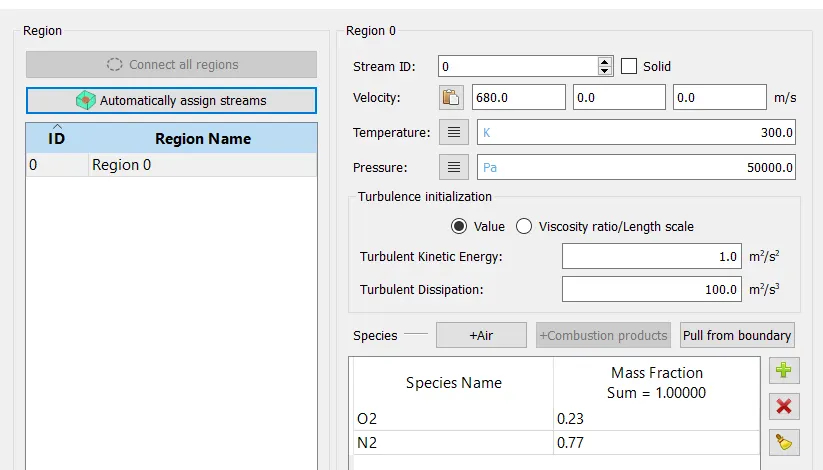
As we are experiencing a shock expansion inside the block, We can use adaptive mesh refinement to refine the meshes at critical points where the shock is happening.
Adaptive Mesh Refnement :
CONVERGE’s innovative Adaptive Mesh Refinement (AMR) technology automatically adjusts the grid at each time-step, adding cells in areas with complex phenomena and eliminating cells that are not needed to yield accurate results. This strategic refinement ensures that CONVERGE can resolve flame fronts and high-velocity flows while minimizing the overall cell count.
This Adaptive Mesh Refinement (AMR) process adds local refinement in areas of steep field variable gradients and is now also being pursued by many of the other leading CFD software OEMs. The company calls the process "Autonomous meshing" and argues the following benefits:
-
By eliminating the process of manual mesh creation, inspection and refinement, time is saved
-
Accuracy is improved through higher grid density where it is needed and where manual meshing strategies might not allocate it
-
AMR provides a robust method for capturing large or rapid boundary motions
-
AMR provides run-time savings due to using an optimized number of computational cells
-
Consistency and standardization can be achieved through the use of a consistent, algorithmic strategy for mesh production.
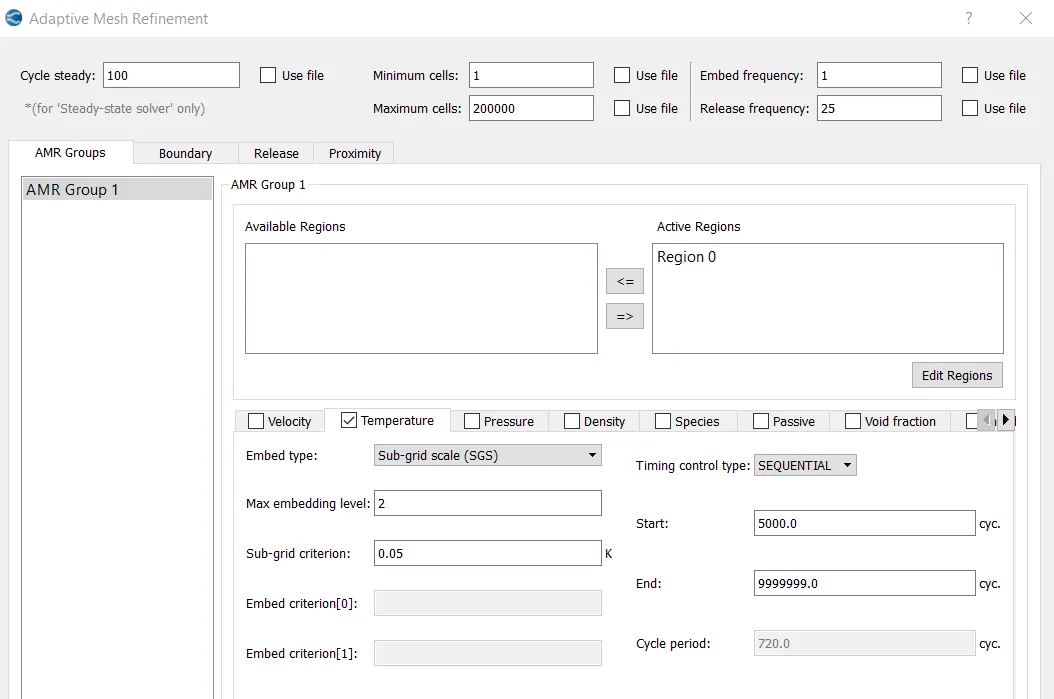
Here we are giving the mesh refinement to be carried on relating to the temperature.
We specify the Sub-grid scale parameter to validate the mesh refinement.
Simulation :
As the time-step and other details are updated in the input files, we can use the input information to simulate the calculations.
Open cygwin and navigate to the folder where the input files are exported.
Then use the command "converge-intelmpi.exe" to simulate the analysis.
Use the command "mpiexe.exe" to carry on the simulation parallely with multiple processors.
Post-Processing :
After the end of the simulation, output files will be saved inside the respective folder.
These files have the information of the simulation results, which can be used to post process the results.
The post processing can be done using paraview.
First conert the output files into a readable form through converge.
Open the converted file in paraview to process the results.
Velocity Contour :
Velocity plot at Outlet :
Pressure Contour :
Pressure Plot at Outlet :
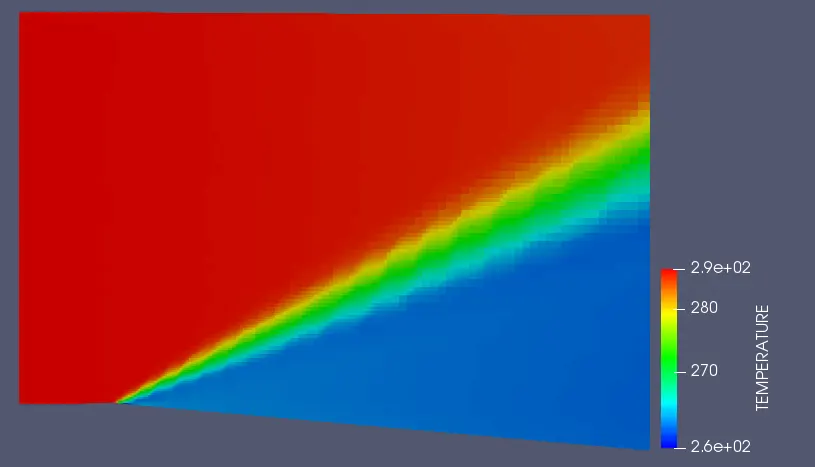
Temperature Contour :
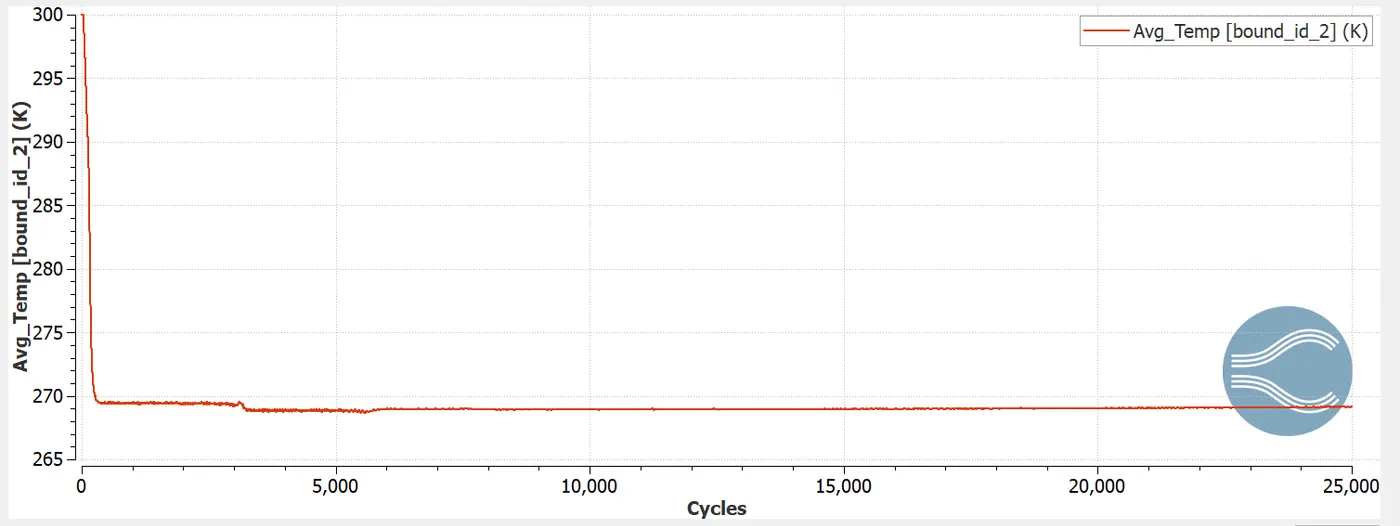
Temperature Plot at outlet :
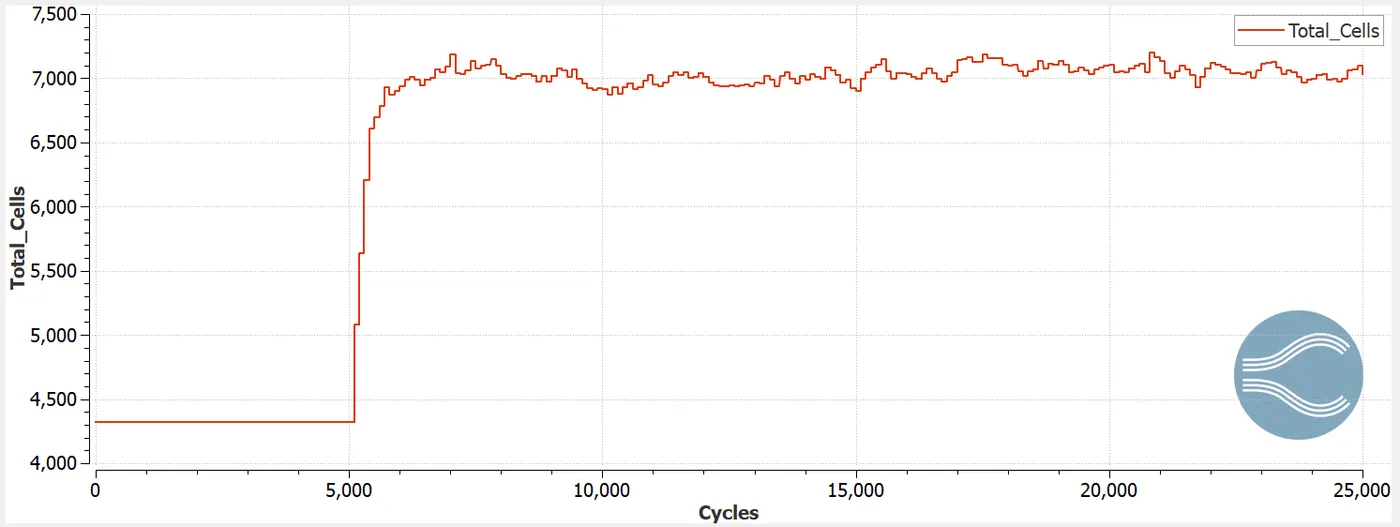
Cell Count :
Conclusion On contours & Plots :
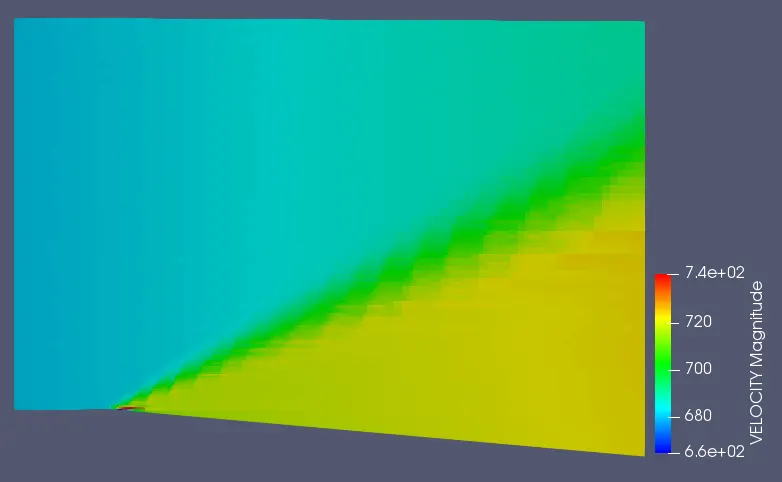
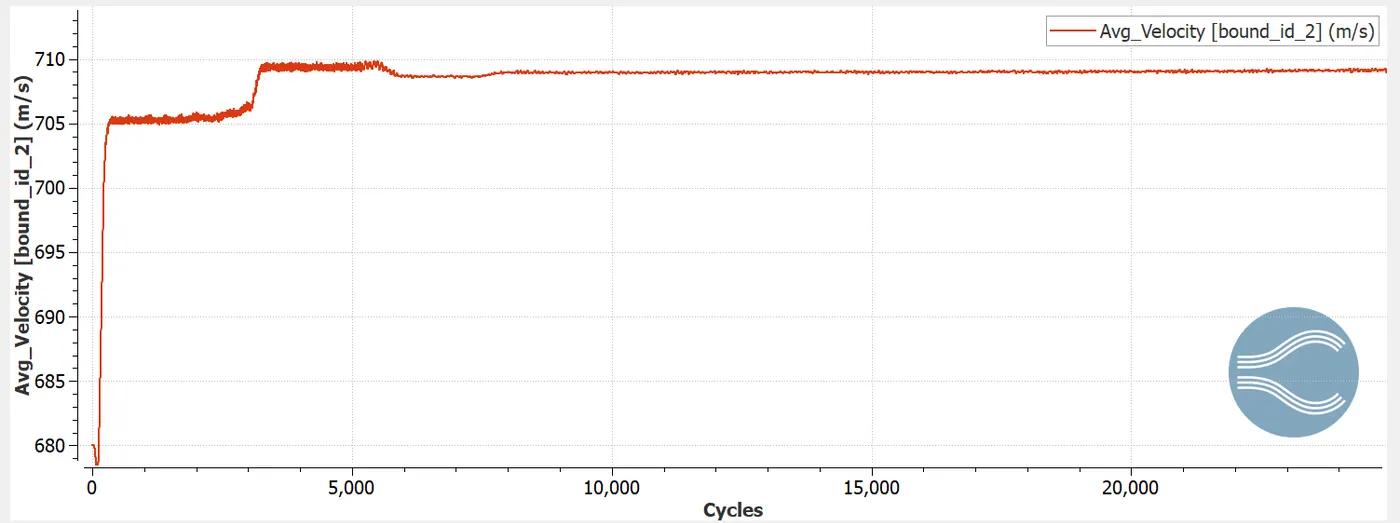
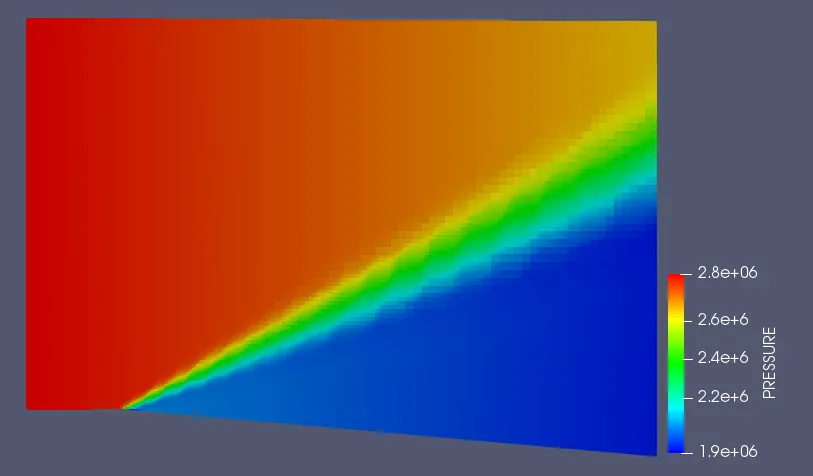
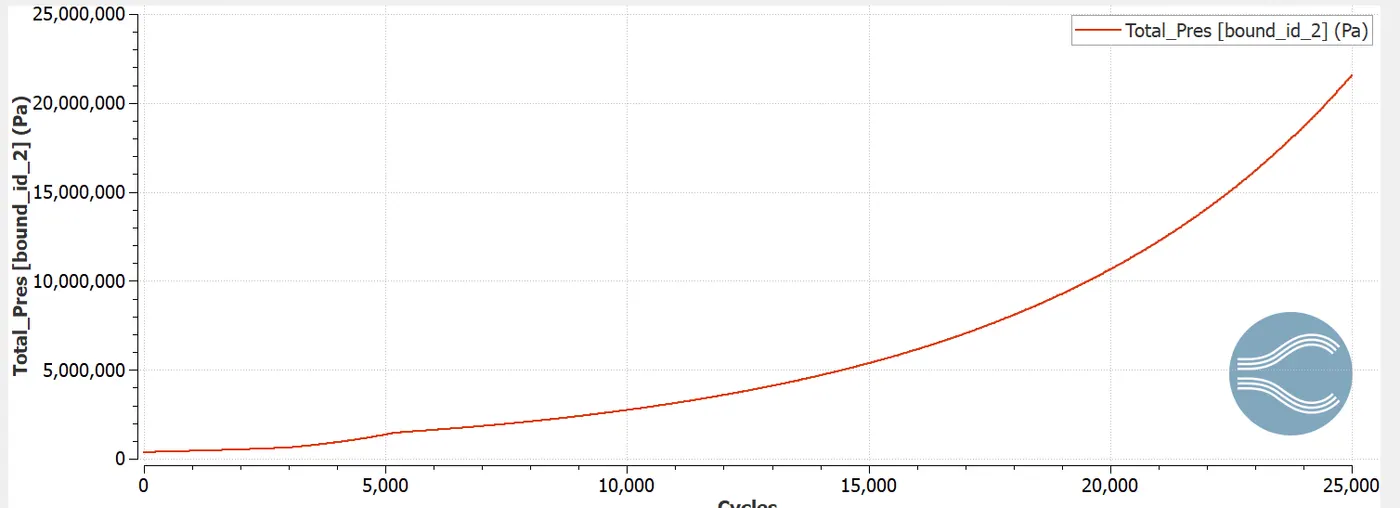
The shock effect and expansion can be seen in all the contours as the properties of the fluid changes during the deflection of the super sonic flow of fluid.
We can see the change in the cell count as we used adapive mesh refinement.
As the shock waves begin to expand, the temperature along the expansion also undergoes a subsequent change which allows the SGS parameter to refine the mesh.
We can note that the temperature is maximum at the inlet of the block and after the shock wave it radially decreases to minimum. This denotes the difference in the mach number before and after the shock expansion.
Effect of SGS parameter on shock location :
Shock Wave SGS Parameter 0.01 :
Shock Wave SGS Parameter 0.05 :
Shock Wave SGS Parameter 0.1 :
Conclusion on SGS Parameter :
As we can se that the refinement along the expansion of the shock decreases as we increase the sgs parameter for the temperature gradient of the block.
The increse in the scale value of the sgs paramter induces a lesser area of refinement.