Week 4: Project - Steady state simulation of flow over a throttle body
Aim :
To Set-up and run a steady state simulation for the flow of air through an Elbow shaped pipe having a Throttle valve placed at the curve of the Elbow perpendicular to the direction of flow.
To Post process the results and show pressure, velocity contours, Meshing, plots for pressure, velocity, mass flow rate and total cell count.
Geometry & Introduction :
Download the Given .STL file and import the file into converge.
The given geometry consists of an elbow shaped pipe with two openings (Inlet, Outlet). A throttle valve is placed in between the pipe.
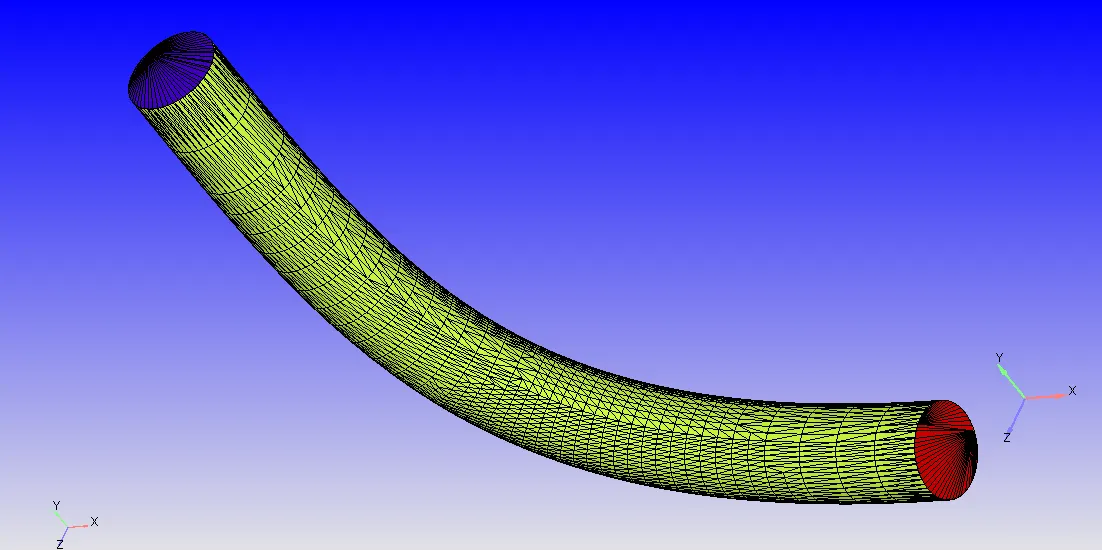
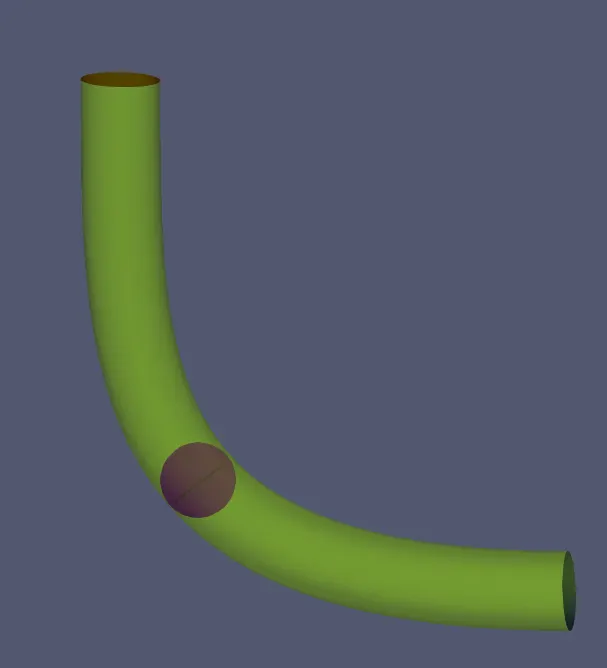
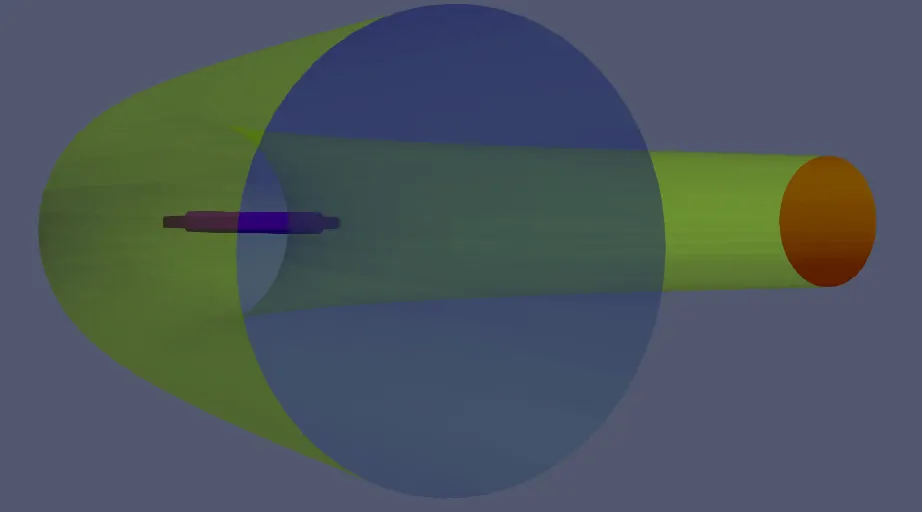
Now scale the whole geometry for a factor of 0.001 to convert the units to mm.
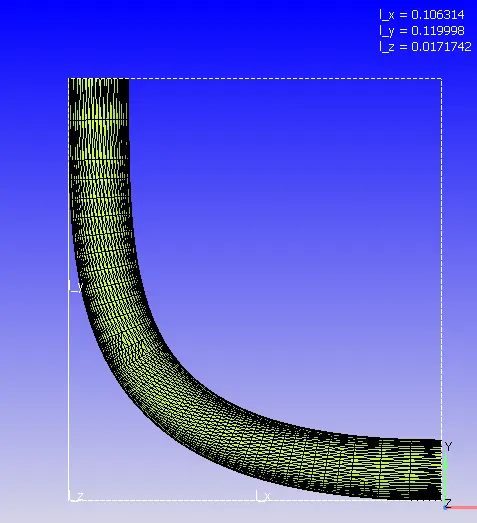
The flow is taking place within the pipe. Which means the normals should be pointed inside the geometry.
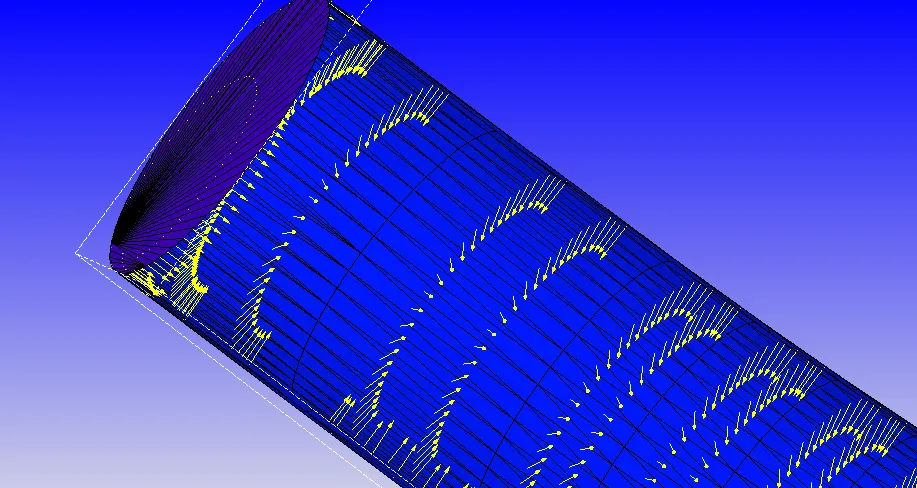
Now all the properties of the geometry are prepared and is ready to be simulated.
Let us assign some boundary namings to distinguish the parts of the geometry.
Consider one end of the pipe as Inlet and the other end as Outlet.
The outside wall of the pipe is named as elbow and the valve is named as Throttle.
Set up & Simulation :
Start the case set up by selecting the Time-Based Application.
Choose air as the material of flow through the pipe.
As the flow is laminar we can go with a steady state simulation.
Give the end cycle time to be 15000 cycles with valid CFL values.
Boundary Conditions :
Inlet :
Boundary type : INFLOW
Pressure : 150000 pa
Temperature : 300 k
Species : Air
O2 mass fraction : 0.23
N2 mass fraction : 0.77
Outlet :
Boundary type : OUTFLOW
Pressure : 100000 pa
Temperature : 300 k
Species : Air
O2 mass fraction : 0.23
N2 mass fraction : 0.77
Elbow : Wall
Throttle : Wall
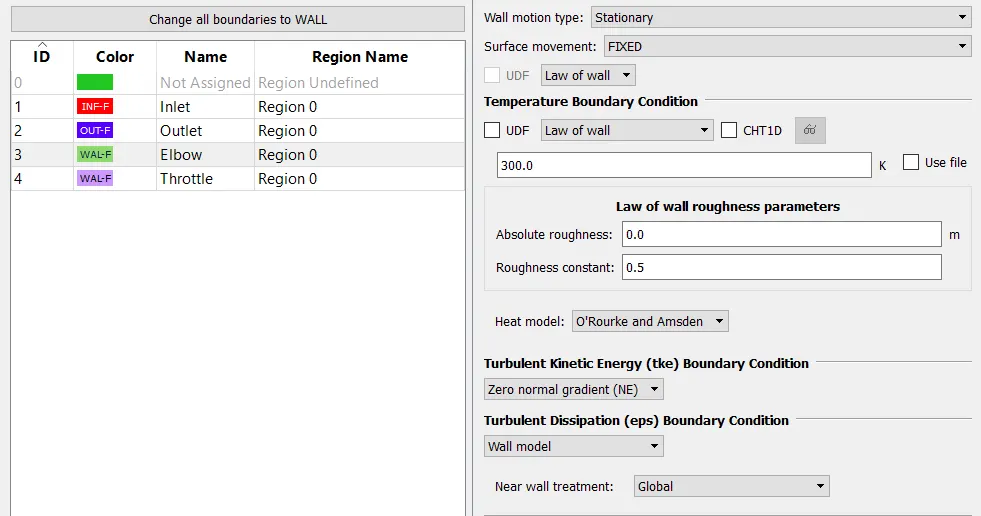
Assign the conditions to a region with species Air and Default conditions.
Use K-Epsilon Turbulence model for the simulation.
Base Grid :
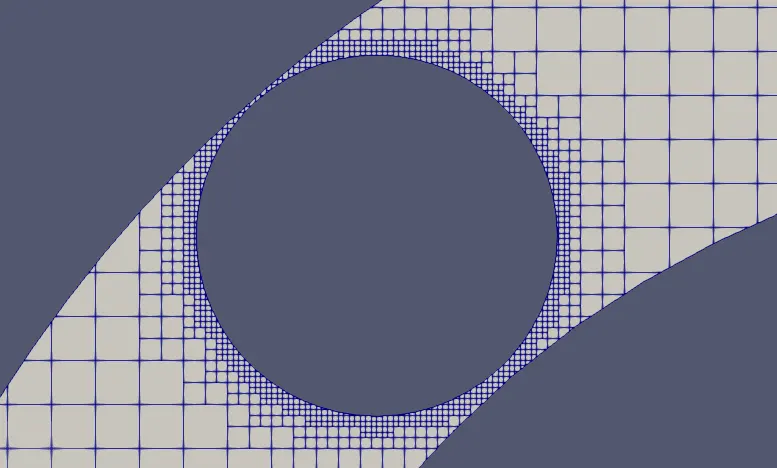
The overall grid size is taken to be 0.002 m.
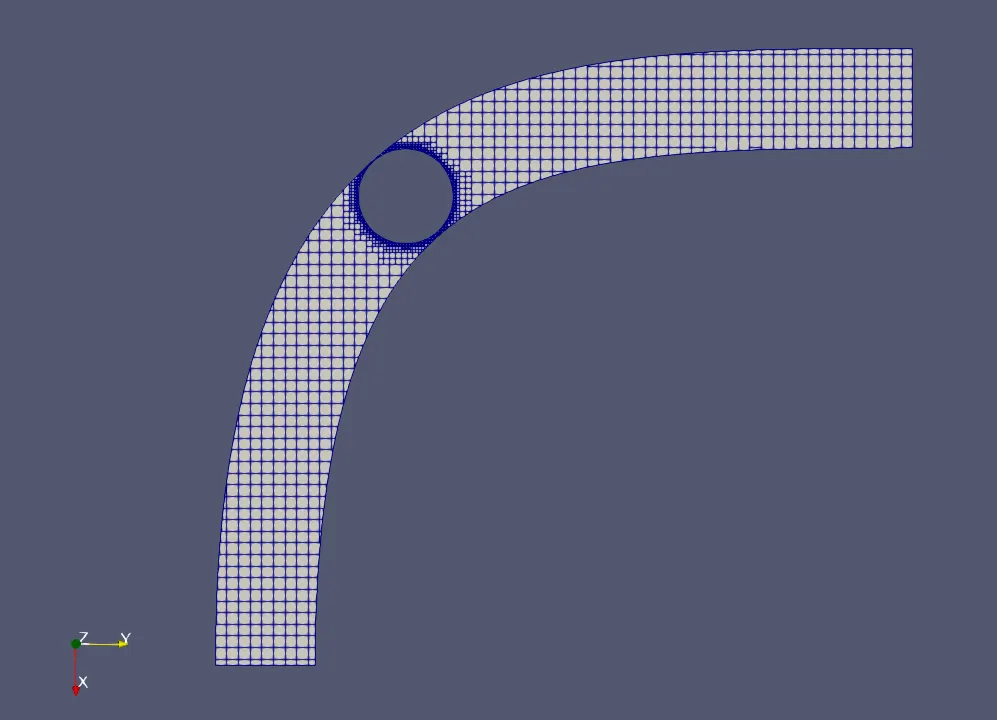
Still we have very small gaps between the throttle and the elbow wall.
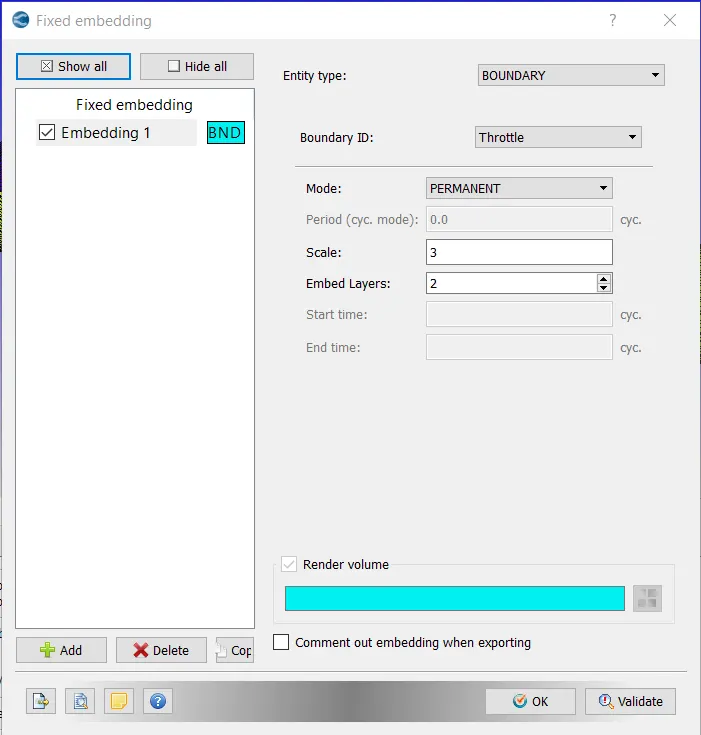
To refine that critical area, we can use Fixed Embedding around the Throttle Boundary.
After Applying the mesh values we can find the area around the throttle to have finner meshing as you can see in the figure attached below.
Calculation :
According to the conditions specified in the casse setup, the input files can be exported to the folder.
Open cygwin to perform the calculations using the input files.
Use converge-intel.exe command to calculate the results.
Convert the output files into EnSight format using converge.
Post process the results using Paraview.
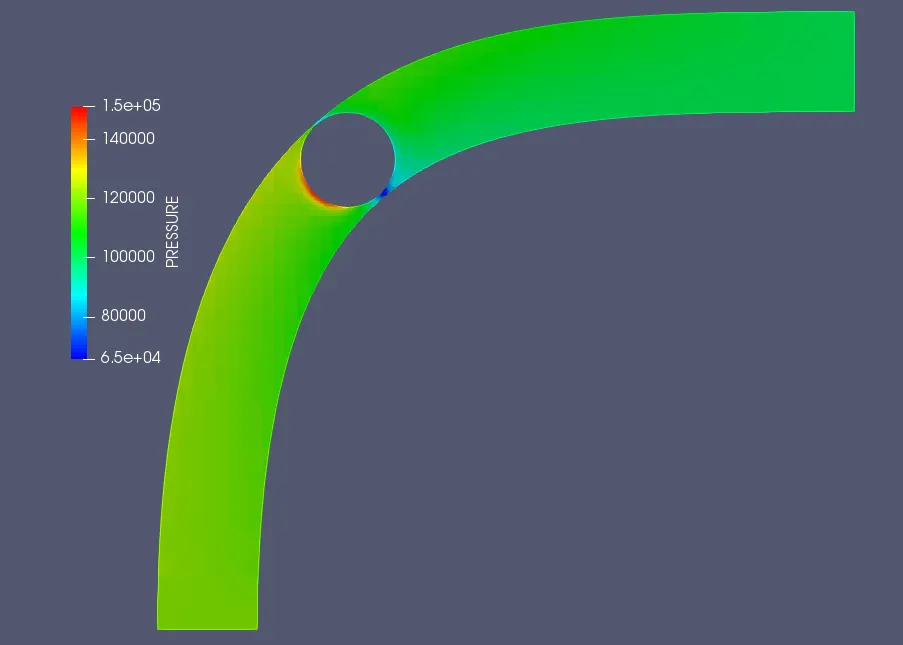
Pressure Contour :
Velocity Contour :
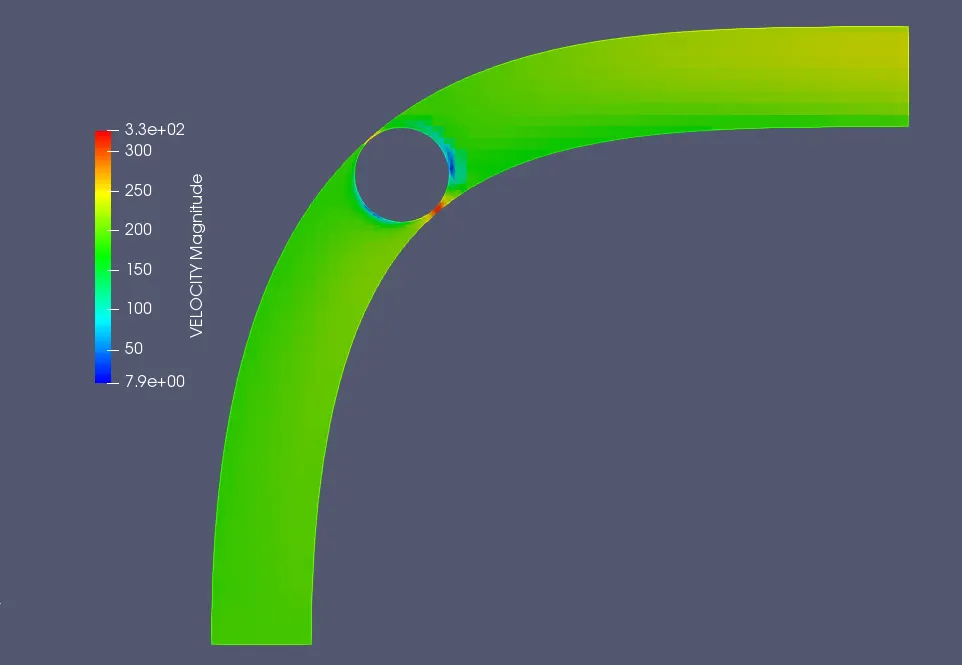
Conclusion on contours :
The velocity of the air is maximum in between the small gaps between the throttle and the pipe wall.
This is because the flow area narrows down and the flow tends to move forward with higher velocity.
We can see that the velocity is low when the flow meets the edge of the throttle as the flow tends to bend its way around the throttle.
The pressure behind the throttle region as the force acting on the throttle edge is reduced because of low velocity.
Velocity at the outlet has a higher value in the top and slightly lower value at the bottom because the area at the top of the throttle is much smaller than the area at the bottom of the throttle. This increases the mobility of the flow at the top more than at the bottom.
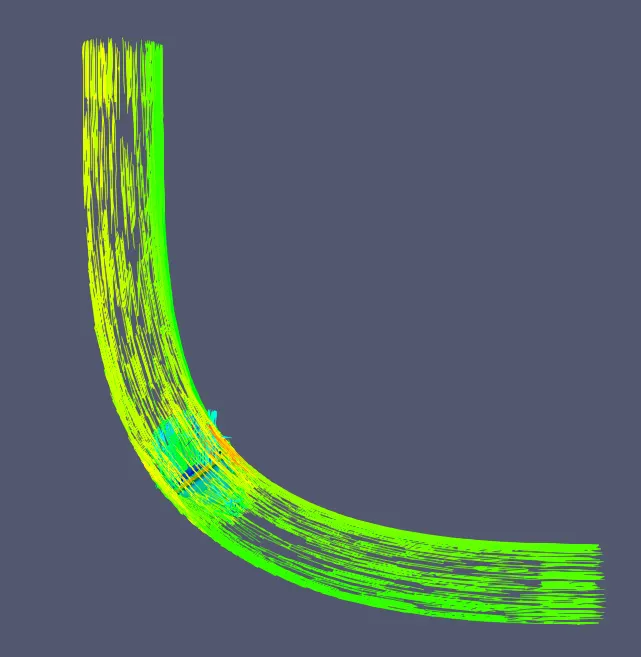
Velocity Stream :
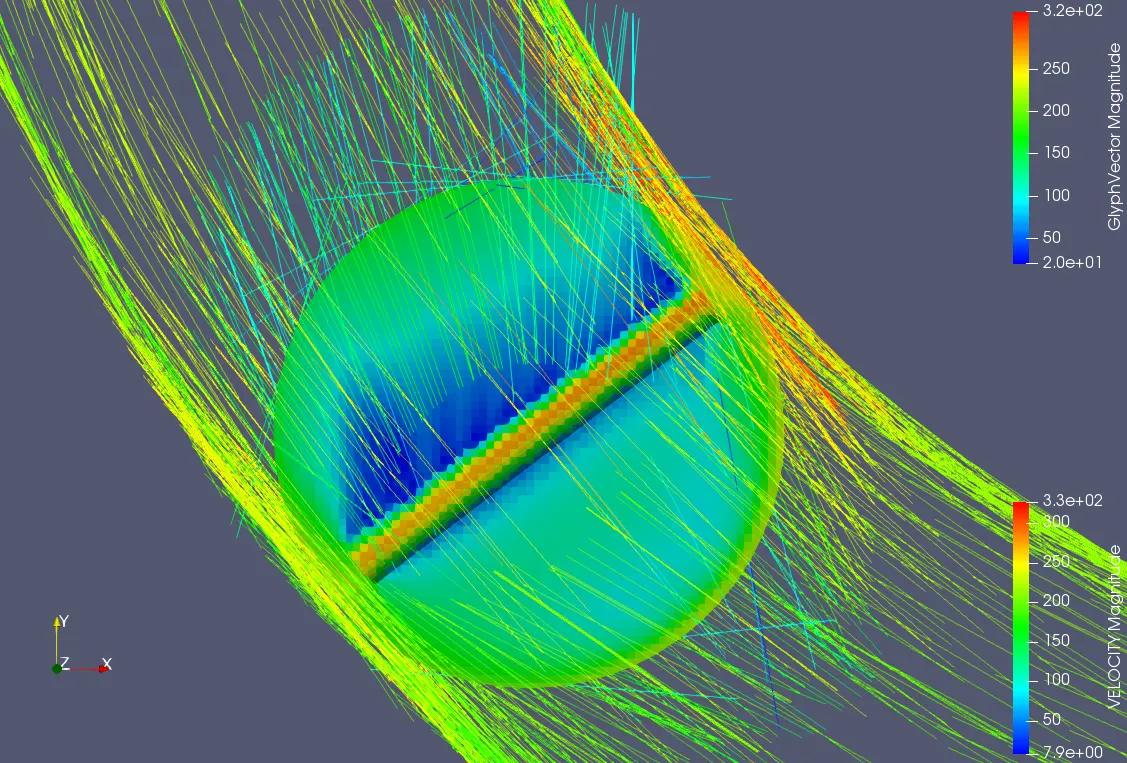
Cell Count :
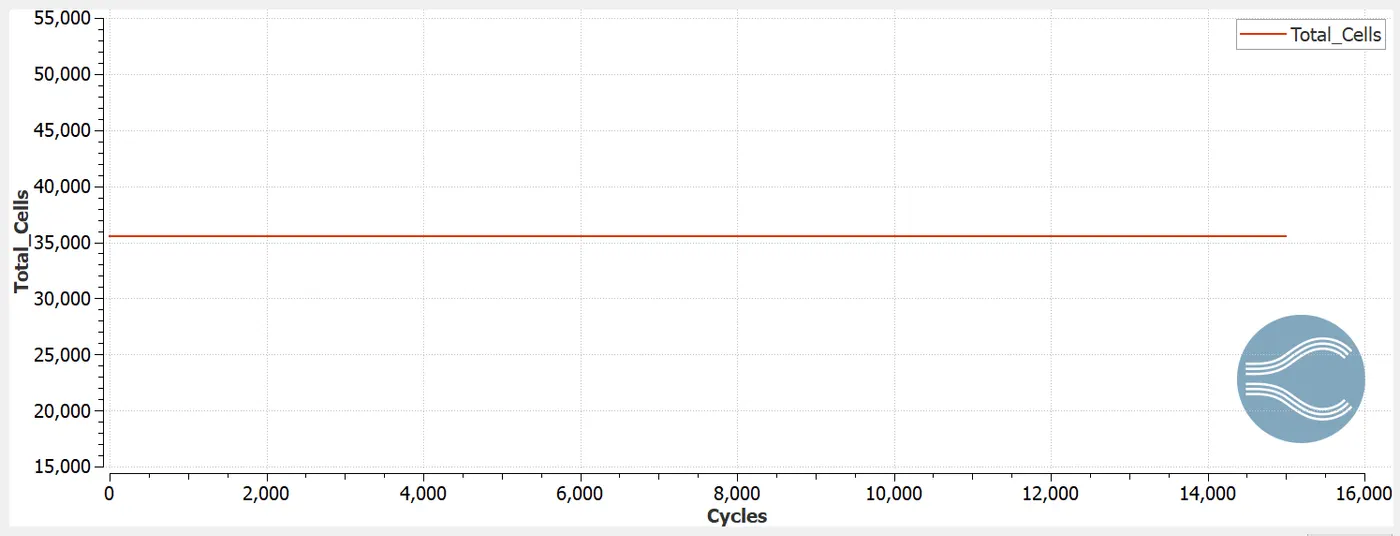
Velocity plot at outlet :
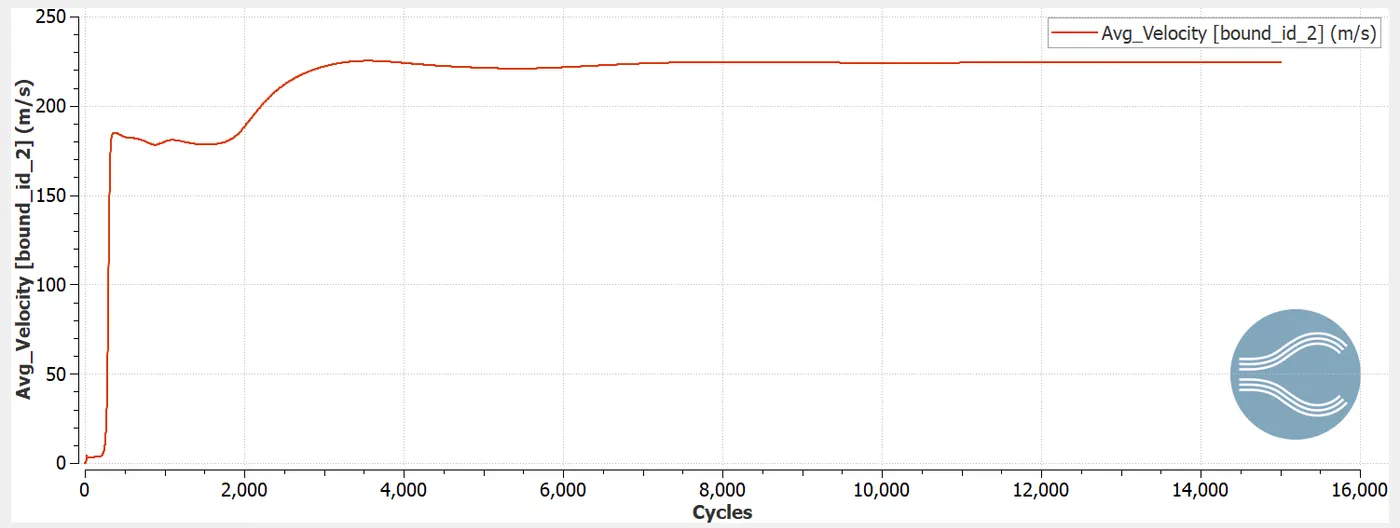
Pressure plot at outlet :
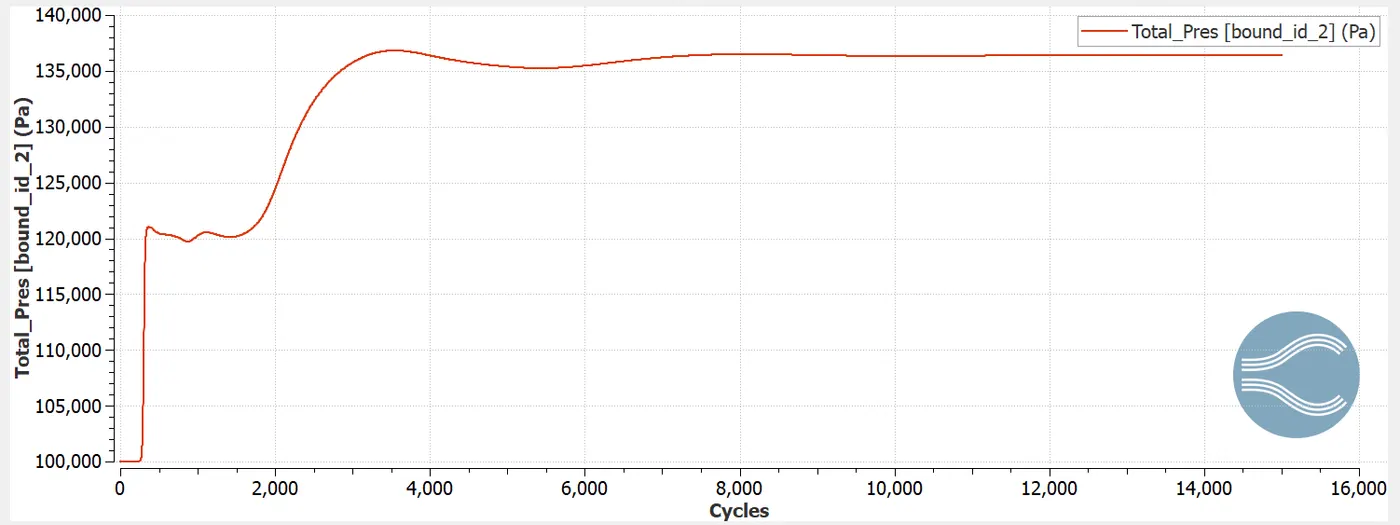
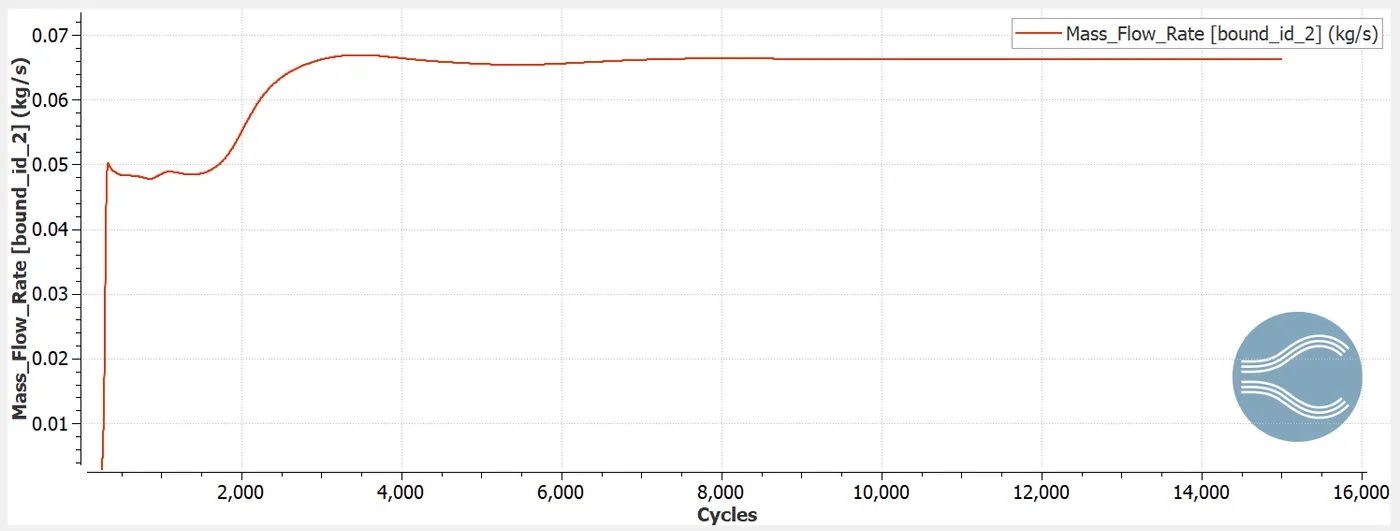
Mass flow rate at Outlet :
Conclusion on Plots :
From the plots we can see that the solution is converged after some cycles.
There are totally 35518 cells in the whole geometry.
The velocity increases suddunly initially and then gradually attains convergence over some period of time. The average velocity at the outlet converges to 224.25 m/s.
The pressure also follows a similar path like velocity and attains a covergence of an average pressure of 136405 pa at the outlet face.
Mass flow rate of the flow is 0.06628 kg/s at the convergence.