Week 5: Prandtl Meyer Shock problem
- Prandtl Meyer Shock problem
- Objective - To visualize the Prandtl Meyer expansion fan over an expansion corner using converge
- Understand the effect of SGS parameter on the shock location.
- To understand the shock waves in the Prandtl Meyer shock problem and look at the effect of SGS temperature value on cell count and the shock location
- Boundary conditions
-
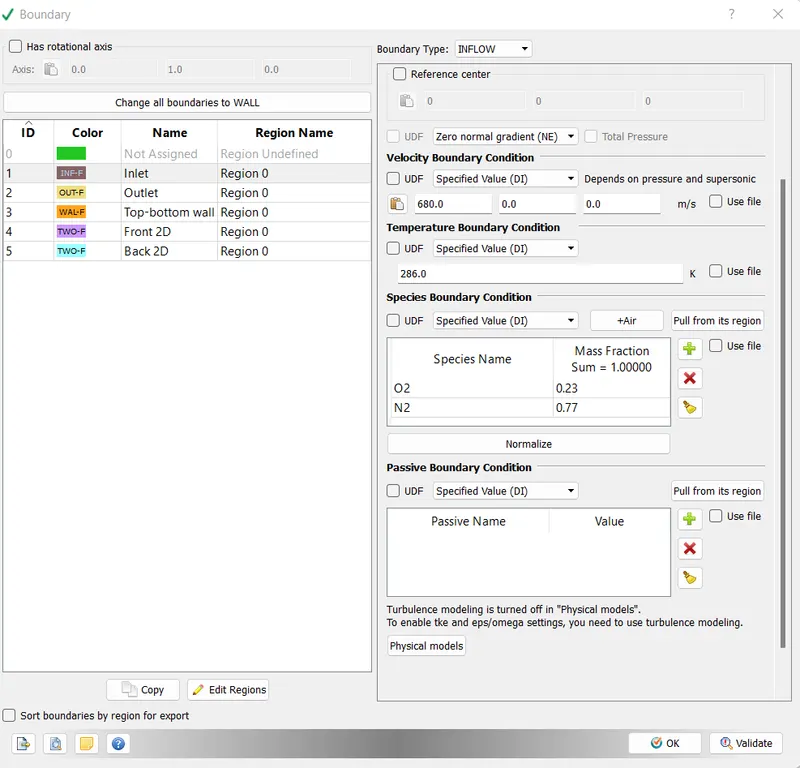
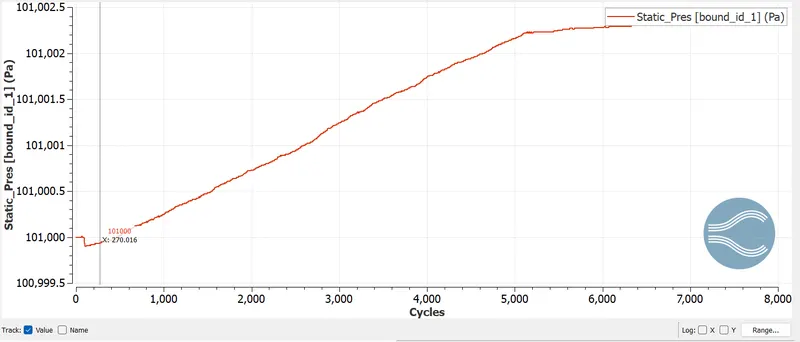
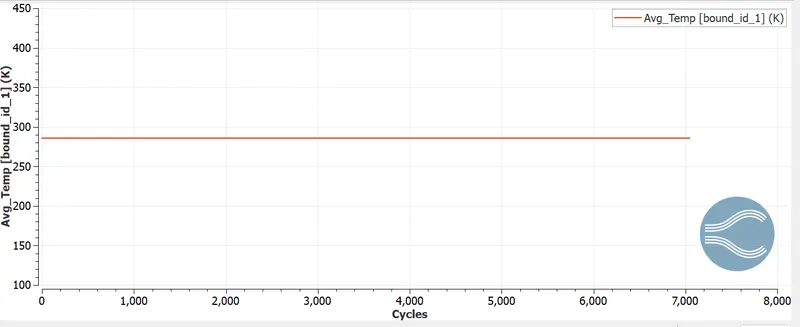
Inlet: Since it’s a supersonic flow at the inlet we should assign Dirichlet boundary conditions for all parameters like Pressure, Velocity, and Temperature. So, We can give Static pressure= 101000 Pa, Velocity=678m/s and Temperature=286k
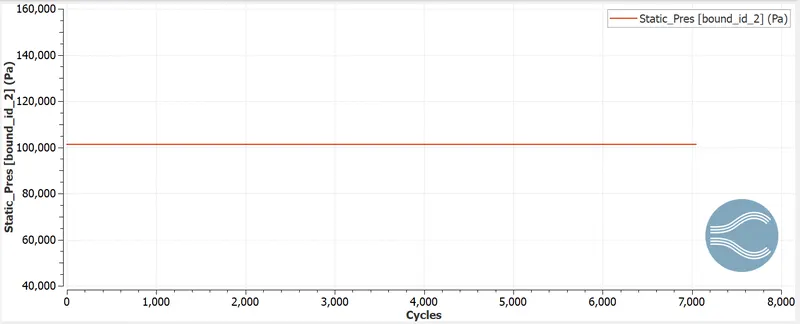
Outlet: At the outlet, we should assign Neumann boundary conditions for all parameters like Pressure, Velocity, and Temperature. So, We can give a Zero normal gradient for all the parameters.
Top-Bottom wall:
Since the supersonic flow is inviscid in nature(the viscous effect is negligible) we can assume the Slip condition at the wall.Front-Back: 2D Wall
Reason: The 2D planar assumption is used because the flow gradients along the z-direction are negligible when compared to the other two directions. By reducing the model to 2D, the Prandtl Meyer can be simulated and analyzed cost-effectively compared to a full 3D model.Turbulence Modelling: No need for the Turbulence model.
-
Reason: In our simulation, we don't have to use Turbulence modeling since there is no Reynolds stress because the flow is inviscid.
- What is a shock wave?
- A shock wave can be viewed as a discontinuity in the properties of the flow field.
- A fluid passing through a shock wave perpendicular to the flow path experiences a rapid increase in pressure, temperature, and density accompanied by a rapid drop in velocity from supersonic to subsonic.
- This process is irreversible.
- Oblique shocks, if the shock wave is not perpendicular to the flow, also change the direction of the flow.
- An object ,such as jet ,is said to have supersonic speed if it travels faster than the speed of sound such speed is defined using mach number.
- The free stream mach number at which local velocity first reaches mach 1 is critical mach number.
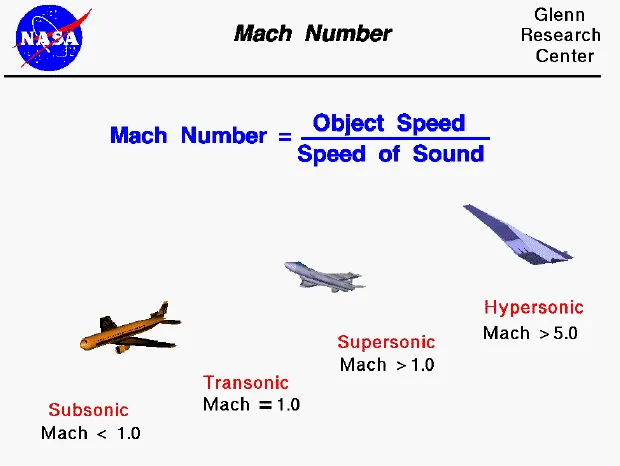
- Vsound < Vobject - shock wave creates
- The free stream mach number at which local velocity first reaches mach 1 is critical mach number.
- IF the size of the object moving at the speed of sound is near 0, then the domain of influence of the wave is called mach cone.
- The angle between the shock wave and the upstream flow direction is defined as the wave angle.
- Prandtl Meyer Expansion Fan
- Two features of Compressible waves are shock waves and expansion waves.
- Impacts perpendicular to the direction of flow are called normal shocks. If they lean into the current, we are talking about oblique shocks. The thrust that travels upstream from the body impact point and turns from that position as an oblique shock is called bow shock.
- An expansion wave/fan is another type of wave in supersonic flow. They occur when the flow area suddenly widens. That is, the supersonic flow hits the convex corner. They diverge from their own flow path and, unlike shock waves, result in expansion fans that cause abrupt property changes such as increased Mach numbers and decreased static flow properties.
- Supersonic expansion fans are technically known as Prandtlmeyer expansion fans, which are simple shafts in two dimensions. The fan consists of countless Mach waves emanating from sharp corners. These waves can extend backwards and meet at a point when the flow rounds a smooth, circular corner.
- Each wave of the expansion fan rotates the flow gradually (bit by bit). It is physically impossible for a single "shock wave" to rotate the flow, as it violates the second law of thermodynamics.
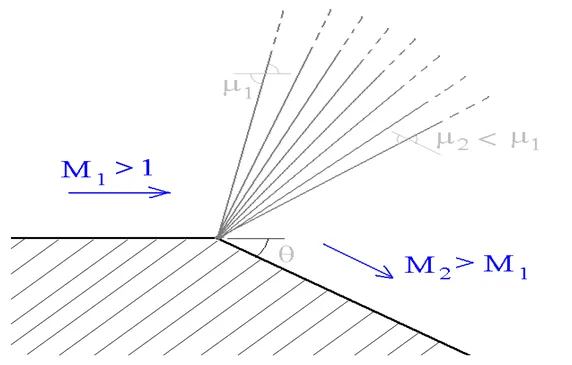
- Above the expansion fan, the flow accelerates (increases velocity) and Mach number increases, but static pressure, temperature, and density decrease. Since the process is isentropic, stagnation properties (such as total pressure and temperature) remain constant across the fan.
- Boundary conditions
- Dirichlet Boundary Condition
Solves a partial differential equation that takes a given value in the limit of the domain
Neumann Boundary Condition
Impose on an ordinary or partial differential equation where the derivative of the solution is a domain restriction.
- Procedure
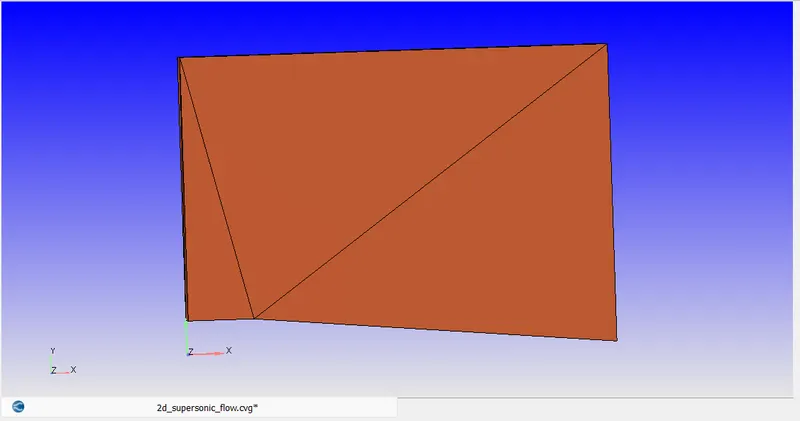
- Geometry
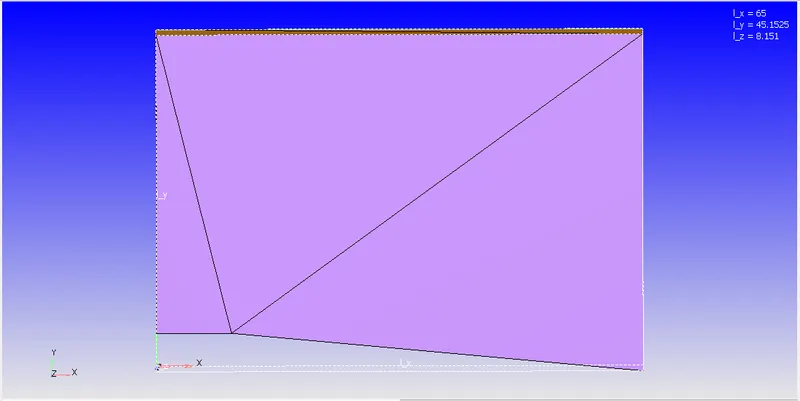
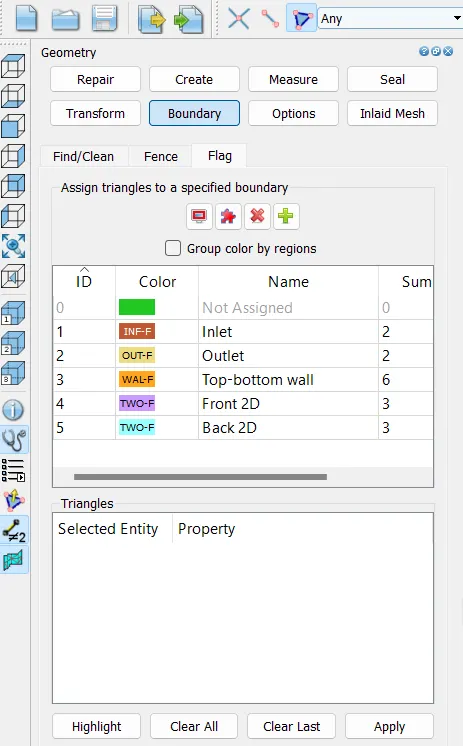
- Applying boundary conditions
- Setup
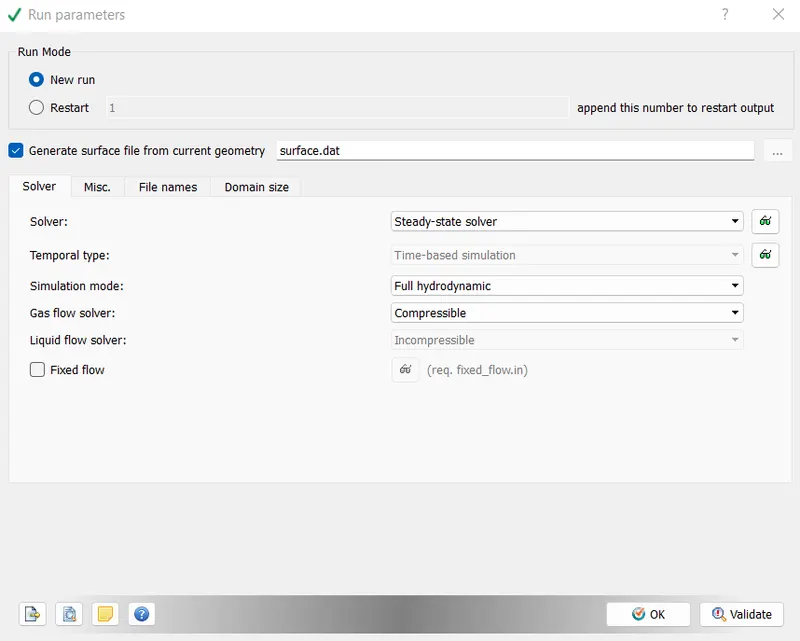
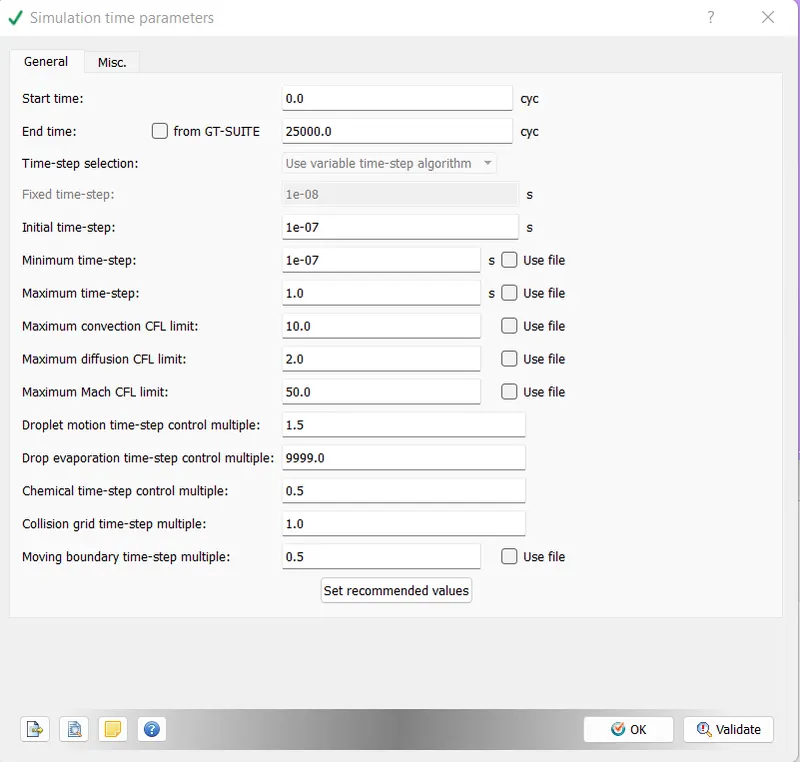
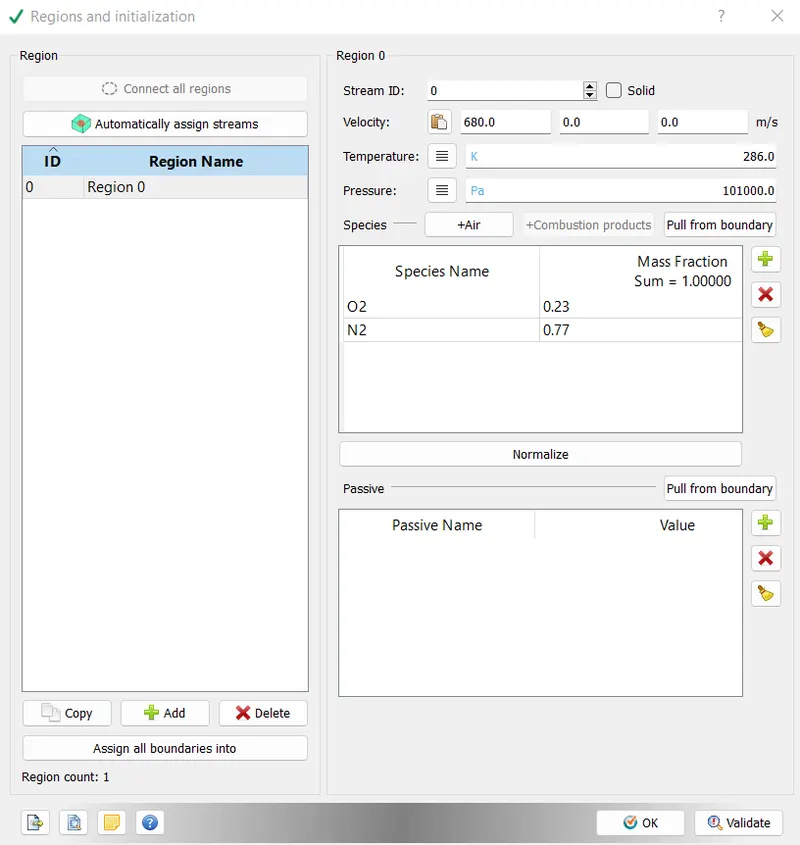
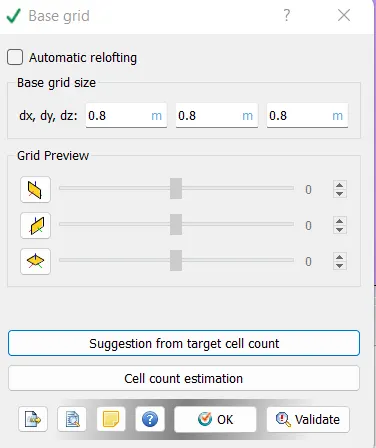
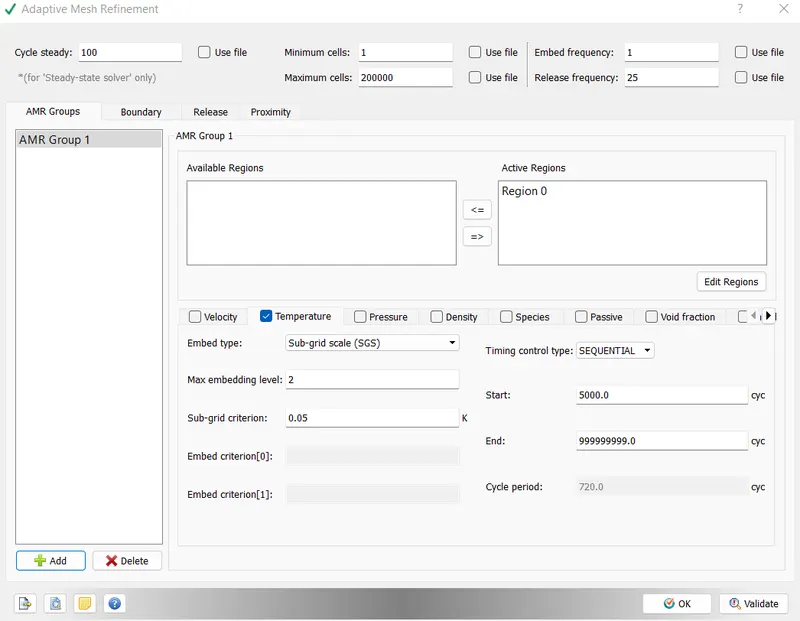
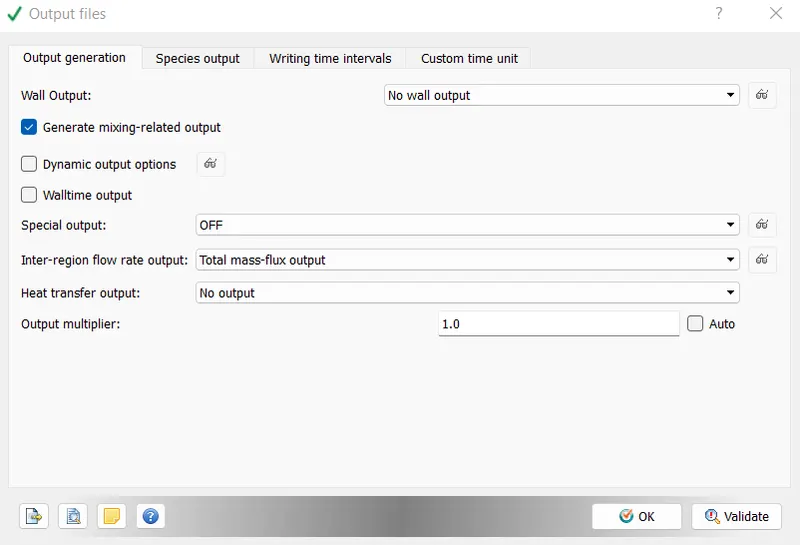
- Mesh
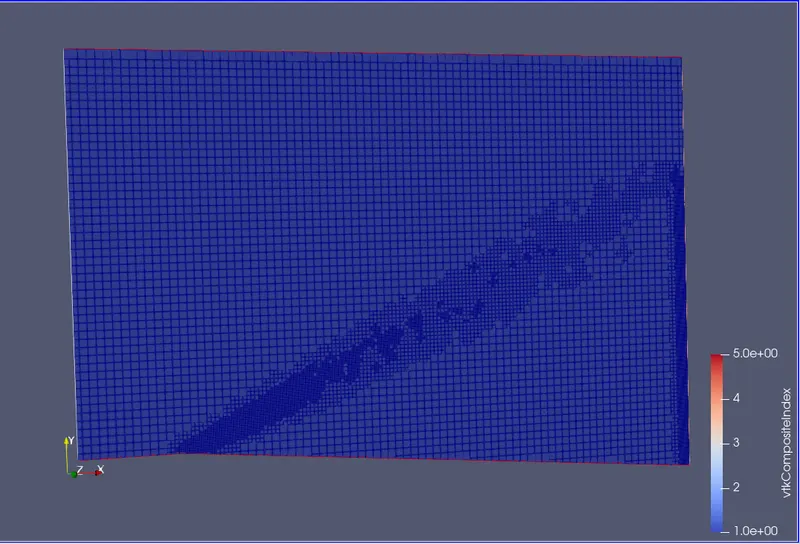
- The grid above was generated with an SGS parameter of 0.05. The central fine-grid area is the result of abrupt changes in the property (here, temperature, since SGS is applied to temperature curvature changes).
- Stepwise Explaination
- The provided geometry is placed in the Converge workspace.
- Borders are appropriately named.
- Normal direction checks consistency between geometry and flow.
- A diagnostic is run to check for geometry deviations.
- Next, seeds suitable for liquids are selected.
- simulation parameters and constant monitoring are set.
- Boundary conditions are set to the correct area and correct values.
- The base grid of increments under consideration is inserted with the desired SGS value, along with the corresponding orientation and associated temperature AMR.
- Sets and selects post-processing variables and time intervals for writing output and resume files.
- All input files are saved in the desired location.
- All saved input files are executed using the command editor. The Converge Solver runs these input files in the background.
- The executed file then generates an output folder where data files are saved after each selected cycle interval. This is post-processed for graphical results.
- Results -for SGS = 0.05 ,0.02
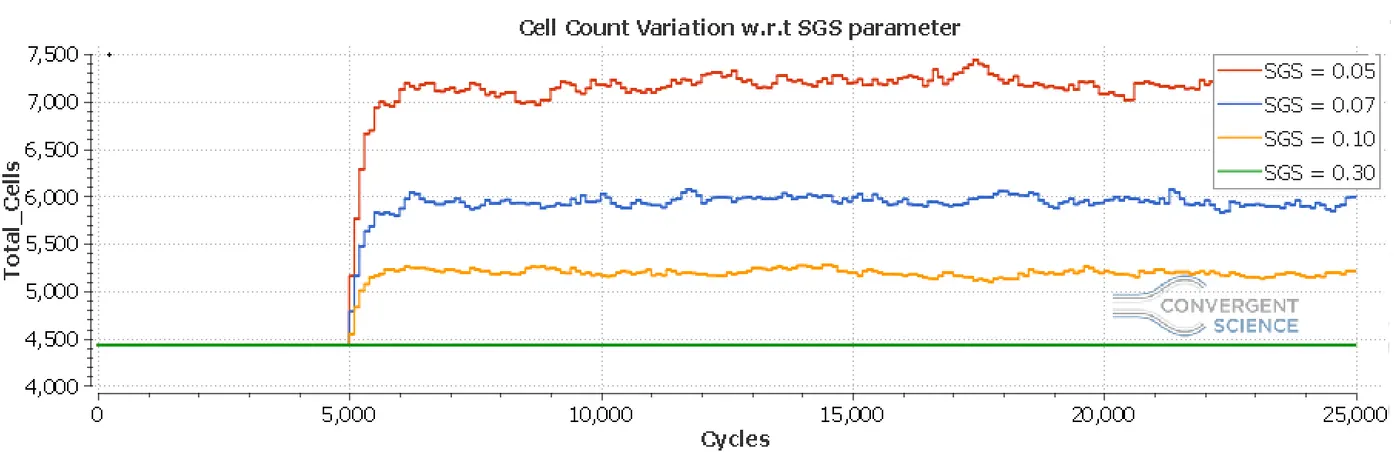
- Effect of cell count on SGS = 0.05 , 0.07 , 0.30 ,0.10
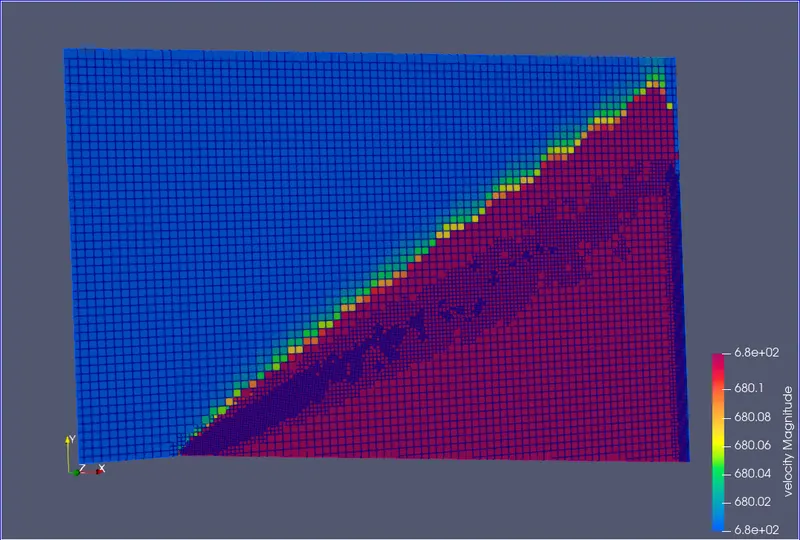
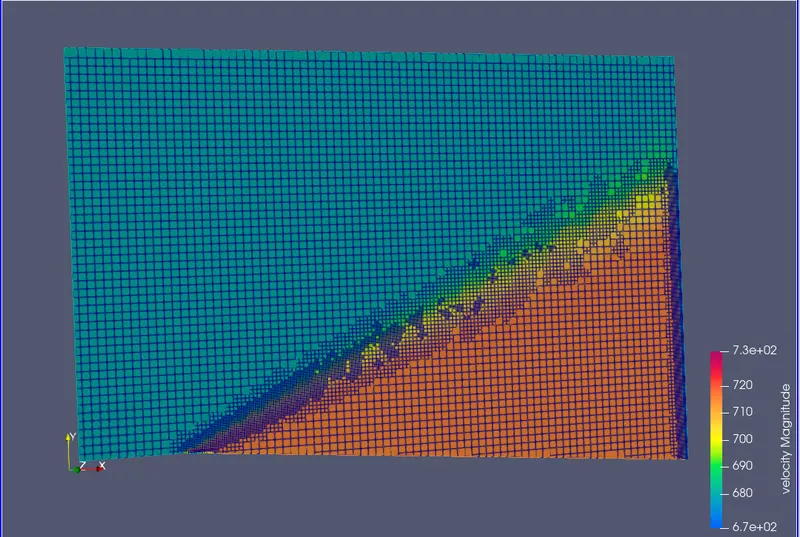
- Velocity contour
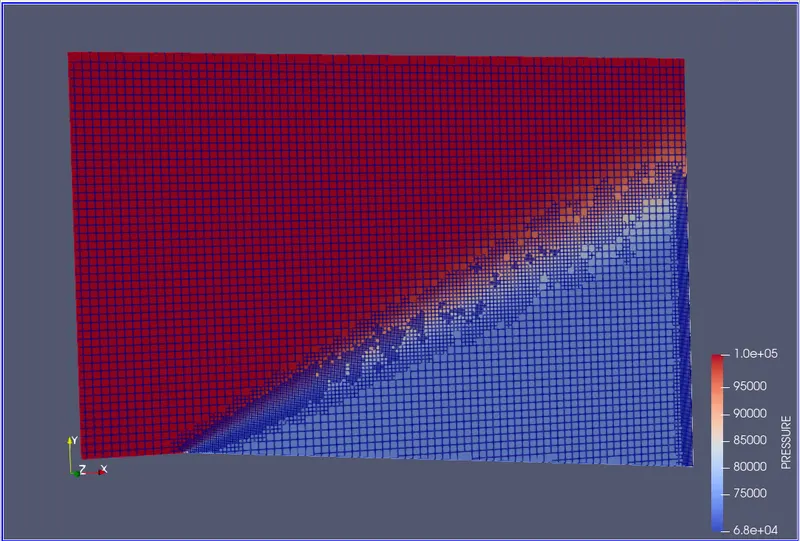
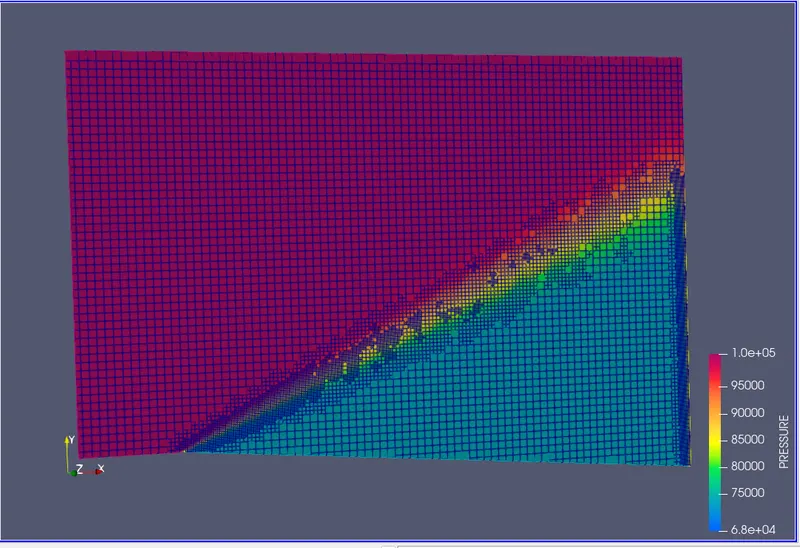
- Pressure contour
- Temperature contour
- Density
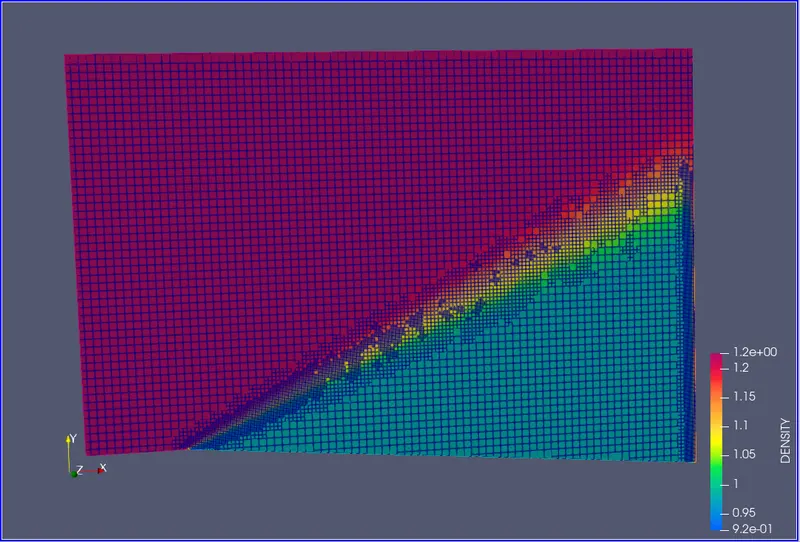
- The top contours show changes in pressure and velocity. When the flow expands abruptly at a convex corner, it forms an expansion fan, resulting in abrupt changes in properties such as pressure and velocity. You can find the pressure curve here and the velocity curve here.
- Plots
- Pressure at inlet and outlet
- Density at inlet and outlet
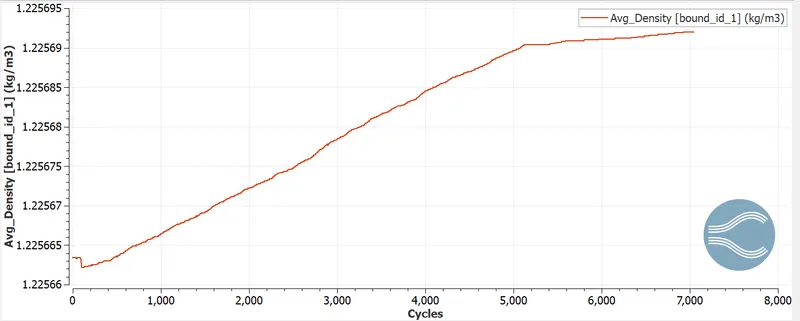
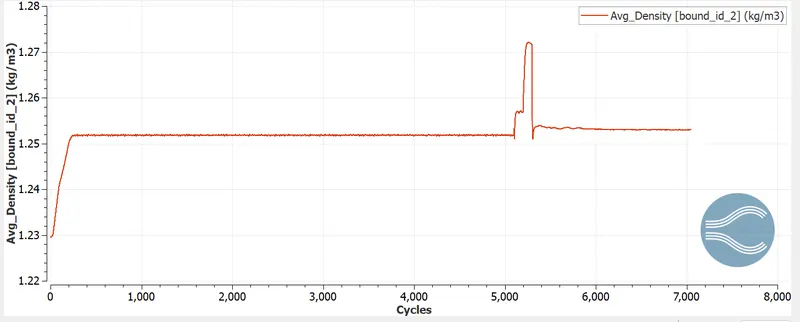
- Velocity at inlet and outlet
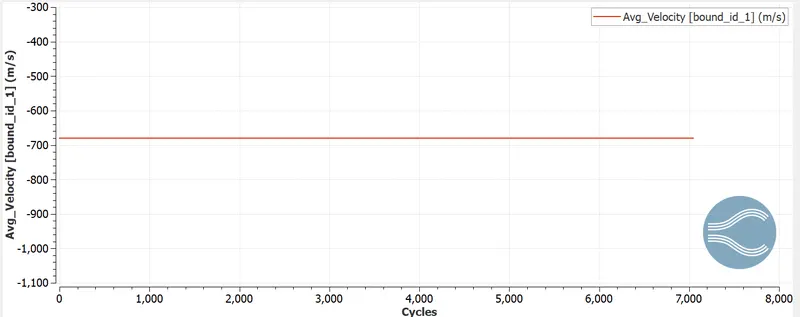
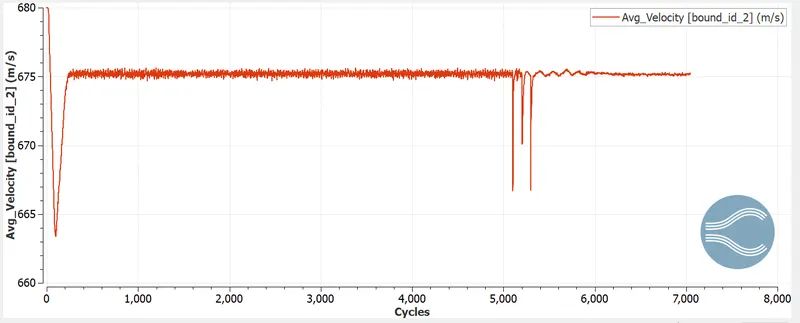
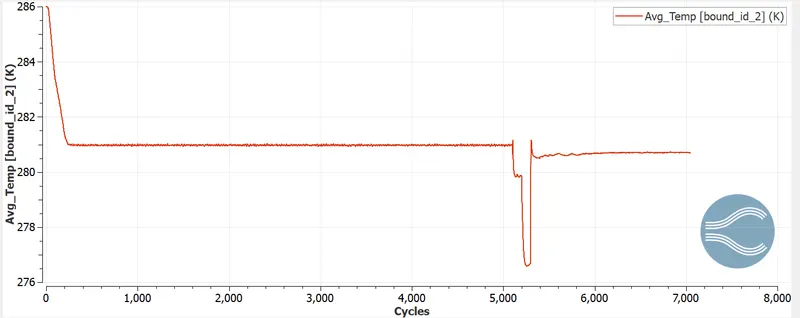
- Temperature at inlet and outlet
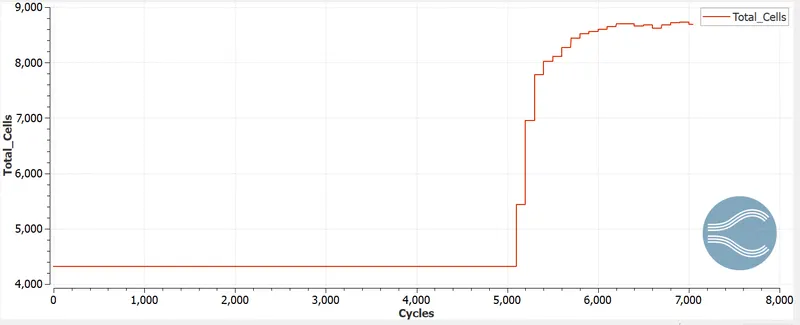
- Cell count
- From the graphs above, we can see that the supersonic flow velocity and Mach number increase as the flow passes through the expansion wave, while the temperature, pressure, and density tend to decrease.
- Results for SGS = 0.02
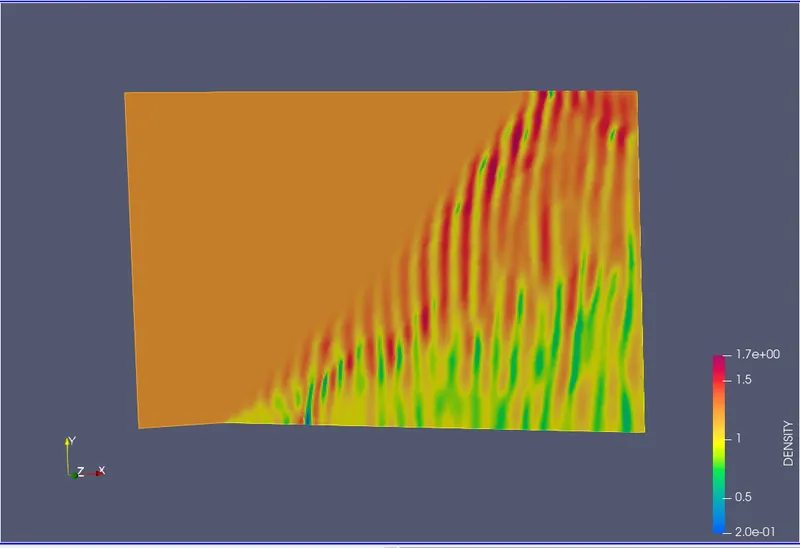
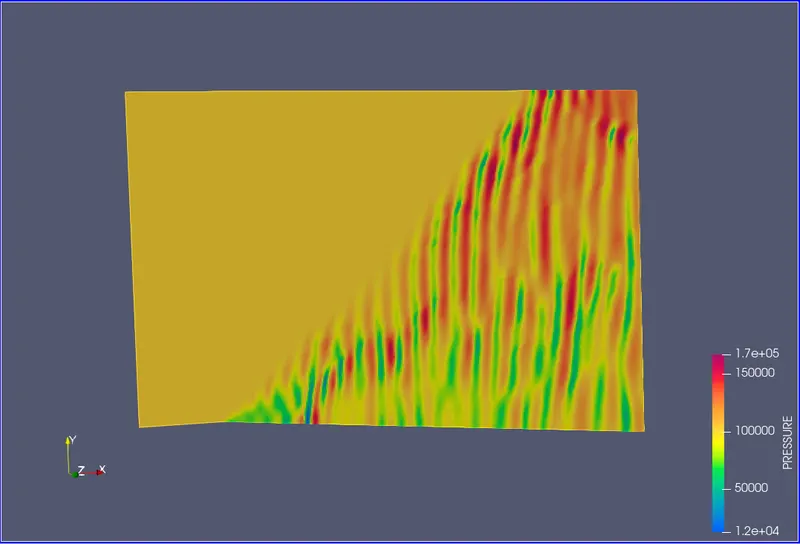
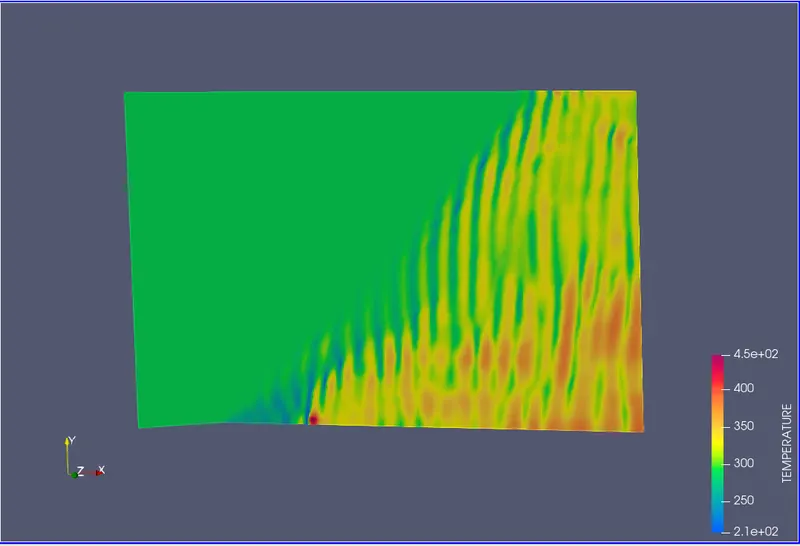
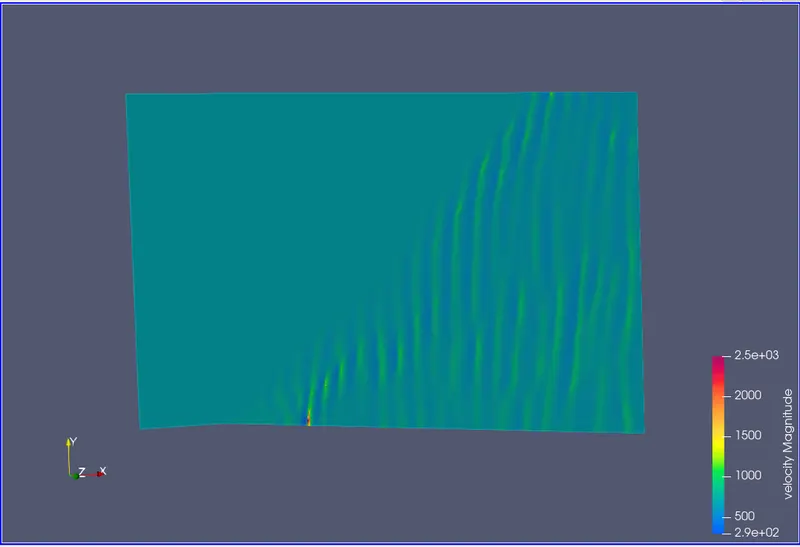
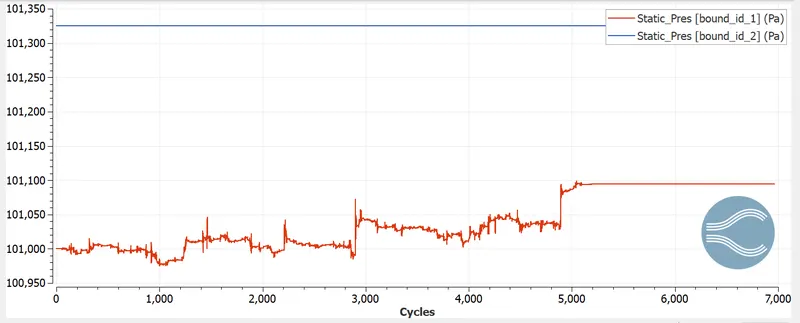
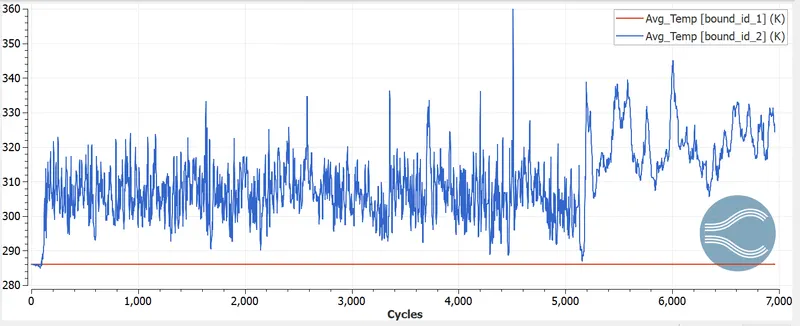
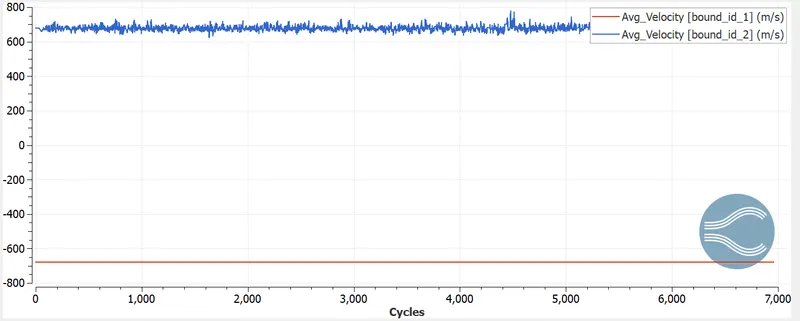
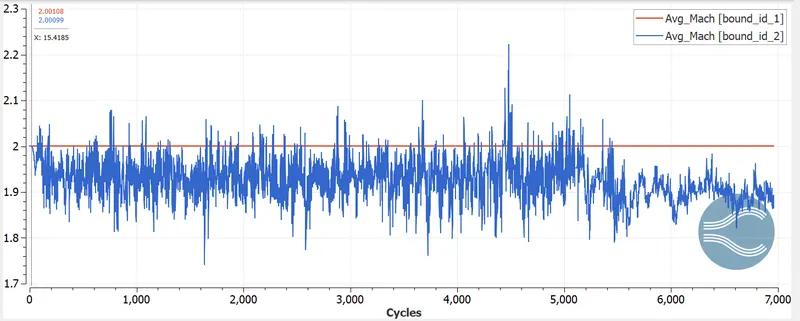
- As the SGS value decreases, the cells become locally purified, increasing the number of simulated cells. The results show that the extended fan tends to become narrower and more prominent as the SGS parameter decreases. This is because Adaptive Mesh Refinement depends on the SGS value. Higher SGS values limit the mesh refinement required to effectively capture the spreading waves, resulting in blurry and unclear waves.
- Effect of cell count
- Observations
- In the top graph, the simulation with the lowest SGS value had the highest number of cells.
- This is understandable because lower SGS means higher refinement and higher refinement means higher cell numbers.
- For SGS = 0.30, the refinement criterion was so high that no refinement was achieved and almost no adaptive mesh refinement.
- Animation links
- https://drive.google.com/drive/folders/1h3Dow9TI63nccymWNKThw5E681LCMcZR?usp=sharing
- Conclusion
- This allowed us to simulate the flow over extended corners and explore the effect of the SGS parameters.
- This helps explore new and modified airfoil designs.
- Through this simulation, we learned how to use adaptive mesh refinement for different subgrid values.
- A subgrid value of 0.02k gives better results for this geometry.
- Applied boundary conditions that provide output values from inputs.
- When a supersonic flow encounters a convex corner, an expansion fan is formed, spontaneously changing parameters such as velocity, pressure and temperature.
- Properties such as pressure and temperature decrease downstream and the Mach number increases.