Week 5.3 - Forced convection Analysis
AIM : To do forced convection simulation of the given case geometry in Ansys Icepak.
OBJECTIVES :
- Simply and Geometry clean-up in Space claim
- Load geometry in Ansys Icepak and generate suitable mesh for the analysis
- Assign Boundary conditions, component properties, Physics and solver settings.
- Post-process the result of simulation.
INTRODUCTION :
Forced convection is a type of heat transfer in which fluids are forced to move, in order to increase the heat transfer. This forcing can be done with a ceiling fan, a pump, suction device, etc.
STEPS / PROCEDURE :
1) Loading Geometry of the given case .
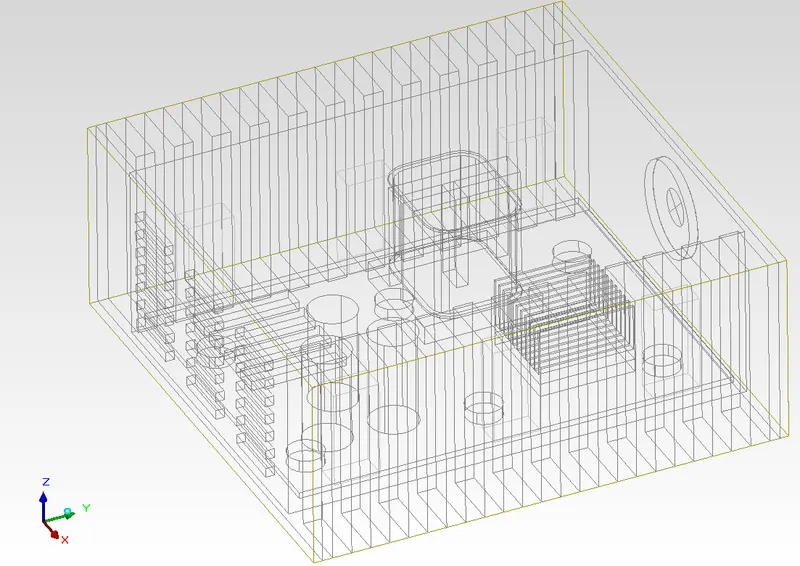
Following are the Geometry of the given Case -
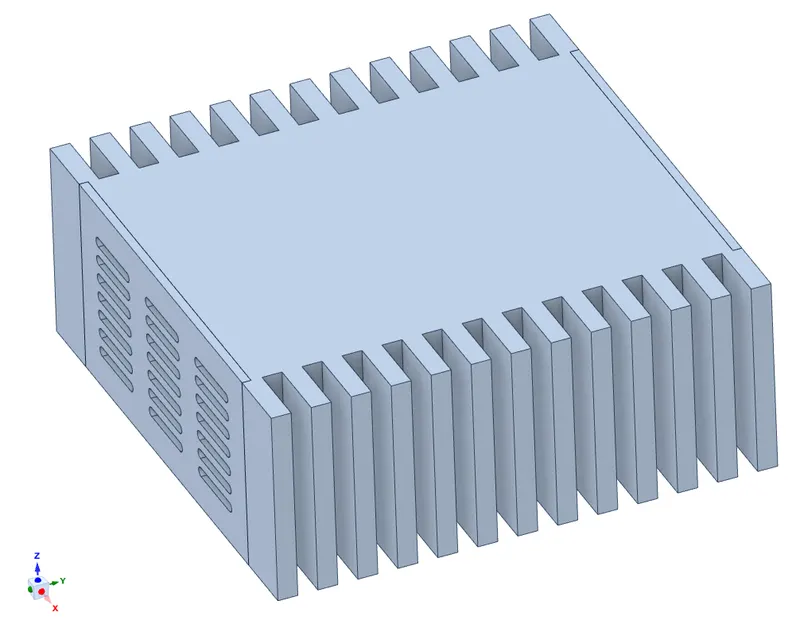
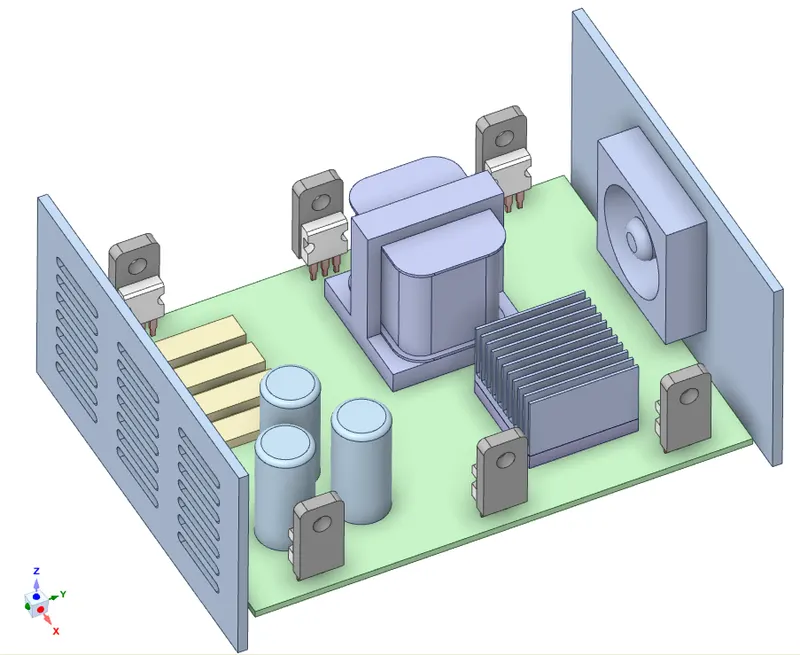
2) Simplifying the geometry using different tools and Icepak Simplify in SpaceClaim -
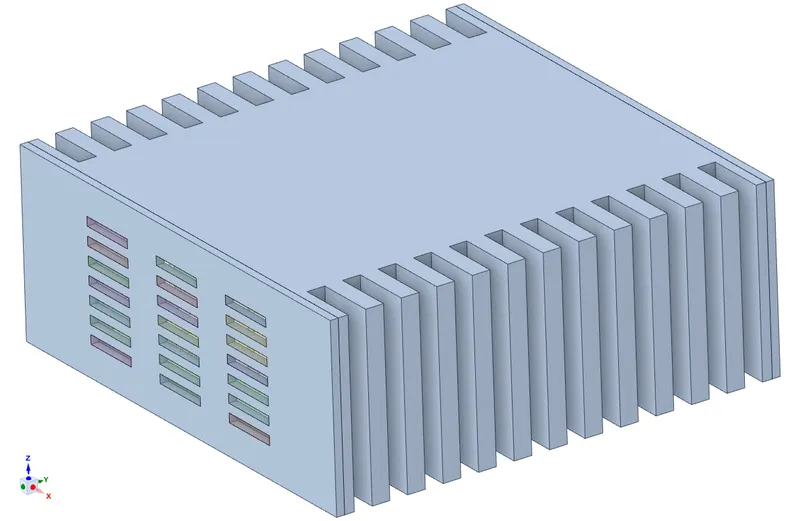
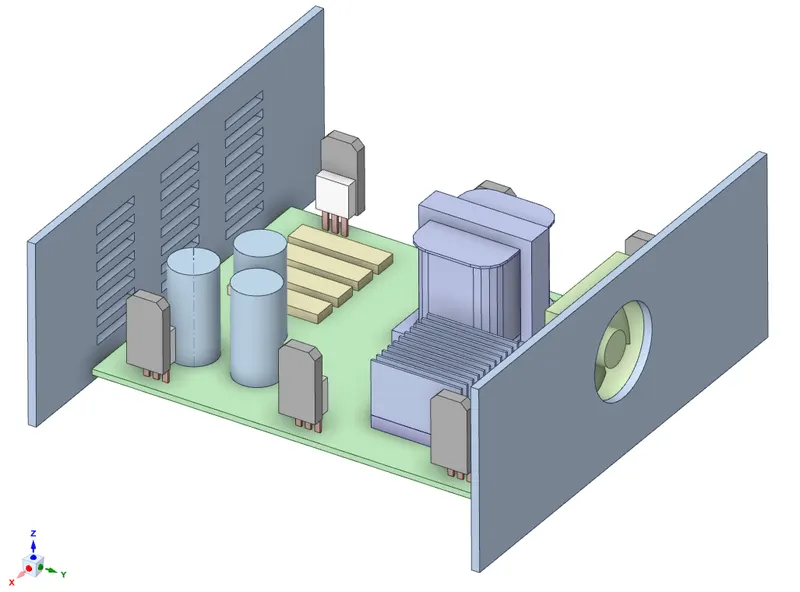
3) Loading Geometry in Ansys Icepak from spaceclaim.
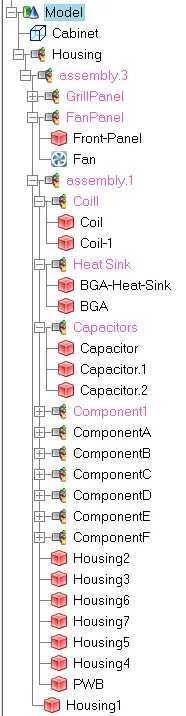
4) Creating Non-Conformal Assembly for the meshing.
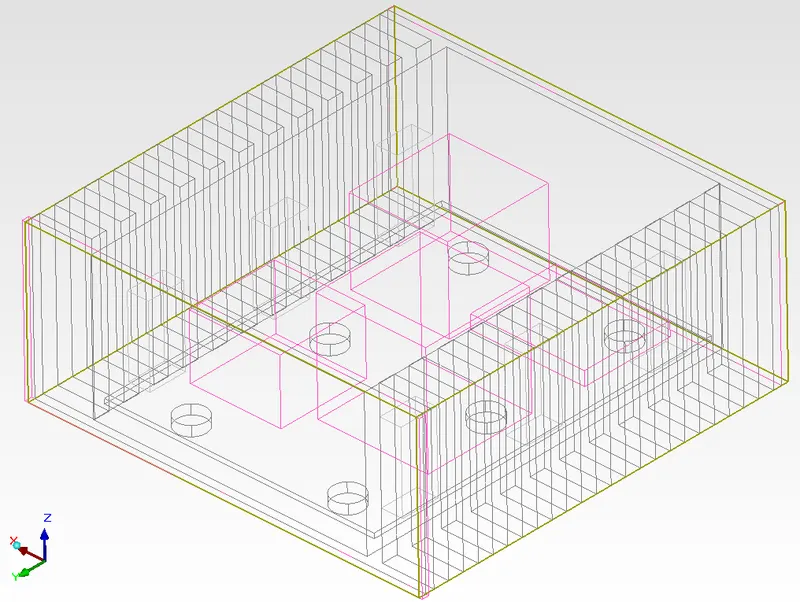
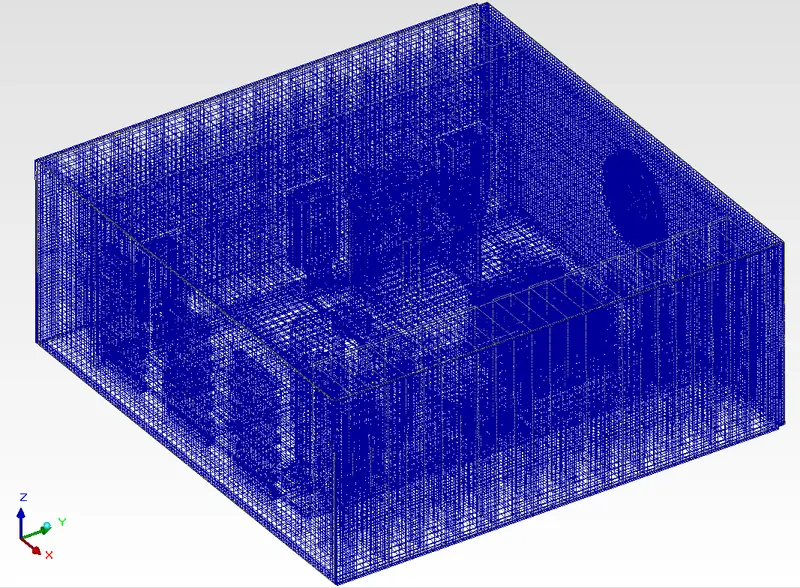
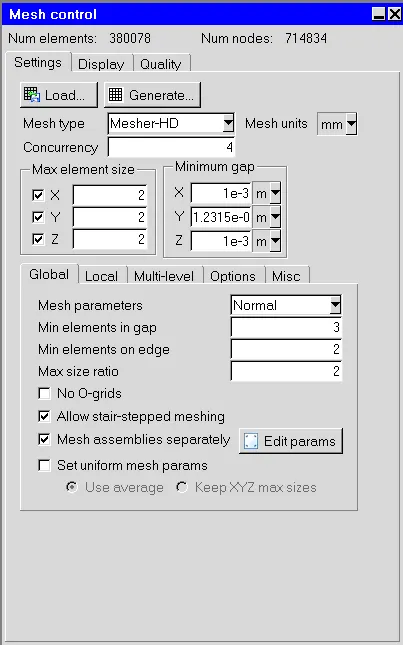
5) Generating suitable mesh on the geometry for the simulation.
Following is the of the generated mesh -
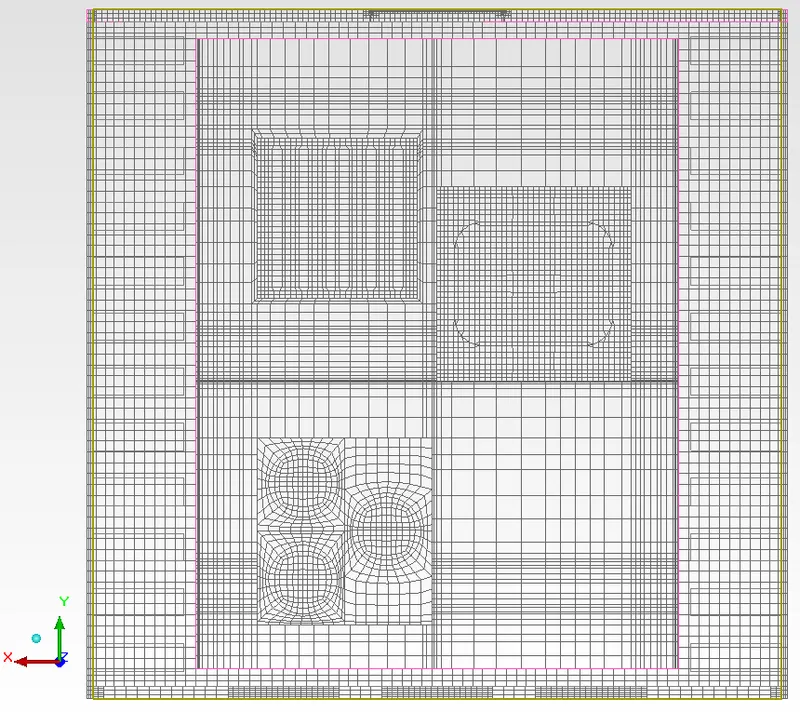
Following is the visualising the mesh inside the cabinet-
- Cut plane of XY plane at 50% of the cabinet in Z-direction from origin (Top Plane)
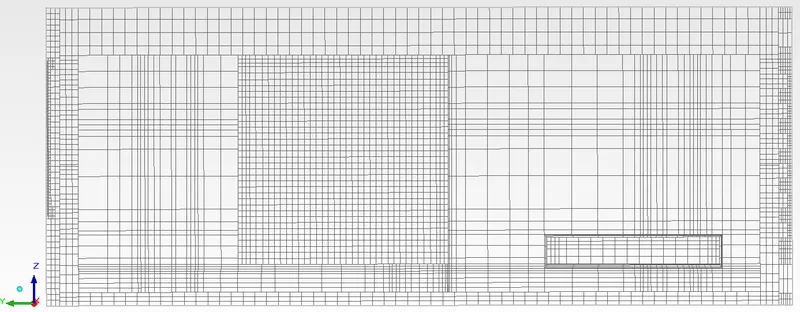
- Cut plane of YZ plane at 50% of the cabinet in X-direction from origin (Front Plane)
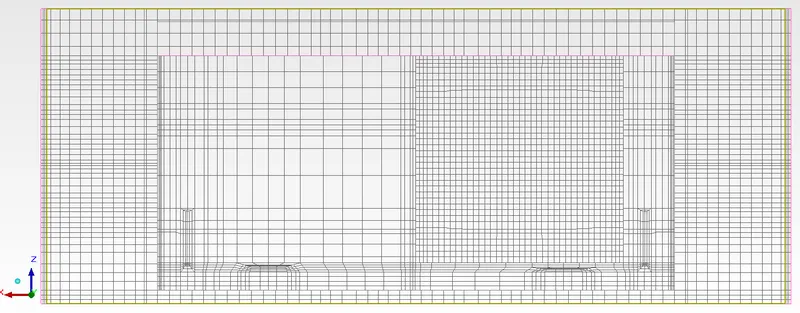
- Cut plane of XZ plane at 50% of the cabinet in Y-direction from origin (Right Plane)
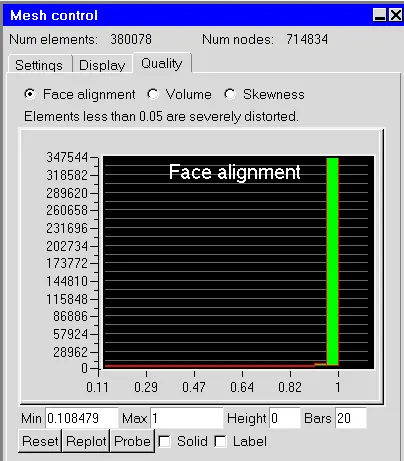
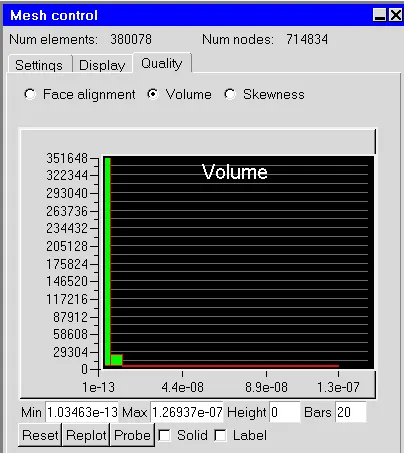
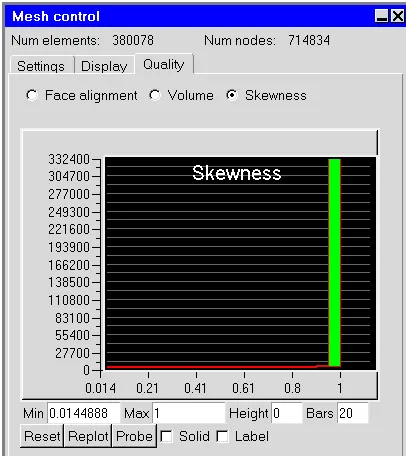
6) Mesh Quality Parameters
Following are the mesh quality for the respective parameters i.e., Face Alignment, Volume and Skewness.
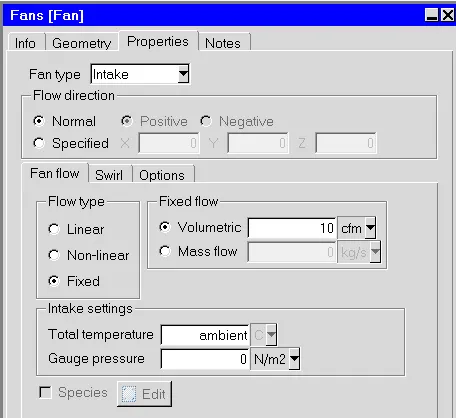
7) Component Properties & Settings -
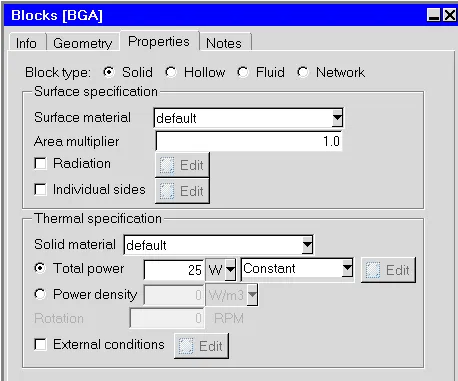
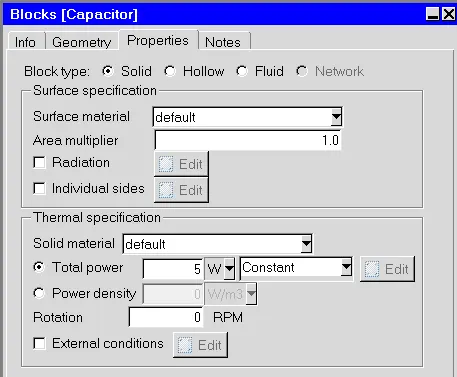
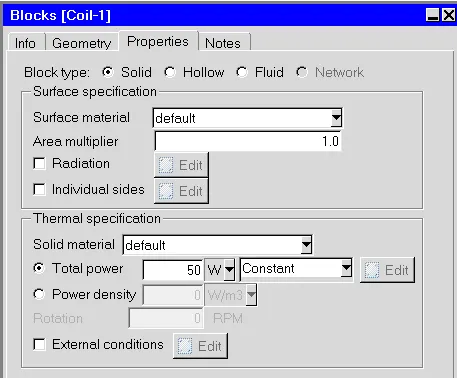
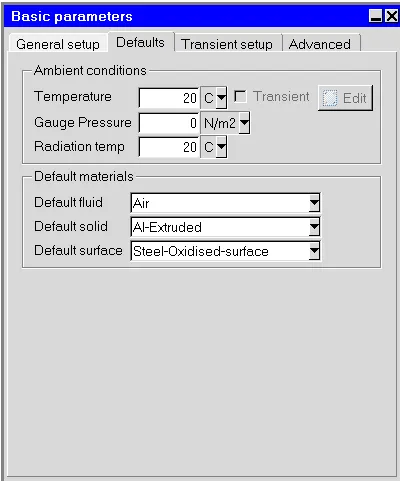
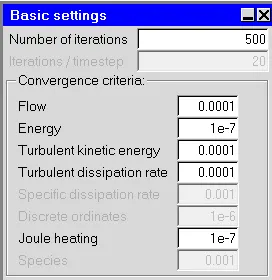
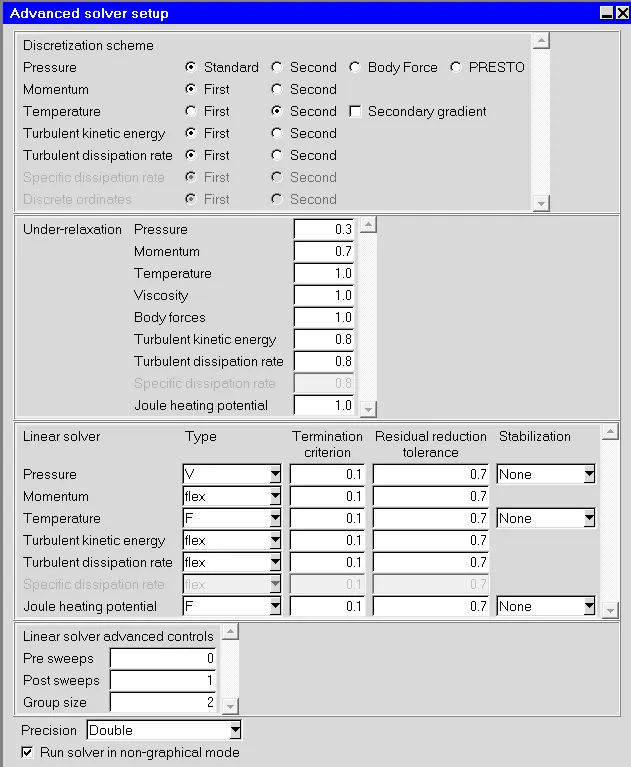
8) Solver Settings -
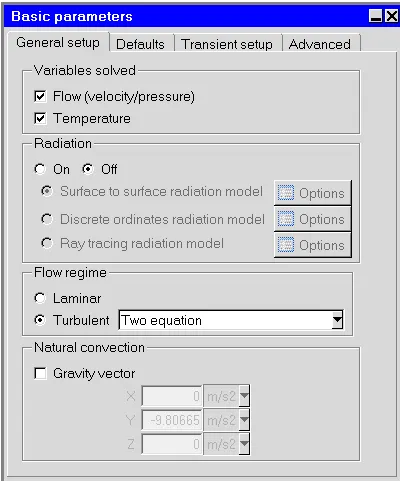
POST PROCESSING :
Outputs
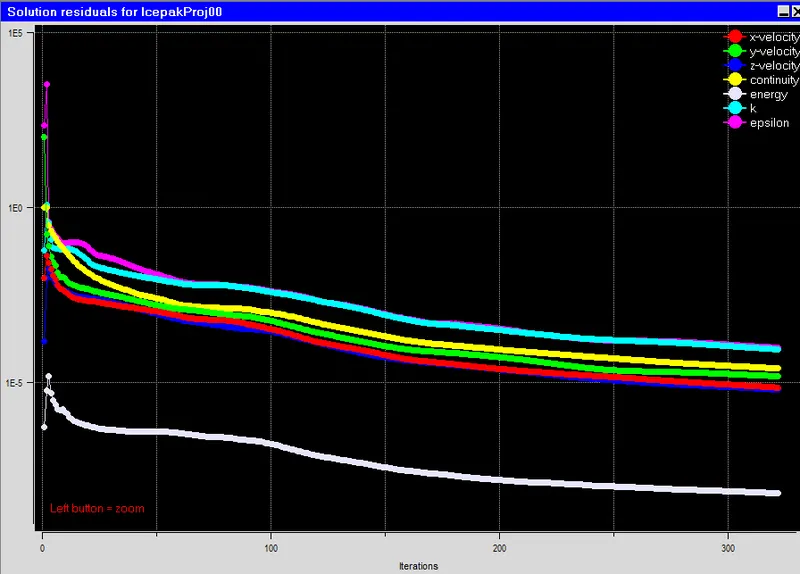
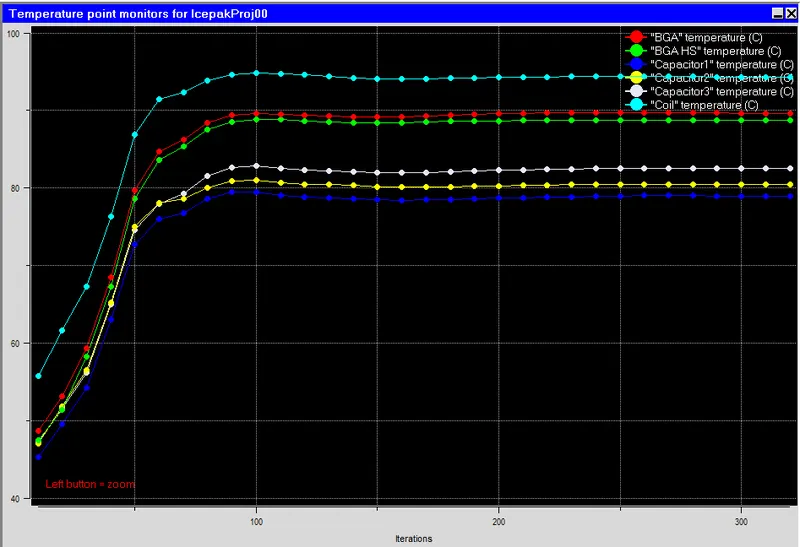
Residuals and Monitor Points -
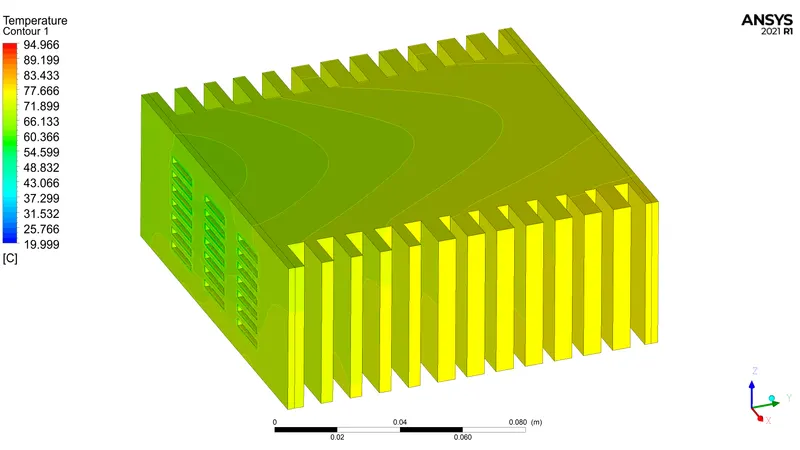
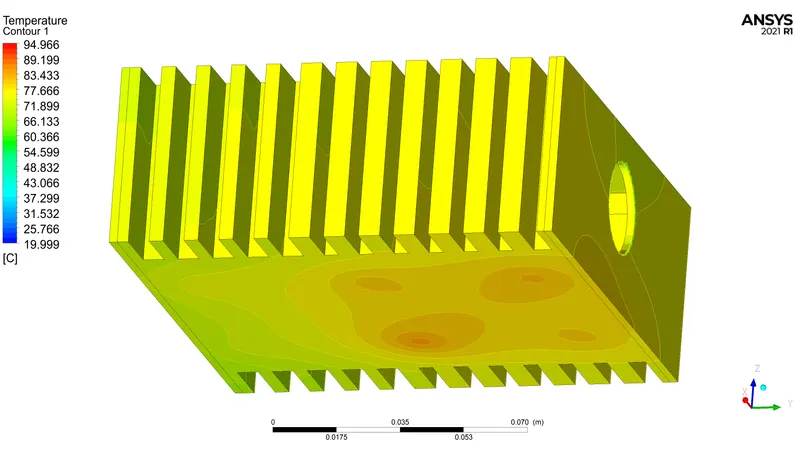
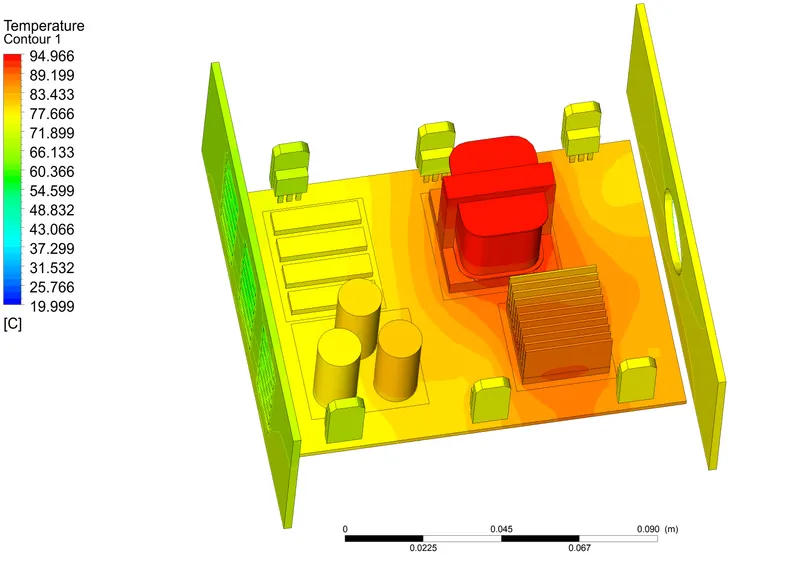
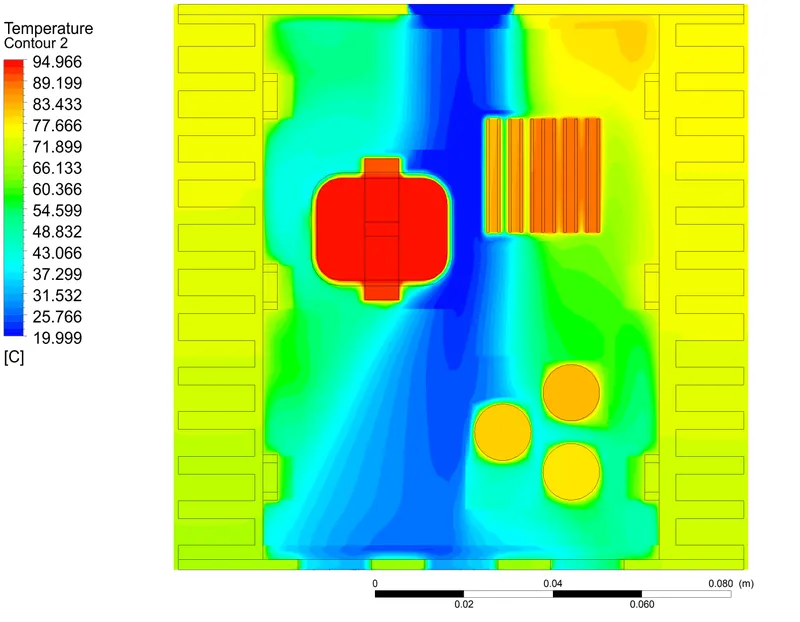
Temperature Contours -
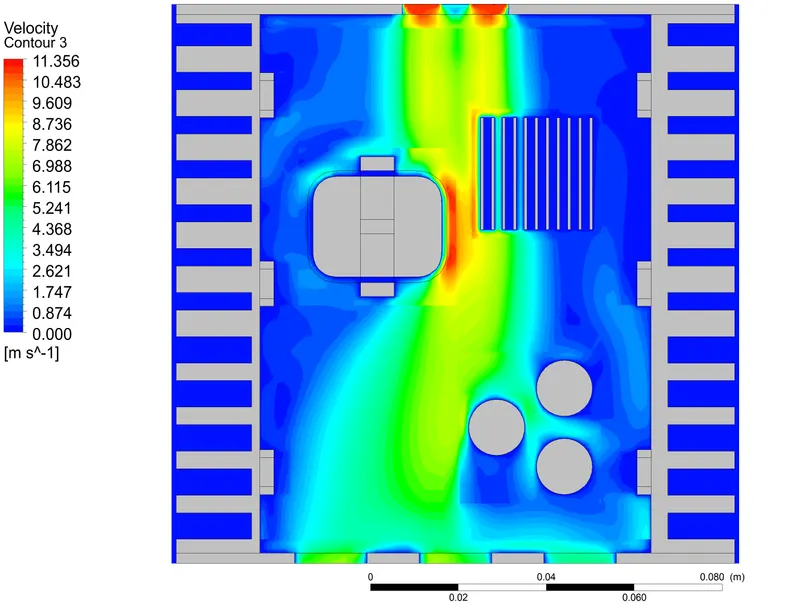
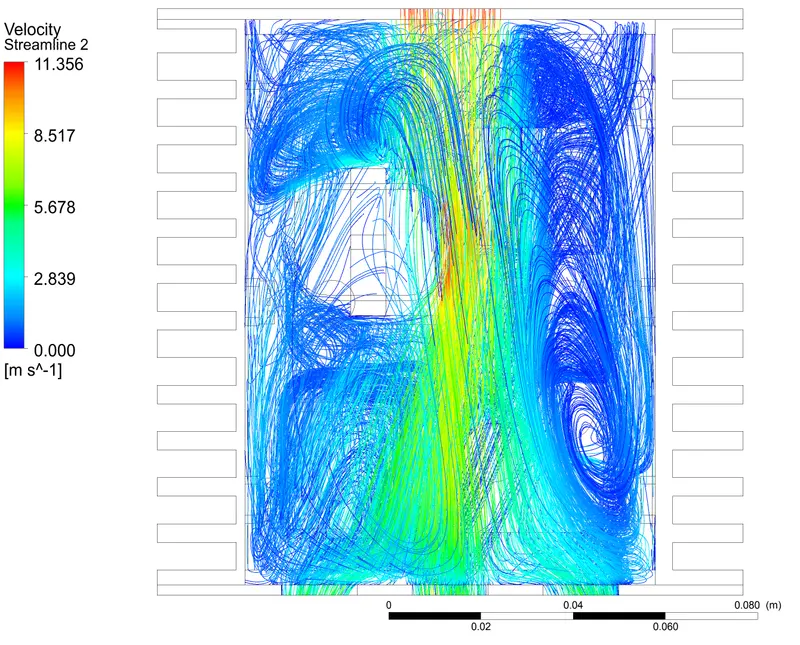
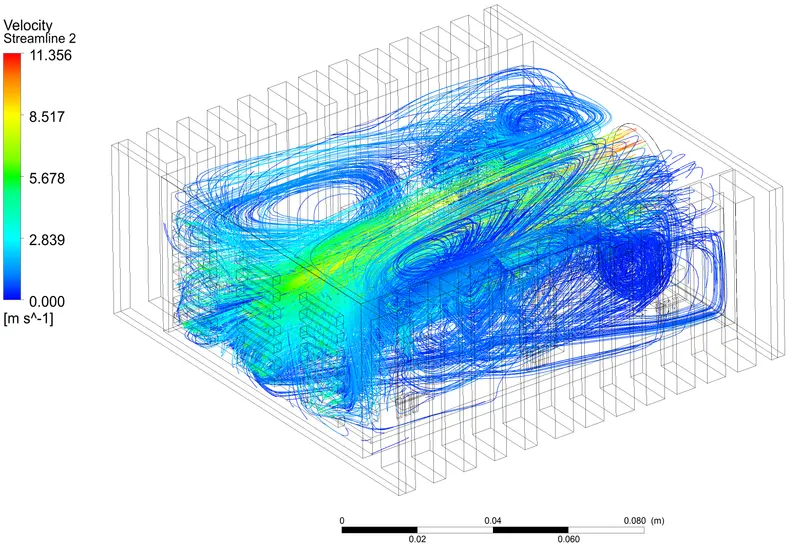
Contour and Streamline Visulization of Velocity of the fluid -
RESULTS :
The Following are the results of the simulation, generated simulation report from the ICEPAK software Showing Various characteristic values of the simulation and the max. temperatures of the different bodies acting in the simulation -
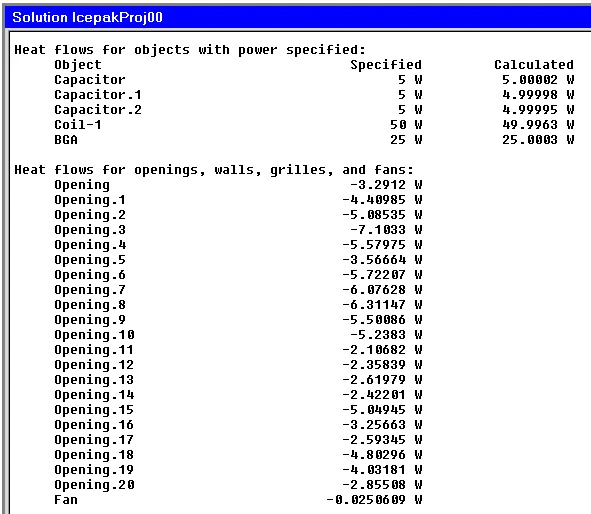
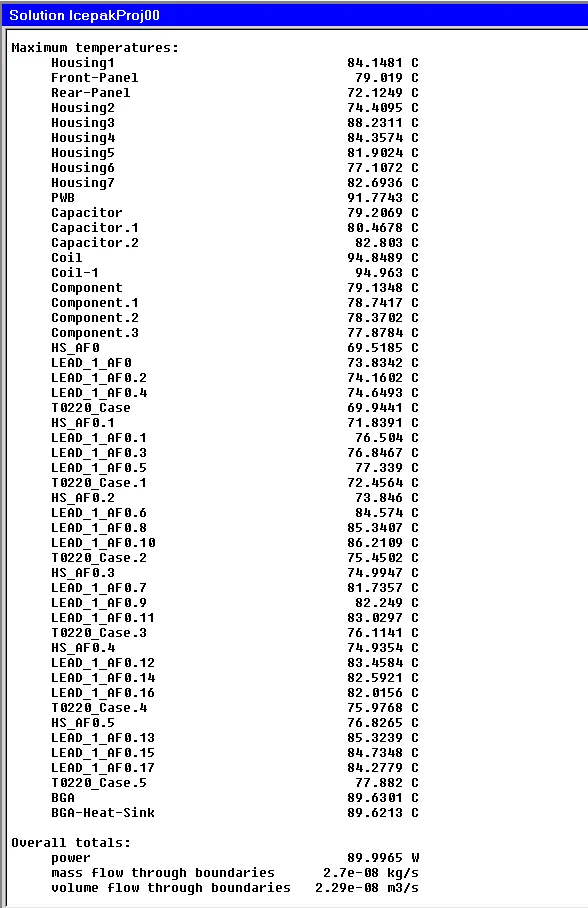
The maximum temperature within the computational domain is 94.963 deg.C. at the Coil.
The maximum air velocity within the computational domain is 11.356 m/s.
CONCLUSION :
Hence, We have completed the simulation for the give forced convection cooling case.
We can see the temperatures attained are realistic and all the residuals are less than 10e-3.
Also, we have seen different Contour & streamline visualization of temperatures and velocity .