Week 4 -Wire Bending Challenge
AIM: The aim of this week challenge is to perform a wire bending operation of wire for three different material Copper Alloy (Non Linear), Aluminium Alloy (Non Linear) and Magnesium Alloy. This analysis is performed and their stress and strain plots are explained based on the result.
PROCEDURE:
step 1: Open the ansys workbench module and select the static structural analysis.
step 2: right click the geomentry tab and select import geomentry --> browse --> select the file --> open.
step 3: Now open the geomentry in mechanical modeller.
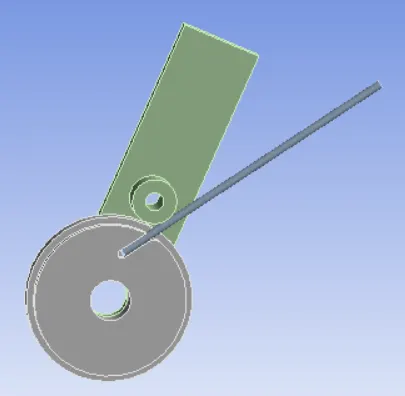
step 4:Now assign the material structural steel for both the wheels and lever also assign the material alloy for the wire.
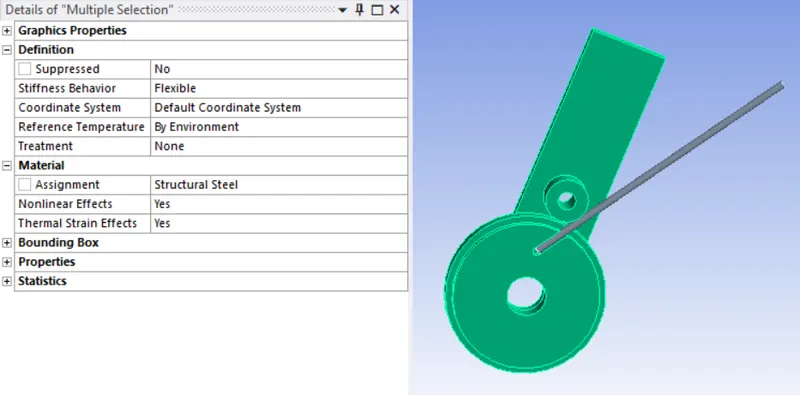
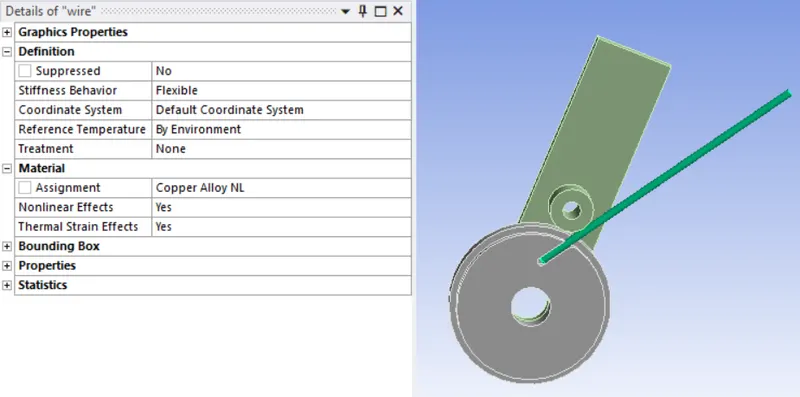
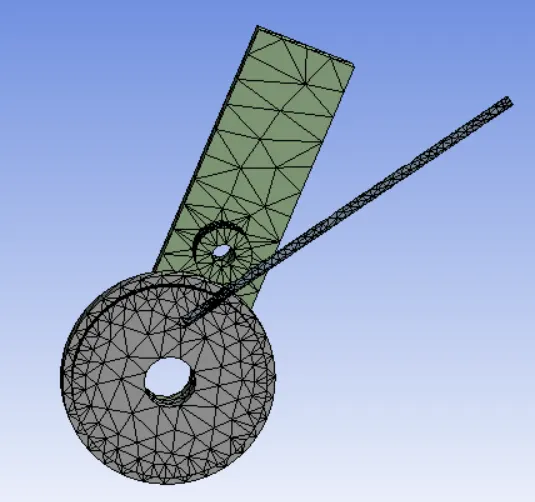
step 5: Now mesh the element with a sizing of 3mm along the contact surface and along the wire where it makes contact whith wheel.
step 6: Now create the contact between the wheel and the wire also between lever and wire.
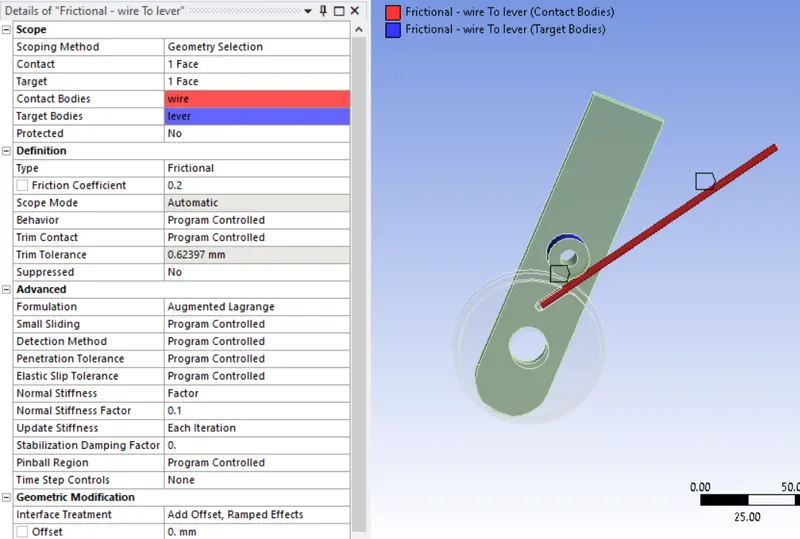
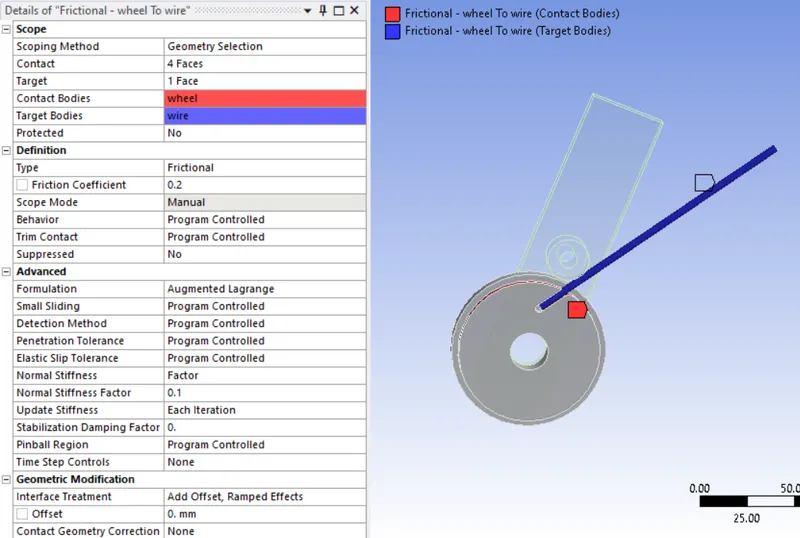
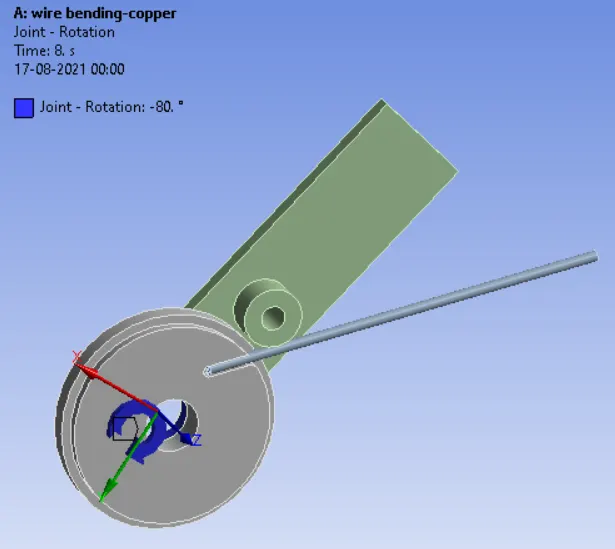
step 7:Now create a cylindrical joint for the wheel.
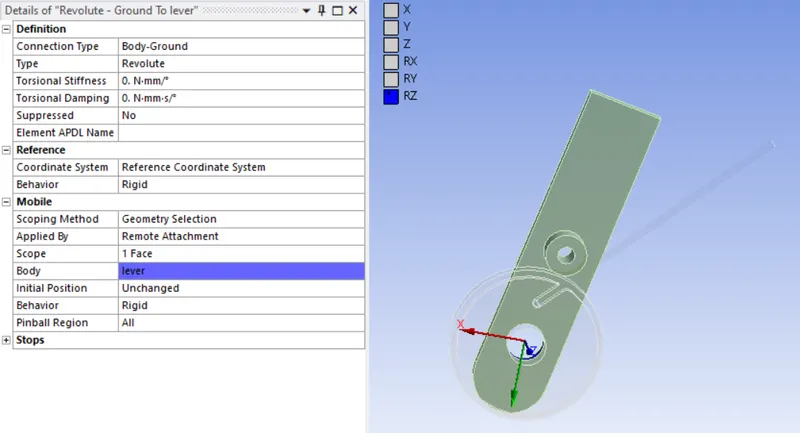
step 8:Now apply the boundary condition for the parts.
Give fixed supports for the wheel and wire.Give a rotation of 80 degree to the lever.
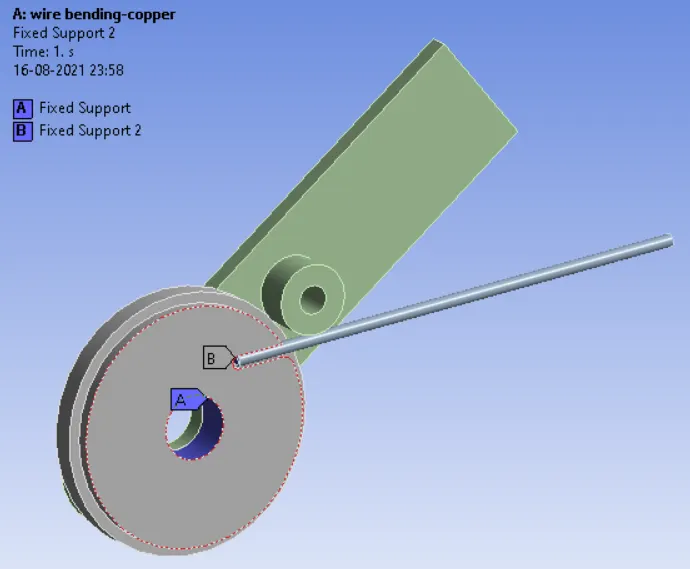
step 9: Now run the simulation.
step 10: Now include the total deformation,Equivalent stress and strain in output files.
step 11: Now change the material of the sheet and run the simulation
Step 12: Compare the result plot and give a detailed explanation.
OUTPUT RESULT:
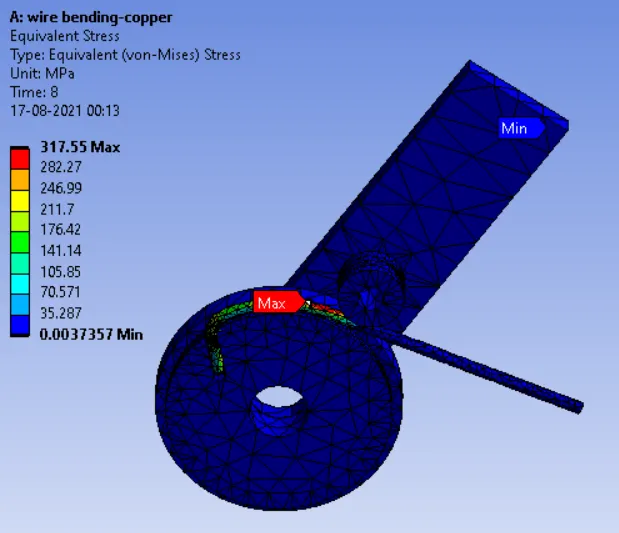
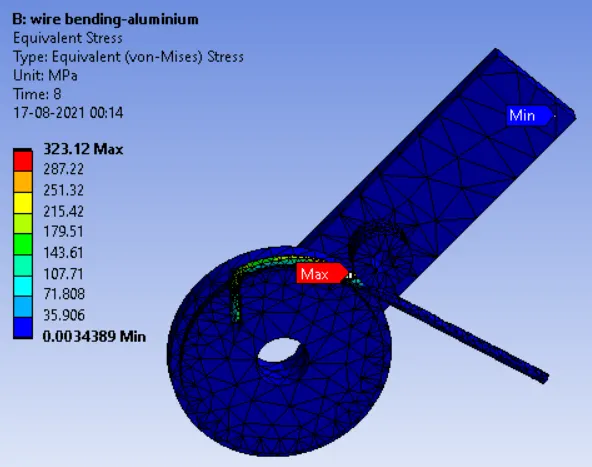
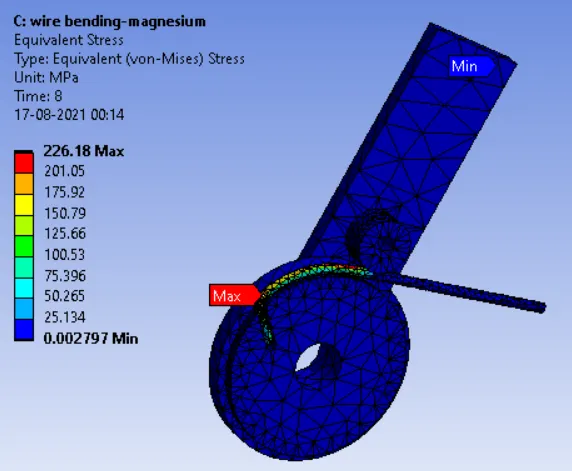
EQUIVALENT STRESS:
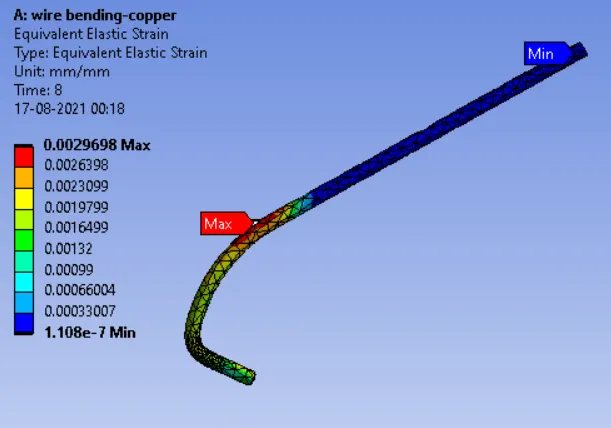
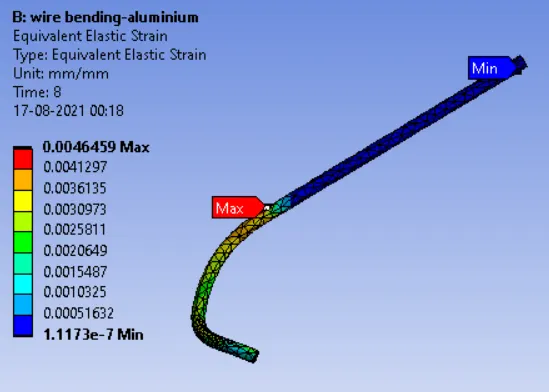
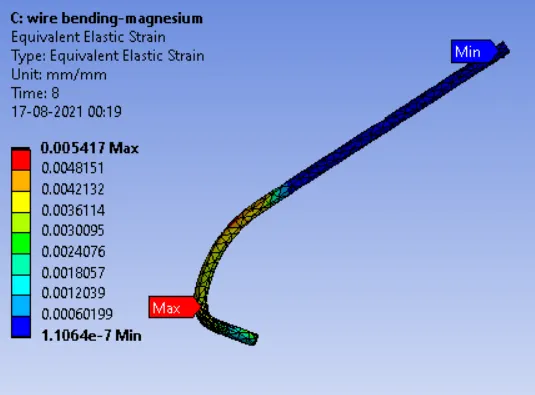
EQUIVALENT STRAIN:
CONCLUSION:
As evident from the graph, during wire bending, the wire material experiences maximum stress during the initial bending phase. Following that, the stress decreases and remains almost constant for the rest of the process. The same pattern is observed with equivalent strain.The initial and final bend portions of the wirexperience the most stress compared to other regions.
Aluminium Alloy and copper alloy experiences maximum stress when compared with Magnesium alloy. The strain in aluminium is higher than the copper.Since the loads are the same in all cases with copper having more modulus of elasticity than aluminium , I infer that aluminium offers the highest resistance to bending and is the least favourable material for wire bending in our case.
The highest strain and also lowest stress is observed for Magnesium alloy. Magnesium alloy also has the lowest modulus of elasticity among the three and therefore, is the most favourable material for wire bending in our case.