Week 4 -Wire Bending Challenge
Title: Wire bending challange for different Materials
Objective: Simulate wire bending for Copper NL, Aluminium NL, Magnesium NL materials and compare Max.Equivalent stress and Max.Equivalent strain for the wire.
Set up:
1.Material Properties:
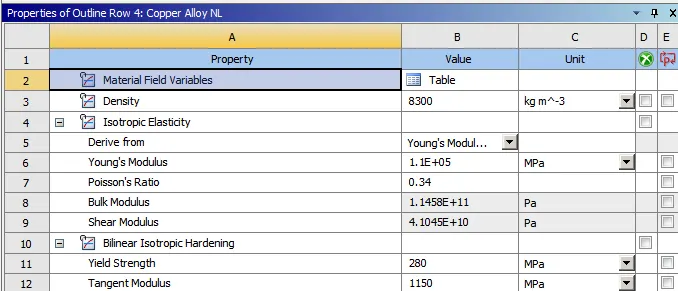
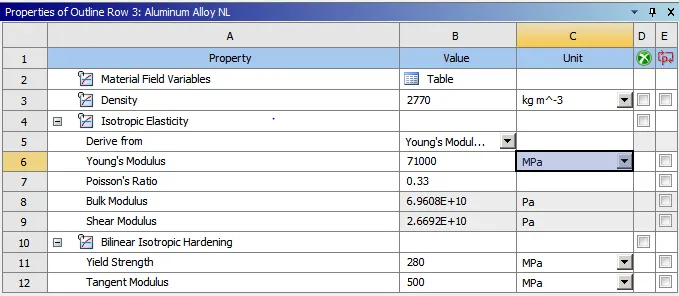
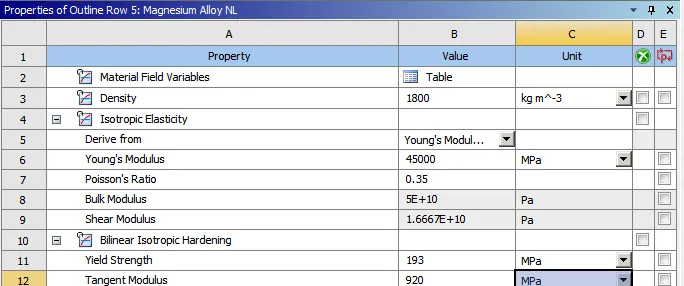
2.Contacts:
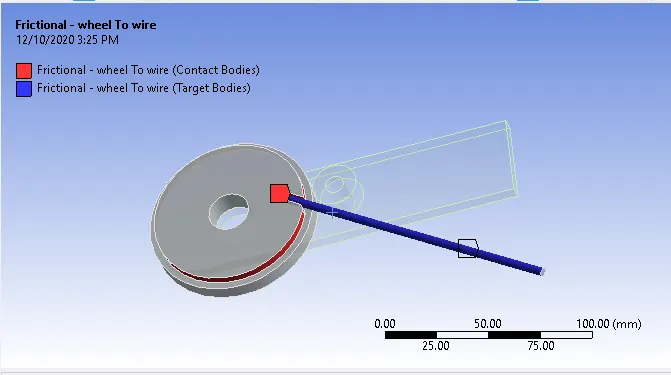
There are two frictional contacts Wire to lever and wheel to wire with coeficient of friction 0.2.
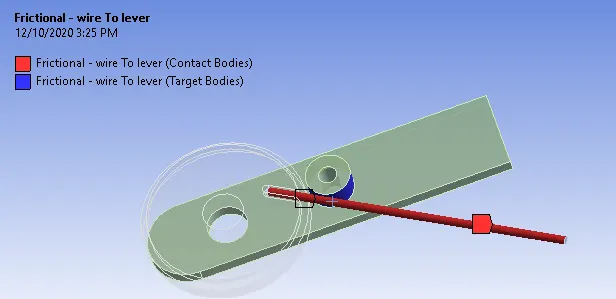
3. Joints:
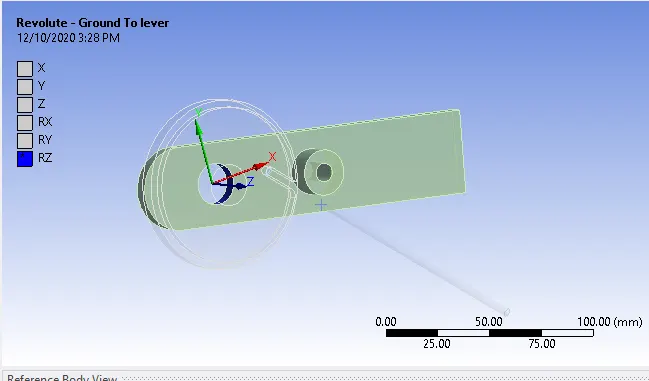
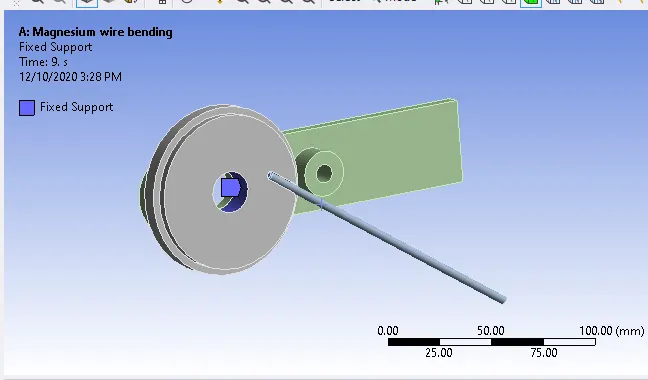
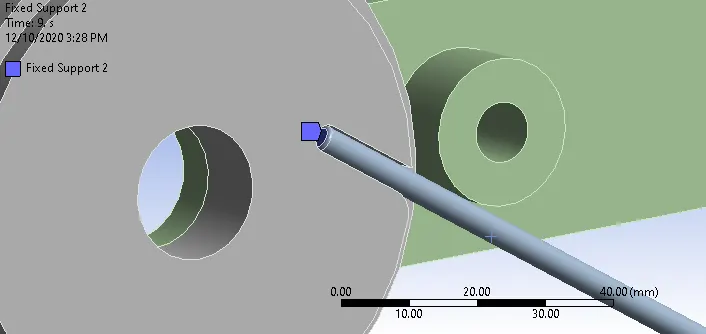
As the lever should rotate it will be revolute joint, wheel should not move so it is fixed joint and wire end we will be giving fixed support as wire should not move while bending.
4. Meshing:
Method is changed to Tetrahedron for all the three bodies with global mesh size of 4mm and sizing for important faces with mesh size of 2.2mm. By using sphere of influence method sizing is done on wire where it start bending with mesh size of 0.8mm.Number of elements for these settings are:13338
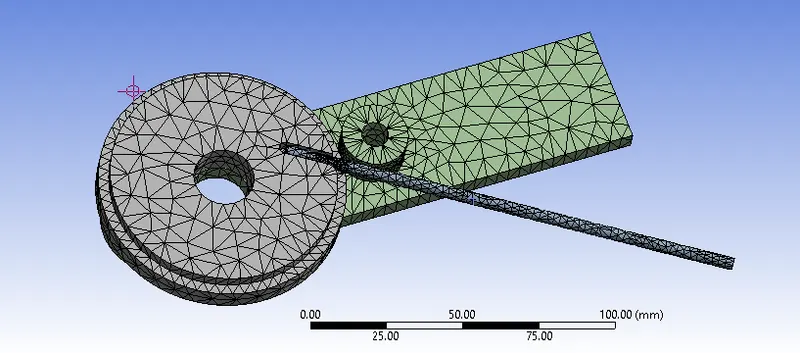
5. Loads:
Rotational is applied to lever having revolute joint as per video.
6.Results
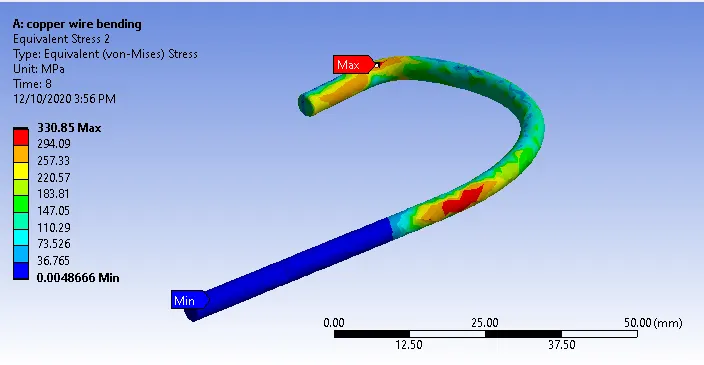
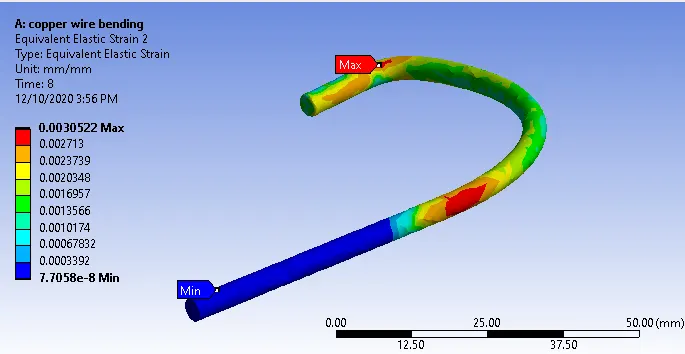
i) Wire bending for copper Alloy NL:
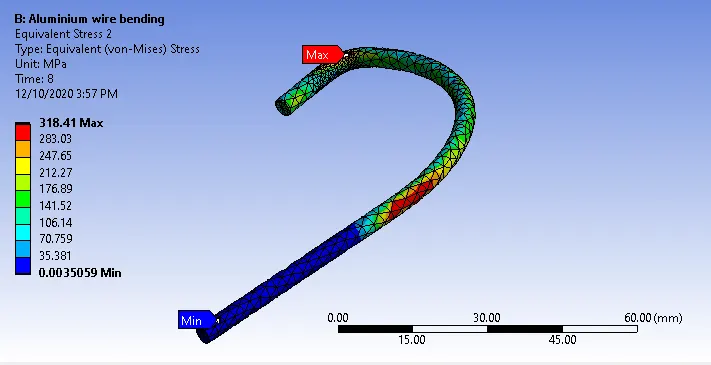
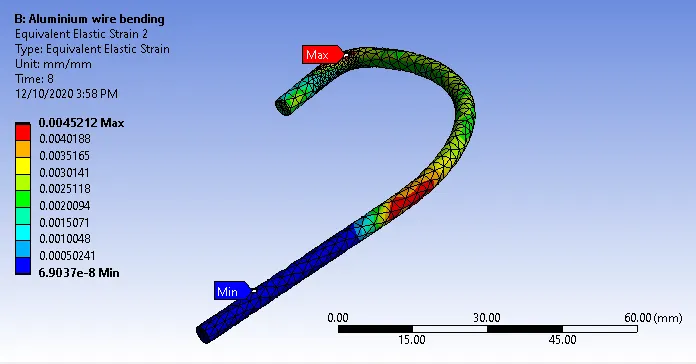
ii) Wire bending for Aluminium Alloy NL:
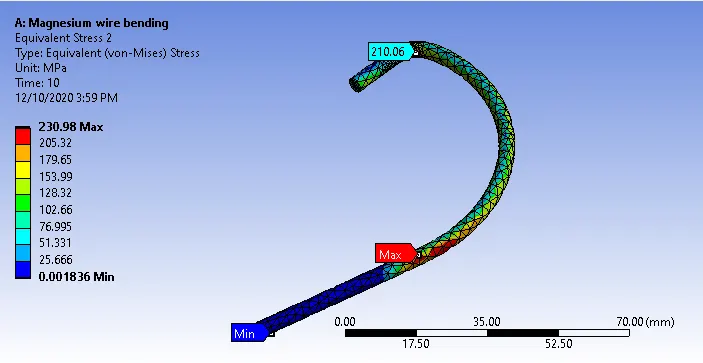
iii) Wire bending for Magnesium Alloy NL:
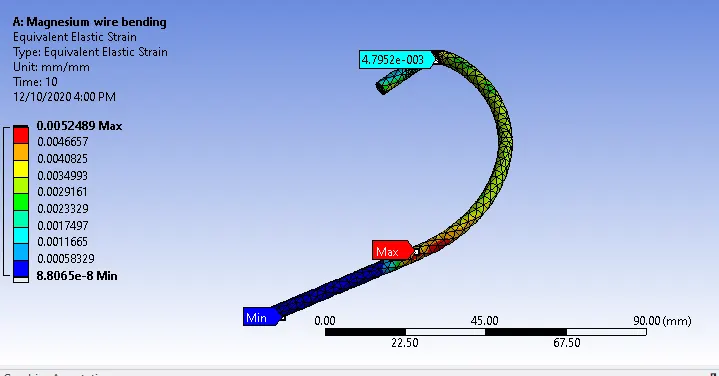
Tabulate results below as per simulation :
| Case | Wire Material | Max.Equivalent stress | Max.Equivalent strain |
| 1 | Copper NL Alloy | 330.85 | 0.0030522 |
| 2 | Aluminium NL Alloy | 318.41 | 0.0045212 |
| 3 | Magnesium NL Alloy | 230.8 | 0.0052489 |
Conclusion:
1.Maximum equivalent stress is maximum for copper alloy NL i.e 330.8 MPa and minimum for Magnesium alloy NL i.e 230.8 MPa.
2.Maximum equivalent strain is maximum for Magnesium alloy NL i.e 0.005248 mm/mm and minimum for copper alloy NL i.e 0.0030522 mm/mm.