Week 3 Verification of Weld Joints
Title: Verification of Weld Joints with different Materials
Objective: To analyse weld joint for 3 different weld materials based on DirectionalDeformation,
Max equivalent strain and Max equivalent stress as per simulation results.
Case setup:
- Modelling: There are 2 plates which have 2 ribs connected by weldments.
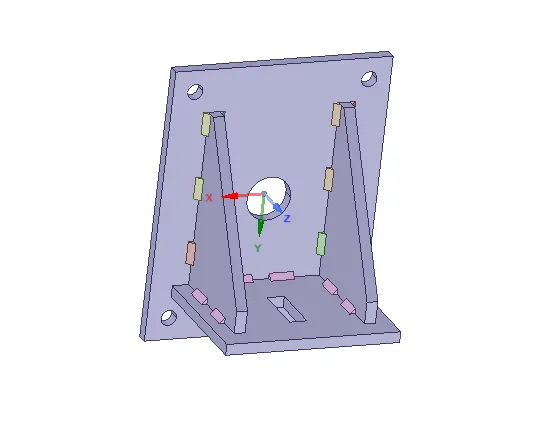
- Contacts: Plates to ribs and plate to plate connections are given Frictional contact with 0.2 coefficient of friction and all other contacts of plate and ribs with weldments are given Bonded contact.
- Meshing: Meshing done as per video but i have kept mesh size of 6.5mm to get better result and the number of nodes are 27516.
- Analysis settings: Turn on large deflection and all other options are kept programm controlled.
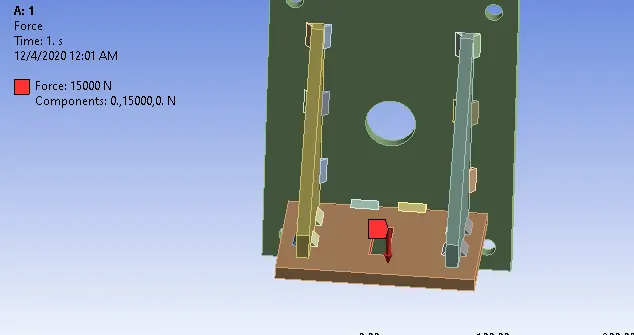
- Supports: Fixed support to holes on large plate and 15000N load is applied vertically downward on small plate rectangular portion.
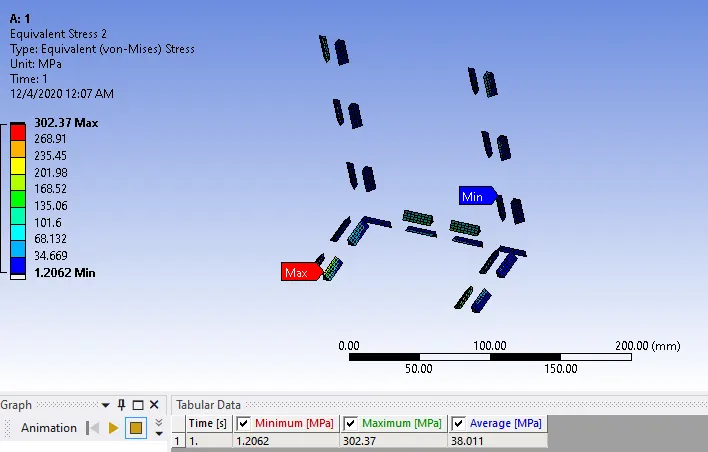
Case 1 Results: Stainless steel weldments and all other components also stainless steel.
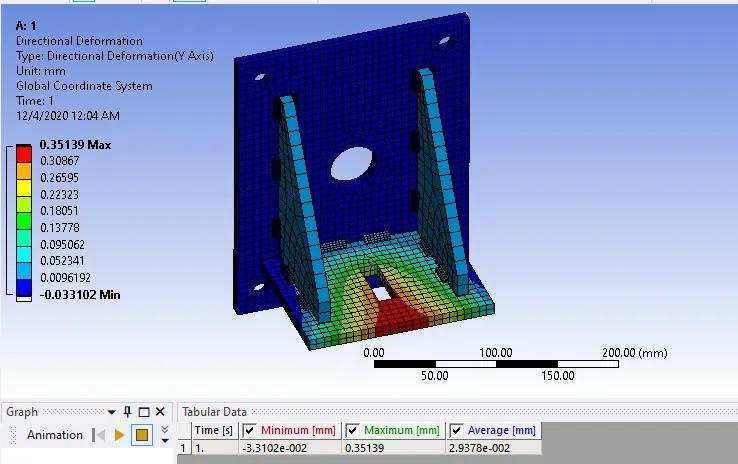
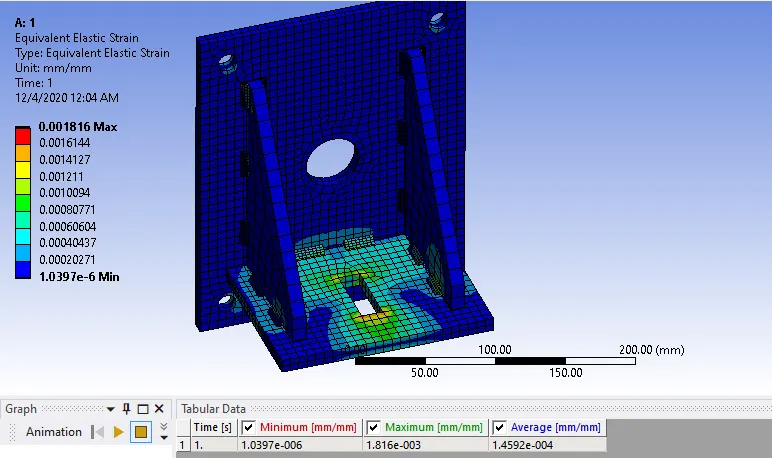
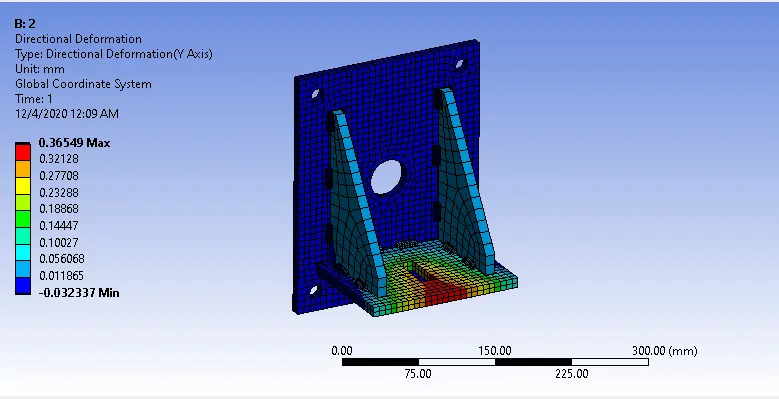
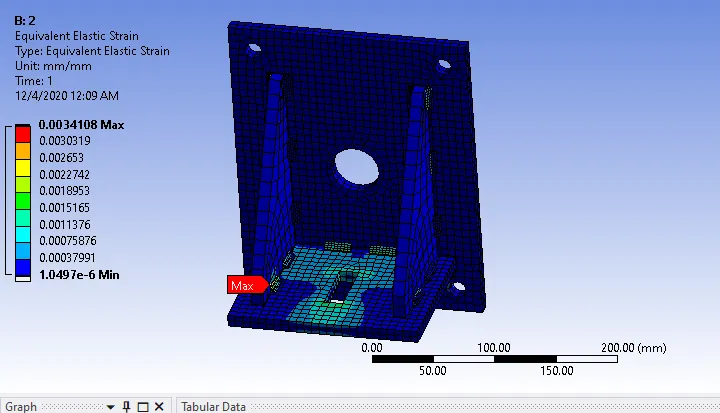
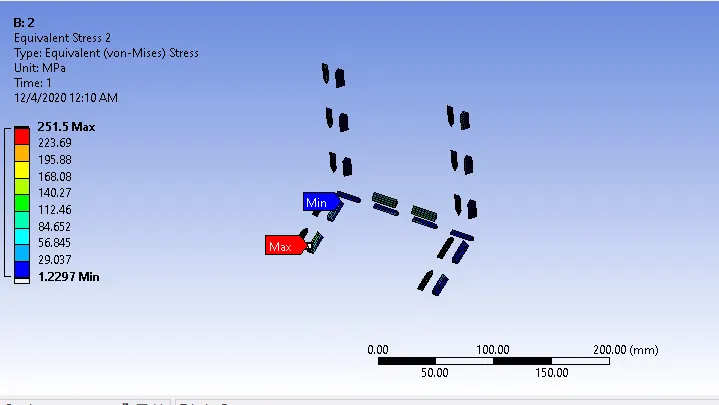
Case 2 Results: Aluminium weldments and all other components stainless steel.
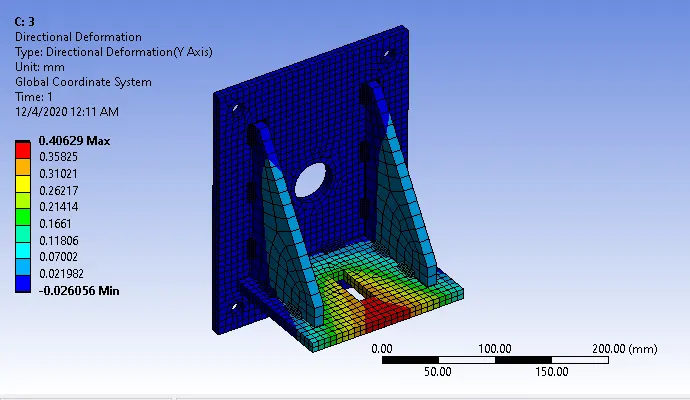
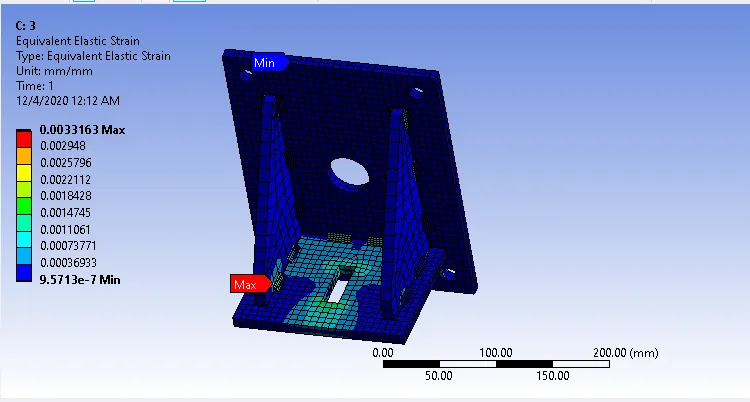
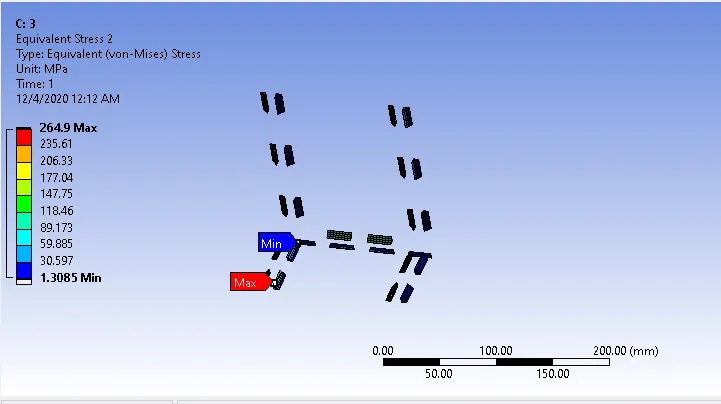
Case 3 Results: Bronze weldments and Stainless steel plates and copper ribs.
Tabulate the results based on simulation:
| Weld Material | Stain less steel | Aluminium | Bronze | |
| 1 | Max.Equivalent Stress(Mpa) all bodies | 340.02 | 344.72 | 351.07 |
| 2 | Max.Equivalent Stress(Mpa) in weldments | 302.37 | 251.5 | 264.9 |
| 3 | Max. Directional Deformation(mm) | 0.35139 | 0.36549 | 0.40629 |
| 4 | Max.Equivalent Strain | 0.001816 | 0.0034108 | 0.0033163 |
| 5 | Min Factor of safty as per Tensile yield strength | 0.60879 | 0.60049 | 0.5436 |
| 6 | Min Factor of safty as per Ultimate tensile strength | 1.7234 | 1.6999 | 1.0079 |
Conclusions:
1. Maximum equivalent stress in three cases is found on the small plate.
2. Maximum equivalent stress in weldment is large in stainless steel weldment (302 Mpa) and low in Aluminium( 251.5 Mpa) so Better weld material order as per stress point of view.
Aluminium > Bronze > stainless steel (performance order as per stress concerned).
Aluminium is better material for weldment.
3. Directional deformation in Y-direction:
stainless steel weldment case = 0.35139 mm
Aluminium weldment case = 0.36549 mm
Bronze weldment case = 0.400629 mm
Directional deformation is more for bronze weldment case as compared to aluminium and stainless steel case.
4. Equivalent strain :
stainless steel weldment case = 0.001816
Aluminium weldment case = 0.0034108
Bronze weldment case = 0.003316
Equivalent strain is very less for stainless steel weldment i.e 0.001816 mm/mm case compared to other cases.
so the change in lenth per original length will be less in case 1.
5. Factor Of saftey:
All designes are not safe if we consider Tensile yield stress as reference as fos < 1 in all three cases.
But, All designs are safe if we consider Ultimate Tensile strength as reference as Fos>1 in all cases.