Week - 4 - Crash Box Simulation
AIM :
A crash box is a highly energy absorbing structure that crashes on application of loads and reduces impact on other components nearby. A full-fledges crashbox is a highly sophisticated design but in this case we will go with a rectuangular channel which can thought of as the most simple crashbox.
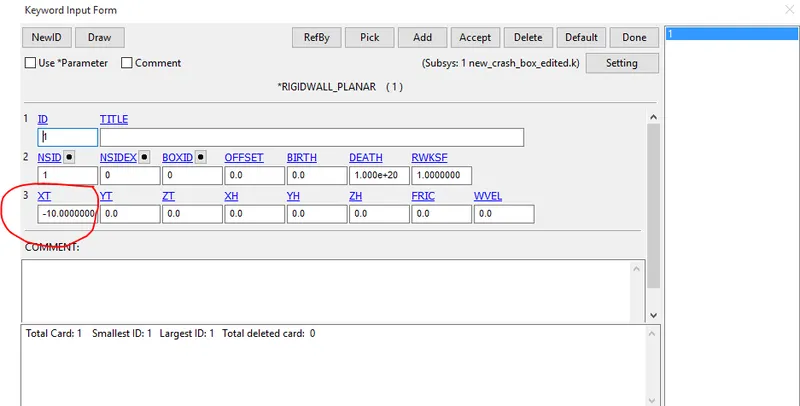
- The crashbox should crash into a rigidwall created using *RIGIDWALL_ keyword.
- Material for the crashbox is steel. The simulation needs to be started using elastic material to verify its correctness and later a nonlinear material card data will be provided
- Thickness of the crashbox is 1.2mm.
- Initial velocity for the crashbox should be around 50 kmph
- The units system to be used is gm-mm-ms
- The simulation should satisfy either of the two situations - (1) It crashes on the rigidwall and rebounces completely or (2) it buckles and folds in the axial direction so as to come in self-contact.
- Once the simulation is completed and results as asked for below is collected, run another simulation by increasing the thickness of the crashbox from 1.2 to 1.5mm.
PROCEDURE :
- Import the given keyword file in Ls- prepost
path = go to file - open - Ls-dyna keyword file.
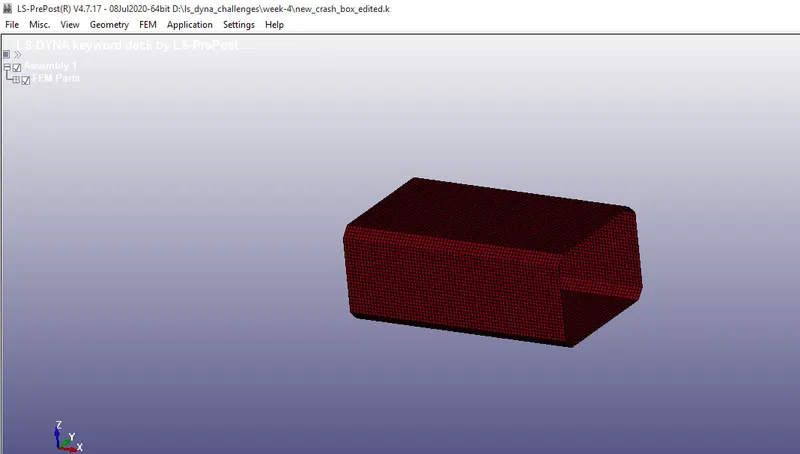
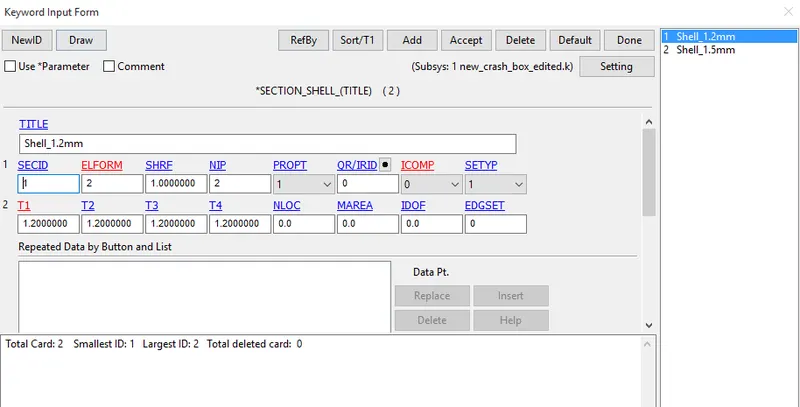
- Create a section ID for shell with ELFORM 2 and thickness 1.2mm for case1, after simulation change thickness to 1.5mm and save it in another folder for case2.
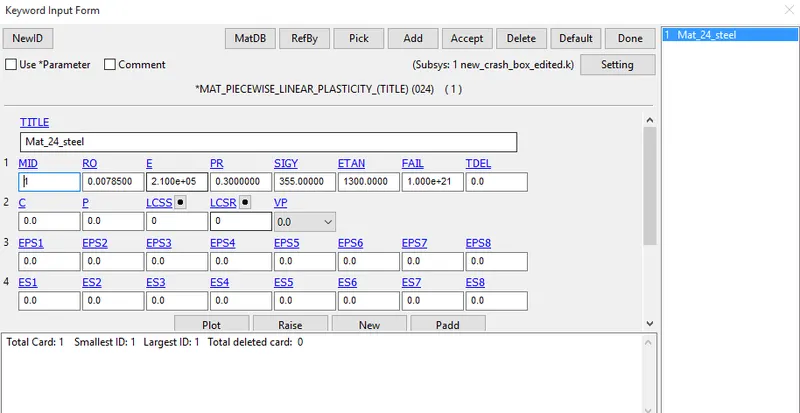
- Create a material 024 piecewise Linear Plasticity and assign proprties of steel in g mm ms
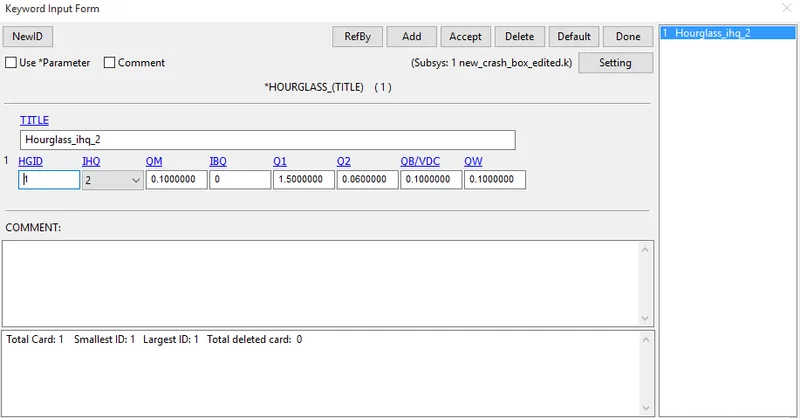
- To avoid Hourglass energy generation, create an Hourglass card with IHQ value as 2 and rest as default.
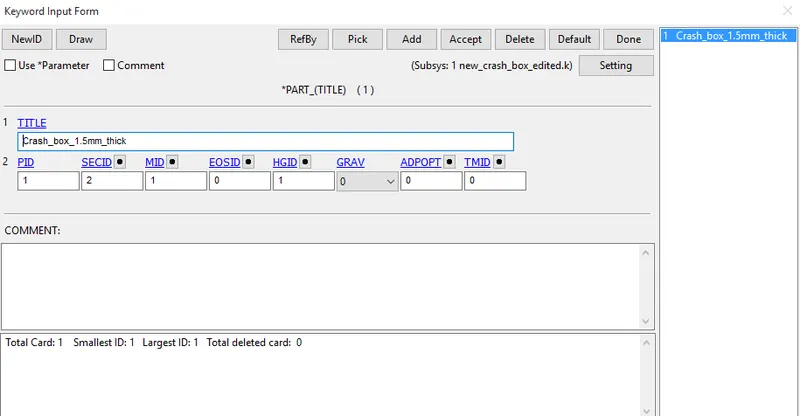
- The Section, Material, Hourglass ID assign to the part card
BOUNDARY CONDITIONS
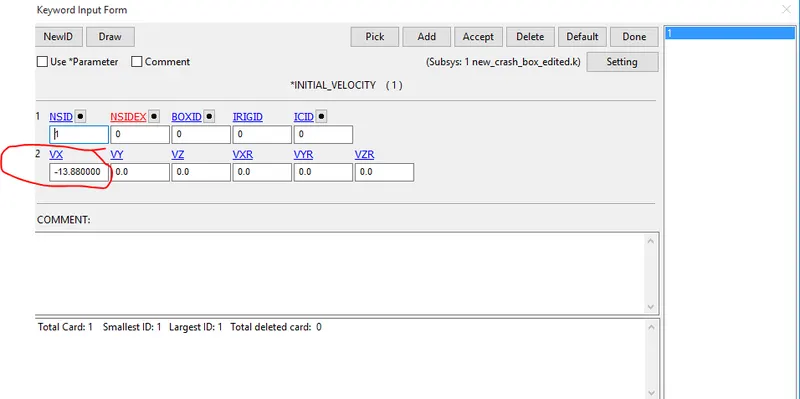
- Initial Velocity - apply v= 13.88mm/ms in X-direction to the crash box.
- The rigid wall is created at a distance of 10mm away from the crash box in X-direction
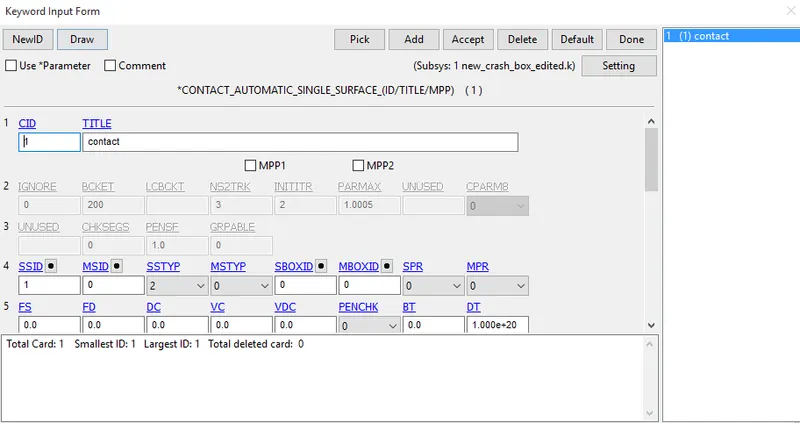
- Created a contact card with Automatic_Single_Surface, select crush box nodes as slave nodes and rigid wall automatically consider as master.
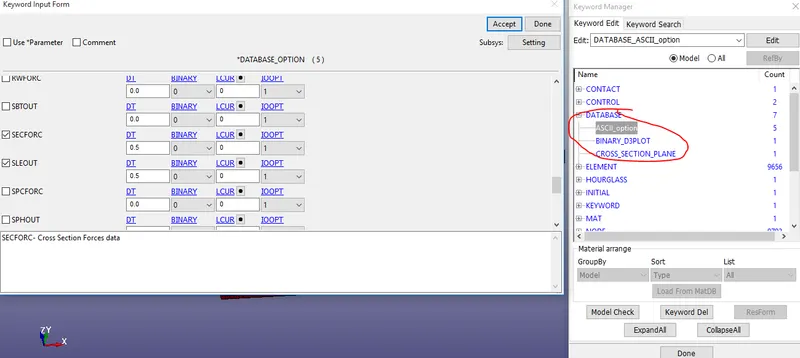
- Create Database card for ASCII file and select glstat, matsum, sleout, secforc and rcforc with DT 0.5 and Binary d3plot with DT 0.5
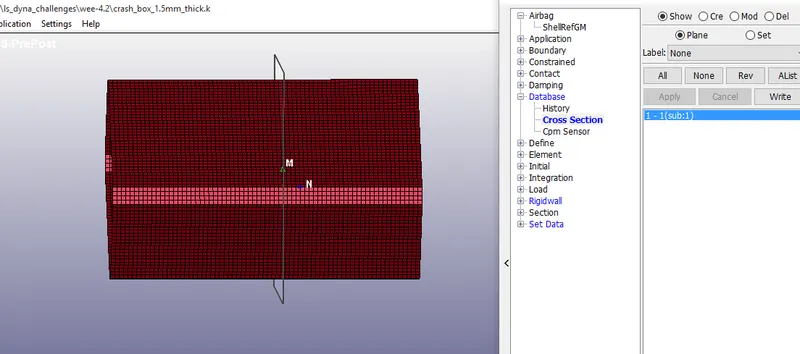
- create cross section plane under database card in the middle of the crash box along it's length
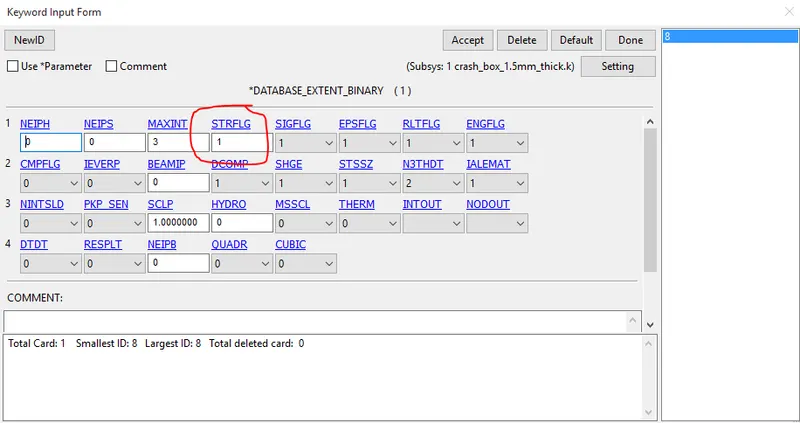
- To get directional strain, create a database card for extent_binary with STRFLG value as 1
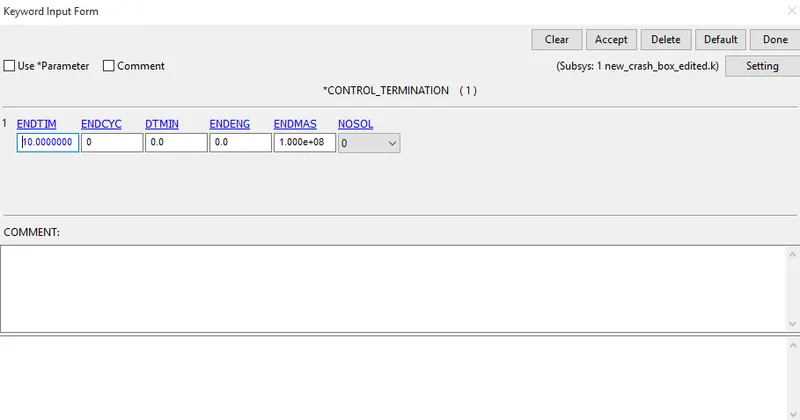
- Create a control termination card to specify end time for simulation.
- save the keyword file in .k format and run simulation using Ls-Run.
RESULTS
animation of simulation
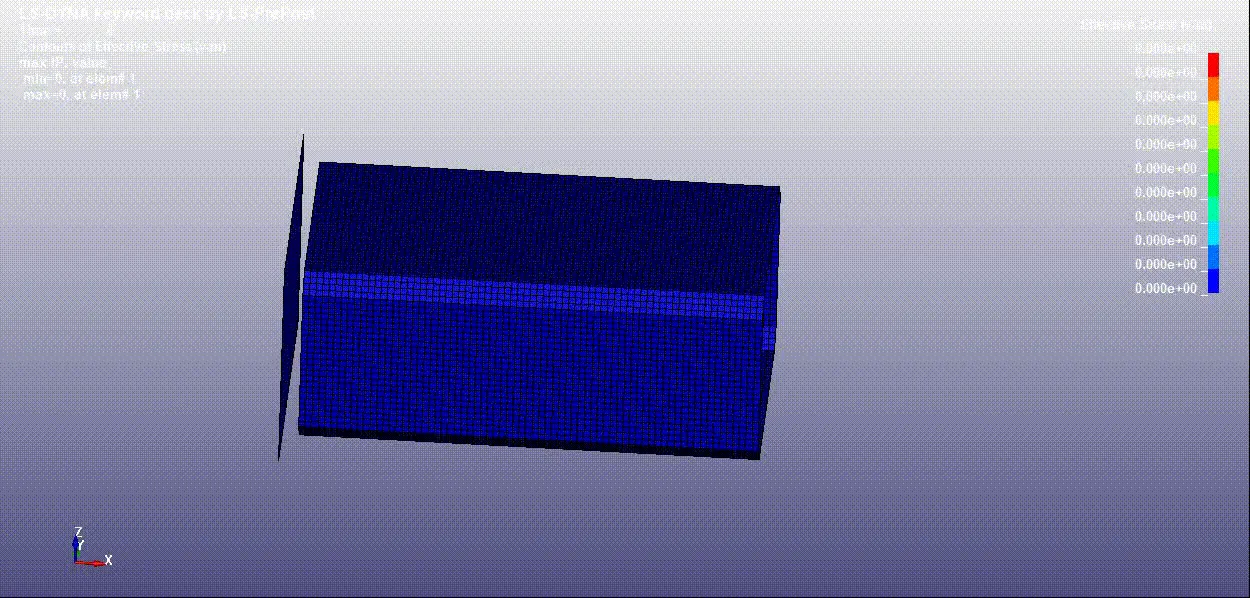
Von-misses stress comparision - 1.2mm vs 1.5mm
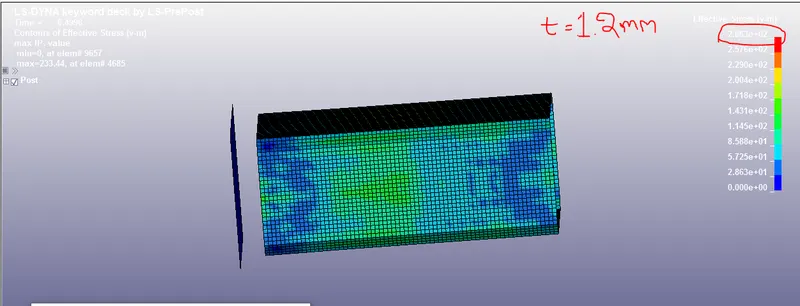
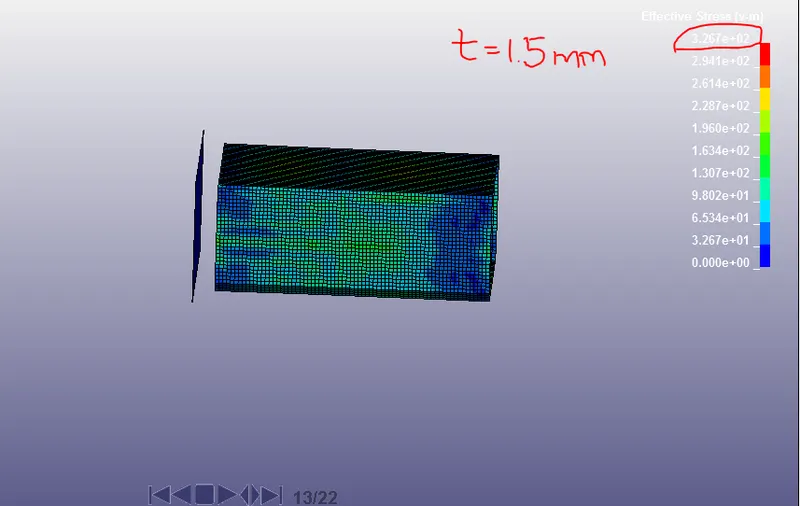
- It can be seen that the stress value is slightly higher for the 1.5mm thick crash tube compared to 1.2mm thick crash tube.
effective plastic strain comparision - 1.2mm vs 1.5mm
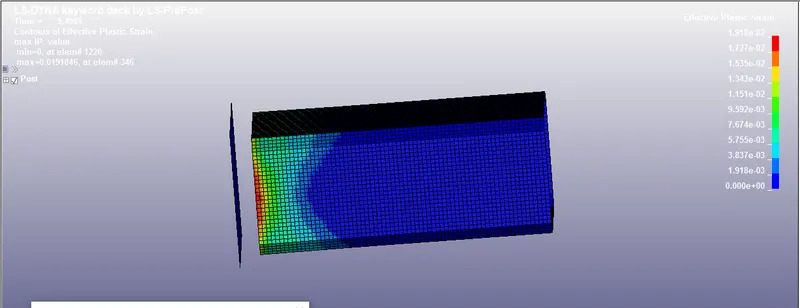
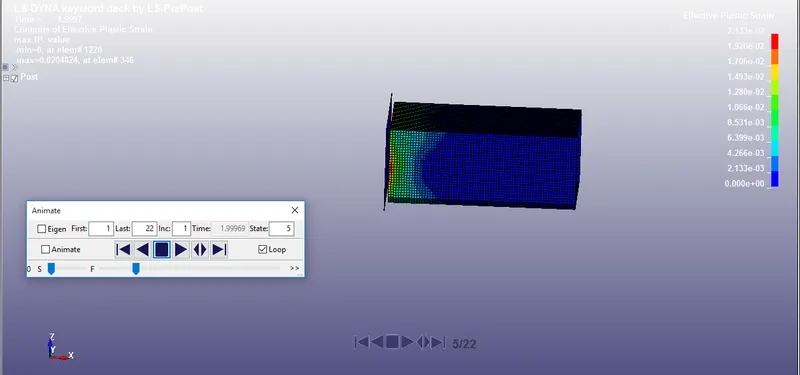
- effective plastic strain also higher for the 1.5mm thick crash tube compared to 1.2mm thick crash tube.
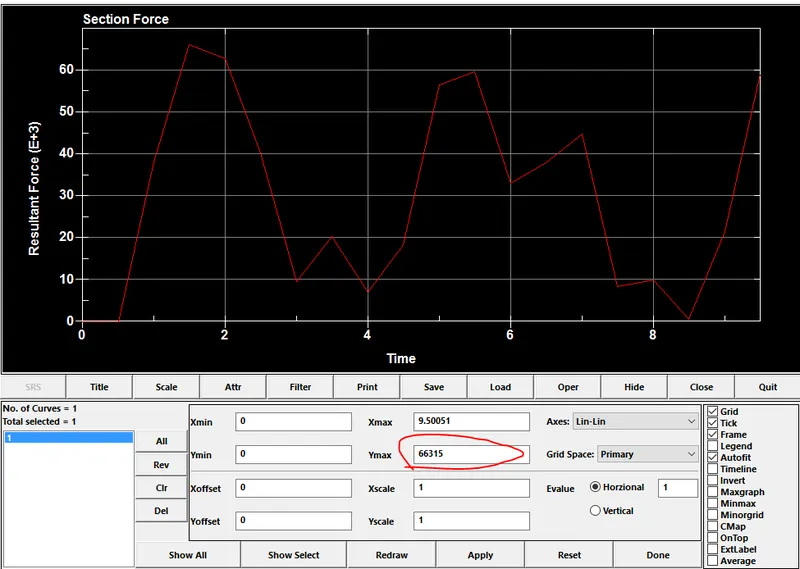
Section force comparision - 1.2mm vs 1.5mm
crash tube thick 1.2mm
crash tube thick 1.5mm
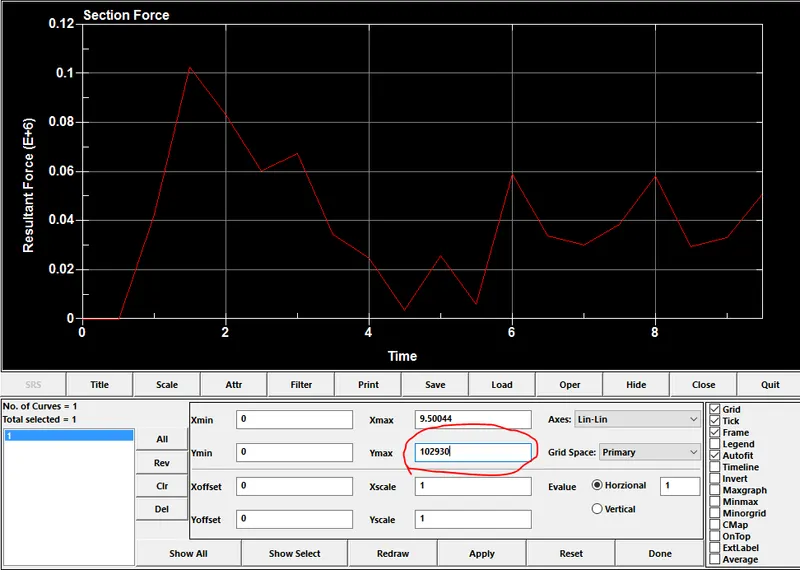
- Resultant force of a section force is higher in 1.5mm thick (10290N)crash tube compared to that of 1.2mm (66315N)
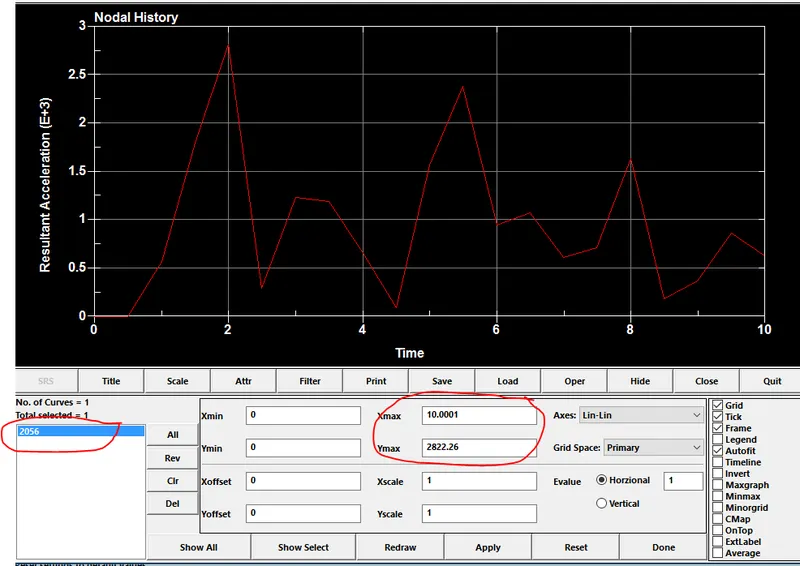
Acceleration comparision - 1.2mm vs 1.5mm
crash tube thick 1.2mm
crash tube thick 1.5mm
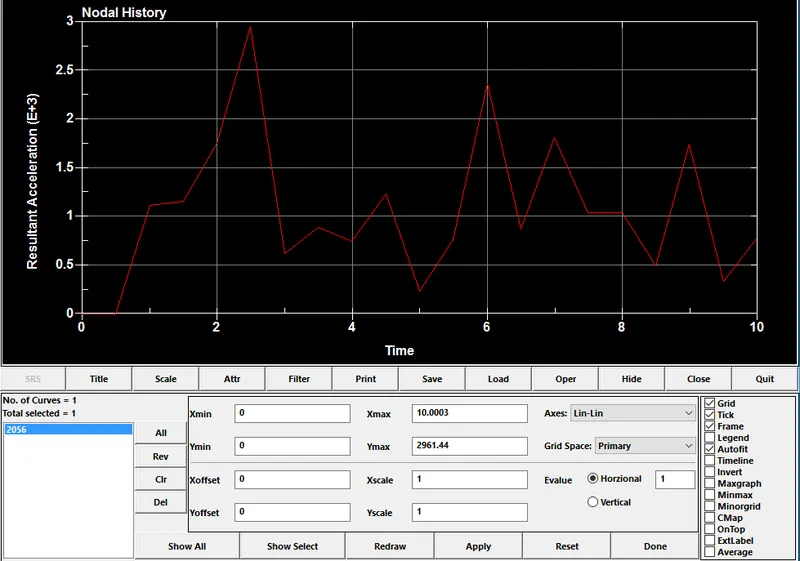
- Node #2056 in the 1.5mm thick crash box has greater acceleration (296.44 mm/ms2) than 1.2mm thick crash box (2822.26 mm/ms2).
Energy plots comparision - 1.2mm vs 1.5mm
crash tube thick 1.2mm
crash tube thick 1.5mm
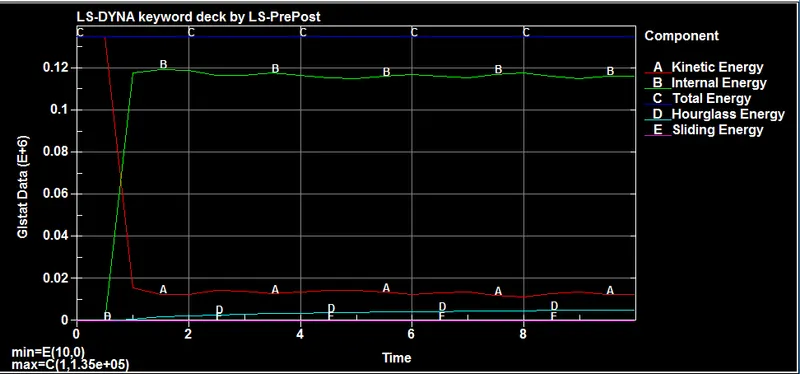
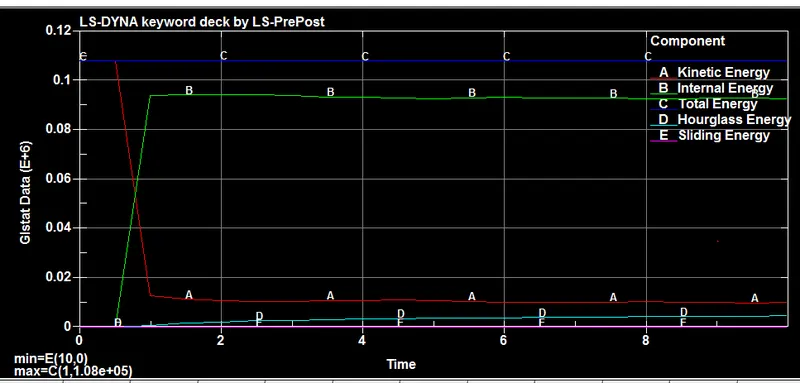
- The energy plot comprising of total energy, internal energy, kinetic energy, hourglass energy and sliding energy were plotted for 1.2mm and 1.5mm thick crash boxes. from the graph kinetic energy decreses and internal energy increses as we expected from theory and total energy remains constant through out the simulation.
- Hour glass energy presents in the simuation within the peermissible limit.
- Sliding energy is almost negligible.
- The energies are higher for 1.5mm thick (1.35e+05) compared to 1.2mm thick (1.08e+05)
Maximum directional stress and strain along the length of the crashbox (X strain, Y strain etc)
crash tube thick 1.2mm - directonal stress
crash tube thick 1.5mm
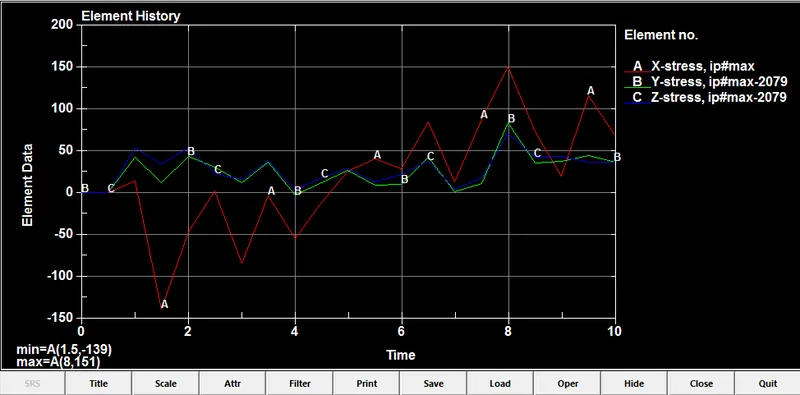
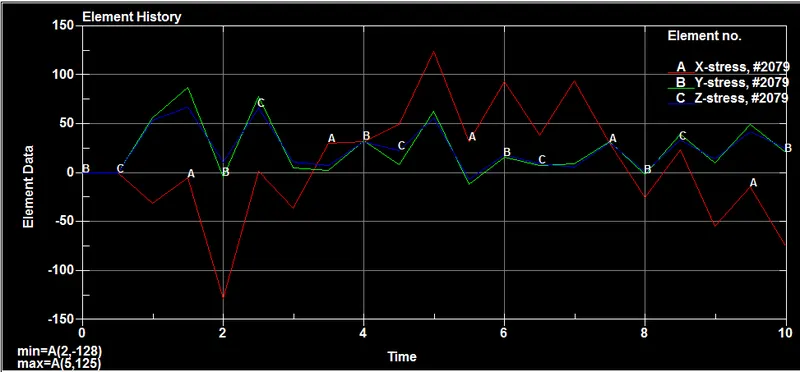
- In both cases stres is higher in X-direction for a 1.5mm thick crash tube.
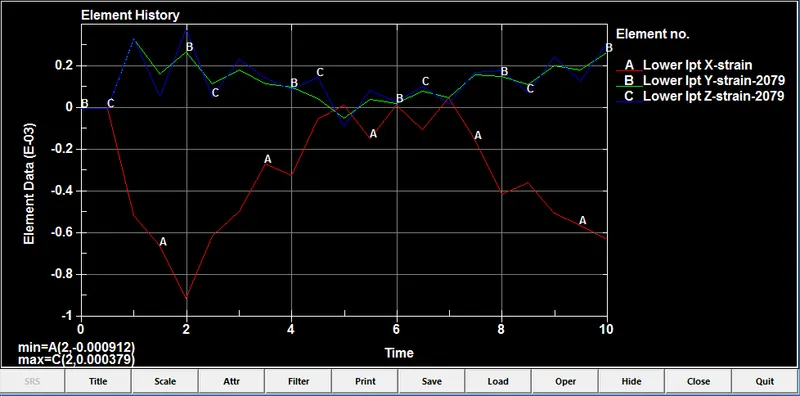
crash tube thick 1.2mm - directonal strain
crash tube thick 1.5mm - directonal strain
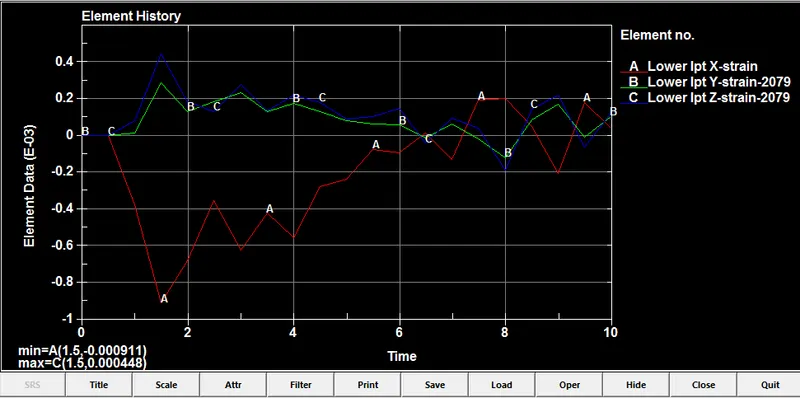
- In both cases strain is higher in Z-direction for a 1.5mm thick crash tube.
CONCLUSION
- The impact of crash box against a rigid wall has been simulated for two different thicknesses- 1.2mm and 1.5mm, and the results have been compared.
- The energies are higher for 1.5mm thick (1.35e+05) compared to 1.2mm thick (1.08e+05), it's due to more mass occupied by the 1.5mm shell thick elements.
- Before crash happening Kinetic energy is constant, when crash box hits the wall it deacclerate and Kinetic energy of crash tube is decreses.
- Internal energy of crash box increses after crash happens, Here K.E. converted as I.E. Following the law of conservation of energy theory.
- Total energy remains constant.
- Strain is higher in 1.5mm thick crash box but it is very small margin compared to 1.2mm thick crash box, because availlablity of more material in 1.5mm thick cross section.
- Hourglass energy is very small and it is in permissible limits.
- There is no sliding occuring so sliding energy is equal to zero.
- 1.5mm thick crash box has greater acceleration than 1.2mm thick crash box.