Week 4 - CHT Analysis on Exhaust port
AIM: CHT Analysis on Exhaust port.
- Give a brief description of why and where a CHT analysis is used.
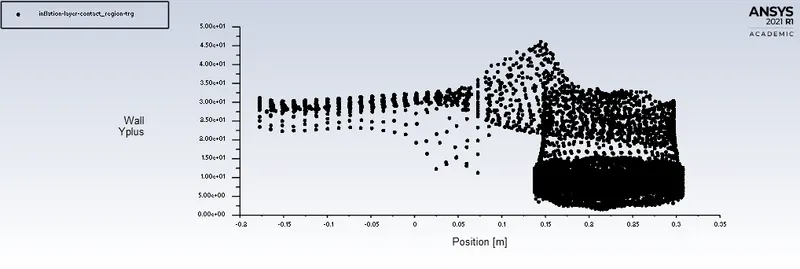
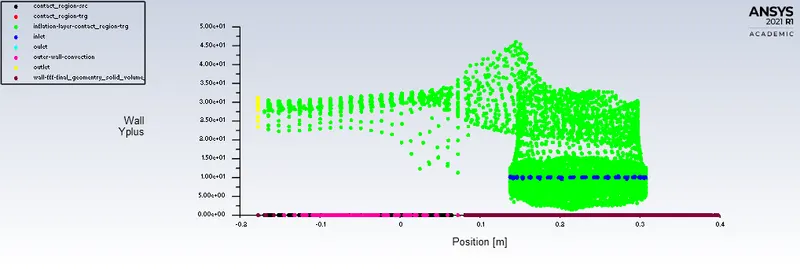
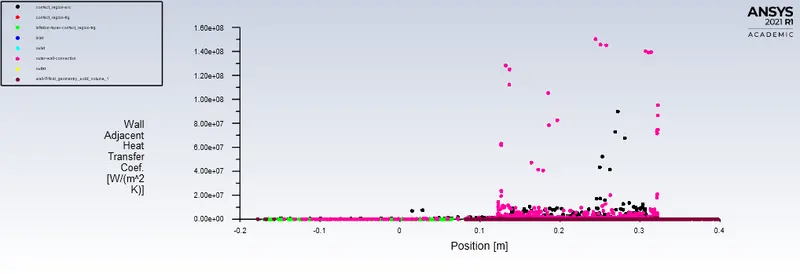
- Maintain the y+ value according to the turbulence model and justify the results.
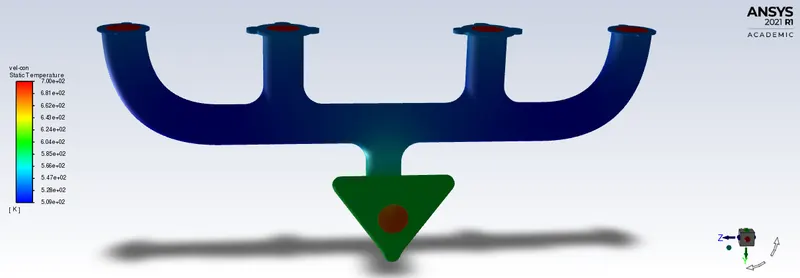
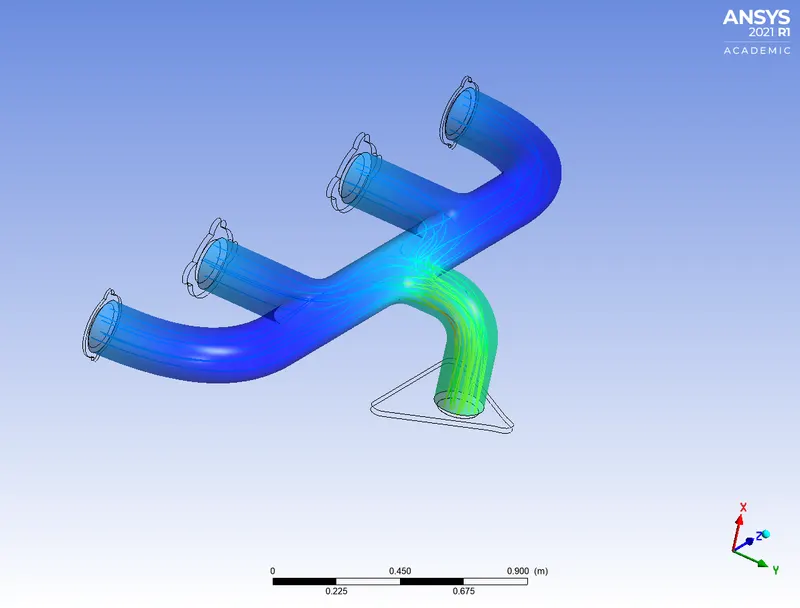
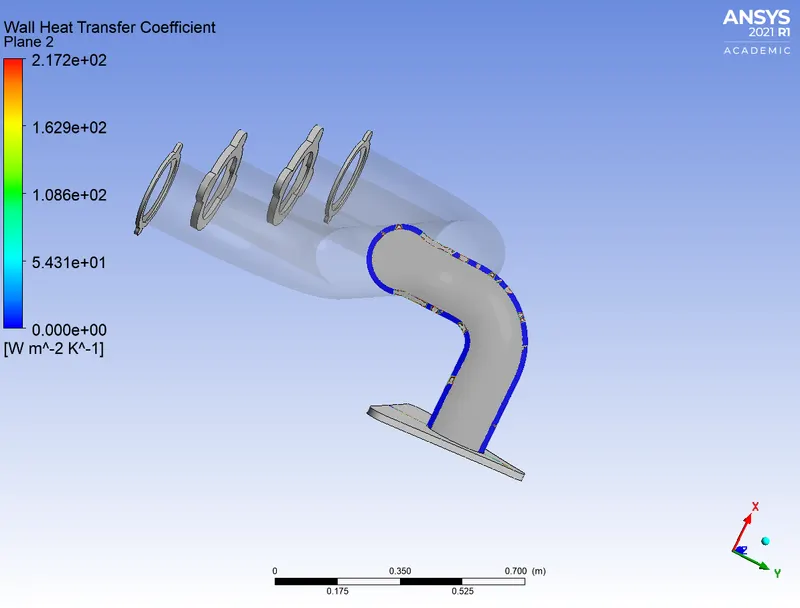
- Calculate the wall/surface heat transfer coefficient on the internal solid surface & show the velocity & temperature contours in appropriate areas.
- How would you verify if the HTC predictions from the simulations are right? On what factors does the accuracy of the prediction depend on.
CHT analysis :
The Conjugate Heat Transfer (CHT) analysis type allows for the simulation of heat transfer between solid and fluid domains by exchanging thermal energy at the interfaces between them.The Conjugate Heat Transfer (CHT) analysis type allows for the simulation of heat transfer between solid and fluid domains by exchanging thermal energy at the interfaces between them. Typical applications of this analysis type exist as, but are not limited to, the simulation of heat exchangers, cooling of electronic equipment, and general-purpose cooling and heating systems.
Computational fluid dynamics (CFD) and more specifically conjugate heat transfer (CHT) analysis can accurately predict heat transfer by simultaneous solving all the relevant solid and flow field heat transfer processes, for example: conduction through solids, free and forced convection in the gases/fluids and thermal radiation.
The CHT approach has an advantage over FE thermal analyses in that wall heat transfer coefficients and their local variations on surfaces are directly calculated within the model rather than based on simplified empirical calculations. The CHT approach therefore has benefits for those applications where heat transfer is either non-uniform or difficult to calculate empirically.
The term 'conjugate heat transfer' refers to a heat transfer process involving an interaction of conduction within a solid body and the convection from the solid surface to fluid moving over the solid surface.
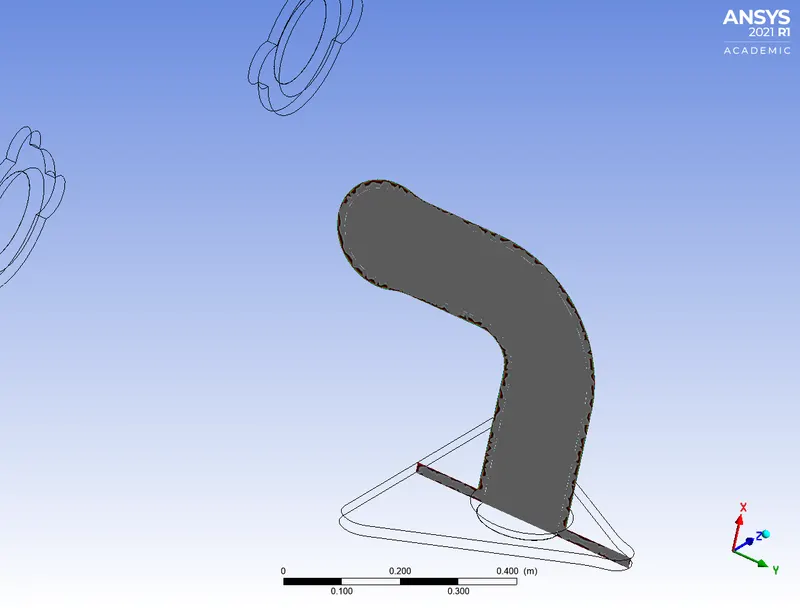
GEOMENTRY:

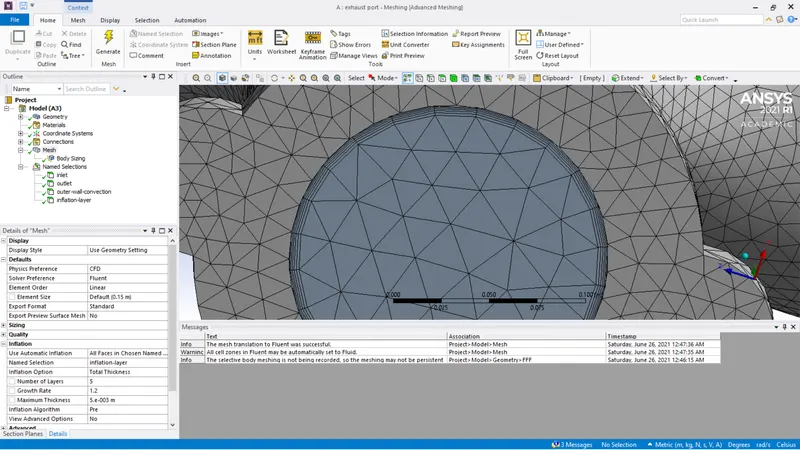
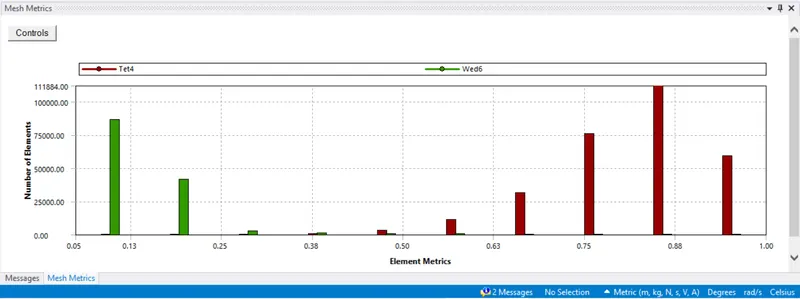
MESHING:


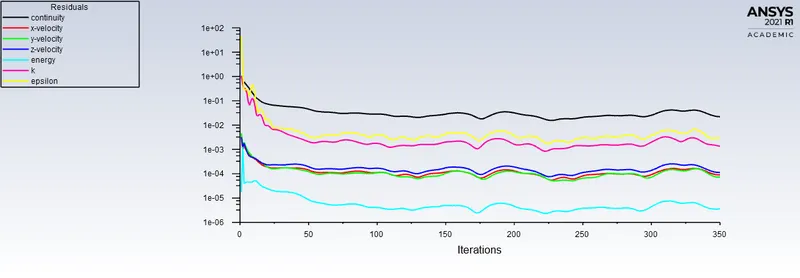
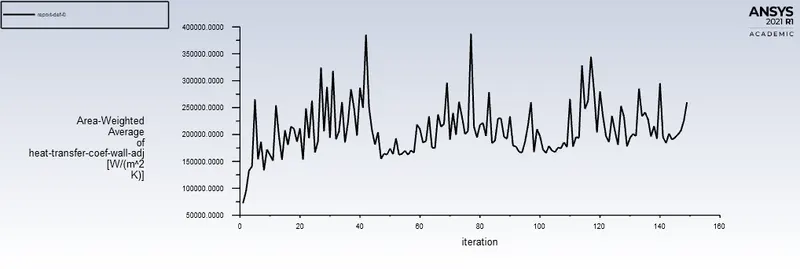
SCALE RESIDUALS:
VELOCITY CONTOUR:
STREAMLINES:
YPLUS GRAPH:
WALL HEAT TRANSFER CO.EFF:
HTC PREDITION FROM THE SIMULATION:
Nusselt's Number is given by,

Where,
Nu- Nusselt's Number
h- Heat Transfer Coefficient
L- Length
k- Thermal Conductivity
Therefore, it is conclusive that HTC is directly propotional to flow velocity. So the HTC should be maximum near the outlet.
Hence the HTC prediction from the simulation is correct.
FACTORS WHICH AFFECTS THE ACCURACY OF SIMULATION:
- As of it is a Conjugated Heat Transfer problem, then the SHARE TOPOLOGY quality affects the smooth transfer of heat between regions.
- INFLATION LAYER which helps to get efficient values and refined mesh leads to better results.
- Proper selection of TURBULENCE model and Y+ values.
CONCLUSION:
- As the no of elements increases the velocity, Temparature and wall Heat Transfer Co.eff increases.
- The high heat transfer coefficient at the junction is due the high heat transfer velocity from fluid to solid. Therefore, the highest value of heat transfer coefficient is obtained at that point.
- The velocity tends to increases frome inlet to outlet is because of mass conservation and mixing of air. As velocity increases, so does the reynold's number and hence the heat transfred.
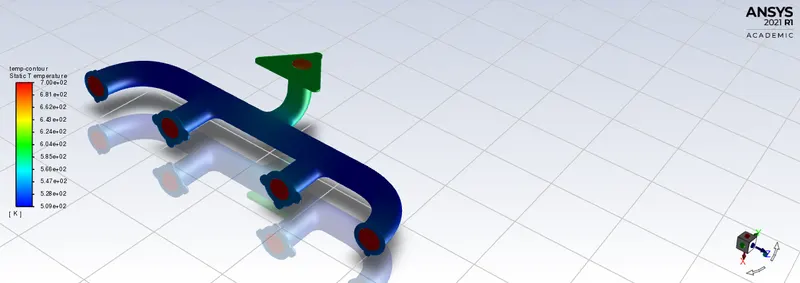
- From the plot, the hot exhaust gas passing through the manifold transfer some heat via convection.
- Hnece CHT analysis is essential prior experiment for better predition of the designed component.