Week 4 - CHT Analysis on Exhaust port
Aim: To determine what is CHT analysis is and verify heat transfer coefficient.
Objective:
- Give a brief description of why and where a CHT analysis is used.
- Maintain the y+ value according to the turbulence model and justify the results.
- Calculate the wall/surface heat transfer coefficient on the internal solid surface & show the velocity & temperature contours in appropriate areas.
- How would you verify if the HTC predictions from the simulations are right? On what factors does the accuracy of the prediction depend on?
Body of content:
what is CHT analysis
The Conjugate Heat Transfer analysis type allows for the simulation of heat transfer between solid and fluid domains by exchanging thermal energy at the interfaces between them.
Geometry export
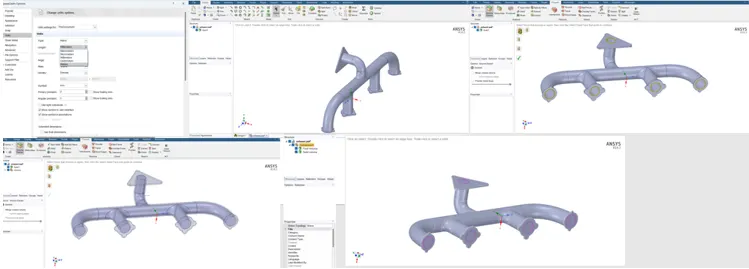
First, we load geometry in space claim and perform geometry cleaning after that we extract the volume form the solid and merge the two body together with the help of share command in workbench of spaceclaim as shown in below figure respectively.
Geometry meshing
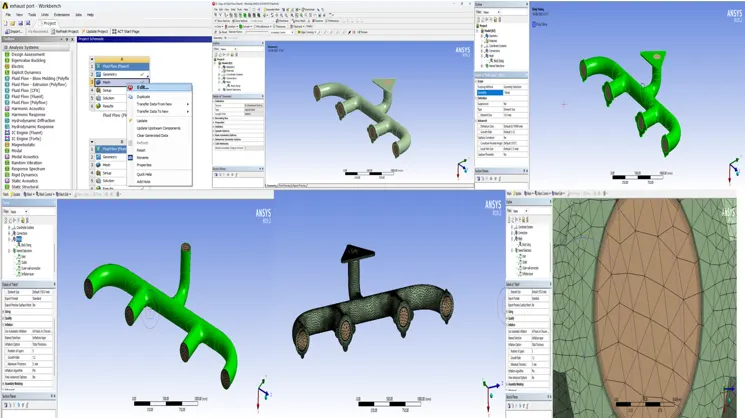
After the geometry cleaning of exhaust port in spaceclaim we load the geometry in mechanical for meshing, here we provide the solid volume body sizing of 10 mm and then we give the inflation layer of 5 with maximum thickness of 5mm to the fluid volume as shown in figure respectively.
Setup
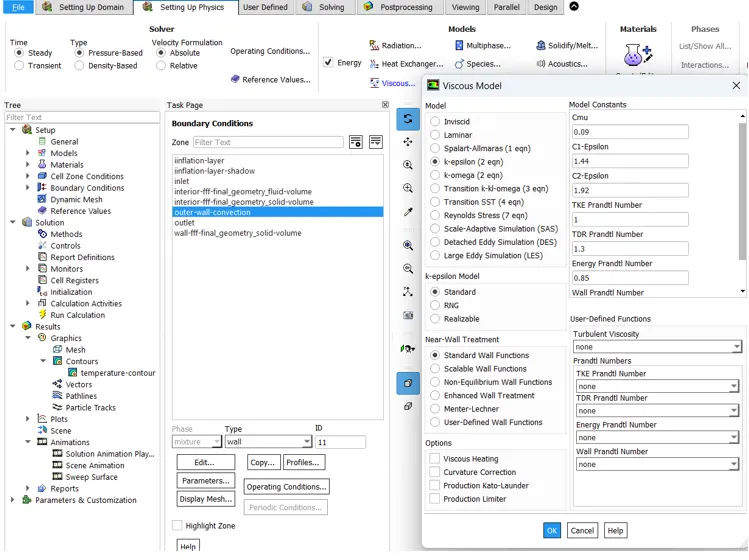
Now as we perform our messing its time for us to setup the boundary condition for the exhaust port for that first we set the boundary condition as pressure-based solver with energy equation, the viscos model we select for our equation is k-epsilon, as shown in below figure.
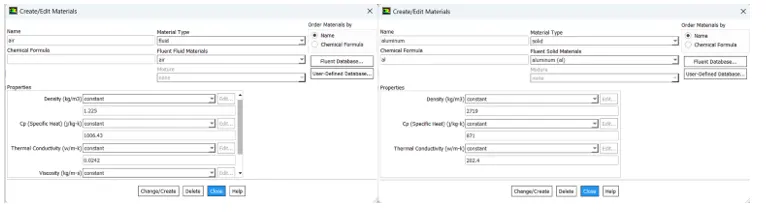
Now the next step we set the boundary condition for our exhaust port, in which we first select the material for fluid we go with air and for solid we go with aluminum, as shown in figure below.
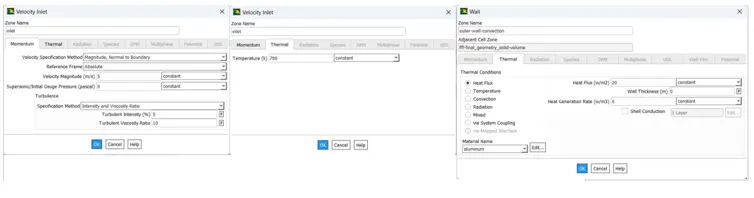
In inlet we provide velocity of 5m/s with thermal temperature of 700k and in outlet wall convection we provide heat flux of 20 w/m2. As shown in below figure.
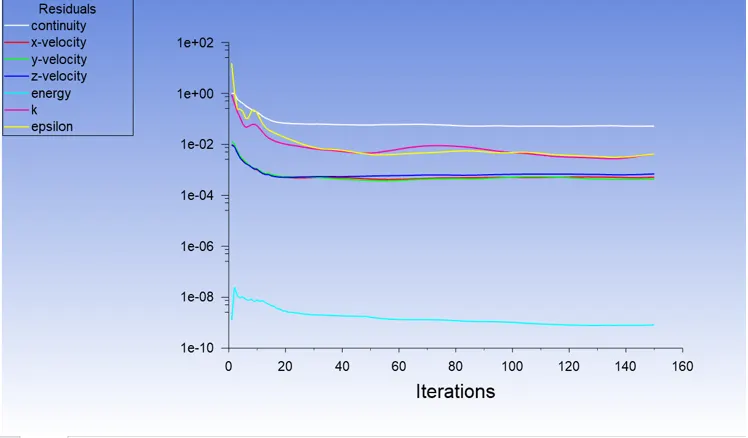
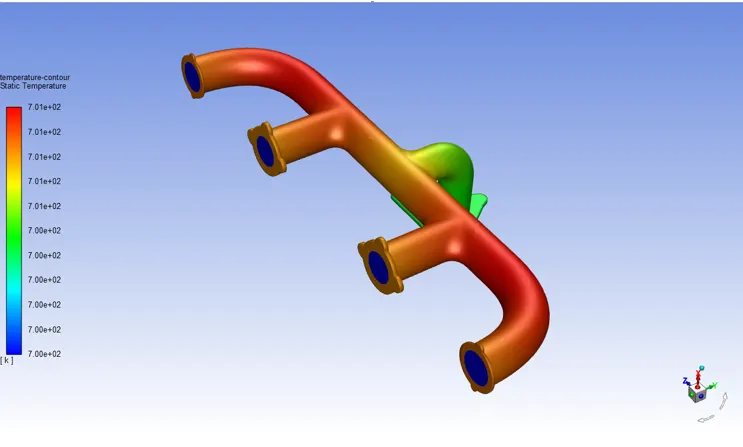
Now, after the setup we run the calculation for 150 iteration and the result generated by the animation and scaled residual is shown in below figure.
Result
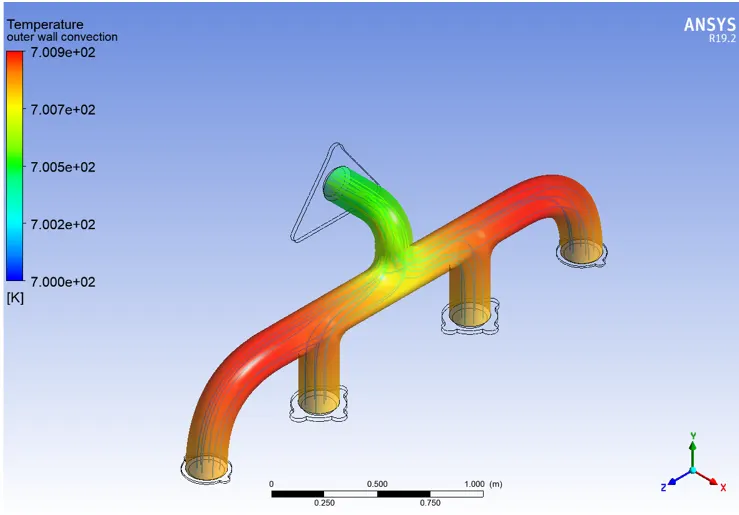
Then we load the simulation in result for the better view of streamline and plane view of analysis which is shown in below figure respectively.
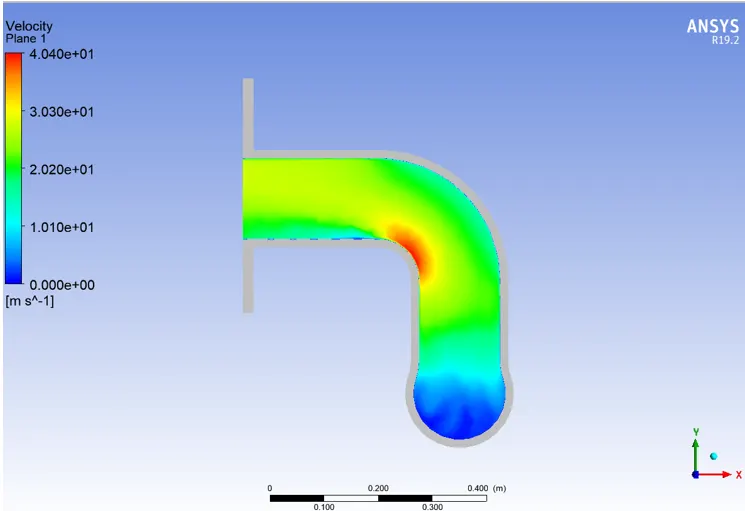
Conclusion
these analysis performed to see the CHT result in ANSYS 19 workbench, CHT analysis stand for conjugate heat transfer which is allow to simulate heat transfer between solid and fluid domain.