Week 4 - CHT Analysis on Exhaust port
Aim:
1. Describe why and where the CHT analysis is applicable.
2. Calculation of the Y+ value for the turbulence model.
3. To Calculate the wall/surface heat transfer coefficient on the internal solid surface & show the velocity & temperature contours in appropriate areas.
4. Verify HTC prediction and factors depending on accuracy.
Introduction:
Conjugate Heat Transfer (CHT) is the phenomenon where both Convection (from solid to liquid) and Conduction (Within solids) heat transfer occurs.
Modes of Heat transfer are explained below.
1. Conduction:
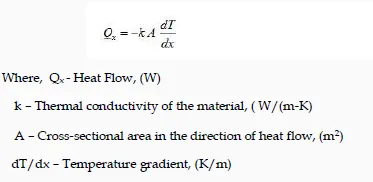
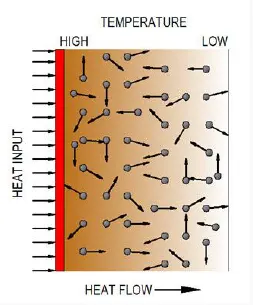
Conduction is a process of heat transfer from a high-temperature region to a low-temperature region within a body or between different bodies which are in direct physical contact. In heat conduction, energy is transferred due to the exchange of molecular kinetic energy. According to kinetic theory, the temperature of the body is proportional to the mean kinetic energy of its constituent molecules. As the temperature in one region of a body increases, the kinetic energy of molecules in that region also increases as compared to that of the molecules of adjacent low-temperature regions. High energy molecules transfer a part of their energy by impact in the case of fluids or by diffusion in the case of metals to low energy molecules, thereby resulting in an increase in their energy levels, hence temperature.
2. Convection:
Heat transfer by convection occurs when a fluid (Liquid and gas) comes in contact with a solid through direct contact and a temperature difference exist between them. Heat transfer by Convection occurs under the combined action of heat conduction and mixing motion.
When a fluid comes in contact with a hot surface, energy in form of heat flows by conduction from the hot surface to the adjacent stagnant layer of fluid particles, thereby increasing their temperature and internal energy. Due to an increase in temperature, the density of the fluid particles
decreases and they become lighter as compared to the surrounding fluid particles. The lighter fluid particles move up to a region of lower temperature within the fluid where they mix and exchange a part of their energy with colder fluid particles. Simultaneously, the cold fluid
particles move downwards to occupy the space vacated by hot fluid particles. This upward and downward movement of hot and cold fluid particles continues till the temperature of the fluid and the surface becomes equal. The upwards movement of hot fluid particles and the downward movement of cold fluid particles is called convectional currents.
If the convectional currents are set up only due to density differences, then the heat transfer process is known as Natural or Free convection.
Examples: Solar cookers, Electrical equipment exposed to air, Human Body, Monitors display, etc.
The convective heat transfer rate is governed by Newton's law of cooling and is expressed as
Q = h As (Ts - Tf)
Where
h = Convective heat transfer coefficient, W/(m^2 K)
As = Area of heat transferring, m^2
Ts = Surface temperature & Fluid, K
Examples: Vehicle radiators, Hair dryers, Refrigerators, Micro ovens, etc.
3. Radiation:
Heat exchanged between two bodies that are separated and are not in contact with each other, is called radiation heat transfer. Radiation heat transfer does not require the presence of an intervening medium between the two bodies as in the case of conduction and convection and it takes place most effectively in a vacuum.
Examples: Solar Radiation, X-ray, Radio waves, infrared light, etc.
Y+ calculation:
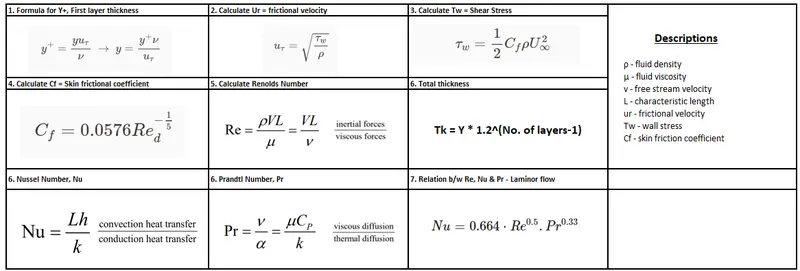
| Calculations | |||
| Y+ | 1 | L | 0.1662 |
| Y | 5.15E-05 | μ | 1.79E-05 |
| ur | 0.28 | No of layers | 10.0 |
| U | 5 | ||
| Tw | 0.10 | ||
| ρ | 1.225 | ||
| Cf | 6.45E-03 | ||
| Re | 5.69E+04 | ||
Procedure:
1. Geometry preparation:
Importing the CAD model in Ansys workbench/SpaceClaim.
Ansys Workbench --> Drag Ansys Fluent --> Right click on Geometry --> Import CAD model
Geometry clean up.
Open model in SpaceClaim --> click Prepare Interfaces --> Clear duplicate surfaces/edges
Prepare --> Volume extract --> Select edges and inner faces --> Fluid volume generates
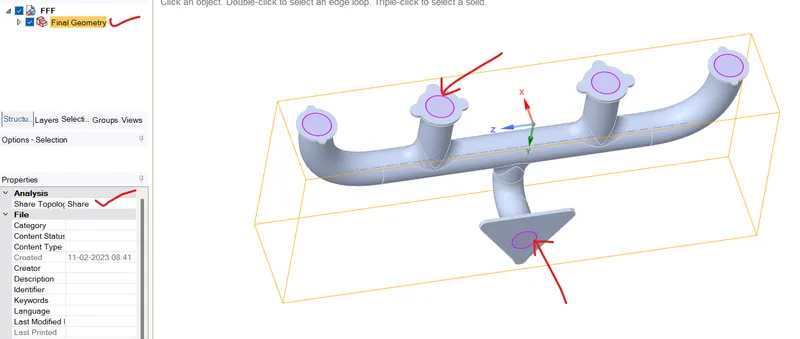
Enable share topology. Pink circles appear to confirm the fluid and inner surface of the model are shared.
2. Mesh:
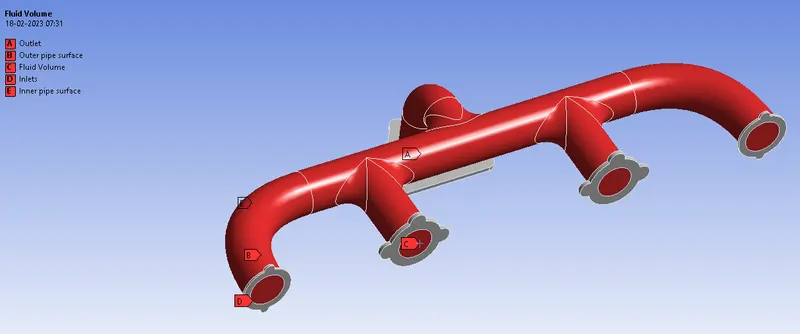
Named selections
Inlet, Outlet, External pipe surface, Internal pipe surface, and Fluid volume.
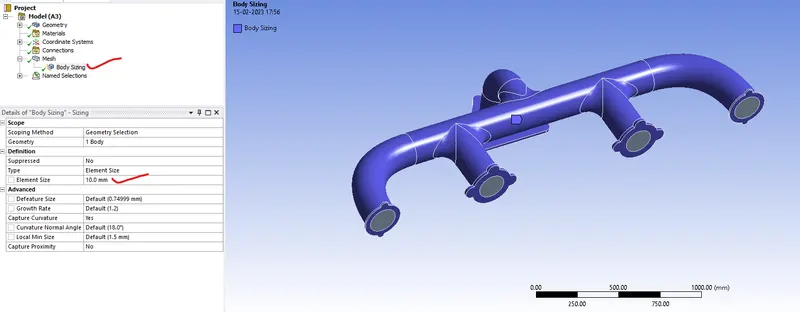
Double-click on mesh in the Ansys workbench. on the Mesh, add body sizing with Element size 10mm as shown below.
Generate mesh with inflations as below
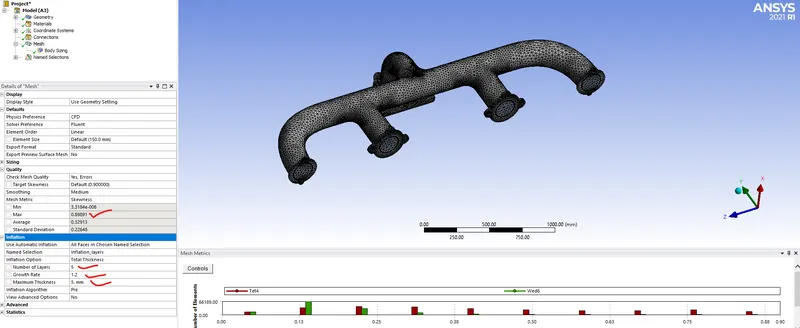
Mesh quality check with skewness value below 0.9
3. Fluent Analysis:
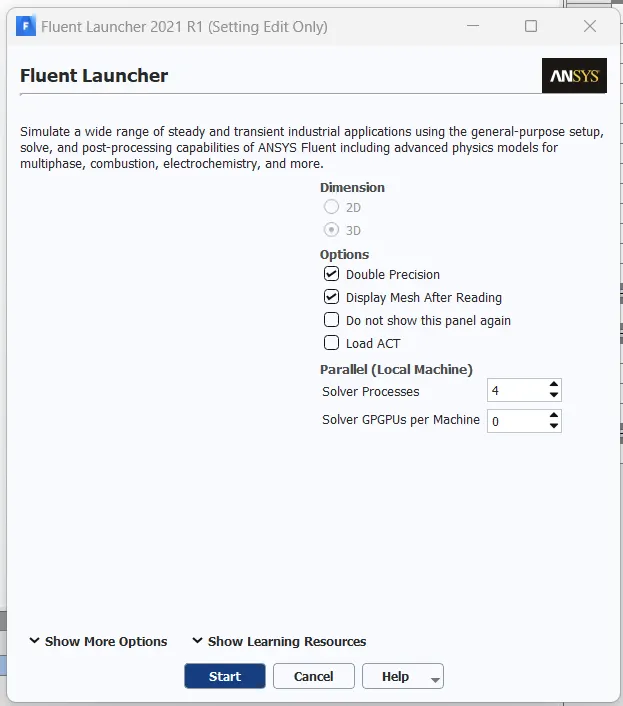
Double click on setup to open Ansys Fluent. Enable double Precision and increase solver processes to 4 as below.
General:
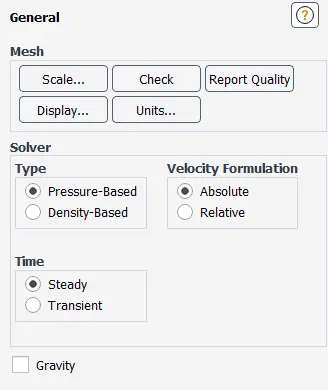
Enable Energy under models as we are doing a heat transfer project.

Viscous Model --> k-epsilon (2-eqn) or K-omega SST
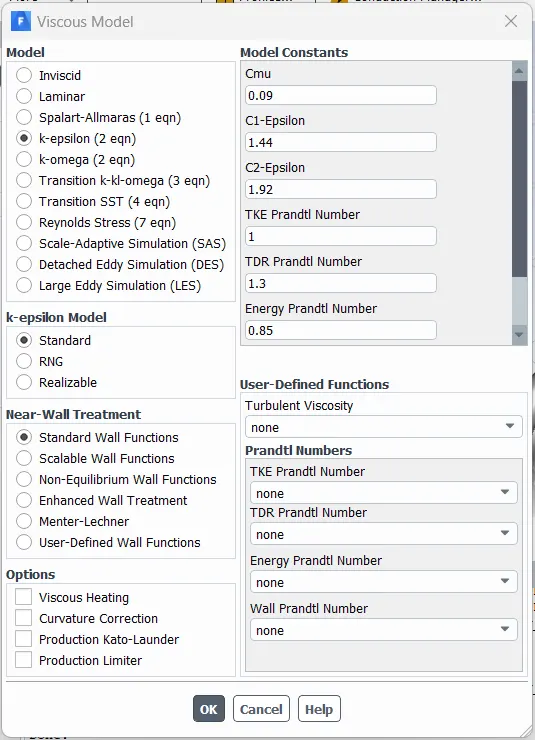
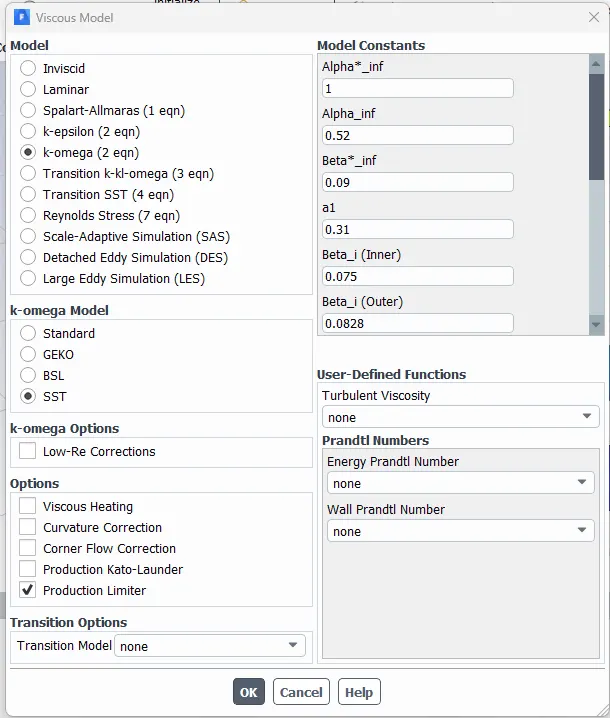
Materials: Fluid as air and Solid as Aluminium (Default setting)
Boundary Conditions:
Inlet: Velocity Magnitude
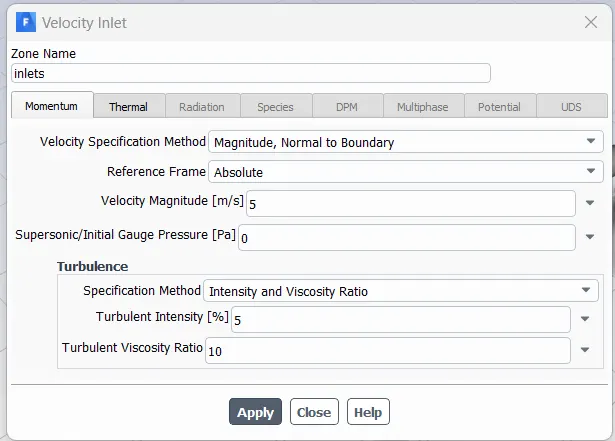
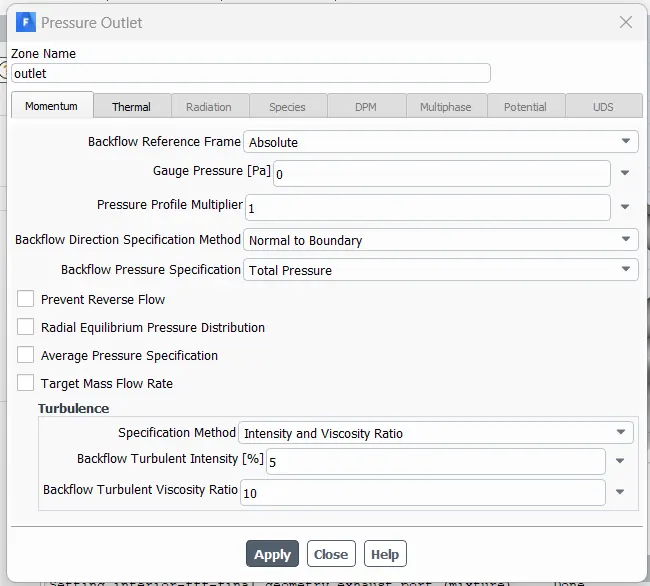
Outlet:
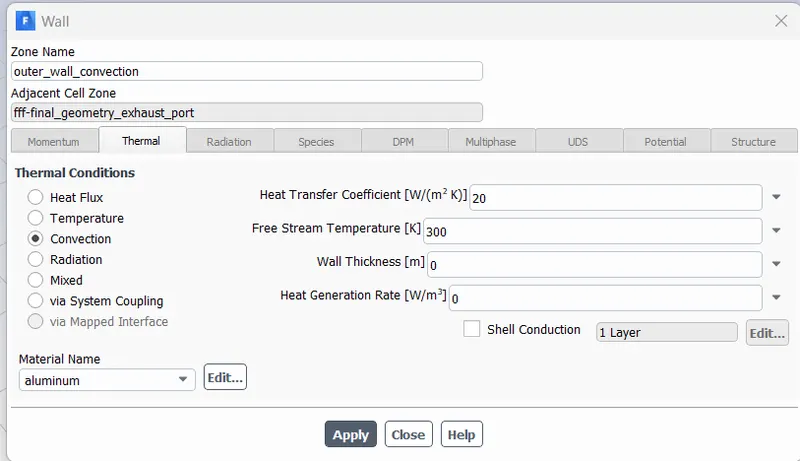
Outer surface:
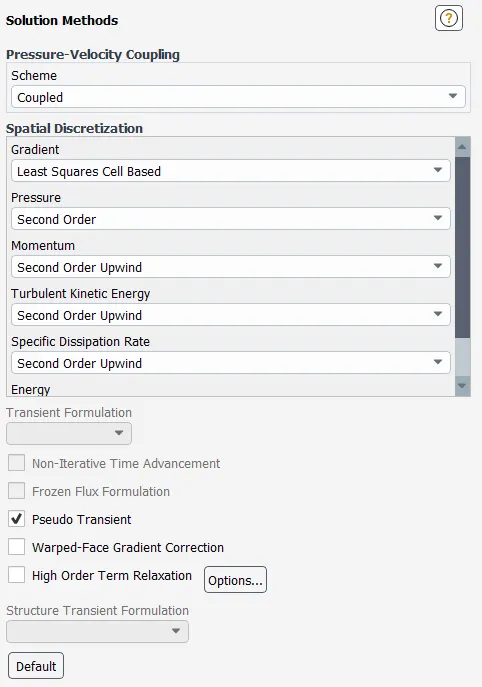
Methods:
Initialization:

Result:
Animation setup:
Solutions tab --> Activities --> Create --> Animation Definition --> Select Animation object --> Preview --> OK

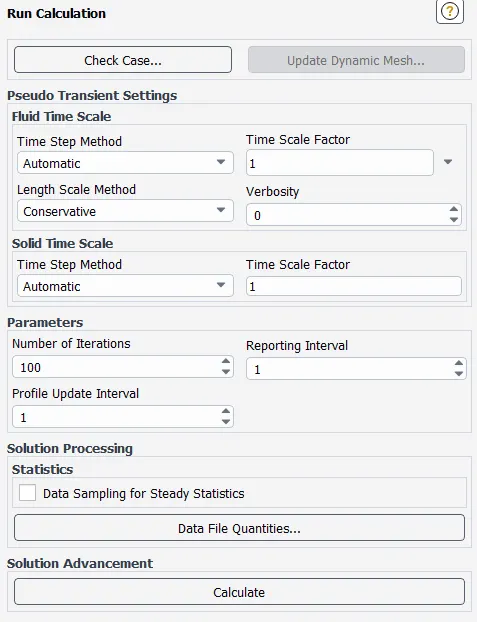
Run Calculation:
4. Results:
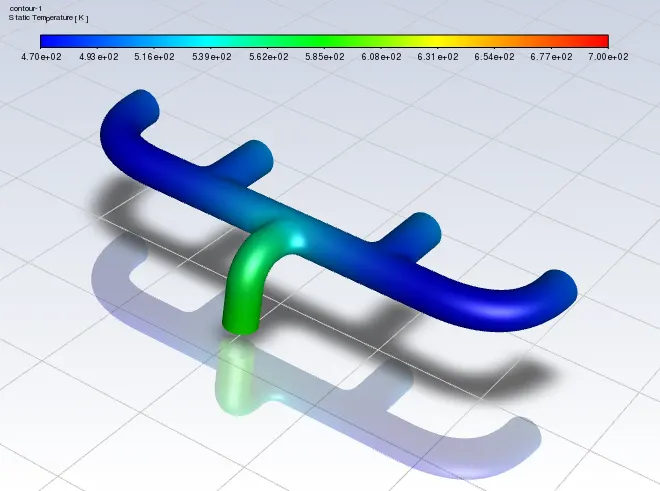
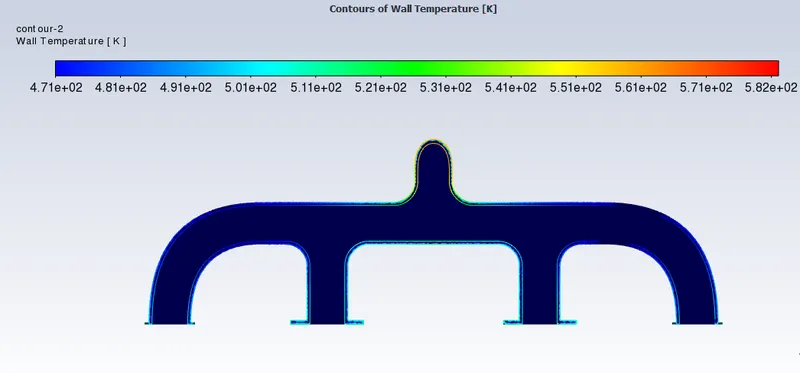
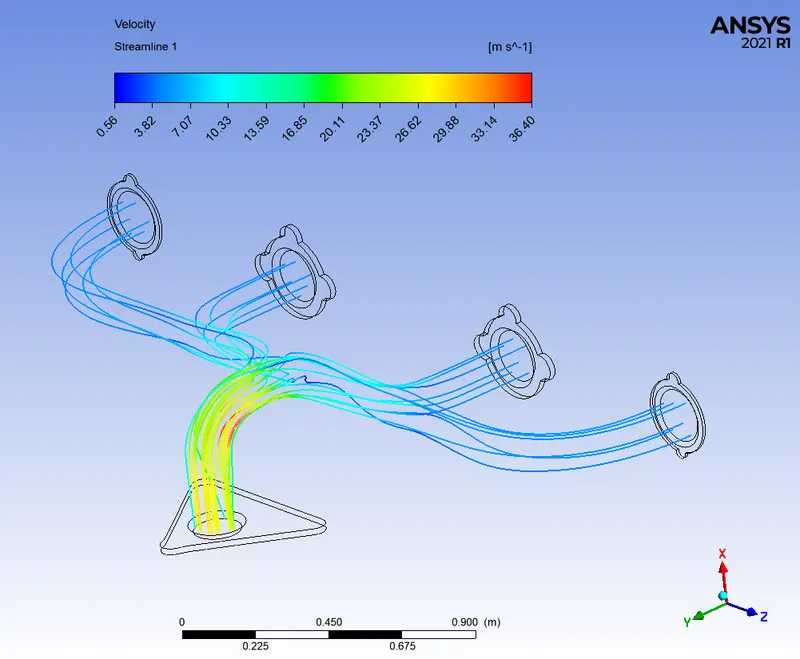
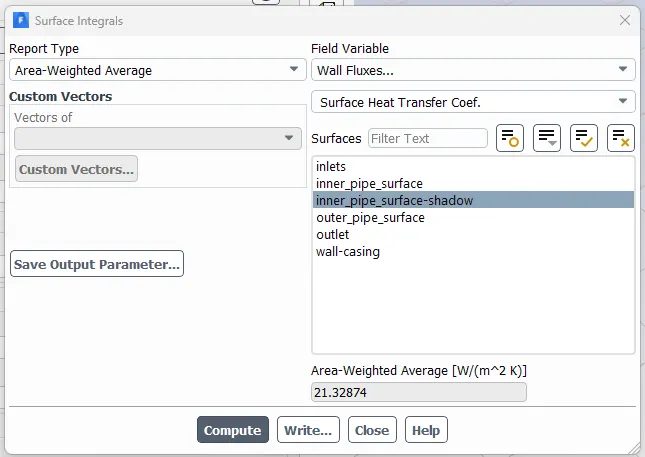
Verification of HTC values:
Verification is done by comparing Analytical and Numerical values.
First, the Reynolds number is calculated using the below formula.
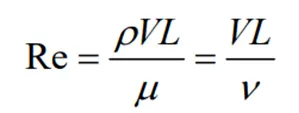
Prandtl Number is also calculated.
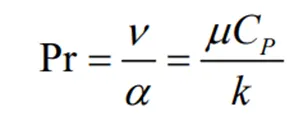
Nussel number, Nu is calculated using the relationship between Re, Pr, and Nu
For Laminar flow, Nu is as below.
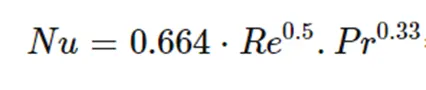
For Turbulence flow, Nu is as below.
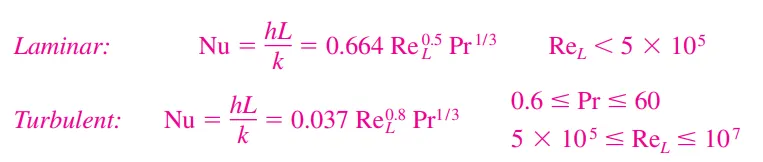
Since Prandtl Number is above 0.6, It is considered Turbulent, and the below calculations are carried out.
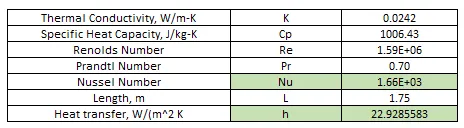
Heat Transfer, h is calculated by the general Nu equation as above.

From the above methods, it is clear that the error is just 1.6%. Hence validated.
Conclusion:
1. Study of various methods of heat transfer.
2. CHT - Conjugate Heat transfer examples.
3. Reynolds number and Heat transfer are proportional to each other.
4. Velocity increases with the increase in Heat Transfer.
5. Y+ calculations & Inflation layers calculations and importance.