Week 4 - CHT Analysis on Exhaust port
Conjugate Heat Transfer
Conjugate heat transfer (CHT) analysis can accurately predict heat transfer by simultaneous solving all the relevant solid and flow field heat transfer processes, for example: conduction through solids, free and forced convection in the gases/fluids and thermal radiation.
The CHT approach has an advantage over FE thermal analyses in that wall heat transfer coefficients and their local variations on surfaces are directly calculated within the model rather than based on simplified empirical calculations. The CHT approach therefore has benefits for those applications where heat transfer is either non-uniform or difficult to calculate empirically.
y+ value
Some mature turbulence models such as k−ϵ are only valid in the area of turbulence fully developed, and do not perform well in the area close to the wall. In order to deal with the near wall region wall functions are used, which can model the near wall region. Wall functions are equations empirically derived and used to satisfy the physics in the near wall region. The first cell center needs to be placed in the log-law region to ensure the accuracy of the results. Wall functions are used to bridge the inner region between the wall and the turbulence fully developed region. When using the wall functions approach, there is no need to resolve the boundary layer causing a significant reduction of the mesh size and the computational domain!
- First grid cell needs to be 30 < y+ < 300 (If this is too low, the model is invalid. If this is too high, the wall is not properly resolved.
- Use high-Re model (Standard k−ϵ , RNG k−ϵ )
Part 1 - Base mesh
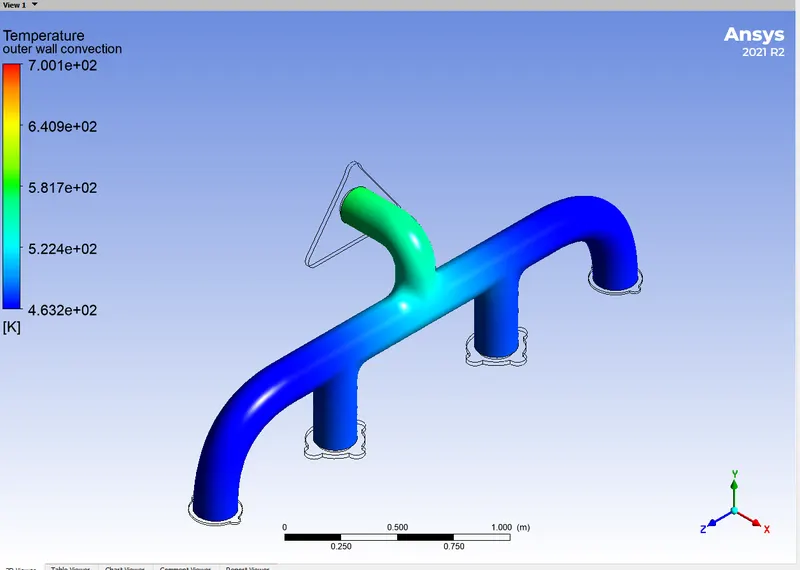
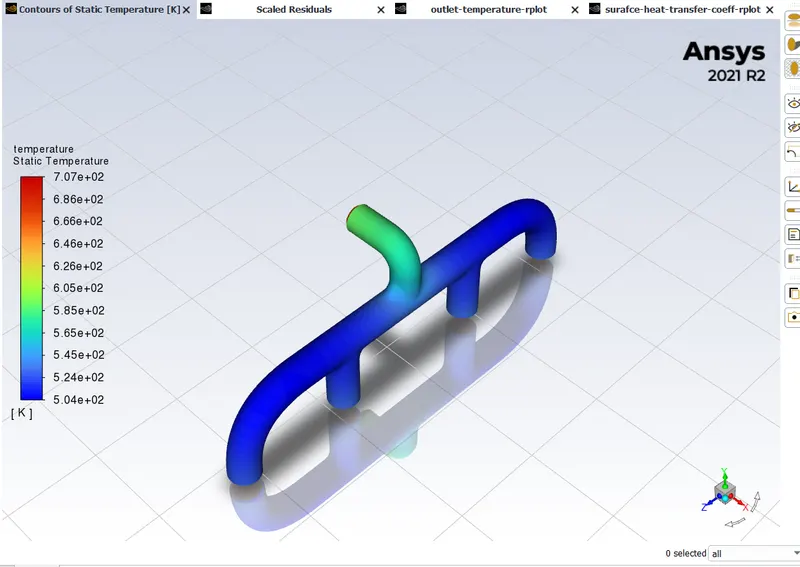
Temperature Contour
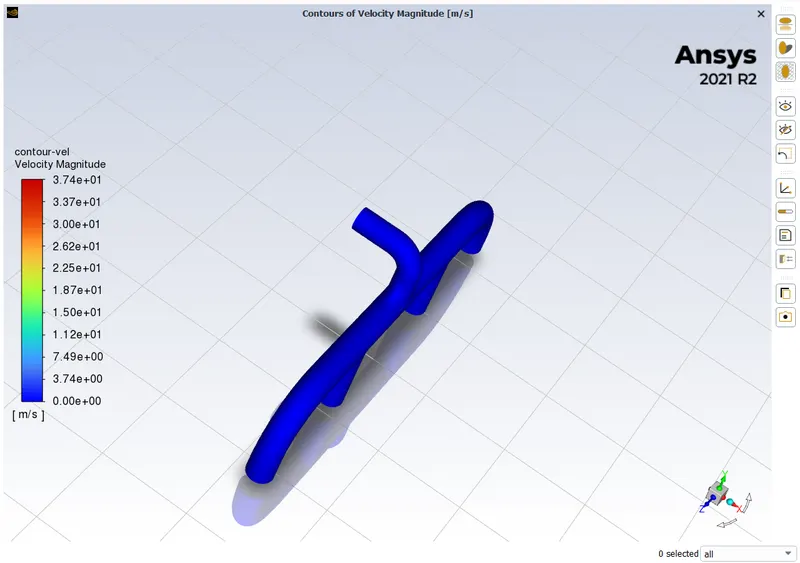
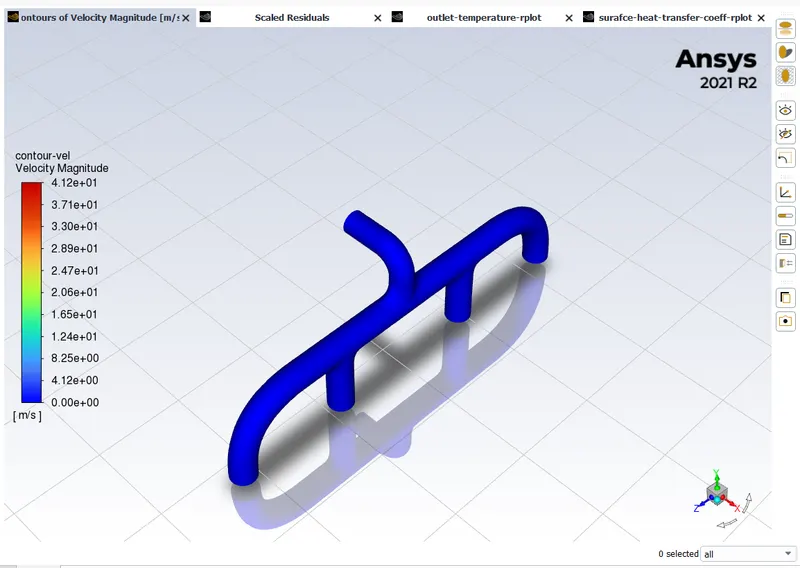
Velocity Contour
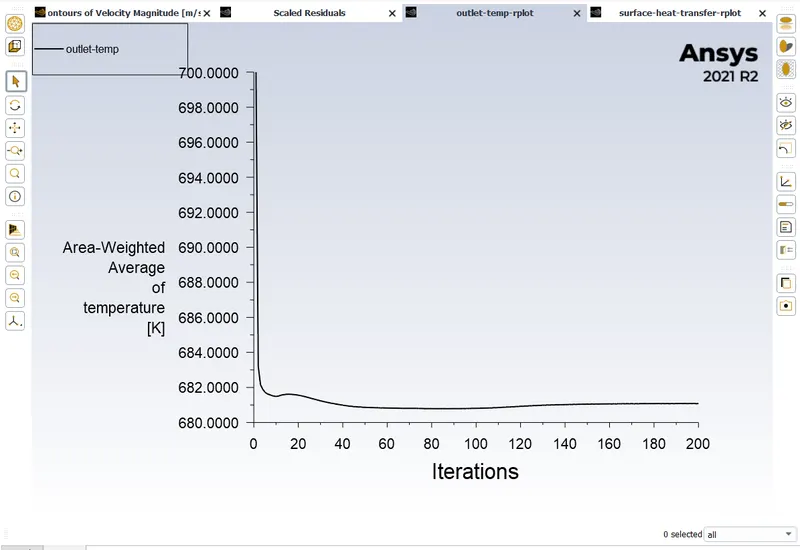
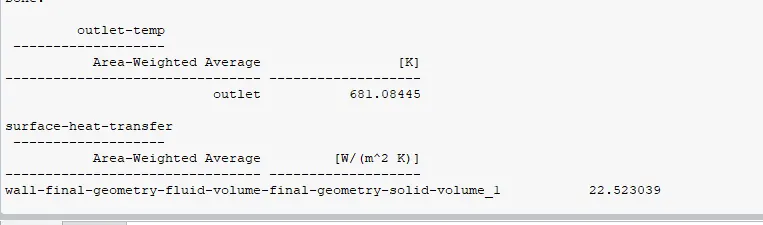
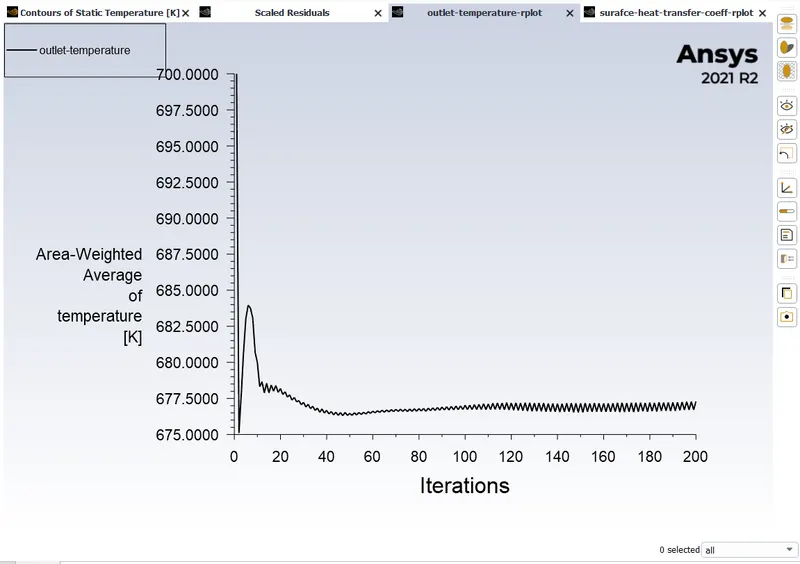
Outlet temp
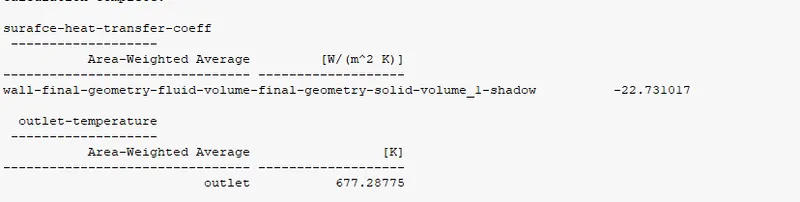
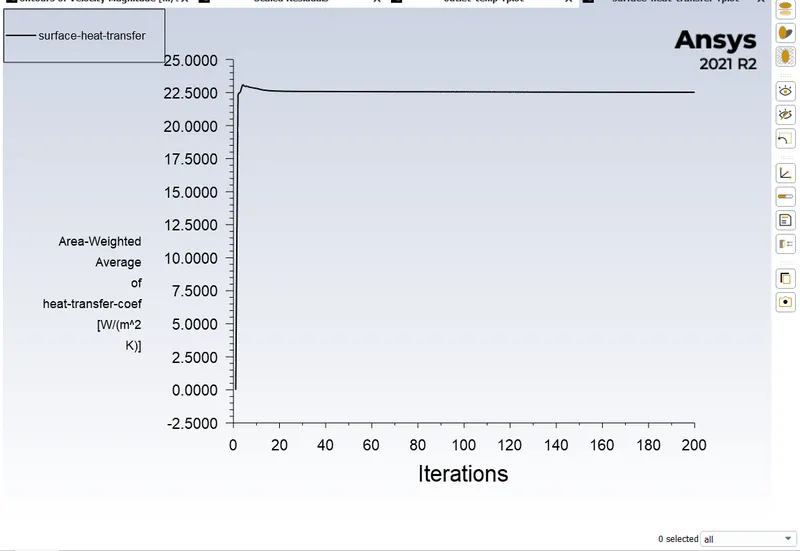
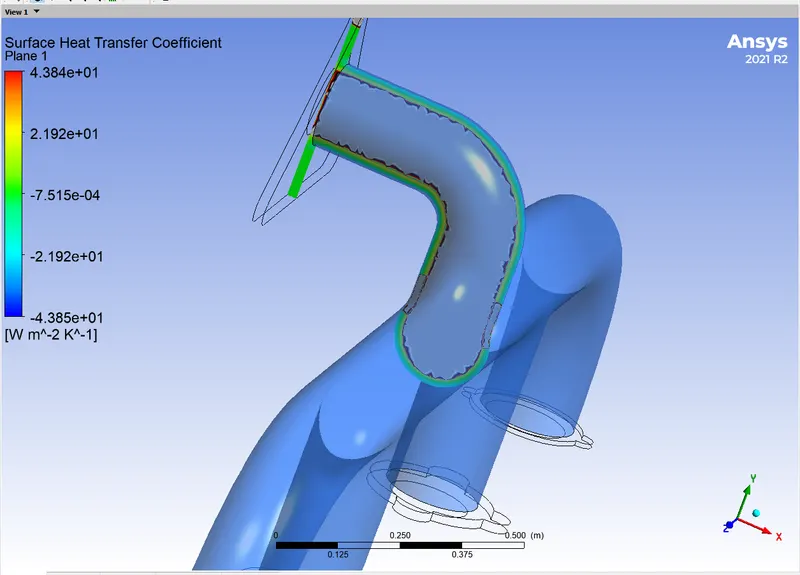
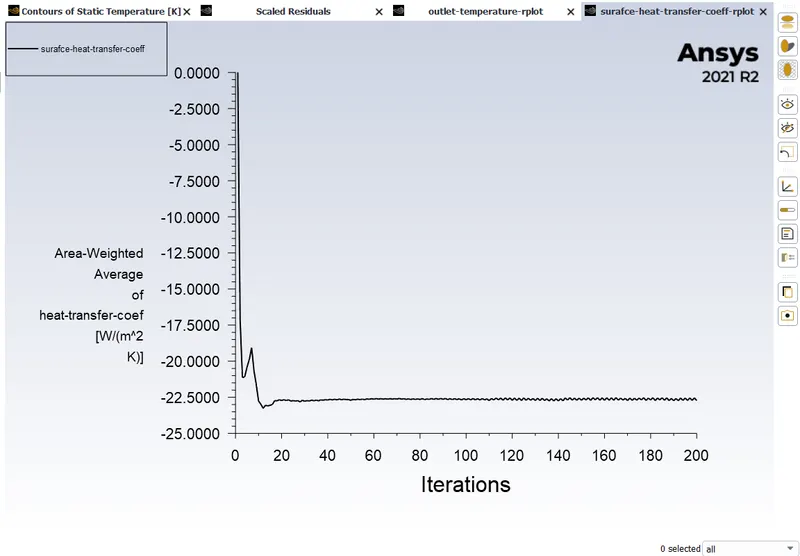
Surface Heat transfer Coeffiecient
Result
Part 2 - Refined Mesh
Temperature Contour
velocity Contour
Surface Heat Transfer Ceoff Plot
Outlet Temp plot
Results