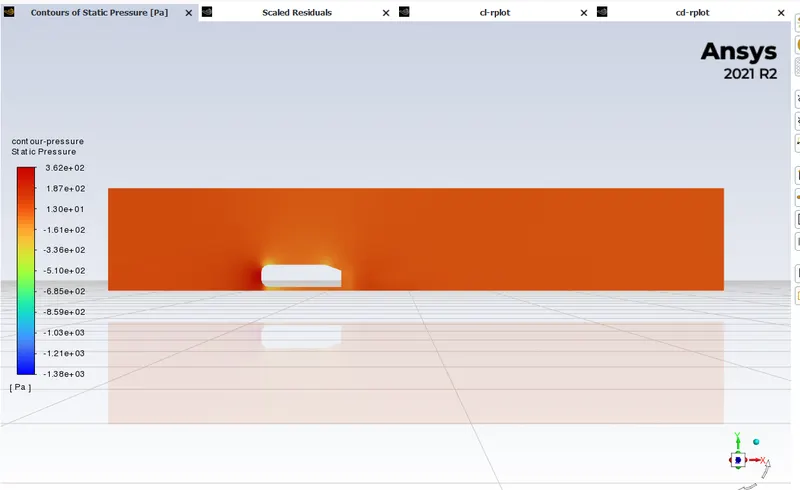
Week 3 - External flow simulation over an Ahmed body.
Ahmed Body
Automotive aerodynamics comprises study of aerodynamics of road vehicles. The most concentrated part is to reduce the drag and increase efficient forward movement, which will consume less power and lead to more fuel-efficient vehicle. Many studies have been progressing in this field, the main approach is to design a aerodynamical streamlined body, which has many limitations in case of a road vehicle.
Mainly Drag is due to pressure drag and form drag, both are predominant in case of road vehicles.
Ahmed body is a reference design for road vehicles which is used for the preliminary study of aerodynamic properties. Using this a reference many modified geometries have been evolved
It is necessary, at times, to generate down force - to improve traction and thus cornering abilities. Lift can be dangerous for an automobile, especially at high speeds. So, in order to maintain control for steering and braking, cars are designed so that the automobile exerts a downward force as their speed increases. However, increasing this downward force increases drag, which in turn, limits the top speed and increases fuel consumption. Hence, these two forces must be carefully balanced.
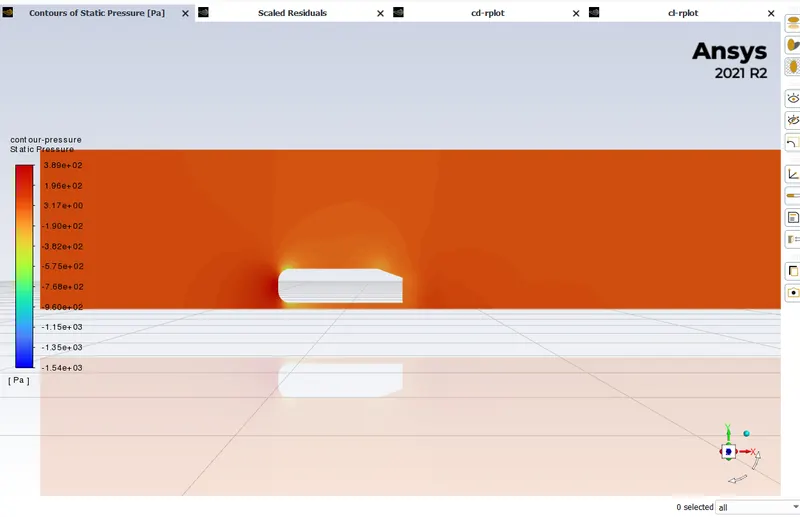
Why negative pressure in the wake region?
Pressure Drag is caused by the flow separation. Assume that the flow over a surface produces an increasing pressure distribution in the flow direction. Such a region of increasing pressure is called an adverse pressure gradient Increasing pressure, tends to reduce the velocity. As the fluid element continues to move downstream it may completely run out of steam, come to a stop and then, under the action of the adverse pressure gradient, actually reverse its direction and start to move upstream
The consequence of such reversed flow phenomena is to cause the flow separate from the surface and creates a large wake of recirculating flow downstream of the surface
In addition to the generation of shear stress, the influence of friction can cause the flow over a body to separate from the surface
The pressure inside the wake region remains low as the flow separates and a net pressure force (pressure drag) is produced, leading to further more negative pressure
Point of Separation
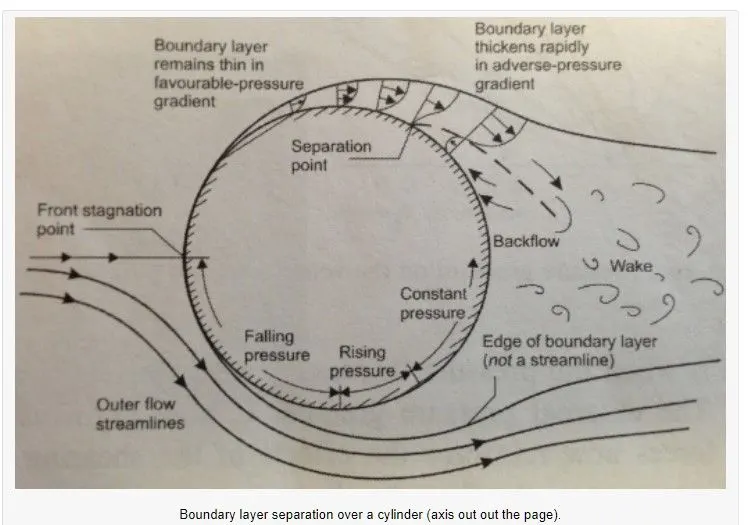
To understand boundary layer separation, we need to understand how these favourable and adverse pressure gradients influence the shape of the boundary layer. fluid travels slower the closer they are to the surface due to the retarding action of the no-slip condition at the wall. In a favourable pressure gradient, the falling pressure along the streamlines helps to urge the fluid along, thereby overcoming some of the decelerating effects of the fluid’s viscosity. As a result, the fluid is not decelerated as much close to the wall leading to a fuller U-shaped velocity profile, and the boundary layer grows more slowly.
By analogy, the opposite occurs for an adverse pressure gradient, i.e., the mainstream pressure increases in the flow direction retarding the flow in the boundary layer. So, in the case of an adverse pressure gradient the pressure forces reinforce the retarding viscous friction forces close to the surface. As a result, the difference between the flow velocity close to the wall and the mainstream is more pronounced and the boundary layer grows more quickly. If the adverse pressure gradient acts over a sufficiently extended distance, the deceleration in the flow will be sufficient to reverse the direction of flow in the boundary layer. Hence the boundary layer develops a point of inflection, known as the point of boundary layer separation, beyond which a circular flow pattern is established.
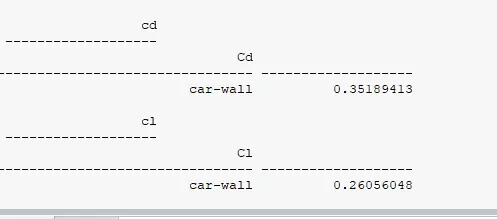
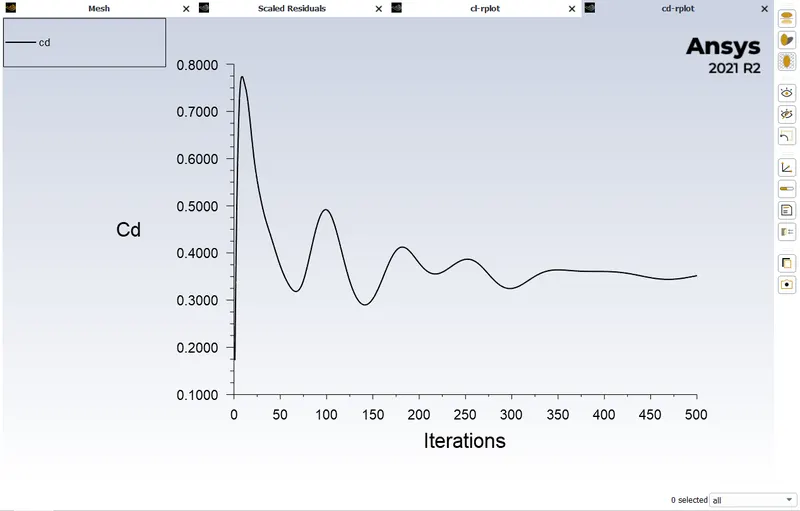
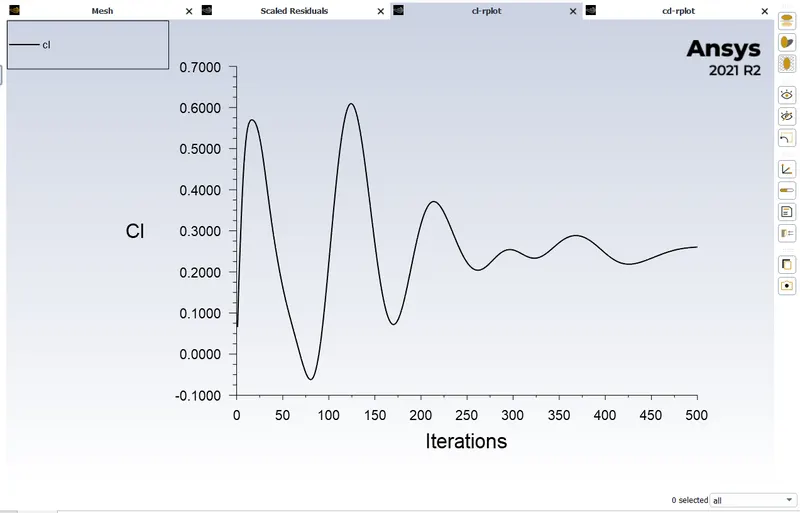
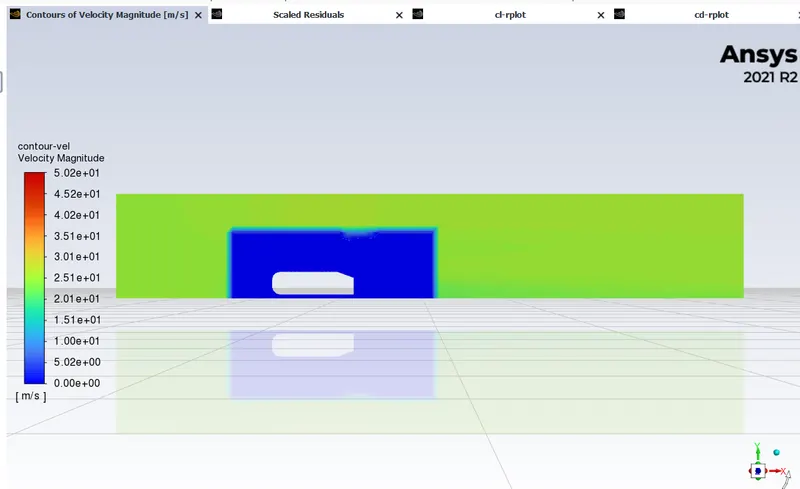
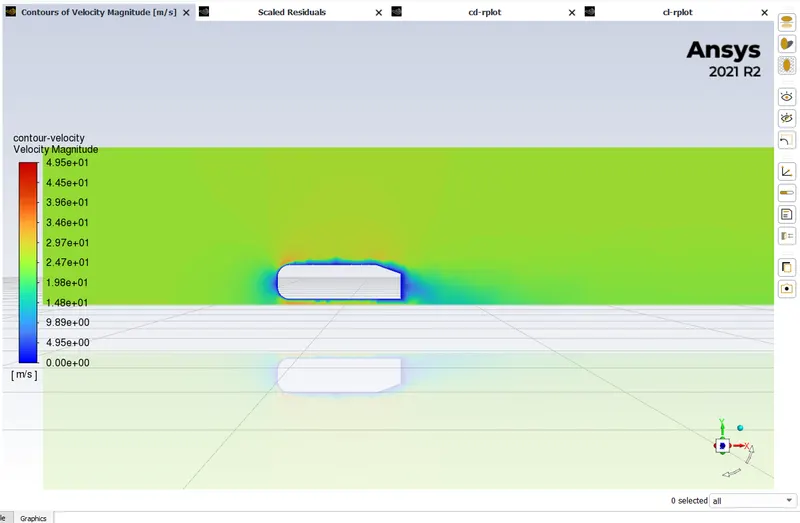
Part 1 - 25 m/s
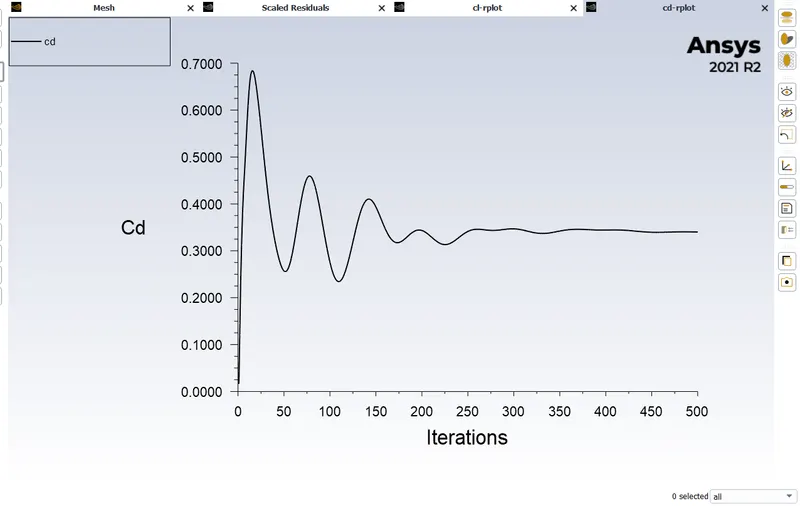
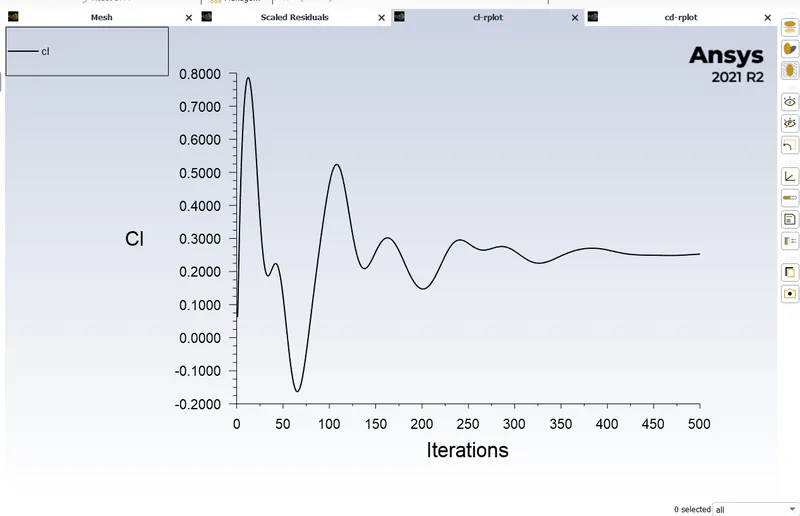
Part 2 - 25 m/s grid independency test