Week 4 - CHT Analysis on Exhaust port
Objective : CHT analysis on Exhaust port
1) What is CHT Analysis. Why and where it is used?
Conjugate heat transfer (CHT) refers to the coupling of conduction in solids with the convective and radiative heat transfer in the surrounding fluids. In other words, CHT corresponds with combination of heat transfer in solids and heat transfer in fluids. In solids, conduction often dominates whereas in fluids, convective usually dominates . Efficiently combining heat transfer in fluid and solids is the key to designing effective heaters, coolers , or heat exchanger . Heat Transfer is solid and heat transfer in fluid are combined in majority of application. This is because fluid flows around the solid or between solids walls. And because solids are usually immersed in a fluid.
The CHT Analysis is used in processes which involves variation of temperature within solids and fluids due to the thermal interaction between the solid and fluid. The exchange of thermal energy between the two physical bodies is called study of heat transfer, the rate of transferred heat is directly proportional to the temperature difference between the bodies. A typical example is the heating or cooling of solid object by the flow of air in which it is immersed.
The physical of conjugate heat transfer is common in many engineering applications, including heat exchangers ,HVAC, electrical components design.
Here i am going to show two type of result, i.e. not refined and refined mesh. Not refined mesh has different Y+ value and refined mesh has different Y+ value.
materials = air.
Inlet velocity = 5m/s
Heat transfer coefficient = 20w/m^2k.
Temperature = 700k
1) Not refined mesh
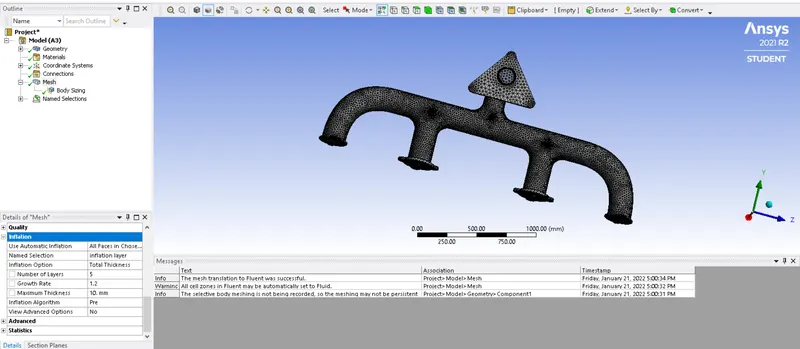
Mesh
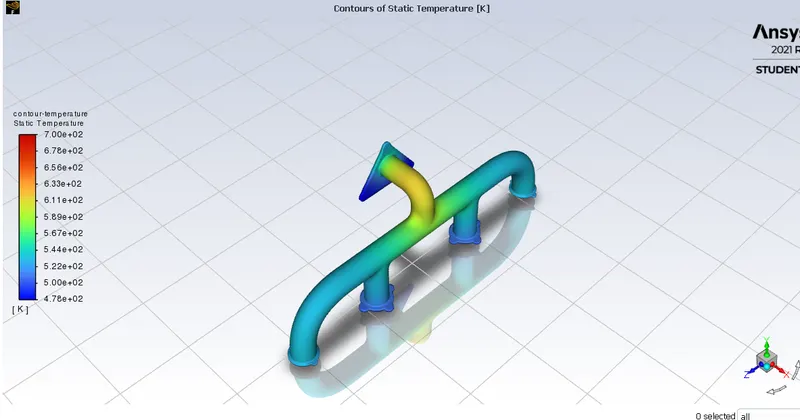
Temperature Contour
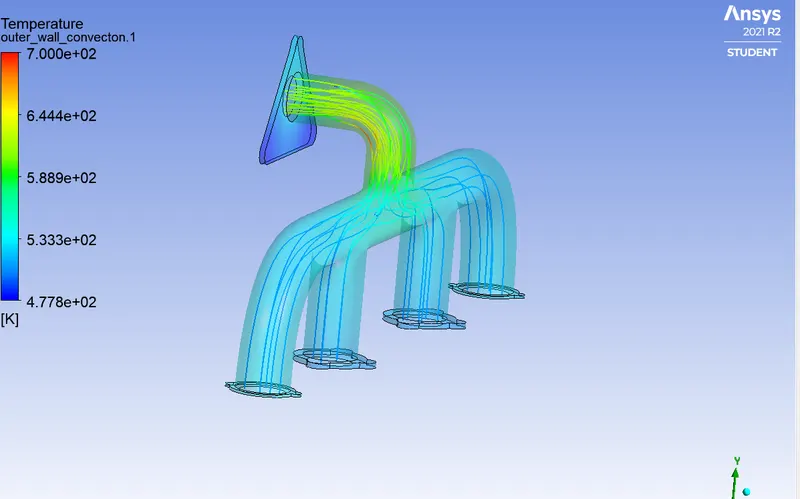
Temperature Streamline
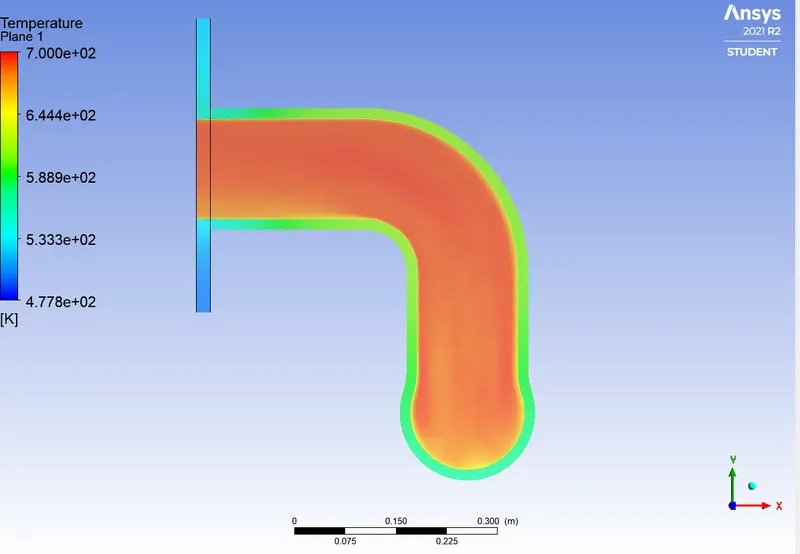
Temperature
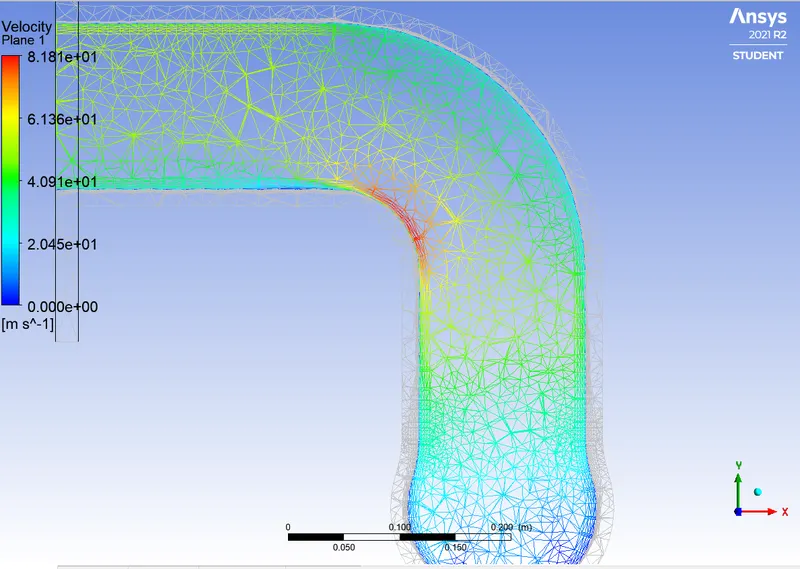
Velocity
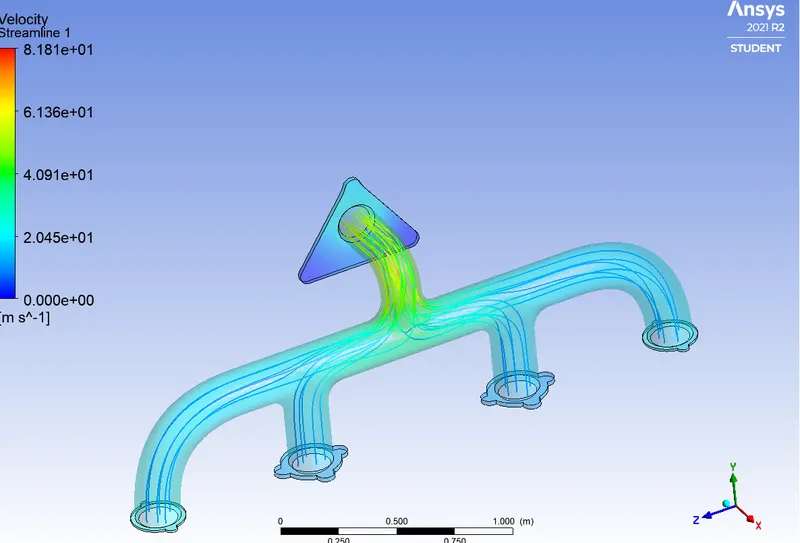
velocity Streamline
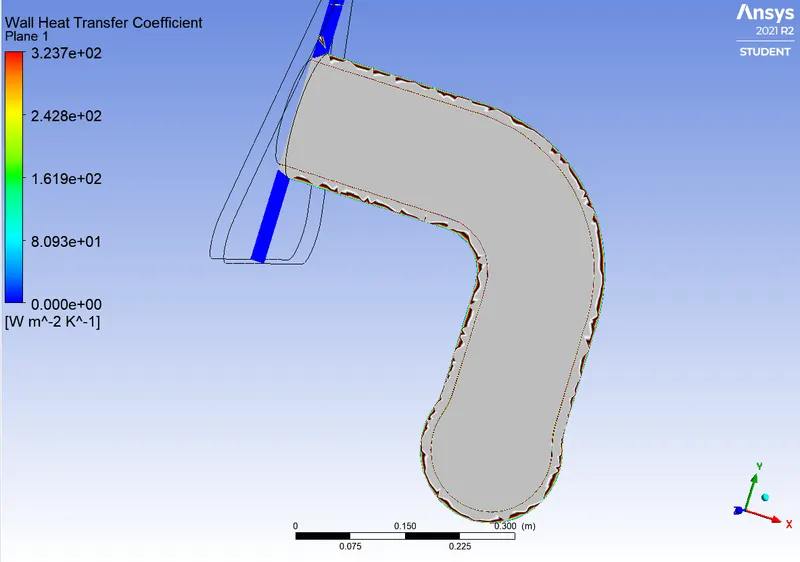
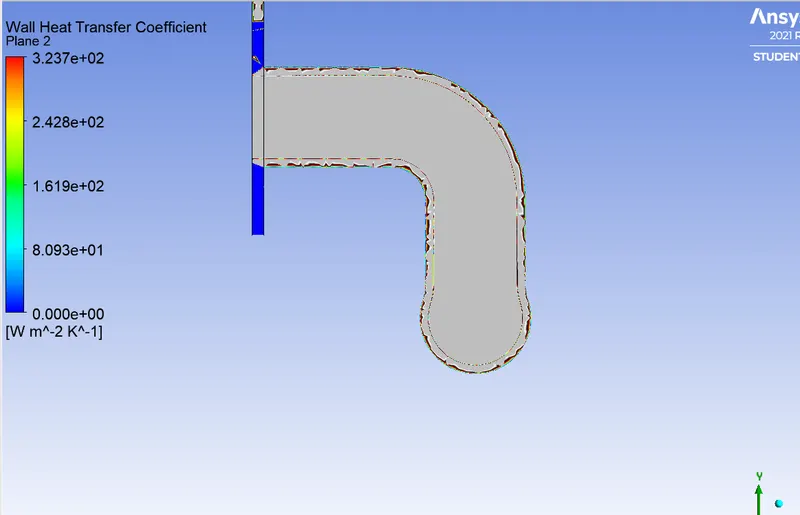
Wall Heat Transfer Coefficient
2) Refind Mesh
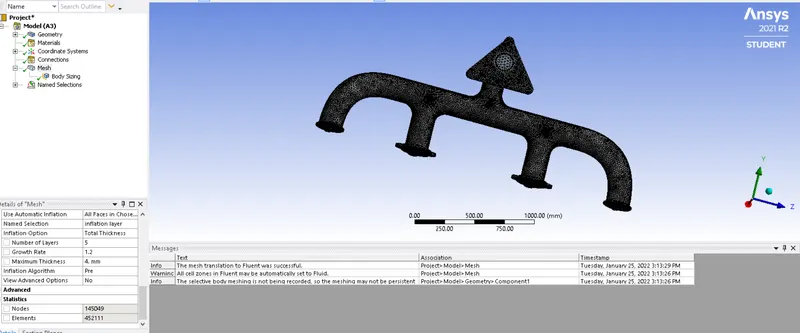
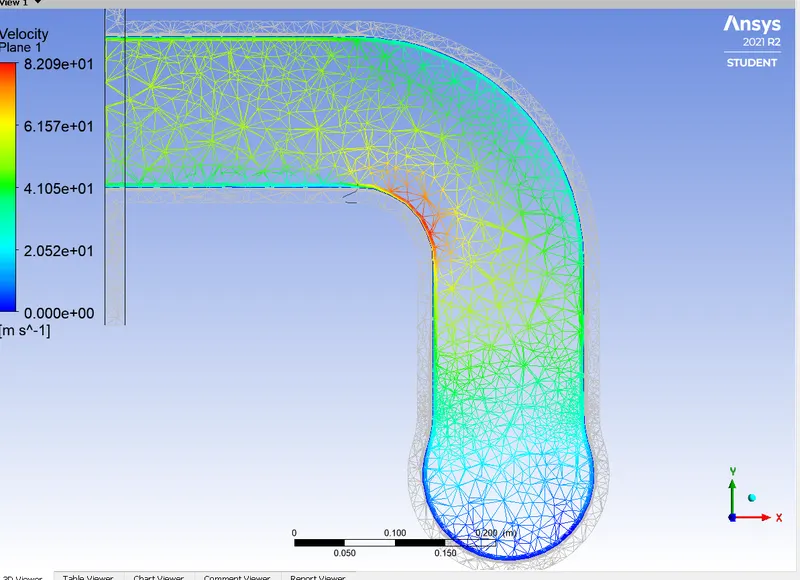
Mesh
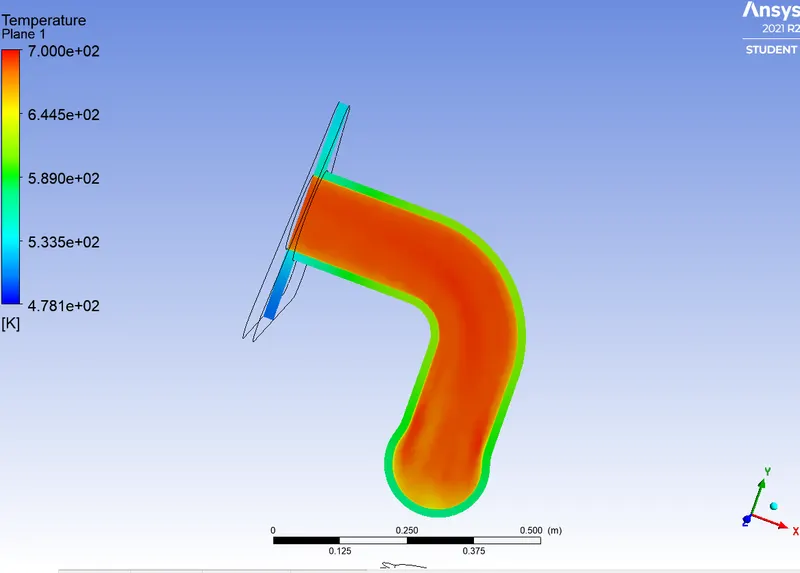
Temperature
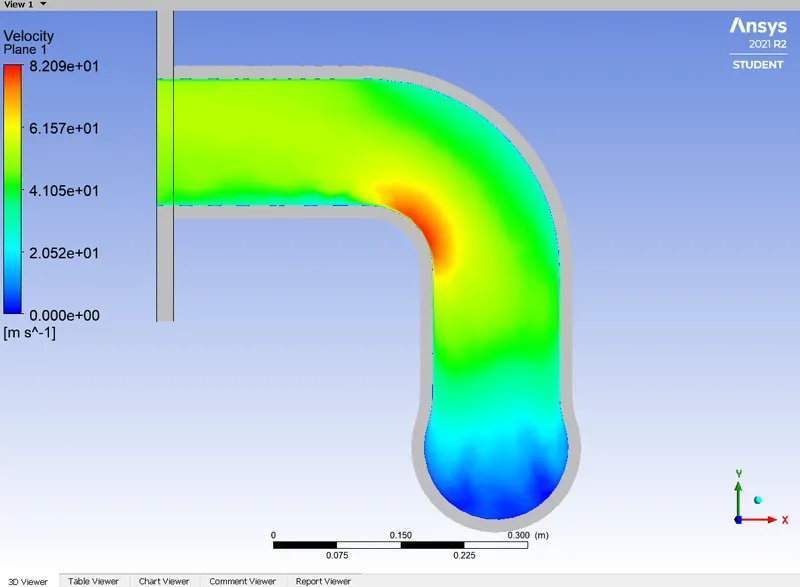
Velocity Contour
Velocity Streamline
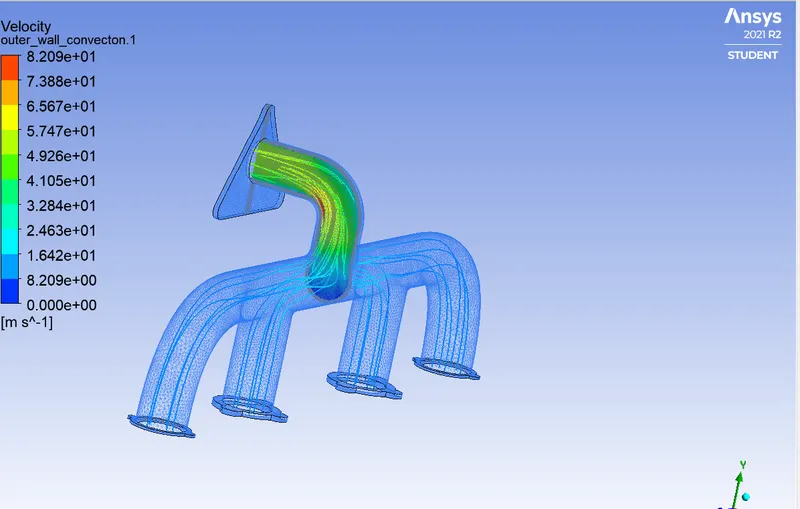
Here fluid flow is depend on the mass conservation equation.
here, Sum of inlet velocity = sum of outlet velocity
(v1+v2+v3+v4) = v5
Velocity
Wall Heat Transfer Coefficient
4)
nusselt number is given by,
`Nu\ =\ \frac{h\cdot L}{k}`
`h=\( Nu\ .k)/L`
h = heat transfer coefficient
Nu = Nusselts number
K = thermal conductivity coefficient
L = characteristics length
We know that the nusselts number is a function of Reynolds number which in turn is a function o flow velocity.
Therefore HTC id directly proportional to the flow velocity.
We can see from the images above that both the HTC and velocity are maximum near the outlet.
Hence, the HTC prediction from the simulation are correct.
Factors affecting the prediction are as follows.
1) Element size and Quality = The finer the mesh , the accurate the results.
2) Inflation layer = It increase the quality of mesh near the boundary interface and helps to capture smooth plots of different quantities.
3) Mesh at the solid-fluid interface =The mesh at the solid-fluid interface must be conformal.
Conclusion
Therefore refined mesh give better and smother result than not refined mesh. Y+ is used to refined the mesh and get than smoother result .CHT analysis is help us to design the heat , cooler , heat exchanger and many more equipment.