Week-4 Challenge WOT Condition Part-2
Answer 1.
EvReferenceApplication simulink model is a pure electric vehicle simulation. In its Passenger Car block a sub-block named Electric Plant has an Energy storage system (Battery) and an Electric Motor-Generator set. This M-G set is modeled in two ways one is called the Mapped model and the other one is the Dynamic model. Similarly in HEV simulation models the IC engines are also available in models mapped and dynamic.
Mapped Model :
1. Mapped model of any motor, generator or engine is based on the lookup tables. Lookup tables are predefined data which are the experimental results obtained from running tests on related components.
2. A mapped model is useful when our only interest is to observe the overall performance of any model and we are not much concerned about the effects of various subcomponents on the overall performance.
3. While using the MotGenEvMapped model we are using a motor generator set which has been tested and we have their operating response in form of a datasheet and that predefined data is directly used to observe the overall performance of our vehicle.
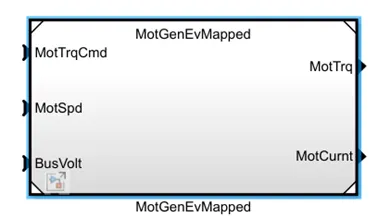
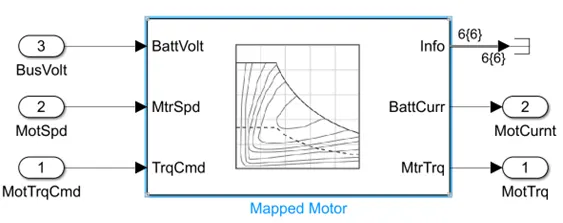
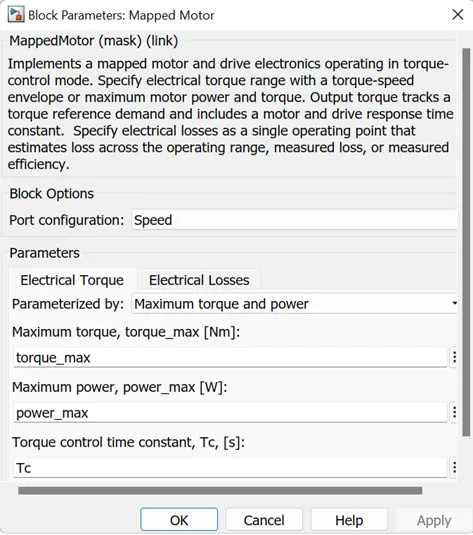
4. A simulation using a mapped model of motor generator set would be faster due to less number of variables to compute or simulate.
Dynamic Model :
1. Dynamic model of any motor, generator or engine is a more advanced or detailed model, which includes the effects of their subcomponents on the overall performance of the machine.
2. Dynamin model is used when we are more interested in the effects of these sub components on the machine performance, for instance if we want to include the effect of motor speed controller on the performance of our vehicle then we will use the dynamic model (MotGenEvDynamic) in this simulation.
3. So here we would be able to characterize the machine output based on the type of controller used and then we would be able to observe the effects of those outputs on the vehicle performance.
The dynamic model of the motor generator set is shown below.
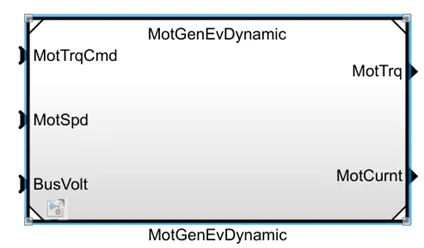
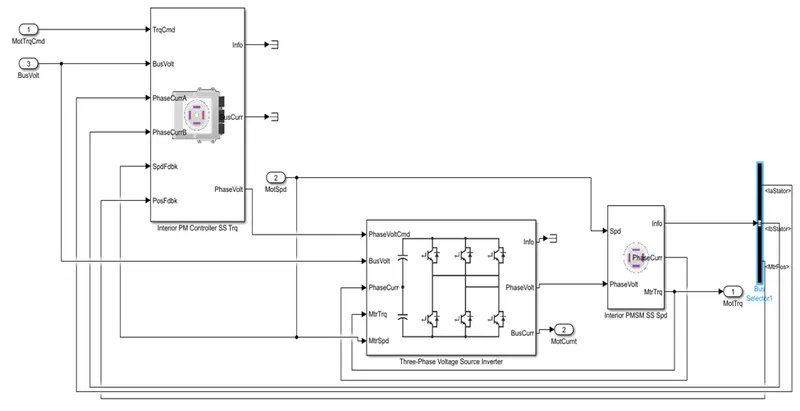
4. As shown in the above figure along with the electric motor other motor components such as inverter and controllers are also modeled and these components can be configured by the user.
5. This added configuration increases the number of variables to compute and therefore the simulation time is increased. But the results are more dynamic in nature.
Changing The model type :
The mapped model MotGenEvMapped is set to default. The current selected model type is bold as shown in figure below.
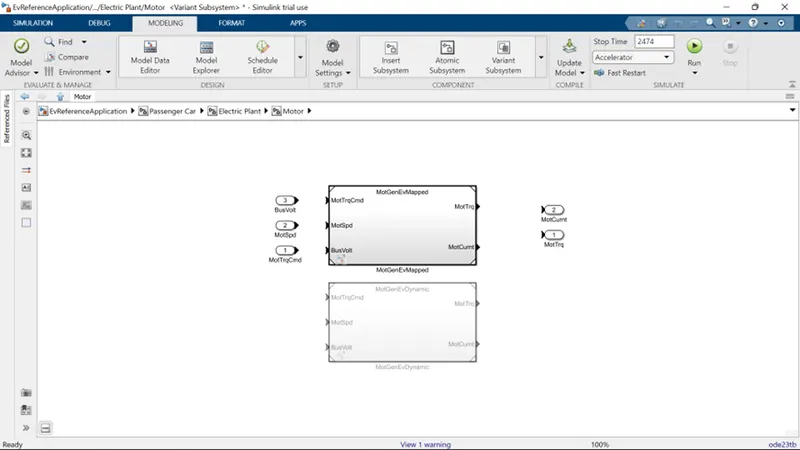
This model type can be changed from mapped to Dynamic as follows
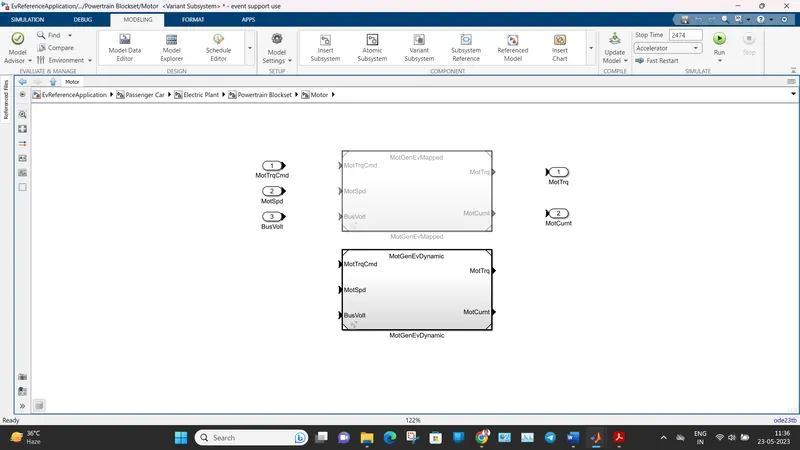
Now click on Modeling menu then click on Variant Manager then go to Motor in model hierarchy and right click the model we want to switch to (MotGenEvDynamic) and click Set as Label Model Active Choice.

Following the above mentioned procedure the motor generator model is changed from default MotGenEvMapped to MotGenEvDynamic as shown below.
Answer 2.
For a normal conventional vehicle fuel efficiency is calculated as miles per gallons but for HEV it is miles per gallon equivalent(mpge) which in the sense means how many kilometer vehicle is travelling per gallons of gas so calculating is little bit complicated. the mpge rating is calculated by figuring out the number of milles a vehicle can go using the same energy content as gallon of gas.the epa calculated that 33.7 kilowatt hours of electriccity is equivalent to one gallon of gas.
In EvReferenceApplication model there a block named Visualization in which a block named Performance Calculations is used to calculate the the equivalent fuel consumption in US miles per gallon. The used block is shown below.
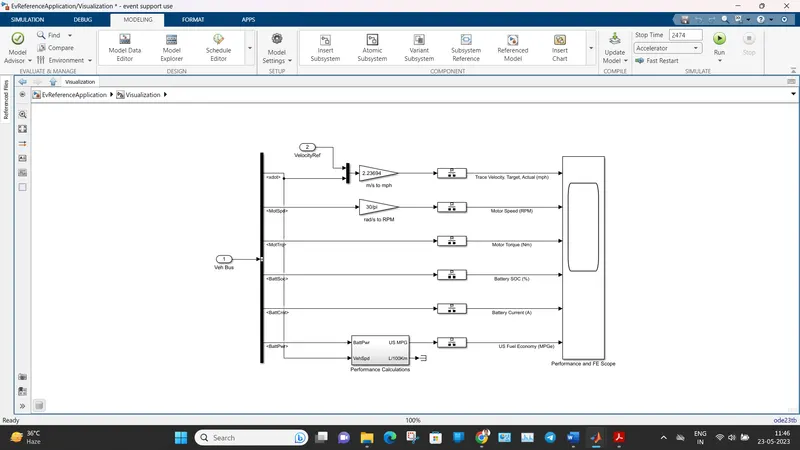
then we click on performance calculations block which after clicking is shown below-
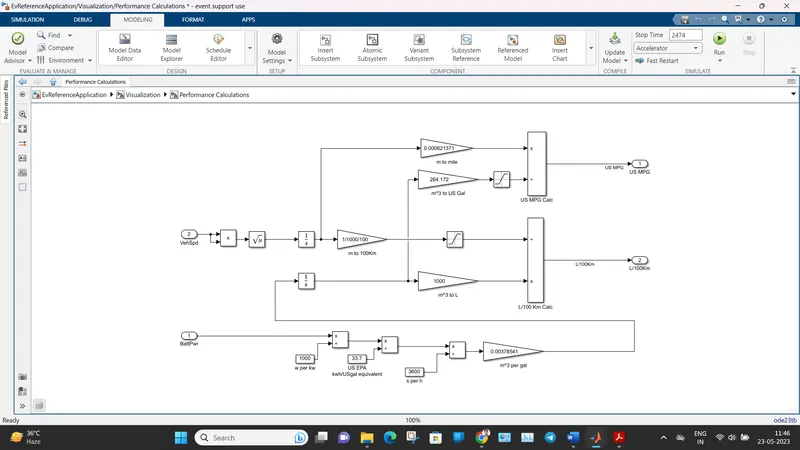
Now we can see that there is three i/ps are taken for calculations-
1.vehicle speed.
2.fuel flow.
3.battery power.
The vehicle speed inputs is in m/s which is converted into miles by multiplying with 0.000621371 and same to the kilogram of fuel which is converted into cubic meter by multiplying by1/(1000*0.739) this cubic meter value is further converted into gallons by multiplying it with 264.172 after that the mile value and gallon value is used to find mpg of the vehicle.
now the battery value is initially converted from watts to kwh by dividing with 1000 and then to gallon equivalent by again dividing it with 33.7(sincw 33.7 kwh=1 gallon)
then divide the value by 3600 to get in per seconds and multiply by 0.00378541nto get the value in cubic meter per gallons.
Answer 3.
Block Diagram of HEV Reference model is shown below-
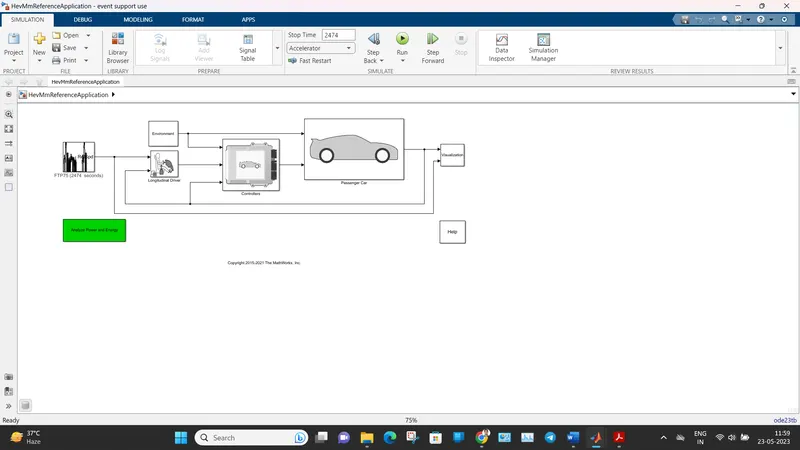
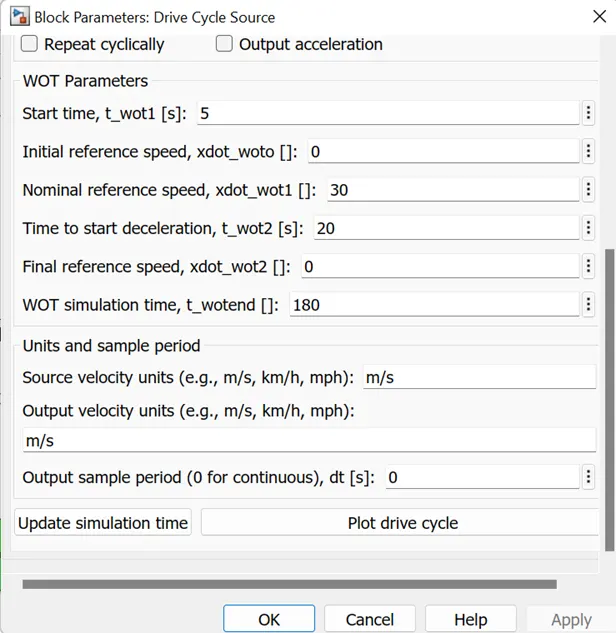
and the block parameter is shown below-
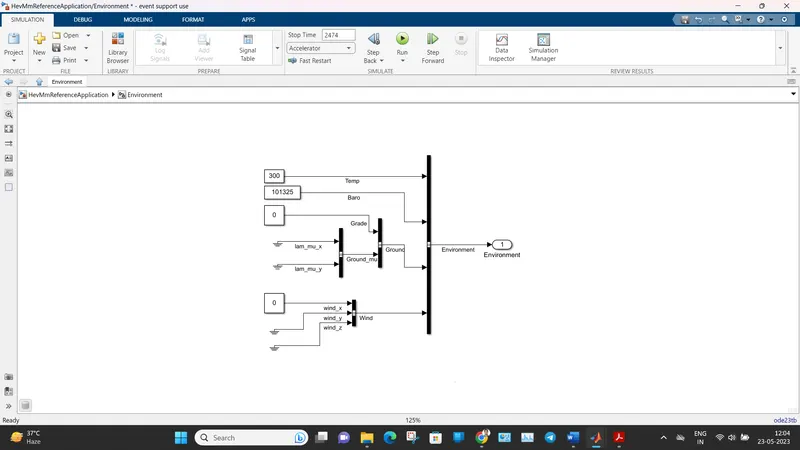
and environment block is shwon below-
and after running is the results are shown below-
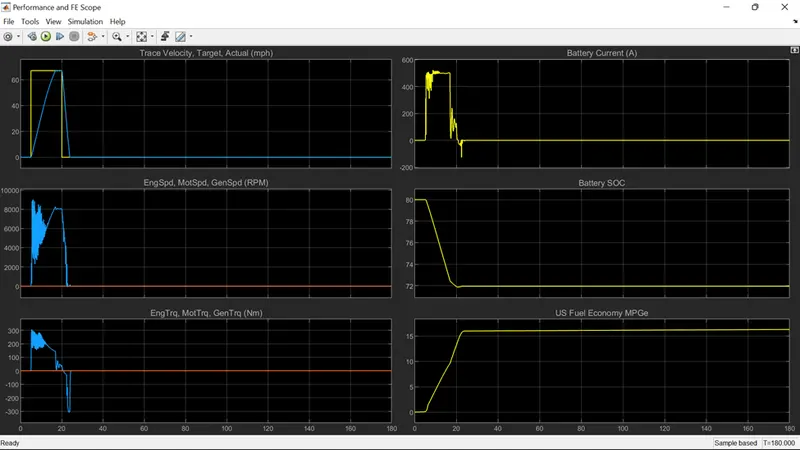
In the default model run, the grade and wind effects are not included in the results so In this condition the vehicle reached a top speed of 67.1 mph in under 18 sec And the vehicle came to stop from its top speed in almost 4 sec.
The battery Soc dropped from 80% to 72% during this cycle.
The fuel economy reached from 0 MPGe to near 16 MPGe.
Now the simulation is repeated but this time we will add the grade of 15 and wind speed 5 and check the effects on vehicle performance. Rest all parameters are kept the same.
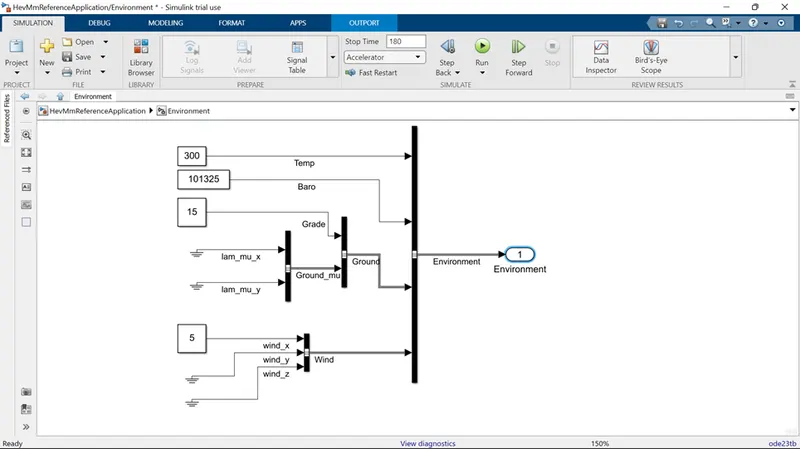
the results are-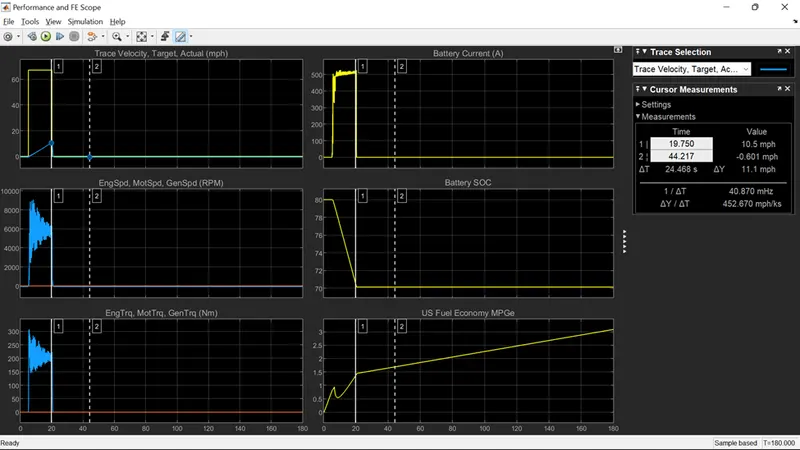
we now see that from the above results show that the grade and wind speed has shown their effects on vehicle performance as the top speed achieved in WOT test under given conditions was 10.5 mph and the time to achieve this speed is also increased around 19.7 sec.
Battery Soc is reduced from 80% to 70%. And the fuel economy was also drastically reduced from 16 MPGe to just over 3MPGe.
Answer 4.
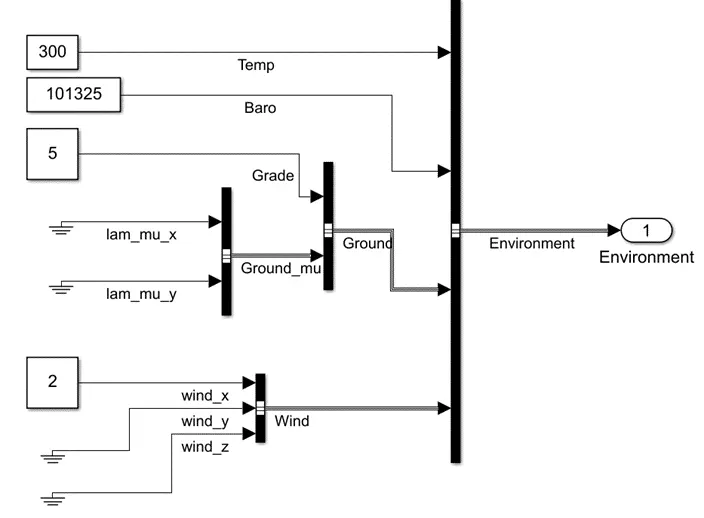
- Hybrid Electric Vehicle Performance with Grade 5 and wind speed 2, with default drive cycle FTP75, simulation time 2474 seconds. Rest all parameters are kept to default.
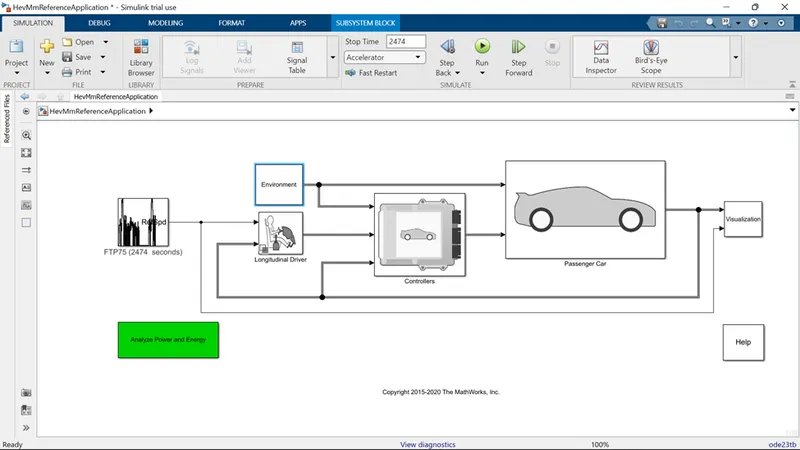
Environment block grade and wind settings is shown below-
and results are shown below -
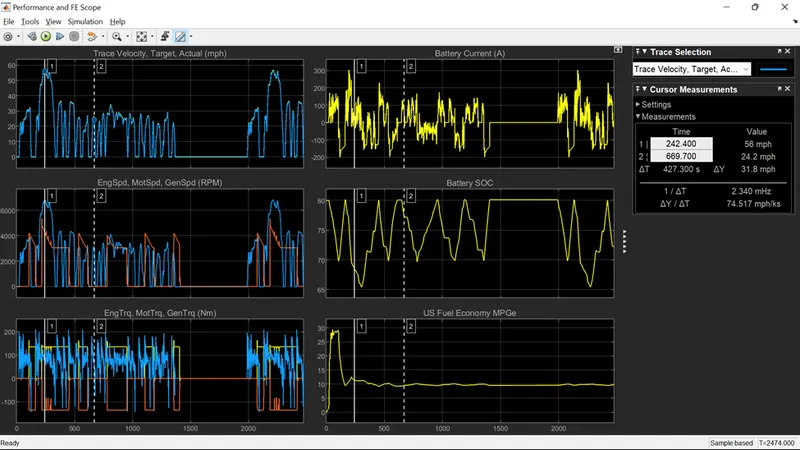
Above results show vehicle top speed = 56 mph , Max motor speed = 6812 rpm , Max engine speed = 4654 rpm
Max generator speed = 4738 rpm
Battery Soc was mostly between 70% to 80% Max Current from the battery was around 300 A. Battery kept charging and discharging during the drive cycle.
Initially the fuel economy was around 29 MPGe but later it was around 10 MPGe only.
- Pure Electric Vehicle Performance under same operating conditions and environment parameters.
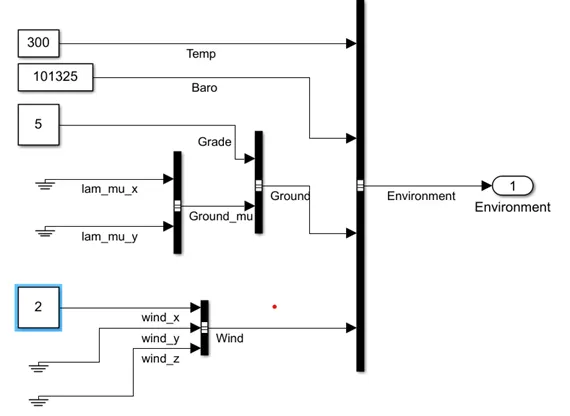
and the result are-
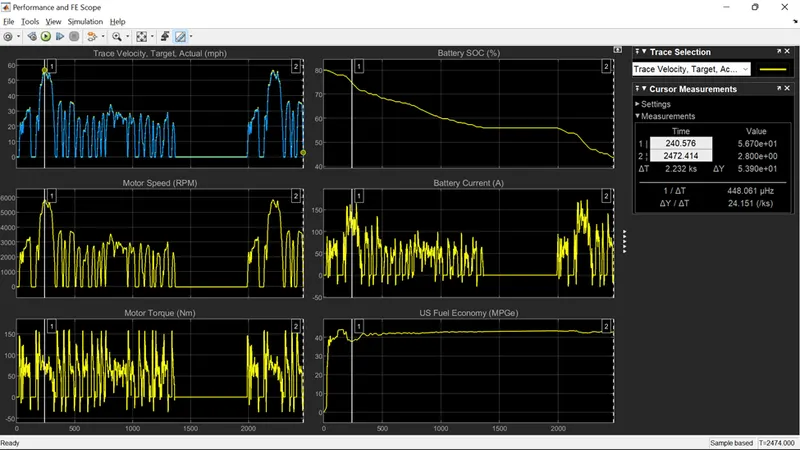
The above results show the max vehicle speed was 56.7 mph.
Max motor speed was 5850 RPM.
Battery was continuously losing energy and battery Soc reduced from 80% to around 45%.
The fuel economy was over 40 MPGe.
So the trip is more economical with the pure electric vehicle as compared to the HEV.