Week-4 Challenge WOT Condition Part-2
- What is the difference between mapped and dynamic model of engine, motor and generator? How can you change model type?
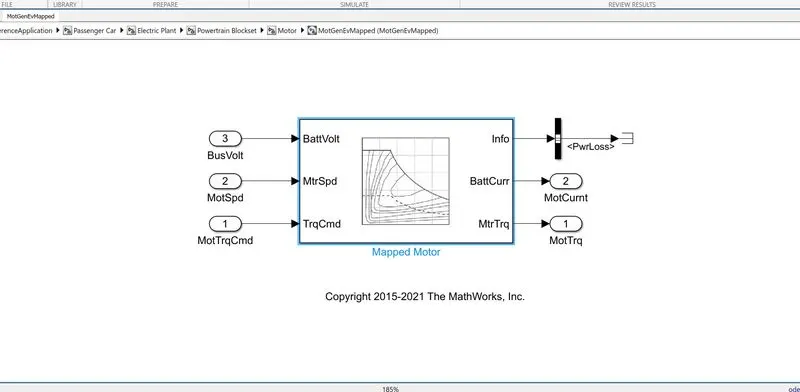
Mapped Model is based on Look Up table data. The data is based on previously experimental values. simply, it is a prearranged data sheet.
While, Dynamic Model runs on Real time data.
Thats why, Dynamic Model takes more time in simulation than Mapped Model.
Mapped Model of HEV and EV Motor /Generator:
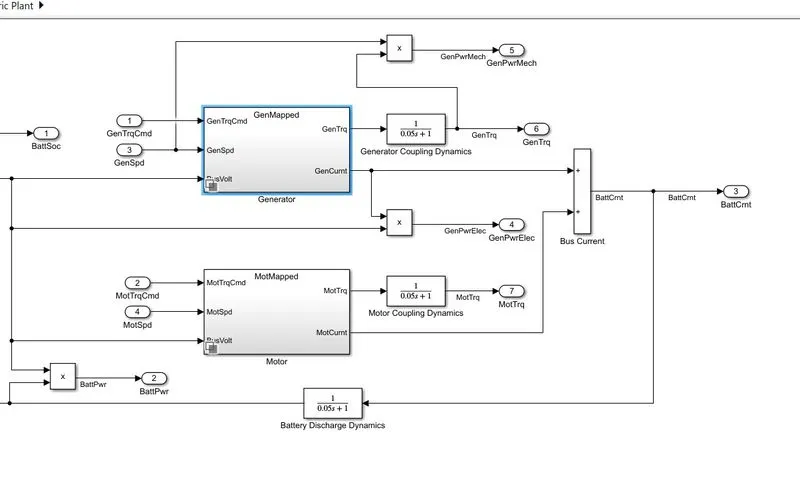
EV:
Dynamic Model of HEV and EV Motor /Generator:
HEV:
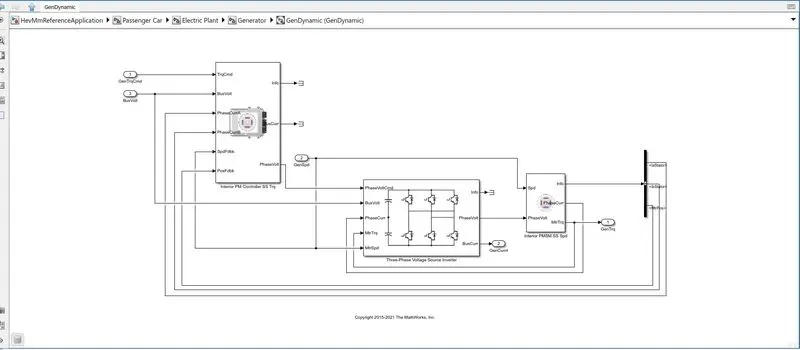
EV:
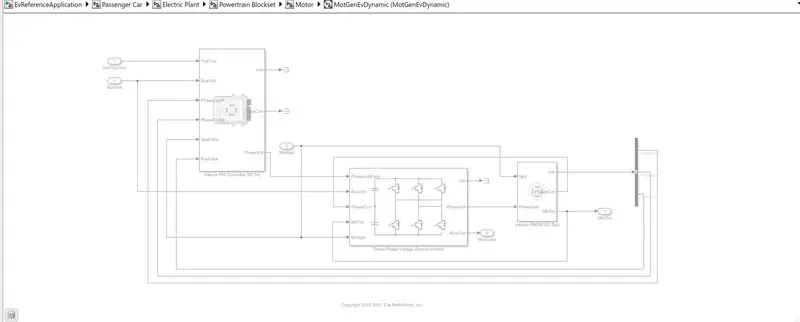
How can you change model type?
To Change from Mapped Model to Dynamic Model we have to gone through following processes:
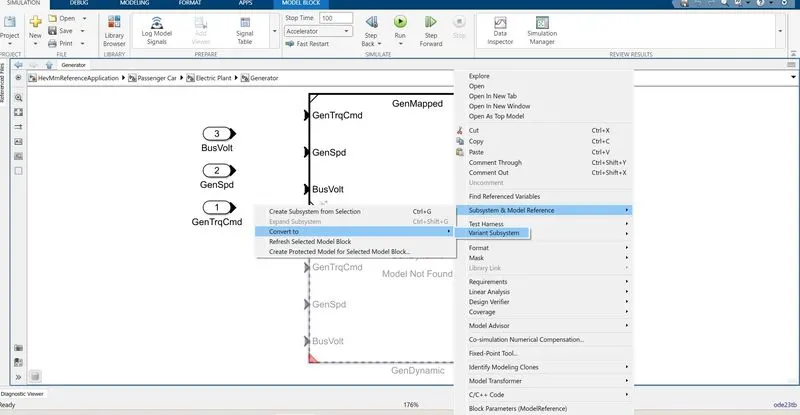
1. First, we have to right click any of the model and then click Subsystem and Model Reference> Covert to> Variant system> Variant System Manager
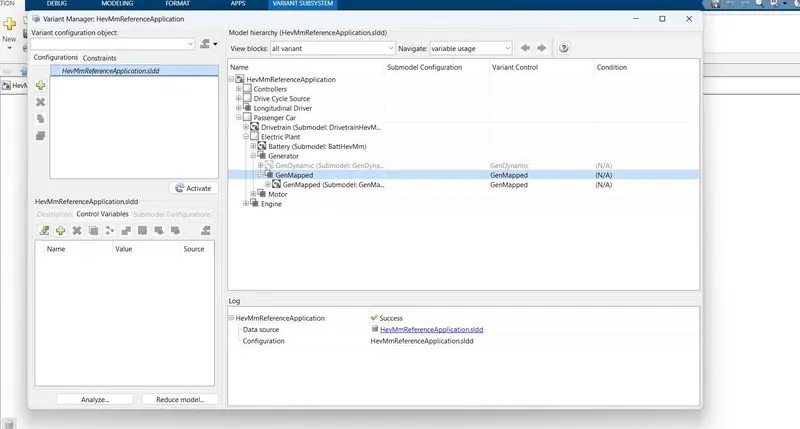
2.Then Under variant subsystem We can see mapped and dynamic model options. We select GetDyanamic option and right click on it after that select Label as Active.
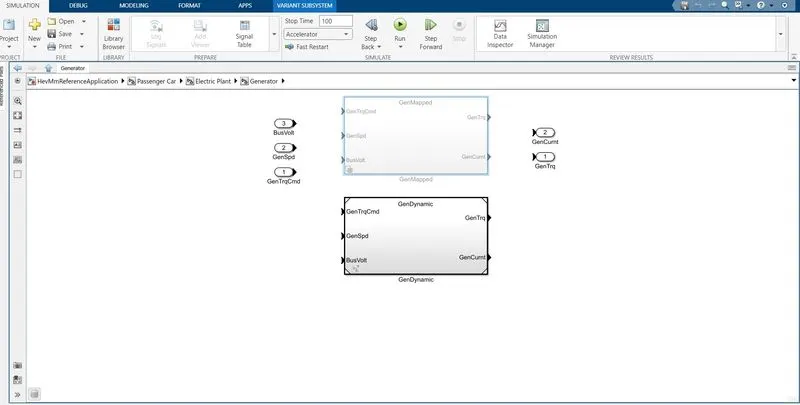
3. Dynamic Model Selected
---------------------------------------------------------------------------------------------------------------------------------------------------------------------------------------------------------------------------
2.How does the model calculate miles per gallon? Which factors are considered to model fuel flow?
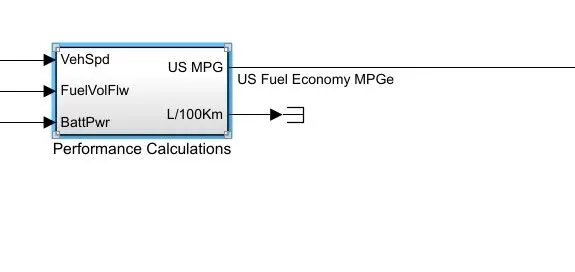
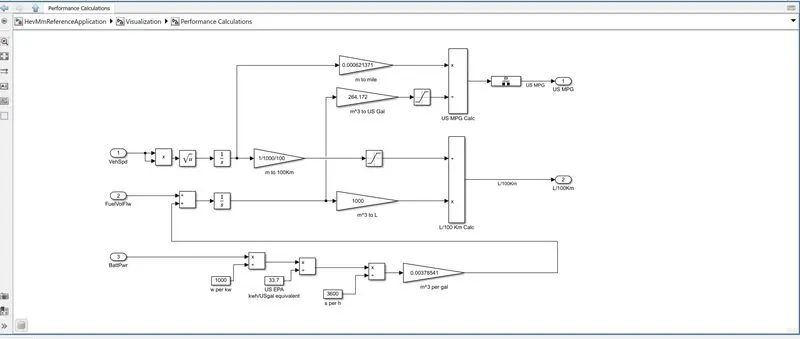
The US environmental protection agency(EPA) considers 1 gallon of gasoline is equal to 33.7 kW
- Vehicle speed is used to calculate the distance in meters which is then converted to miles.
- Battery power data is used to find power used in kWh which is then converted to gasoline-equivalent using US EPA value by dividing with 33.7
- Distance traveled in miles divided by the number of gallons we get miles per gallon.
- For HEV this gallon(gasoline-equivalent of battery power) is added with gallon used by IC engine then miles per gallon is calculated.
Used Saturation Block to limit the data range.
Used Gain Blocks for conversion of units.
Constant Blocks for assigning constant values.
--------------------------------------------------------------------------------------------------------------------------------------------------------------------------------------------------------------------------------------
3.Run the HEV ReferenceApplication with WOT drive cycle. Change the grade and wind velocity in the environment block. Comment on the results.
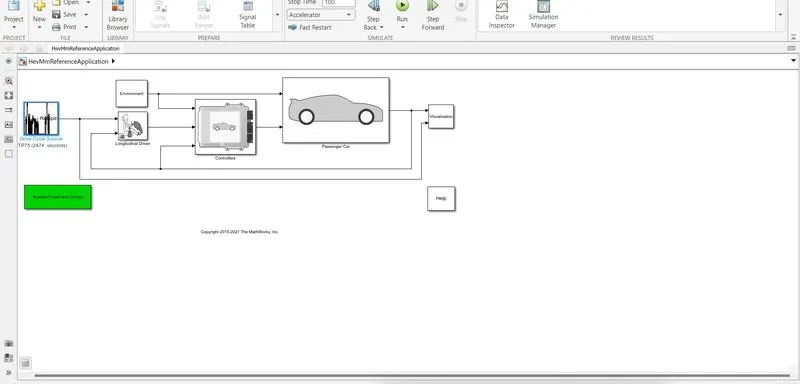
Run autoblkHevStart command in MATLAB Command Window Reference HEV model appears.
Model:
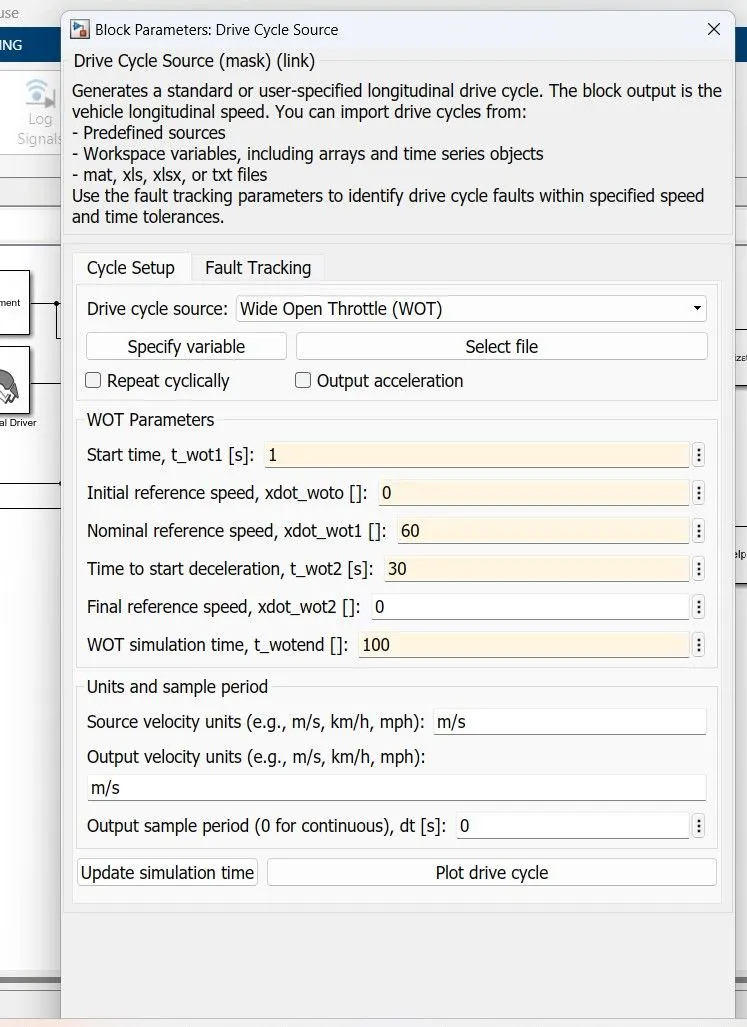
Driving Cycle:
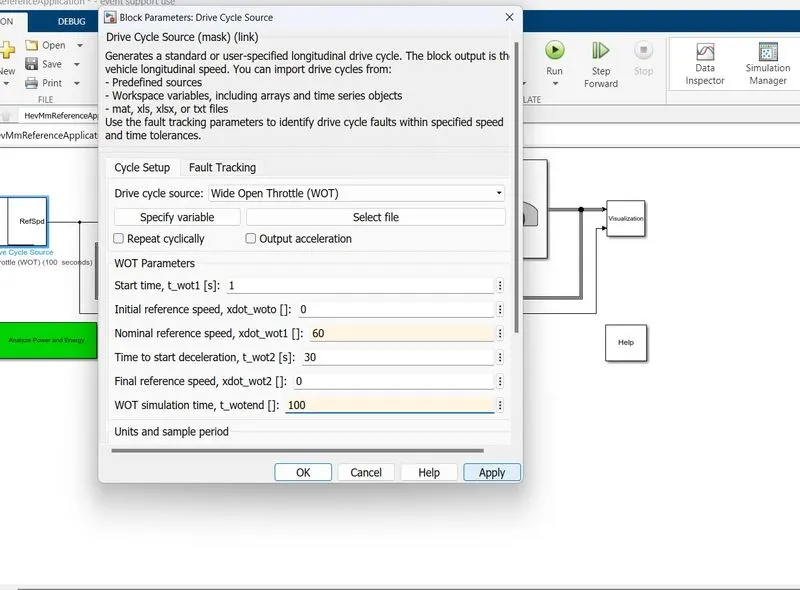
Changed Driving Cycle to WOT and parameters also changed
Enviromental Condition:
Keeping Environment Default.
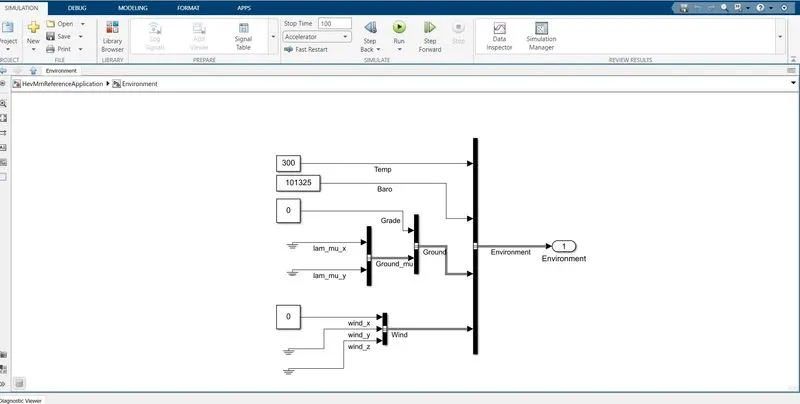
Now Run the simulation for 100secs.
Result:
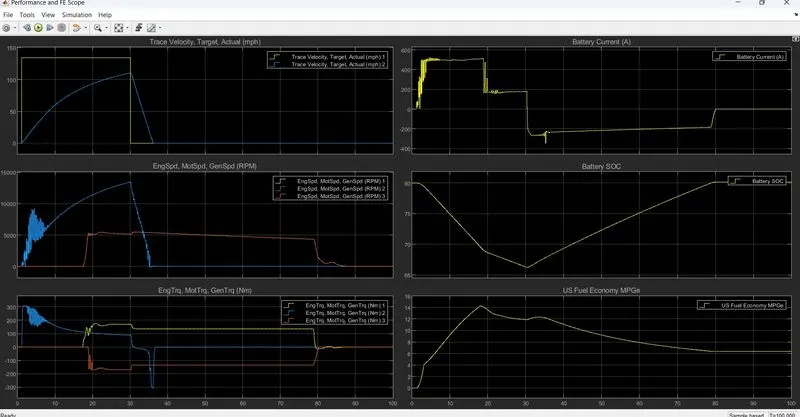
- We can see that the vehicle Controller tries to follow the Reference speed which is 134mph and after 30 secs starts decreasing and after 35 secs Vehicle stopped.
- Battery state of charge using 80% of its charge and it decreasing to 67 % approx. in 30 secs then when Vehicle starts decelerating the Battery is getting charging through Regenerative Braking.
- The Motor starts at 1 sec and achieves a speed of approx. 9000rpm in 5 secs then then after 8 secs it reaches 14000 rpm to achieve the ref. speed and if we seed the gen speed, we can see that after 18 secs Battery SOC came less than 70% then Engine starts and the motor acts as generator to charge the Battery.
- At start Battery is supplying Motor power that's why Motor Torque is high then after 18 secs when Engine starts, we can the engine Torque is rising but gen torque is going negative because at 18secs engine torque increases and we know the torque and speed relationship is inversely proportional since the rated output power of a motor is a fixed value.
Now Changing Enviromental Conditions:
Grade Angle: 10°
Wind Speed: 5 m/s
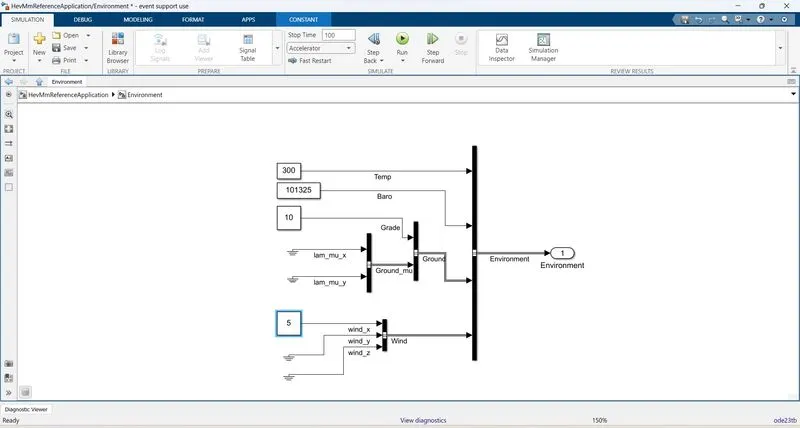
Results:
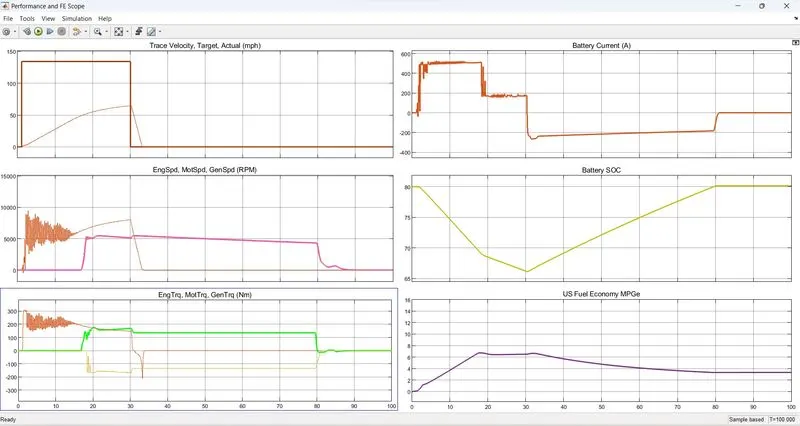
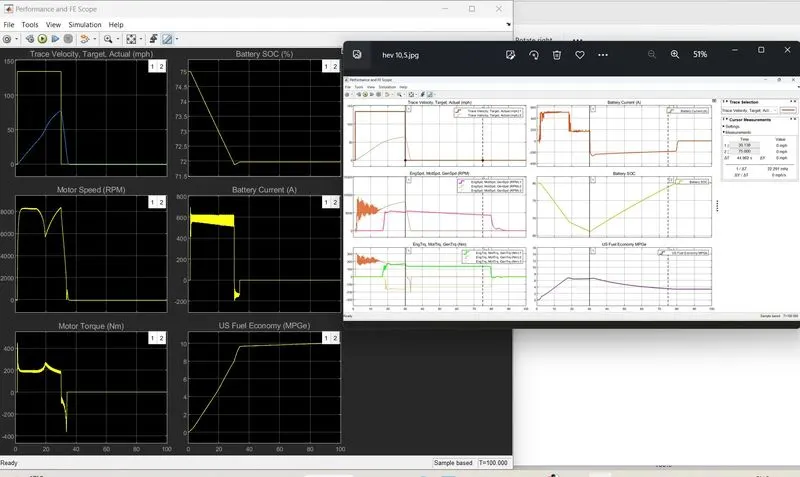
Vehicle has achieved target Velocity hardly 64.6 mph and other parameters also act accordingly SOC and Current of Battery almost remains same as the previous.
4.Keeping all other parameters same, compare the simulated results of hybrid and pure electric powertrains.
Run autoblkevStart command in MATLAB Command Window Reference HEV model appears.
Drive Cycle: Same parameters as Previous one.
Enviromental Parameters: Same as previous
Grade Angle: 10°
Wind Speed: 5 m/s
Results:
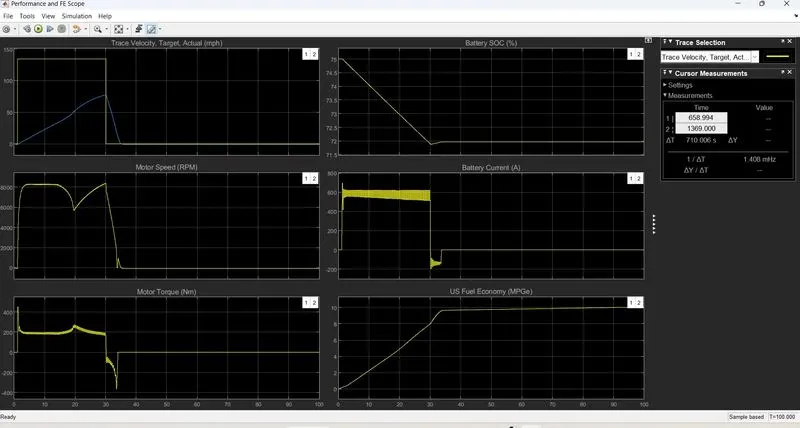
Vehicle has achieved target Velocity of 77 mph and after 30secs Battery SOC discharged just 3%.
At starting the Motor Controller initiates motor Speed 8320 rpm approx. But the motor requires more torque to continue the operation so at about 19 secs Torque value rose 274 N-m and because of this a dip in Motor speed can also be seen. and about 35 secs all parameters are stabled at 0.
HEV vs EV:
With the same parameters we can see that EV has achieved more Velocity than HEV. and Battery discharging is low compare to HEV.