Week-4 Challenge WOT Condition Part-2
Powertrain Blockset used for
Application models of automotive powertrains include gasoline diesel, hybrid, and electric systems. it includes a components library for simulating engine subsystems, transmission assemblies, traction motors, battery packs, and controller models. powertrain block sets also include a dynamometer model for virtual testing.
Aim
Understanding powerstrain blockset in MATLAB
1. What is the difference between the mapped and dynamic model of the engine, motor, and generator? How can you change the model type?
A) mapped engine: the mapped engine is it is used to measure the performance parameter of the vehicle by using standard lookup tables which are preferred by the system. this type of model is less accurate.
the values are based on parameters are brake torque, commanded torque, and engine speed. if any other parameter is engine temperature which is taken from the lookup tables it is the function of the temperature parameter.
B) Dynamic engine: this type of model is used real-time data fed by the users during the run time of simulations. this type of model is more accurate than that of mapped models. this type of model is when the vehicle subsystem required data. we can calculate brake torque, mass flow, and gas mass flow. exhaust emission.
C) mapped motor: this type of motor is where the faster simulation is required .it does not have 'knowledge of motor parameters, and the output and reference value are compared changes are made to input torque, the torque and speed are specified, and maximum motor power and torque are defined.
D) Dyanamic motor: we used a three-phase interior permanent magnet moving motor is used. It uses three phase input voltage. which is used to regulate individual phase current allowing control of the motor torque-speed the block is used when the users know the parameter used in simulations, this type of system is more accurate.
E) mapped generators: the mapped generator is similar to other blocks most of the data is taken from the lookup table corresponding to the inputs parameter. simulation time is less.
F) Dynamic generators: the dynamic generators involve the user entering manually the data during run time for particular applications. results take time and it is more accurate.
we can change mapped to a dynamic model :
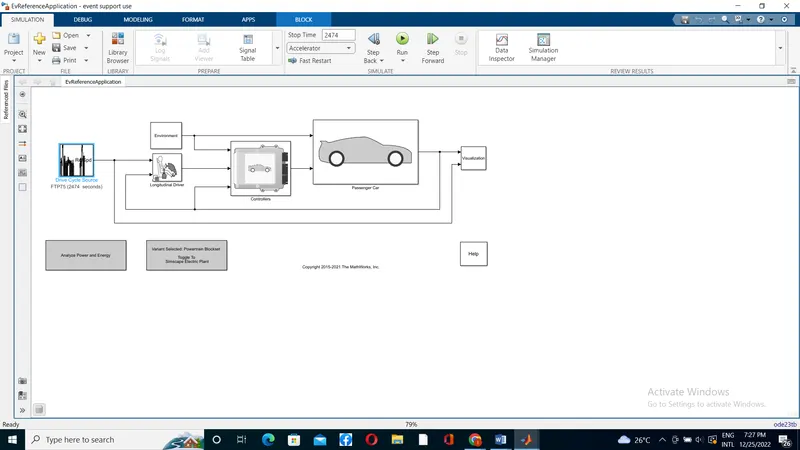
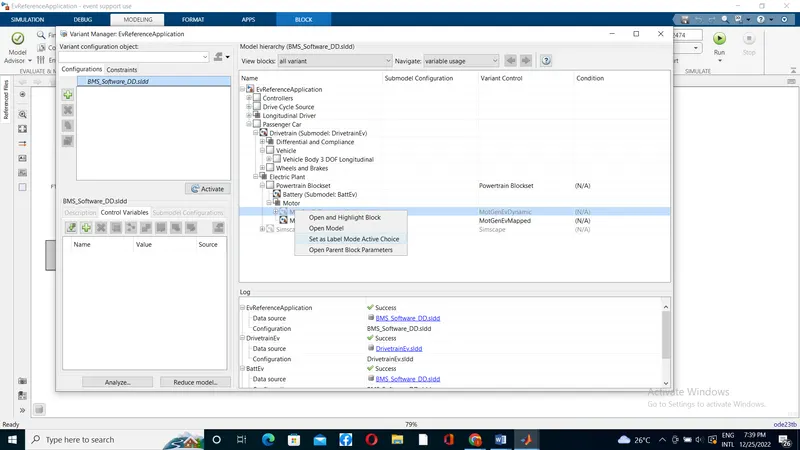
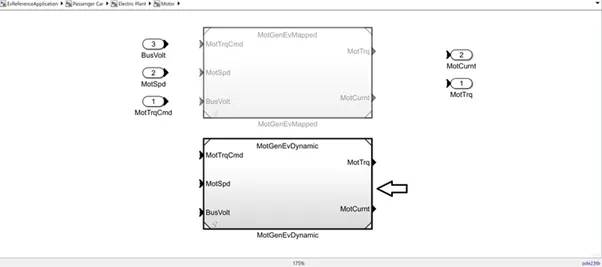
this procedure will be the same in the case of a motor or engine.
2) How does the model calculate miles per gallon? Which factors are considered to model fuel flow?
- powertrain Blockset provides a fully assembled reference application model of automotive powertrains, including gasoline, diesel, hybrid and electrical systems. it includes a component library for simulating engine subsystems, transmission assemblies, traction motors, battery packs, and controller models. powertrain Block sets also include a dynamometer model for virtual testing.MDF file support provides stand miles per gallon gasoline equivalent is a measure of the average distance traveled per unit of energy consumed. that a car can travel per gallon of fuel.
- The EPA gives each vehicle three different MPG ratings. as All car Leasing notes.
- Highway MPG: an average car will get while driving on an open stretch of road without stopping or starting, typically at a higher speed.
- And, combined MPG, a combined average of highway and city MPG.
- MPG is an important metric to know about any vehicle that you're considering purchasing. It tells you about the difference in cost between operating different vehicles by giving you a sense of how much money you're likely to spend on fuel. This becomes especially important when fuel prices are higher, since every bit of savings counts for your budget.
Simulink block to calculate miles per gallon
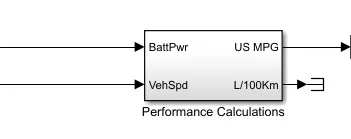
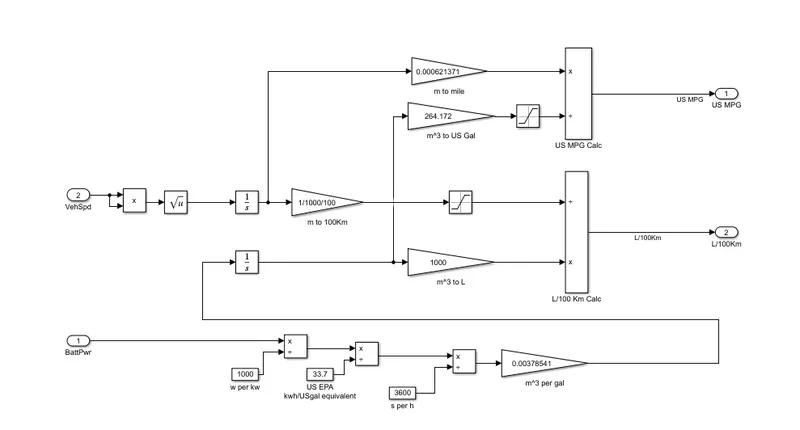
- Battery power data is used to find power used in KWH which is then converted to gasoline-equivalent using us EPA value by dividing with 33.7KWh
- note: as per the US environmental protection agency(EPA) 1 gallon of gasoline is equal to 33.7kwh
- By dividing the distance traveled in miles by the number of gallons, we can get miles per gallon.
- For HEV this gallon(gasoline equivalent of the battery power) is added with a gallon 2IC engine then the mile per gallon is calculated
3) Run the HEV ReferenceApplication with WOT drive cycle. Change the grade and wind velocity in the environment block. Comment on the results.
open the HEV reference application
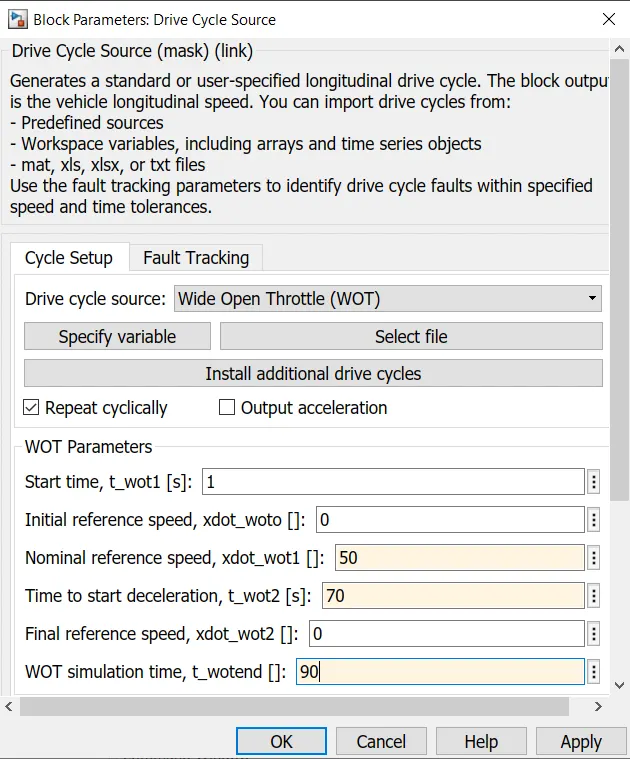
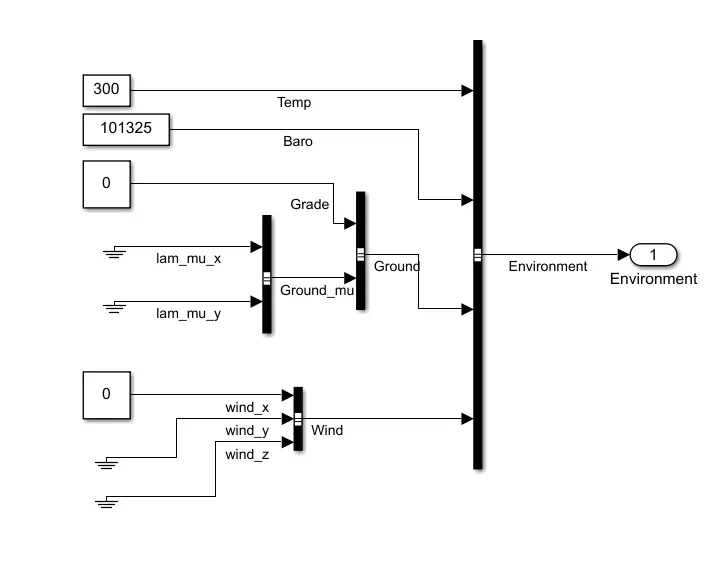
Grade - 0, wind velocity 0m/s
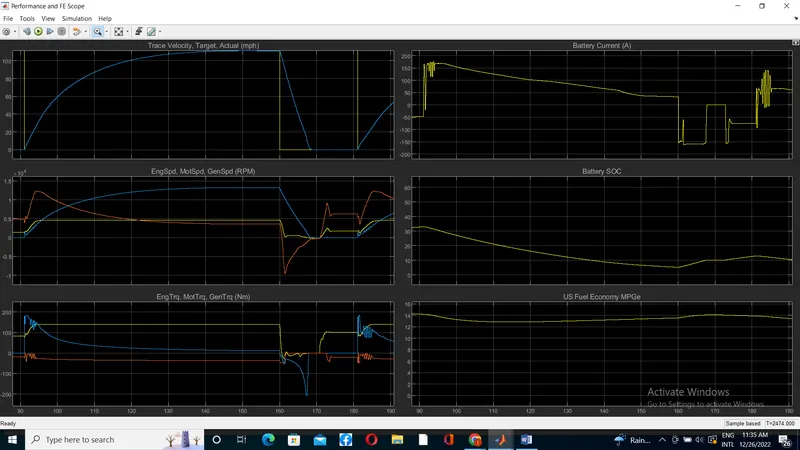
Grade - 7, wind velocity 12m/s
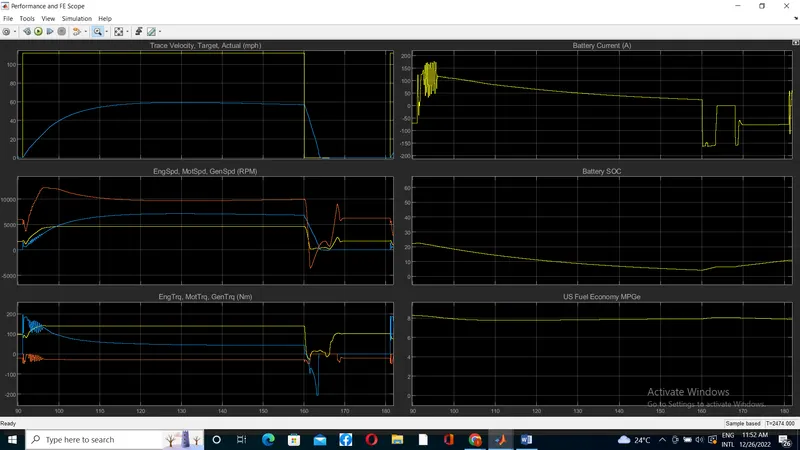
Grade -14, wind velocity 30 m/s
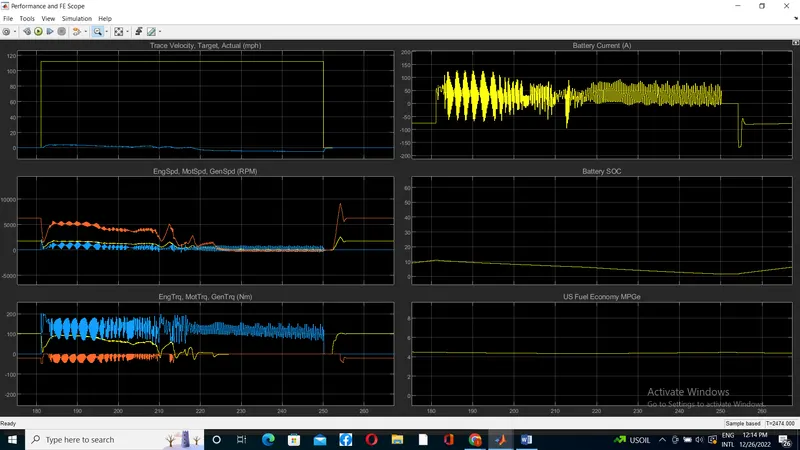
RESULTS:
- with the increase in grade and wind velocity.
- fuel economy is also reduced because the distance traveled is reduced due to external forces.
- peak velocity achieved is reduced as gradient force and aerodynamic force become dominant.
- deceleration time is reduced so batter recharging capacity is also reduced.
- battery soc at the end of wot acceleration is similar but during deceleration, the battery is charged more the grade and wind velocity is less.
4)Keeping all other parameters the same, compare the simulated results of hybrid and pure electric powertrains.
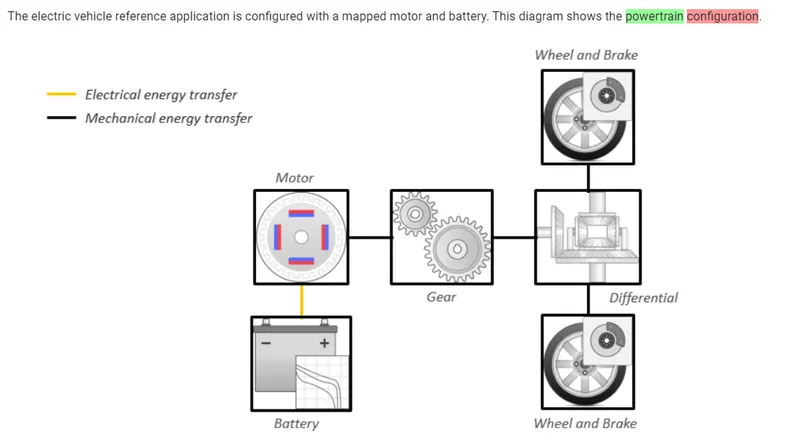
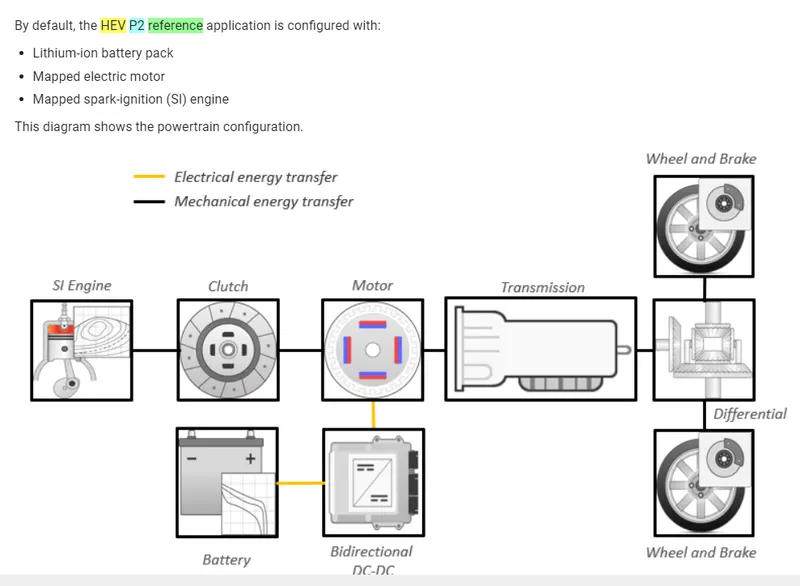
EV model powertrain configuration:
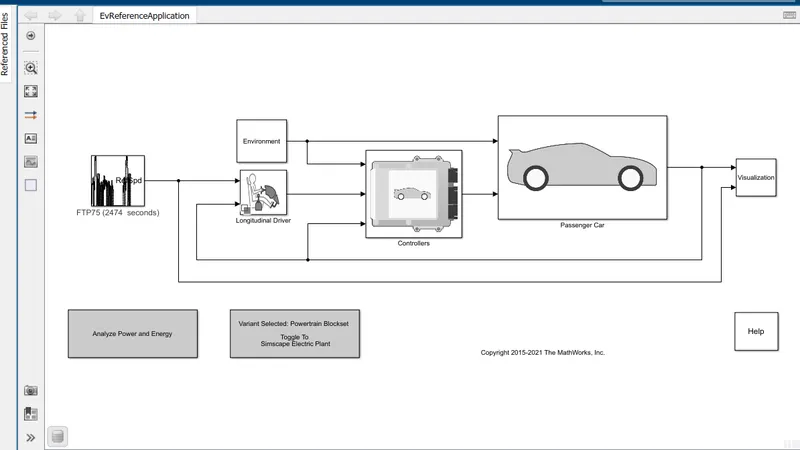
Simulink model:
Result
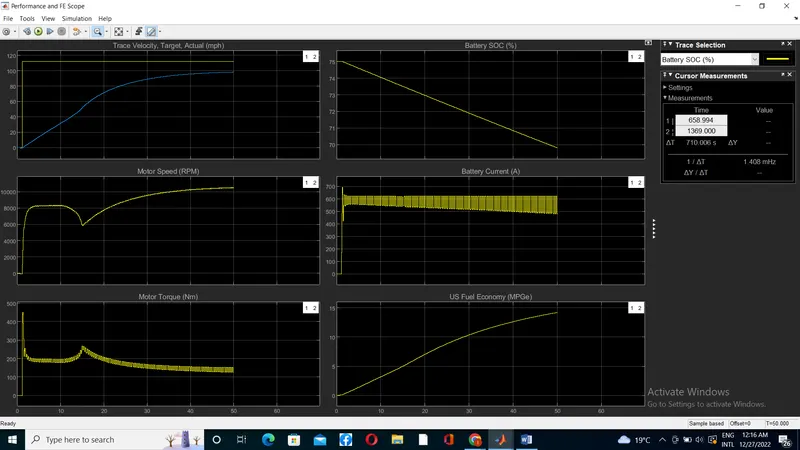
EV model:
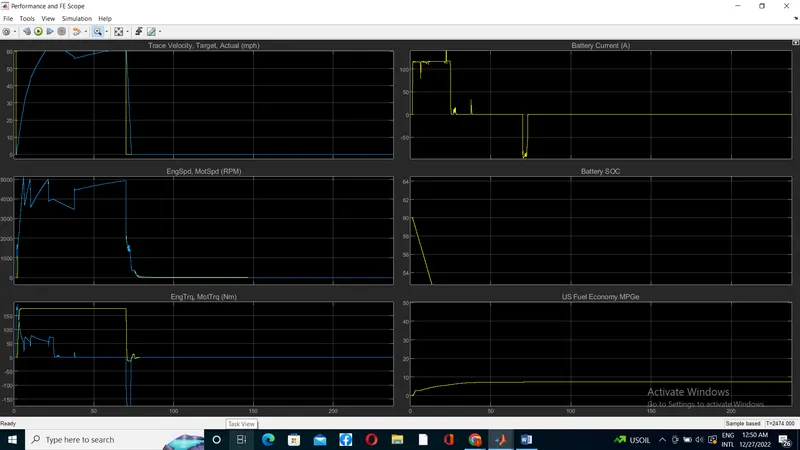
HEV P2 Model :
Remark :
The overall difference in both these simulations is their vehicle operations where the EV completely operated on Battery as the power source and on the other hand, the HEV has the power source is/ci Engine and Battery. the result obtained is varied and the parameter is also differentiated.