Week-4 Challenge WOT Condition Part-2
Question#1:
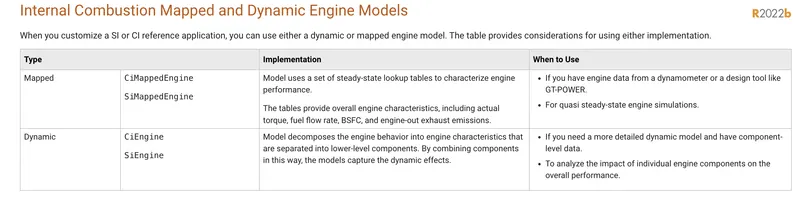
Mapped models can be modeled with predefined values in the form of lookup tables and it runs faster than the dynamic model as it uses the values instead of components.
Dynamic Model represents the actual components instead of predefined values in the form of lookup tables.
Mapped Model of Motor/Generator:
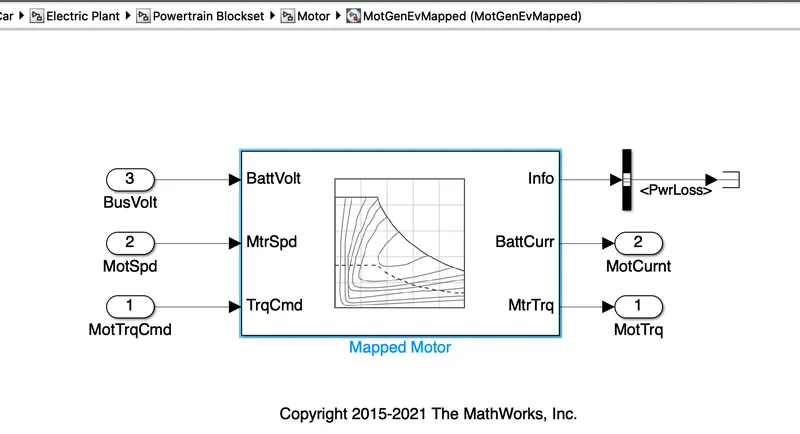
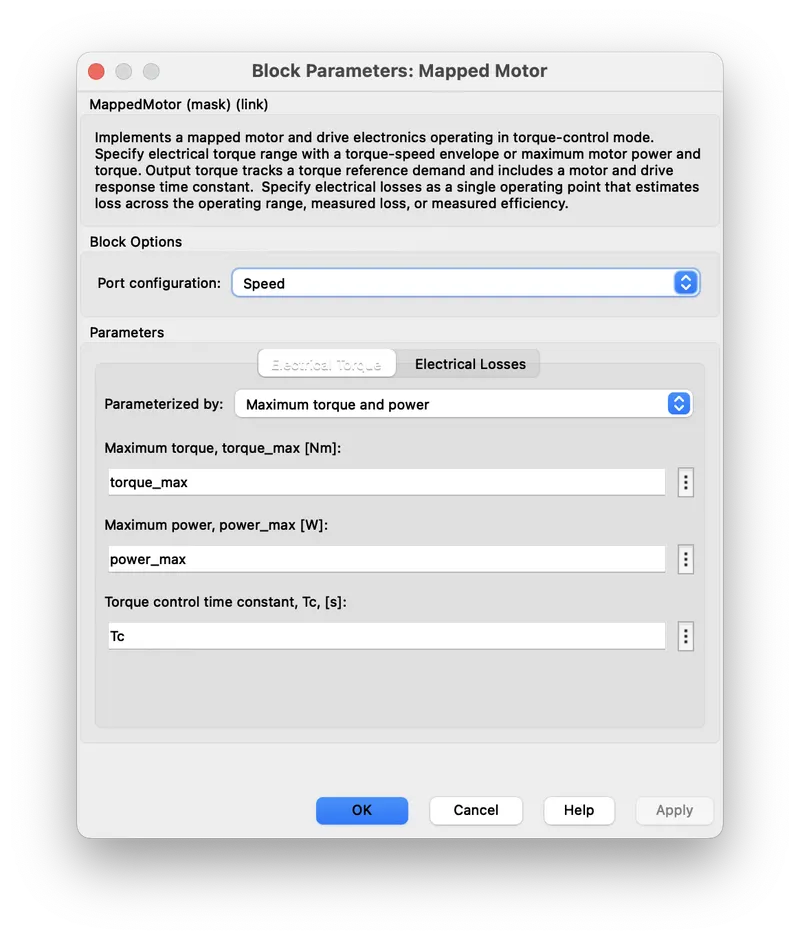 :
:
Motor/Generator Dynamic Model:
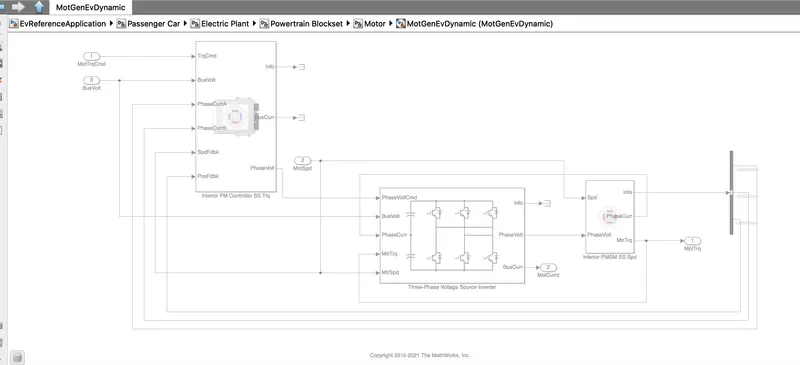
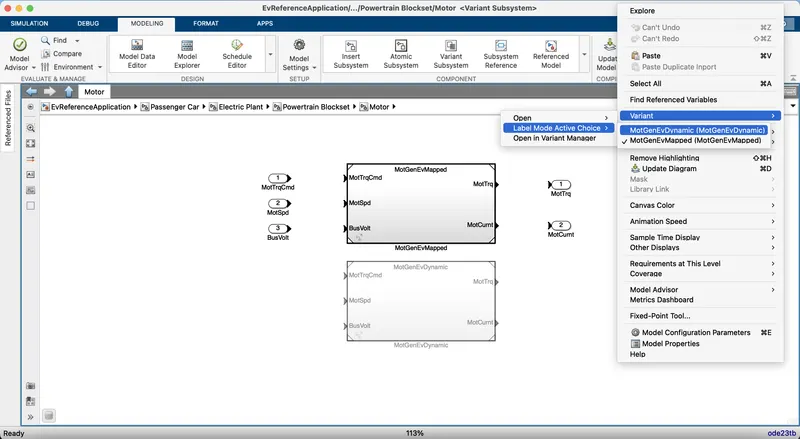
Changing the Model Type for EV MotGen:
Rightclick on blank area-->Variant-->Label Mode Active Choice-->MotGenEVDynamic
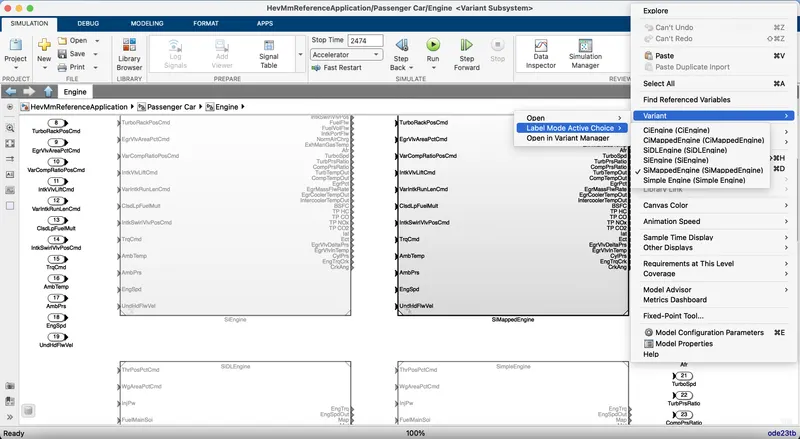
Changing the Model Type for HEV Engine:
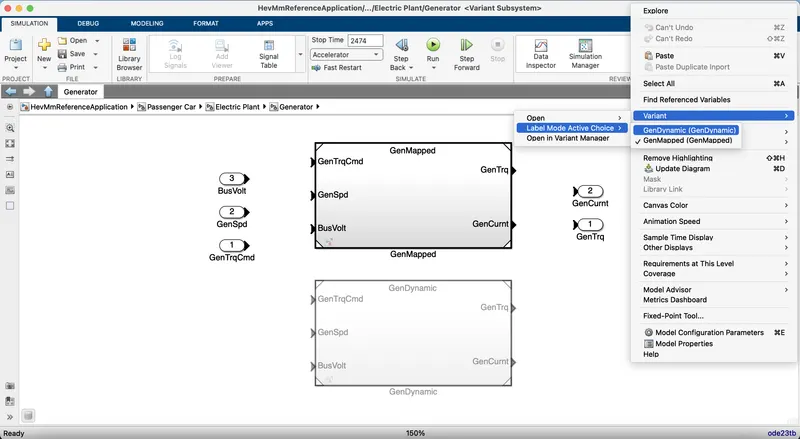
Changing the Model Type for HEV Generator:
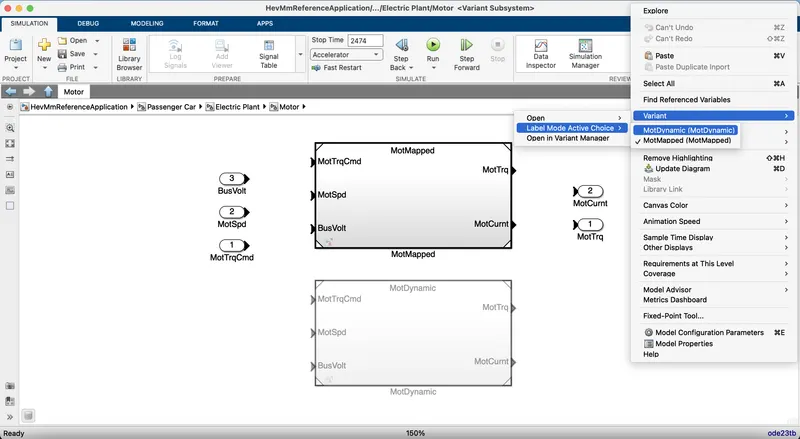
Changing the Model Type for HEV Motor:
Question#2:
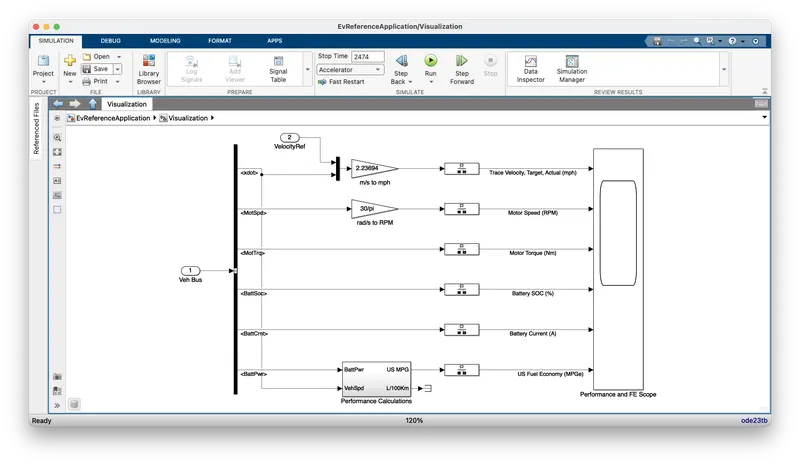
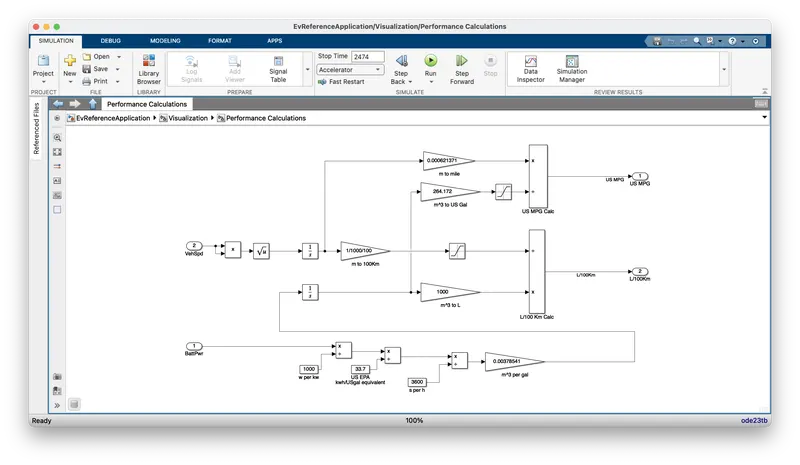
For EV:
For HEV:
US miles per gallon is calculated in the model from the values of battery power, fuel flow and vehicle speed as shown below:
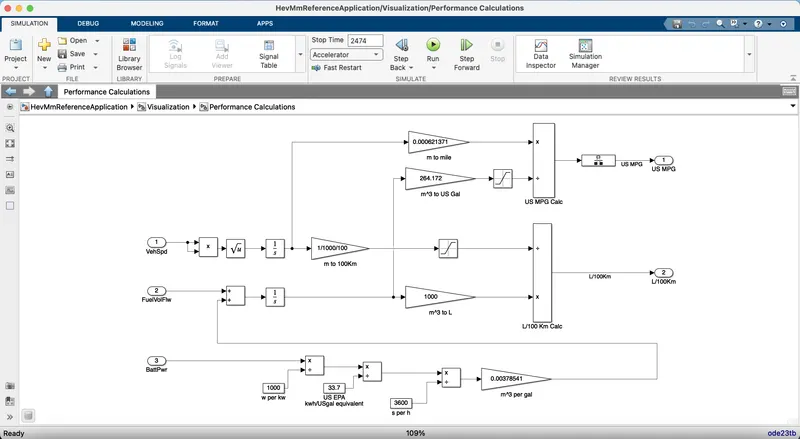
Factors considered to model fuel flow:
- Batery Power
- Vehicle speed
Question#3:
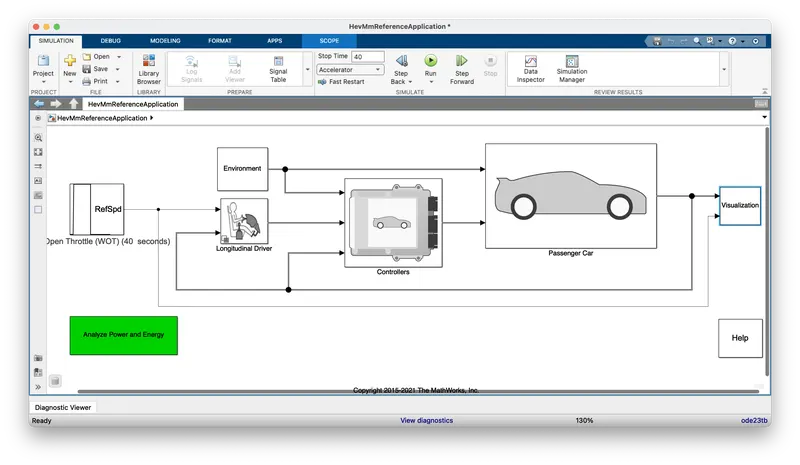
Setting WOT condition for HEV model:
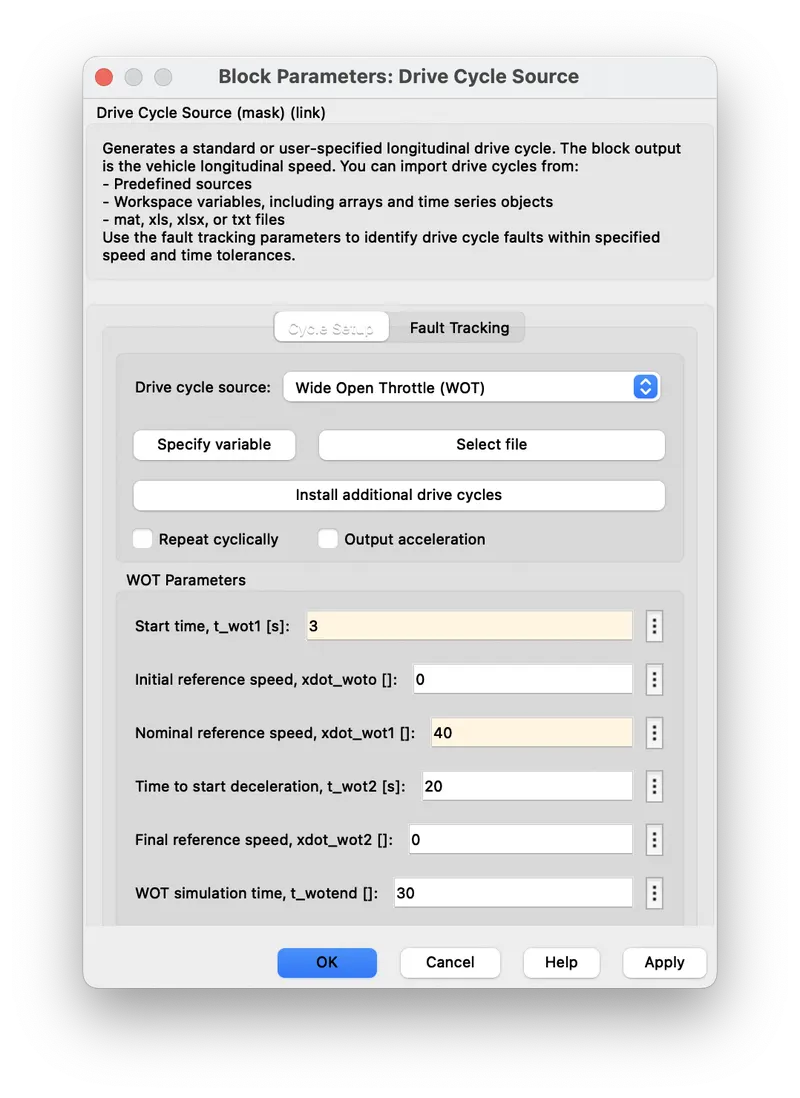
Setting up Grade and Wind velocity valus in block:
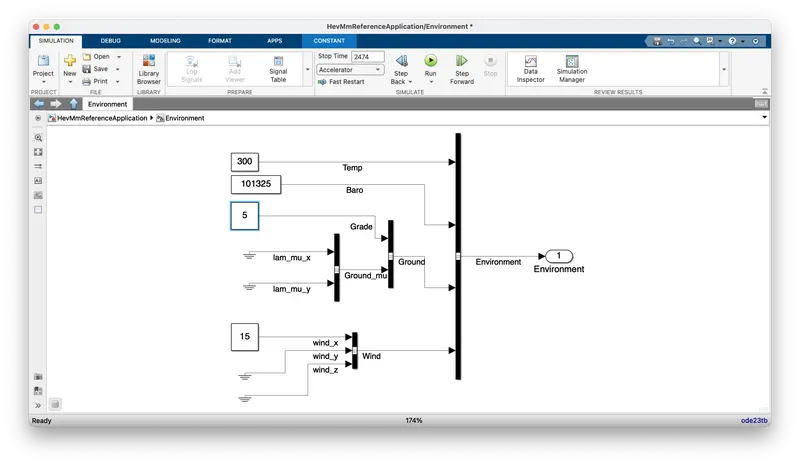
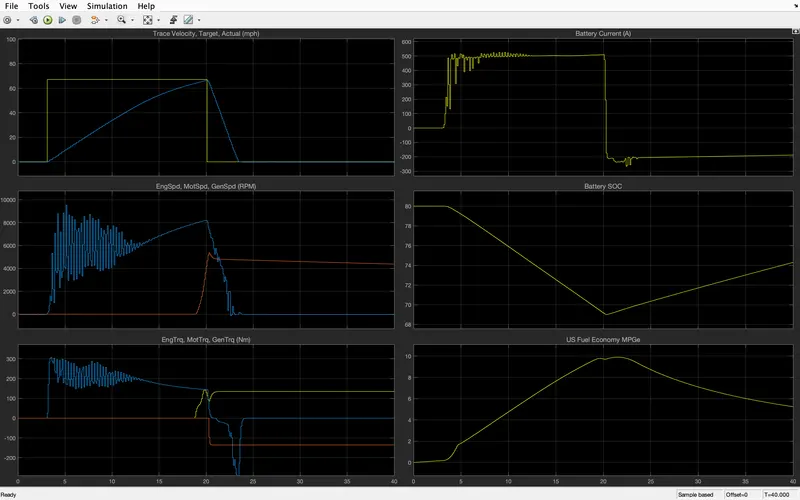
 Results:
Question#4:
Preformance test on HEV model under same conditions as previous case:
Setting up WOT condition to HEV model
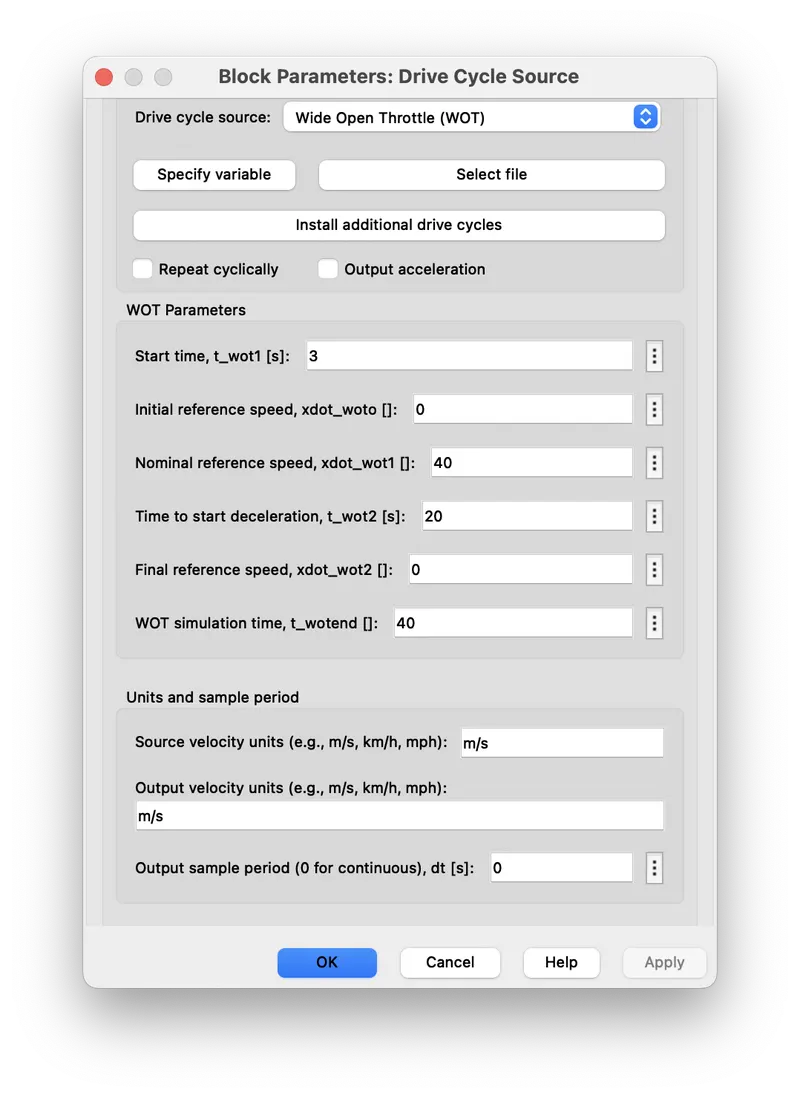
Setting up Environment conditions:
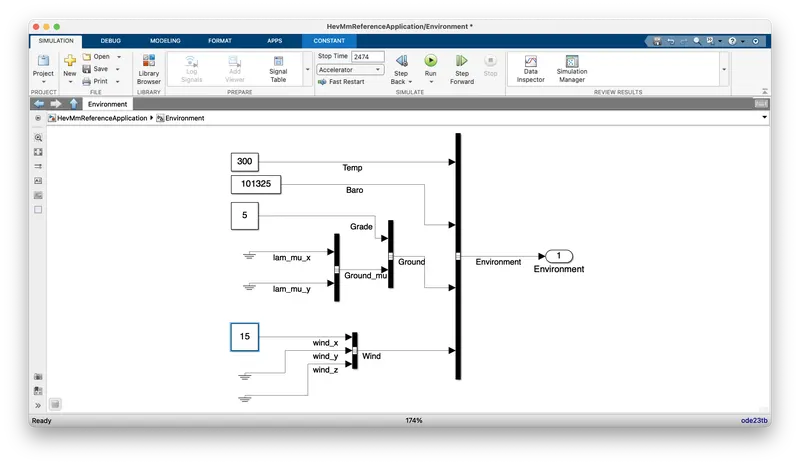
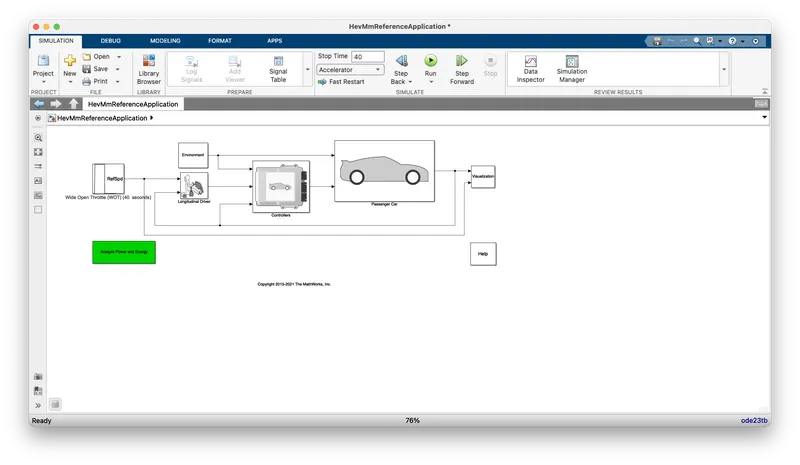
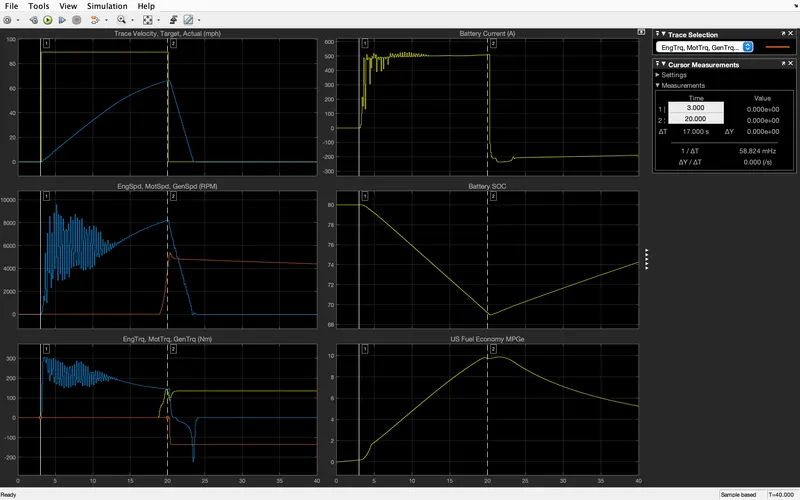
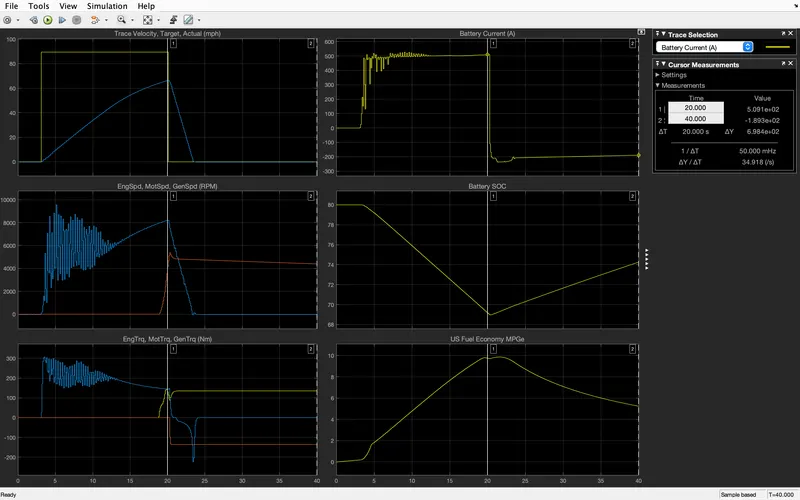
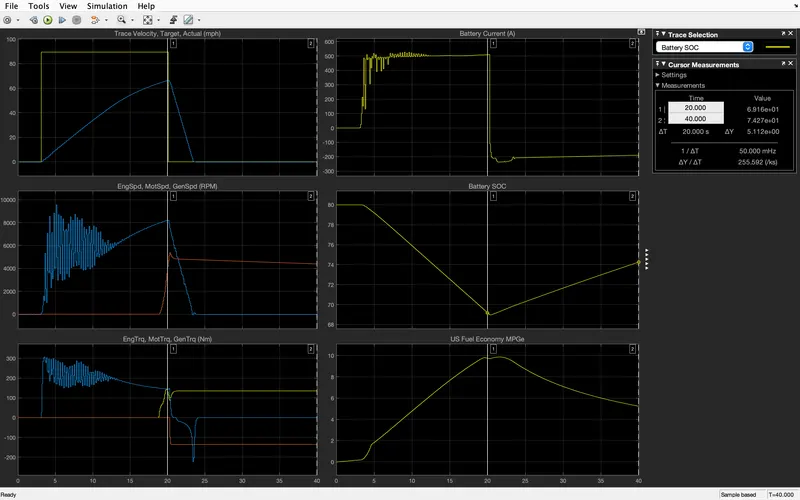
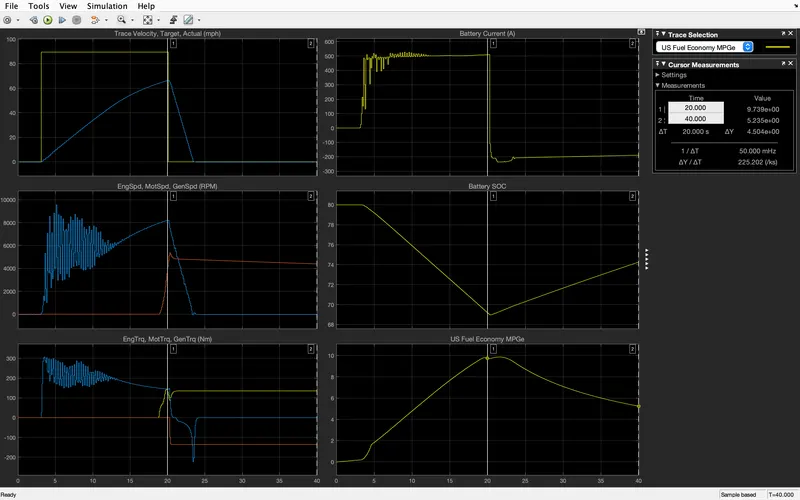
Perfomance result of HEV:
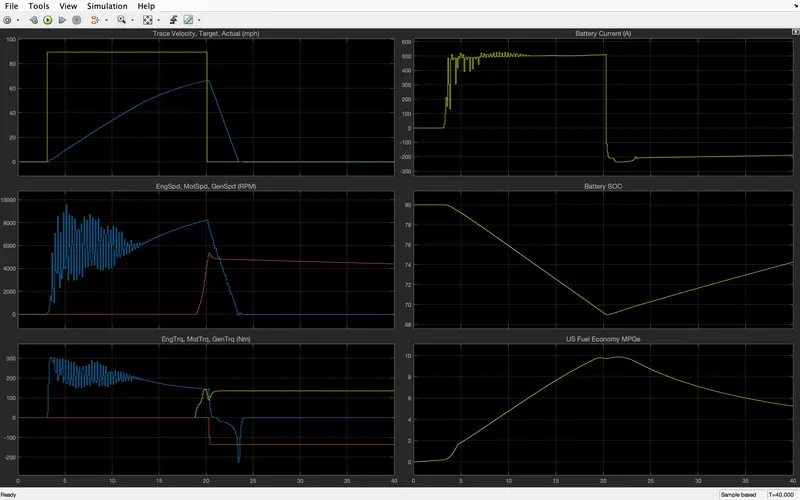
EV Performance:
During Accleration
Targeted Velocity during acceleration is = 89.5 mph
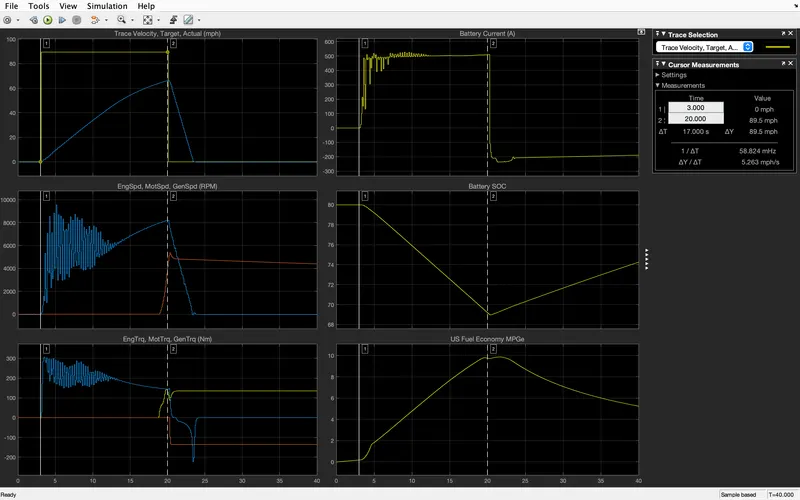
Actual Velocity acheived during acceleration is : 66.6 mph
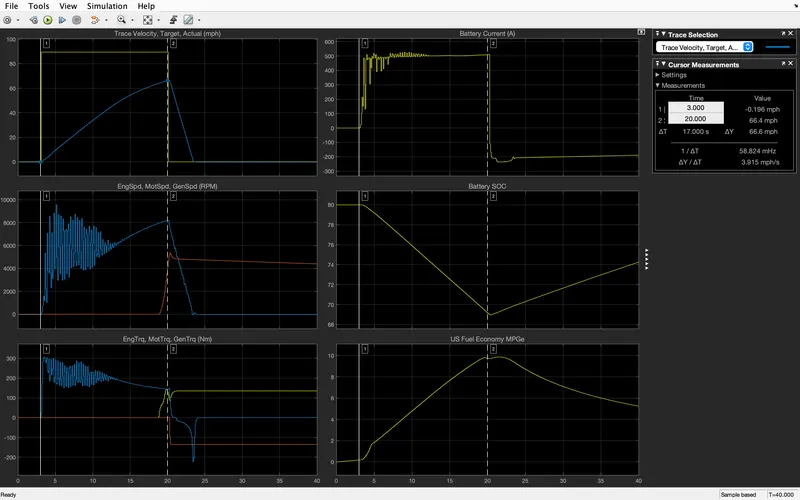
change in Engine Speed during acceleration is = 4124 RPM
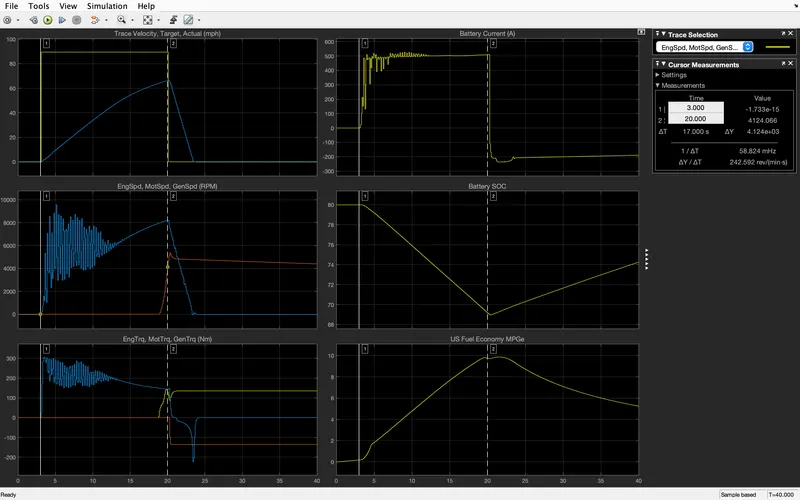
Change in Motor Speed during acceleration is = 8246 RPM
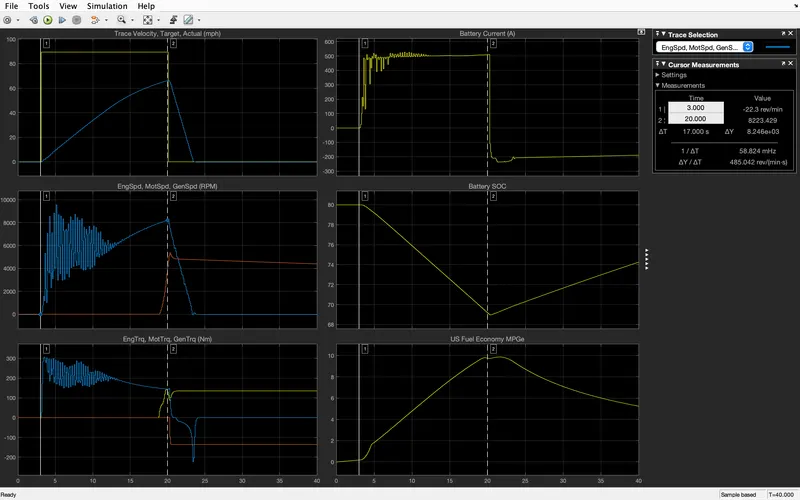
Change in Generator Speed during acceleration is =4124 RPM
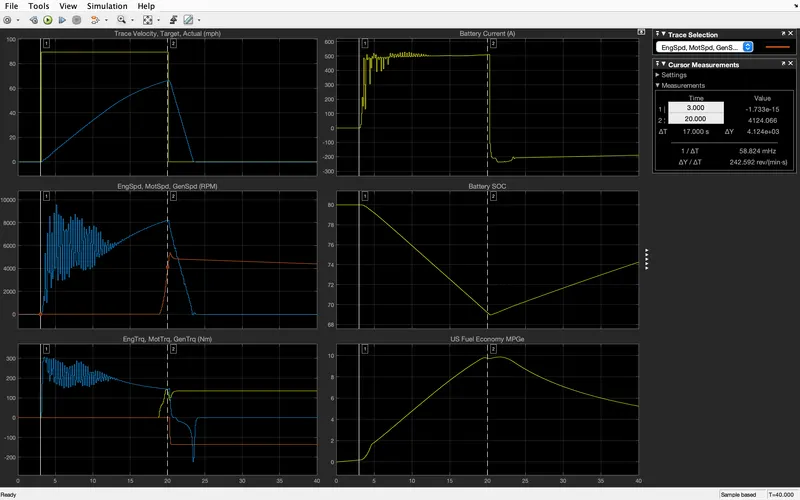
Change in Engine Torque during acceleration is = 130.6 Nm
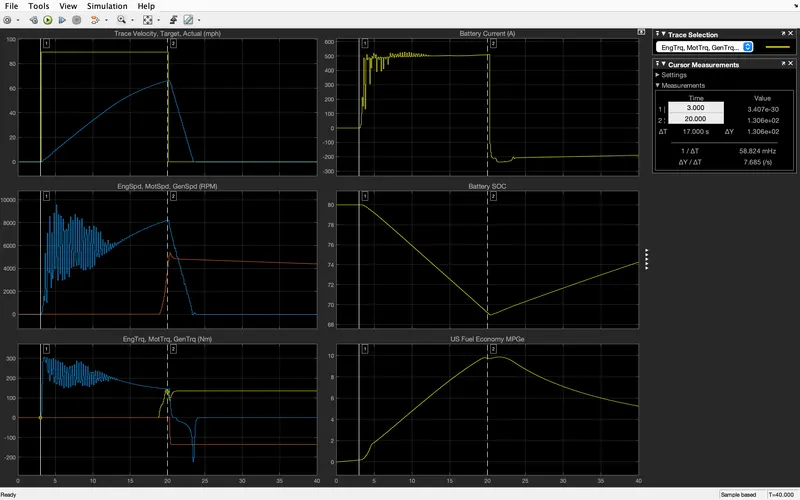
Change in Motor Torque during acceleration is =144.1 Nm
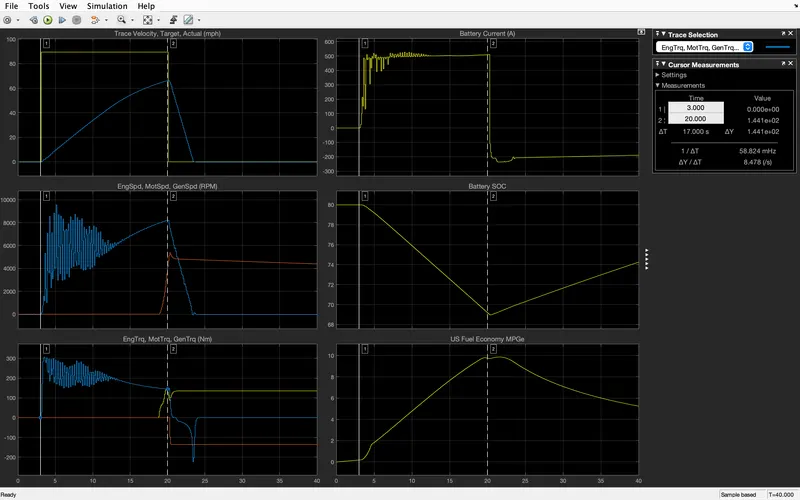
Generative Torque is zero during acceleration
Change in battery Current during acceleration is = 509.1 A discharged
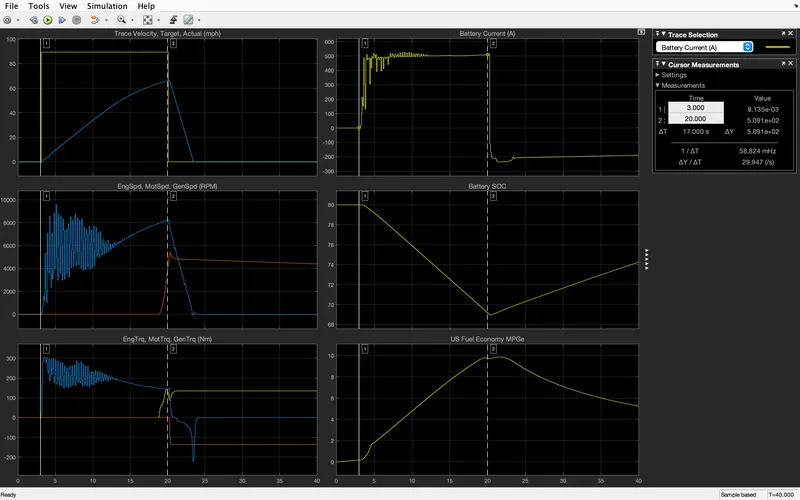
SOC during acceleration = 10.8%
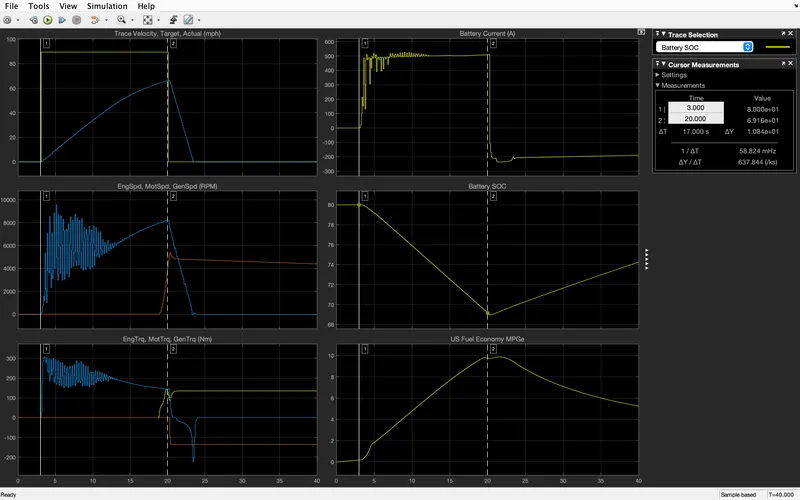
US Fuel economy during acceleration is 9.56 MPGe
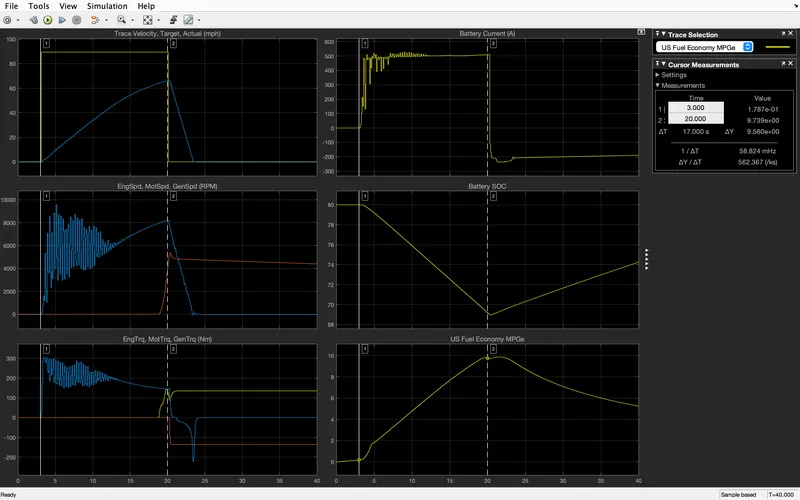
Results during deceleration of HEV:
Targeted Velocity during deceleration is = 89.5 - 0 mph
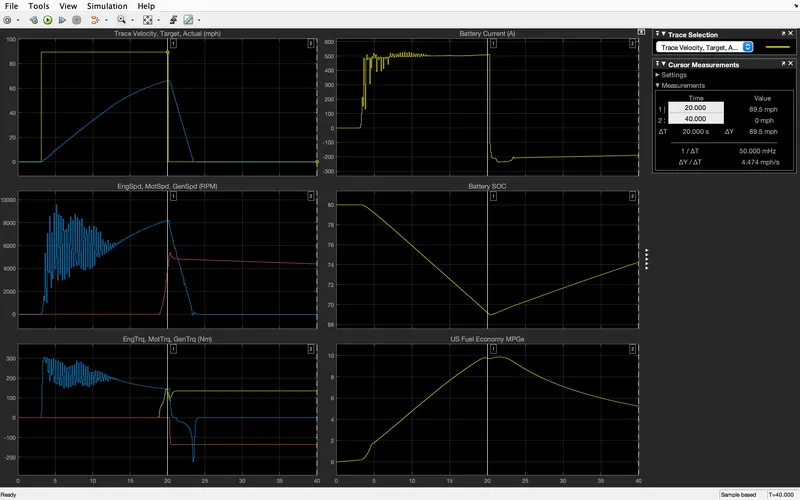
Actual Velocity acheived during deceleration is : 66.4- -0.225 mph
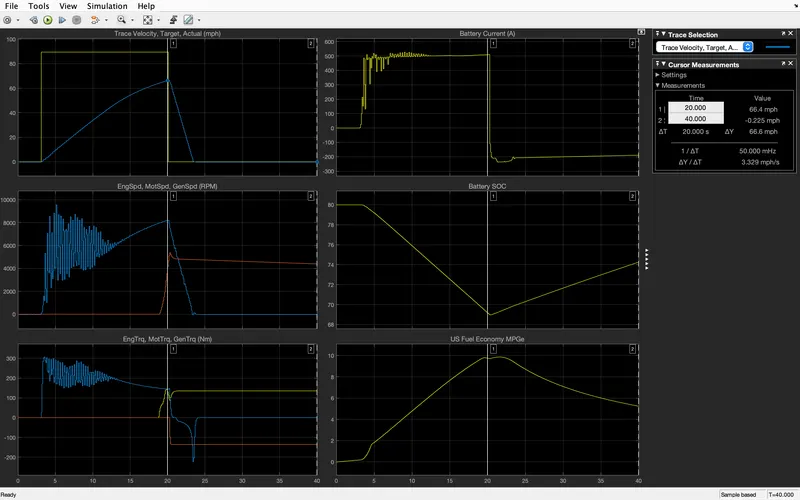
change in Engine Speed during deceleration is = 271 RPM
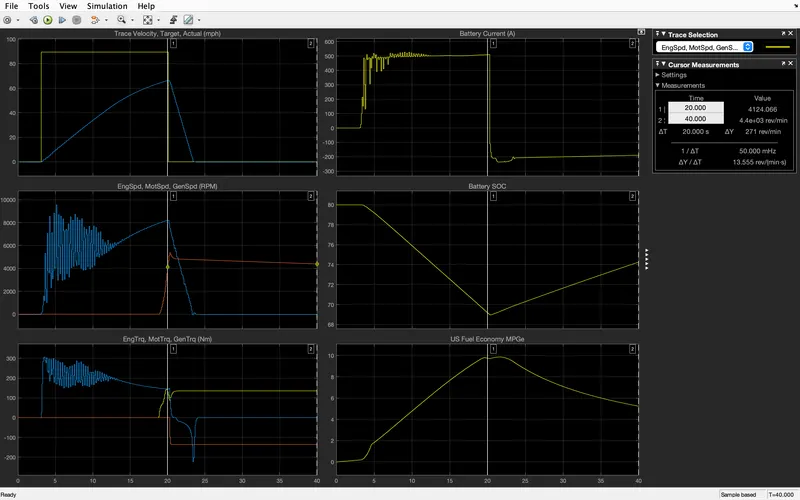
Change in Motor Speed during acceleration is = 8248 RPM
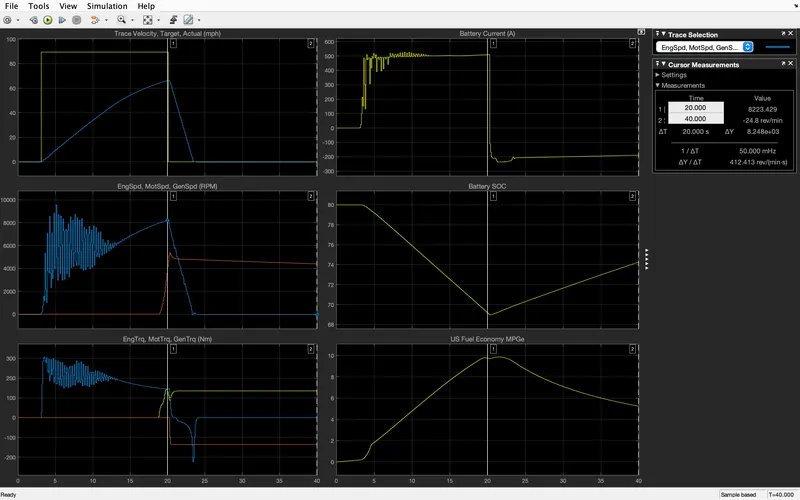
Change in Generator Speed during deceleration is =271 RPM
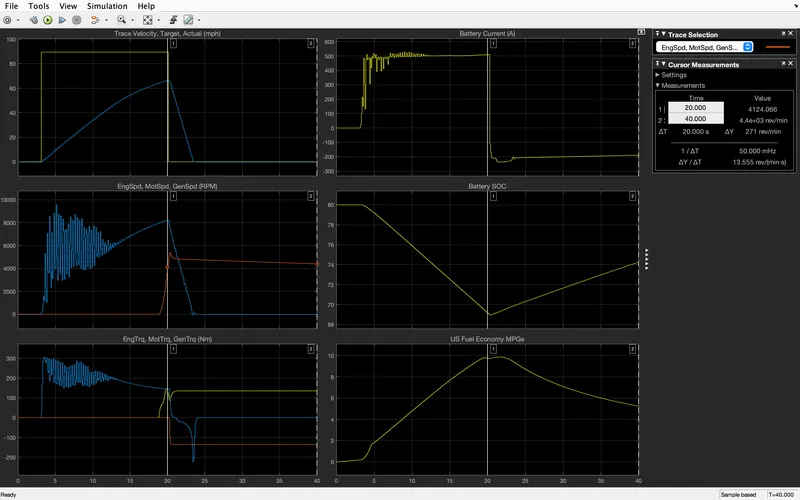
Change in Engine Torque during deceleration is = 271 RPM
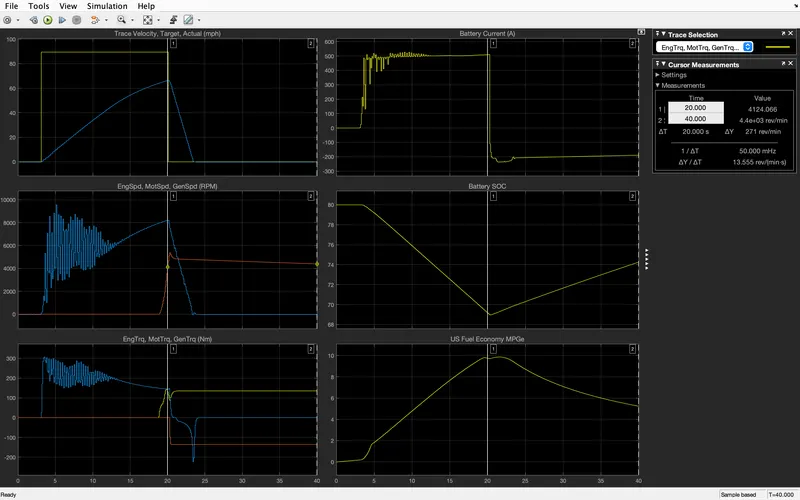
Change in Motor Torque during deceleration is =144.1 Nm
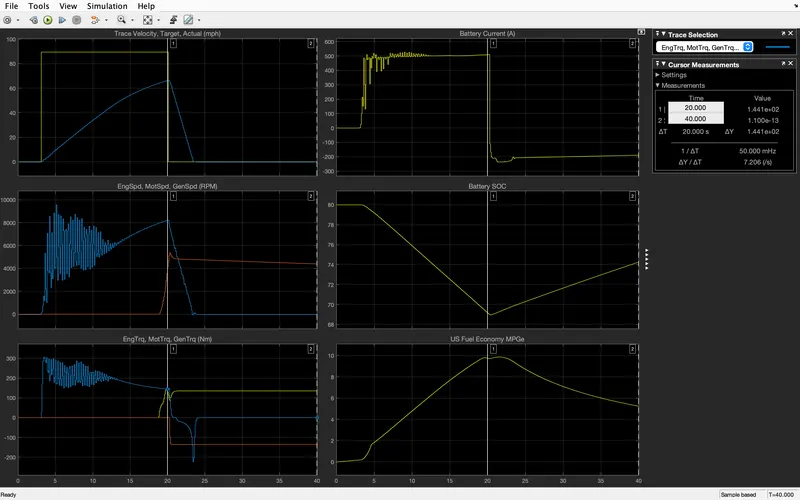
Generative Torque during deceleration is 135.3 NM
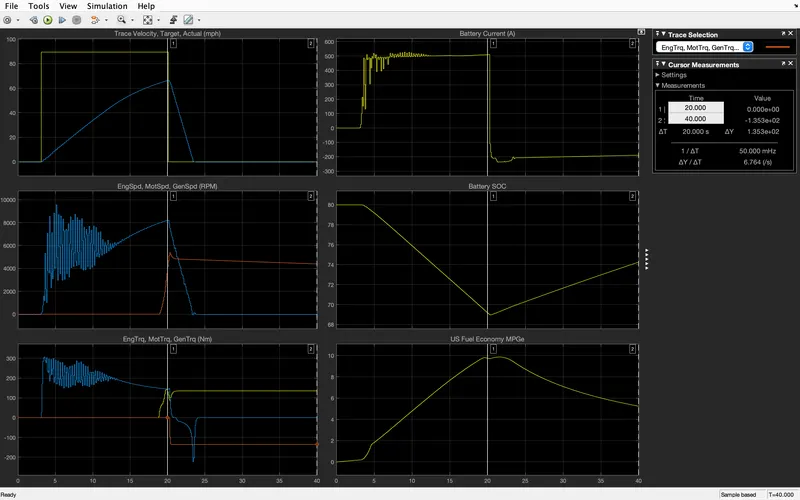
Change in battery Current during deceleration is = 189.3 A charged
SOC during deceleration = 5.112% charged via Regenerative braking
US Fuel economy during deceleration is 4.5 MPGe
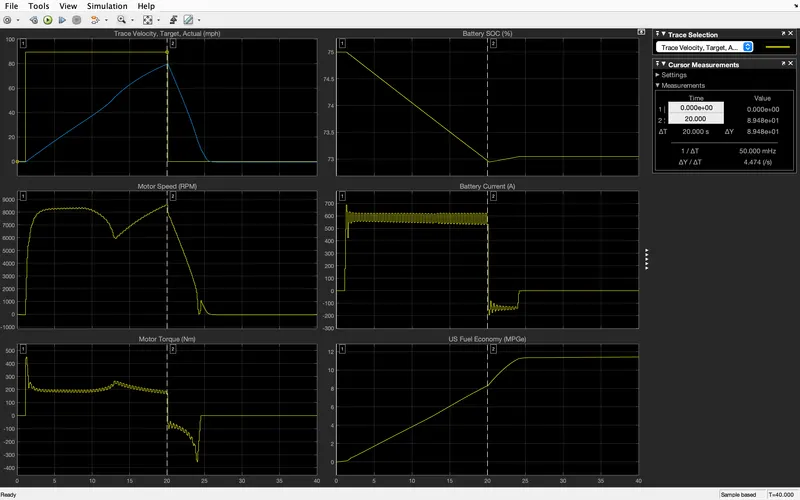
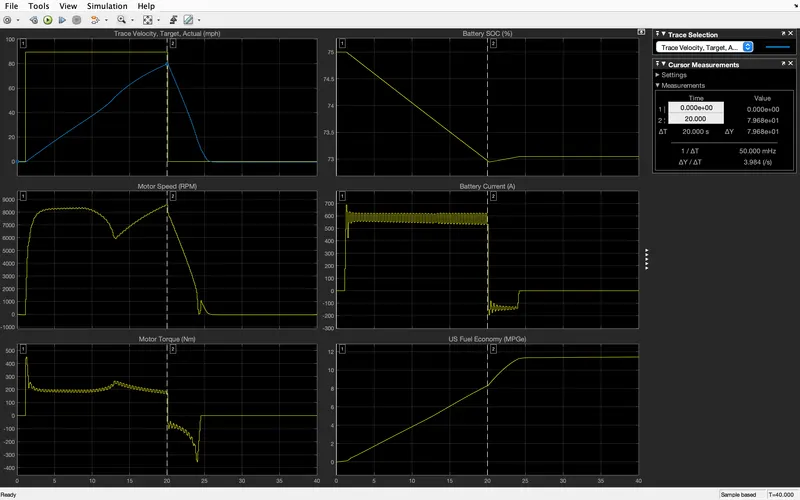
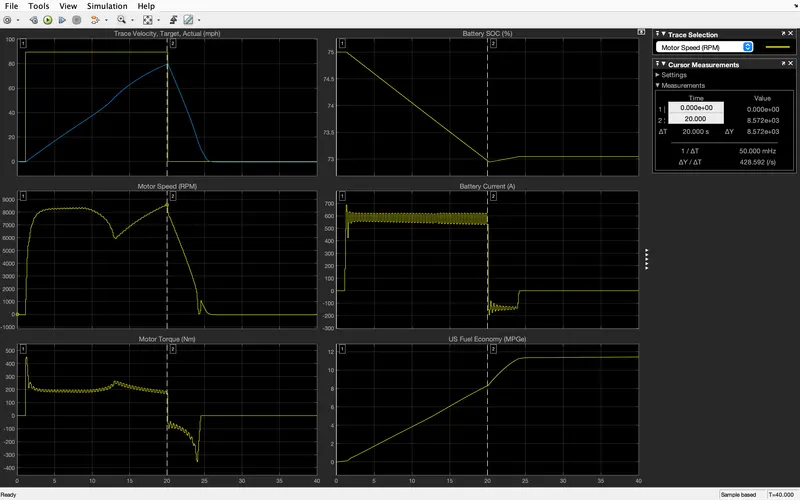
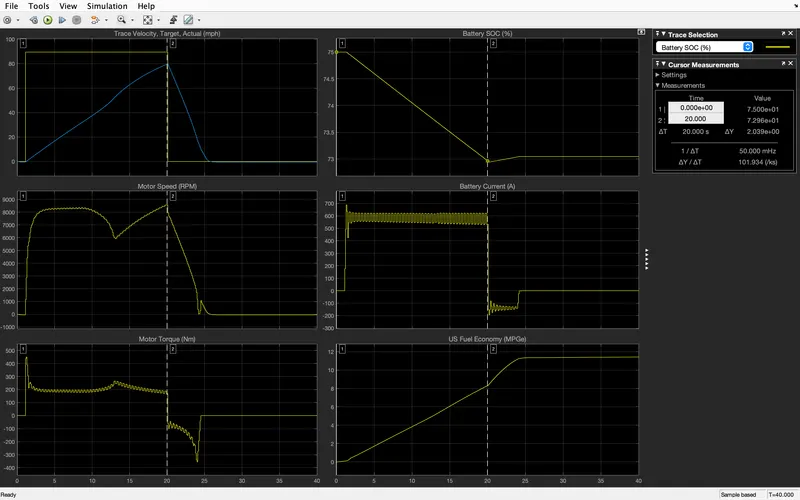
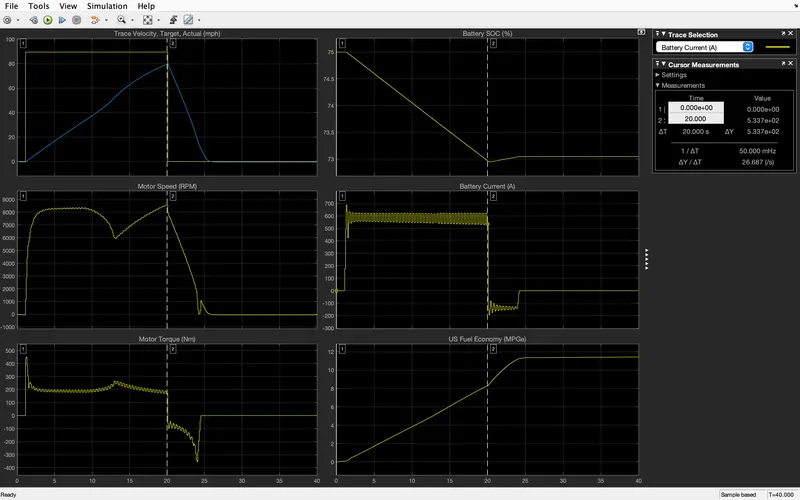
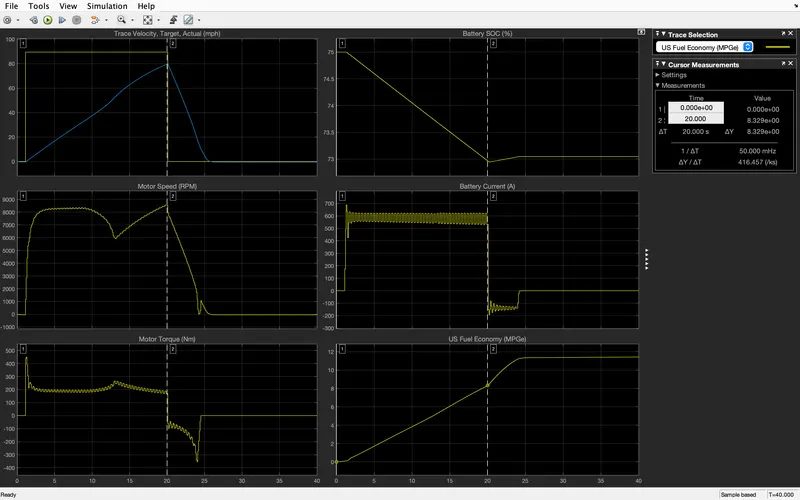
For EV:
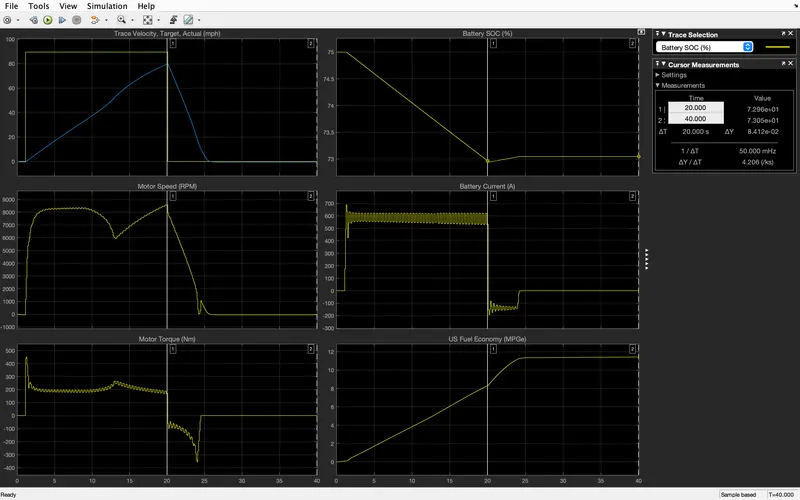
Targeted Velocity during acceleration is = 89.48 mph
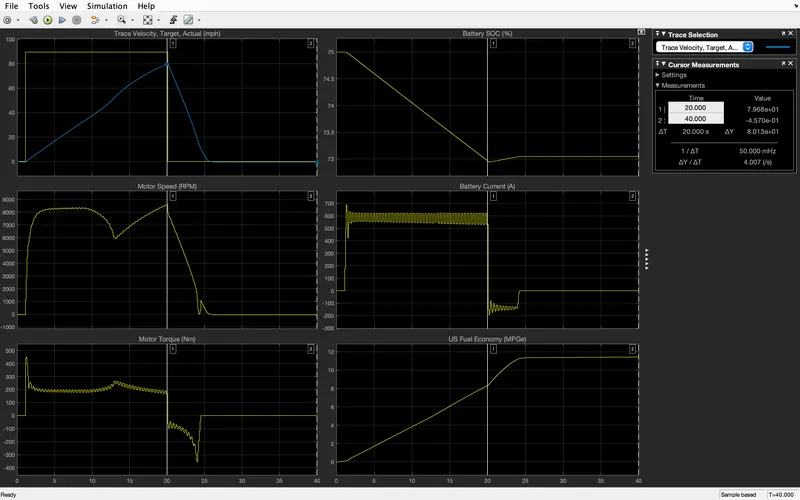
Actual Velocity during acceleration is = 79.68 mph
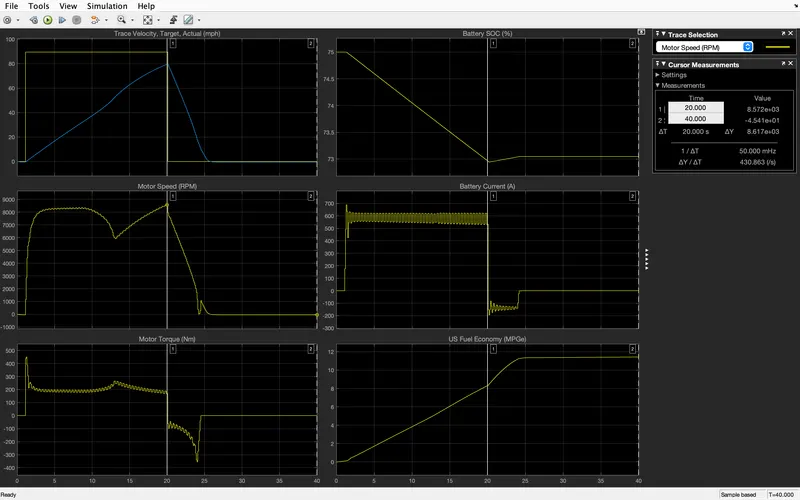
Motor Speed during accceleration = 85.72 mph
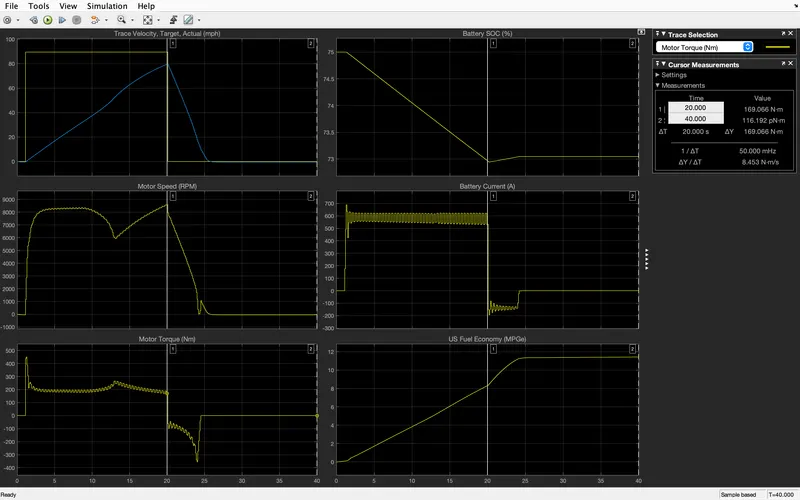
Motor Torque Genrated during accleration =
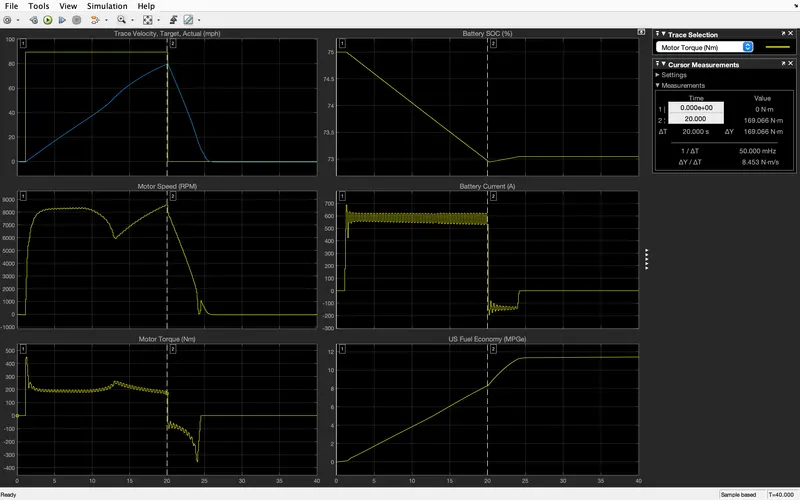
Battery SOC reduced during accleration is 2.039 %
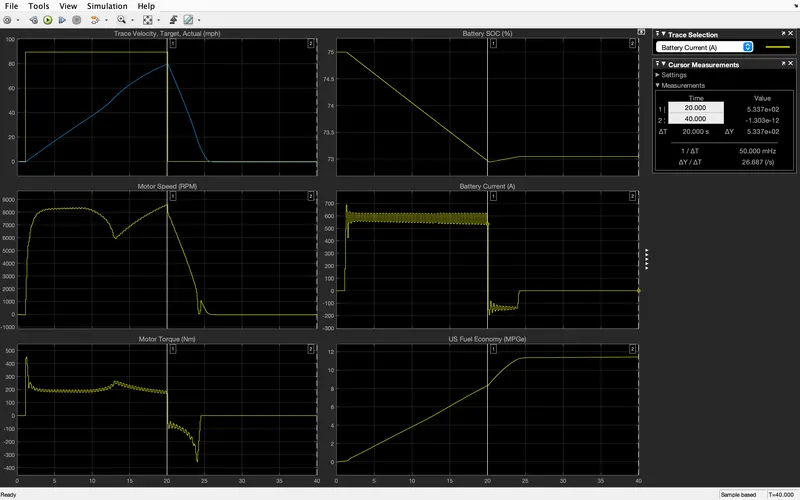
Battery current during accleration = 533.7 A
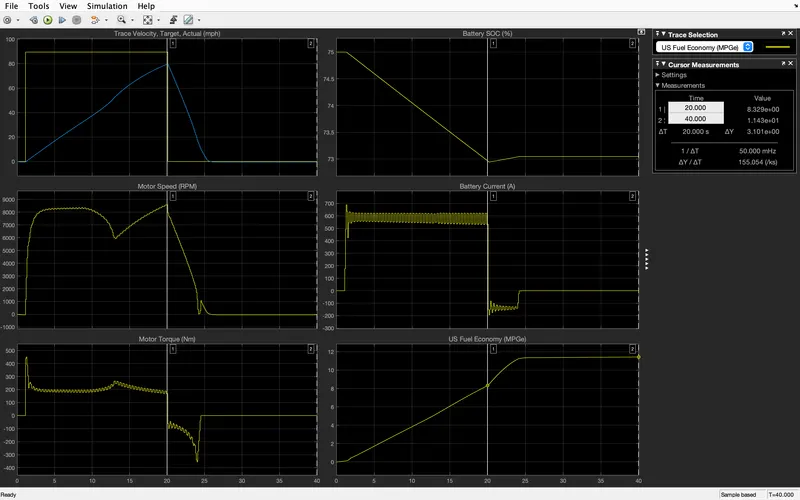
US Fuel Economy for EV during acceleration= 8.329 MPGe
Decelearation of EV:
Trace velocity during deceleation was set to zero.
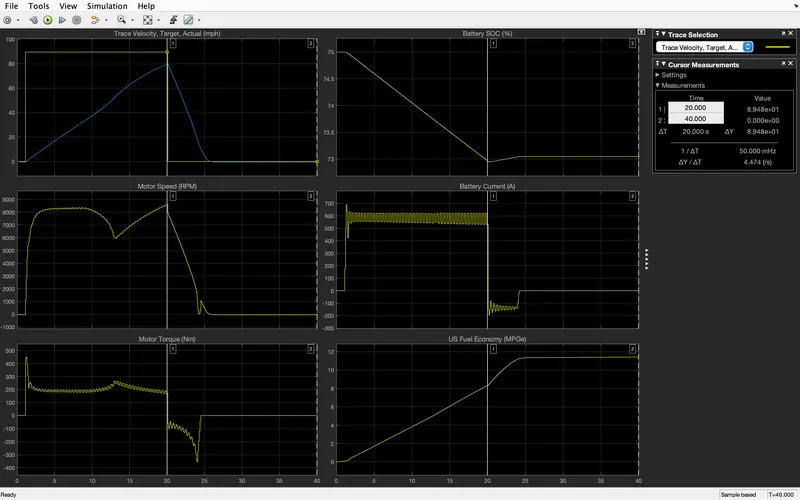
Actual Velocity of the EV during deceleration becomes zero after 6 seconds
Speed of motor was reduced by 8617 RPM during deceleration
Maximug Regenerative torque obtained from motor is
SOC of battery
Battery Current
Fuel Economy:
Conclusion:
| Parameters | Electric Vehicle | Hybrid Electric Vehicle |
| Acceleration for 20 seconds | 80 | 69.3 |
| Motor RPM at 80 mph | 8628 | 8539 |
| Motor Starting Torque (Nm) | 450 | 306.9 |
| Motor torque at 80 mph | 190 | 139 |
| Regenrative Torque during deceleration (Nm) | 358 | 135 |
| change in Battery SOC during accleration from 0 to 80 mph(%) | 2.059 | 11.45 |
| change in Battery SOC during decleration from 80 to 0 mph(%) | 0.104 | 6.086 |
| Battery Current during Motor Start (A) | 693.4 | 482.5 |
| Battery Current at 80 mph (A) | 621.2 | 167.5 |
| max Battery Current during deceleration (A) | 199.7 | 268 |
| US Fuel Economy in MPGe | 11.32 | 5.32 |