Week-4 Challenge WOT Condition Part-2
Que 1:What is the difference between mapped and dynamic model of engine, motor and generator? How can you change model type?
Ans >Difference between Mapped and dynamic model:
| Parameters | Dynamic Model | Mapped model |
| Model block | Model based on behavior of system for characterizing | Model is based on static characteristics |
| Data required | Detailed data of each block required | Only characteristics are required |
| Run time | Slow | Fast |
| Output accuracy | More accurate | less accurate |
| When to use | When you have detailed data and wanted to analyze detailed behavior of system | When you have dyno data and need faster results |
Using HEV reference model:
To change generator type from mapped based to dynamic :
Step 1: Open electric plant> generator subsystem > right click > variant type> open model active type
using this flow we can change model type
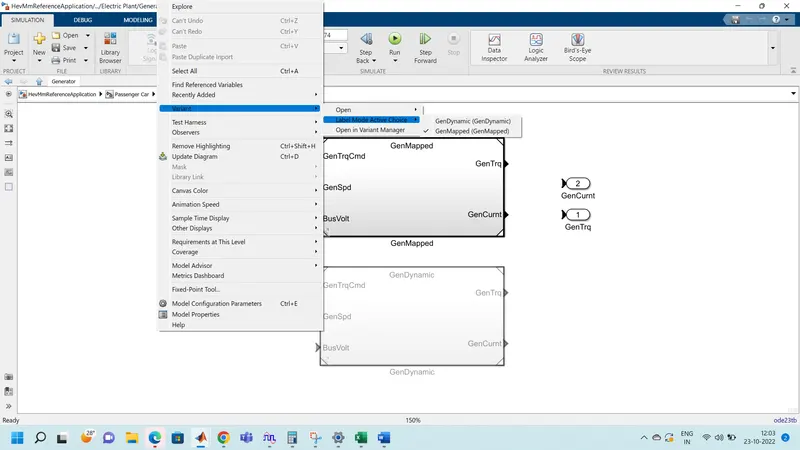
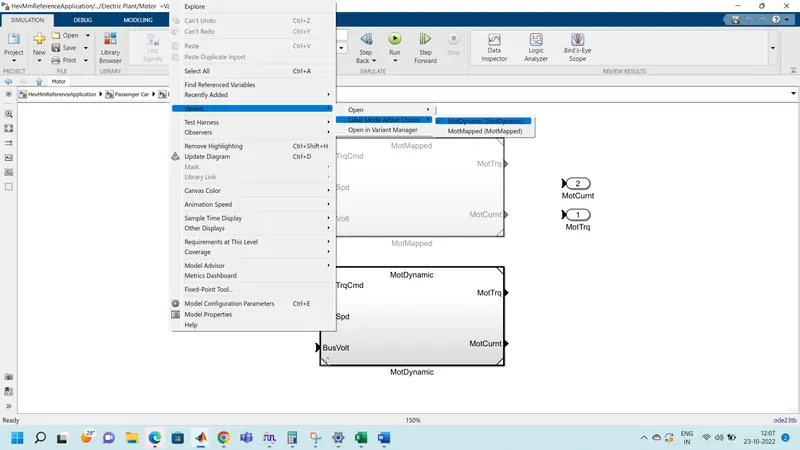
To change motor type we follow same process as for generator as shown in below snap:
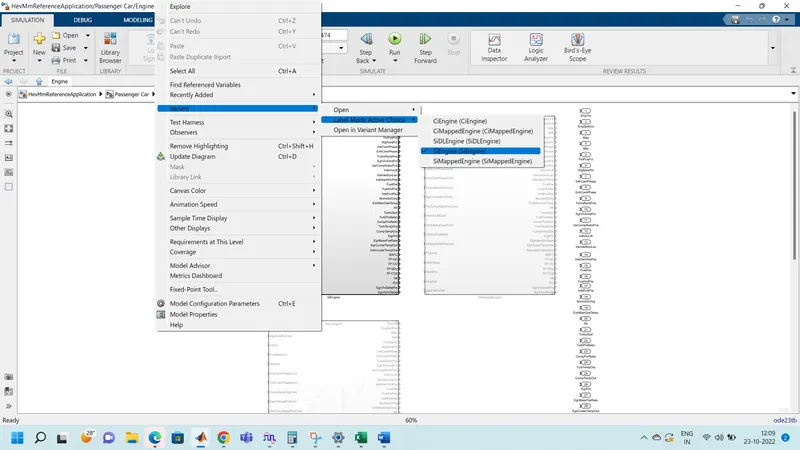
For Engine selection there is number of option for SI and CI dynamic or mapped, we can select any one type depend on requirement
Process for selection of type of engine is same as shown in snap:
Que 2:How does the model calculate miles per gallon? Which factors are considered to model fuel flow?
Ans:
Below shows snap of calculations of miles per gallon in model:
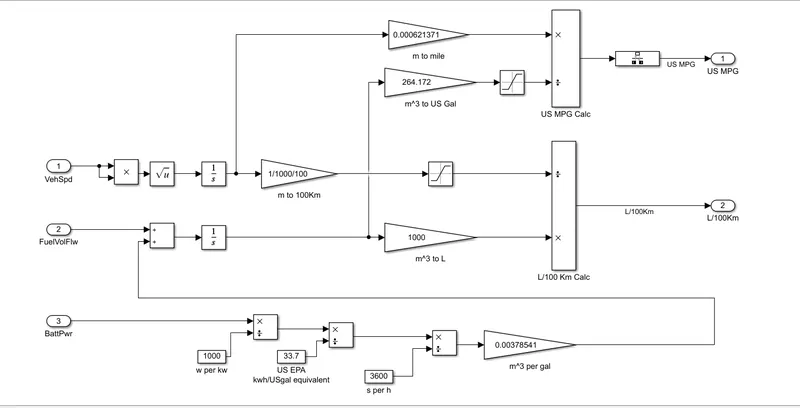
Step 1: Vehicle speed is converted into distance using integrator block and distance in meters is converted into miles using gain block of 0.0006213
Step 2: Battery Power Reuired in waatt is converted into m^3 per gal
Step 3: Fuel Volume required from engine and battery power required from motor in m^3 per gal is added and integrated to convert into energy
Step 4: Energy is converted from m^3 into US Gal using gain of 264.172
Step 5: using divider block miles required are divided with US Gal required and we get output of Miles per US Gallon
Parameters required for calculations are:
1. Vehicle Speed 2. Fuel Volume Flow 3. Battery Power
Que 3:Run the HEV ReferenceApplication with WOT drive cycle. Change the grade and wind velocity in the environment block. Comment on the results.
Ans:
Step 1: Open HEV model:
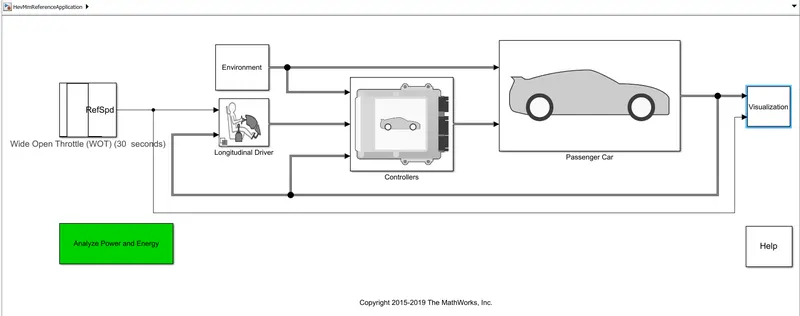
Step 2: Change drive cycle to WOT
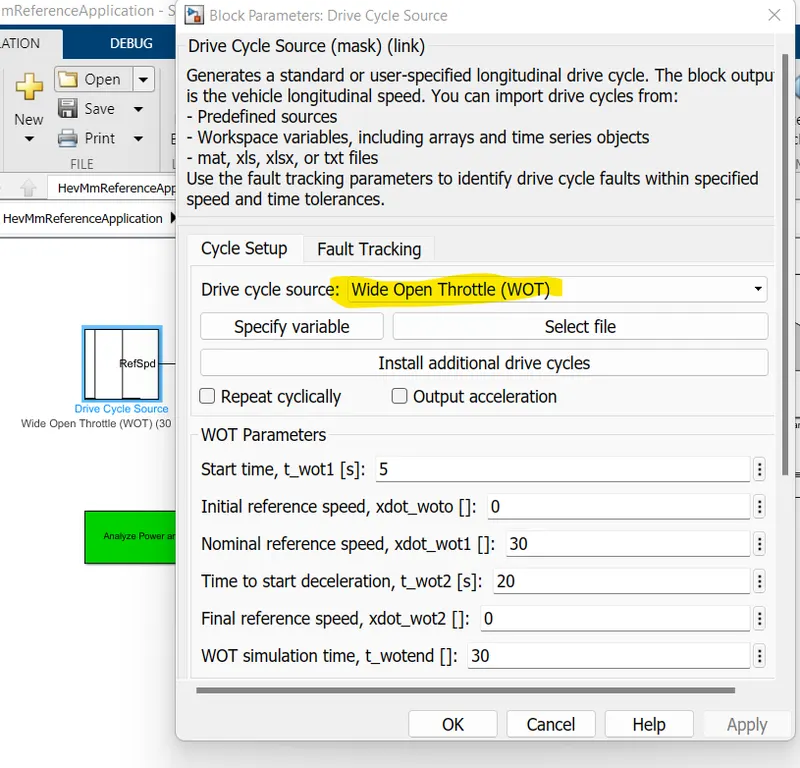
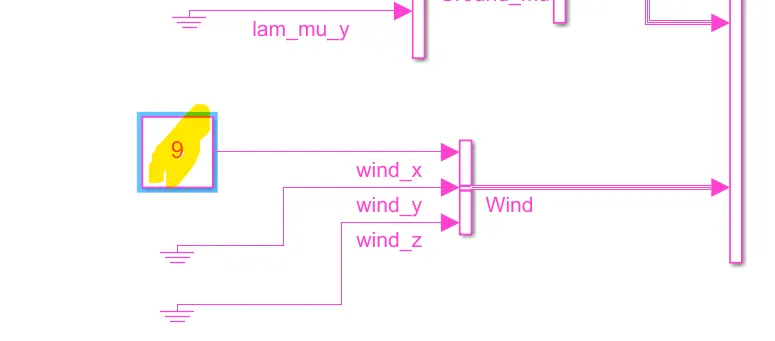
Step 3: Changed Wind Speed to 9 m/s
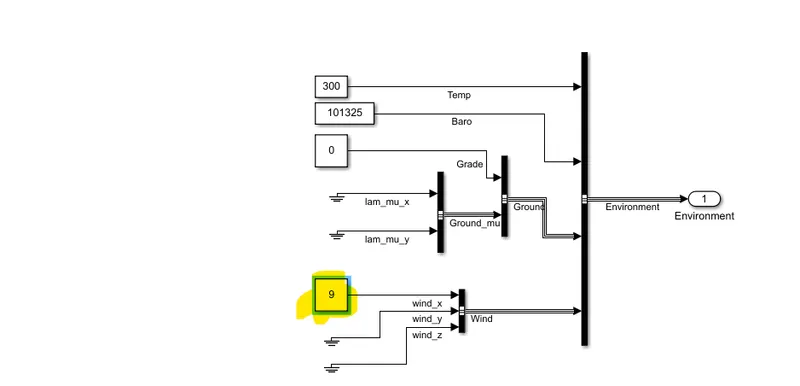
Step 4: Changed grade to 8 degree
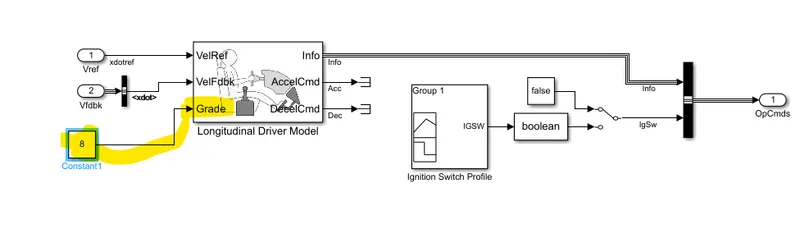
Results:
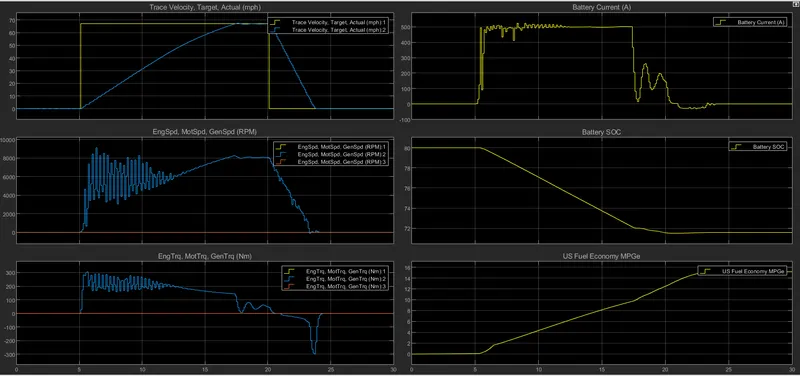
As Shown in result during WOT grade condition complete power is delivered from Electric powerain of Motor - battery unit
Que 4:Keeping all other parameters same, compare the simulated results of hybrid and pure electric powertrains.
Ans:
Step 1: EV reference Model:
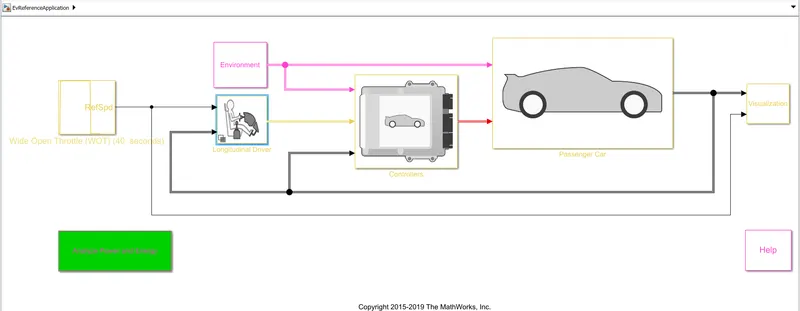
Step 2: Change Drive Cycle to WOT
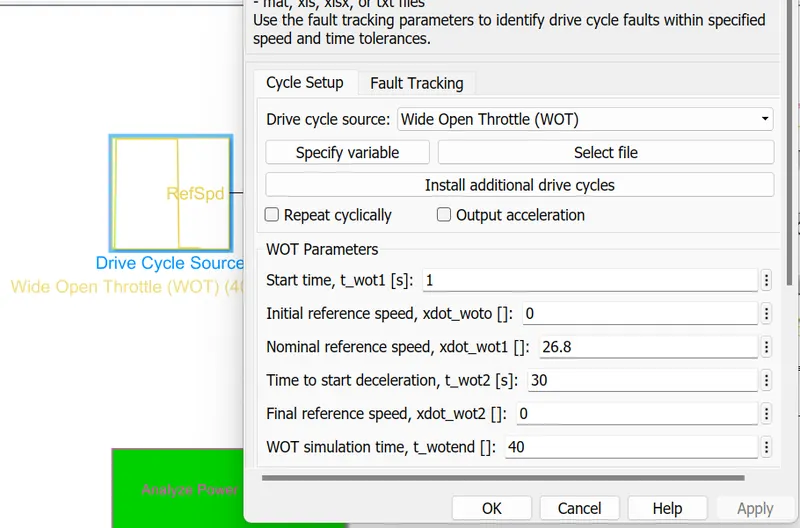
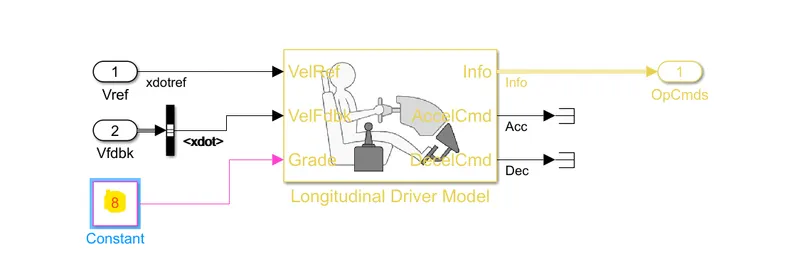
Step 2: Set grade to 8 degree and wind speed to 9 m/s
Results:
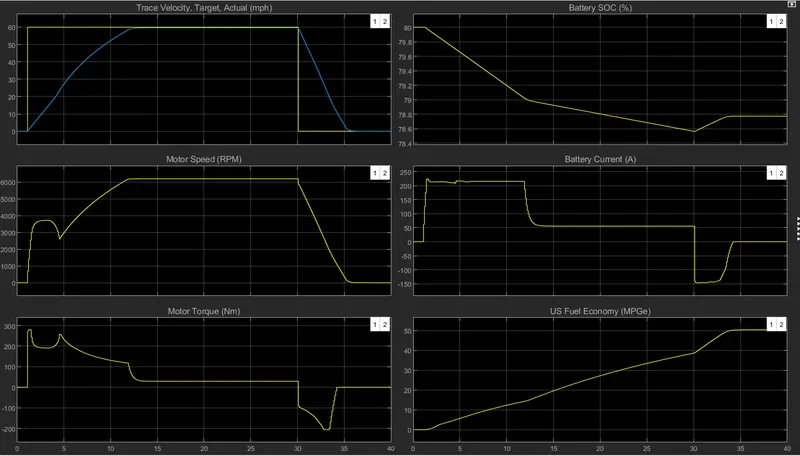
As Shown below are Results of EV model for WOT for 8 degree grade
 r
r
Comparison of results of EV and HEV model for WOT and 8 degree
| Parameters | EV | HEV |
| Max Speed for WOT (kmph) | 60 | 67.5 |
| Maximum Torque (Nm) | 280 | 300 |
| SOC drop(%) | 1.60% | 8% |
| Max battery Current(A) | 218 | 500 |
| US fuel Economy(MPG) | 50 | 15 |