Week-4 Challenge WOT Condition Part-2
1. (a)Difference between mapped and dynamic model of engine, motor and generator.
Mapped Model:
- Mapped model is also called as Static model.
- The mapped model is preferred when the behaviour of the component model is not required.
- It is modelled with the predefined datasets in the form of lookup table to perform faster response.
Dynamic model:
-
This model is prefered to analyze the impact of individual components on the overall performance.
-
It is modelled with the component level data.
Dynamic Model decomposes the behavior of the component into characteristics that are separated into lower-level components. By this way, the dynamic models capture the dynamic effects.
Dynamic and mapped modellings are possible for engine, generator and motor.
(b) The dynamic and mapped model type can be changed with the help of variant manager in the modelling tab. Choice between the dynamic and mapped model can be made by right-click the model and choose the label mode active choice.
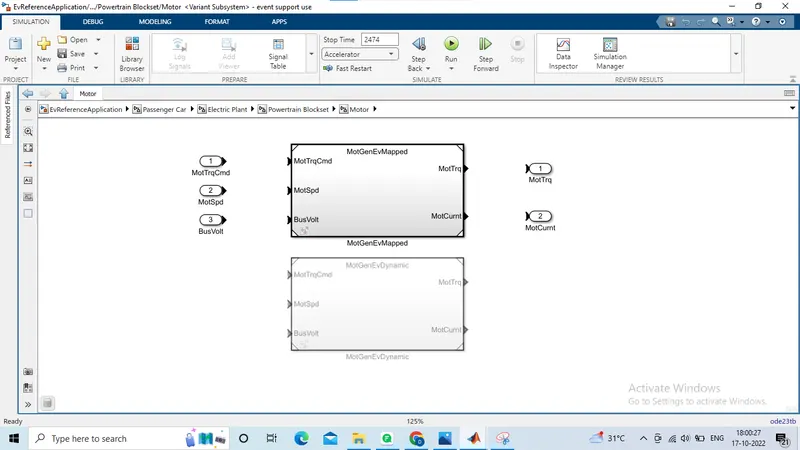
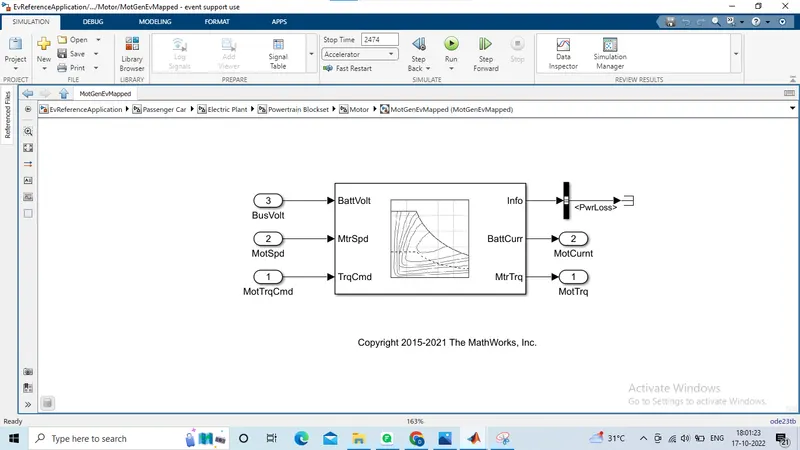
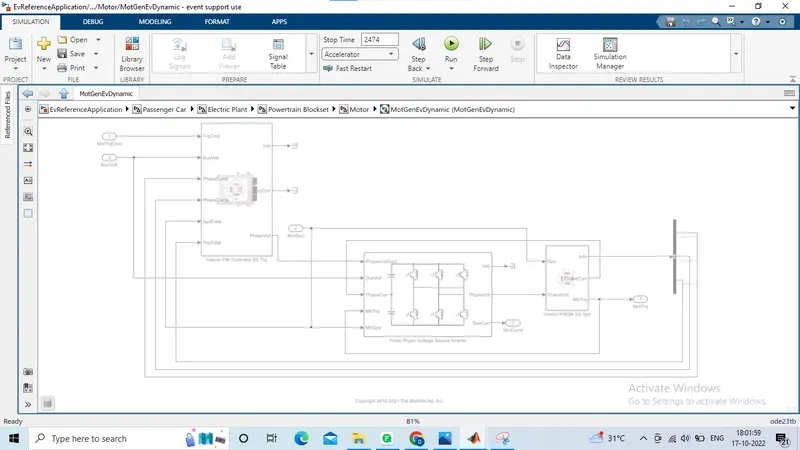
2) How does the model calculate miles per gallon? Which factors are considered to model fuel flow?
The simulink model used to calculate miles per gallon is shown below:
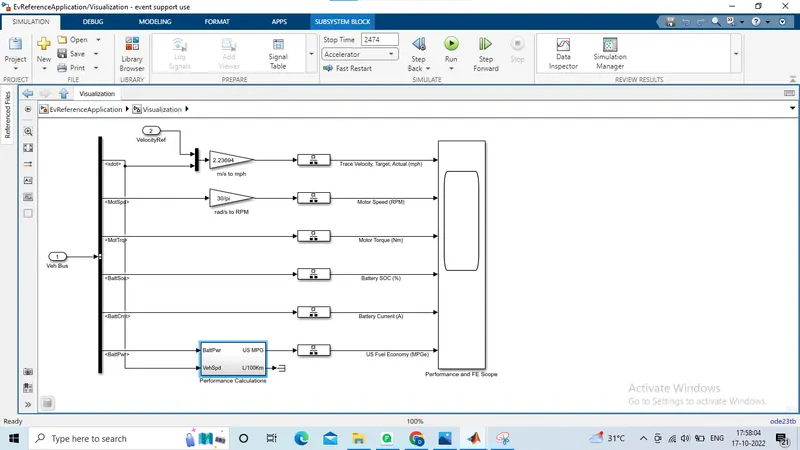
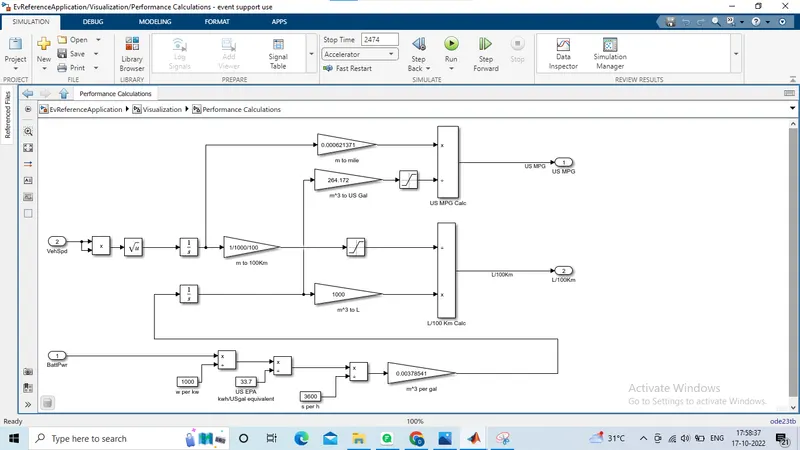
The Battery power and vehicle speed factors are considered to model fuel flow.
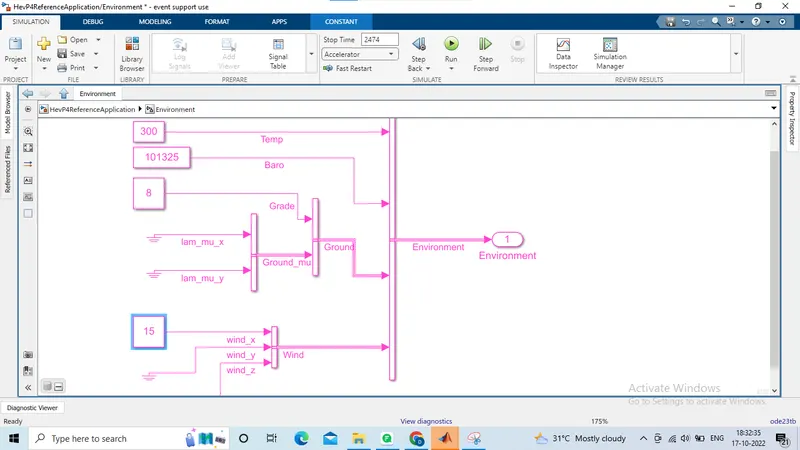
3) Run the HEV Reference Application with WOT drive cycle. Change the grade and wind velocity in the environment block. Comment on the results.
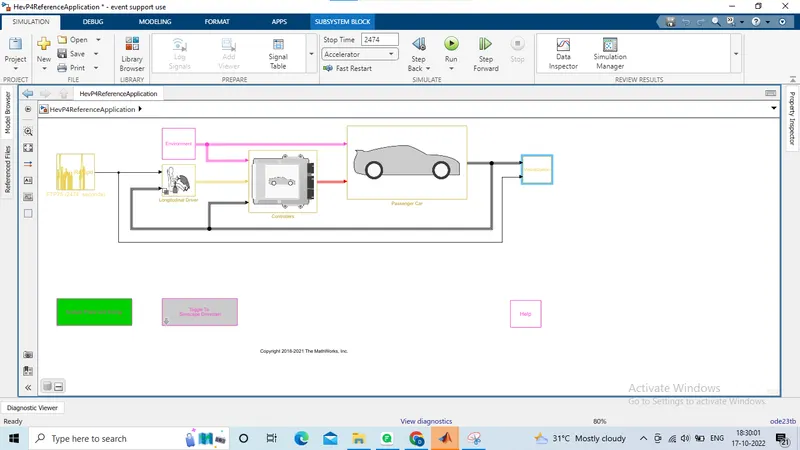
HEV Reference Application:
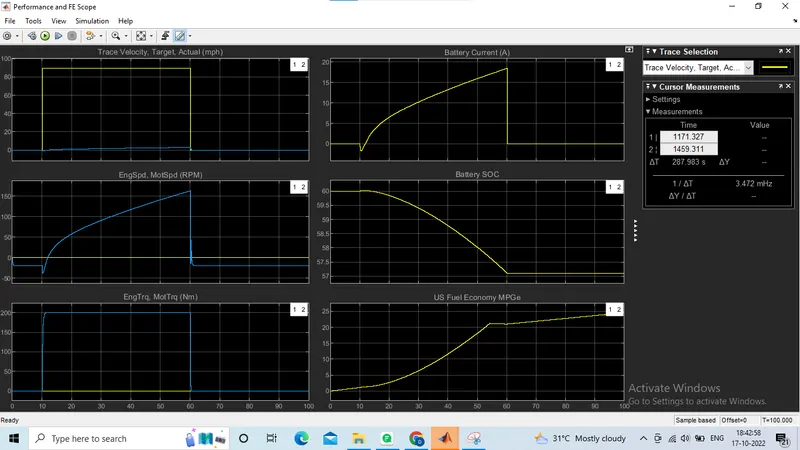
Performance output:
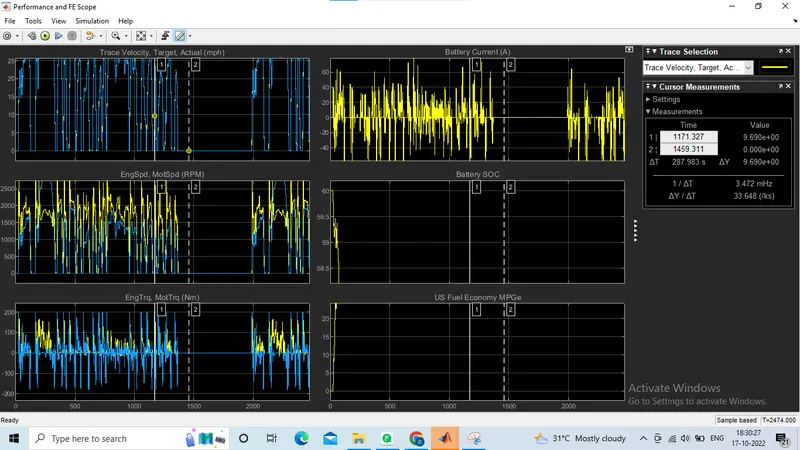
With WOT cycle( start time-5, nominal ref.speed-30, deceleration time-20,WOT-30)
(grade-8%, Wind speed-15m/s)
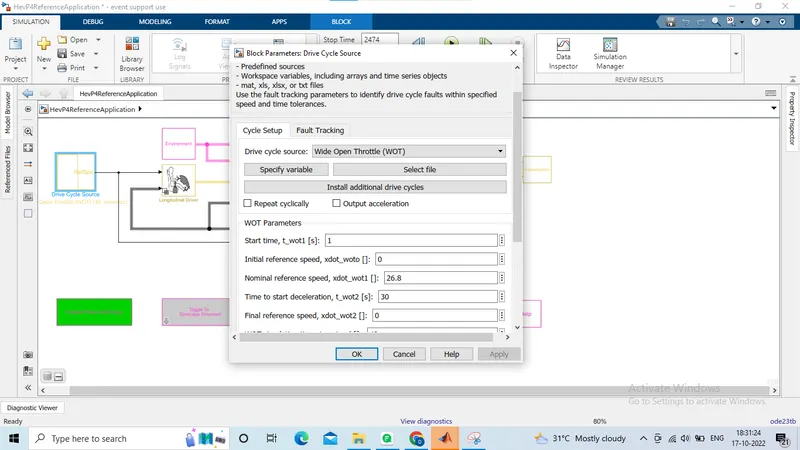
Performance evaluation:
With WOT cycle( start time-10, nominal ref.speed-40, deceleration time-60,WOT-100)
(grade-6%, Wind speed-8m/s)
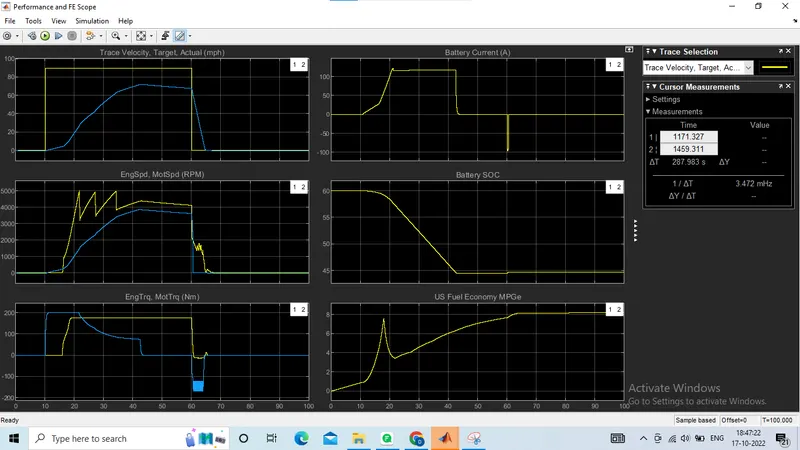
with the increase in wind velocity and grade angle, the desired velocity is not achieved due to dominant gradient force. The deceleration time is reduced which results in lesser battery recharging capability. Fuel economy got reduced.
4) Keeping all other parameters same, compare the simulated results of hybrid and pure electric powertrains.
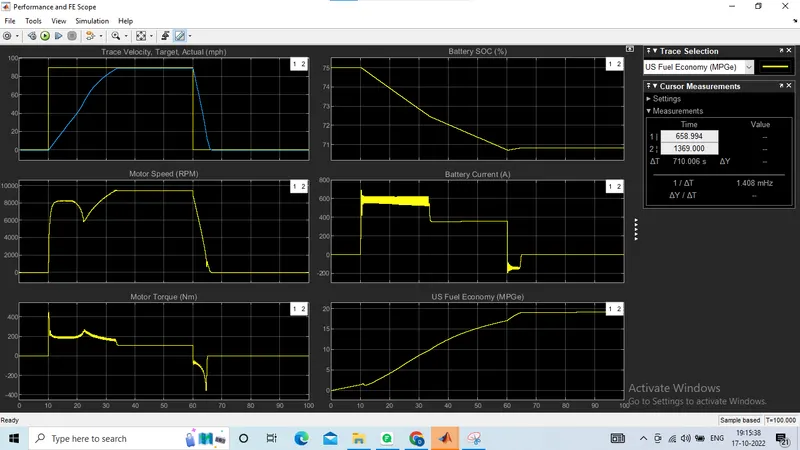
With WOT cycle( start time-10, nominal ref.speed-40, deceleration time-60,WOT-100)
(grade-6%, Wind speed-8m/s)
Pure EV:
HEV:
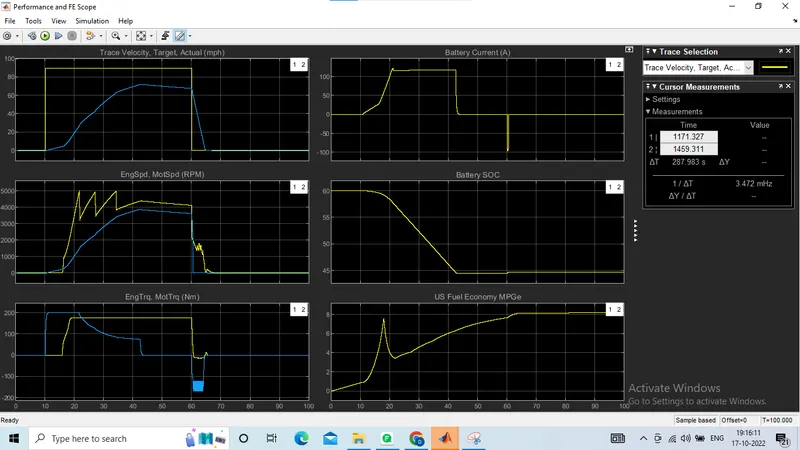
Observations of pure EV w.r.t to HEV:
1. With pure EV, the desired speed has been achieved after 30s.
2. The achieved motor speed is very high.
3. Drawn very high battery current to achieve desired speed.
4. Fuel economy has been improved with pure EV.
5. Battery SOC is highly balanced.