Week-4 Challenge WOT Condition Part-2
1. Difference between mapped model and dynamic model:
Mapped Model
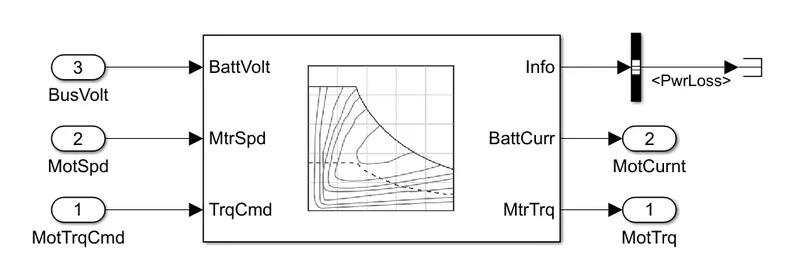
Mapped models are used when a particular model's behaviour is not of interest and can be modelled with predefined values in the form of lookup tables. Eg.: Mapped motor
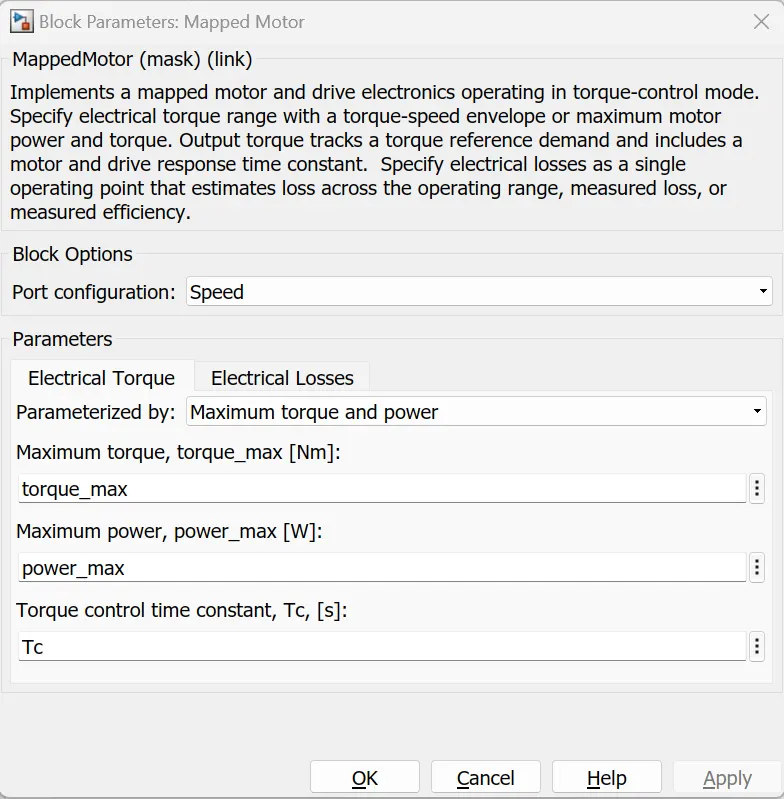
- The Mapped Motor block implements a mapped motor and drives electronics operating in torque-control mode.
- It specifies the electrical torque range with a torque-speed envelope or maximum motor power and torque.
- Output torque tracks a torque reference demand and includes a constant motor and drive response time.
- It specifies electrical losses as a single operating point that estimates loss across the operating range, measured loss, or measured efficiency.
Dynamic Model
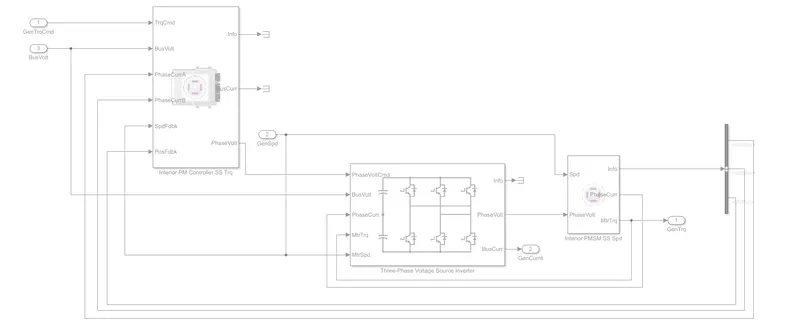
Dynamic models are used when the internal response to a model concerning its components is needed. Eg.: Motor model
In the below model, motor components such as inverter, phase controller, and feedback circuits are also modelled.
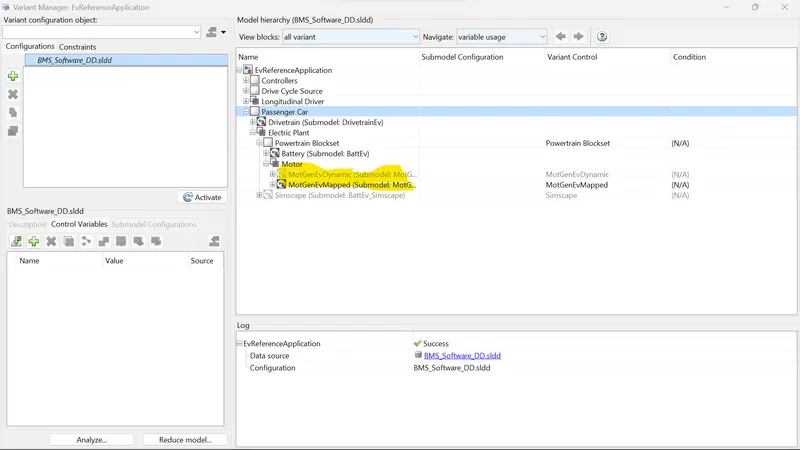
Changing the model type in the EV Powertrain block:
We can use the variant manager in the modelling tab to find our variant systems.
Right-click on the model you want and use set as Label mode active choice.
2. In the HevMmReferenceApplication model, we will take the Performance Calculations subsystem (as shown below), which is present inside the Visualization subsystem.
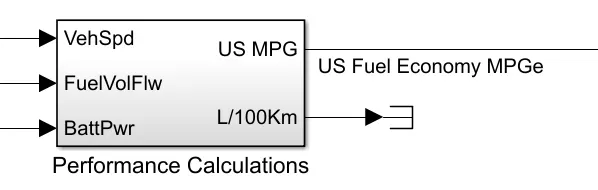
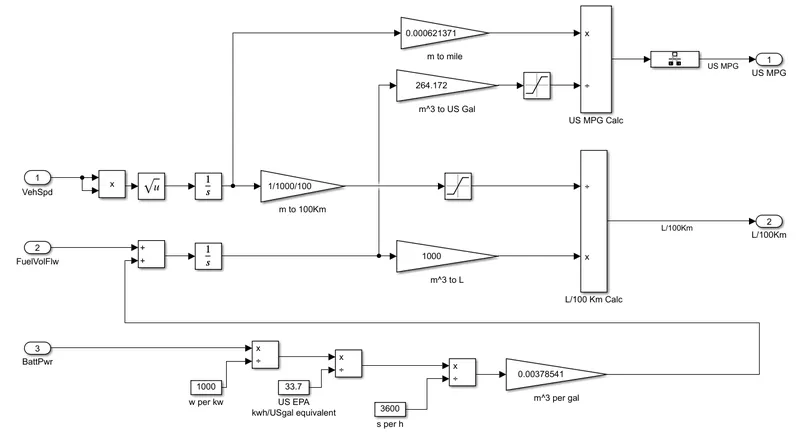
Inside this subsystem, we can see the flow of conversion of miles to gallons which is explained below:
- Vehicle speed data is used to calculate the distance travelled in meters, converted to miles.
- Battery power data is used to find power used in kWh which is then converted to gasoline-equivalent using the US EPA value by dividing by 33.7 (As per the US environmental protection agency (EPA), 1 gallon of gasoline is equal to 33.7 kWh).
- By dividing the distance travelled in miles by the number of gallons, we can get miles per gallon.
- For HEV this gallon(gasoline equivalent of battery power) is added to the gallon used by the IC engine then miles per gallon is calculated.
Factors that are considered to model fuel flow are:
- Vehicle Speed
- Battery Power
3.
Simulink Model:
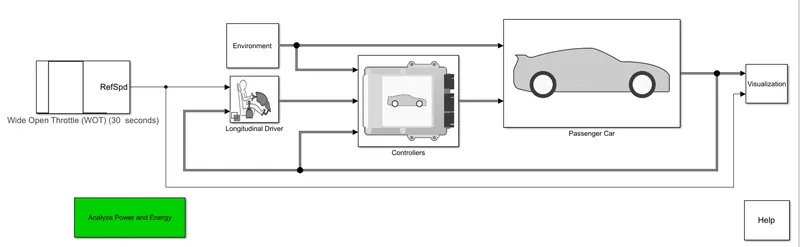
Result:
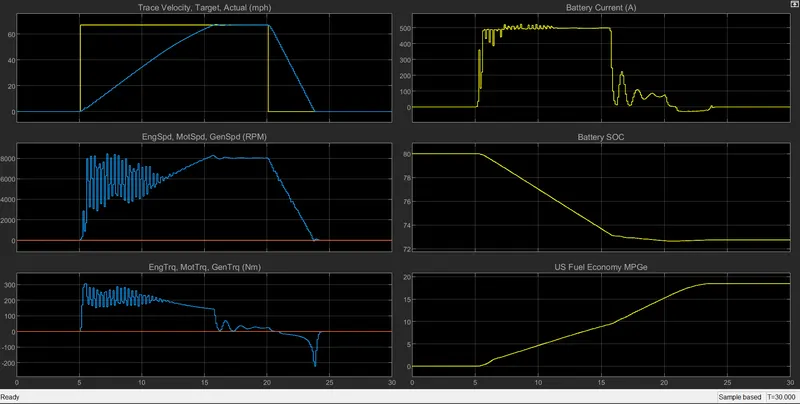
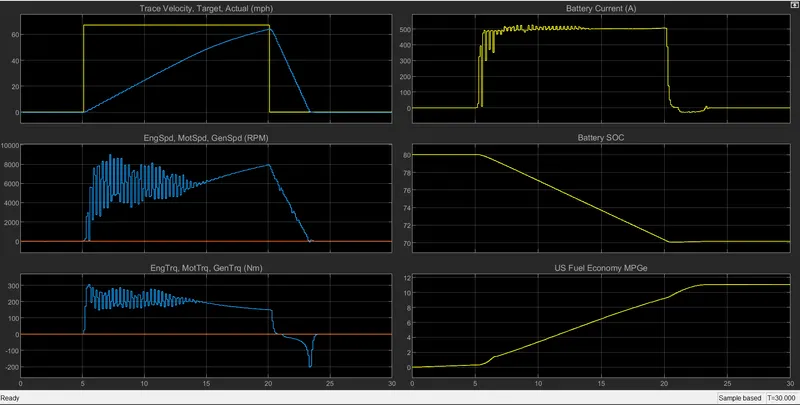
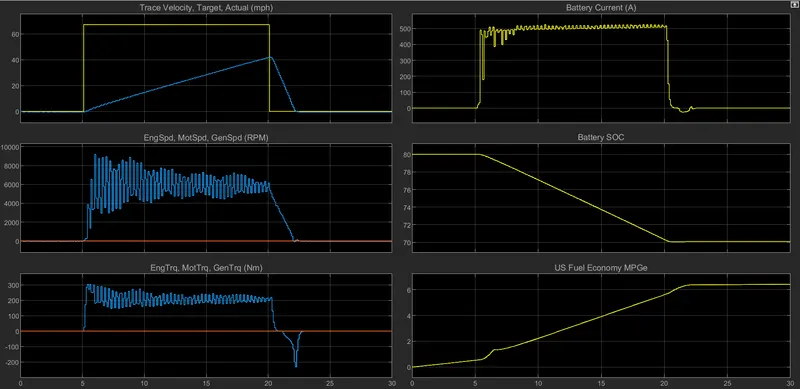
Now changing the parameters of the grade and wind velocity in the Environment block,
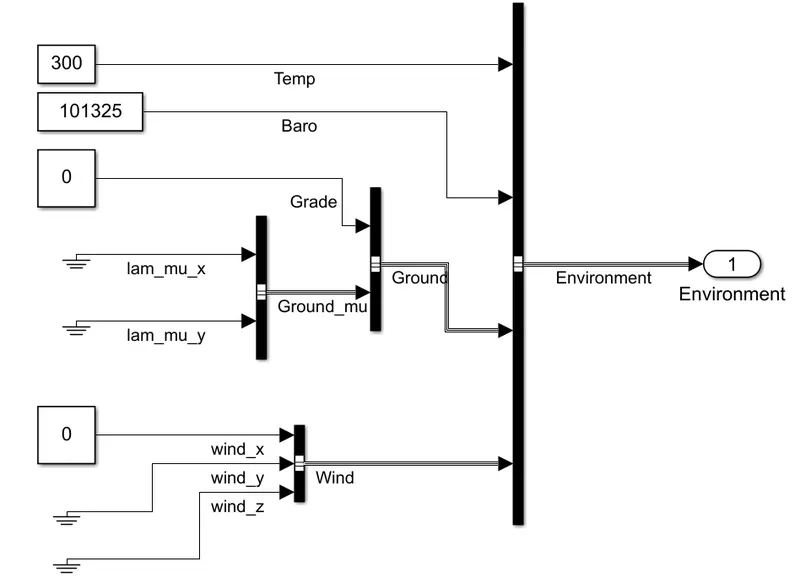
Case 1: Grade = 5, Wind velocity = 10 m/s
Case 2: Grade = 10, Wind velocity = 20 m/s
Case 3: Grade = 15, Wind velocity = 30 m/s
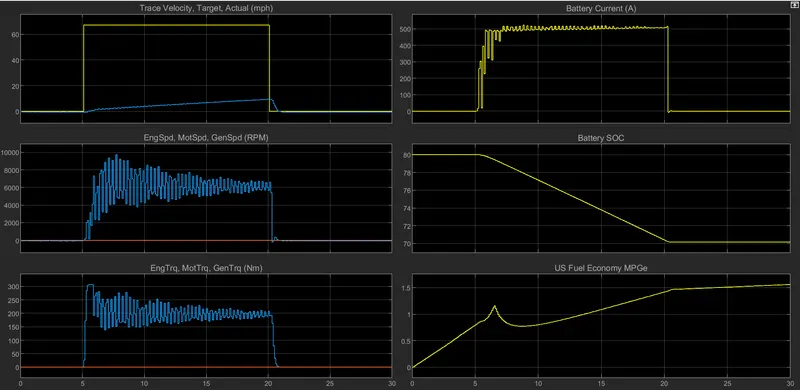
Result:
With the increase in grade and wind velocity
- Peak velocity achieved is reduced as gradient force and aerodynamic force become dominant.
- Fuel economy is also reduced because the distance travelled is reduced due to external forces.
- Deceleration time is reduced so battery recharging capacity is also reduced.
- Battery SOC at the end of WOT acceleration is similar but during deceleration, the battery is charged more in the grade and wind velocity is less.
4.
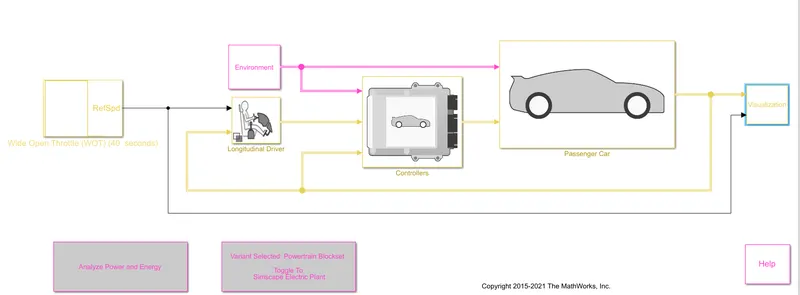
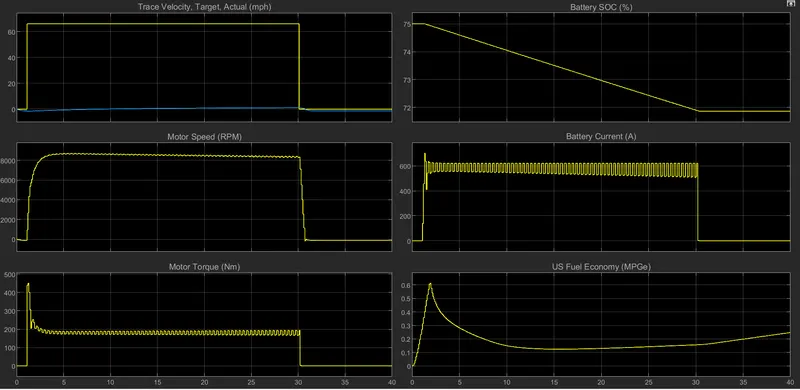
Taking Grade = 15 and wind velocity = 30 m/s in the Environment block in both the models,
EV model:
Result:
HEV model:
Result:
Conclusion:
Comparing the results of EV and HEV, we can say that:
- Time taken to achieve the required peak velocity is less for EV as compared to HEV.
- Deceleration time is also low for HEV as it has many moving frictional parts
- Fuel economy is more for an EV compared to HEV due to less no. of moving parts and thus low frictional losses.