Project 2
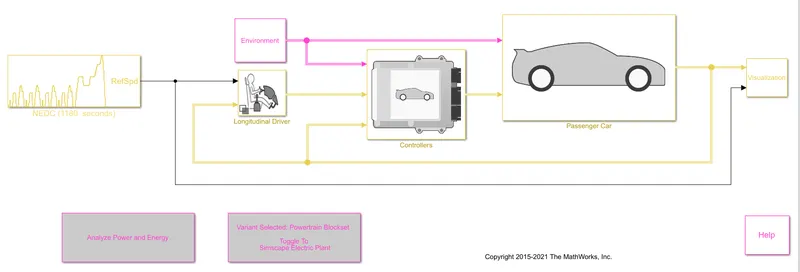
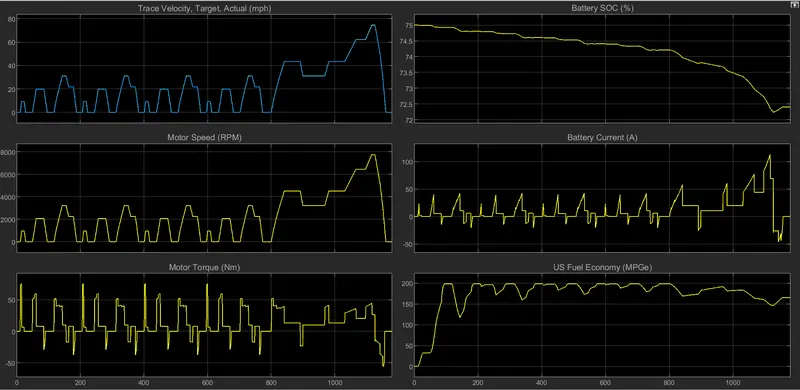
AIM: Design and Develop a Simulink model to understand the Energy analysis of EVs on different driving cycles.
Driving Cycle:
A driving cycle is a series of data points representing the speed of a vehicle versus time. It is
used to assess fuel consumption and pollutants emissions of a vehicle in a normalized way, so that different vehicles can be compared. The driving cycle is performed on a chassis dynamometer,
where tailpipe emissions of the vehicle are collected and analyzed to assess the emissions rates.
So, let us consider 4 different drive cycles:
1. New European Driving Cycle
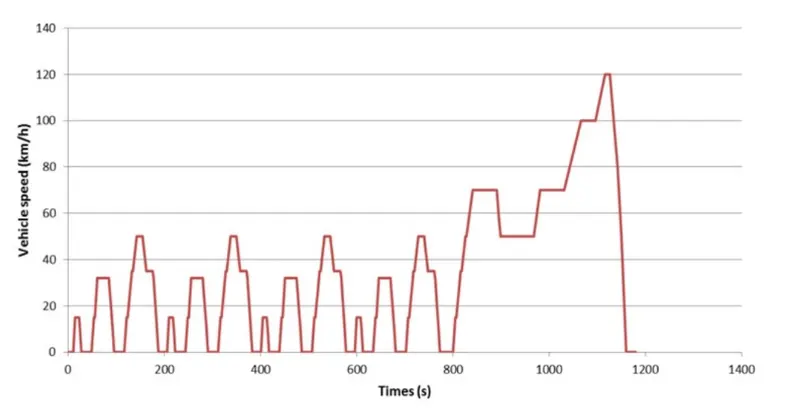
The NEDC is used as a reference cycle for homologating vehicles until the Euro6 norm in Europe
and some other countries. It is made of an urban part called ECE, which is repeated four times,
and an extra-urban part, the EUDC.
| Distance | 11,023 m |
| Duration | 1180 sec |
| Average Speed | 33.6 kmph |
This cycle is criticized by experts as it doesn’t represent real-life driving conditions. Indeed,
accelerations are very soft; there are a lot of constant speed cruises and a lot of idle events. This
makes it impossible to obtain certified values when driving the vehicle in real conditions.
2. The Artemis Driving Cycle
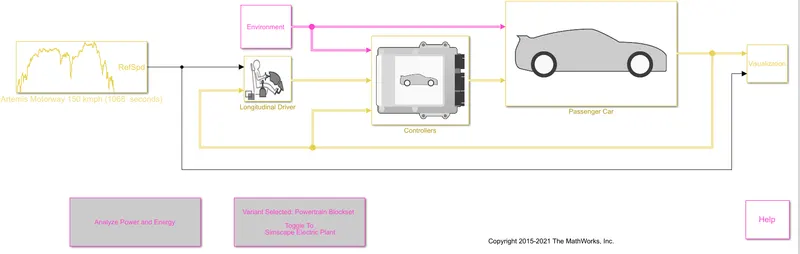
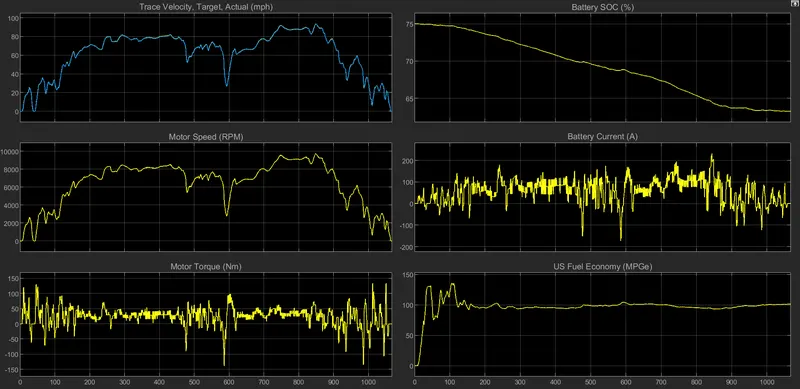
This cycle is based on a statistical study done in Europe within the so-called Artemis project. It is made of different configurations, plus an additional variant: the urban cycle, the motorway 130 km/h, and the motorway 150 km/h. Artemis cycles are not used for certification of pollutants or fuel consumption. However, car manufacturers use this kind of cycle to better understand real driving conditions and to assess the real performances of their vehicles.
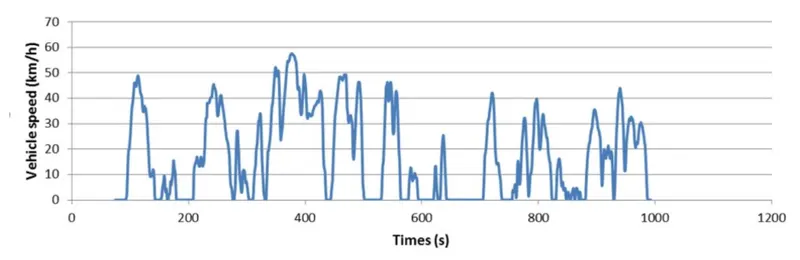
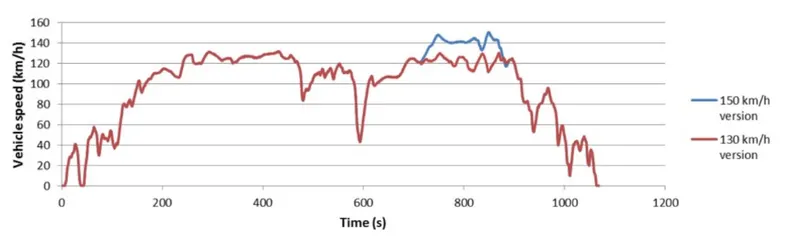
| Driving Cycle | Urban | Motorway 150 | Motorway 130 |
| Distance | 4870 m | 29,545 m | 28,735 m |
|---|---|---|---|
| Duration | 993 sec | 1,068 sec | 1,068 sec |
| Average Speed | 17.6 kmph | 99.6 kmph | 96.9 kmph |
3. FTP-75 Cycle
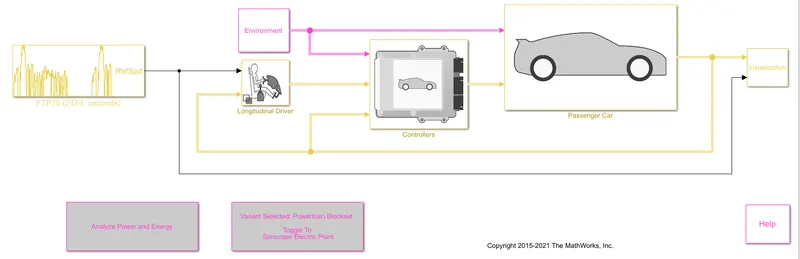
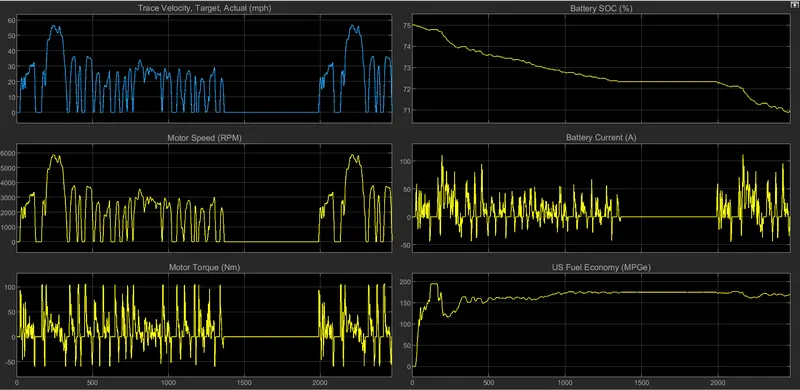
The FTP cycle (for Federal Test Procedure) has been created by US EPA (Environmental Protection Agency) to represent a commuting cycle with a part of urban driving including frequent stops and a part of highway driving.
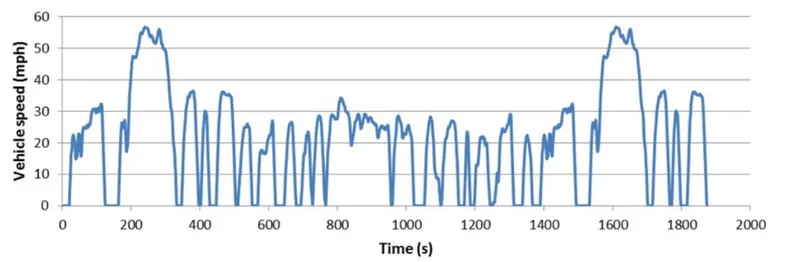
| Distance | 11.04 miles (17.77 km) |
| Duration | 1,874 sec |
| Average Speed | 21.2 mph (34.1 kmph) |
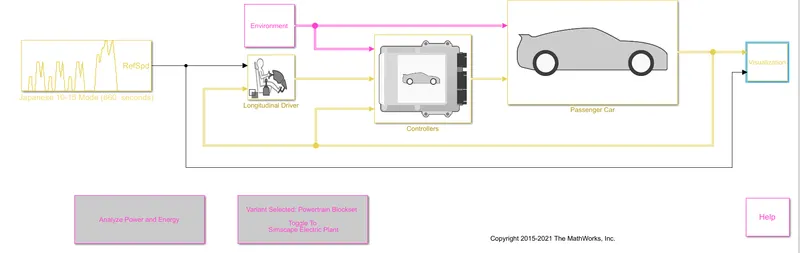
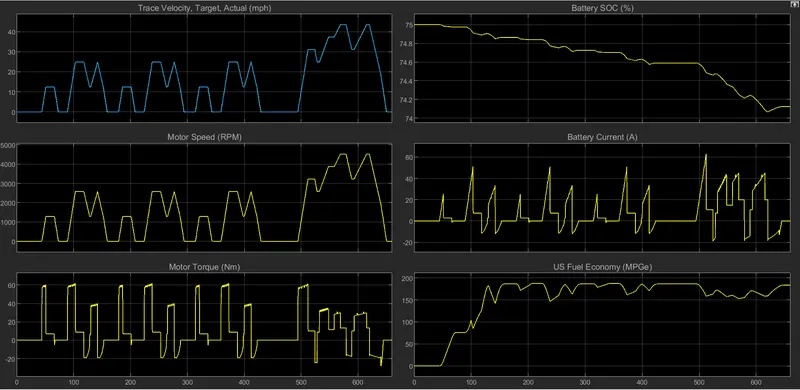
4. 10-15 Mode Cycle
| Distance | 4.16 km |
| Duration | 660 sec |
| Average Speed | 22.7 kmph |
SIMULINK MODELS:
1. NEDC
2.
ARTEMIS MOTORWAY 130 KMPH
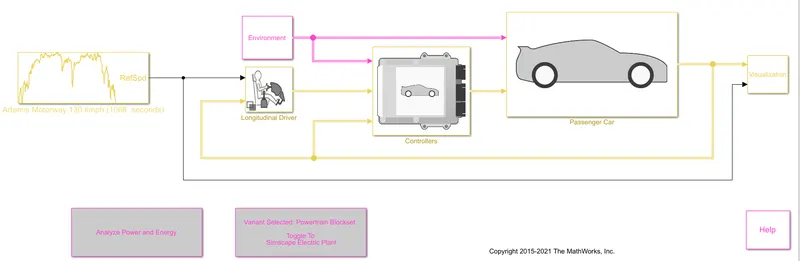
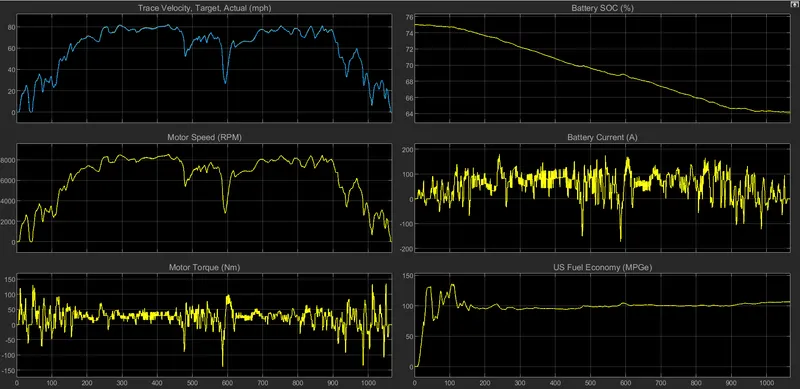
ARTEMIS MOTORWAY 150 KMPH
3. FTP75 DRIVING CYCLE
4. 10-15 MODE CYCLE
Procedure to build a model:
-
Open the MATLAB application.
-
After clicking on the Simulink option shown above the application, we need to go to the help center option that is shown in the right corner of the display.
-
Then enter the powertrain blocks and choose the EV reference application.
-
Click on that option then you will get the Simulink model.
-
Now you have to select the drive cycle type as FTP75 and then run the model.
-
You will get the required output results in the visualization block.
- You can repeat the cycle by using different driving cycles.
Conclusion:
We have designed and developed a Simulink model to understand the Energy analysis of EVs on different driving cycles.