Week-4 Challenge WOT Condition Part-2
Answers
Q1
Mapped Model
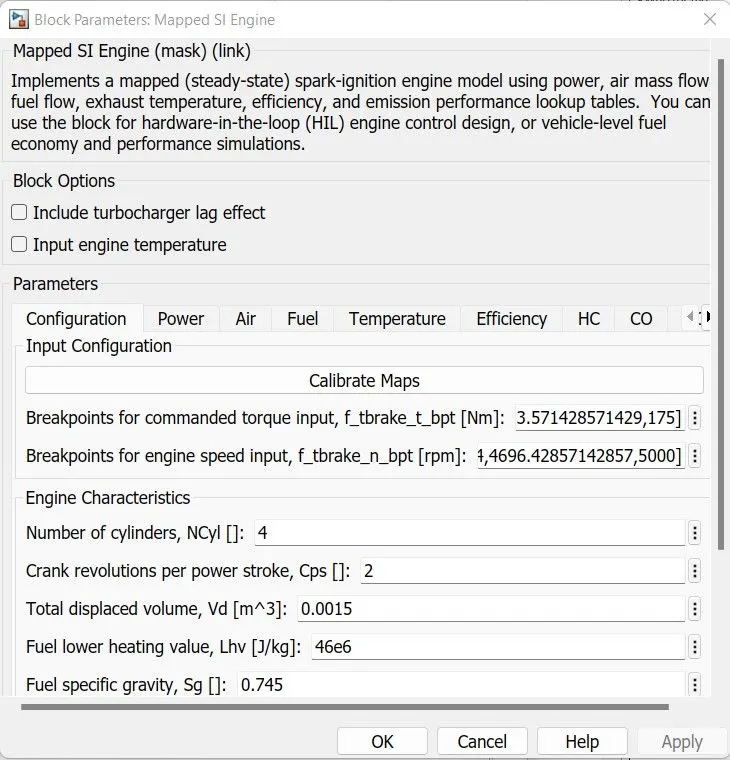
- This type of model uses a set of steady-state lookup table to characterize engine.
- The table provide overall engine characteristics, incluiding actual torque, fuel flow rate, BSFC, and engine-out exhaust emissions.
- This Mapped model engine is used whene we have engine data from a dynamometer or a design tool like GT-POWER.
- It also useful for quassi steady-state engine simulation.
- Example : Mapped SI Engine
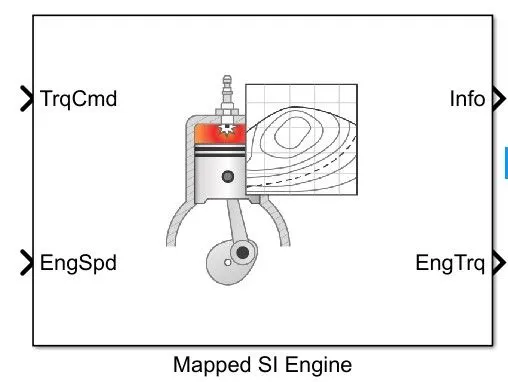
Data lookup table for Mapped Si Engine
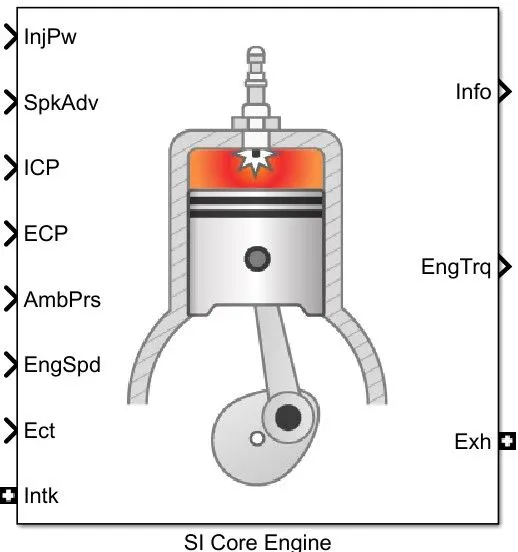
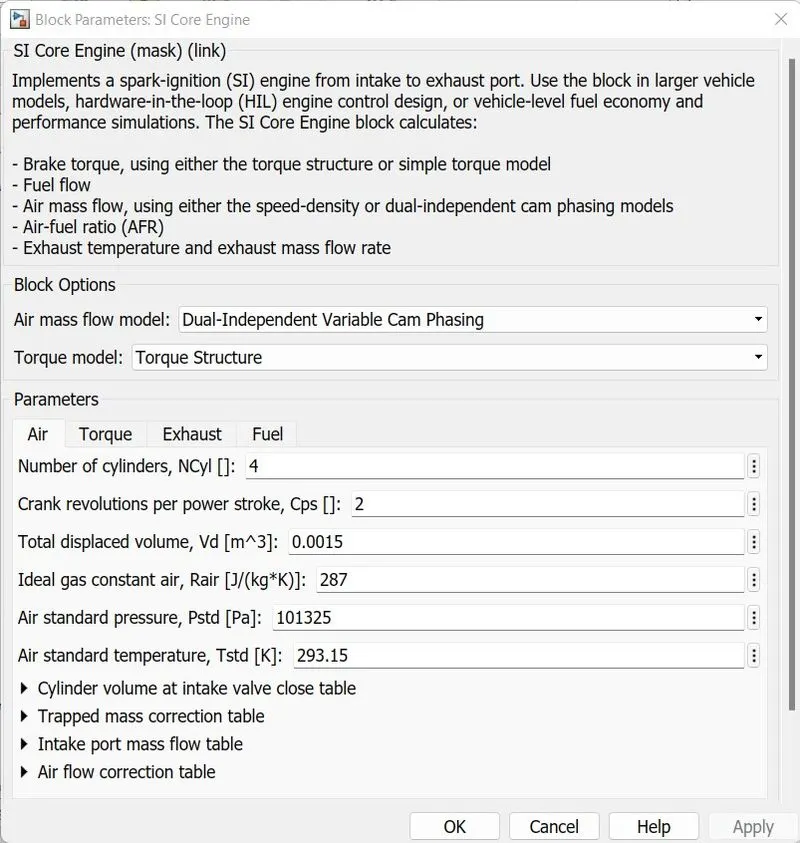
Dynamic Model
- Model decomposes the engine behaviour into engine characteristics that are seperated into lower-level components.
- By combining components in this way, the models capture the dynamic effects.
- This Dynamic model engine is used whene more detailed dynamic moedel and have component level data.
- It also use to analyze the impact of individual engine components on the overall performance.
- Example : SI Core Engine
Q2
- Hear we consider HEV multimode reference model.
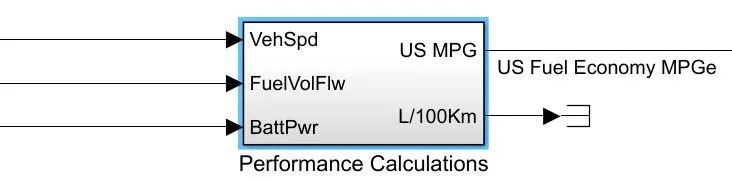
- In this model visualization block is available, inside the visualization block performance calculation block is available.
- Inside the Performance Calculation block we seen calculation of Vehicle miles per gallon and lot's of other parameter.
- In the hybrid electric vehicle we consider fuel consumption by engine for accelarate vehicle and generate power for battery which can be use later for accelerate vehicle or meet high power requirment.
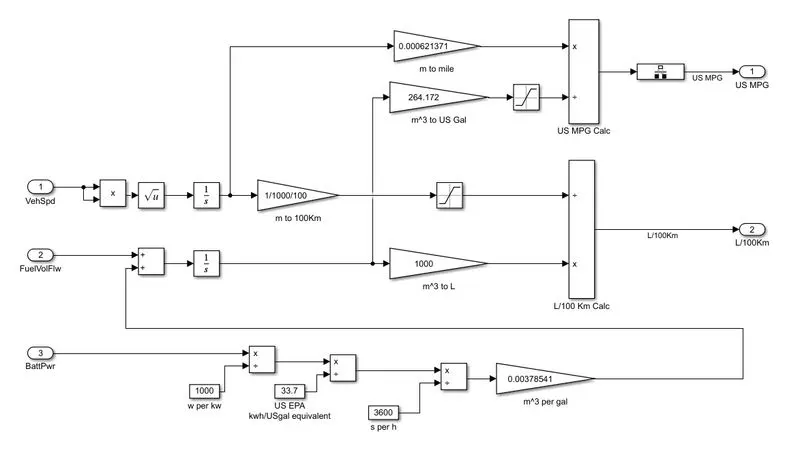
- In this model we reqire two type of calculation one is required for direct vehicle acceleration and other is for battery charging
- For vehicle acceleration we use vehicle speed and convert it to distance in meter after this step distance in meter is converted to distance in mile.
- In the same time we calculate fuel volume in m^3 based on fuel flow rate.
- After converting fuel flow into fule volume then it convert to m^3 to liter and after it converted to gallon.
- After completing this step we devided distance in miles to fule in gallon to get miles per gallon.
- For calculation fuel consumption for charging battery we use kwh to fuel in m^3 calculation.
- This fuel volume is converted to gallon and add to the calculation of mpg.
- This process is also show in fig.
Q3
Run the HEV ReferenceApplication with WOT drive cycle. Change the grade and wind velocity in the environment block. Comment on the results.
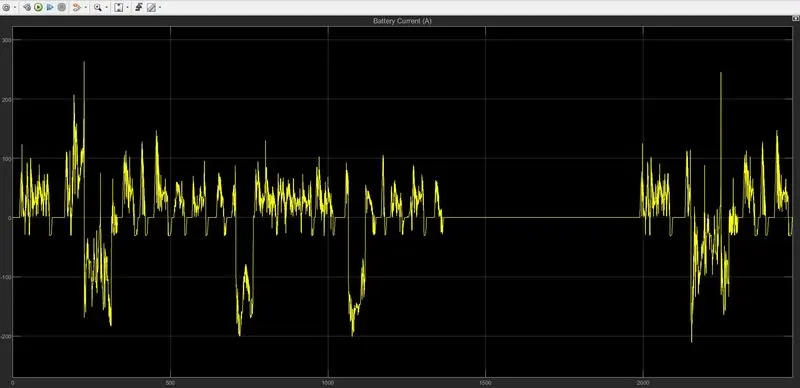
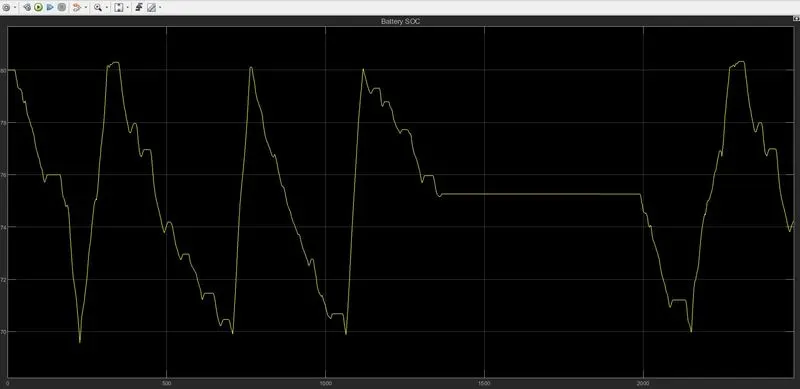
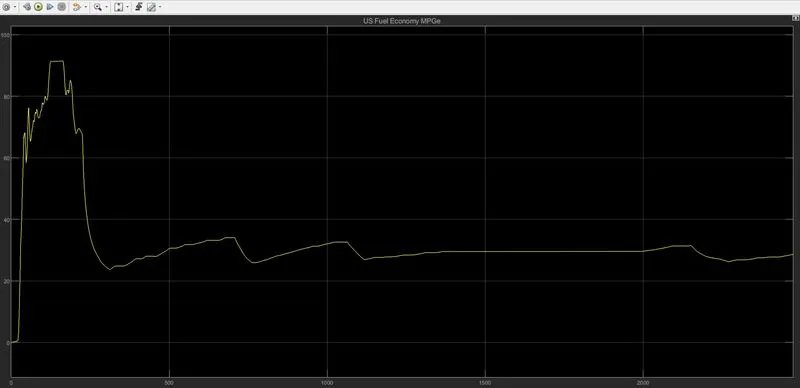
Whene we run the HEV reference application with WOT Drive cycle with zero slop angle and zero wind speed calculated Battery Current, Battery State of Charge, Fuel Economy and Torque Generation is display hear.
Battery Current
Battery State of Charge
Fuel Economy
Torque Generation
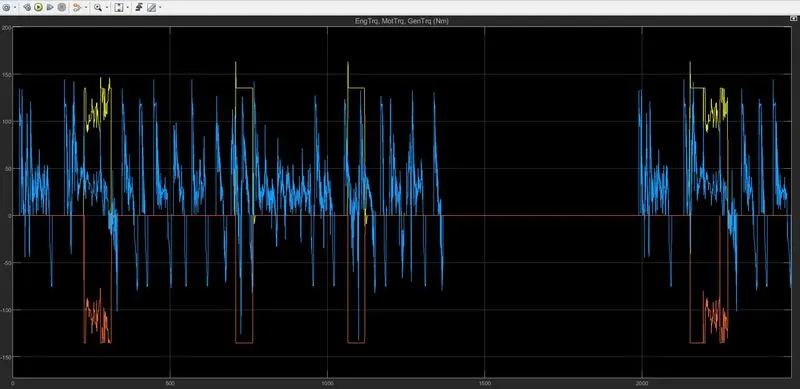
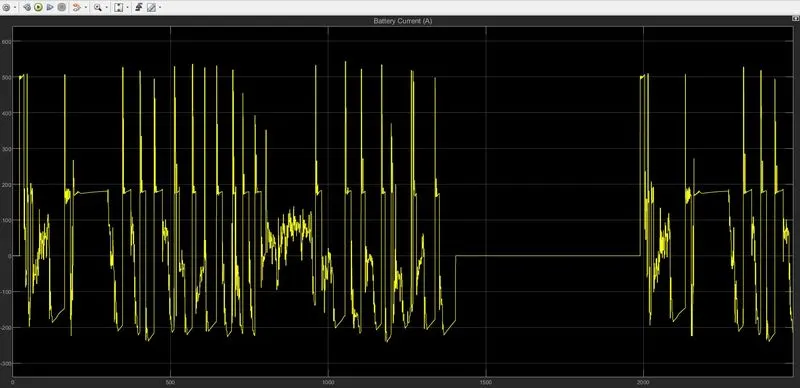
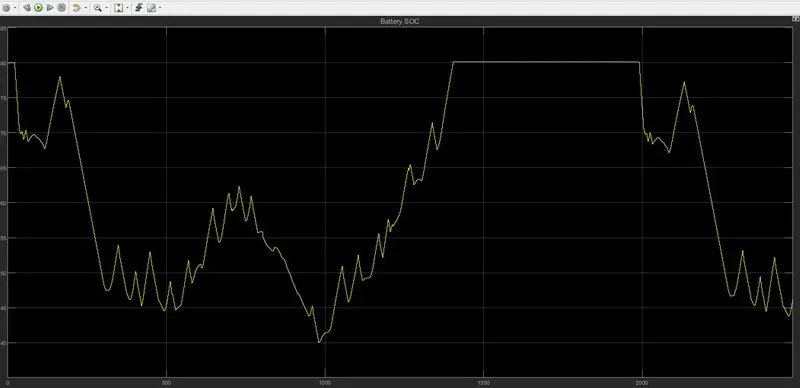
Whene we run the HEV reference application with WOT Drive cycle with some slop angle and some wind speed calculated Battery Current, Battery State of Charge and Fuel Economy is display hear.
Slop Angle = `10^o`
Wind Speed = 40 m/s
Battery Current
Battery State of Charge
Fuel Economy
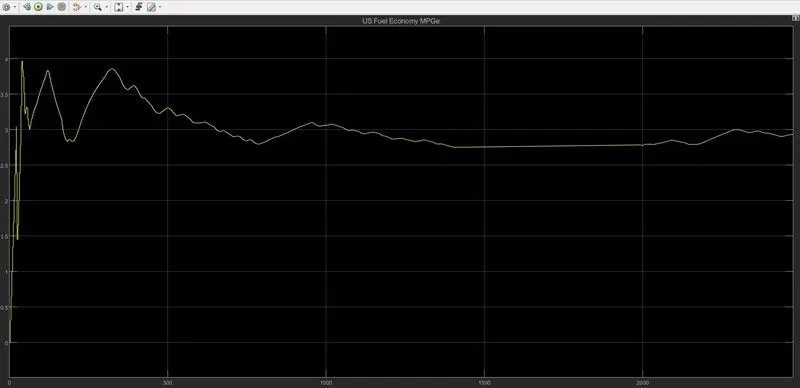
Torque Generation Graph
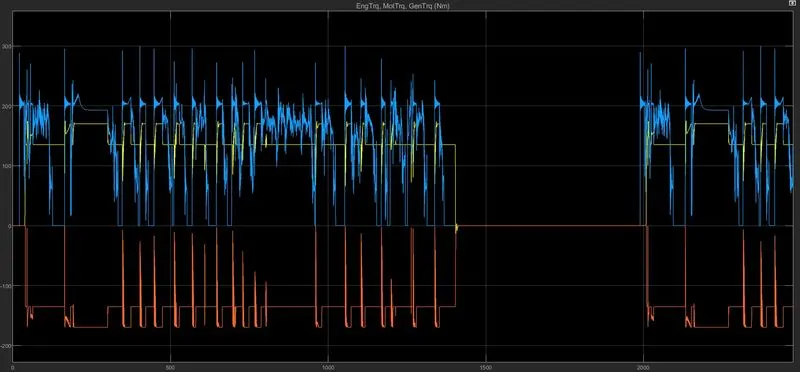
Conclusion
- In this both diffrent condition analysis all graph and conclude some result.
- In condition whene slop and wind speed is zero peak battery amp is around 270A and whene slop angle and wind speed is available peak battery amp is around 520 A.
- At zero slop and zero wind speed Battery SOC at the end of simulation is remain around 74% and whene slop angle and wind speed is available its value is around 46%.
- At zero slop and zero wind speed Fuel economy in miles per gallon is 32.86 and when slop angle and wind speed is available its value is around 2.968.
Q4
In this Question compare EV Reference application and EHV Reference application and analysis the results.
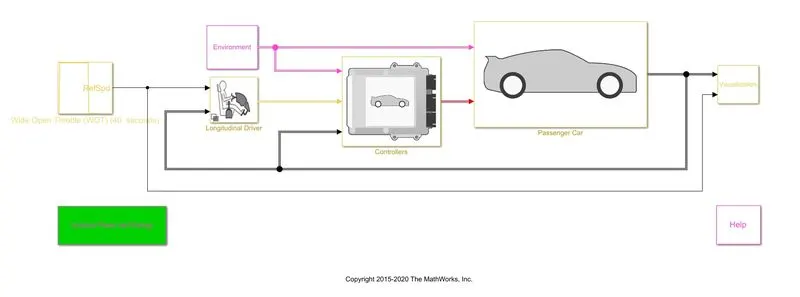
Visualization block for EV Reference application
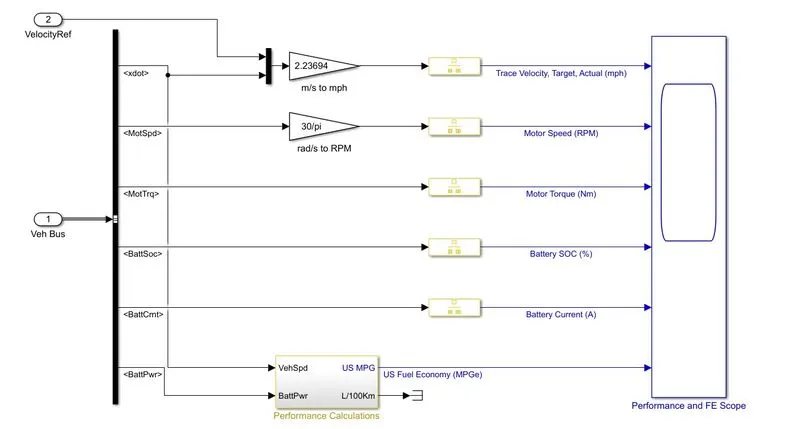
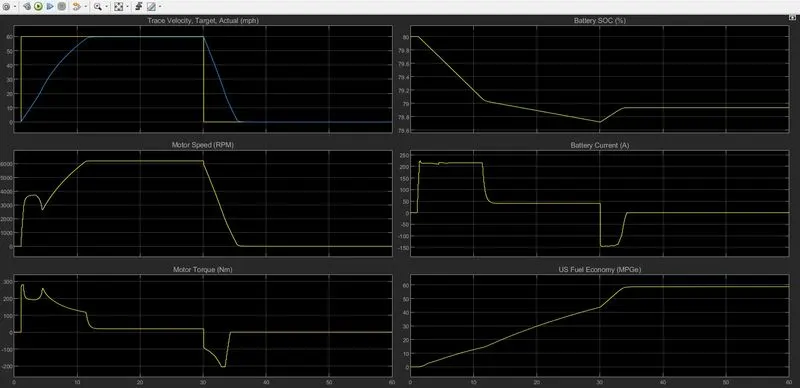
EV Reference Application Simulation Results
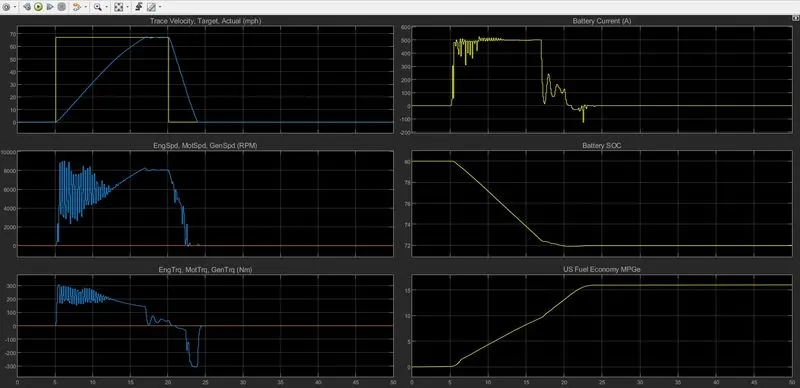
EHV Reference Application Simulation Results
Comparision
- As seen in the fig Acceleration time of pure EV vehicle is less compare to HEV vehicle.
- Deceleration time is also low for HEV as it has many moving frictional parts
- Fuel economy is more for an EV vehicle compared to HEV due to less parts and thus low frictional losses.