Week-4 Challenge WOT Condition Part-2
1)What is the difference between mapped and dynamic model of engine, motor and generator? How can you change model type?
Answer:-
Powertrain blockset provides two types of enigne models:Mapped and Dynamic.
Mapped Model:- Mapped engines represents macro engine behavior as a set of lookup tables(brake torque, fuel flow,air mass flow,exhaust temperature,efficiency and emission as functions of commanded and measured engines speed. Dynamic engines decompose engine behaviour into individual component models that account for engine dynamics most notably intake airflow and turbocharger dynamics.
It uses a prebuilt data in looku table for the simulation of powertrain blockset.
In mapped model the calcultaions are very fast.
Electric losses are need to be specified if present.
Dynamic model:-
Dynamic engines models are suitable for designing control,estimator and diagnostic algorithms that depend on dynamic subsystem states for example in closed loop AFR cotrol algorithm development. Mapped engine models are suitable for analysis and design activities that do not require engine subsystem dynamic charcterstics for example in engine and transmission powertrain matching analysis for fuel economy,emission and performance tradeoffs.
It uses time data for calculating every behaviour of vehicle charcterstics like speed, velocity,drag,wheel braking etc.
In dynamic model the calculations are time comsuming
Chnaging the model:-
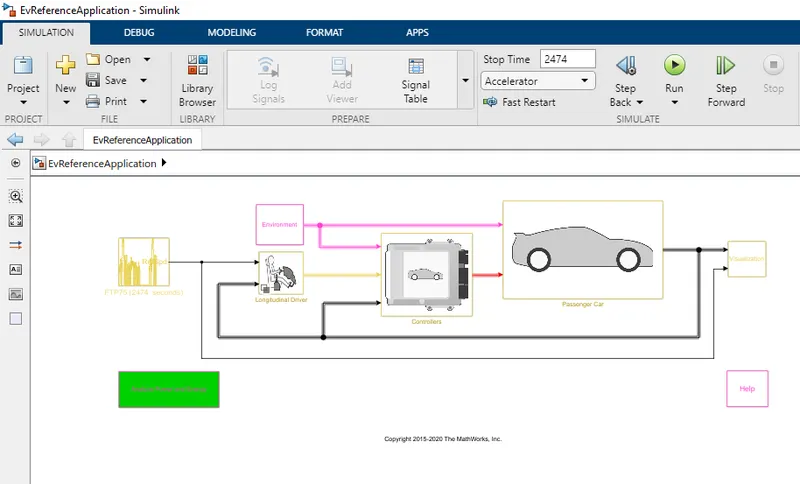
Step1)Open the passenger car block:-
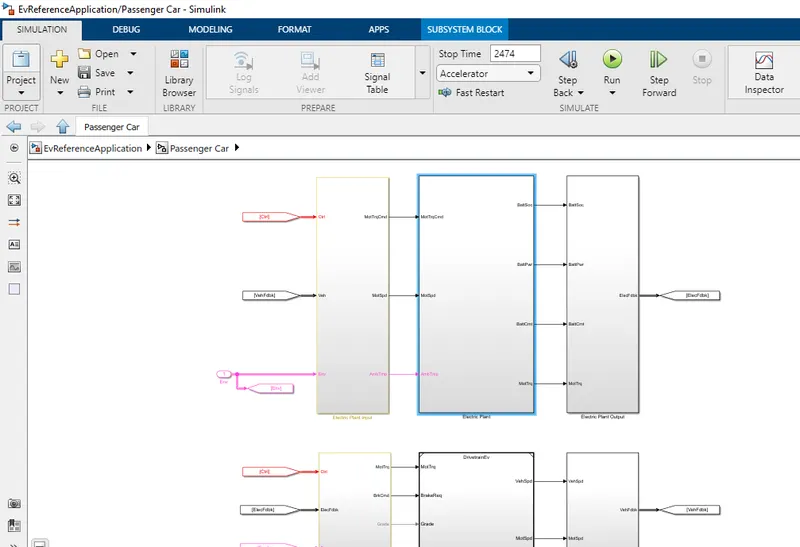
Step2)Open Electrc Plant
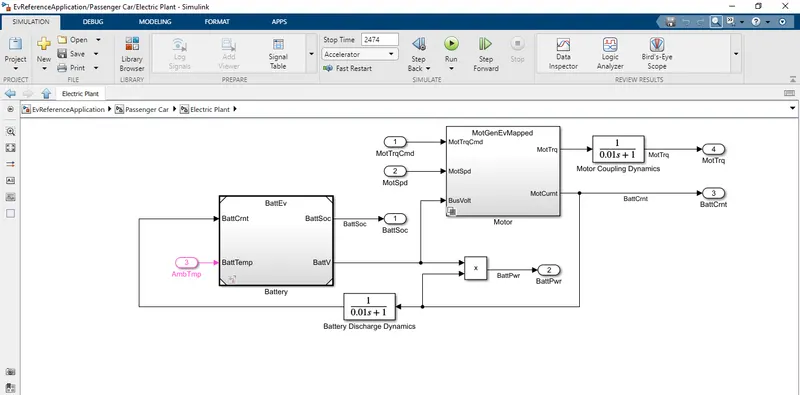
Step3)Now open MotGenEvMapped
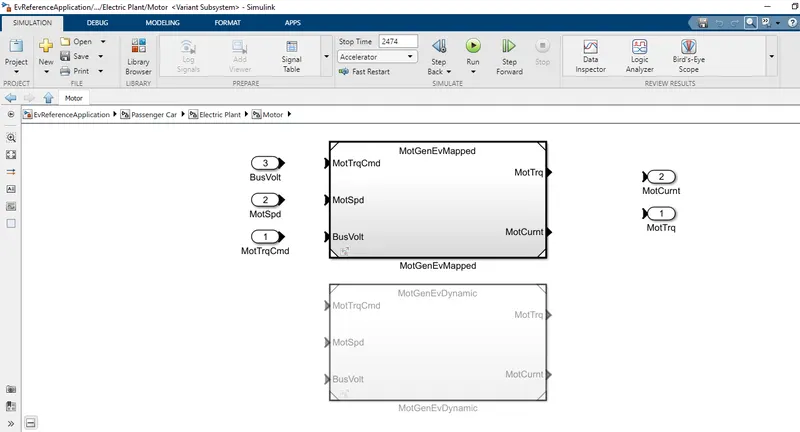
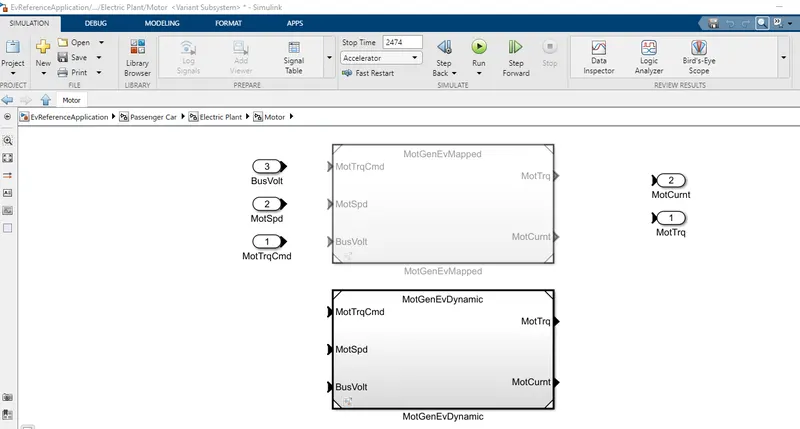
Step4) Now right click on screen->Variant->Label Mode active choice-> Dynamic or mapped
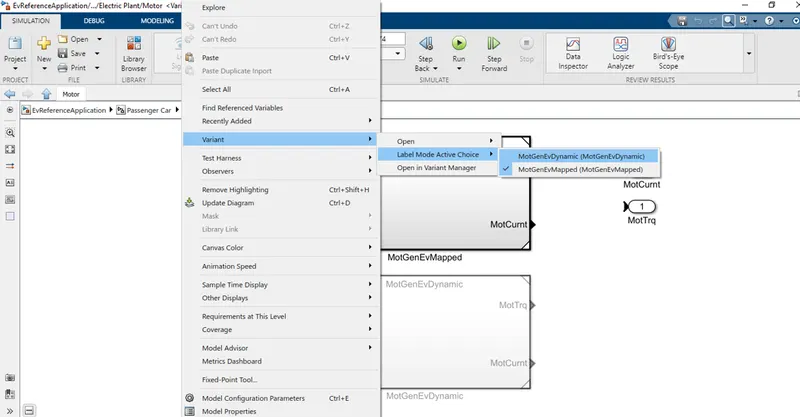
Step5) Make mapped to dynamic
2)How does the model calculate miles per gallon? Which factors are considered to model fuel flow?
Answer:-
Miles per gallon (MPG) is a fuel economy rating determined by how far a car can travel on a gallon of gasoline or diesel. Although the metric version would be kilometres per litre, MPG is adopted in many metric-system countries, like Canada.
While it is both cheaper and better for the environment to achieve a higher MPG rating, there is a curve, that the EPA calls the "MPG Illusion" that shows the cost-benefits of increasing MPG decrease with higher rating. For example, to travel 1,000 miles, a car that gets 10 MPG will require 100 gallons of fuel. Conversely, a car that gets 15 MPG will require 67 gallons of fuel. In this case, an increase of just 5 MPG cuts fuel consumption by 33%. When a car gets 30 MPG, however, increasing its mileage to 35 MPG will only save 5 gallons of fuel over 1,000 miles.
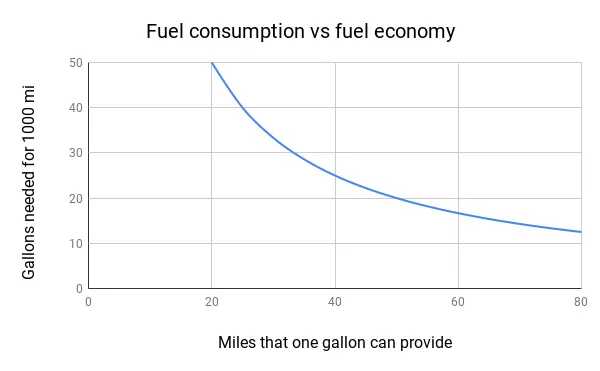
Because of this "MPG Illusion," car makers in both the United States and Canada are beginning to list their cars' mileage in fuel consumption per distance. In Canada, this is done in liters per 100 kilometers (L/100km), and in the USA, this is done in gallons per 100 miles (gal/100mi).
Now Ope Ev refernce application and click on visualization block.
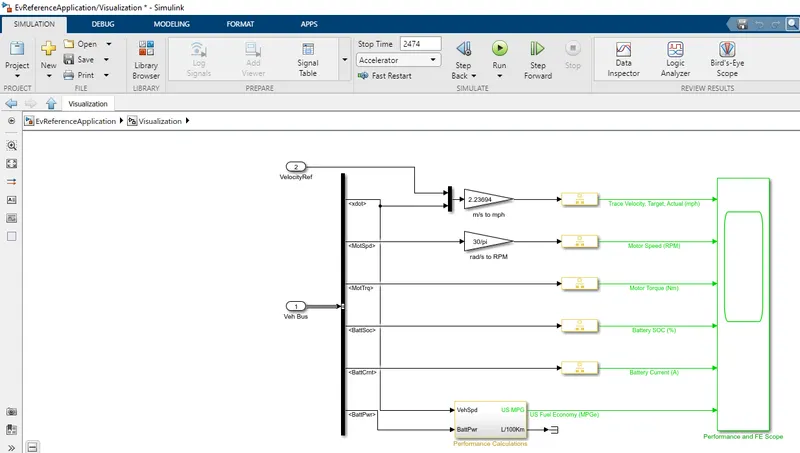
Afterward click on the performance calculation block
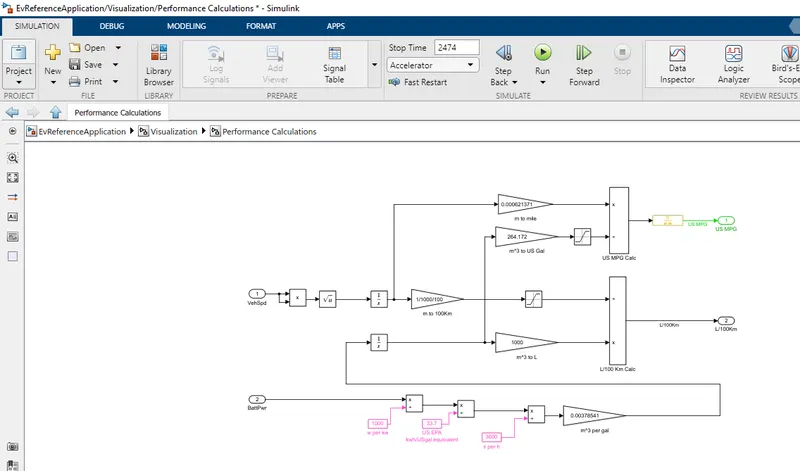
MPG for electric vehicles
Miles per gallon for electric vehicles (MPGe, or “miles per gallon equivalent”) places a value on your car’s energy efficiency. A higher MPGe indicates a higher energy efficiency rating; a lower MPGe indicates a lower rating. MPGe is independent of factors such as range and battery life, so it remains important to examine your vehicle’s fuel efficiency.
Typical electric car MPGe ratings
MPGe of popular electric cars
| Electric car model (base level) | Efficiency (miles per gallon equivalent) |
|---|---|
| Nissan Leaf | 111 MPGe |
| Chevrolet Bolt | 118 MPGe |
| Tesla Model S | 109 MPGe |
| Tesla Model X | 101 MPGe |
| Tesla Model 3 | 134 MPGe |
| Tesla Model Y | 121 MPGe |
| Audi e-tron | 78 MPGe |
| Porsche Taycan | 79 MPGe |
A higher efficiency rating will mean lower electricity costs per mile. Of the above vehicles, the Chevy Bolt boasts the highest efficiency rating. The Tesla Model X has the lowest efficiency of the list, with a rating that is 17 MPGe lower than the Bolt. This means that, completely separate from range, horsepower, or any other metric of comparison, you would end up paying less per mile to drive a car like the Bolt than a car like the Model Xb.
Interestingly, the cars generally seen as the highest quality (both Tesla models) have the lowest efficiency ratings. This might come from higher internal energy usage in the Tesla vehicles, as they are known to have some of the most robust software running within. It could also be a factor of vehicle weight. As you look into purchasing an electric vehicle, it is important to keep in mind the impact certain features (or lack thereof) of the car will have on statistics such as MPGe.
Factors affecting the fuel Economy:
Excessive short trips
frequent cold wether travel
Heavy braking or acceleration
high vehicle weight or towing weight
speeding
3)Run the HEV ReferenceApplication with WOT drive cycle. Change the grade and wind velocity in the environment block. Comment on the results.
Answer:-
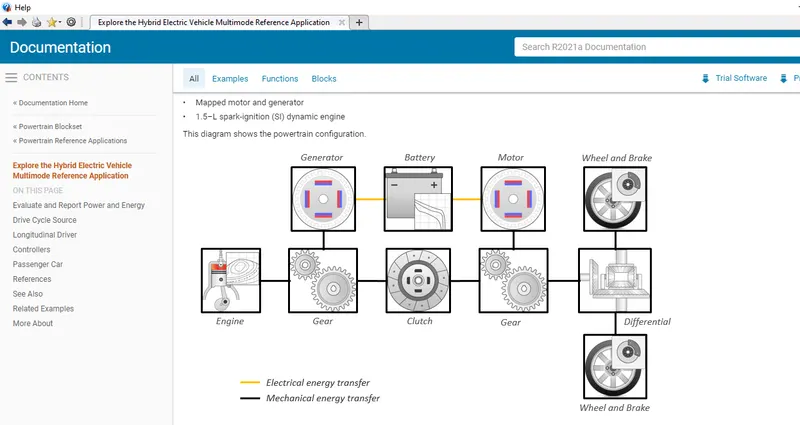
Command:- from help open 'autoblkHevStart'
Below model will load and open:-
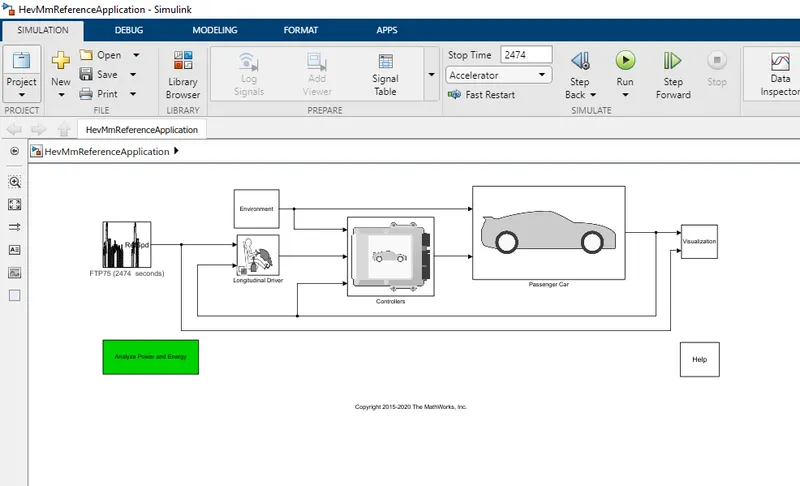
Step 1) Open the Drive cycle block and select drive cylce sorce as WOT.
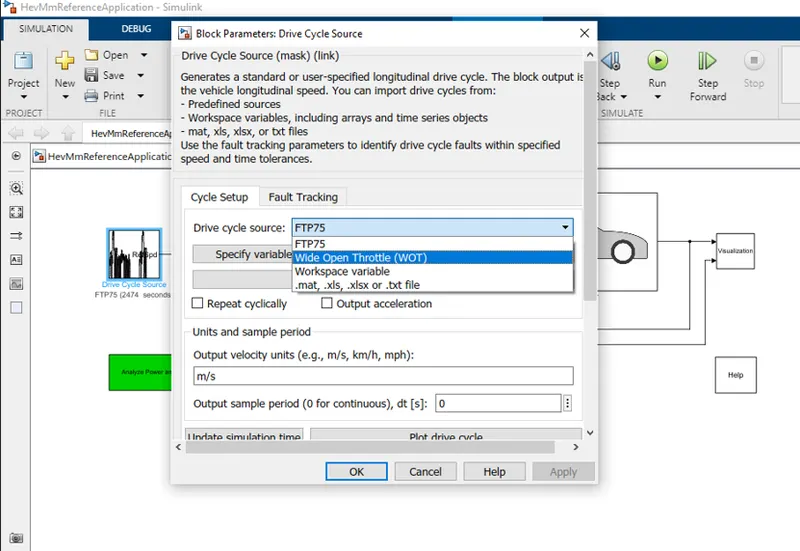
Step2) WOT simulation time 180 Sec.
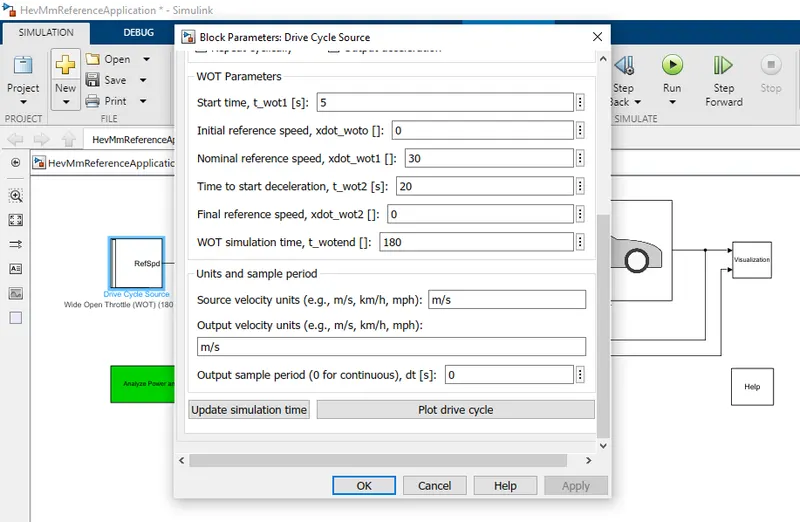
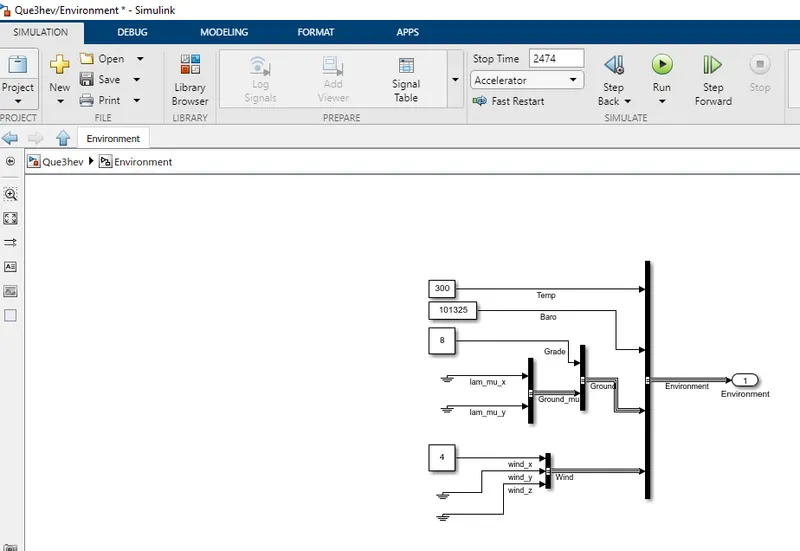
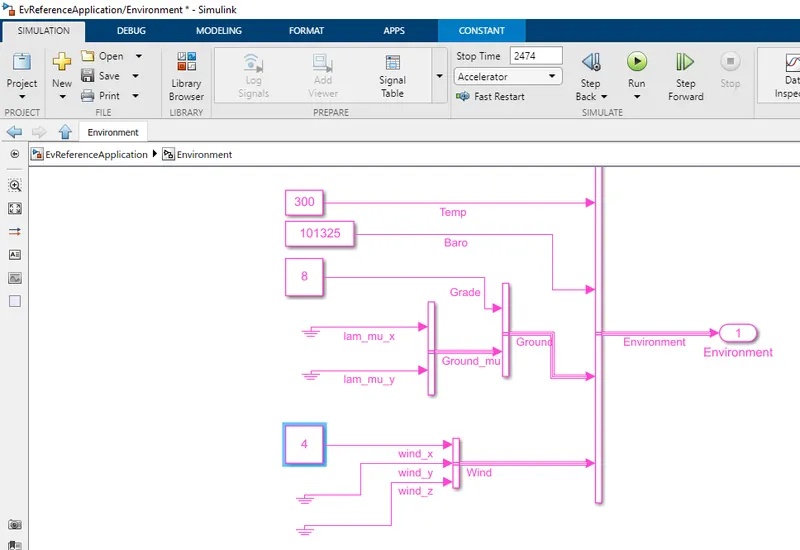
Grade and wind velocity for this case
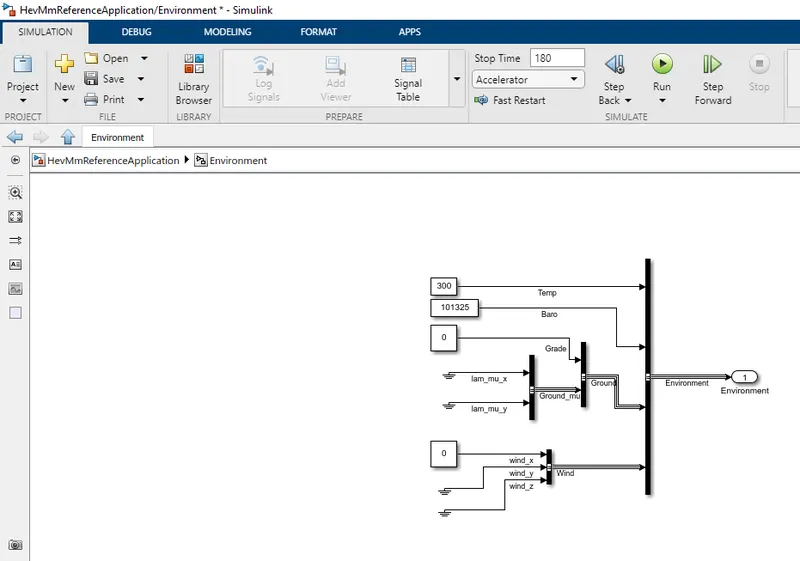
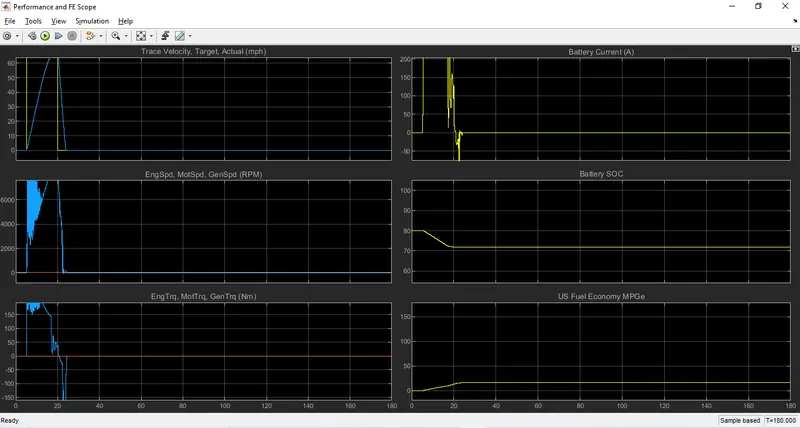
Step3)Run the simulation for 180sec.
Step4)Now open the enviroment block and change grade and wind velocuty.
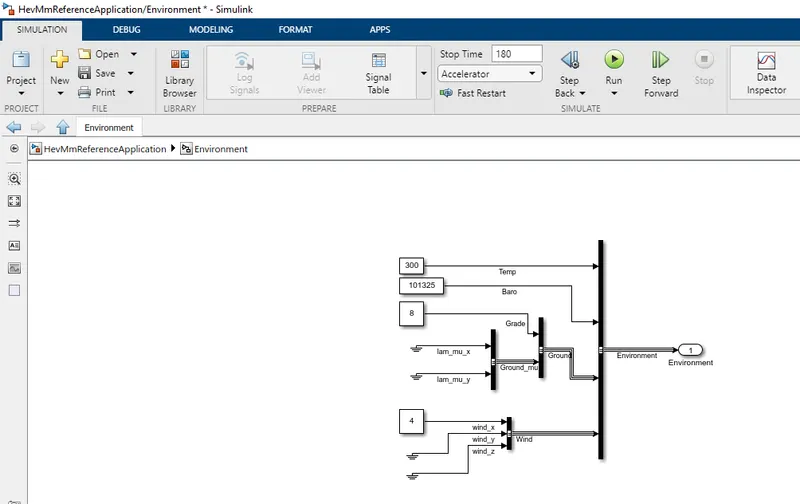
Step5)Run the simulation.
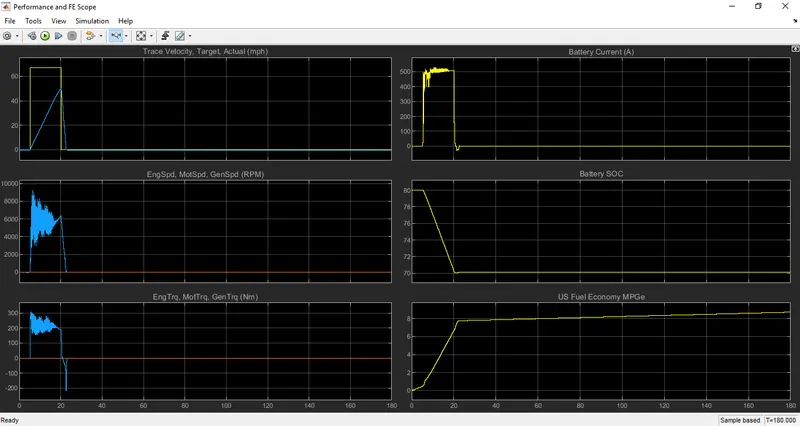
The target velocity actual was only able to achieve 50.4mph. The battery current was increased upto 500A and maintained for a duration of 14sec.
Engine speed was able to achieve 8000rpm but for a small duaration of time and battery state of charge(SOC) was decrease from 80 to 70.
Engine torque increases initially and goes to negative after 20th sec and the peak torque achieve was around 275Nm. The fuel economy was increased from 0 to 8.7 and remains constant.
4)Keeping all other parameters same, compare the simulated results of hybrid and pure electric powertrains.
Answer:
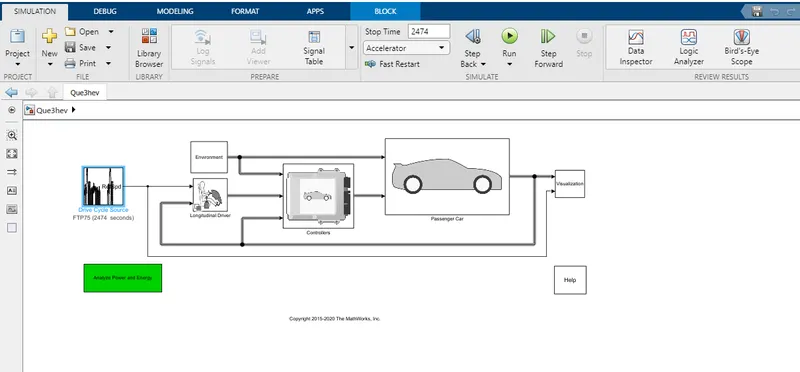
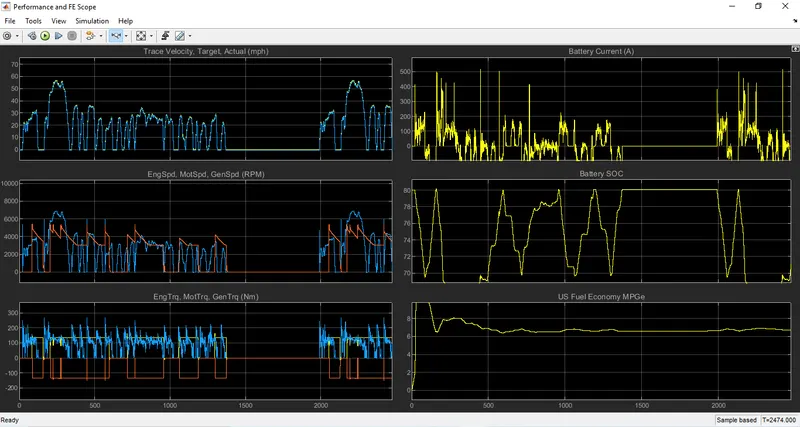
1)HEV reference
2)EV reference
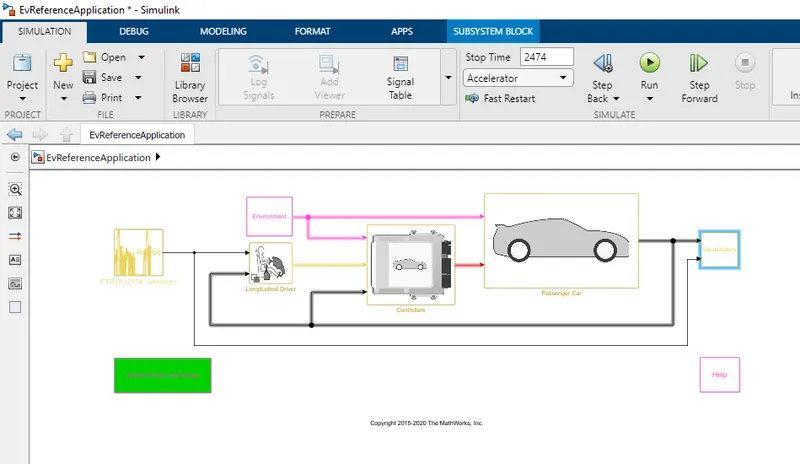
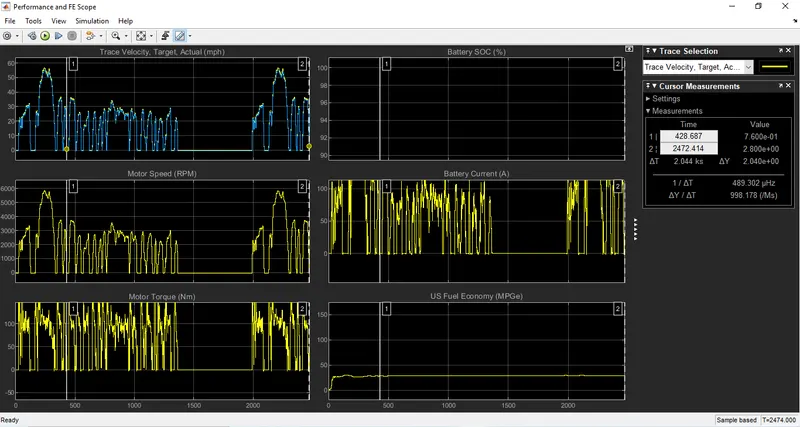
Battery SOC is continuously decreasing in pure electric vehicle where in HEV it is increasing and decreasinga.
Motor speed of HEV is more than the EV.
To generate same amount of power the motor current is half in EV as compared to HEV.
Fuel economy is double in EV as compared to HEV.
Motor torque is same in both EV and HEV.