Week-4 Challenge WOT Condition Part-2
- What is the difference between mapped and dynamic model of engine, motor and generator? How can you change model type?
Mapped Model:
- Model uses a set of steady-state lookup tables to characterize engine performance.
- The tables provide overall engine characteristics, including actual torque, fuel flow rate, BSFC, and engine-out exhaust emissions.
- Uses:- If you have engine data from a dynamometer or a design tool like GT-POWER.
For quasi steady-state engine simulations.
Dynamic Model:
- Model decomposes the engine behavior into engine characteristics that are separated into lower-level components. By combining components in this way, the models capture the dynamic effects.
- Uses:-If you need a more detailed dynamic model and have component-level data.
To analyze the impact of individual engine components on the overall performance.
How can you change model type
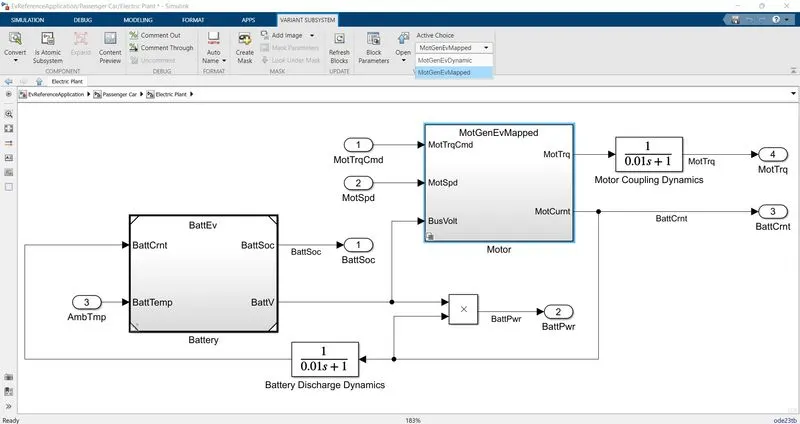
- Open the EV model reference model in powertrain blockset
- Select the Passenger block.
- In Passenger block their will be Electric plant block
- This block has Mapped model which can be changed by selecting it than in the toolbar their is selection aavaible in which by toggling it the model vcan be changed.
- Find the below image for more calrity
==================================================================================================================================================================== 2.How does the model calculate miles per gallon? Which factors are considered to model fuel flow?
The below block is used for calculating miles per gallon
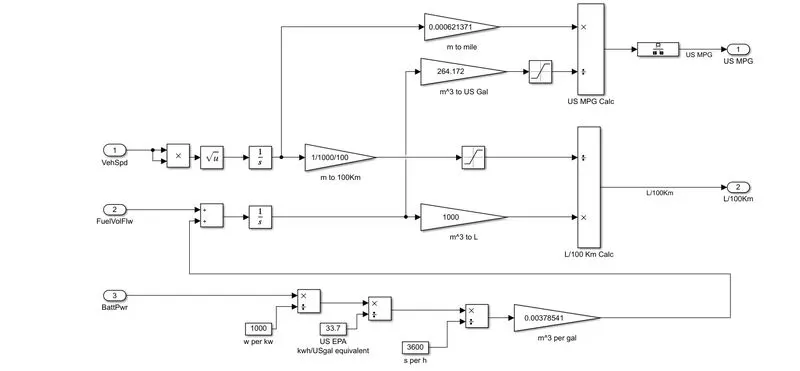
The calculation is done by taking the 3 factors which are mention below.The Simple calculation can be done is by filling the tank by 1 gallon or litre of fuel and noting down the initial and final kms untill the vehicle is stopped by subtracting the distance we would determine the the miles per gallon.But in HEV the battery factor is also consider for which a sperate battery poiwer block is consider which addes to the calclutaion.
Factor considering the model fuel flow are:
- Vehicle Speed
- Battery power
- Fuel volume
====================================================================================================================================================================
3.Run the HEV ReferenceApplication with WOT drive cycle. Change the grade and wind velocity in the environment block. Comment on the results.
The HEV Ref model is opened in power train blockset module which is as bellow:
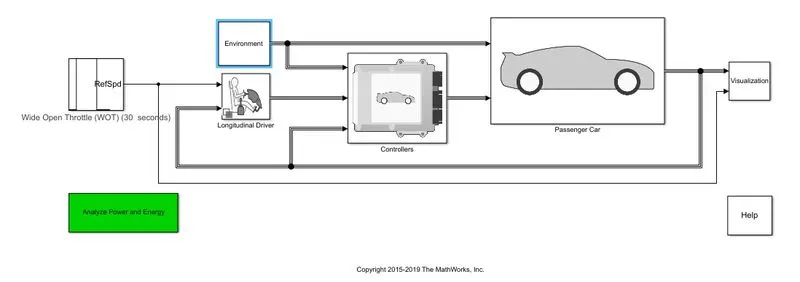
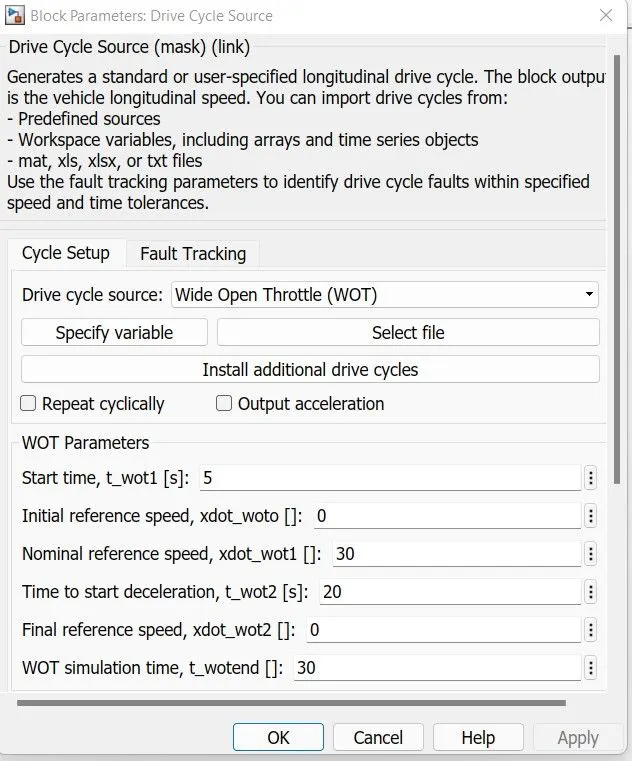
The drive cycle is changed to WOT drive cycle the simulation time is changed accordingly.
The grade and velocity is changed in the envirnoment block in the model , by default it is 0 it changed as below:
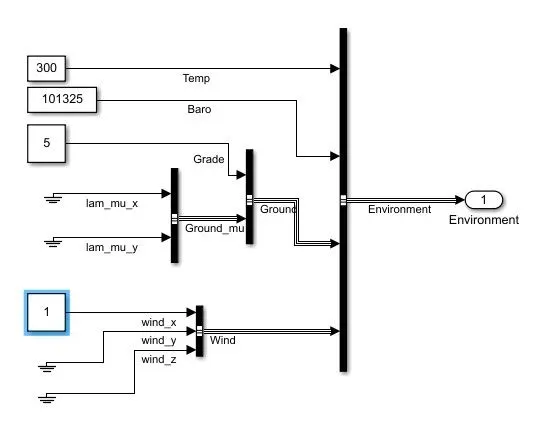
The changed value is seen above. The simulation is perfomed and below results are obtained:
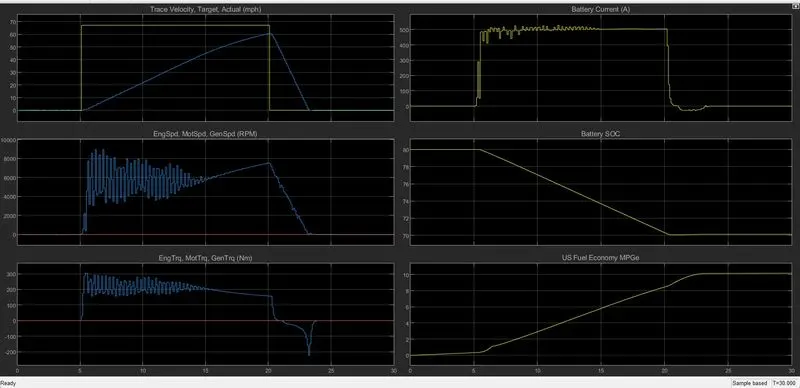
The WOT drive cycle is used for the above simuation and HEV model is taken
The drive cycle is of 30 sec , in which 0 to 5 sec is steady state where the we observe that that all the graphs are stable the soc is 80% and current is 0.
After 5 sec accleration is started from here the graphs starts varing , the battery currents stoops up at the 5th sec and varies above , the soc is decreasing gardiuly.
At the 20th sec braking is done at this movement the battery current is decreased, the battery soc is maintained around 70%.
Futher the car is in idle state where the graphs are at the stable position.
====================================================================================================================================================================
4.Keeping all other parameters same, compare the simulated results of hybrid and pure electric powertrains.
The EV Ref model is opened in power train blockset module which is as bellow:
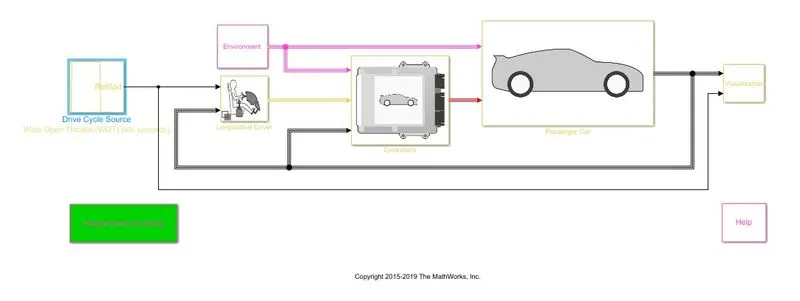
The drive cycle is changed to WOT drive cycle the simulation time is changed accordingly.
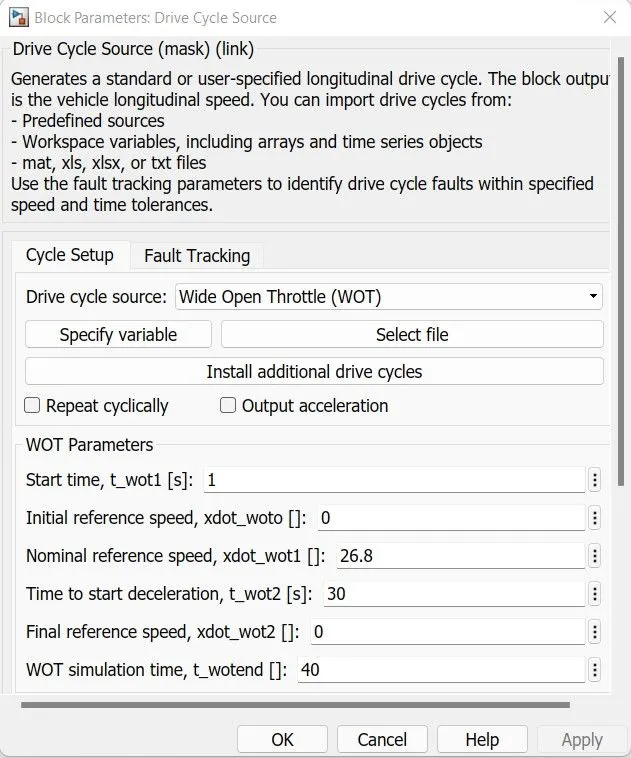
The grade and velocity is changed in the envirnoment block in the model , by default it is 0 it changed as below:
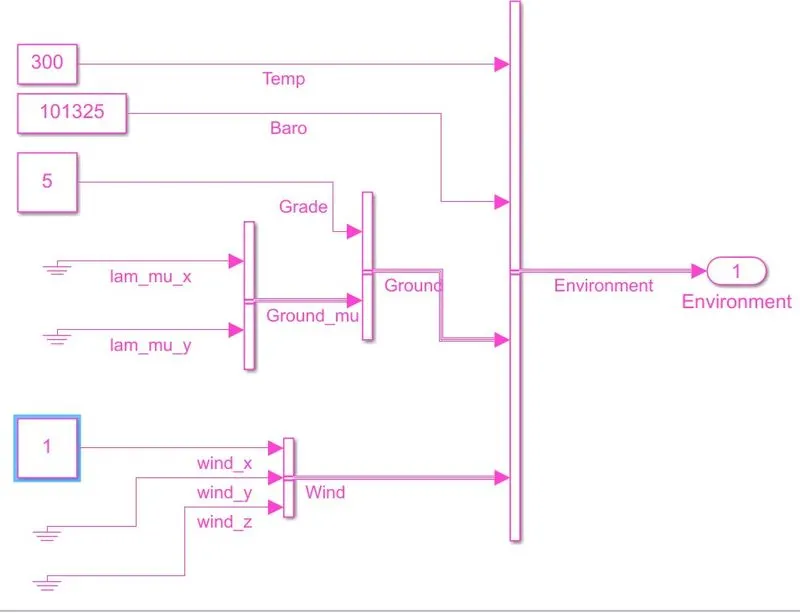
The changed value is seen above. The simulation is perfomed and below results are obtained:
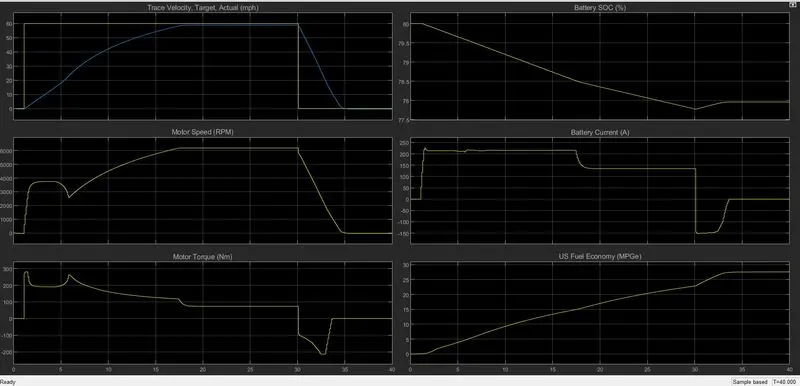
Conculsion:
We observed that the battery is charged during the barking i.e regenarative braking is happening in EV not in HEV
The current onsumtion is totally different in ev all the load is driven by battery
The effeciency is higher in EV then HEV.