Week-4 Challenge WOT Condition Part-2
Question No 01:-What is the difference between mapped and dynamic model of engine, motor and generator? How can you change model type?
Solution:-
Mapped model:- Model uses a set of steady-state lookup tables to characterize engine, motor, generator performance.
The tables provide overall engine characteristics,motor characteristics, generator characteristic in the form of table.
Uses:- For quasi steady-state simulations
Simulation Time:- Its take less time than Dynamic model.
Dynamic model:-Model decomposes the engine behavior into engine characteristics that are separated into lower-level components. By combining components in this way, the models capture the dynamic effects.
Uses:-
-
if you need a more detailed dynamic model and have component-level data.
-
To analyze the impact of individual engine, motor, generator components on the overall performance.
Simulation Time:- Its take less time than mapped model.
Change model type:- For changing Model type following steps are below
- open Vehical model
- After enter in Passanger Car model block
- After that according to model
In Hybrid electric model has Engine , Electric plant, Drivetrain block
In Electrical model has Electric plant, Drivetrain block
According to model configration block are available Select according requirement and then

For this right click and above page is open then go to the "Block Parameter (Subsystem)" and open.
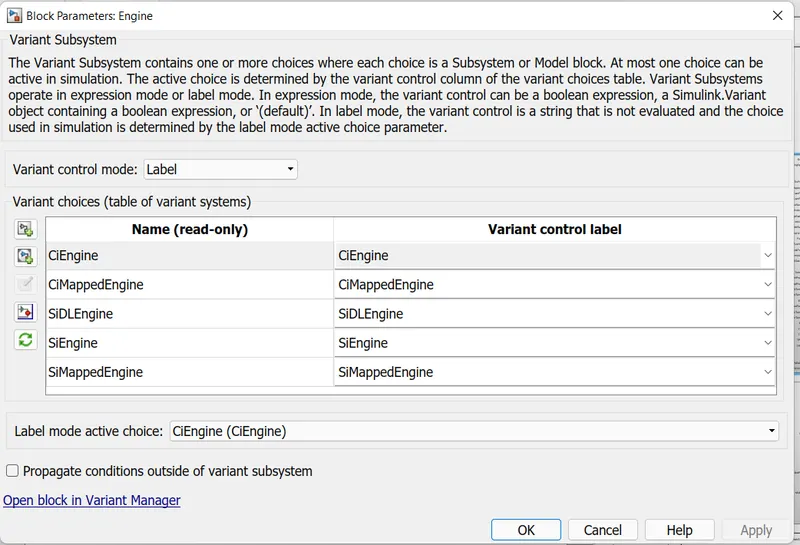
this type page is open and Select in "Lable Mode Active Choice " which model you want to active .
Question No 02:-How does the model calculate miles per gallon? Which factors are considered to model fuel flow?
Solution:-
For calculation on HEV vehicle mile per gallon are details are below.
Subsysteam block looklike below
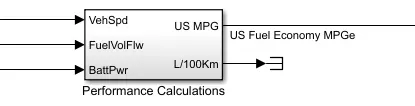
Subsysteam Calculation arrangement are
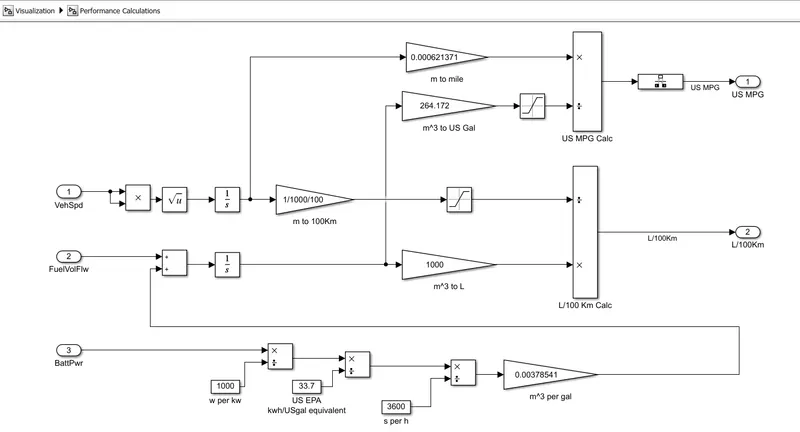
For calculation Need 3 Input value are
1) Vehical speed
2) Fuel volume flow
3) Battery Power
Vehical speed :- Vehical speed Calculation some from below ckt in Hybrid electric vehical.
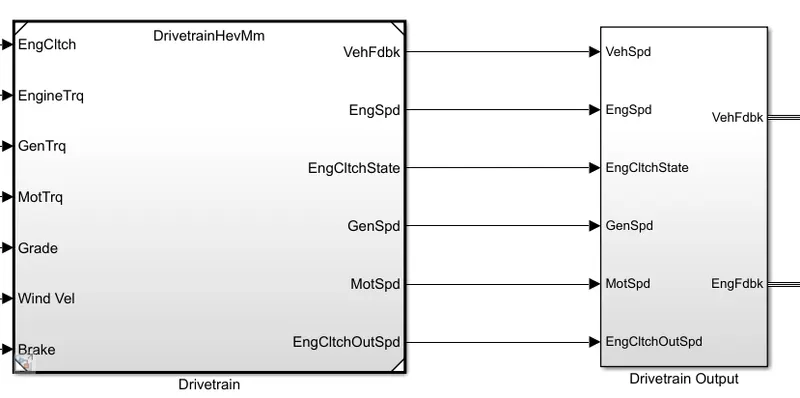
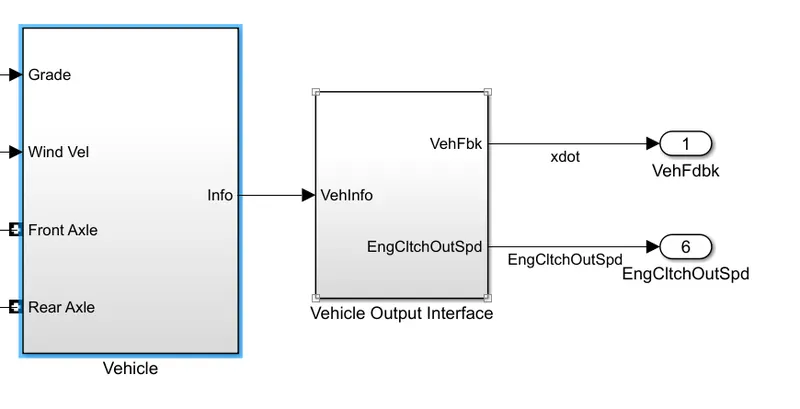
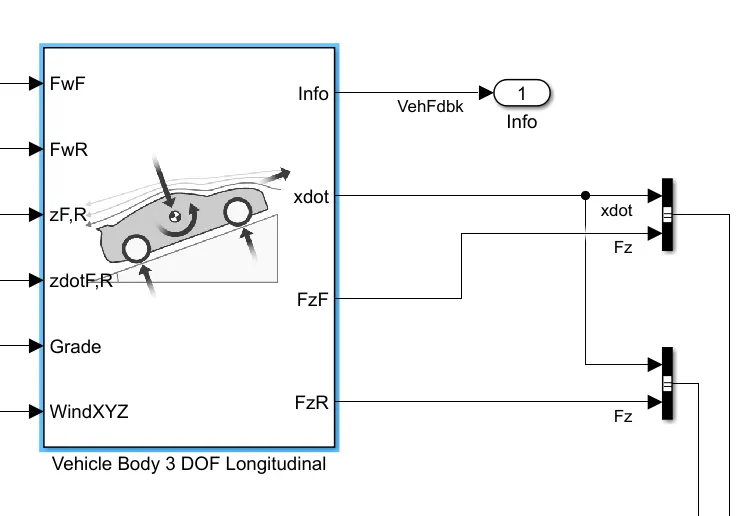
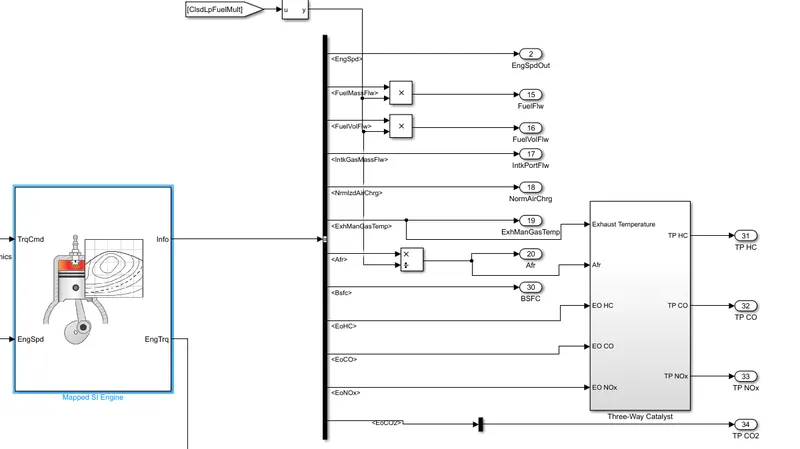
Fuel volume flow:- Fuel volume calculation model are below in hybrid electrical vehical.
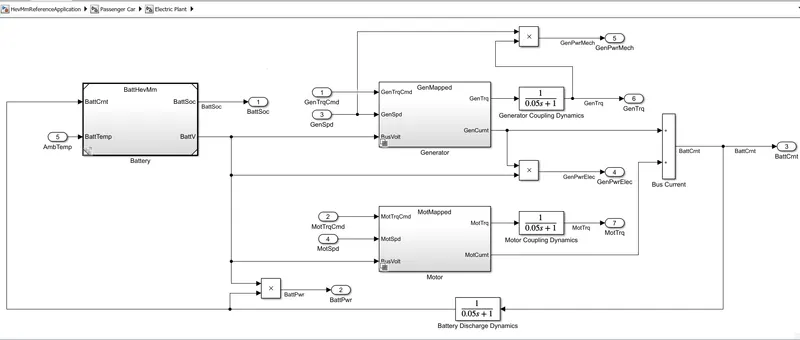
Battery Power:- Battery power is calculated from uses of battery during running in Hybrid electric vehical.
Question No 03:- Run the HEV ReferenceApplication with WOT drive cycle. Change the grade and wind velocity in the environment block. Comment on the results.
Solution:- Run The HEV ReferenceApplication and change input signal with WOT drive cycle.
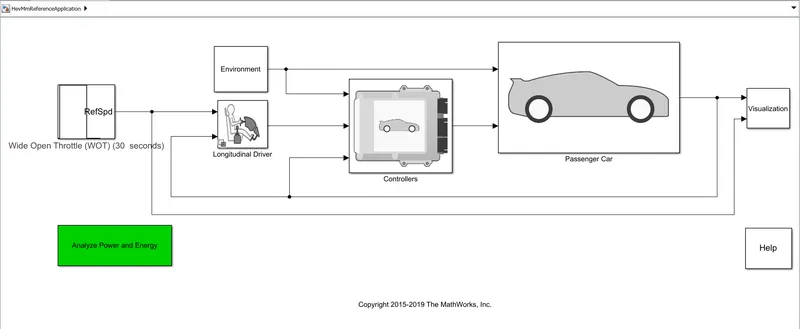
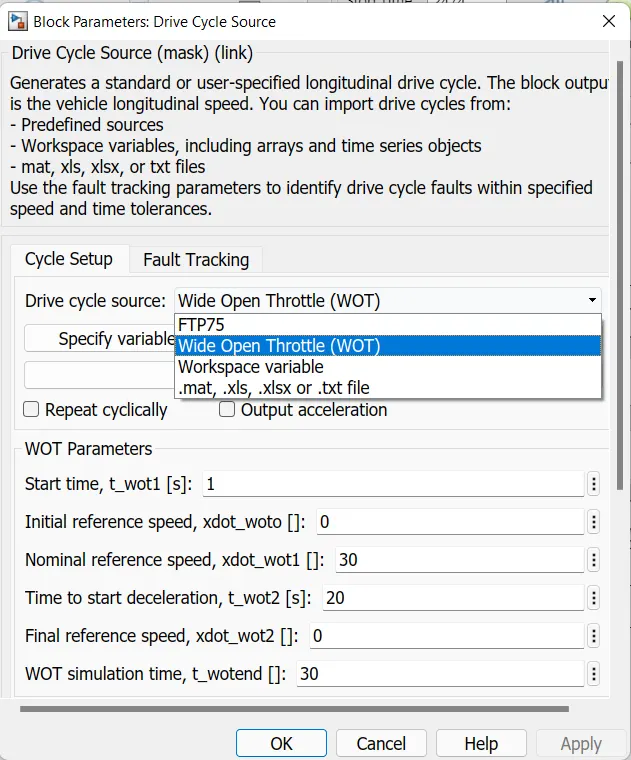
Select Wide Open Throttle (WOT) and set other value.
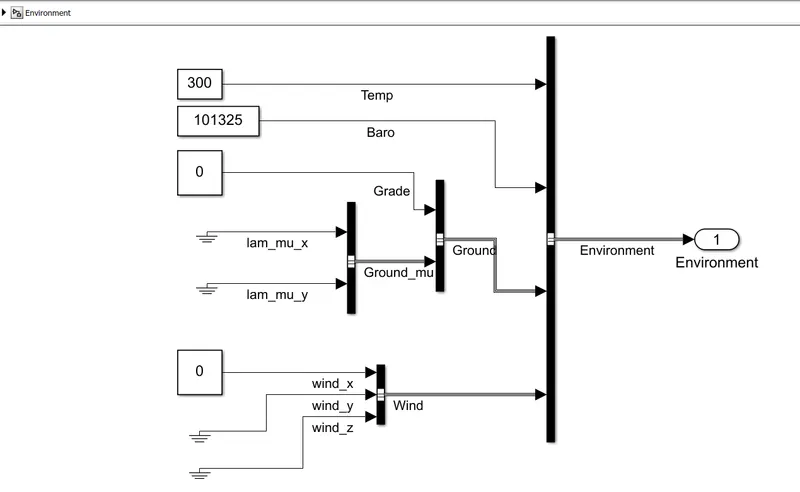
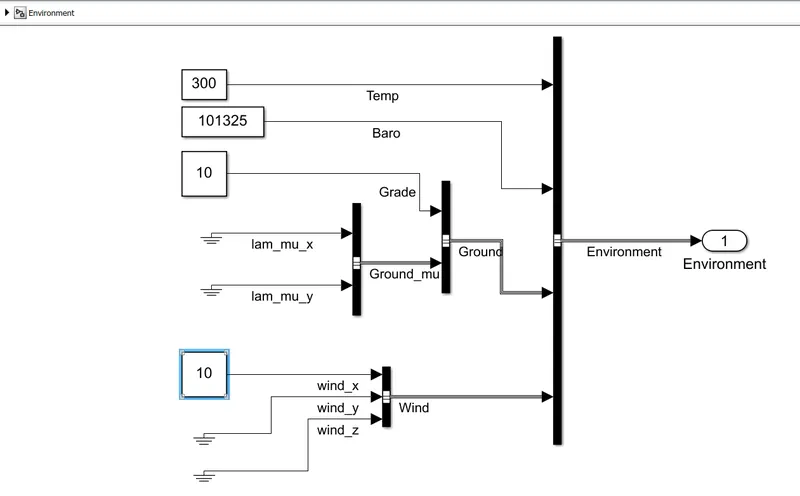
the grade and wind velocity in the environment block parameter setting below at grade 0 degree and wind velocity is 0.
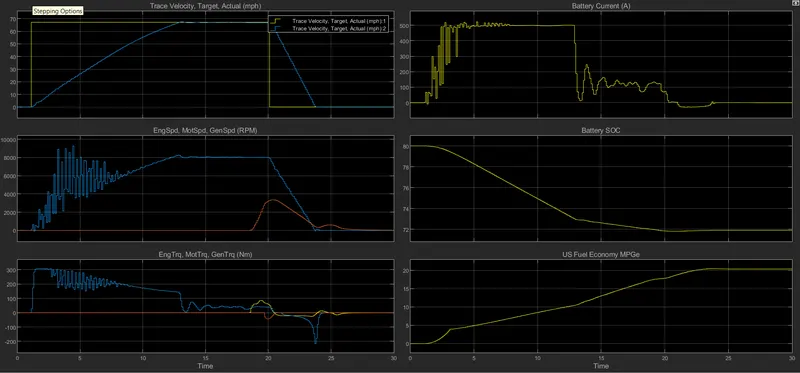
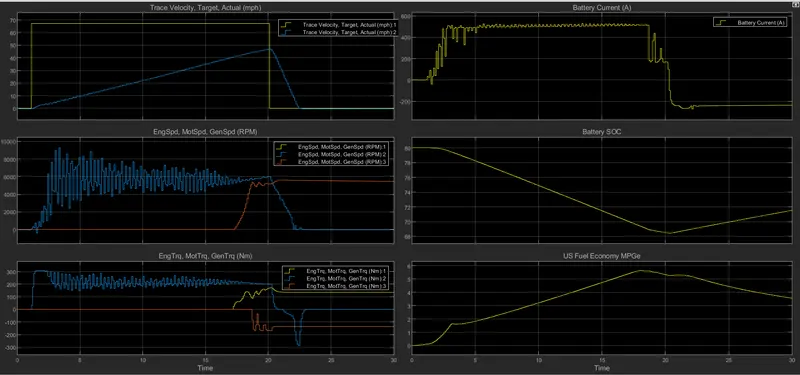
After RUN the simulation result of SCOPE
the grade and wind velocity in the environment block parameter setting below at grade 10 and wind velocity is 10.
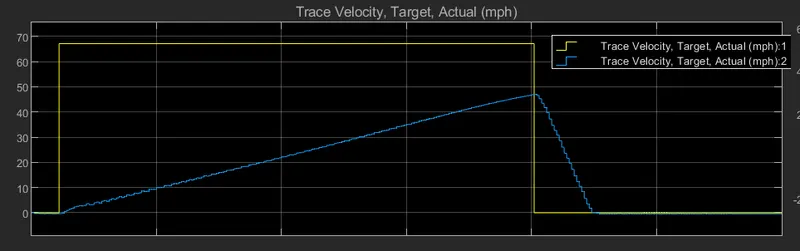
After change the value of grade 10 and wind velocity is 10 then run the simulation result are below.
Observation:-
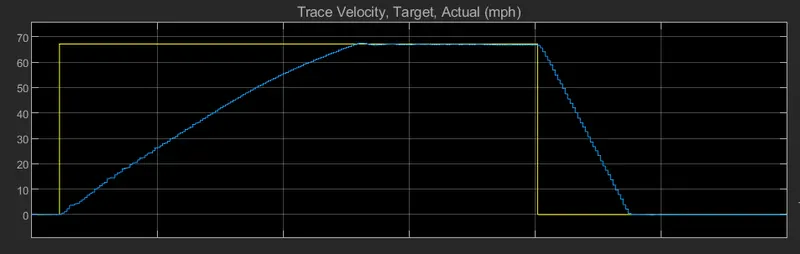
At degree is 0 and wind is also 0 then result at Wide Open Throttel condition vehicle output velocity reaches at maximum value of input velocity at 12.2 sdifference time and 12 to 20 sec its constant speed 66 mph.
At degree is 10 and wind is also 10 then result at Wide Open Throttel condition vehicle output velocity not reaches at maximum value of velocity. In this condition vehicle Velocity reach maximum velocity output 19 sec velocity is 47mph.
Question no 04:-Keeping all other parameters same, compare the simulated results of hybrid and pure electric powertrains.
Solution:- Run EV ReferenceApplication and change input signal with WOT drive cycle.
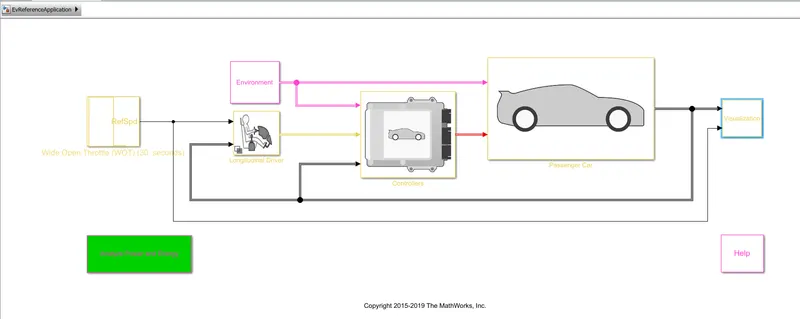
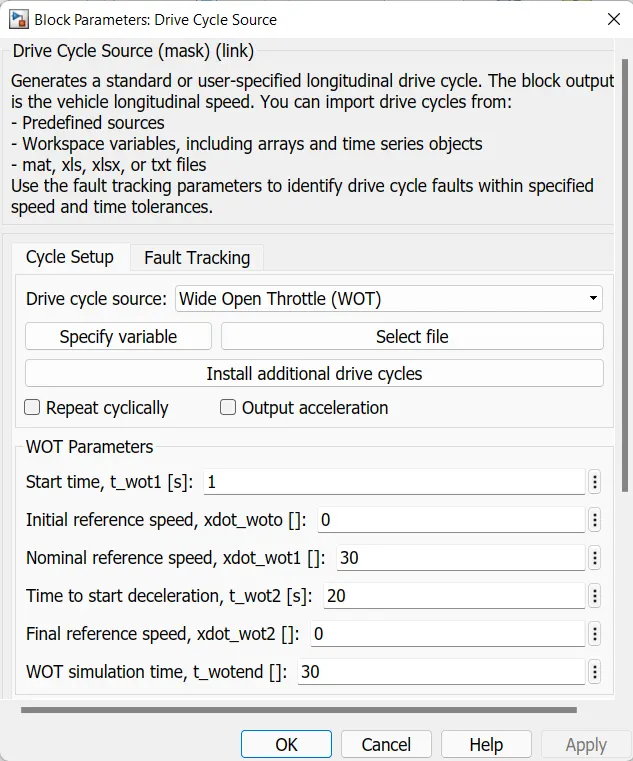
Select Wide Open Throttle (WOT) and set other value.
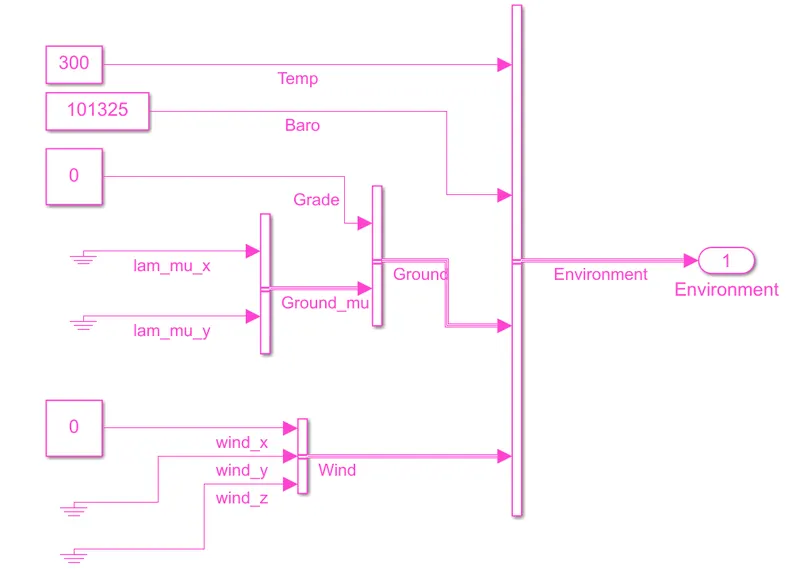
the grade and wind velocity in the environment block parameter setting below at grade 0 degree and wind velocity is 0.
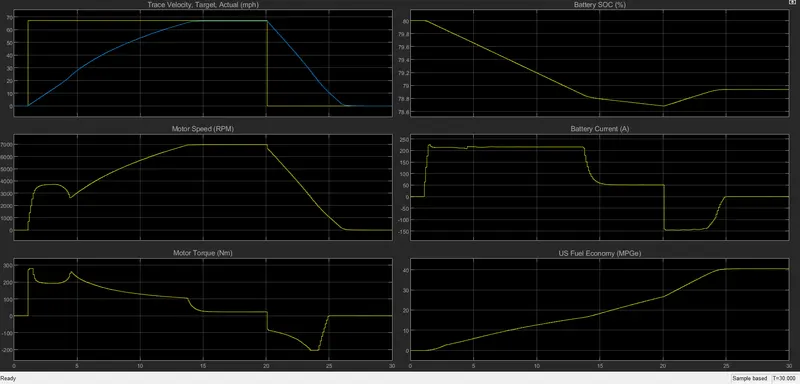
After RUN the simulation result of SCOPE of pure electrical vehicle.
the simulation result of SCOPE of Hybrid electrical vehicle.
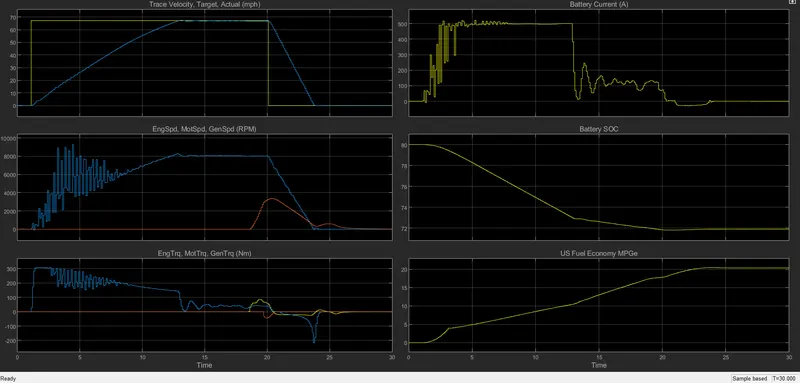
Observation :- After run the simulation Compare the simulated results of hybrid and pure electric powertrains are below.
- Output Velocity Observation:-
In Pure electric vehical When Input velcity is 67.11 mph.
- From 0 to 14 sec its reaches velocity to 0 to 66.33 mph.
- From 14 to 20 sec its 66.20 mph almost constant speed.
- From 20 to 26 sec when input velocity is 0 its provide slightly decreace in value, the value 66.13 to 0 mph take 6.4 sec time.
In Hybrid electric vehical When Input velcity is 67.11 mph.
- From 0 to 12.9 sec its reaches velocity to 0 to 67.2 mph.
- From 13 to 20 sec its 67 mph almost constant speed.
- From 20 to 23 sec when input velocity is 0 its provide slightly decreace in value, the value 67 to 0 mph take 3.6 sec time.
From both the data of Output velocity define following compare points
- hybrid vehical take less time to reach maximum speed then pure electrical difference are some sec only.
- hybrid vehical is almost its input value and electrical vehical some minor amount to reaches.
- After input is 0 without break apply hybrid vehical velocity take less time compare electric vehical.
- Output Battery SOC (State of Charge) Observation:-
In Pure electric vehical When starting soc value is 80%.
- From 1 to 14.4 sec its SOC decreases 80 to 78.8%.
- From 14.4 to 20 sec its SOC decreases 78.8 to 78.6%.
- From 20 to 24.5 sec its SOC increases 78.6 to 78.9%.
- After that SOC is Constant 78.9%.
In Hybrid electric vehical When starting soc value is 80%.
- From 1 to 13 sec its SOC decreases 80 to 72.9%.
- From 13 to 20 sec its SOC decreases 72.9 to 71.8%.
- From 20 to 23.9sec its SOC increases 71.8 to 71.9%.
- After that SOC is Constant 71.9%.
From both the data of Output Battery SOC define following compare points.
- starting 0 to 13 sec hybrid vehical uses more soc than elctric vehical.
- from 13 to 2 sec also hybrid vehical uses more soc than elctric vehical.
- from 20 to some sec increases in SOC % value is high in Electrical vehical.
- Output Battery Current Observation:-
In Pure electric vehical When starting 0 to 1 sec battery current value is 0.
- From 1 to 13 sec battery Current is 215 A.
- From 13 to 15 sec its battery current decreases 215 A to 59.7A.
- From 15 to 20 sec its battery current constant approximate at 50 A.
- from 20 to 23 sec battery current is -140 A it means battery is charging after that its value is 0.
In Hybrid electric vehical
- From 1 to 8 sec battery Current is 0 to 499 A.
- From 8 to 12 sec its battery current constant approximate at 499 A.
- from 13 to 19 sec battery current variation in between is 245 A to 77.17 A.
- From 20 to 24 sec battery current is -2 A it means battery is charging after that its value is 0.
From both the data of Output Battery Current define following compare points.
- Starting Hybrid vehical consume more Current value is High than Electrical vehical.
- Electrical vehical provide high negative current means charge more power for charge and in hybrid electric vehical is less amount for battery charge current provide.
- Pure electrical vehical has emission is 0 and hybrid electrical vehical produce emission.