Week-4 Challenge WOT Condition Part-2
- What is the difference between mapped and dynamic model of engine, motor and generator? How can you change model type?
Ans.
For that first we understand the mapped model and dynamic mode.
Mapped model:-
Mapped model means model has predefined value for simulation or input by means of look up table or it’s may excel file or it can anything and in that model we are not interested of that parameter. This type of model is quicker because there is predefine value which is required short time for running.
Dynamic model:-
Dynamic model value used from it’s own model data(internal data) or used user run time value and we are need to it’s internal parameter. This type of model is require more time because it’s used real time value.
here take one example,
Mapped Engine:-
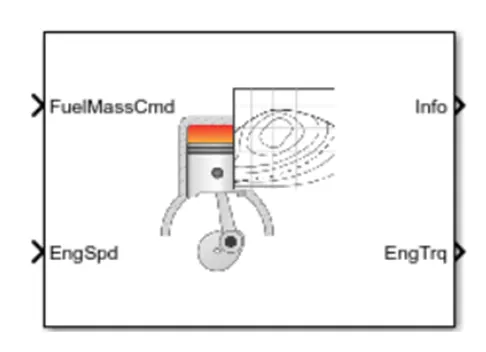
Mapped engine is default settings in powertrain block sett. It is used to measure performance of the vehicle by using standard lookup tables which prefeed to the system. This type of model is less accurate.
This is mapped CI engine block.
Dynamic Engine:-
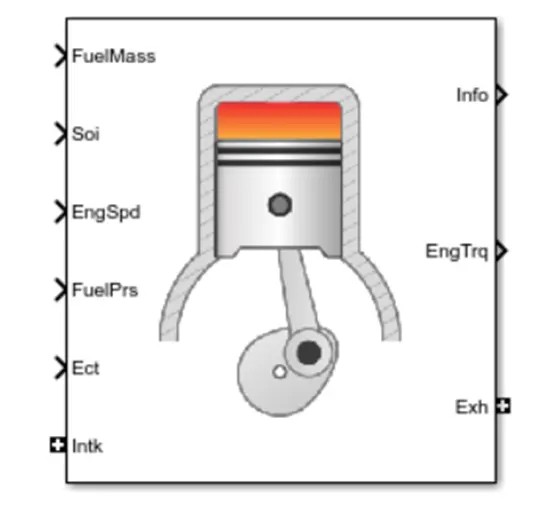
This type of model uses real time data fed by user at run time for modeling. This model is more accurate than mapped engine model. This type of model is used when the data of subsystems of a vehicle is required. We can calculate : brake torque, fuel flow, port gas mass flow, exhaust temperature, exhaust mass flow rate and exhaust emissions.
This image dynamic CI Engine block.
CHANGING MODEL TYPE:-
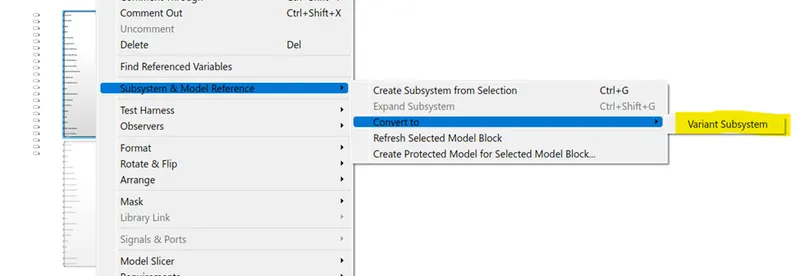
- Open any model in which you want to change model modul.
- Right click on that . go to subsystem and model reference then go to convert.
- How does the model calculate miles per gallon? Which factors are considered to model fuel flow?
Ans.
Miles per gallon is a fuel economy rating determined by how far a car can travel on a gallon of gasoline or diesel for a conventional IC engine vehicle. In case of electric vehicle , this is a measure how much electrical energy is consumed by the battery pack to travel a fixed distance. The powertrain block has a inbuilt model for this which can be found inside the visualization block.
For Calculate miles per gallon we open below subsystem which gives value of miles per gallon.
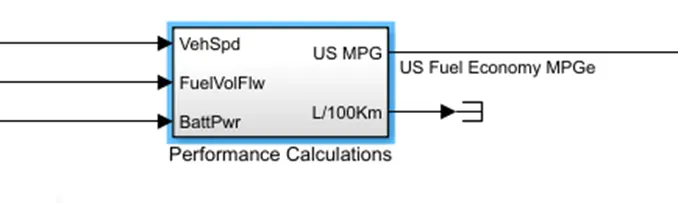
After the open this subsystem we can show below system.
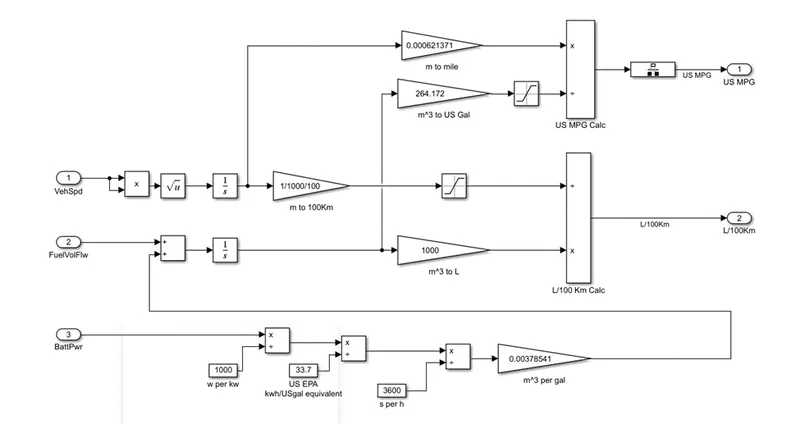
In above image we can see that the we can see this model is HEV so here as input we take fuel rate, battery power and vehicle speed.
Then velocity is convert in distance and then convert in miles.
Fuel flow rate and battery power convert in to gallon by standard unit.
Then both distance and volume divide and we get miles per gallon.
- Run the HEV ReferenceApplication with WOT drive cycle. Change the grade and wind velocity in the environment block. Comment on the results.
Ans.
First we change in drive cycle and run models.
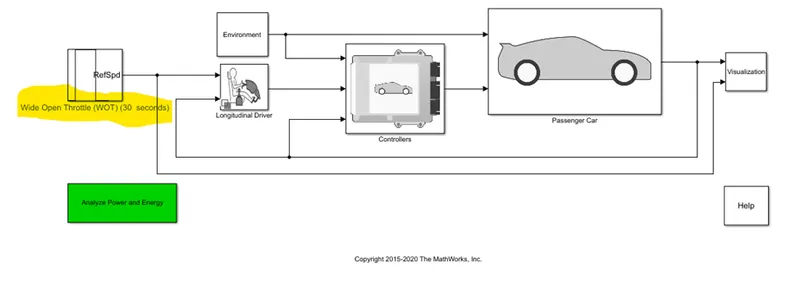
Here we see that in yellow mark than show us drive cycle.
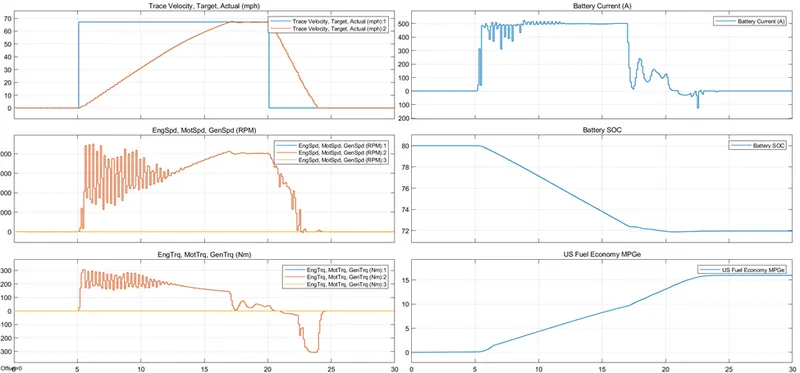
In above result we can that our target velocity drawn in blue line and actual value of velocity is drawn in red line catch target value in later as battery current, engine speed increases for reach the target value.
This happens because limitation in power availability from energy source, to overcome this delay here we can add some battery or fuel supply more provide to engine and motor so that delay can be minimize and our target value can reach in minimum time.
Now we change in grade and wind velocity.
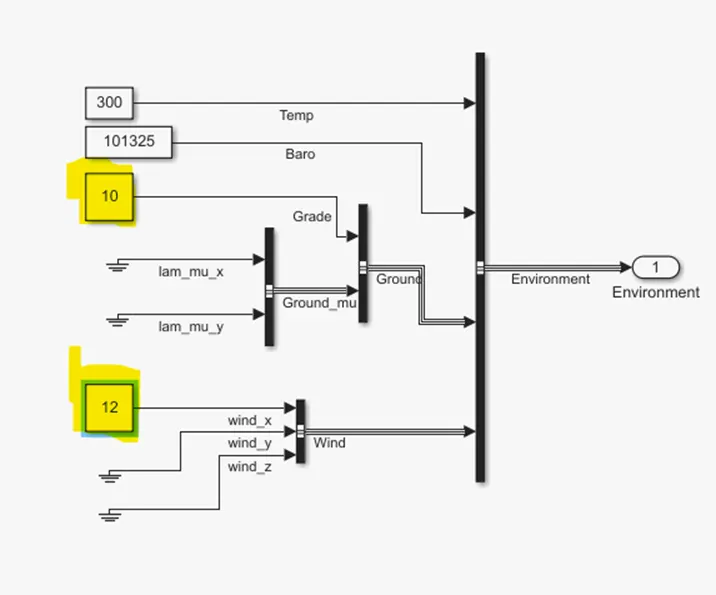
Here we can see that we change the grade angle 10 and wind velocity is 12.
After change we here see that results.
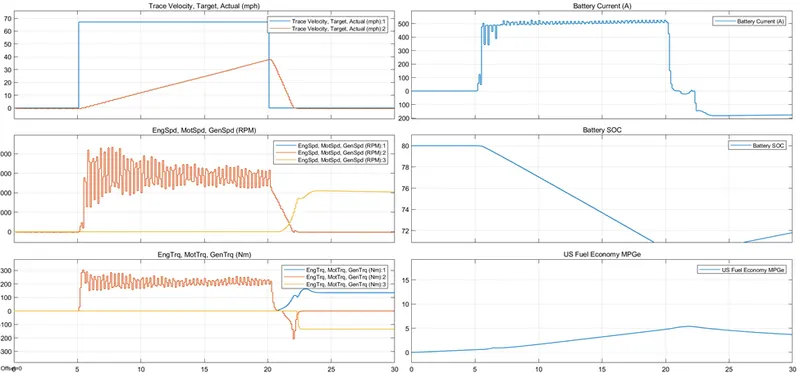
Here we can observed that our actual velocity is not reach to input velocity there is more different compare to above result because of the here add some grade and wind velocity which required more energy.
- Keeping all other parameters same, compare the simulated results of hybrid and pure electric powertrains.
Ans.
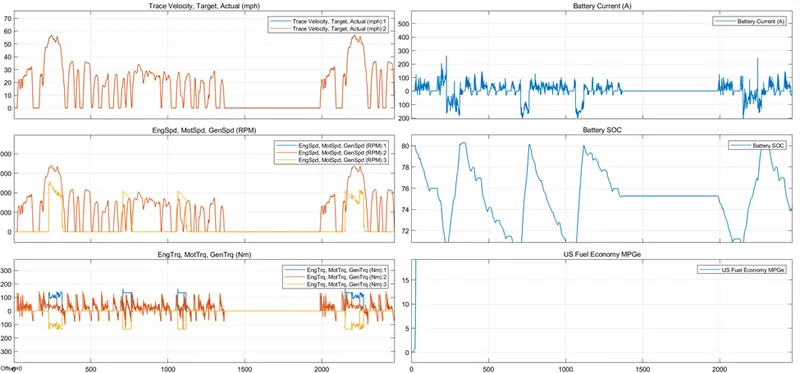
For HEV the result obtained is below provided.
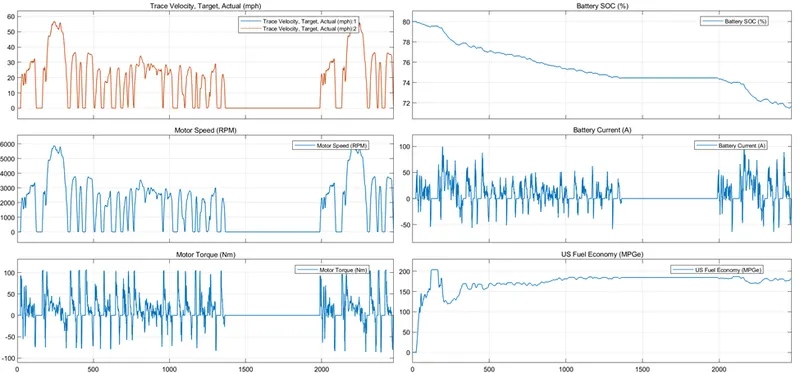
For EV the results obtained is below provided.
Compare the both results:-
- Better fuel economy in EVs compare to HEV.
- In HEV we can reach more speed in less time compare to EVs(acceleration time is less compare to EVs)because of both propulsion are here provide engine and motor and EVs only motor propulsion.
- If we consider only motor propulsion running in both vehicle then EVs has more sustainable compare to HEVs.
- The conventional HEVs use lead acid battery whereas the EVs use lithium-ions cells which have more energy density.