Week-4 Challenge WOT Condition Part-2
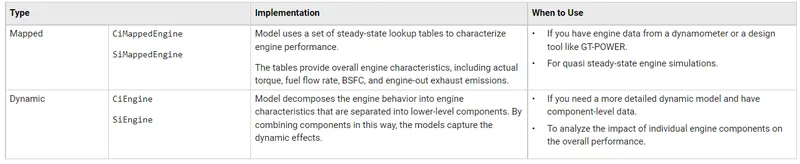
- What is the difference between mapped and dynamic model of engine, motor and generator? How can you change model type?
- How does the model calculate miles per gallon? Which factors are considered to model fuel flow?
soluction:
Distance Traveled Precalculation Template
New Odometer When Tank Refill - Old Odometer From Previous Refill = Miles Driven
As previously mentioned, if you are just looking for approximate answers, then you can simply use the templates and call it a day. If you are looking for the most real, accurate results possible and savings, see Section I.
How to Calculate Miles per Gallon Formula Template
Miles Driven / Gallons Used = Miles-per-Gallon (MPG)
Example
- You drove 100 miles and used 5 gallons of gas.
- Your intuitive answer would be 20 miles-per-gallon. Your intuitive answer would be correct.
- 100 miles traveled, divided by 5 gallons of gas used, gives you 20 miles per gallon.
- 100/5 = 20 mpg.
How to Calculate Gas Cost per Mile Formula Template
Price per Gallon / Miles per Gallon = Cost-per-Mile (CPM)
Example
- You paid $5 for a gallon of gas, and you get 10 miles-per-gallon (mpg).
- Your intuitive answer would be $.50 a mile. Your intuitive answer would be correct.
- $5 paid, divided by 10 miles traveled per gallon (mpg), gives you $.50 cost per mile.
- 5/10 = $.50 cost-per-mile
About Your Miles per Gallon Results...
So what does the miles-per-gallon answer actually tell you? It tells you that...
- This particular vehicle,
- being mechanically maintained at a given level of efficiency,
- using a specific brand and grade of gasoline,
- being filled at a particular time of day,
- from a particular gas station and a particular pump at a particular fill speed,
- and being driven a certain commute route,
- by a specific driver...
...gets so many miles per gallon.
[WebsiteWithNoName is supported by its audience. When you make a donation, good karma may come your way. This is how the site remains ad-free.
Section I - Using a Reasonably Scientific Method and Mistakes to Avoid
If you are looking to get the most real, accurate results possible; this procedure will help you do that. If you are just looking for an approximation, then you can skip it all and fill in the templates with your existing numbers.
- Pick a week, or other time period, when you will be doing your most typical driving pattern.
- Have two pens and paper in the car.
- Use the gas station you normally use. Fill the gas tank at your usual time. Note the pump number you are using. Note the pump speed you normally use. Do not top off. While waiting, write down your odometer reading, include tenths. If you have a trip-odometer, reset it to zero. Remember to not be distracted by all this to the point you forget to put back the gas cap.
- Commence with your week; the usual work commute, errands, etc. Combining your work commute with errands will increase your gas mileage, but only do so if it is what you intend to usually do. Continue your routine until you have less than a quarter-tank. Don't strive for a gas-gauge reading of empty unless it is what you normally do.
- Make sure you still have the pens and paper in your car.
- At the same time of day as before, return to your previous gas station.
- Attempt to use the same pump number you used before. Set to the same pump speed as before. While waiting: write down your odometer reading; write down your trip-odometer reading; include tenths from both. When the pump-handle clicks: write down how many gallons; and very definitely include tenths. Write down the price you paid per gallon. Save the receipt; if the gas station is at least half-coordinated, some or all of this information will be printed there for you. Does it match what's showing on the pump? Do not top off. If so inclined, reset trip-odometer to zero. And the gas cap thing again...
- Proceed with your normal routine. You'll do the calculations with the templates at your leisure.
Section II - List of Notes About Fuel Economy, Improving Gas Mileage and Saving Money
Tune-ups and tire pressure: These are The Big Two as to getting the best mileage.
- Over-inflating tires increases gas mileage, but causes an immediate and significant increase in tire wear; so don't do that. Under-inflated tires reduces your mileage; and it doesn't do your sidewalls any good either.
- As for tune ups, spark plugs are especially important. A fouled or carbon-built-up plug reduces mileage drastically, not to mention it will probably cause you to flunk a smog check. A personal note: Two different mechanics quoted me a price of over $100 to change a set of 6 spark plugs, plus the inflated cost of the plugs. In both cases, I departed the premises immediately. I ended up changing the plugs myself, it's not that hard to do. Buy yourself a Chilton or Haynes manual for your particular make and model of car, they have all sorts of useful information. Some auto parts stores even have tool-loaner programs if you don't want to buy your own. Depending on how the plugs are positioned, changing spark plugs can be an obnoxious task. However, there is no law that says one has to do them all at once. I just did one or two at a time when sufficiently motivated. As a side note, disconnecting more than one plug at a time is not a good idea; reconnection time can be a disaster waiting to happen.
Which factors are considered to model fuel flow.?
soluction:
the main factors are affected the are:
1.vahicle maintenance
2,fuel variations
3.vehicle variations
4.engine break-in
3.Run the HEV ReferenceApplication with WOT drive cycle. Change the grade and wind velocity in the environment block. Comment on the results.
soluction:
HEV ReferenceApplication
powertrain configraction
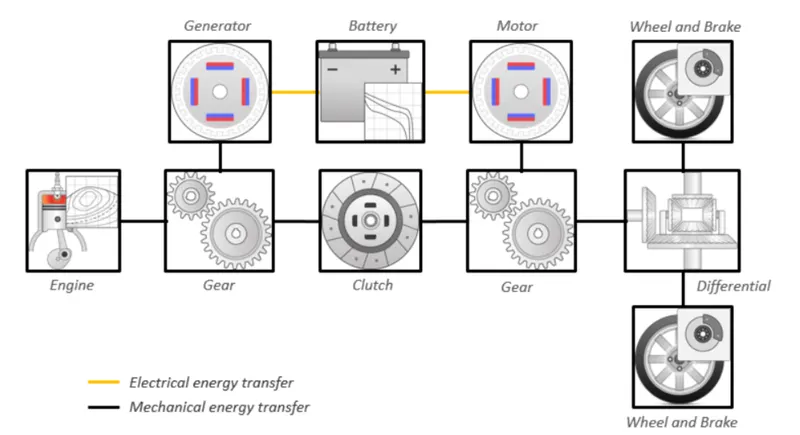
THE HEV REFERENCE APPLICATION REPRESENTS A FULL MULTIMODE HBV MODEL WITH AN INTERNAL COMBUSTION ENGINE. BATTERY,MOTOR,GENERATOR,AND POWERTRAIN CONTROL ALGORITHMS.
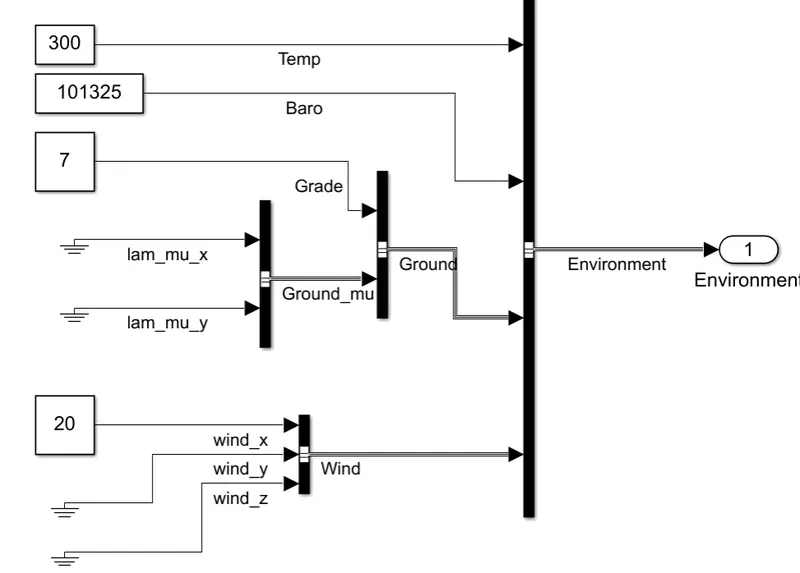
BY DEFAULT THE HEV MULTIMODE REFERENCE APPLICATION IS CONFIGURED WITH
MASPPED MOTOR AND GENERATOR
15-L SPARK-IGNITION DYANMIC ENGINE
OPEN THROTTLE(WOT) DRIVE CYCLE
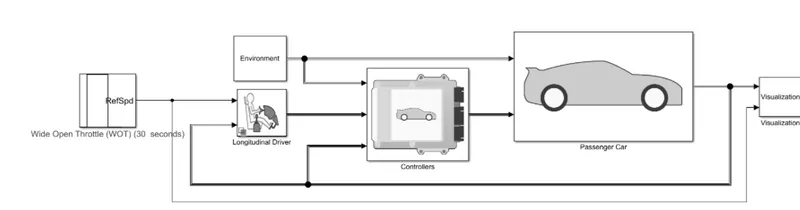
ENVIROMENT BLOCK
CHANGED THE GRADE AND VELOCITY TO 7 AND 20 RESPECTIVELY
OUTPUT:
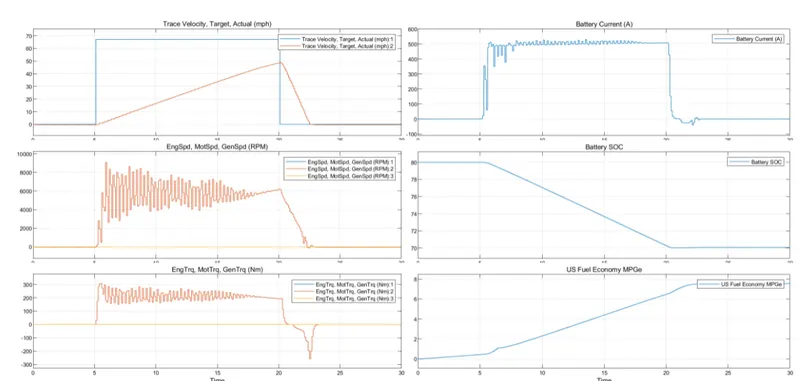
1.0TO 5SEC THE VEHICLE IS AT REST AND FROM 5TO 20SEC VEHICLE ACCELERATED AND AGAIN FROM 20 TO 30 SEC VEHICLE TO RESET.
2.WHEN THE VEHICLE IS ACSELERATED THE MOTOR SPEED AND TORQE IS FLUTUATED.
3.FUEL ECONOMY MPG IS INCREASED FROM 0 TO 8
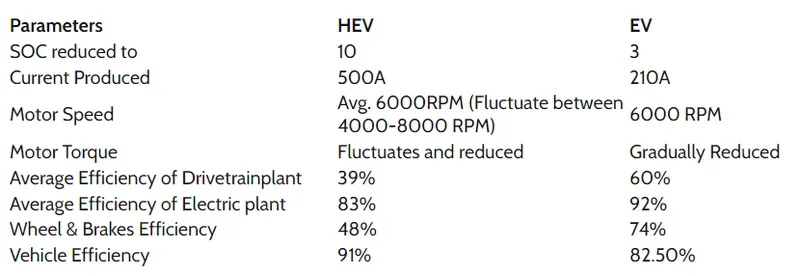
4.Keeping all other parameters same, compare the simulated results of hybrid and pure electric powertrains.
SOLUCTION:
ELECTRICALL VEHICLE REFERENCE:
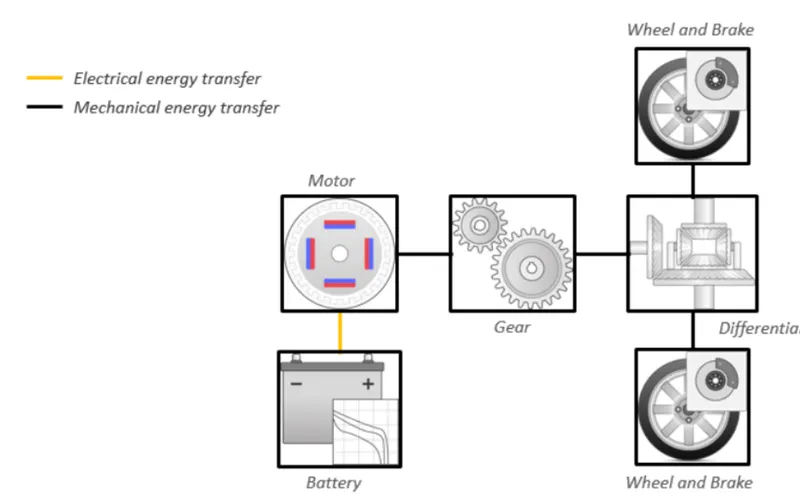
SIMULACTION ELECTRIC VEHICLE:
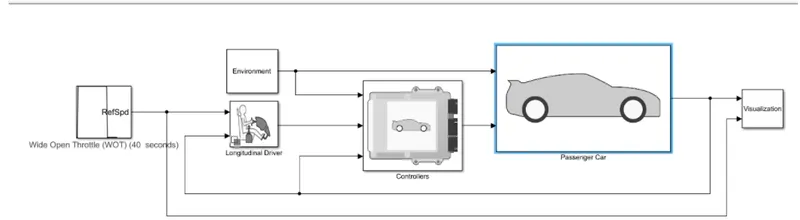
RESULTS:
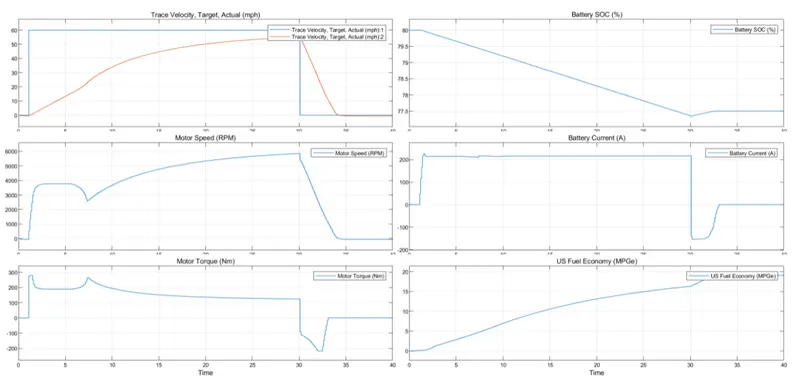
1.WHEN THE VEHICLE IS ACCELERATED THE SPEED OF MOTOR INCRASED GRADUALLY WITH SMALL FUNCTION INITIALLY AND THE MOTOR TORQU IS DECREASED GRADUALLY AS SHOWN IN THE GRAPH.
2.THE CURRENT PODUCED IS AROUND 210 A AND SOC REDUCED FROM 80 TO 77. THE FUEL ECONOMY IS INCREASED FROM 0TO 19 MPGe.
OVERALL SUMMARY:
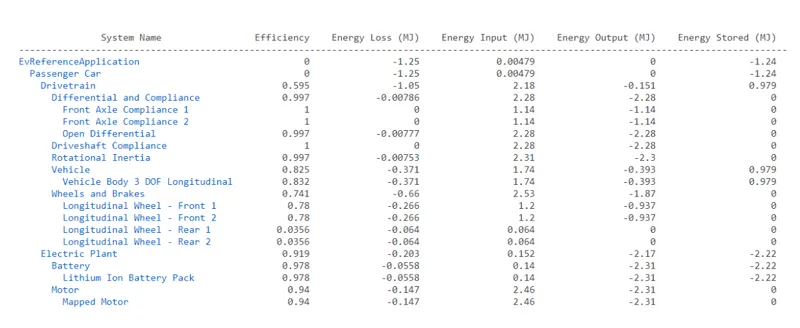
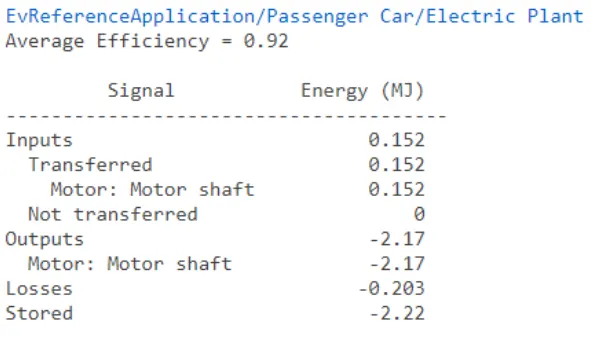
ELECTRICALL PLANT SUMMARY
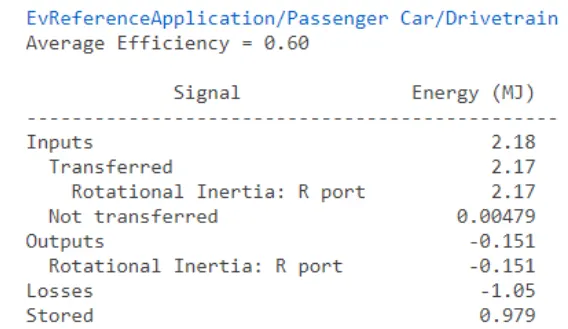
DRIVETRAIN PLANT SUMMARY:
COMPARISION:
THE END