Week-4 Challenge WOT Condition Part-2
1)What is the difference between mapped and dynamic model of engine, motor and generator? How can you change model type?
Answer:-
Difference between mapped and dynamic model:-
1-Mapped Model-
- Mapped model is also known as static model,run the simulation is based on the data savedon the look up table.
- Run fast as compared with the dynamic model.
- It is used if we have the engine data from dynamometer or a design tool like GT power.
- Mapped engine model are suitable for analysis and design activities that do not require engine subsystem dynamic characteristics.
2-Dynamic Model-
- In this model,run the simultion based on the actual components such as motor and accessories,generator and its accessories, engine and its accessories.
- Consume time due to calculation at real-time activities.
- It is used when we need more detailed dynamic model and has component level data.
- Dynamic engine model are suitable for designing control,estimator and diagnostic algorithms that depends on dynamic subsystem states.
How can you change model type?
For changing the mapped model to dynamic model the steps are following-
- Open'EV Reference Application' in powertrain blockset of Matlab.
- Enter the passenger car block by double click on it.
- Then go Electric Plant Block
- Select the Motor block.
- Inside the motor block the default model selected as 'MotGenEvMapped'
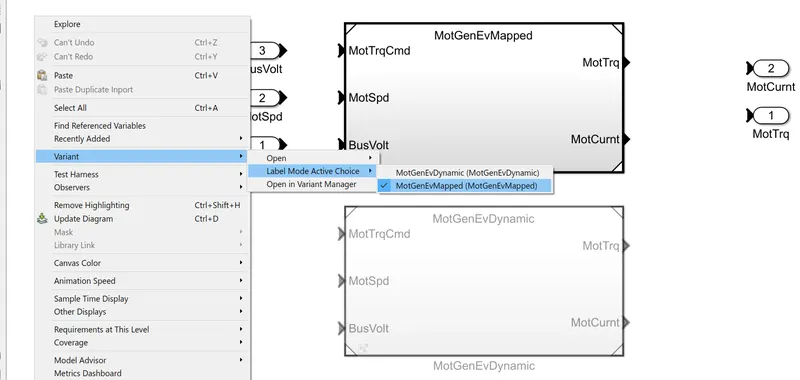
- Now for changing the mapped block to dynamic block, Right click on the 'MotGenEvDynamic' and select variant option.
- Then select 'Label mode active choice' and select 'MotGenEvDynamic' as shown below picture.
2)How does the model calculate miles per gallon? Which factors are considered to model fuel flow?
Answer:-
- MPG or miles per gallon is the distance measured in miles that a car can travel per gallon of fuel. MPG is also the primary measurement of a car's fuel efficiency: The higher a car's MPG, the more fuel efficient it is.
- One gallon is equal to 4.55 litres of fuel it uses. As an example, if you own a car that can return 50mpg and its fuel tank only has one gallon of petrol or diesel in it, you should be able to drive 50 miles before the car runs out of fuel.
- A car's MPG can be inconsistent because it is affected by a number of different factors, so it is difficult to get an accurate measurement. For example, factors like traffic and road conditions can affect MPG in any given context.
- MPG is use for a conventional gasoline vehicle fuel efficiency but for the electric or hybrid vehicle,the fuel efficiency is calculated by MPGe (Miles Per Gallon equivalent).
- In elctric or hybrid vehicle, one gallon is equal to 33.7 kilowatt-hours energy is use.
In case of our Ev model, inside the visualization block we have another block named Performance Calculation and inside this block we have actual calculation model.
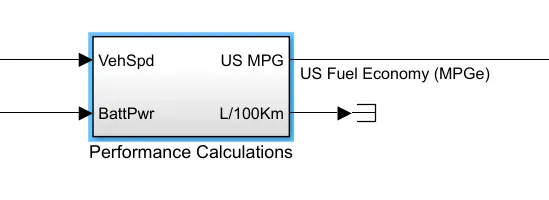
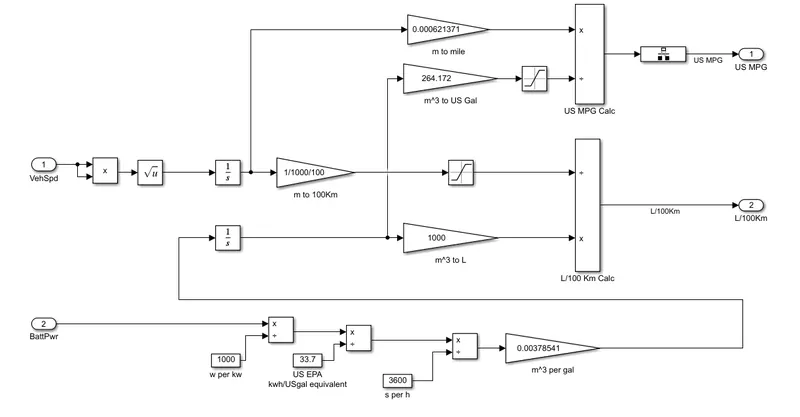
Here, there are 3 different input which is-
- Vehicle speed
- Fuel flow
- Battery power
1.The vehicle speed input is in meter/sec which is coverted into miles by multiplying with 0.000621371.
2.Similarly the kilogram of fuel is converted into cubic meter by multiplying by 1/(1000*0.739). This cubic meter value is then converted into gallon by multiplying with 264.172.The mile and gallon value is used to find the MPG of the vehicle.
3.Now the battery value is initially converted from watts to kwh by dividing 1000 and then to gallon equivalent by again dividing it with 33.7 because 33.7kwh=1 gallon.Then divide the value by 3600 to get per second value and then multiplying by 0.00378541 to get the value in cubic meter per gallon.
3)Run the HEV ReferenceApplication with WOT drive cycle. Change the grade and wind velocity in the environment block. Comment on the results.
Answer:-
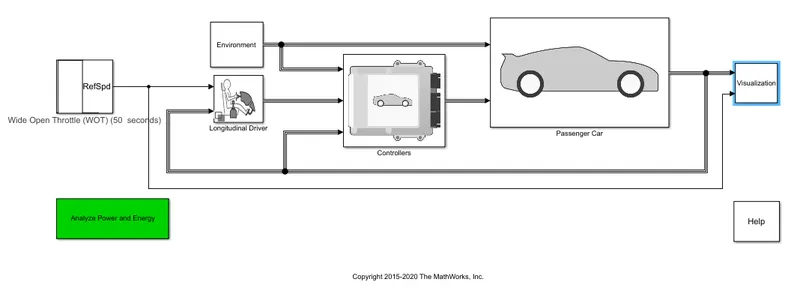
Vehicle Model-
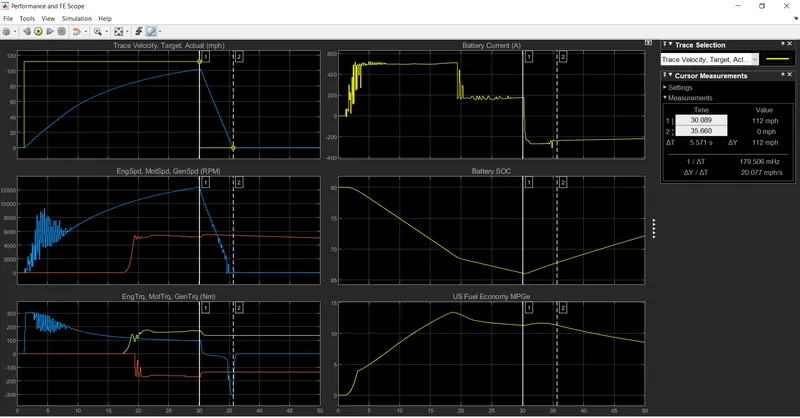
Output Result without Grade and wind velocity-
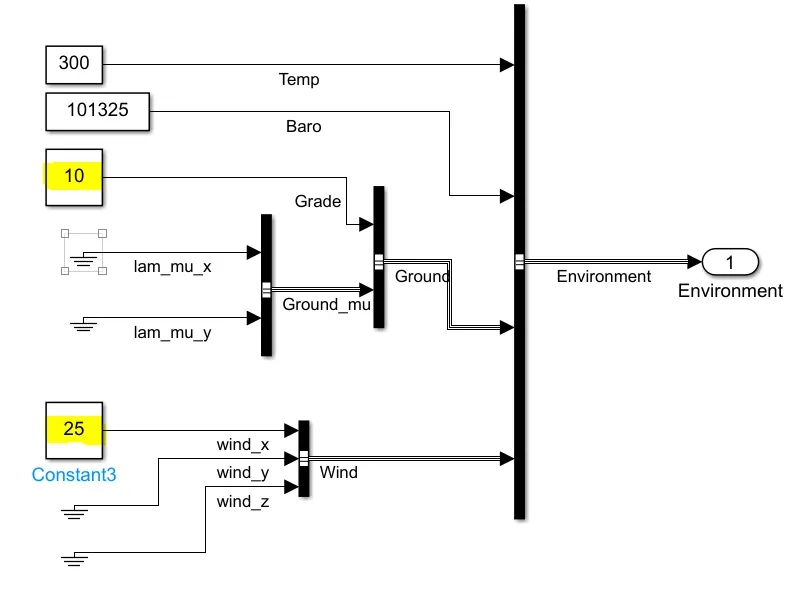
- If we change the Grade=10 and Wind Velocity= 25m/s in Environment block.
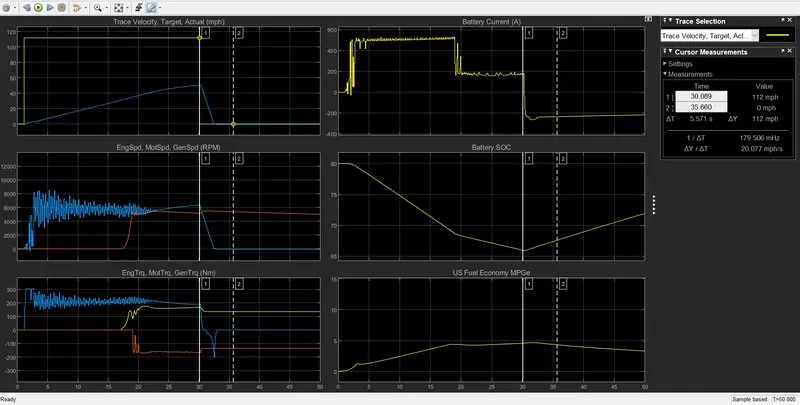
Output Result with Grade and wind velocity-
Conclusion:-
without Grade and wind velocity
- During the acceleration vehicle achive 102m/h speed and during deceleration the vehicle reaches its zero speed in 5.7sec.
- Battery SOCis decreases from 80% to 67%
- The fuel economy was increases from 0 to 13.33 and then start decreases.
with Grade and wind velocity
- During the acceleration vehicle achive only 50m/h Speed (velocity) and during deceleration the vehicle reaches its zreo speed in 2.33 sec.
- Battery SOC is decreases from 80% to 65%
- The fuel economy was increases from 0 to 4.5 and remain constant for same time and then decreases.
4)Keeping all other parameters same, compare the simulated results of hybrid and pure electric powertrains.
Answer:-
Model-
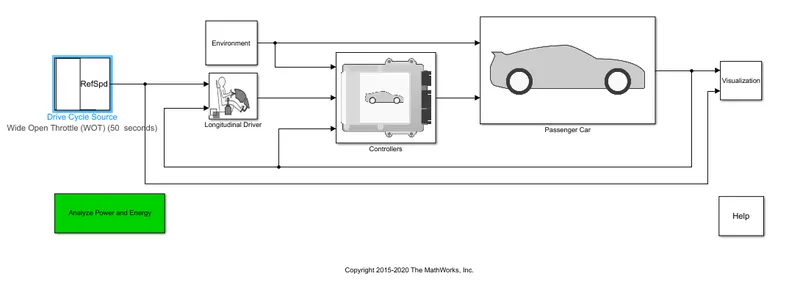
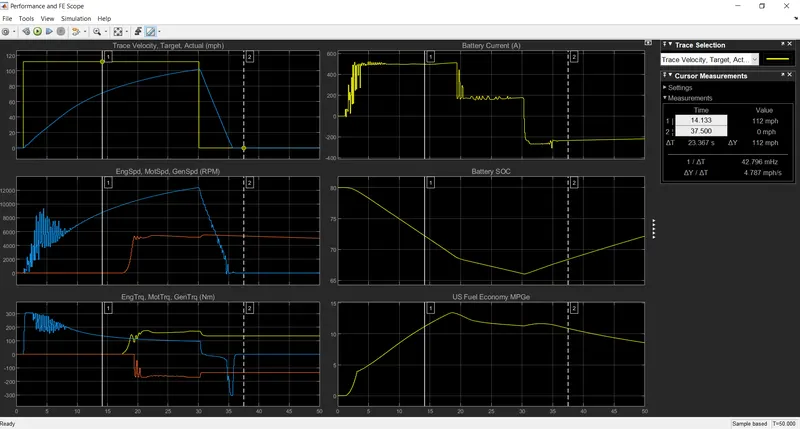
Output Result of Hybrid powertrain-
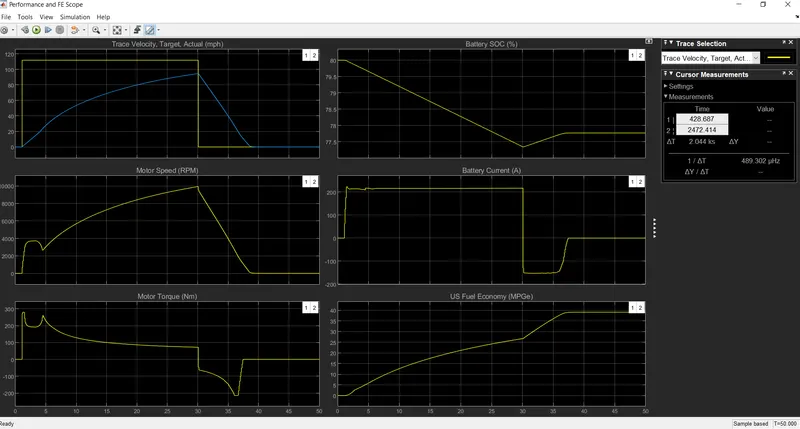
Output Result of Pure Electric Powertrain-
Conclusion-
- The top speed is achived by hybrid model is more than pure electric model.In HEV model top seed is 102m/h where as in EV model is 94m/h.
- The decleration time is increases in EV model which is 8.8sec where as in HEV model this time is 5.6sec.
- The battery current capacity of pure EV is much higher compared to than of HEV, since in EV model the battery is only driving unit.
- Higher fuel economy is achived in case of pure EV.