Week-4 Challenge WOT Condition Part-2
Question-1
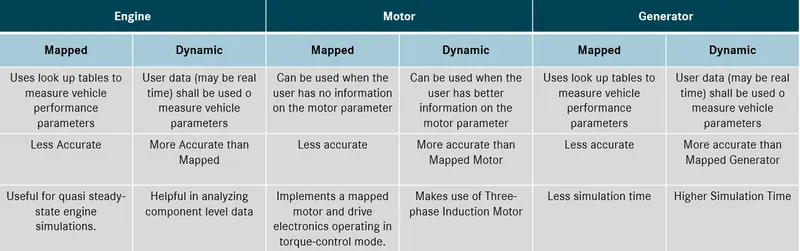
Difference between mapped and dynamic model of engine, motor and generator are given below
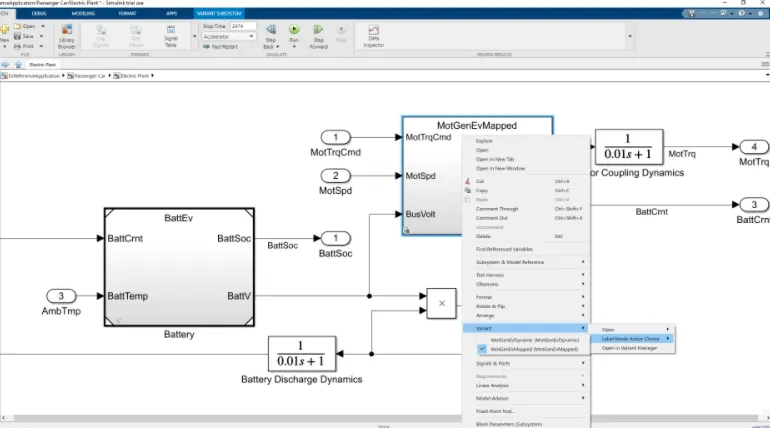
To change the model from Mapped to Dynamic
Step -1 : Open EV model in Simulink
Step -2: Get inside passenger car block & then to electric plant block
Step -3: Right click on the motor block to find variant option (to choose between Mapped and Dynamic)
Note: Same can be repeated for Engine & Generator
Question-2
Miles per gallon (mpg) are commonly used in the United States & Canada, it is a fuel economy rating determined by how far a car can travel on a gallon of gasoline or diesel.
conversion formula :
1 mile = 1.6km
1 mile per gallon = 0.42514 km/L
Since, EVs do not consume gasoline an equivalent amount of energy in kilowatt-hours that is equal to one gallon of gasoline to be seen. In such case one gallon of gasoline is equal to 33.705 kilowatt-hours (as per EPA - Environment Protection Agency).
MPGe = km/kWh × 3370.5 ÷ 160.9344
For example, let's convert 50 km/kWh of Electric vehicles to MPGe of Diesel Engine Vehicle
50 km/kWh = ( 50 × 3370.5 ÷ 160.9344 ) = 1,047.165802 MPGe
The performance calculation model (Case : EV) calculates miles per gallon using the vehicles speed and battery power (consdiering the above mentioned conversions). The model is as given below
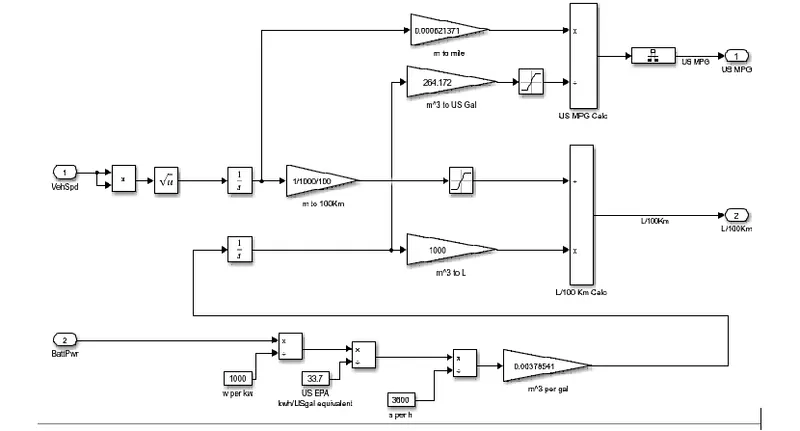
Case Considered : EV
Step-1 : Distance is calculated by vehicle speed and time and then converted to miles
Step-2: Battery power is divided by 1000 and furthr divided by US EPA value (33.7) and then converted to m^3 per gal
Step-3: using miles and m^3 per gal values, the model calculates miles per gallon
Note: This is the model of EV vehicle, for HEV additonal input of Fuel volume flow shall be considered
Question-3
Step1: Open HevMmReferenceApplication using the 'autoblkHevStart' in command window
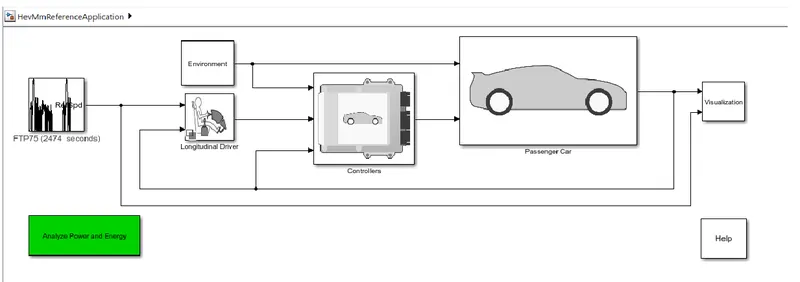
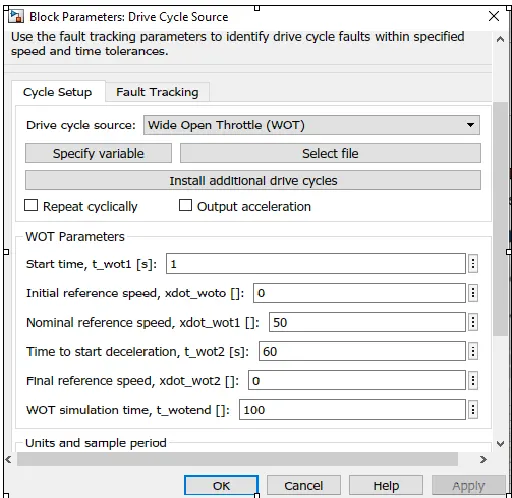
Step2: At drive cycle source change the drive cycle source to WOT and check rest of the WOT parameters as per the simulation requirements
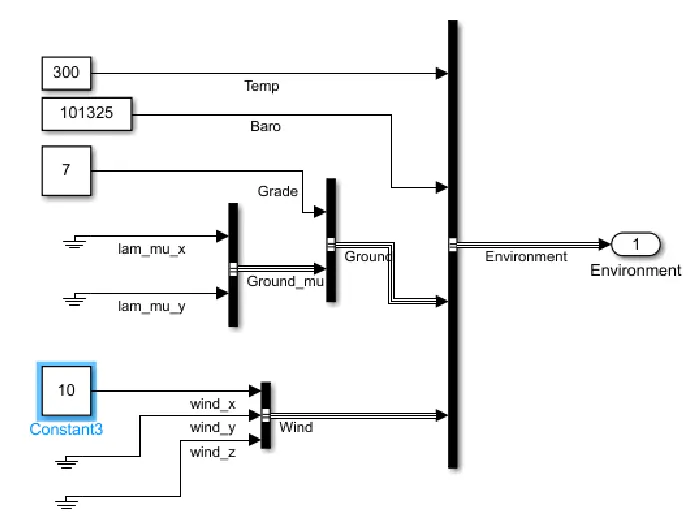
Step3: Inside Environment block change the grade and wind velocity with simulation values and return the HEV Ref model and run the simulation. In this case simulation study two case are considered
case 1: Gade = 7deg, Wind velocity = 10m/s
Step-4: Run the simulation and Analyse the graph / results
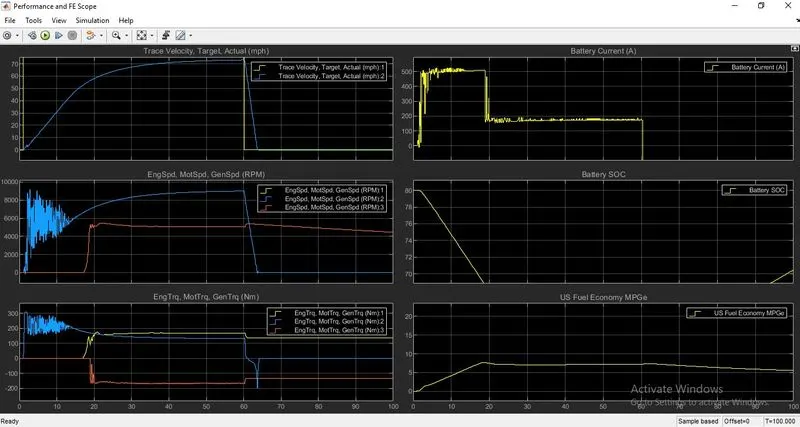
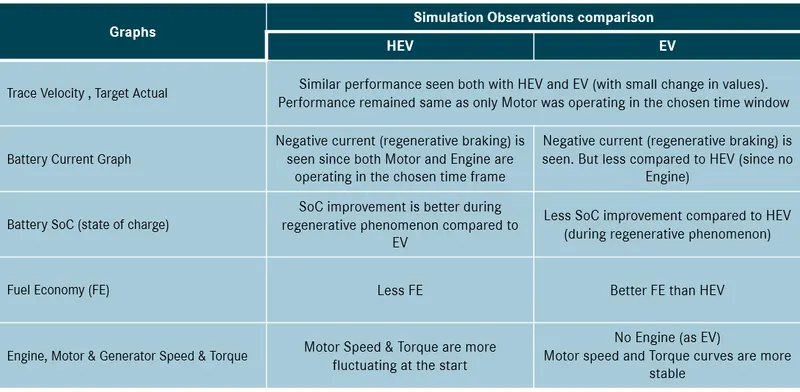
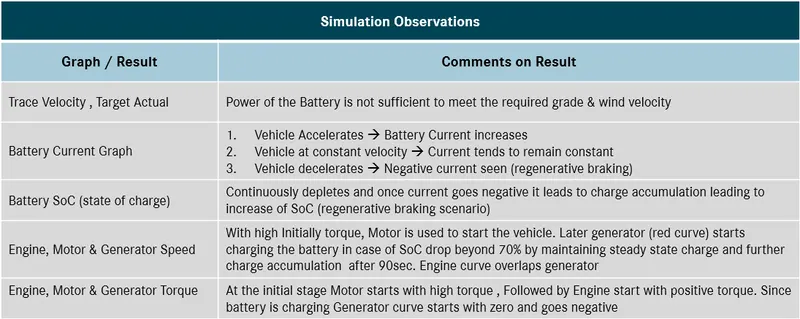
Step-5: Observations from the analysis are given below
Question-4
Keeping all other parameters same as in Question-3, Simulations are done on EV Ref model and results are compared in the table
Step-1 : Open EV Ref model
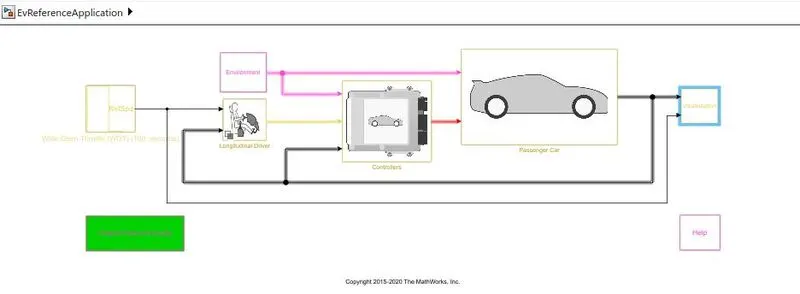
Step-2: Set the Drive cycle & simulation parameters are in case of Question -3 (HEV)
Step-3: Set the same Grade and wind velocity as in HEV (Question-3)
Step-4: Run the simulation and Analyse the graph / results
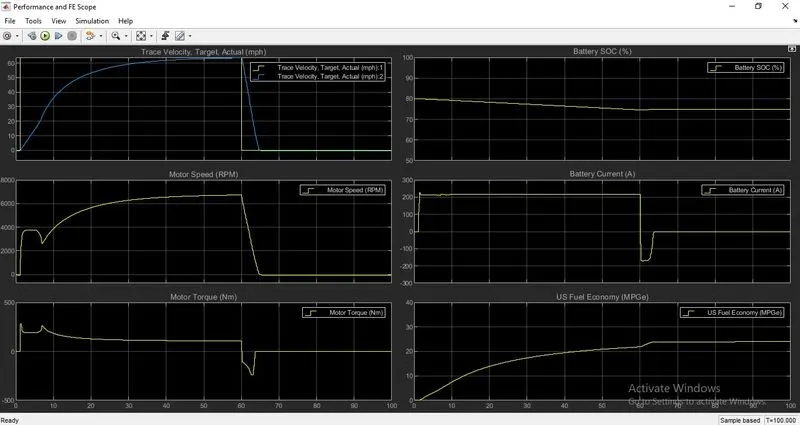
Step-5: Observations from the analysis are given below