Week-4 Challenge WOT Condition Part-2
Aim:
- What is the difference between mapped and dynamic model of engine, motor and generator? How can you change model type?
- How does the model calculate miles per gallon? Which factors are considered to model fuel flow?
- Run the HEV ReferenceApplication with WOT drive cycle. Change the grade and wind velocity in the environment block. Comment on the results.
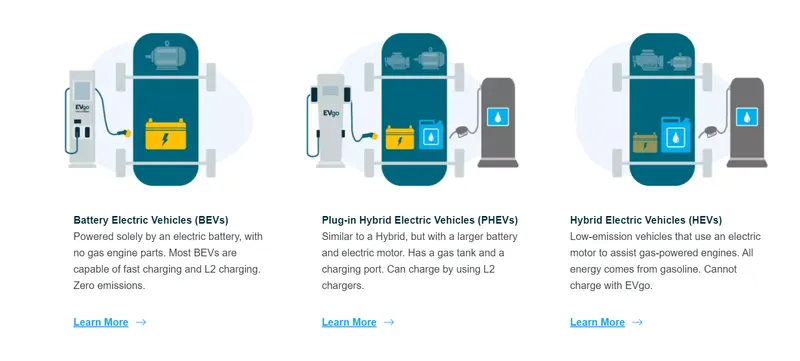
- Keeping all other parameters same, compare the simulated results of hybrid and pure electric powertrains.
answers:(1)
mapped engine model:
Model uses a set of steady-state lookup tables to characterize engine performance. The tables provide overall engine characteristics, including actual torque, fuel flow rate, BSFC, and engine-out exhaust emissions.
it is very speed and takes less time for simulation,and a example for strady state vechiles.
dynamic engine model:
Model decomposes the engine behavior into engine characteristics that are separated into lower-level components. By combining components in this way, the models capture the dynamic effects.
it is an example for quasi and dynamic state vechiles.
changing the model type:
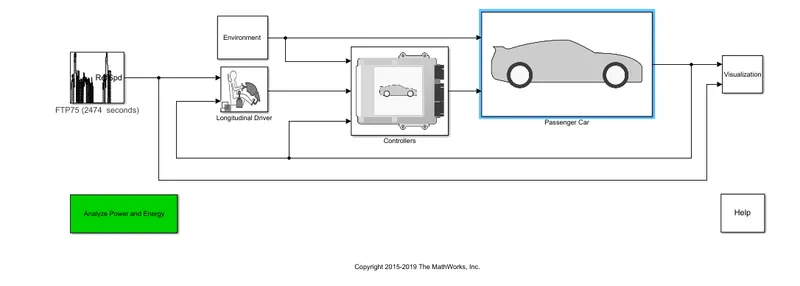
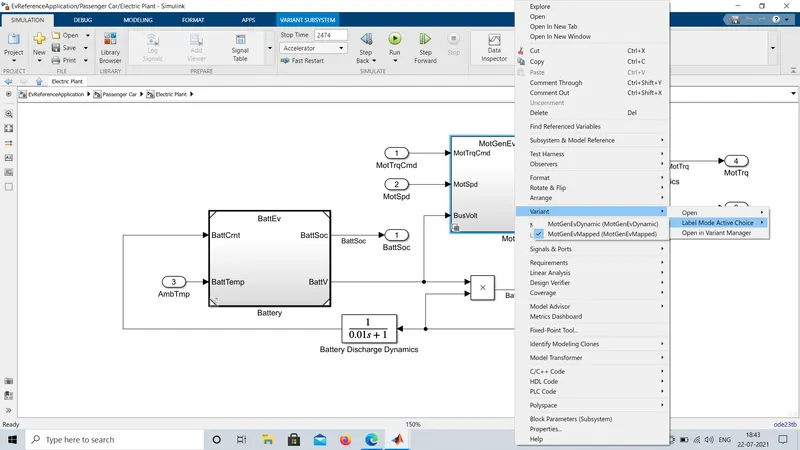
- open the ev reference application.
- open the passenger car subsystem.
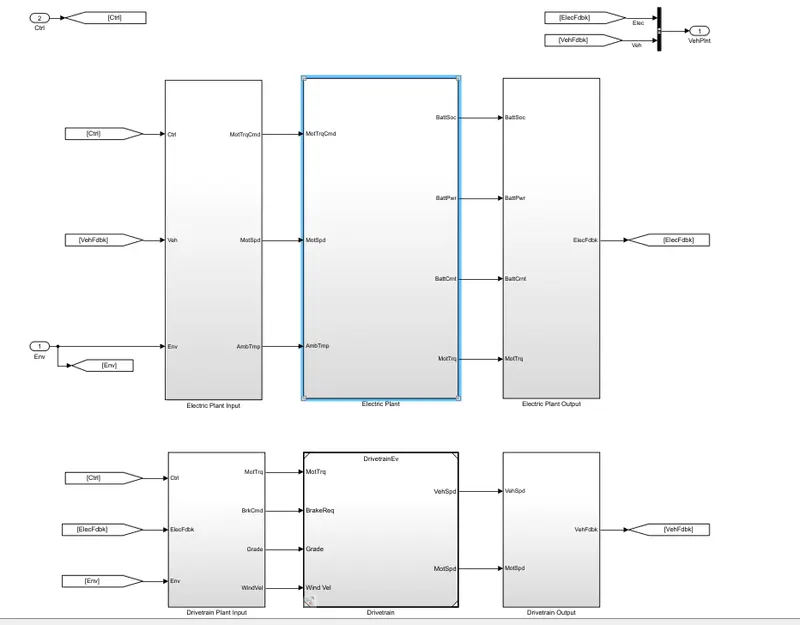
- open the engine plant subsytem.
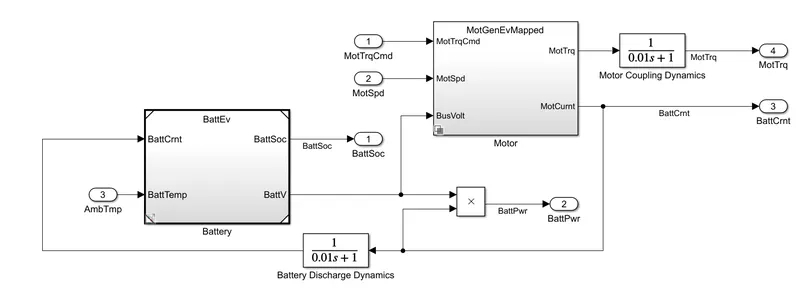
- right click on the motor it will show the variant where we can the change model.
(2)answer:
how to calculate miles per gallon:
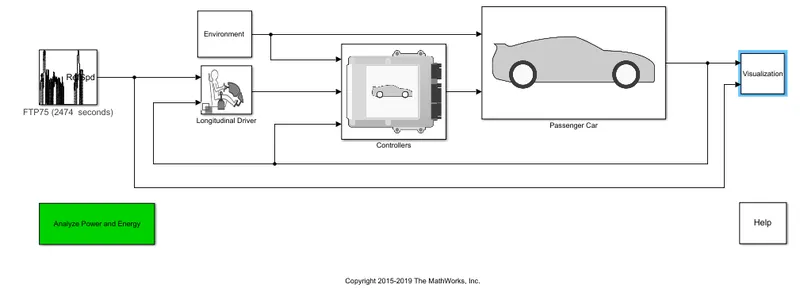
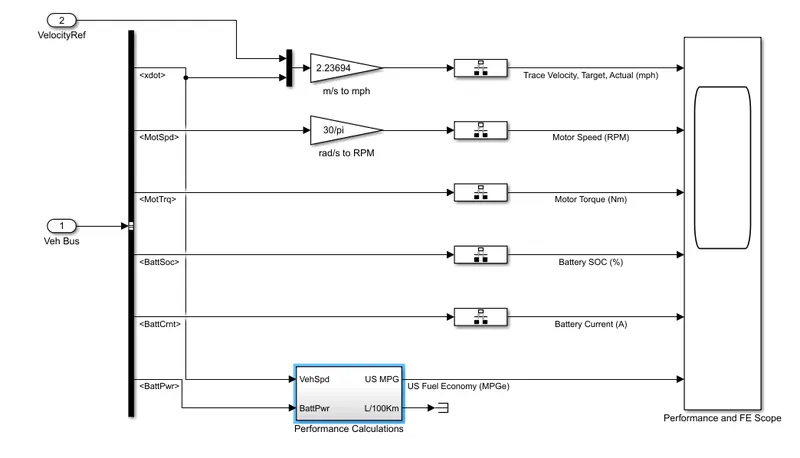
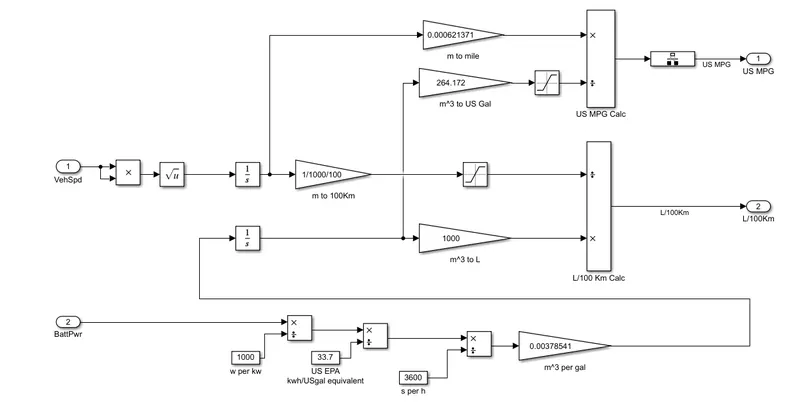
it is a fuel economy where how much distance a vehicle can travel on a gallon.
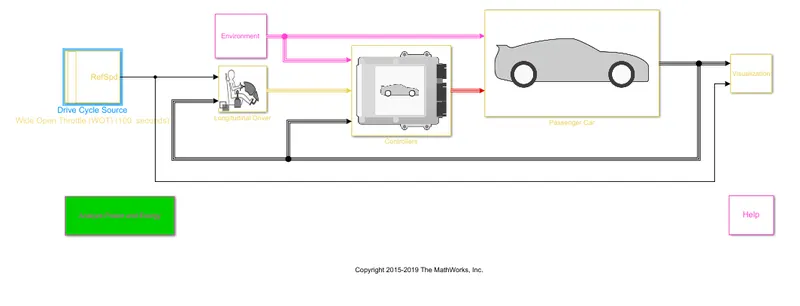
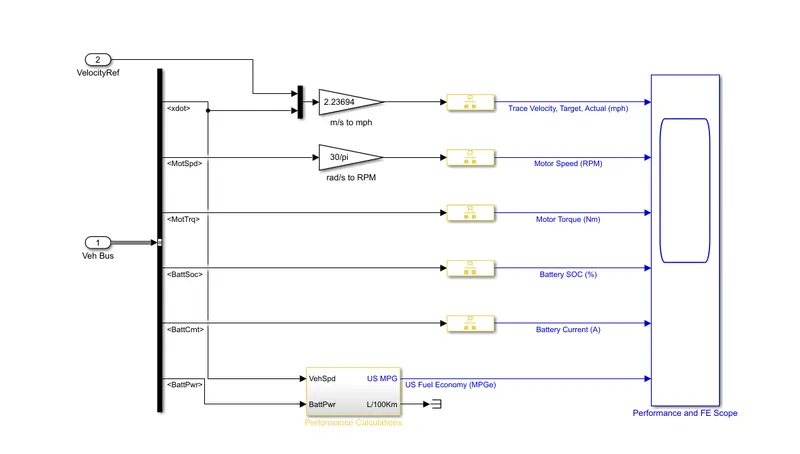
the above blockset represents the powertrain blockset of ev vechile.
to calculate the mpg given inputs are battery,speed,and fuel flow.
distance is calculated by vehicle speed,battery is consumed with the total distance,with this flow rate fuel is exeperessed and converted into gallons and calcualtes.
factors that considered for fuel model:
is it safe for the fuel consideration.
cost of the fuel,and availability of fuel.
(3)answer:
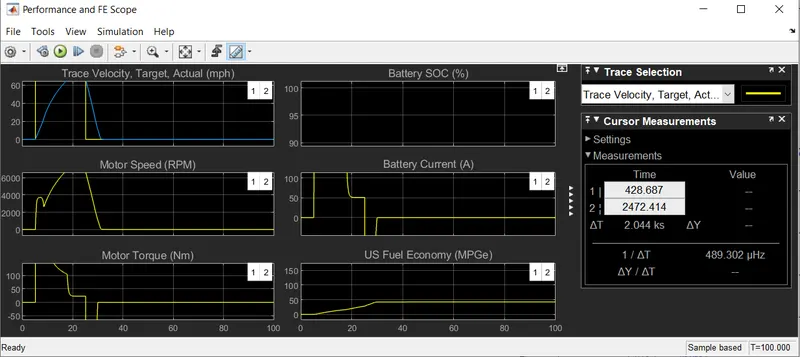
with out changing the velocity and grade:
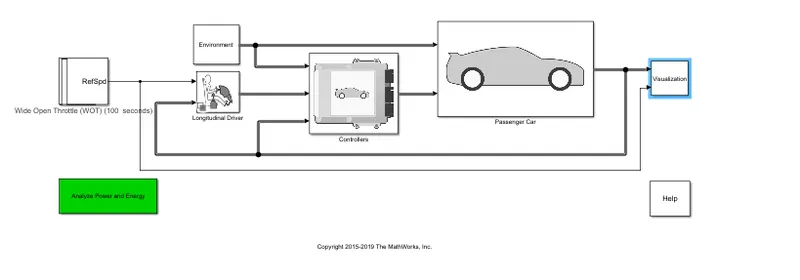
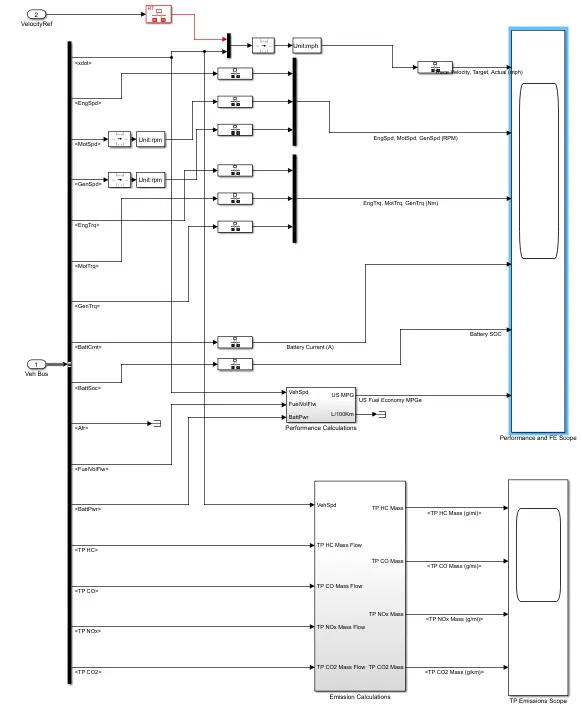
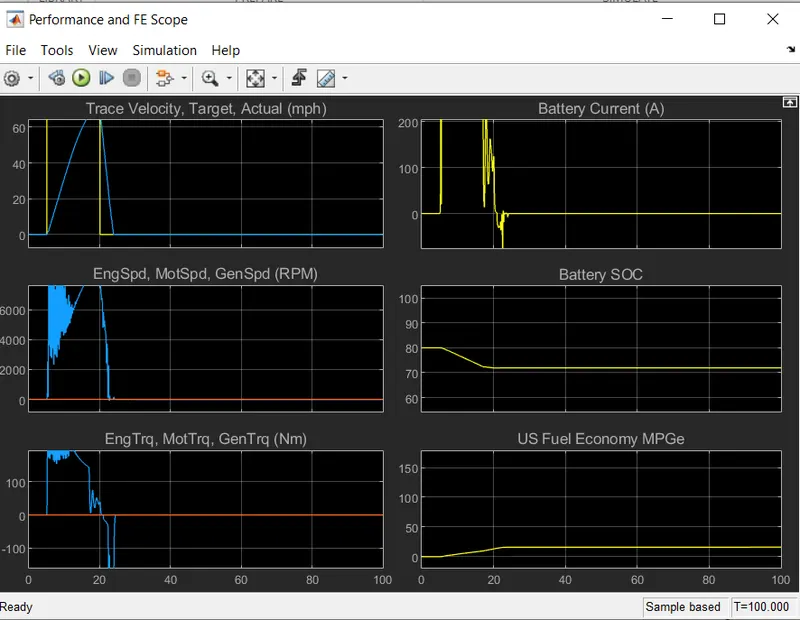
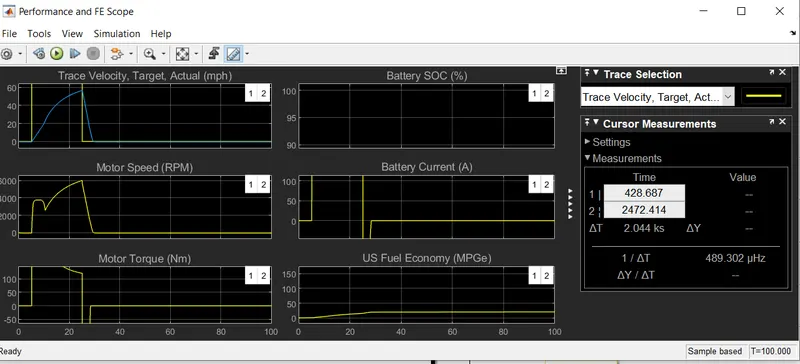
after changing the velocity and grade:
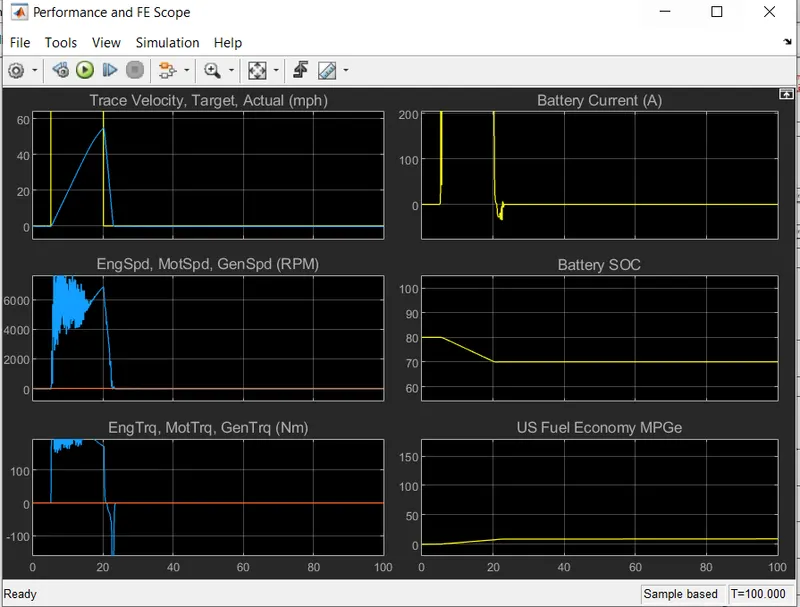
comparing both plots:
- in the plot 1 torque is very less compared to plot2.
- in plot 2 motor speed is high than plot1
- more battery power is required for plot 2 than in plot1.
- engine toruqe is high than the default model.
- battery soc is constant in both.
(4)answer:
after changing the velocity and grade:
conclusion:
pure electric vehicles give economic drive and no emission is produced where as hev produces emission slightly compared to ev.