Week-4 Challenge WOT Condition Part-2
1. What is the difference between mapped and dynamic model of engine, motor and generator? How can you change model type?:
Differences between Mapped and Dynamic model are presented in tabular form below:
| Type |
Implementation |
When to Use |
| Mapped model |
Model uses a set of steady-state lookup tables to characterize engine performance The tables provide overall engine characteristics, including actual torque, fuel flow rate, BSFC, and engine-out exhaust emissions. |
|
| Dynamic model | Model decomposes the engine behavior into engine characteristics that are separated into lower-level components. By combining components in this way, the models capture the dynamic effects |
|
Source: MATLAB documentation
How to change model type:
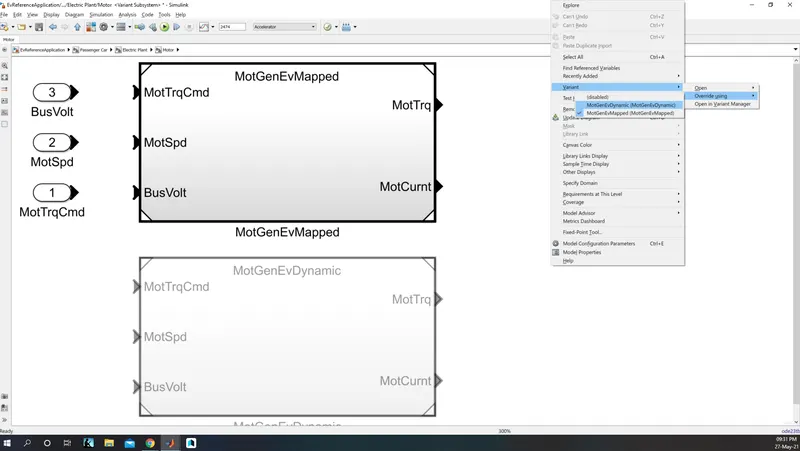
In the EV reference application open the passenger car`rArr`electric plant`rArr`motor, right click anywhere and open "variant" option to select "override using" option and select the preffered (dynamic or mapped) model.
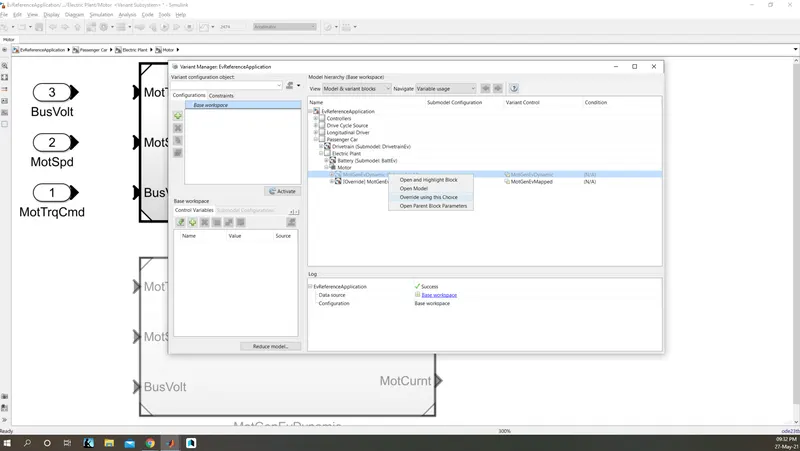
Alternatively one can use 'Variant manager' to change the variant anywhere in the project. Right click on the desired variant and select "override using this choice".
2. How does the model calculate miles per gallon? Which factors are considered to model fuel flow?
Open electric vehicle appllication, in the model of the electric vehicle open the visualisation subsystem:
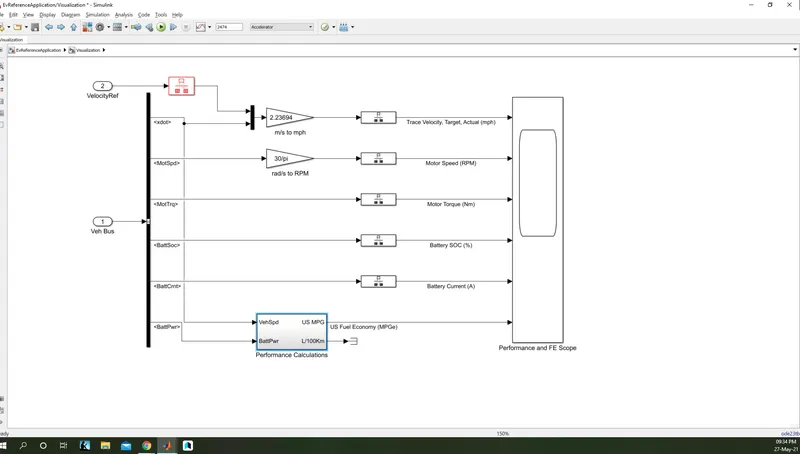
In the visualisation subsystem we find Performance Calculation subsystem where the efficiency calculation is carried out.
Below is the highlighted path of efficiency calculation. We can see that Power of the vehicle is converted from electrical power to gasoline equivalent. Then distance covered by the vehicle is divided by the equivalent gallons of gasoline to find the MPG efficiency.
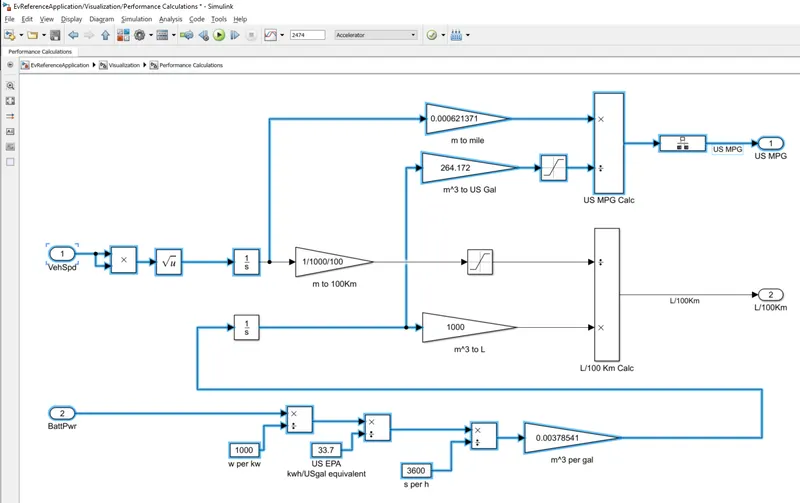
Factors considered to model fuel flow are:
1. Vehicle Speed
2. Battery Power
3. Fuel state
3. Run the HEV ReferenceApplication with WOT drive cycle. Change the grade and wind velocity in the environment block. Comment on the results:
Open EV reference application and change the drive cycle to "WOT":
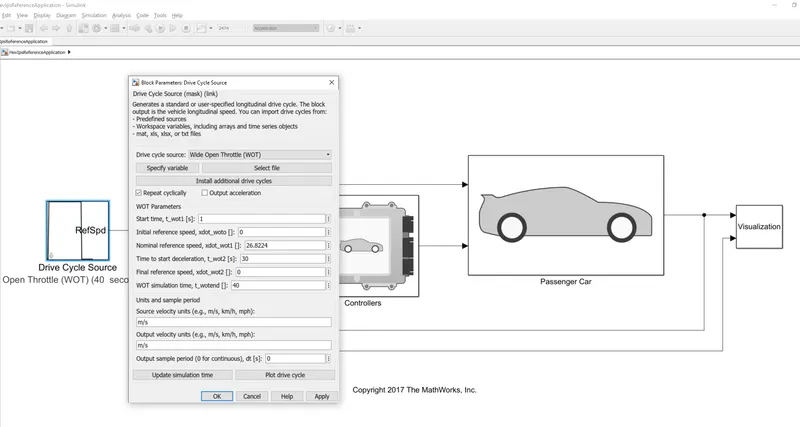
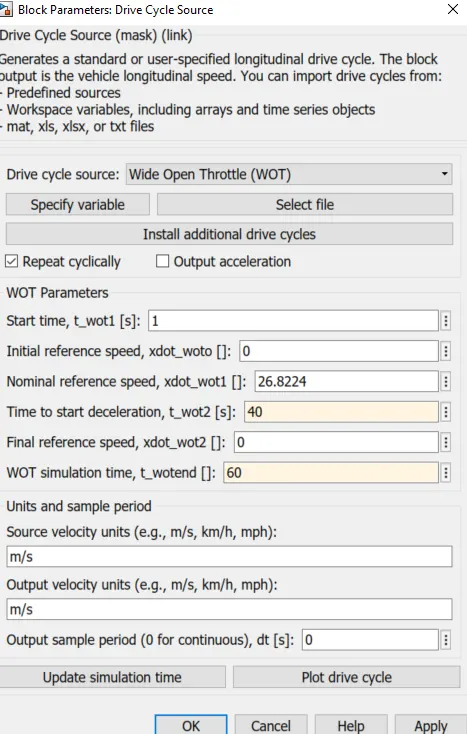
To save simulation time change the parameters of WOT cycle;
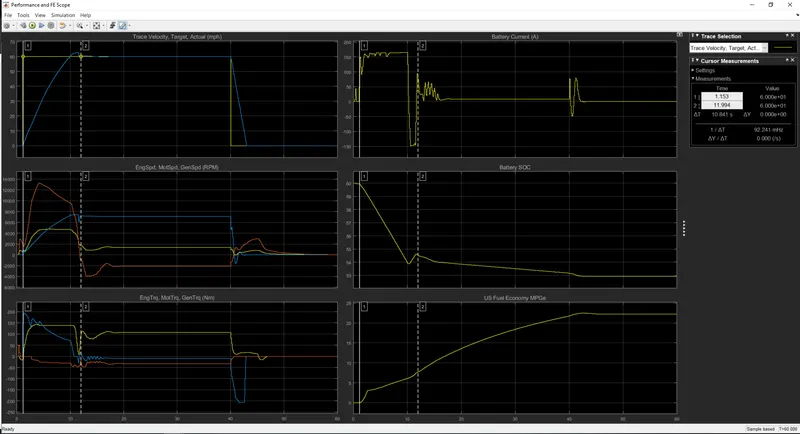
When the WOT cycle was run in simulation for 60 seconds, following results were obtained:
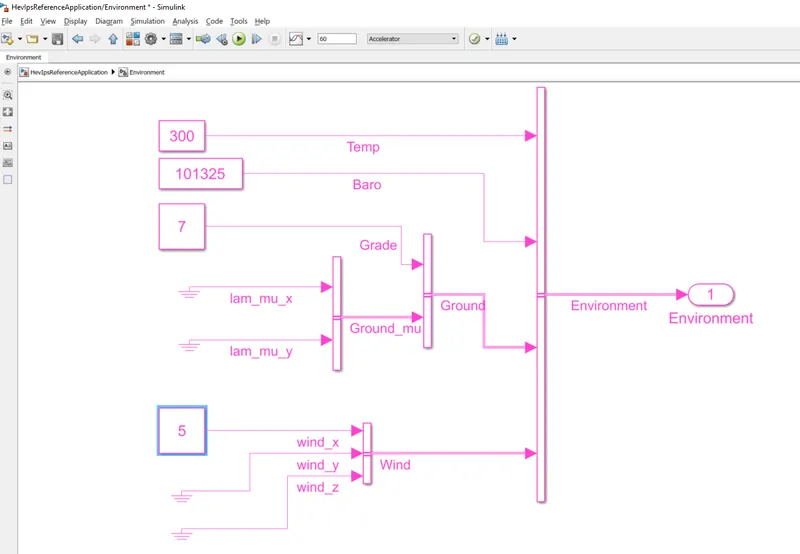
Now, we change the Grade to 7% and Wind to 5:
Following simulation results were obtained the this case:
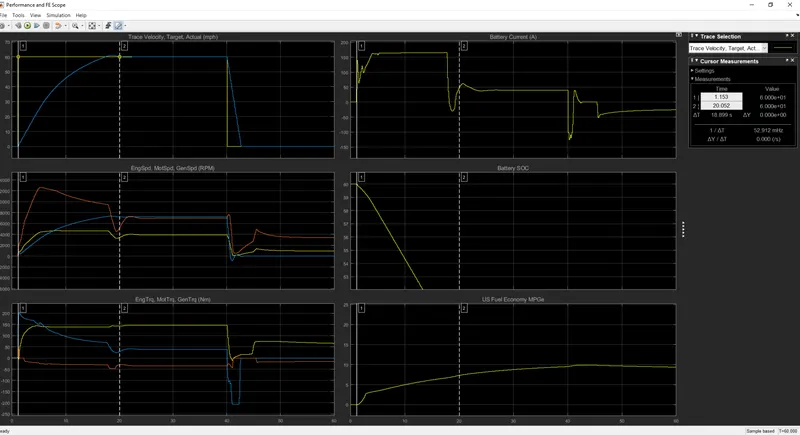
When we change the grade and wind speed;
grade: 10%
wind: 15
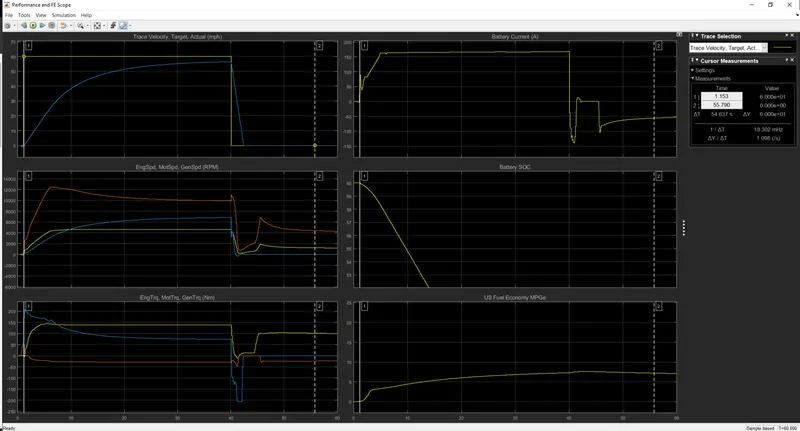
Keeping Wind speed zero and only grade present;
grade: 7;
wind: 0
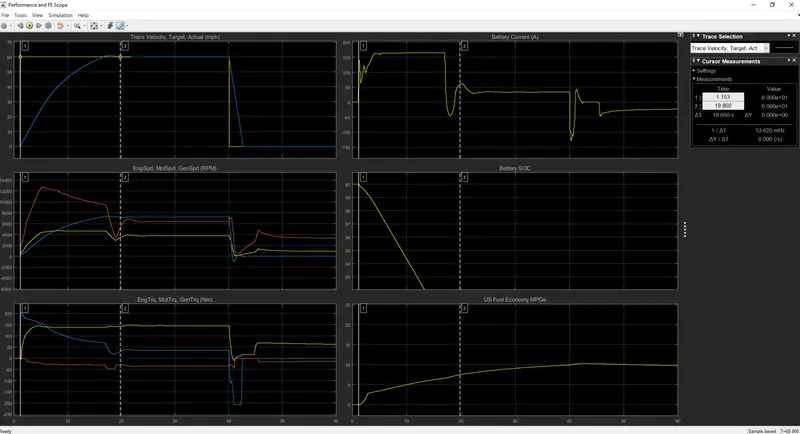
Keeping grade equal to zero and only wind speed present;
grade: 0;
wind: 5
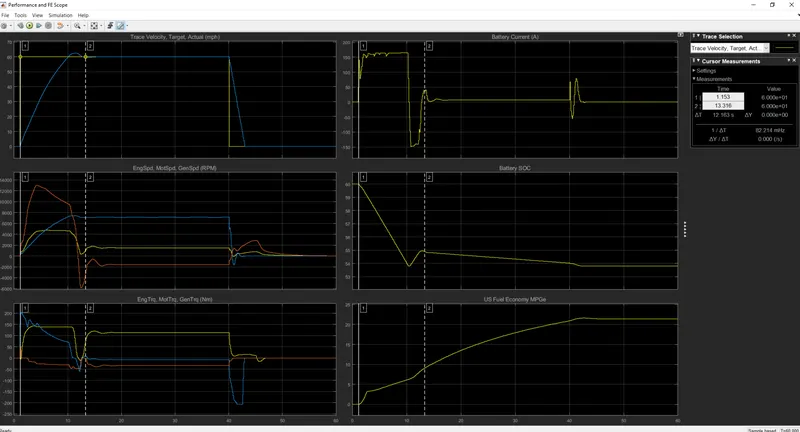
We simulated the EV reference application for various grade and wind speed values
- and find out that increasing both of them to a certain values makes it completely difficult for vehicle to reaches the speed required by the drive cycle (WOT; top speed)
- while grade percentage increase makes it more difficult for vehicle to reach required speed as compared to the Wind speed.
4. Keeping all other parameters same, compare the simulated results of hybrid and pure electric powertrains:
We simulate both HEV and EV keeping all the parameters same and we find out following results on comparision:
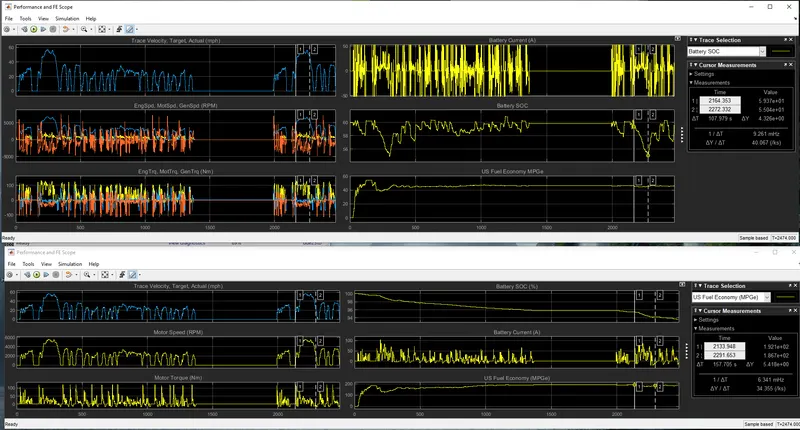
- The HEV vehicle is more capable of perfectly chasing the drive cycle, due to presence of power support from the IC engine.
- While the Battery SOC of EV is degraded over time the SOC of HEV battery is maintained upto to a level.
- MPG economy of EV is better than the HEV.
- There is lower and bidirectional current flow into the terminals of HEV as compared to the EV where it is higher and unidirectional.