Week-4 Challenge WOT Condition Part-2
- What is the difference between mapped and dynamic model of engine, motor and generator? How can you change model type?
Solution:
Mapped system:
Model uses a set of steady-state lookup tables to characterize equipment performance. The tables provide overall engine characteristics, including actual torque, fuel flow rate, BSFC, and engine-out exhaust emissions.
This type of model is less accurate, can be used during initial study of model. result got will be faster.
Applicable for Engine, Generator and motor in a model
Dynamic model:
Model decomposes the engine behavior into engine characteristics that are separated into lower-level components. By combining components in this way, the models capture the dynamic effects.
This type model will help in study the impact of individual engine components on the overall performance.
Applicable for Engine, Generator and motor in a model
How can you change model type?
Solution:
Ev reference application project is selected for this demonstration,
As this is a pure EV, we can change model type only for a motor, in case of HEV we can change model type for Engine, Generator and motor as per requirement.
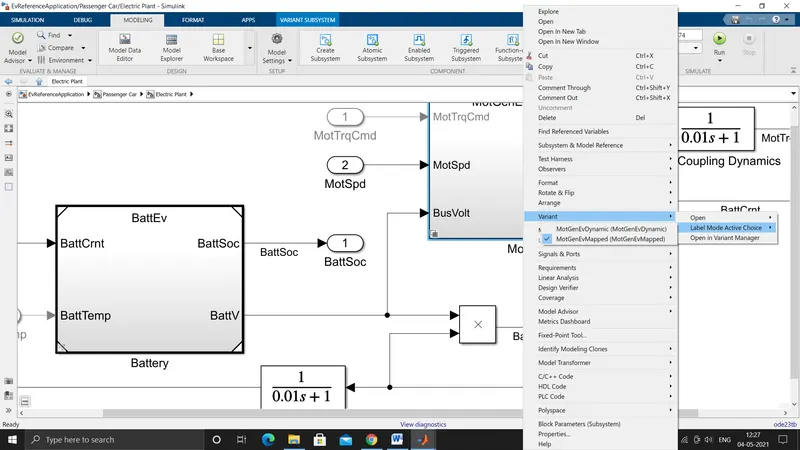
In EV reference application go to passenger vehicle block >> Electric Plant >> right click Motor block >> variant >> Label mode active choice >> select the dynamic or Mapped model as per the requirement
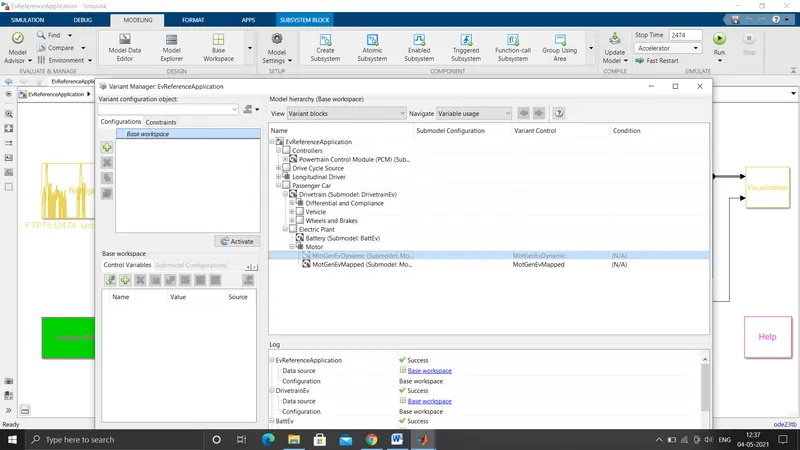
Also we can do directly from modelling toolbar >> Variant manager >> in the dialogue box select the component whose property need to be change
2. How does the model calculate miles per gallon? Which factors are considered to model fuel flow?
Solution:
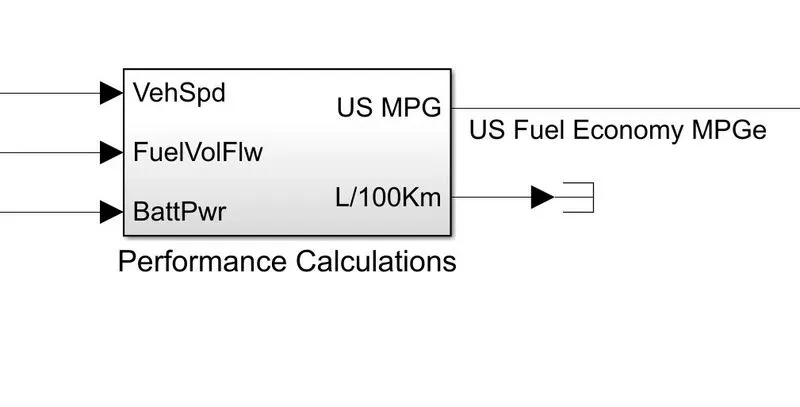
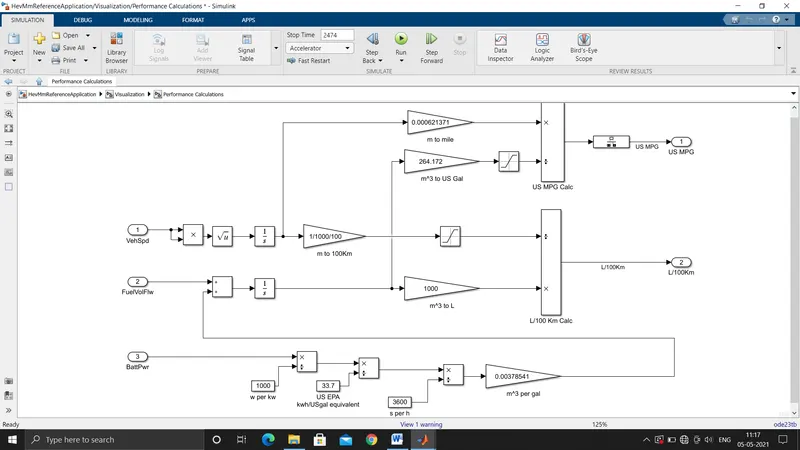
In HEV mm model, the miles per gallon calculation done in performance calculation block, which take input vehicle velocity which is integrated with time to calculate the distance travelled by the vehicle, in hybrid vehicle fuel flow for charging the battery by running the engine for fixed distance travel is also calculated, using distance and fuel flow miles per gallon is calculated
Factors Considered for fuel flow:
1. Fuel consumed for charging the battery for fixed distance
2. Engine runned during in parallel run mode
3. Run the HEV ReferenceApplication with WOT drive cycle. Change the grade and wind velocity in the environment block. Comment on the results.
solution:
1st simultiom is runned for HEV Referencee model with default environmental condition,
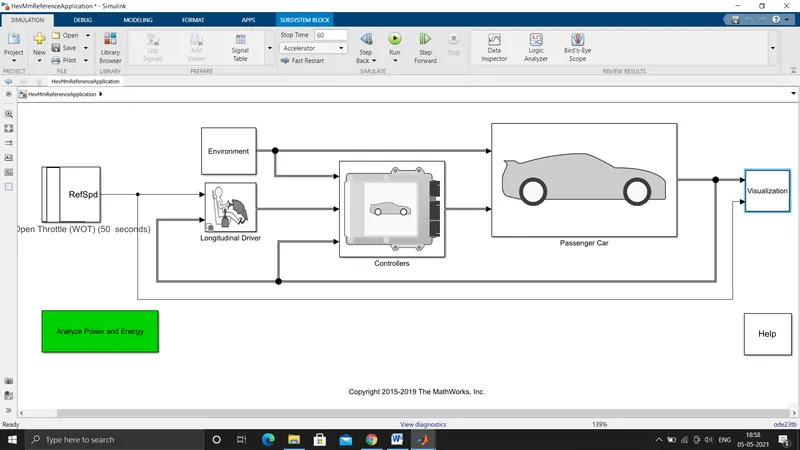
WOF condition:
Nominal reference speed- 50miles/h
deceleration time 20sec
simulation time 50 sec
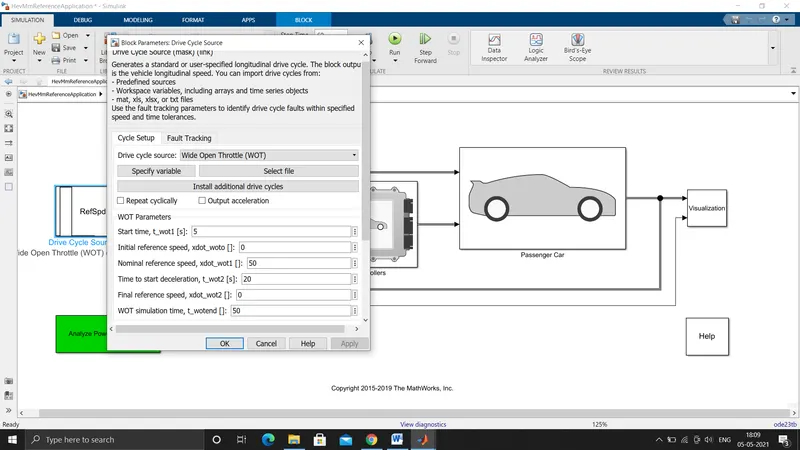
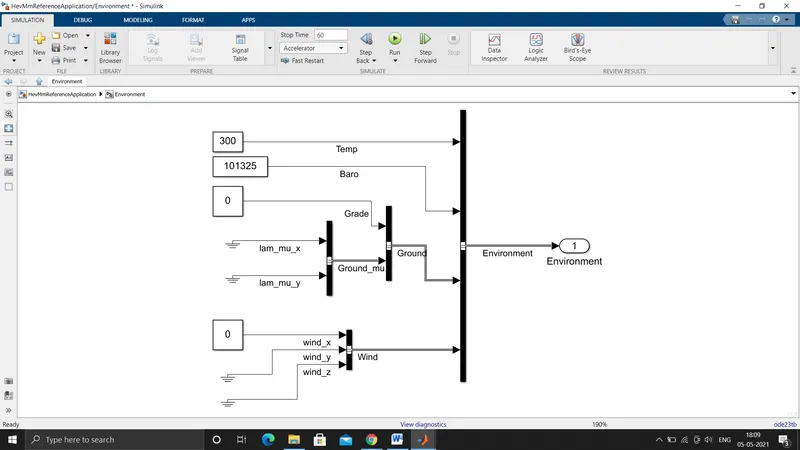
Default environmental condition:
Grade- 0 degree
wind speed- 0 m/h
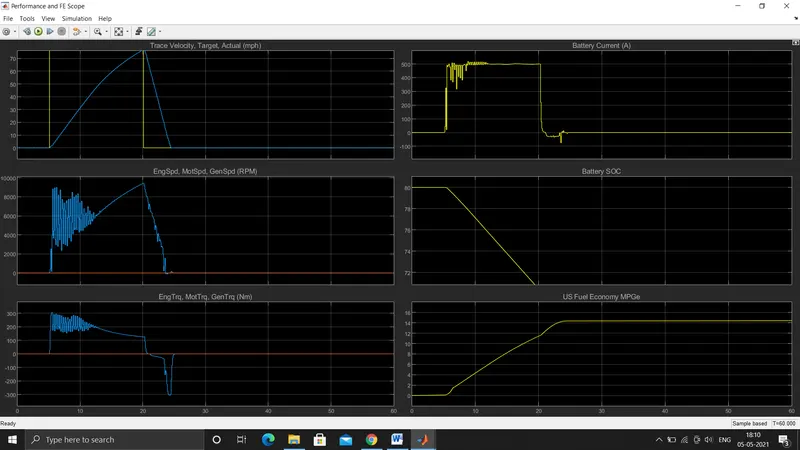
result:
Fuel economy :14.3 miles/gallon
acceleration time: 15 sec
top speed : 77mph
deaccleration time: 4.70 sec
battery discharge : from 80 % to 71%
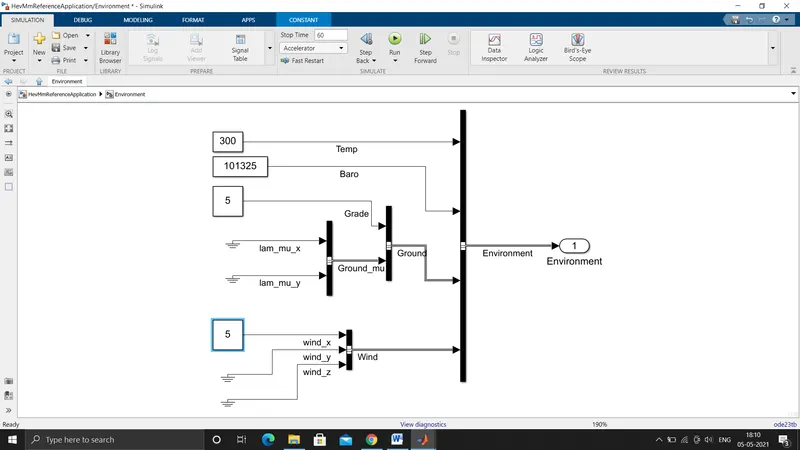
condition with change in environmental condition for same WOT drive cycle:
Grade- 5 degree
head wind velocity- 5mph
Result Plot:
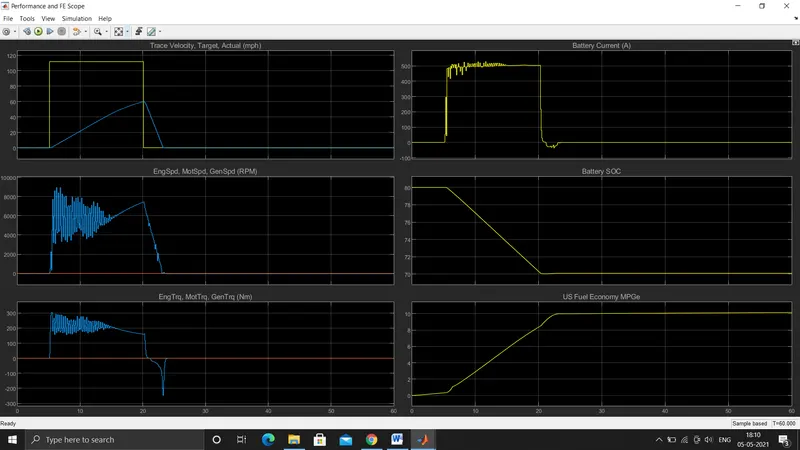
result:
Fuel economy :9.6 miles/gallon ( less than condition 1. 14.3miles/gallon)
acceleration time: 15 sec
top speed : 60mph ( less than condition 1. 77mph, here extra work done to overcome the grade and head wimd)
deaccleration time: 3.1 sec ( less than condition1. as head wind add advantage for deaccleration)
battery discharge : from 80 % to 70% ( SOC has minorly decrease of 1% from condition 1)
4.Keeping all other parameters same, compare the simulated results of hybrid and pure electric powertrains.
Solution:
a pure EV reference modle is selected for the simulation
WOF condition:
Nominal reference speed- 50miles/h
deceleration time 20sec
simulation time 50 sec
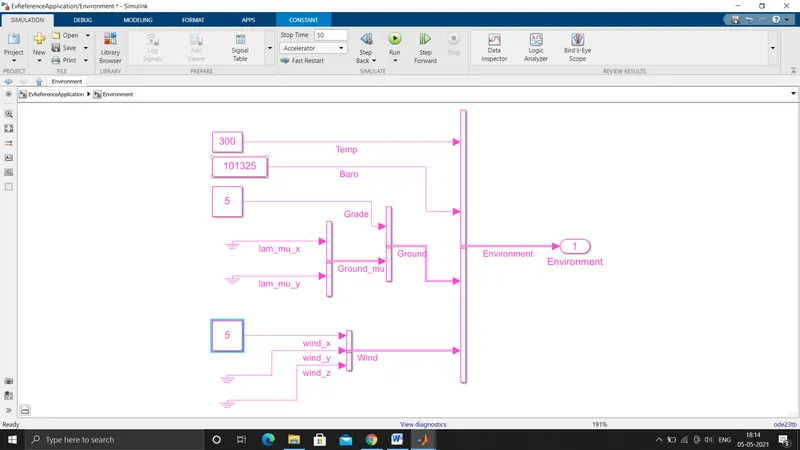
condition with change in environmental condition for same WOT drive cycle:
Grade- 5 degree
head wind velocity- 5mph
Result Plot:
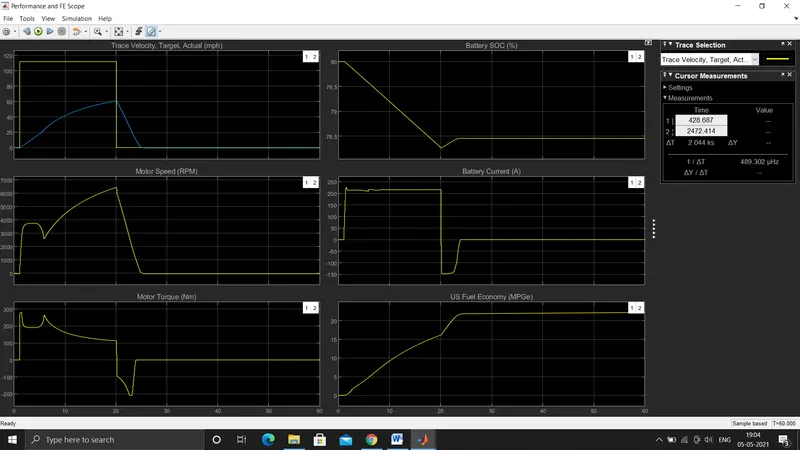
result comparision with HEV multimode modle with same Environmental condition
Fuel economy :21.8 miles/gallon ( more than condition 2. 9.6miles/gallon )
acceleration time: 18.9 sec
top speed : 61mph ( less than condition 2. 60mph, here extra work done to overcome the grade and head wimd)
deaccleration time: 4.8 sec ( more than condition2. as gereneration breaking is used)
battery discharge : from 80 % to 78.4% ( SOC change is very less compared to condition 2, and here during delccleration battery got changed due to regenerative breaking)