Week-4 Challenge WOT Condition Part-2
Q1 What is the difference between mapped and dynamic model of engine ,motor and generator.How can you change model type?
Q2 How does the model calculate miles per gallon? which factors are considered to model fuel flow?
Q3 Run the HEV reference application with WOT drive cycle change the grade and wind velocity in the environment block.comment on the table.
Q4 Keeping all other parametres same,compare the simulated results of hybrid and pure electric powertrains.
AIM
To learn power train blockset by varying the parametrers.
A1 Difference between mapped and dynamic model of engine .
Mapped model of engine
Mapped engines represent macro engine behavior as a set of lookup tables (brake torque, fuel flow, air mass flow, exhaust temperature, efficiency, and emissions) as functions of commanded load and measured engine speed.
Mapped engine models are suitable for analysis and design activities that do not require engine subsystem dynamic characteristics, for example, in engine and transmission powertrain matching analysis for fuel economy, emissions, and performance tradeoffs.
Model uses a set of steady-state lookuptables to characterize engine performance.
The tables provide overall engine characteristics,including actual torque, fuel flow rate, BSFC, and
engine-out exhaust emissions.
If you have engine data from a dynamometer or a design tool like GT-POWER.
Dynamic model of engine
Dynamic engines decompose engine behavior into individual component models that account for engine dynamics, most notably intake airflow and turbocharger dynamics.
Dynamic engine models are suitable for designing control, estimator, and diagnostic algorithms that depend on dynamic subsystem states, for example, in closed-loop AFR control algorithm development.
For quasi steady-state engine simulations.
If you need a more detailed dynamic model and have component-level data.
To analyze the impact of individual engine components on the overall performance.
This is similar for motors and generators.
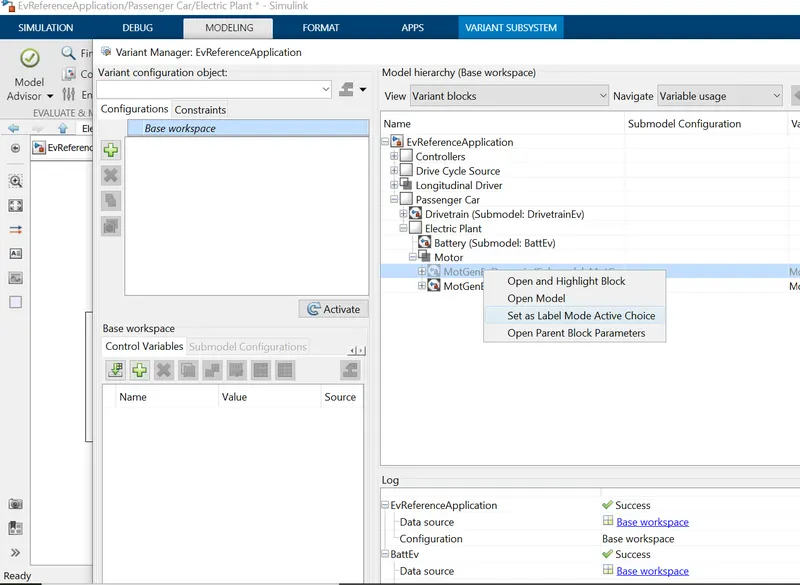
*Changing model types
First open the powertrain blockset and select the ev reference application to open in simulink
open the passenger car model
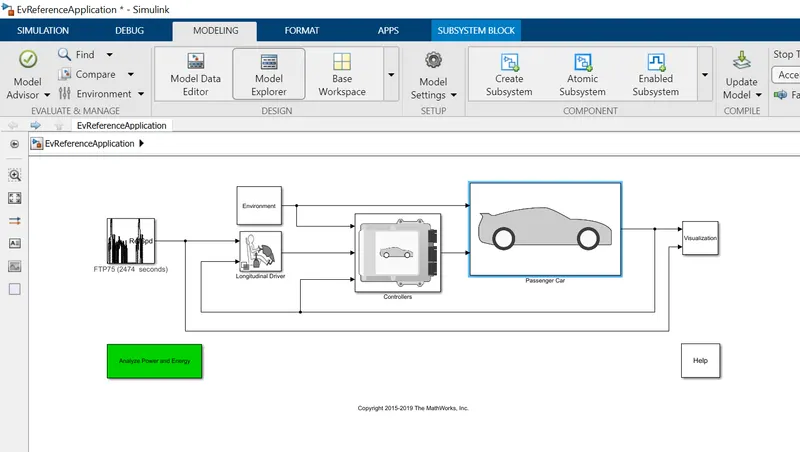
go for the variant blocks and set the motor path to set as label mode active choice.
change in mapped model can be observed where the dynamic model is commented out.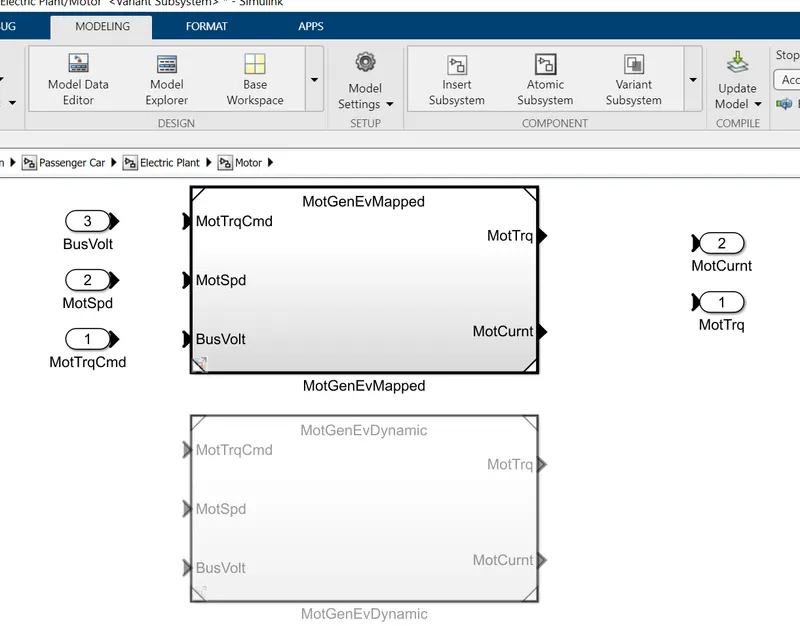
A2
Model calculaton in miles per gallon
Firstly open the visualisation blocks in HEVreference in simulink
open the perfomance calculation block,which has the vehicle speed and battery power as inputs.
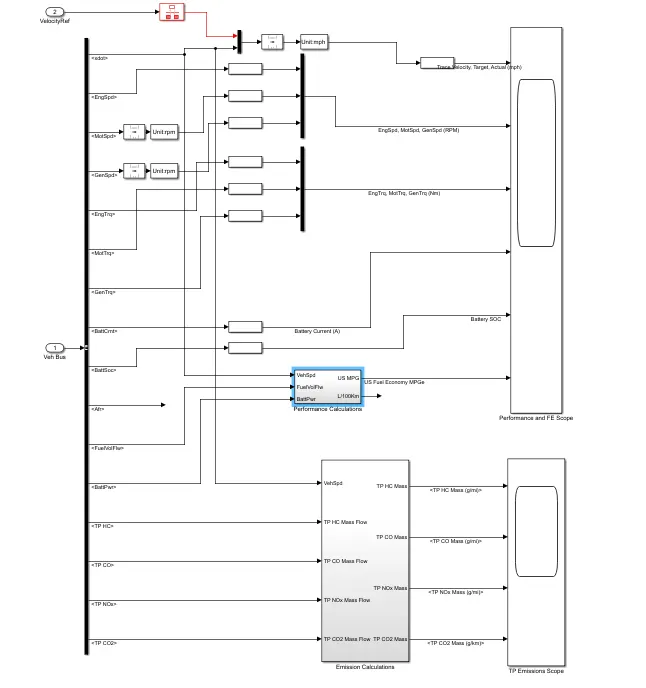
MPGe is miles per gallon equivalent.MPGe is calculated in the model with the help of battery power and vehicle speed.
vehicle speed is multiplied itself and square rooted it.Then divided with time and converted metre to mile and divided with gallon.
Battery power is divided by 1000 and then divided with 33.7.Then it is converted to s per hour and then converted to m^3 per gal.
The value is coverted into gallon and used as MPG after dividing miles with gallon.
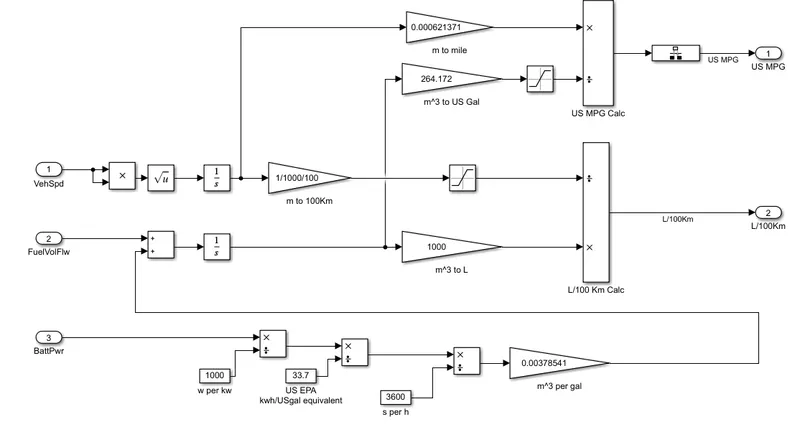
The factors affecting model fuel flow are velocity,vehicle speed and battery power.
A3
Open the HEV reference application in simulink
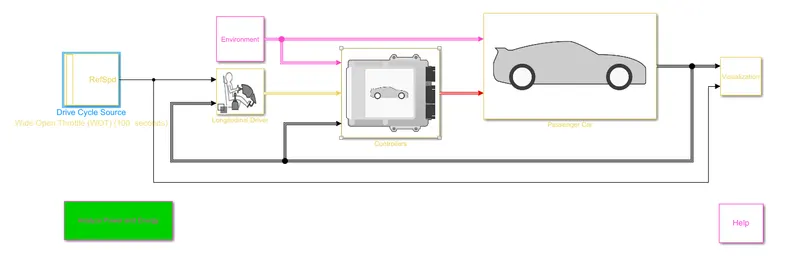
select the drive cycle source
change the drive cycle to wide open throttle and vary the parametres
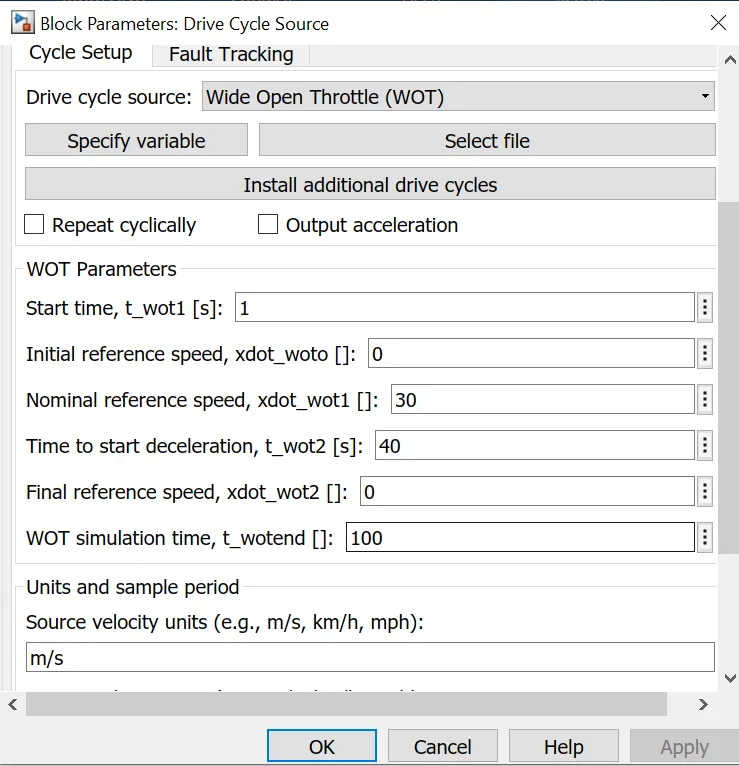
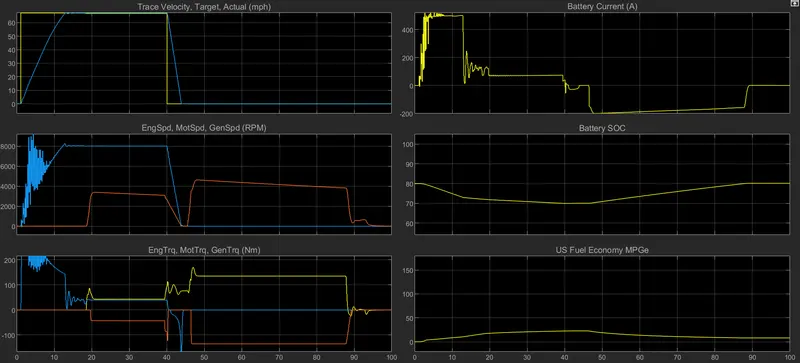
output for WOT
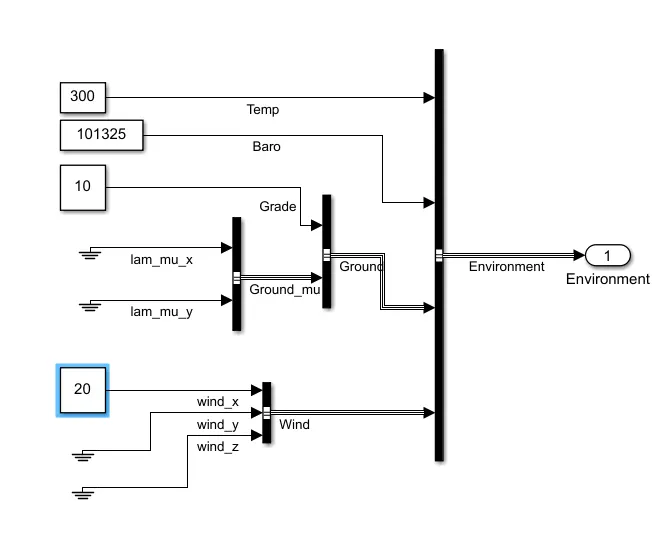
To change the parametres open the environment block
Change the temperature,gradeability and wind speed
run the program and observe the graph in visualisation
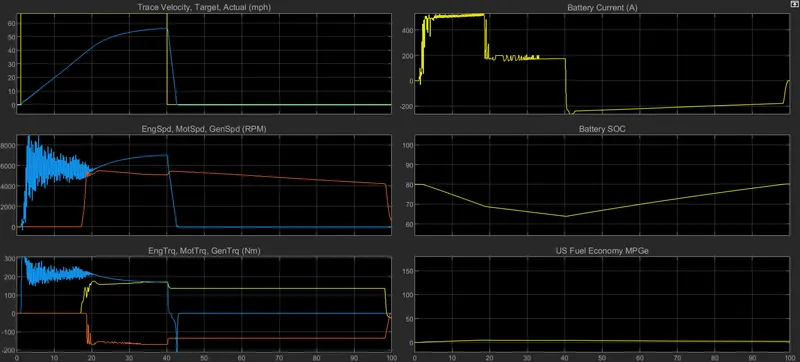
observation between both outputs
* it is clearly visible that battery current increased and changes happens in 20 seconds
* At 20 seconds current becomes negative in first condition where as in second the battery goes to negative at 40 seconds
* The SOC value decreases due to more power required to overcome windspeed and gradeability.
*SOC values goes below 70 in second condition.
* Torques are almost similar.
* Fuel economy is less when compared to first condition.
A4
Open EV reference application in powertrain blockset
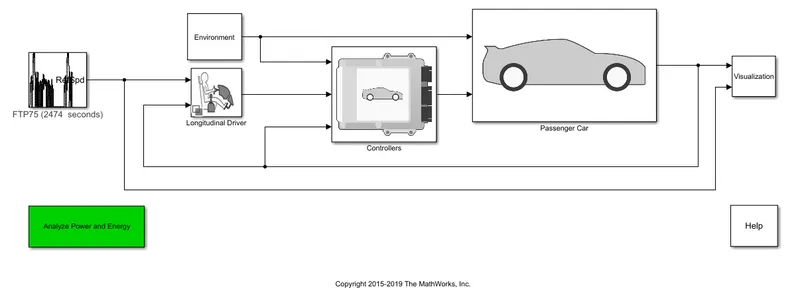
Change the input of drivecycle to WOT
open the evironment block and change the gradeability to 10 and wind velocity to 20.
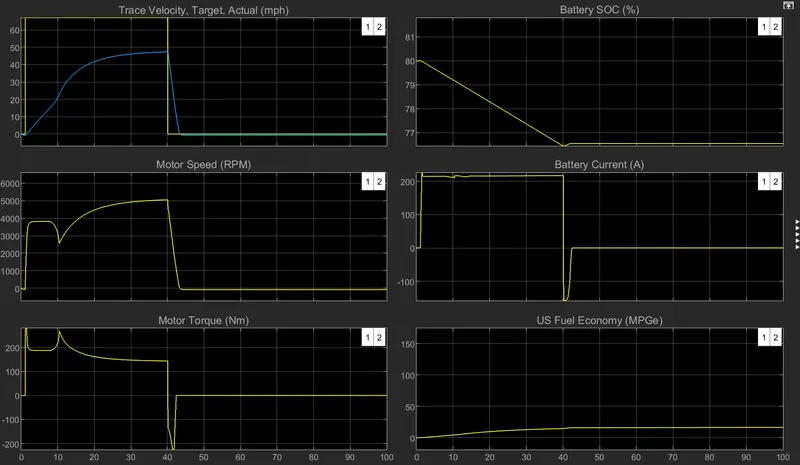
Observation between pure EV and HEV.
1 The velocity of pure EV obtains are less compare to HEV. Pure EV have velocity less than 60mph where as HEV have more than 60mph.
2 Motor speed of EV are less compared to HEV.
3 Trace velocity are almost similar.
4 Motor torque are almost similar
5 Baterry current used is almost half of pure EV compared to HEV.
6 Fuel economy of EV are almost double that of HEV.
Conclusion
1 Difference betweem mapped and dynamic motor,engine ande generator are explained.changing models are explained.
2 Miles per gallon in model calculation is explained.factors are explained
3 Graph observations are explaine by running HEV reference application model without grade and wind velocity .
4 Compared HEV and pure electric vehicle model and observations are done.