Week-4 Challenge WOT Condition Part-2
Q1. What is the difference between mapped and dynamic model of engine, motor and generator? How can you change model type?
Mapped Engine: It is a steady-state model where all the input parameters like air mass flow, fuel flow, exhaust temperature, efficiency, and emission performance are taken from look tables where values are predefined. This type of modelling is less accurate. The lookup tables value are based on the values of brake torque, commanded torque and engine speed. If any other parameter like Input engine temperature is selected then lookup table values are also a function of the temperature parameter.
Dynamic Engine: This type of model uses real time data fed by the user at run time for modelling. This model is more accurate than mapped engine model. This type of model is used when the data of subsystems of a vehicle is required. This model also represents the actual working of the engine in real time. The input values change every time so the output values from the model also changes continuously. Here the simulation time taken is more.
Mapped Generator: The mapped generator block is also similar like other blocks. This is also similar like the mapped motor, where the input values for the generator block are predefined or it takes from the lookup tables. Here also simulation time is less when this model is used.Most of the data required is taken from the lookup tables corresponding to the given input parameters. Its simulation time is less.
Dynamic Generator: This model also represents actual generator which work in a real time environment. Here the input values are not taken from look up tables, the output values are calculated continuously according to the changes in input values. The dynamic generator involves user entering the parameters manually during the run time for their particular applications. The results take time and are more accurate.
Mapped Motor: It is also called as the static motor where the model runs based upon look up tables or predefined input values. Simulation using this model is fast as that of dynamic model. The mapped motor works in torque control mode. This type of motor is used when the user requires a faster simulation and doesn't have the knowledge of motor parameters. The output torque and reference torque is compared and changes are made.
Dynamic Motor: This model represents the real time working of the model. It represents the actual model of the equipment. It does not take any predefined values as input. It takes the real time values as inputs and gives the output continuously. Simulation using this model is slow compared to mapped motor model.In the dynamic motor a permanent magnet synchronous motor (PMSM) is used. This block is used when the user knows what parameters are to be used in that particular simulation. This motor is more accurate.
Q2. How does the model calculate miles per gallon? Which factors are considered to model fuel flow?
MPGe stands for Miles per Gallon Equivalent. MPGe is a fuel economy rating determined by how far a vehicle can travel on a gallon of fuel. In this case calculation of battery power and vehicle speed in miles per Gallon is used to compare the value with engine fuel consumption.
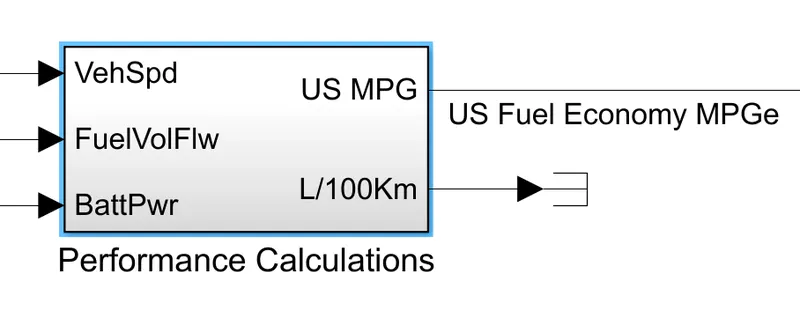
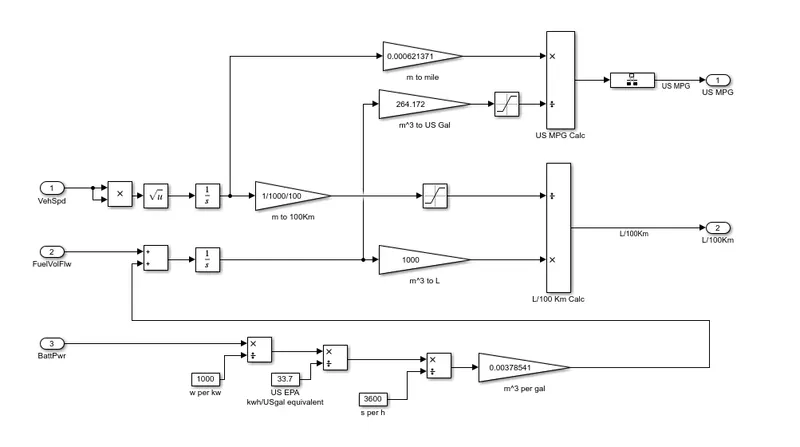
Battery power > converted into kw> Kw/gal equivalent value>KW-sec. The volume flow rate of the value is expressed into m^3 > intergrated w.r.t time to obtain volume of fuel..
Vehicle speed is integraed to obtain the distance > converted into kilo-meter and miles by multiplying and dividing with the appropiate value.
The factors considered to model fuel flow are the battery power and the vehicle speedd.
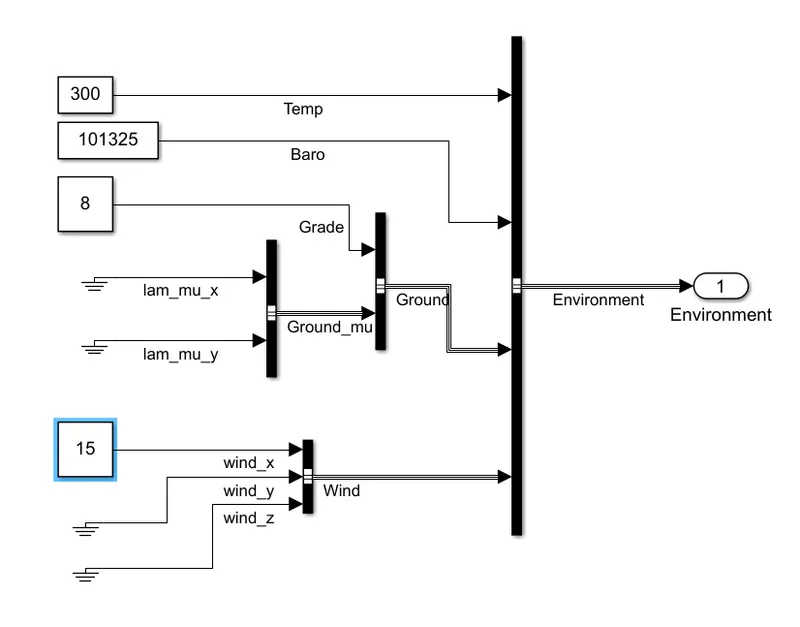
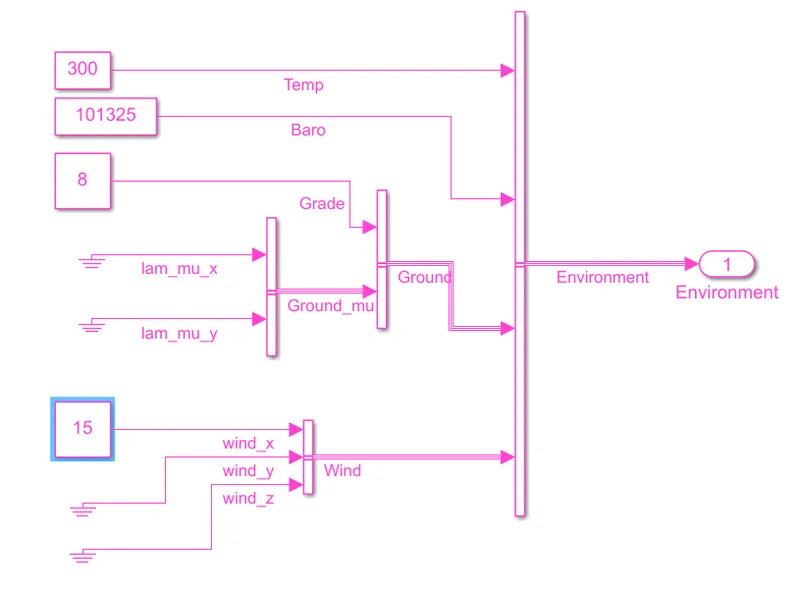
Q3. Run the HEV ReferenceApplication with WOT drive cycle. Change the grade and wind velocity in the environment block. Comment on the results.
GRADEABILITY - 8%
WIND VELOCITY - 15
TOTAL TIME TAKEN FOR SIMULATION - 100sec
RESULTS -
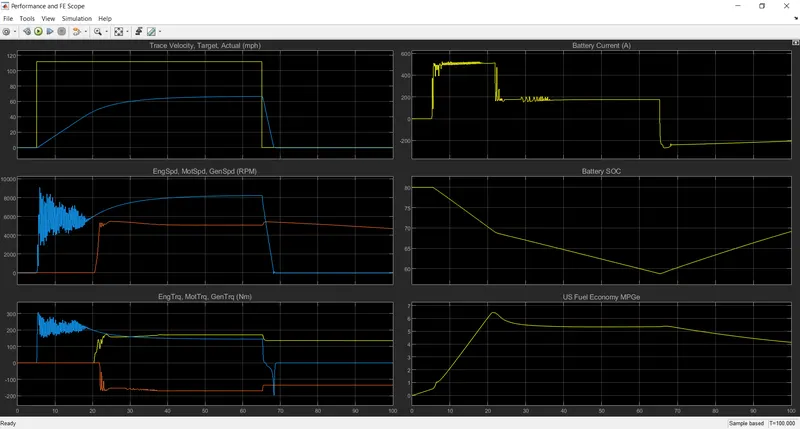
Due to the limitation on maximum power available from energy source there is a difference between actual velocity curve and the input curve.
The negative torque is obtained during the deacceleration.
The Battery SOC keeps on decreasing till the regenerative braking starts and then rises agaiin.
The max 500 A of current can be delivered due to limitation factor.
Motor Torque is initially high then the engine torque rises and the generator torque is negative as it is charging the battery
Q4. Keeping all other parameters same, compare the simulated results of hybrid and pure electric powertrains
EV POWERTRAIN - HEV POWERTRAIN -
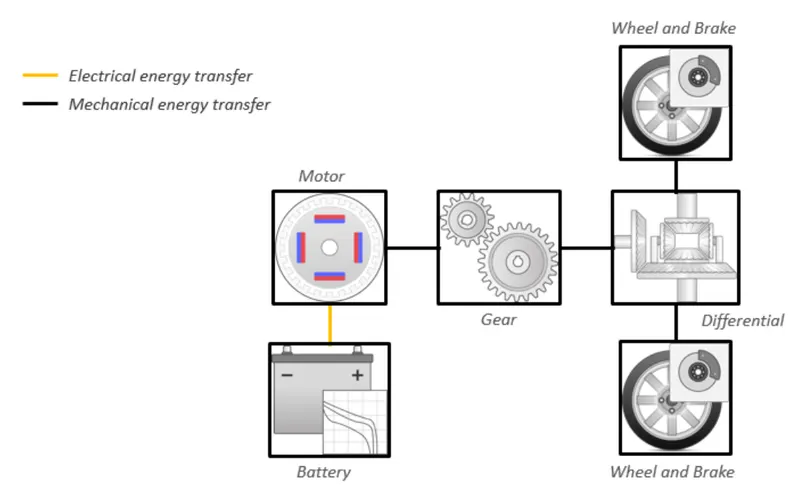
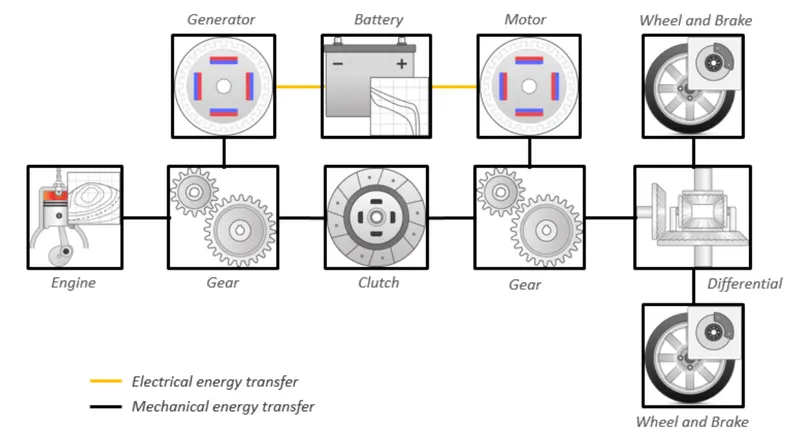
RESULTS -
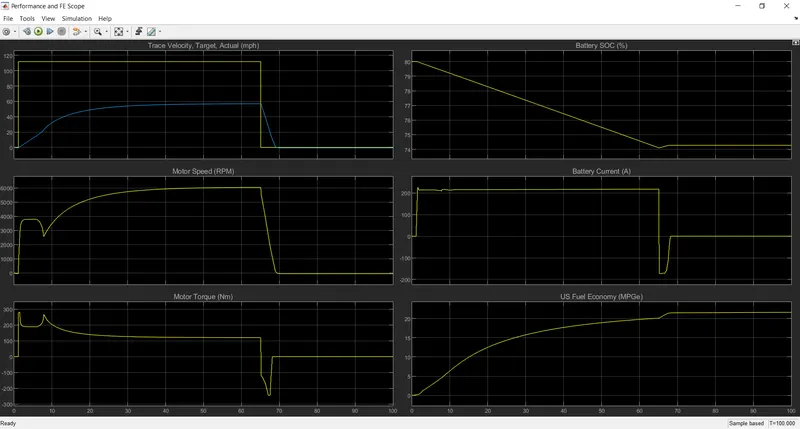
COMPARISON
| HEV | EV | |
| MAX BATTERY CURRENT DRAWN | 500 | 220 |
| BATTERY SOC % | 80-59% | 80-74% |
| FUEL ECONOMY | 6.5 | 22 |
| GRADEABILITY | 8 | 8 |
| WIND VELOCITY | 15 | 15 |
| MAX SPEED | 70 | 60 |
1.Fuel Economy of the EV is also more as compared to HEV.
2.The Battery SOC of EV is also higher than the HEV.
3.Time taken to reach the top speed is more in EV than the HEV.